-
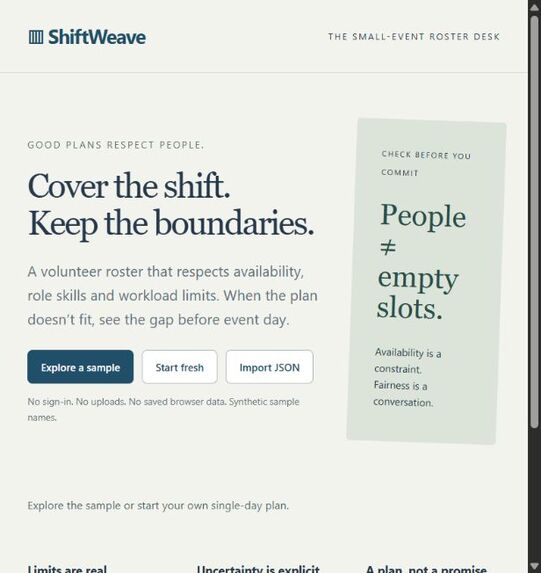
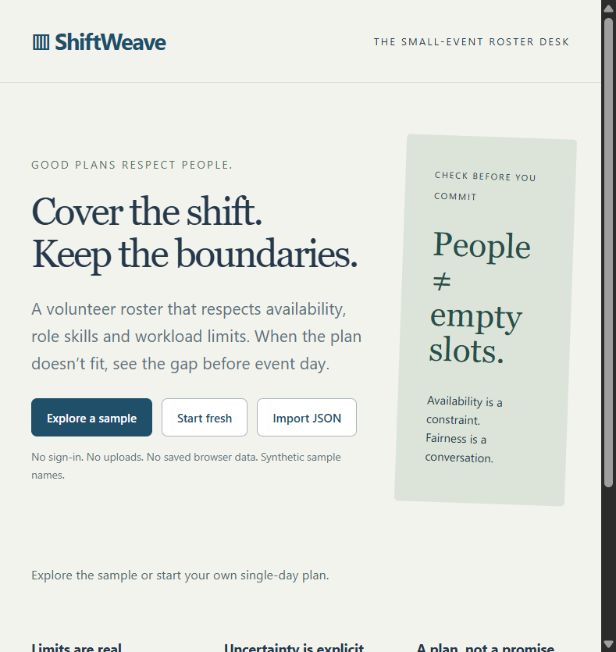
Local-first planning with explicit constraints and no sign-in.
-
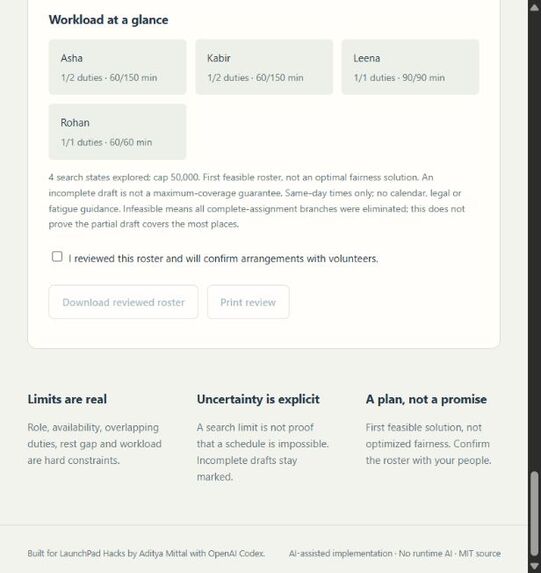
Complete sample roster, independent audit and workload review.
-
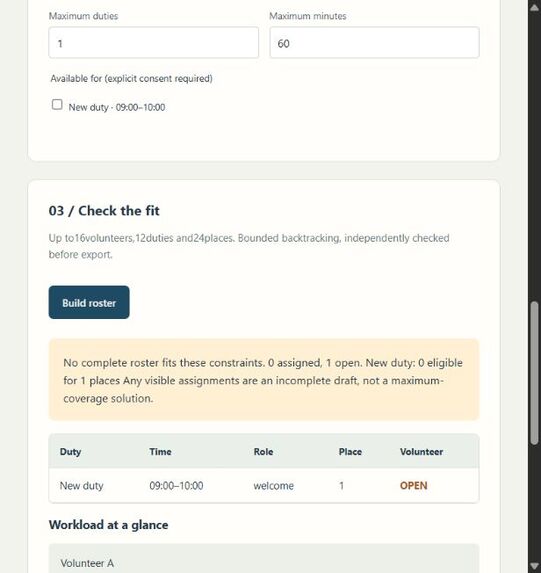
Uncovered duties remain visible; incomplete output is clearly marked.
Inspiration
Small student events need more than a list of empty slots. A plausible-looking roster can still assign someone while unavailable, double-book a volunteer or depend on a skill they do not have. ShiftWeave explores a narrow workflow: enter the actual constraints, inspect whether they fit, and keep uncertainty visible. This is a design motivation, not a claim of volunteer interviews or real-event testing.
What it does
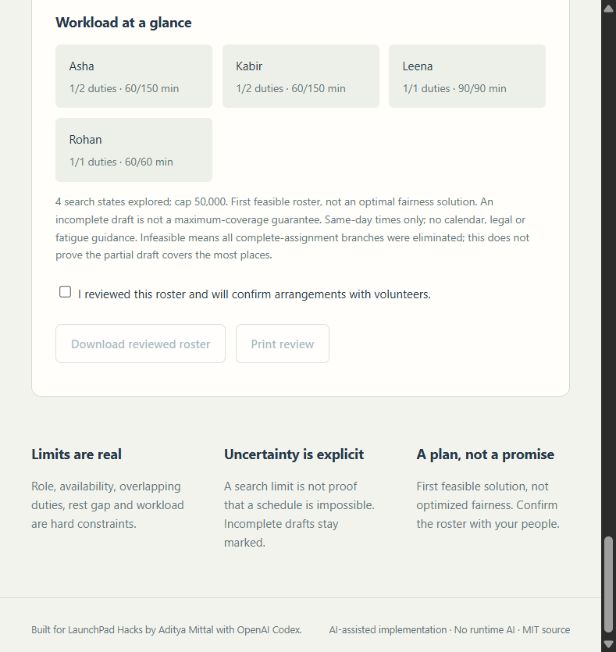
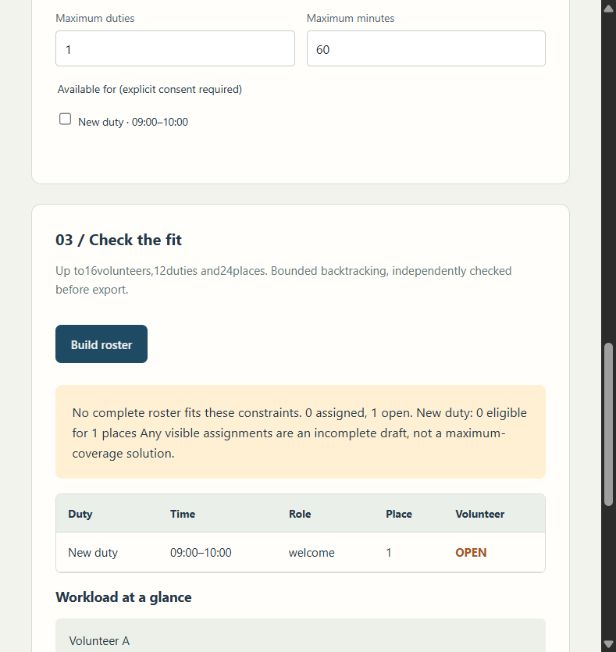
ShiftWeave builds a same-day roster from duties, role skills, explicit availability, maximum duty counts, maximum minutes and a rest gap. A complete roster satisfies the encoded constraints. If none exists, the app says so; if search hits its cap, it separately says feasibility is unresolved. Review assignments and workloads, approve, then export the input and audit with the roster or print the review. Any input edit clears the old approval.
How we built it
Static HTML/CSS/JavaScript with no external runtime dependencies. The pure solver selects the most constrained open place, tries eligible volunteers with a workload/flexibility heuristic, and backtracks within 50,000 states. A separate audit checks the resulting assignments. The browser processes everything locally; a bundled single-file version can run without internet. OpenAI Codex generated and verified the implementation under Aditya Mittal's authorized workflow. No prior competition code was reused; this project was created 22 October 2026.
Challenges we ran into
Infeasibility and a search timeout must not be conflated. Another development check exposed stale approval after editing a numeric constraint; the UI was changed to invalidate the review on input rather than waiting for a change/blur event, and the actual browser regression check passed. A limited search and deterministic heuristic keep scope small, but the result is not a fairness optimum or guaranteed maximum-coverage partial roster.
Accomplishments
A working constraint-based workflow with independent assignment audit, 13 passing automated tests including 100 seeded small cases compared against an independent exhaustive oracle, and actual browser checks of sample coverage, infeasible input, reviewed download and stale-approval invalidation. These are development checks, not real-world efficacy measurements.
What we learned
Development observation: trustworthy output needs a clear boundary between a feasible result, a proven inability to cover every place, and an exhausted search budget. Independent checking also helped catch behavior that polished UI alone would hide. This describes findings from agent-driven development; it does not claim personal study, manual implementation or independent testing by Aditya. If the portal asks for Aditya's own learning/confidence, he must supply his actual answer.
What's next
Add explicit preferences and investigate a provably fair objective, larger/multi-day schedules and better conflict explanations. These are future ideas, not current features.
AI and contributions disclosure
Aditya authorized project selection and development. Codex researched rules, selected/proposed the implementation, generated source/tests/docs and performed development verification. This is an agent-driven build with disclosed assistance, not a claim of hand-written human code. Runtime contains no AI model. All sample names and availability are synthetic. No third-party packages, user interviews, real volunteer outcomes or measured time savings claimed.
