-
-
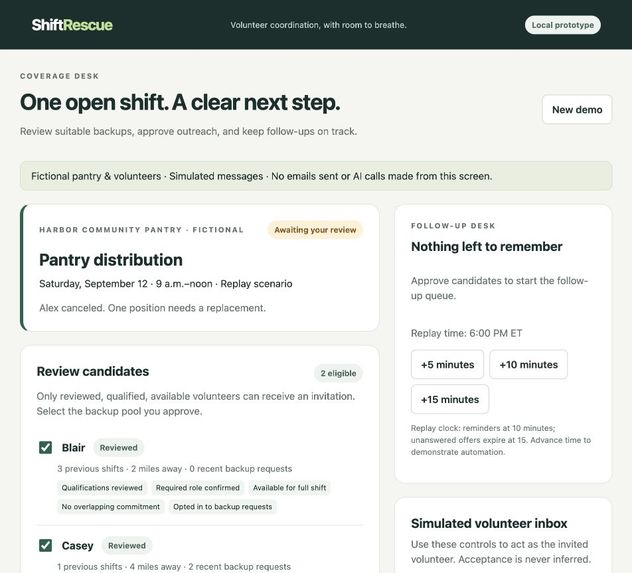
Coordinators review eligible backups and approve outreach.
-
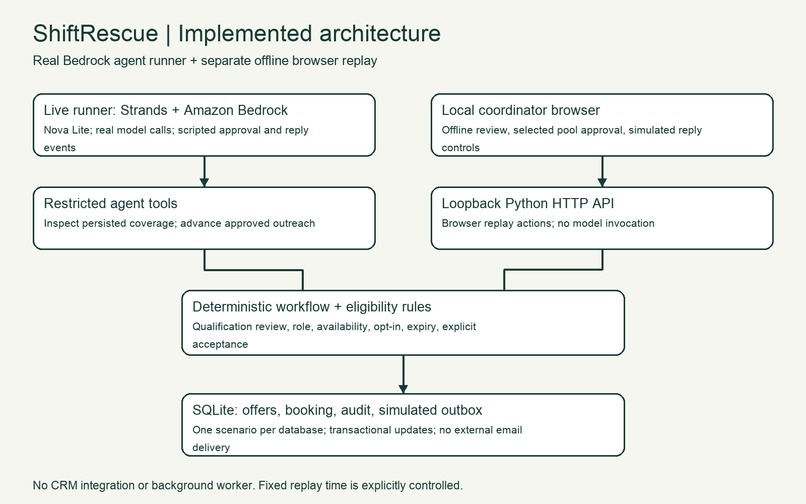
Strands and Amazon Bedrock coordinate the coverage workflow, while Python enforces eligibility and SQLite records outcomes.
Inspiration
I wanted to understand the coordination challenges volunteer organizations face, so I reached out to several food pantries. One coordinator described sending emails to fill open shifts but struggling with coverage during the summer and outside working hours. Another explained that follow-ups were sometimes forgotten and that organizing recurring volunteers around their scheduling requirements was difficult. These conversations inspired me to build ShiftRescue.
What it does
ShiftRescue helps volunteer coordinators review suitable backups and approve who can be contacted. The local prototype demonstrates invitations, follow-up reminders, declines, offer expiration, and confirmed replacement bookings.
Candidates must meet qualification-review, role, availability, and backup opt-in requirements. A volunteer must explicitly accept an offer before the position is filled. If no approved candidates remain, the workflow flags the gap for the coordinator.
The demo uses fictional volunteers and simulated messages and replies.
How we built it
I built ShiftRescue using Python, SQLite, and a lightweight browser interface. SQLite stores offers, bookings, and an activity trail.
I also implemented a separate Strands Agents SDK integration with Amazon Bedrock and Amazon Nova Lite. The agent uses tools to inspect coverage and advance approved outreach, while application code enforces eligibility and booking rules.
A successful live Bedrock run created an initial offer, advanced to another candidate after a scripted decline, and verified the booking after a scripted acceptance. The browser interface currently demonstrates the workflow separately, without model calls.
Challenges we ran into
The interviews revealed different priorities across organizations: last-minute coverage, volunteer retention, location matching, and qualification review. I had to keep the prototype focused on one manageable workflow while incorporating relevant safeguards.
Another challenge was ensuring that expired offers, duplicate acceptances, and repeated follow-ups would not create conflicting bookings or unnecessary outreach.
Accomplishments that we're proud of
I turned feedback from volunteer coordinators into a working prototype designed to supplement their existing tools. ShiftRescue includes candidate review, coordinator approval, follow-up tracking, and a persistent activity trail.
I also verified a real Strands and Bedrock workflow and passed 15 automated tests. These are initial technical milestones; the project has not yet been piloted with an organization.
What we learned
Scheduling software does not eliminate the manual work of finding coverage and following up. An agent could help coordinate those steps, but it must distinguish between someone being interested, qualified, available, and actually accepting a shift.
The conversations also taught me to understand each organization’s existing workflow before deciding what to automate.
What's next for ShiftRescue
The next priorities are connecting the live agent to the browser interface, adding background scheduling and authenticated replies, and exploring authorized integrations with volunteer platforms such as Better Impact.
I would then test the workflow with a willing organization and measure coordination time and coverage outcomes before confidently claiming real-world improvements.
Built With
- amazon-bedrock
- amazon-nova-lite
- javascript
- strands-agents-sdk


Log in or sign up for Devpost to join the conversation.