-
-
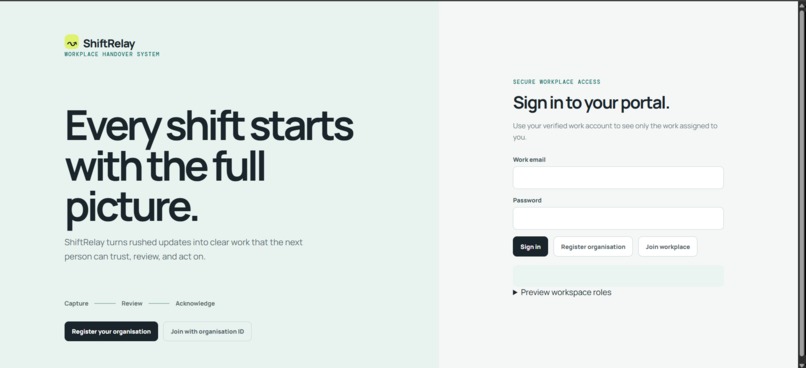
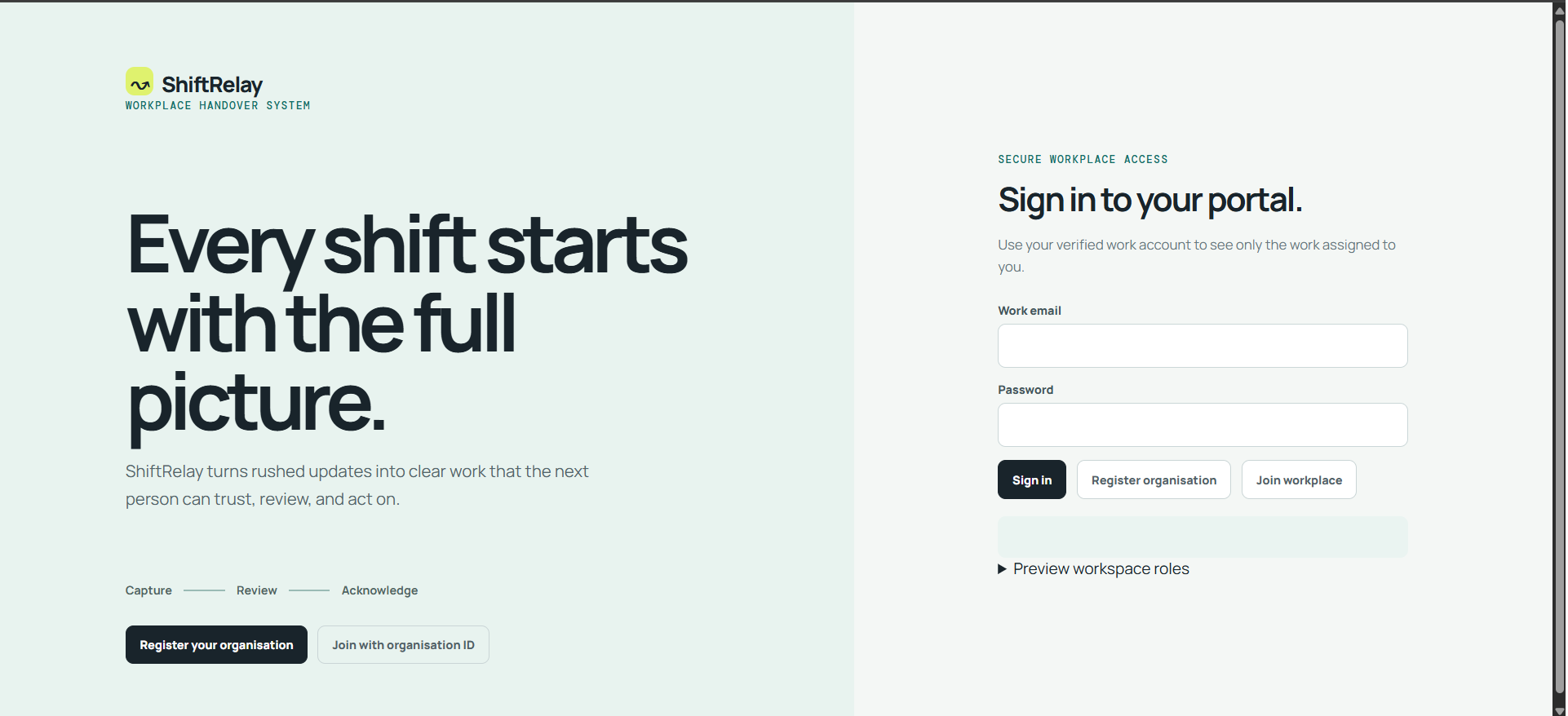
Landing page — ShiftRelay slogan and organisation access options.
-
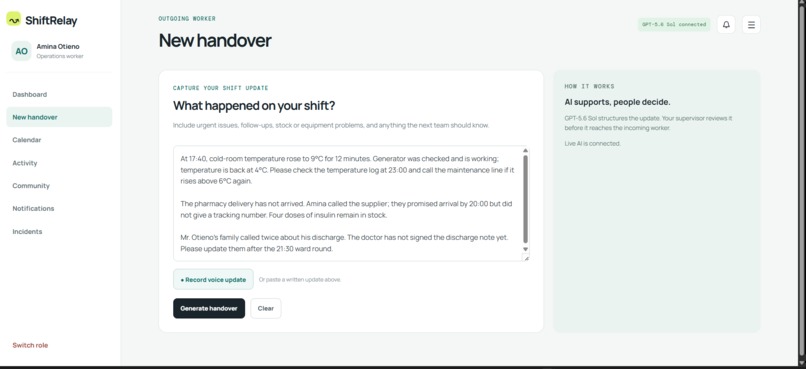
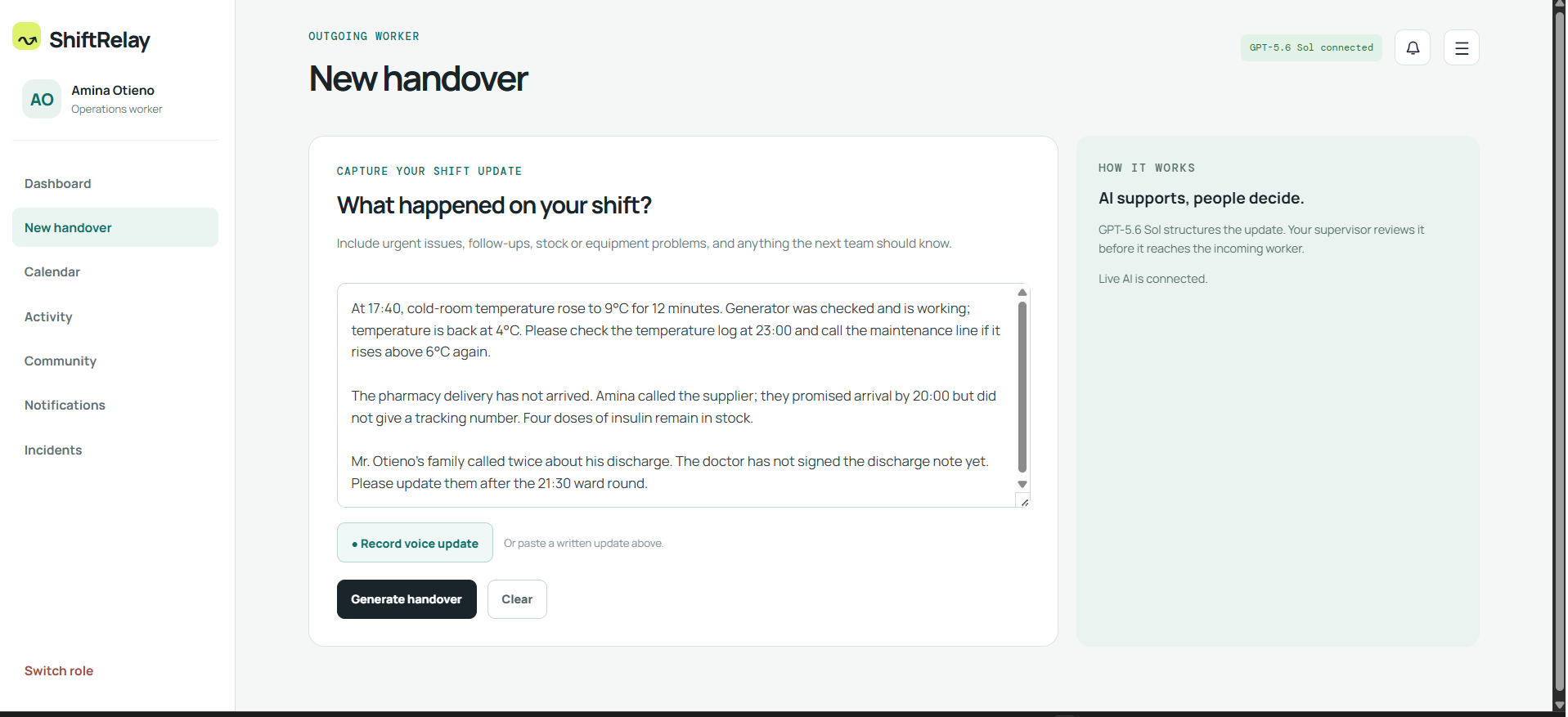
New handover — worker entering a shift update.
-
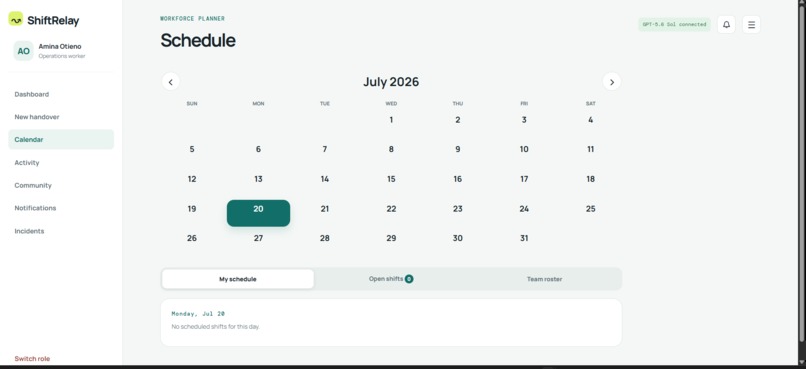
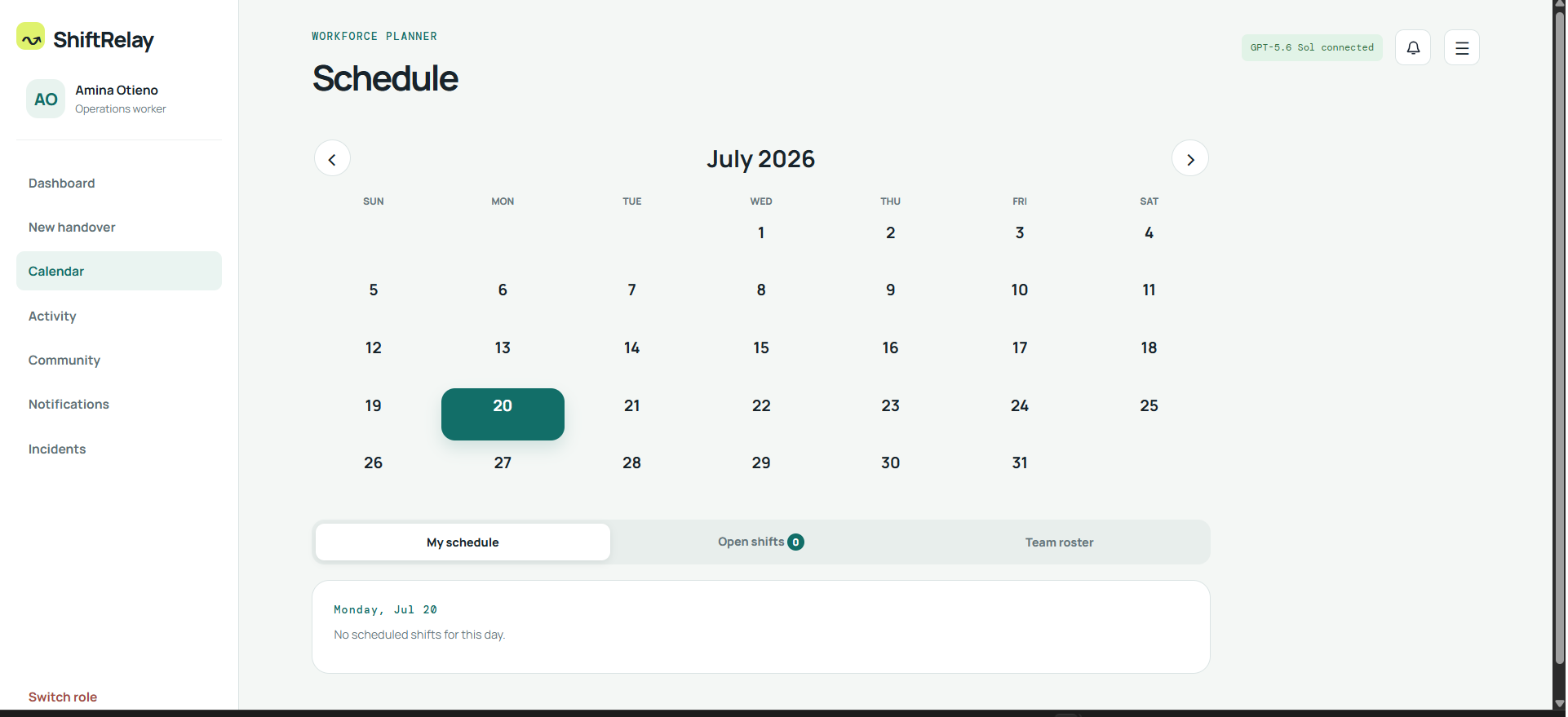
Schedule/calendar — monthly view, open shifts, and roster.
-
-
-
-
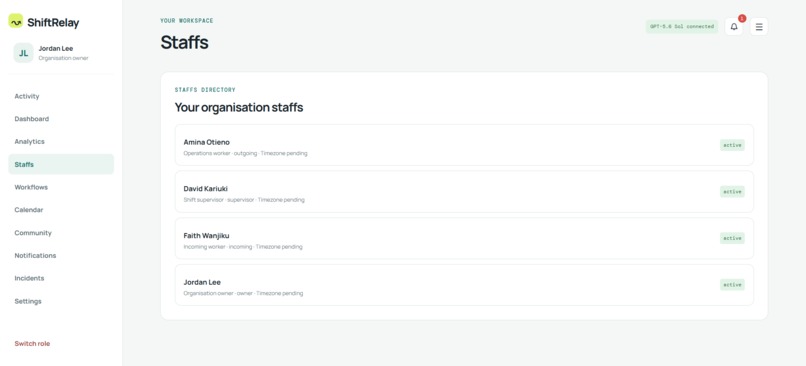
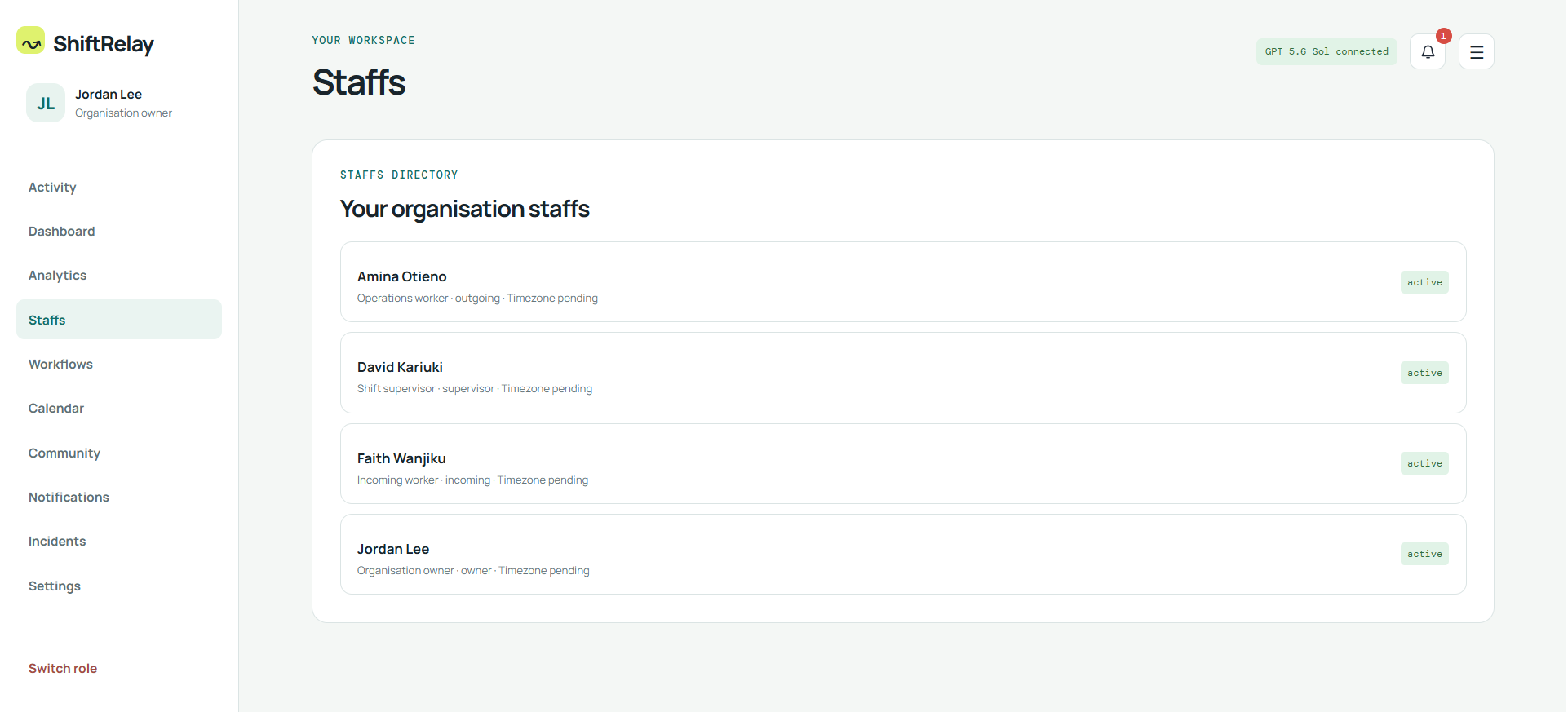
Staffs on HR dashbord
-
-
-
Inspiration
Shift changes are often managed through paper notes, rushed conversations, phone calls, and scattered chat messages. That makes it easy for important information to be missed when one worker leaves and another takes over. ShiftRelay was inspired by the need for a calmer, more accountable way for frontline teams to work across shifts. We wanted to build one simple workspace where workers can pass on the full picture, supervisors can review key updates, and incoming staff can begin their shift knowing exactly what needs attention.
ShiftRelay prevents critical operational context from disappearing when one frontline shift ends and another begins. Workers can paste or record their update; ShiftRelay turns it into a concise, evidence-grounded handover with prioritized actions, owners, deadlines, and missing-context prompts.
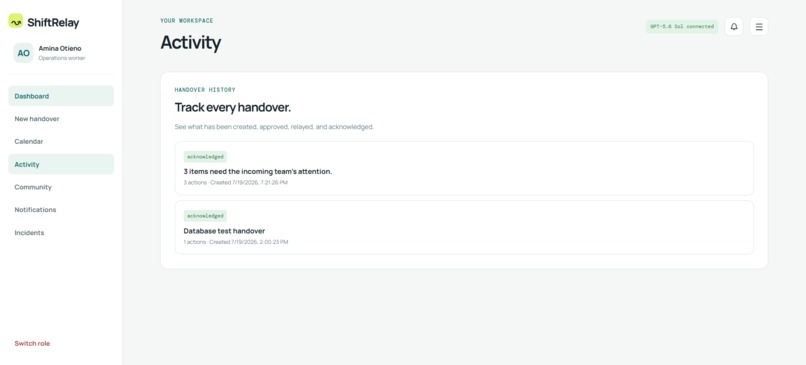
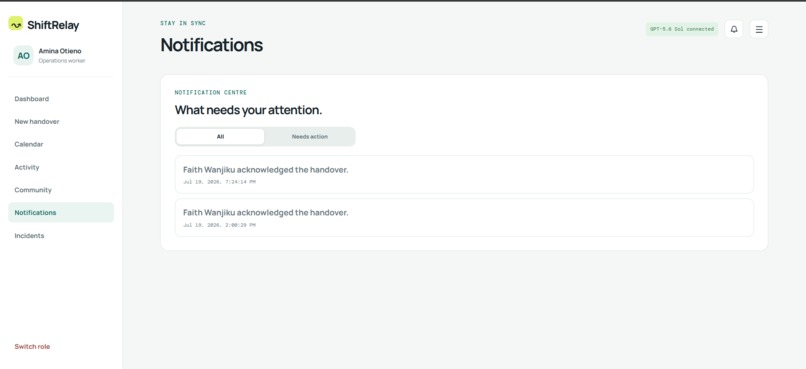
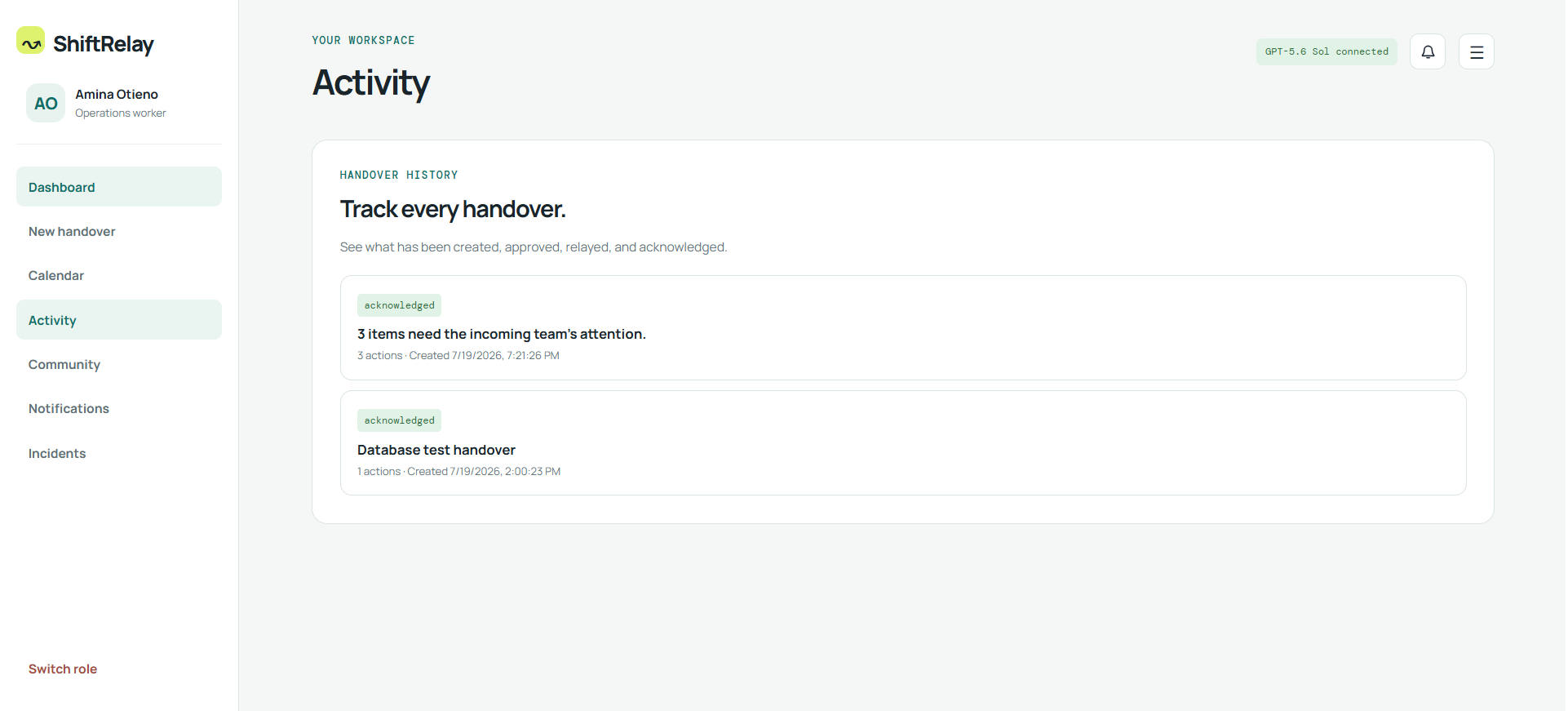
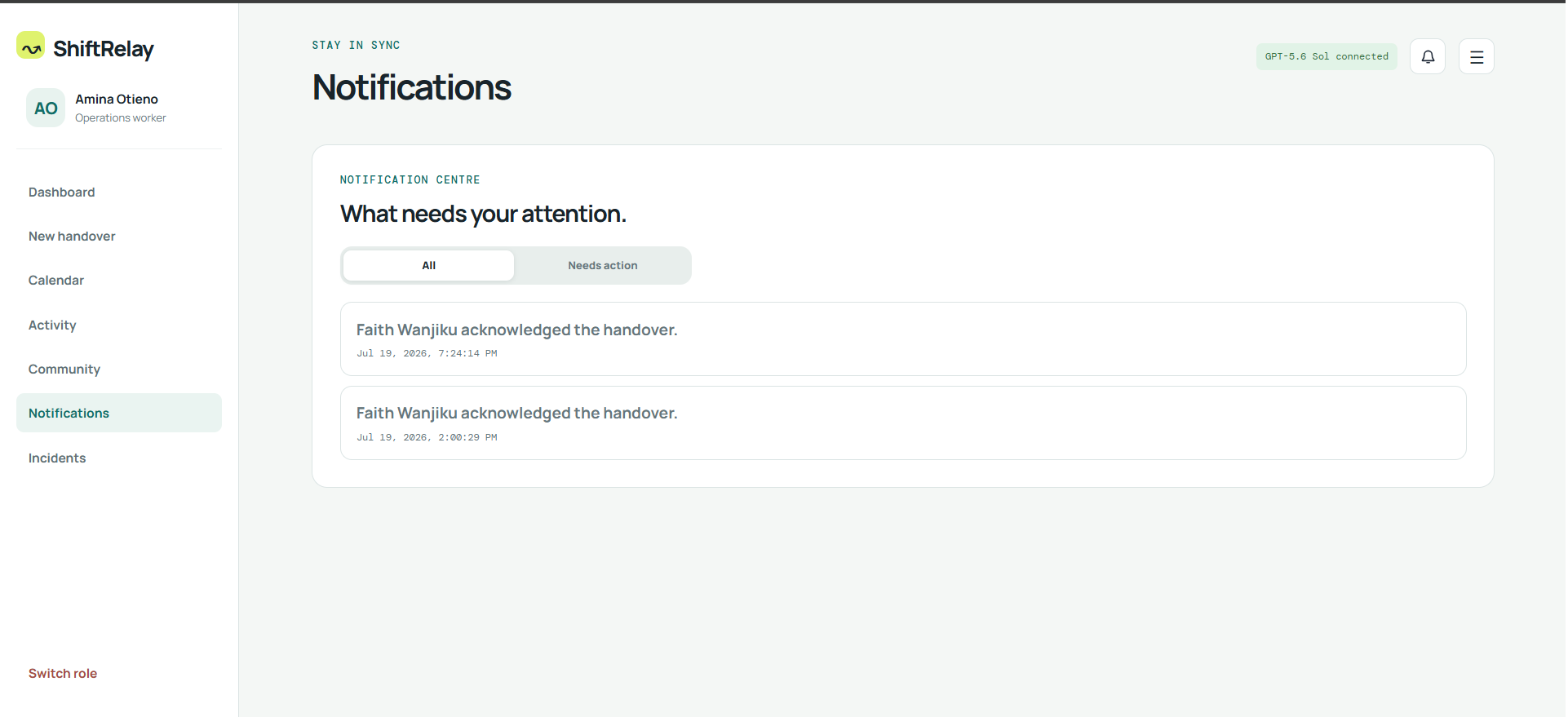
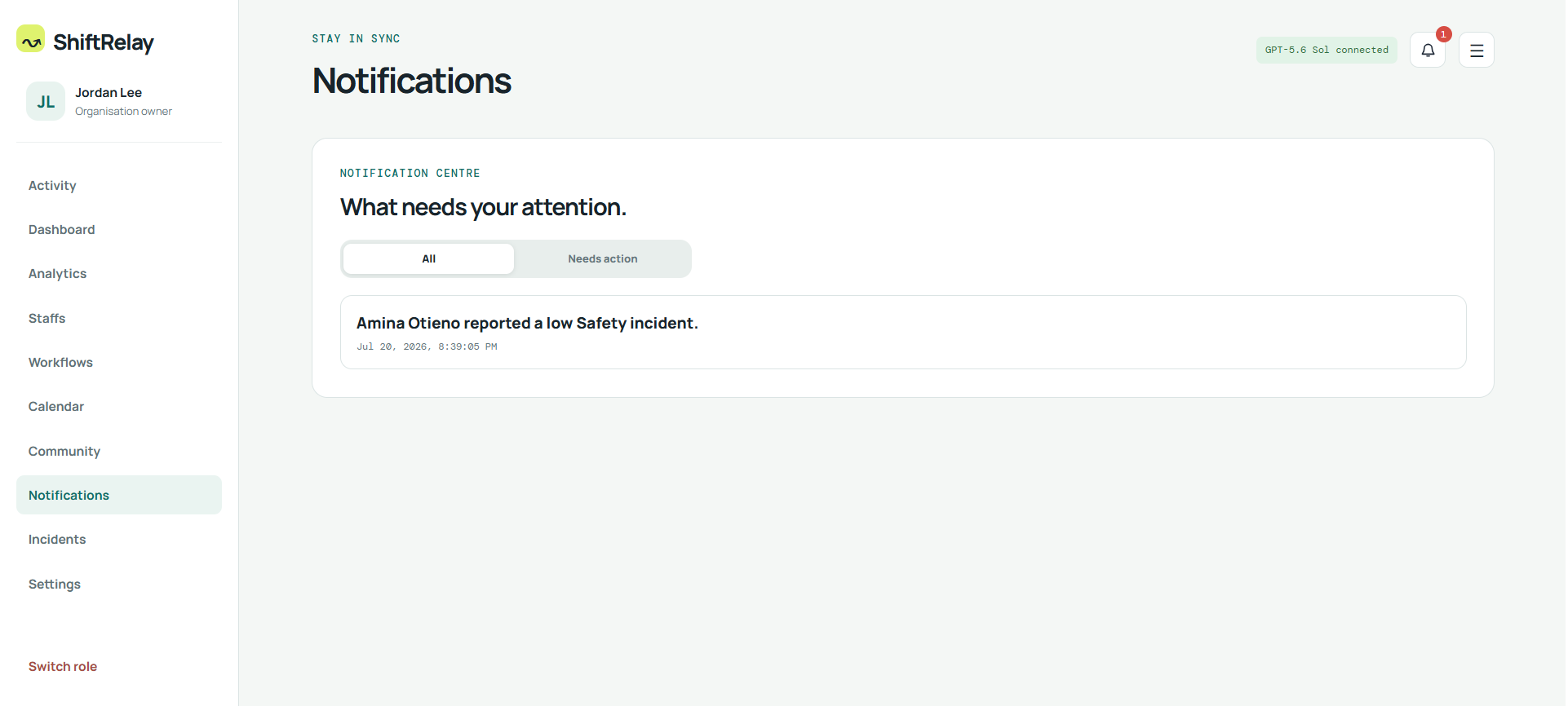
The outgoing worker saves the handover for review, the supervisor relays it, and the incoming worker acknowledges it. Each step creates a visible audit trail and in-app notification so teams can see that critical context was received.
Problem and impact
Shift handovers are often rushed, verbal, and undocumented. That leaves incoming teams reconstructing what happened, which items are urgent, and who owns the next action. In clinical, retail, logistics, security, and field-service settings, this can create safety risks, missed customer commitments, and duplicated work.
ShiftRelay gives an incoming worker one accountable brief instead of a scattered collection of messages and memory. The MVP uses a clinical scenario, but the workflow is intentionally industry-neutral.
How GPT-5.6 Sol Is Used
GPT-5.6 Sol performs the product's core reasoning task: it transforms unstructured shift updates into a structured handover while preserving evidence, surfacing uncertainty, and refusing to invent missing facts. The model output is constrained to an explicit JSON contract containing a summary, actions, priorities, owners, deadlines, evidence, and missing-context questions.
Voice updates use the server-side Transcriptions API before the transcript is sent to the Sol analysis endpoint. API keys never reach the browser.
How Codex Accelerated The Work
Codex accelerated the end-to-end implementation: product scoping, responsive UI construction, the server-side structured-output contract, persistence and workflow state transitions, voice-capture integration, validation, and the project documentation. Key design decisions were to keep AI evidence-grounded, make human review mandatory before relay, and provide a credential-free demo mode for evaluators.
Building one shift workflow for workers, supervisors, workforce managers, and owners was challenging because each person needs different permissions and actions. We also had to make the app feel fast on mobile, so we reduced full-page reloads and made live shift information refresh in the background.
Accomplishments That We Are Proud Of
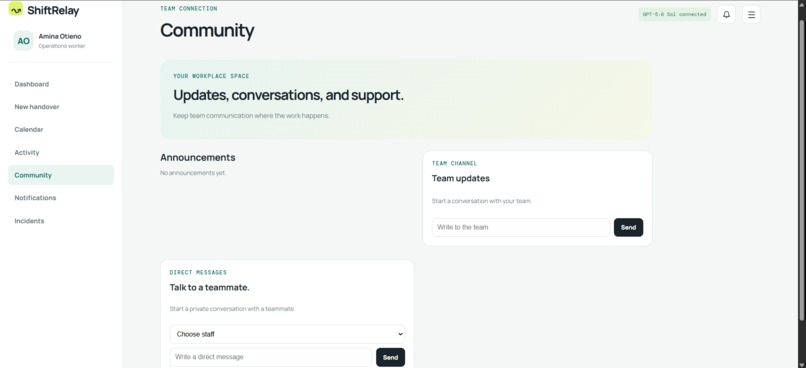
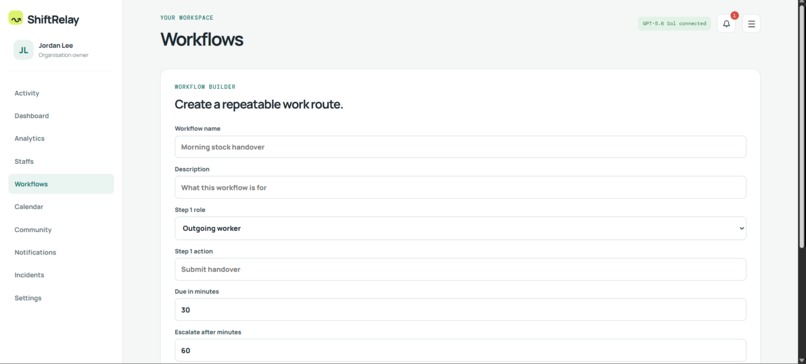
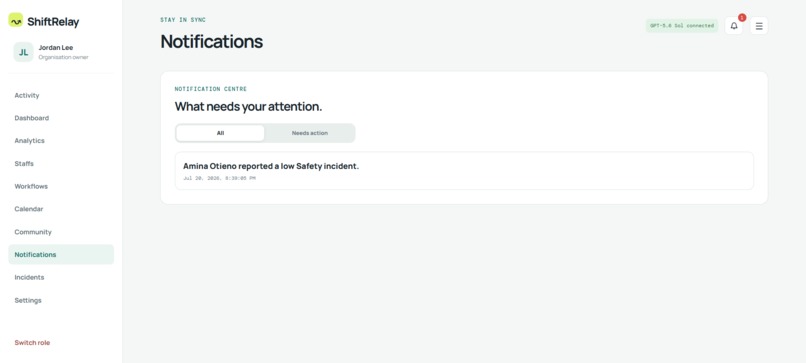
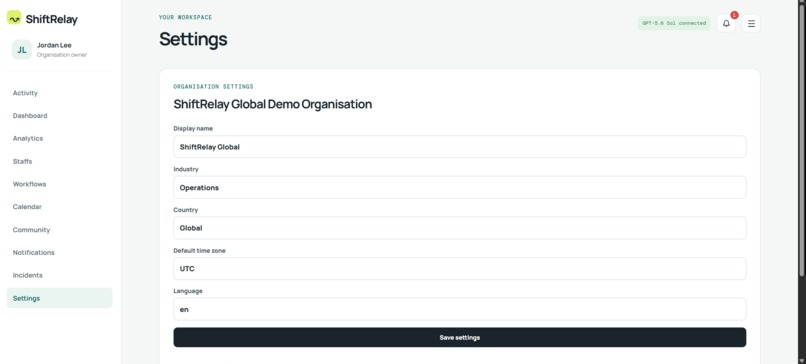
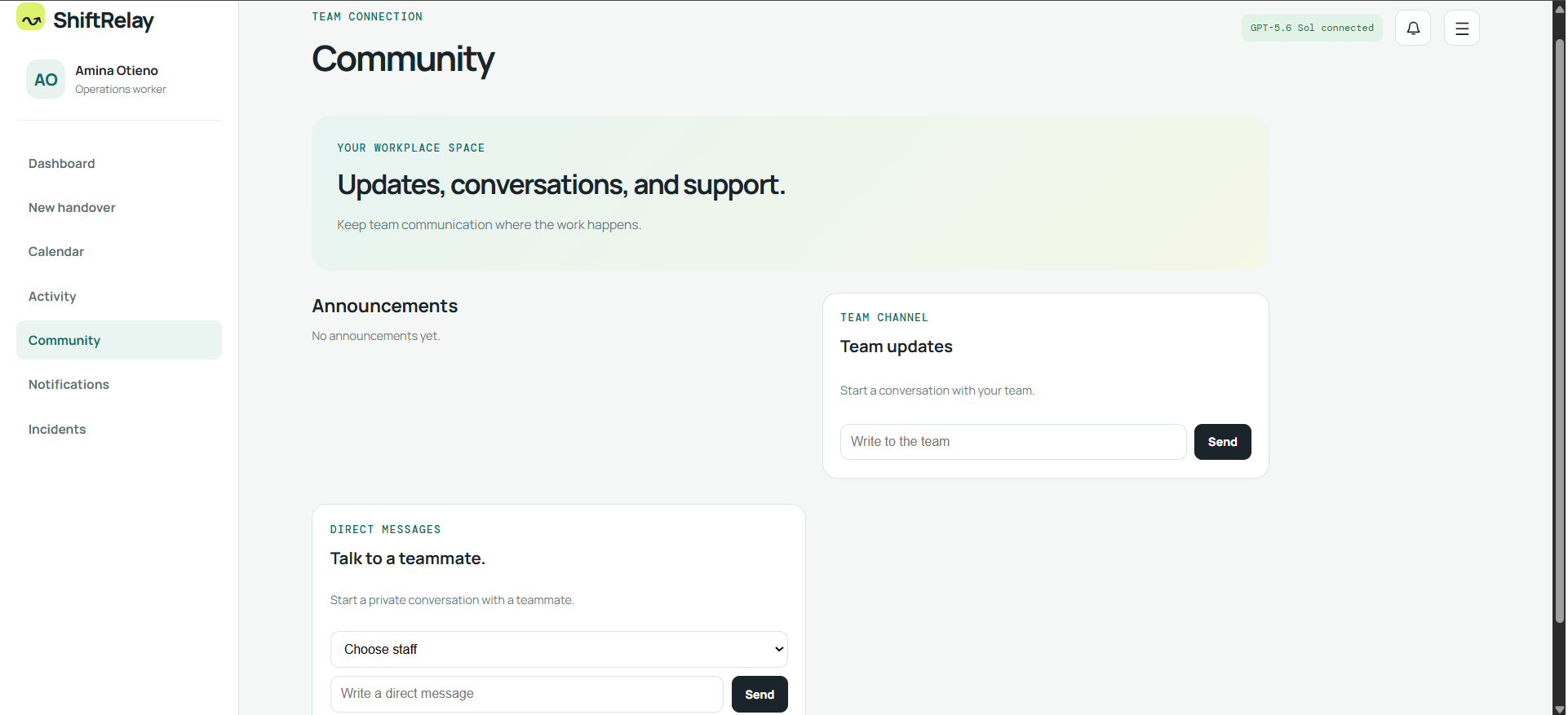
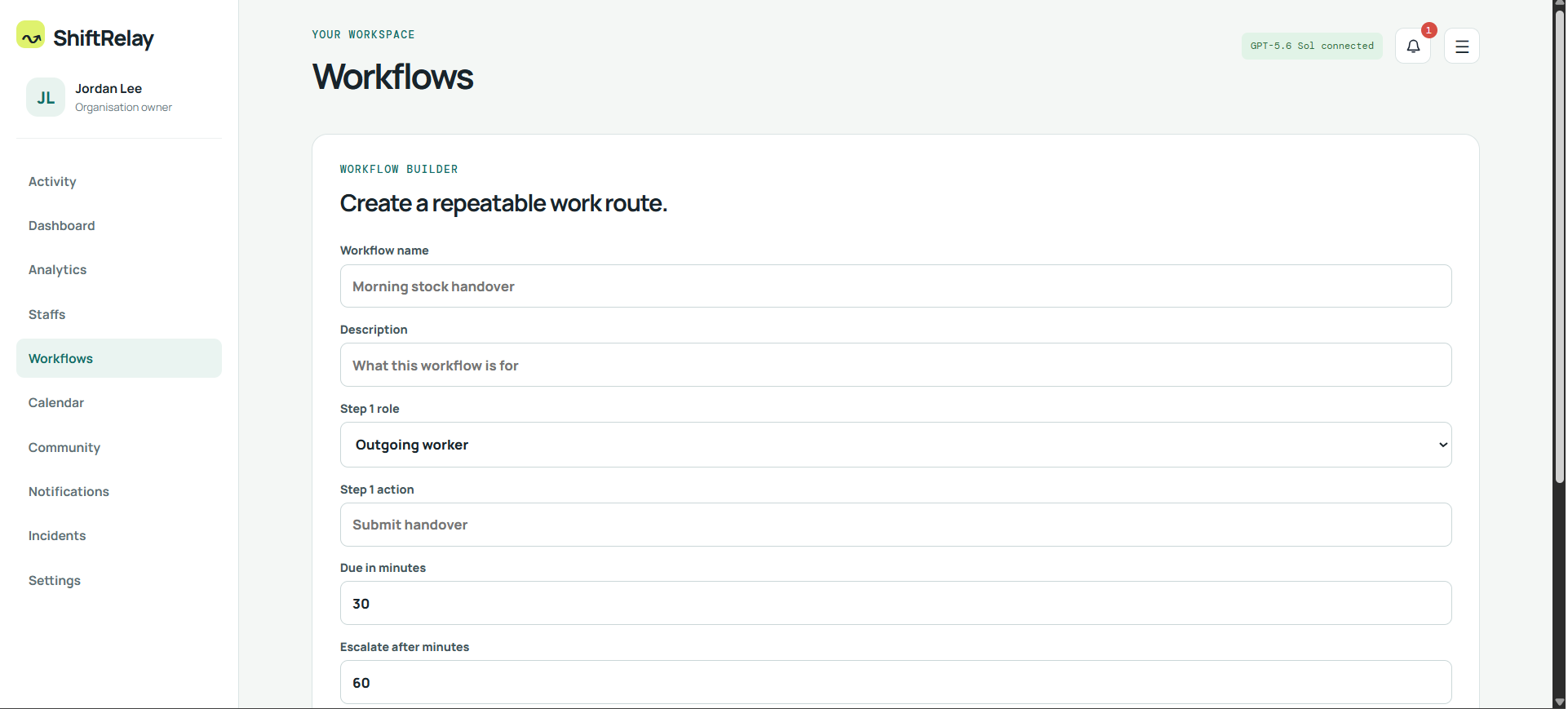
We built a working end-to-end handover flow: workers submit updates, supervisors review them, and incoming workers acknowledge tasks through a checklist. We also added organization onboarding, role approval, schedules, clock in/out, notifications, workforce tools, profile photos, team communication, and AI-assisted handover support.
What We Learned
We learned that frontline teams need clarity more than complexity. Small details such as immediate button feedback, readable shift information, and role-based screens make a big difference when people are busy at work. We also learned that AI works best when it supports human review instead of replacing it.
What's Next For ShiftRelay
Next, we will add push notifications, production email verification, configurable industry checklists, richer workforce reporting, HRIS/CSV schedule imports, and native Android and iOS releases. We also plan to add stronger organization controls for multi-location teams and global workforce operations.
Reviewer Setup
- Use Node.js 18 or newer.
- Copy
.env.exampleto.envand configure API values for live analysis, or omit the file to use the built-in demo handover. - Run
npm startand openhttp://localhost:3000.
Built With
- api
- app
- codex
- css3
- gpt-5.6
- html5
- javascript
- node.js
- openai
- postgresql
- render
- sol
- terminal
- web


Log in or sign up for Devpost to join the conversation.