-
-
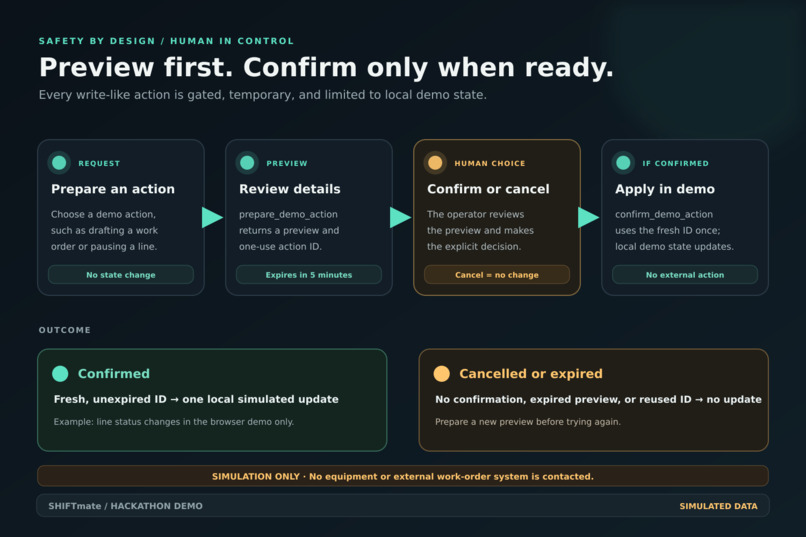
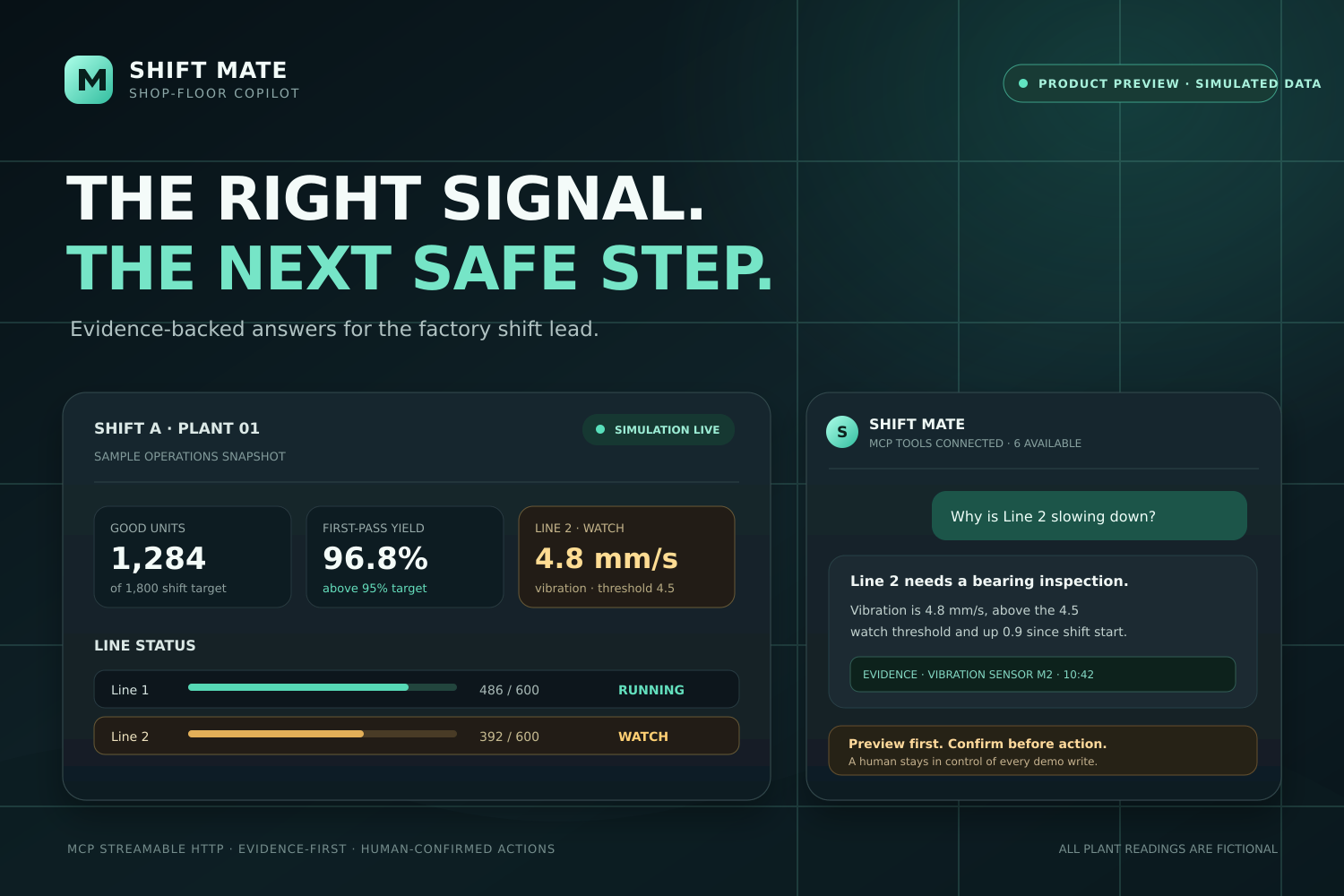
Shiftmate interface preview: evidence-led line health and action priorities using simulated plant data.
-
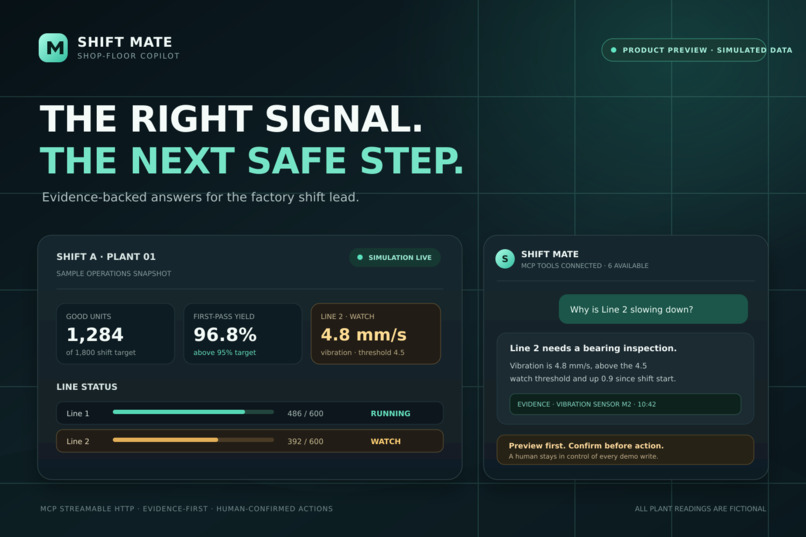
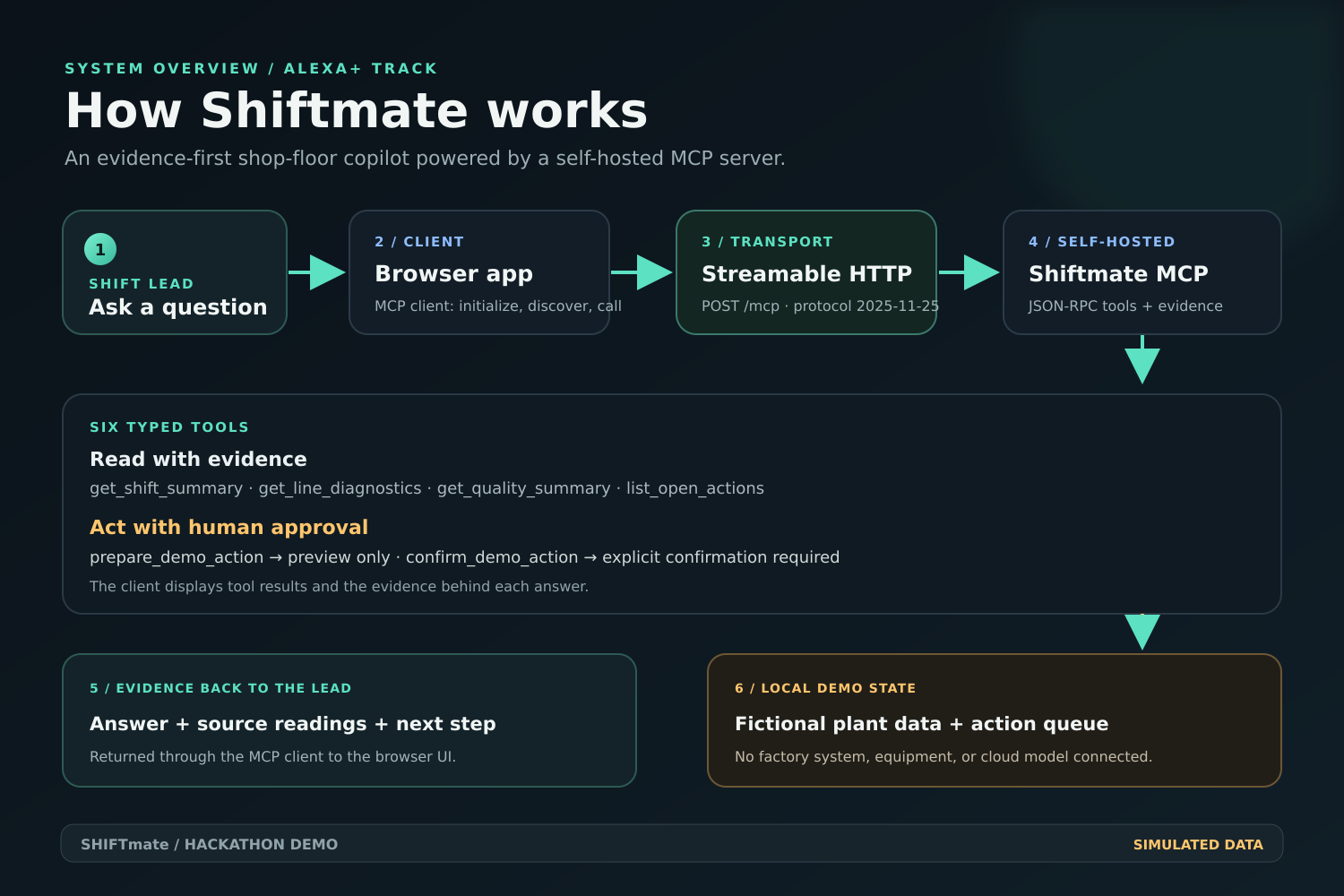
How Shiftmate connects its browser client to six MCP tools over Streamable HTTP using simulated plant data.
-
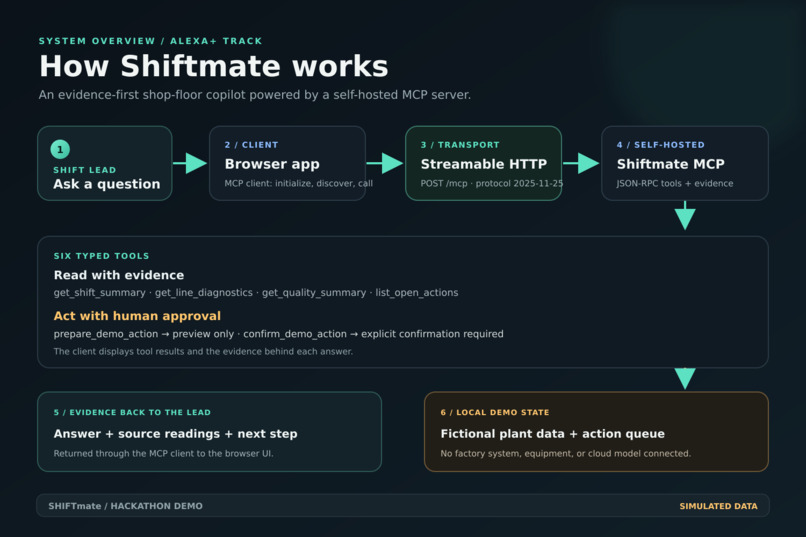
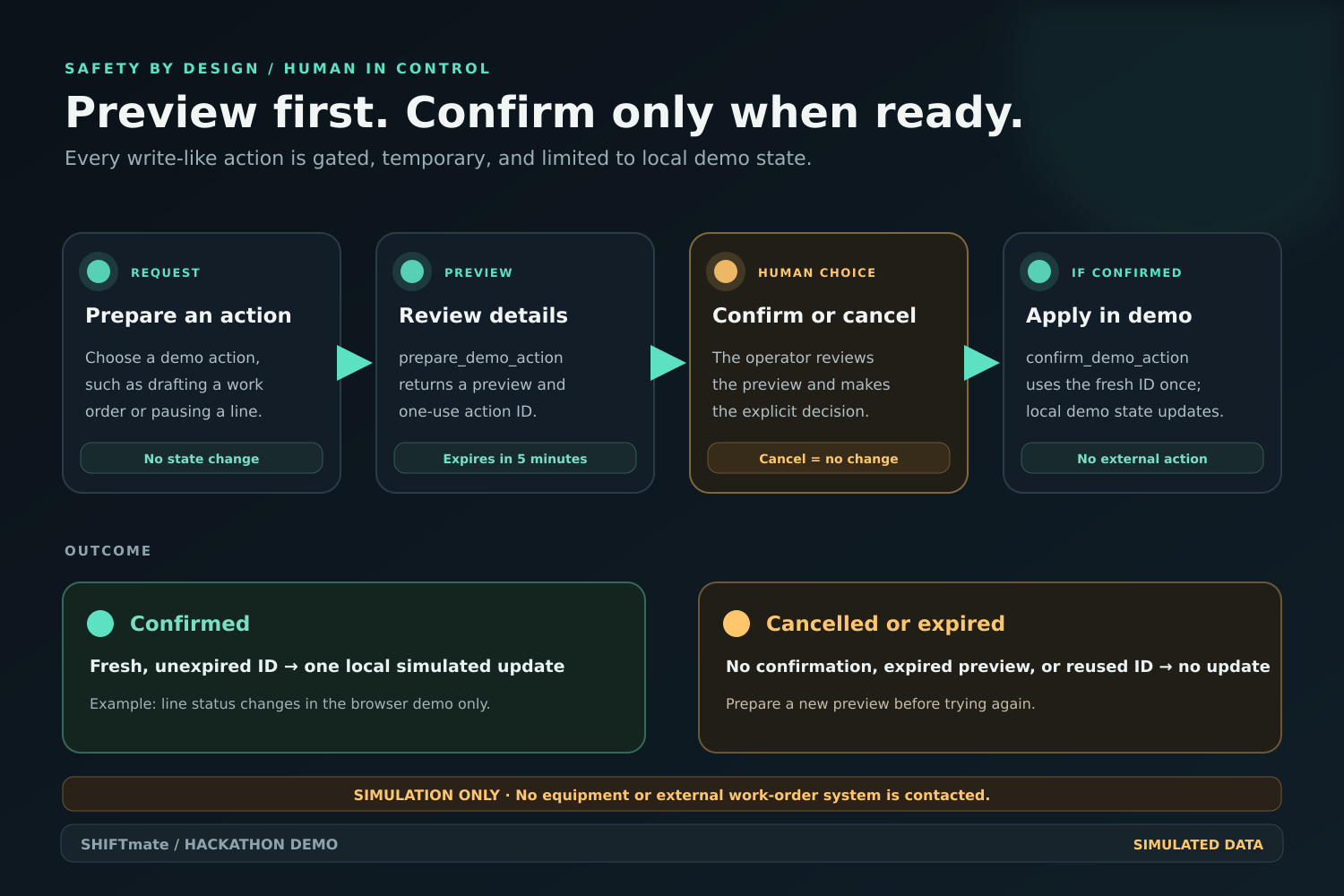
Human-confirmed demo actions: preview first, then confirm. Changes stay in local simulated state; no equipment is controlled.
Inspiration
As a mechanical engineering student, I’m interested in how shop-floor teams can get useful production information quickly. Operators may need to check output, quality, or a machine signal while deciding what to do next. I wanted to explore whether they could ask those questions in everyday language and see the evidence behind each answer.
What it does
Shiftmate is a shop-floor assistant prototype. It answers questions about shift output, production-line status, quality, sensor readings, and open actions using sample plant data.
The dashboard includes advanced controls to filter production lines, adjust the vibration alert threshold, and change or pause automatic refresh. It also supports voice input in compatible browsers. For demo actions such as creating a maintenance ticket or changing a simulated line state, Shiftmate shows a preview and waits for the user to confirm.
All plant data and actions are simulated. Shiftmate does not control real equipment and is not a production Alexa+ integration.
How we built it
The project has a browser dashboard built with HTML, CSS, and JavaScript, and a self-hosted Node.js server that exposes tools through the Model Context Protocol (MCP) over Streamable HTTP.
The browser connects to the MCP endpoint, discovers the available tools, and displays responses with their supporting evidence. The server separates read-only queries from actions that need confirmation. We also added tests for protocol behavior and confirmation-gated demo actions.
Challenges we ran into
One challenge was making natural-language questions map to a small, predictable set of tools. Another was ensuring that action requests could not silently change even the simulated state. We addressed this by separating previews from confirmation and showing clearly when an action affects demo data only.
We also had to keep the dashboard useful on different screen sizes while making the controls understandable and the demo data transparent.
Accomplishments that we’re proud of
We’re proud that Shiftmate demonstrates an end-to-end MCP workflow: the browser connects to the server, discovers tools, requests evidence, and presents a confirmation step before simulated actions. The dashboard also brings line status, shift metrics, and operator controls together in one place.
What we learned
We learned how an MCP client and Streamable HTTP server work together, how to design tool calls around clear inputs and outputs, and why evidence and human confirmation matter in operational interfaces. We also learned to make the limits of simulated data visible instead of presenting a prototype as a real industrial deployment.
What’s next for Shiftmate
Next, we would explore connecting Shiftmate to approved, read-only plant data sources; add role-based access and an auditable action history; and test the workflows with operators. Any future equipment-related action would need appropriate authorization, safeguards, and human approval.
Built With
- api
- context
- css
- html
- http
- javascript
- json-rpc
- mcp
- model
- node.js
- protocol
- recognition
- speech
- streamable
- web


Log in or sign up for Devpost to join the conversation.