-
-
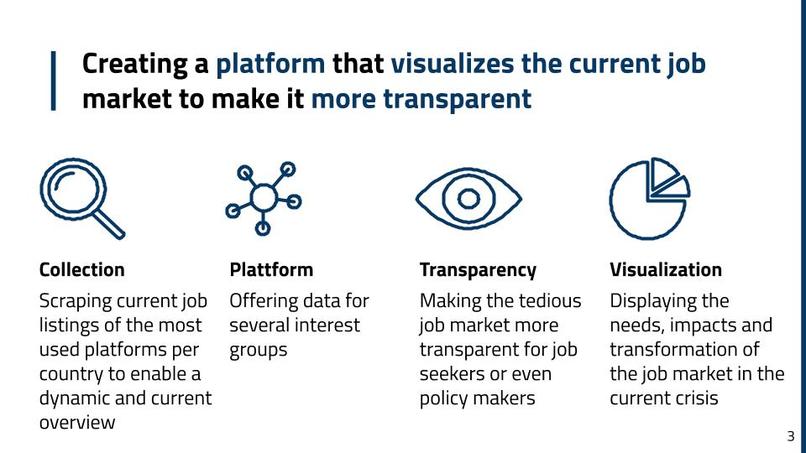
Pitchdraft
-
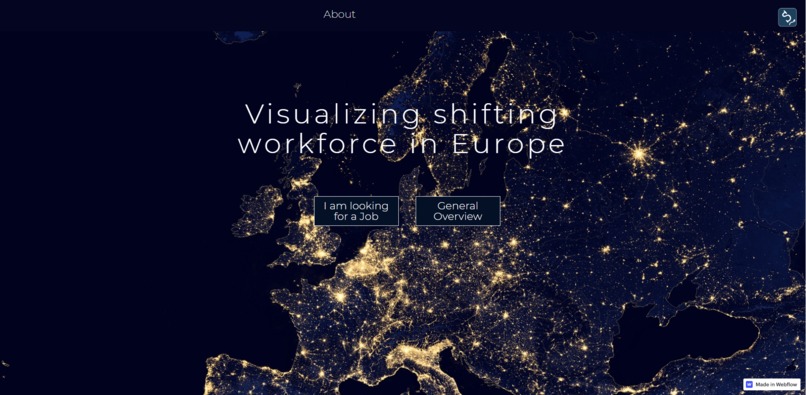
Website Shifting Workforce
-
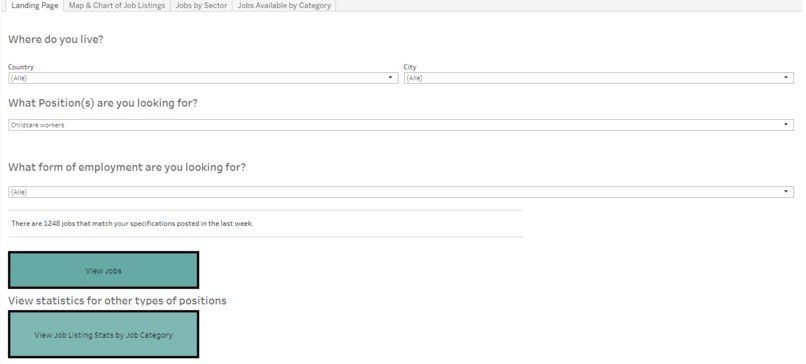
Overview Data Visualization 1
-
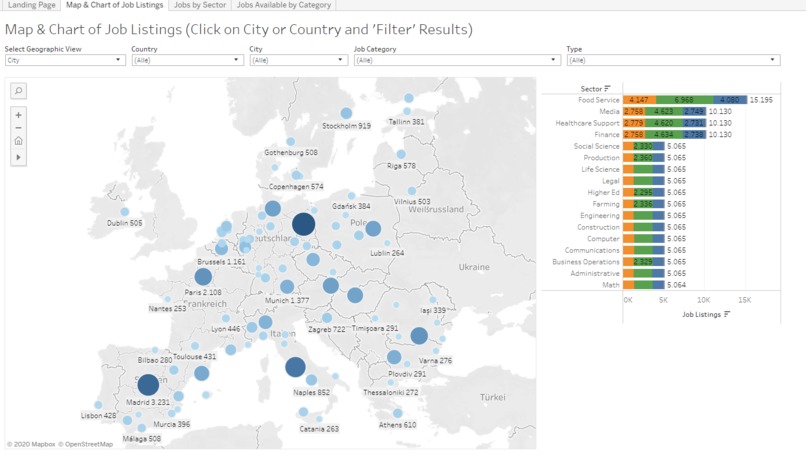
Overview Data Visualization 2
-
Overview Data Visualization 3
The problem your project solves
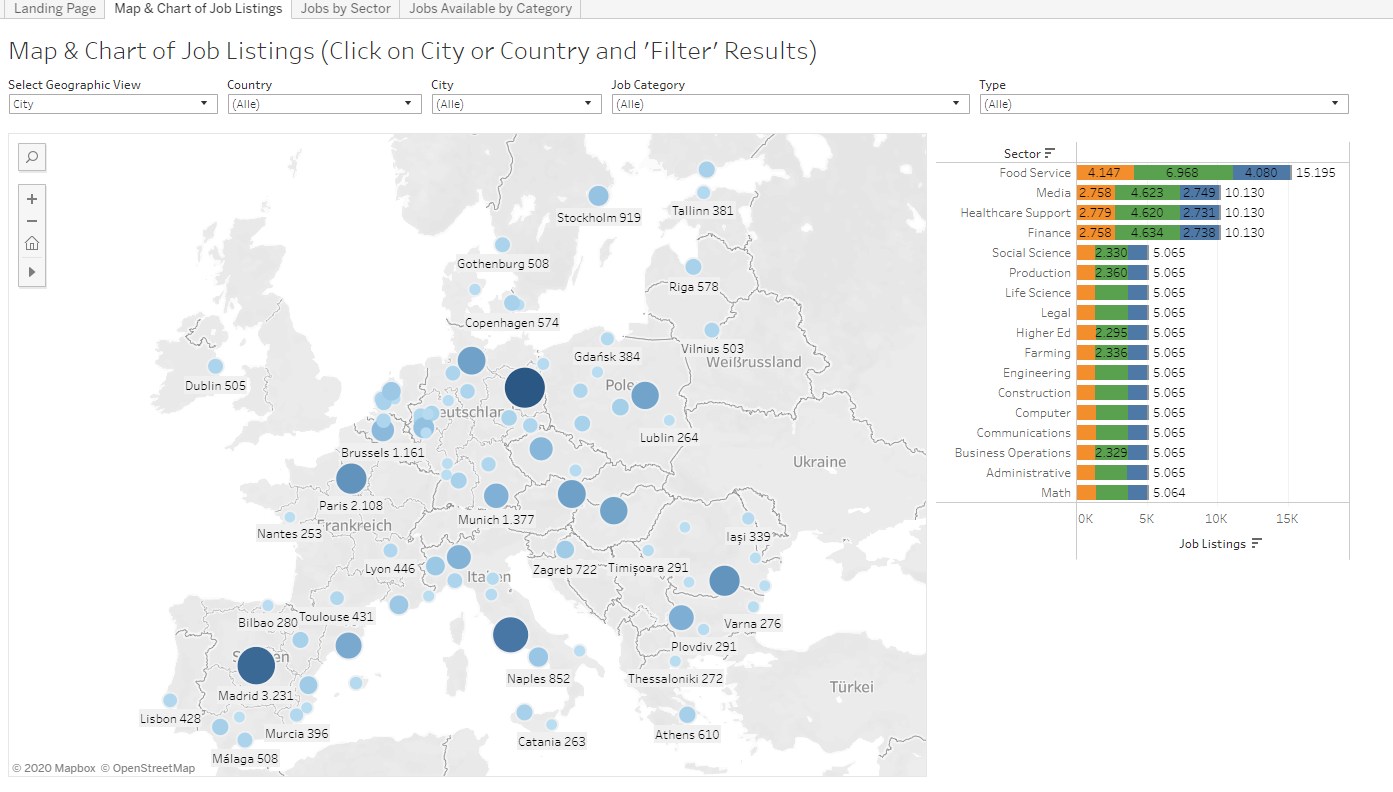
People are losing their jobs due to economic collapse in some sectors. At the same time other sectors are expanding and looking for people to strengthen their workforce. This could be highly sector-, location- and skill-specific at the moment and is very opaque both for people looking for jobs and policymakers. A quick survey revealed that indeed people are losing their jobs and some industries are more affected by the collapse than others are.
The solution you bring to the table
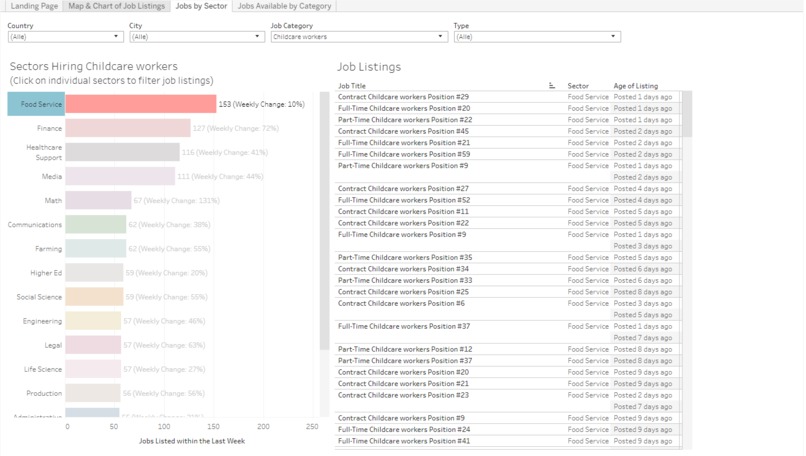
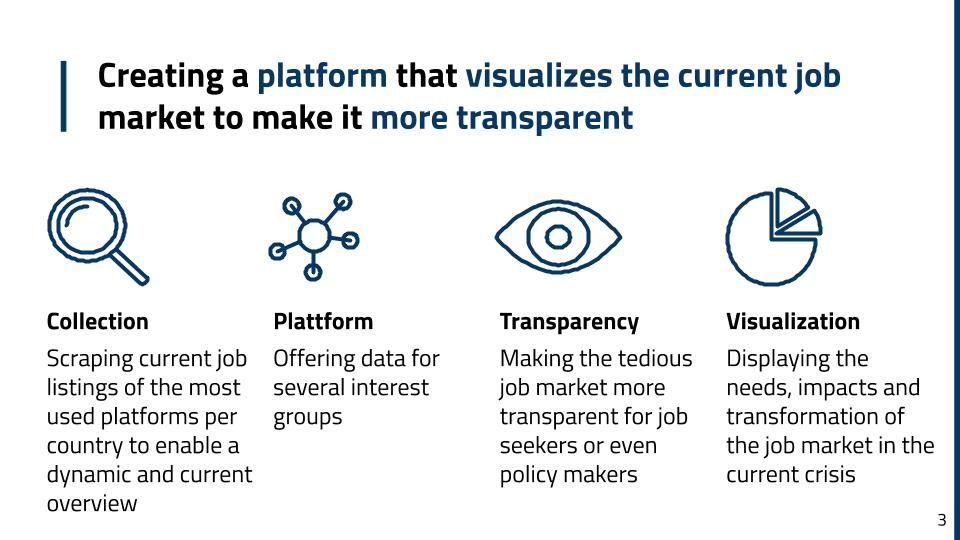
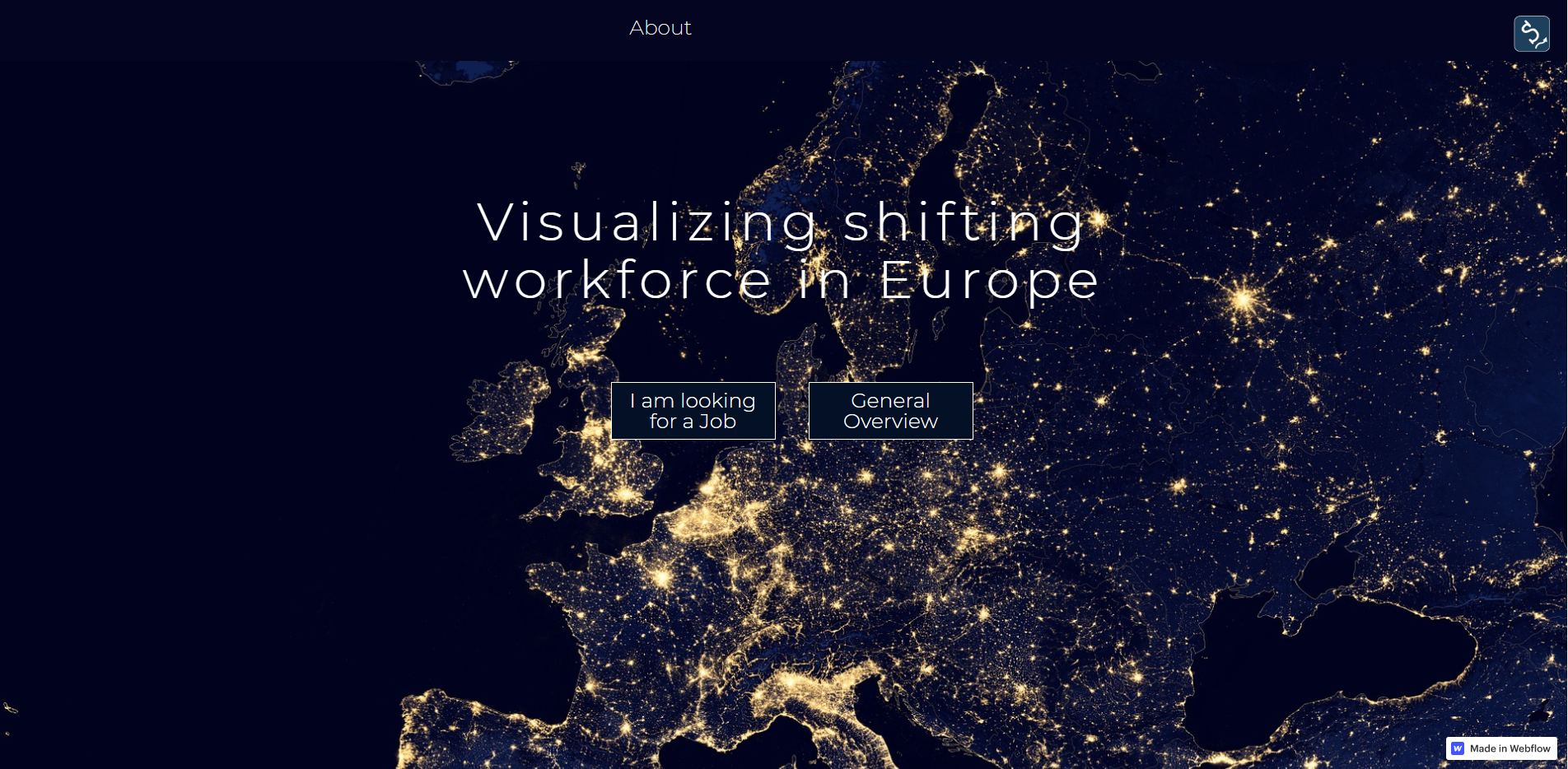
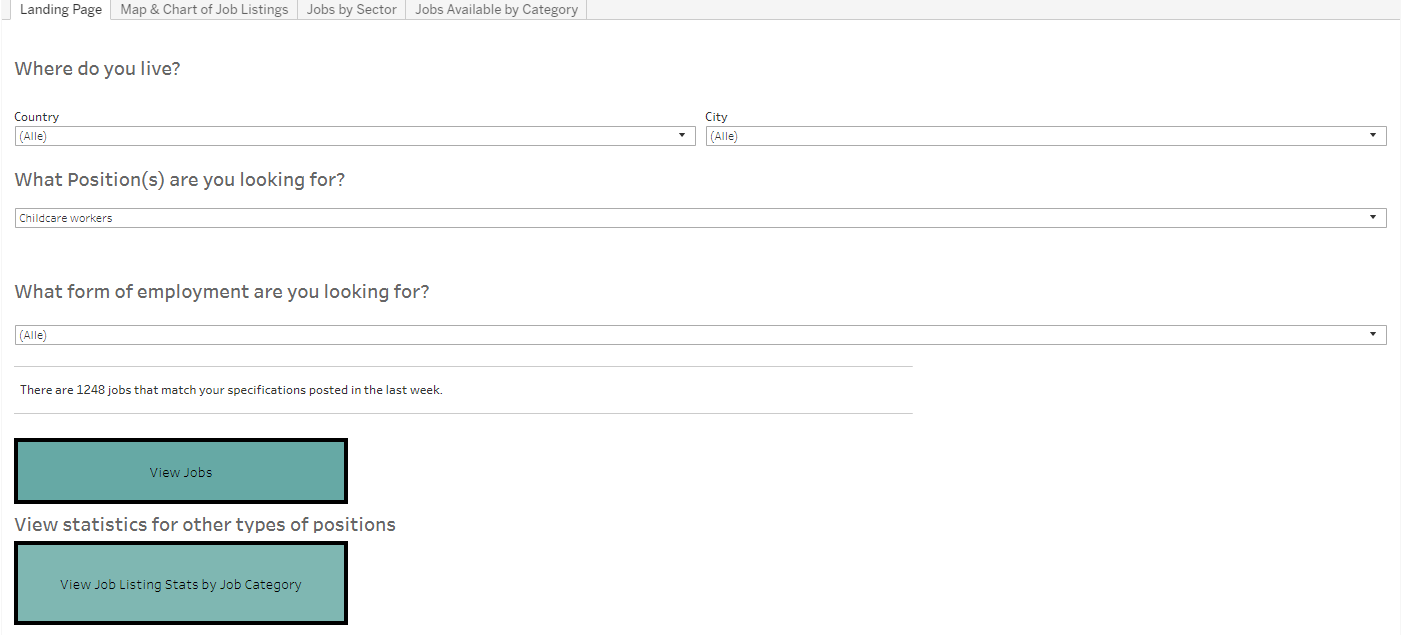
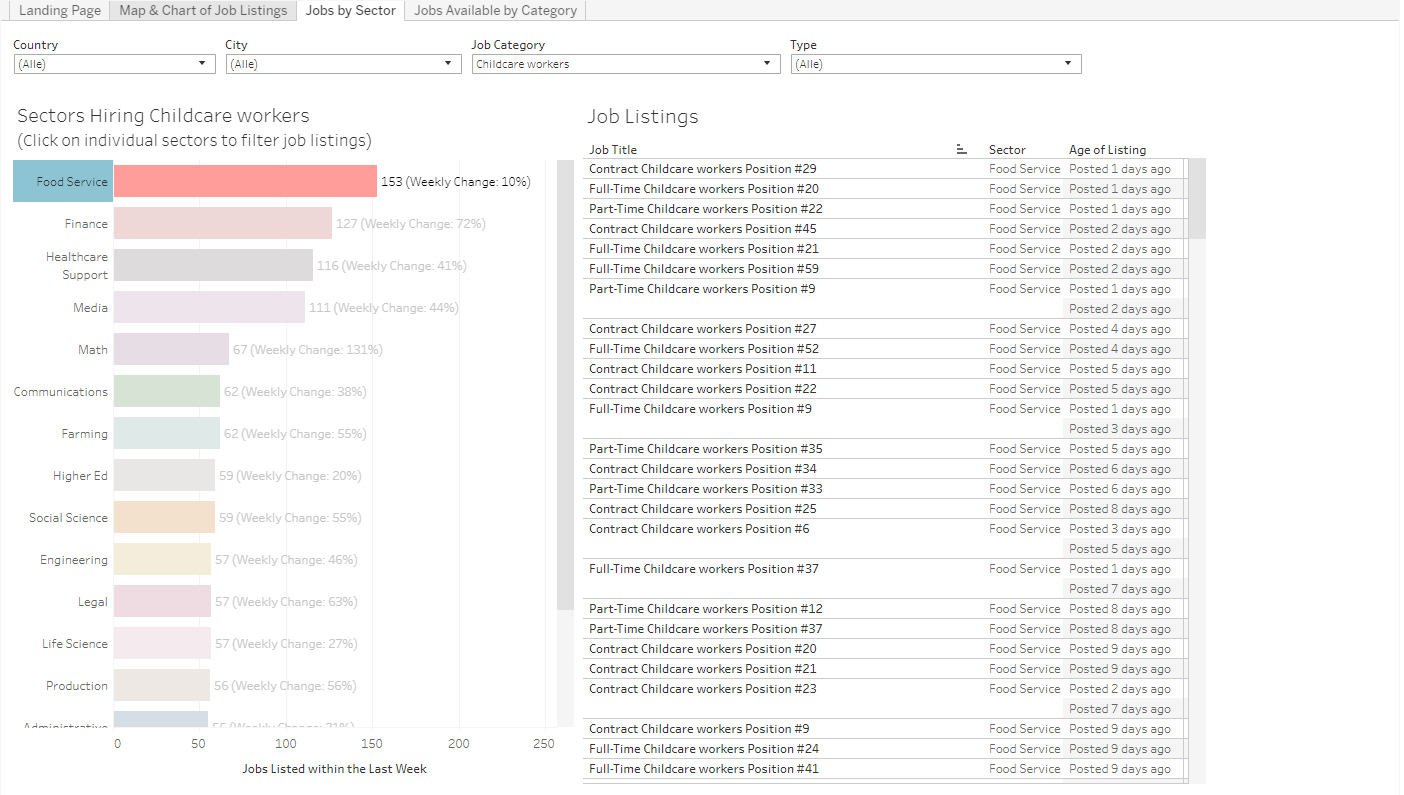
We want to visualize open job listings currently available in different European countries. This helps to show shifts in the job market to draw a bigger picture of the economic impact of COVID-19. This solution also offers filtering options to help individuals find work near them in new sectors that utilize their skillset. We will focus on visualizing the job market, but our end goal would be to add an interface to the individual job listing.
What you have done during the weekend
We updated the concept of our idea and worked out a Dummy Data set that should be able to depict a real dataset from a job platform in its structure. Additionally, we created an overview of the most commonly used job platforms throughout the countries of the European Union. To test if we are biased in the perception of Industries that might suffer the way we imagine and the problem of the individual finding a job we started a short Survey. The result of this survey supported our claims. It also showed, that in case of unemployment the majority would like to use the information of a reliable website to find the most promising industry for their skill.
The solution’s impact to the crisis
Unemployment in Norway has risen from 2,3% at the start of March to 10,4% in April. Unemployment in Germany has not been going up that much but close to five times as many companies have applied for “Kurzarbeit” compared to the financial crisis in 2008. So unemployment will definitely rise too in the following months. Germany is less dependant on industries that are impacted the most like hospitality and tourism. Norway is an exception since the layoffs are mainly temporary. Other European countries are experiencing these effects too. That is why we guess that unemployment may, on average, rise by up to 100% which would result in up to 15.000.000 people unemployed in Europe due to the crisis. If our product manages to get only 0.1% of those people to find a new job one month earlier this would result in 15.000 people getting back a way to finance their life. Additionally,it would save countries with unemployment benefits to save multiple hundreds thousands of euros in unemployment benefits. If one percent of the estimated 1.500.000 additional unemployed people in germany got a job one month earlier through our solution this would result in at least 4.500.000 euros in unemployment benefits savings. link![Source A] link![Source B]
The necessities in order to continue the project
The most important next step is to set up a reliable, up-to-date, and representative database. For that, it would be most important to create partnerships with as many relevant job platforms as possible to get their data via API for a moderate price. The next step would be the creation of a database and software itself. We estimated at least 80 hours of a full stack developer for creating a first functional version. After that other functionalities could be added that are more important for policymakers and companies which would result in at least 80 more hours of a developer. For marketing, we would depend on the media and word of mouth since this is a non-profit project helping the people. The partnering job platforms should be willing to tell users about our product too, as we link their job listings on our platform.
The value of your solution(s) after the crisis
After the crisis the data could be used to monitor minor shifts in job offers for policymakers or even for companies. Policymakers could be alerted if sudden drops in job offers appear. It could also be of interest to people transitioning from education to a working life to see which industries are stable.Policymakers can also utilize the hiring trend data in their area to guide funding decisions for professional retraining efforts and scholarship opportunities to aid unemployed individuals’ transition into growing sectors that are looking for their skillset.


Log in or sign up for Devpost to join the conversation.