Inspiration
Small teams spend too much time reconstructing everyday answers: who is available, who actually worked, what changed, and what needs attention next. I wanted an assistant that brings the relevant records into view and helps the owner make a decision, without taking that decision away from them.
That became ShiftBrief: a team workspace with Sarah beside it, turning a question into a useful view of the business.
What it does
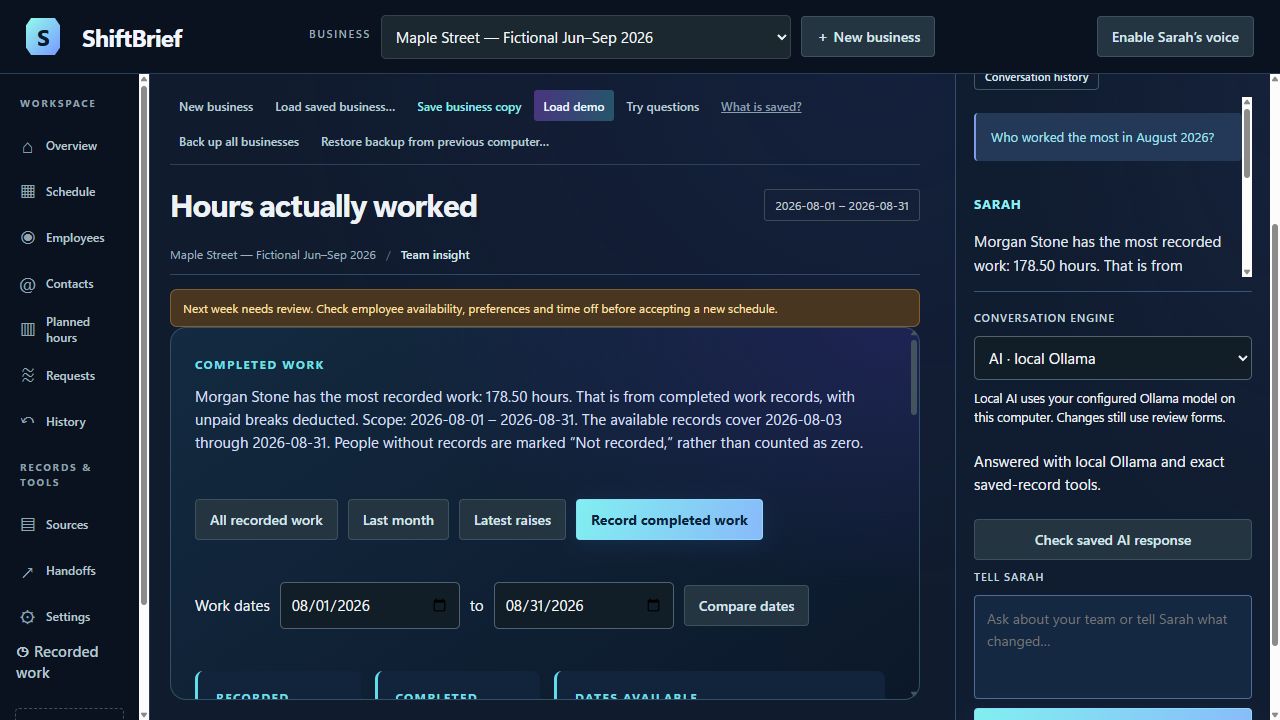
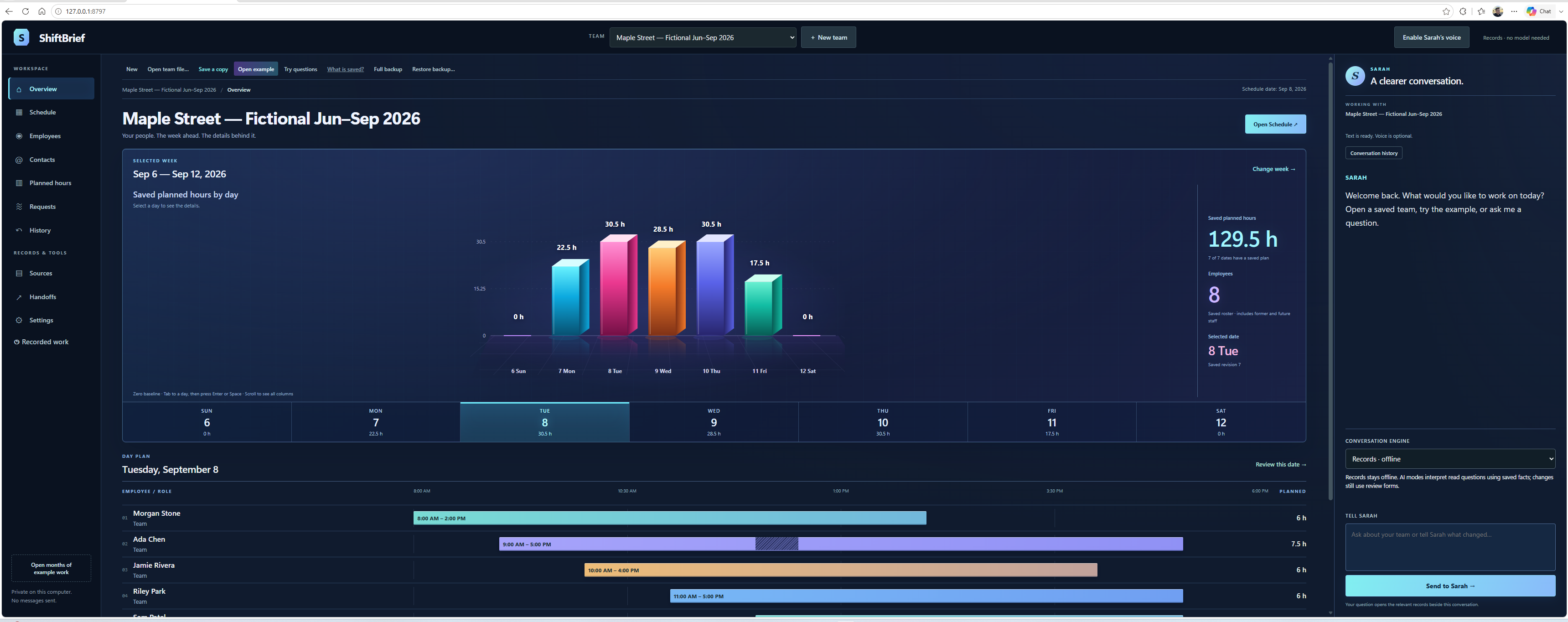
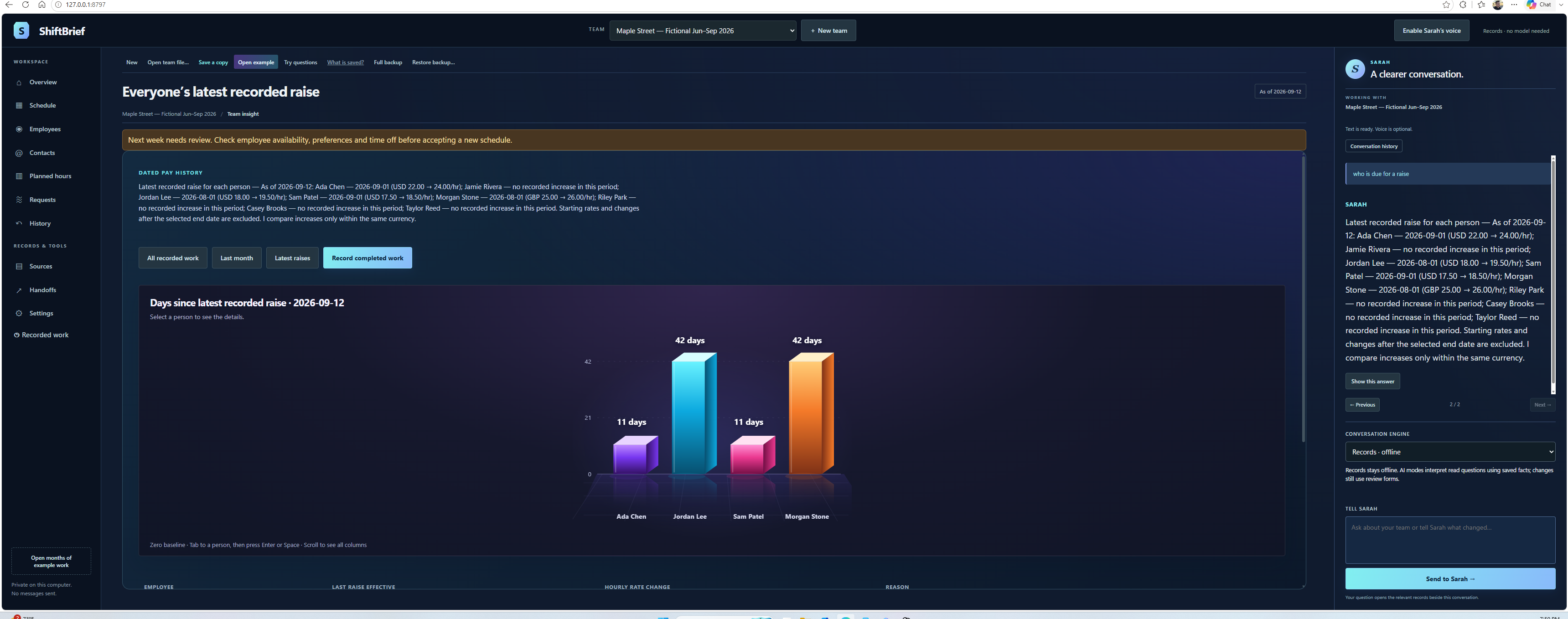
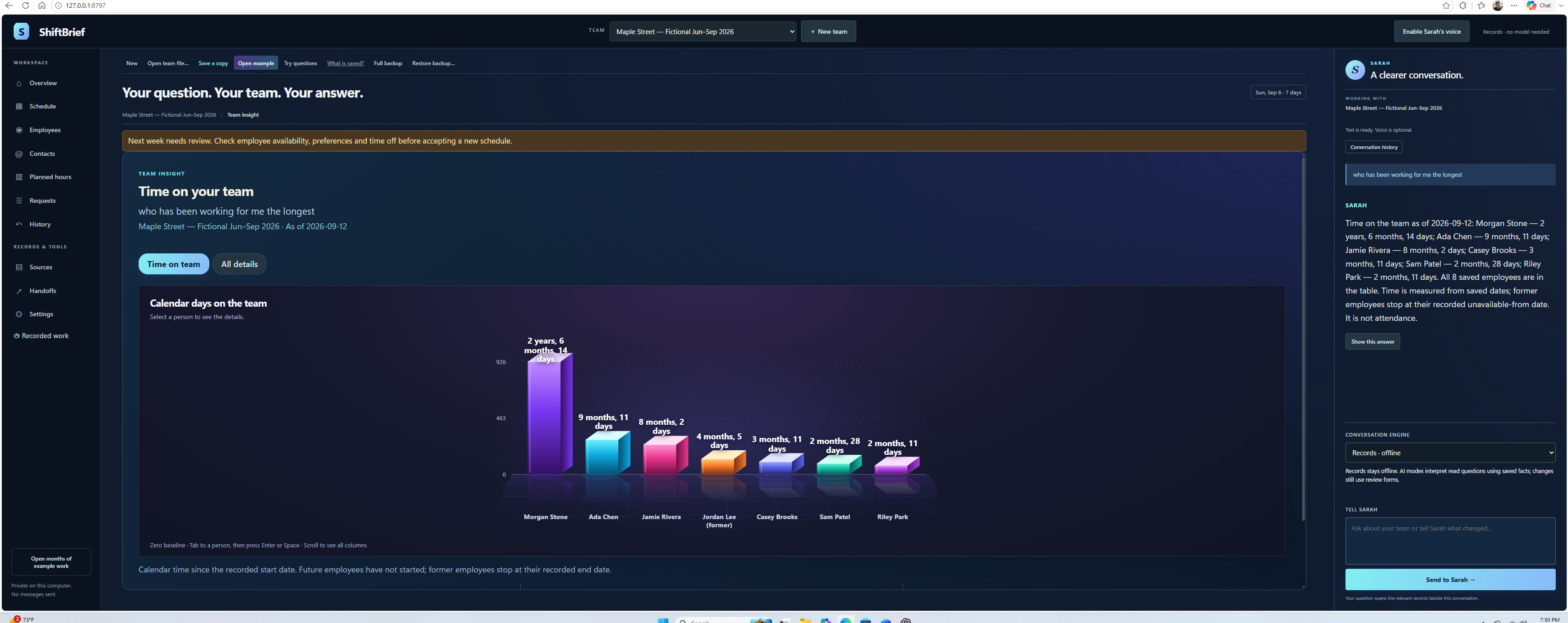
Ask Sarah about completed work, employee start dates, pay history, availability or a planned week. ShiftBrief opens the matching records, date range and charts alongside the conversation. You can inspect the details behind an answer instead of relying on a sentence alone.
The workspace keeps employee information, dated availability, planned schedules, completed work, pay changes, contacts and source-document history together. Schedule proposals and record changes are reviewed before they are saved. Planned shifts remain separate from evidence that work actually happened; missing information stays unknown.
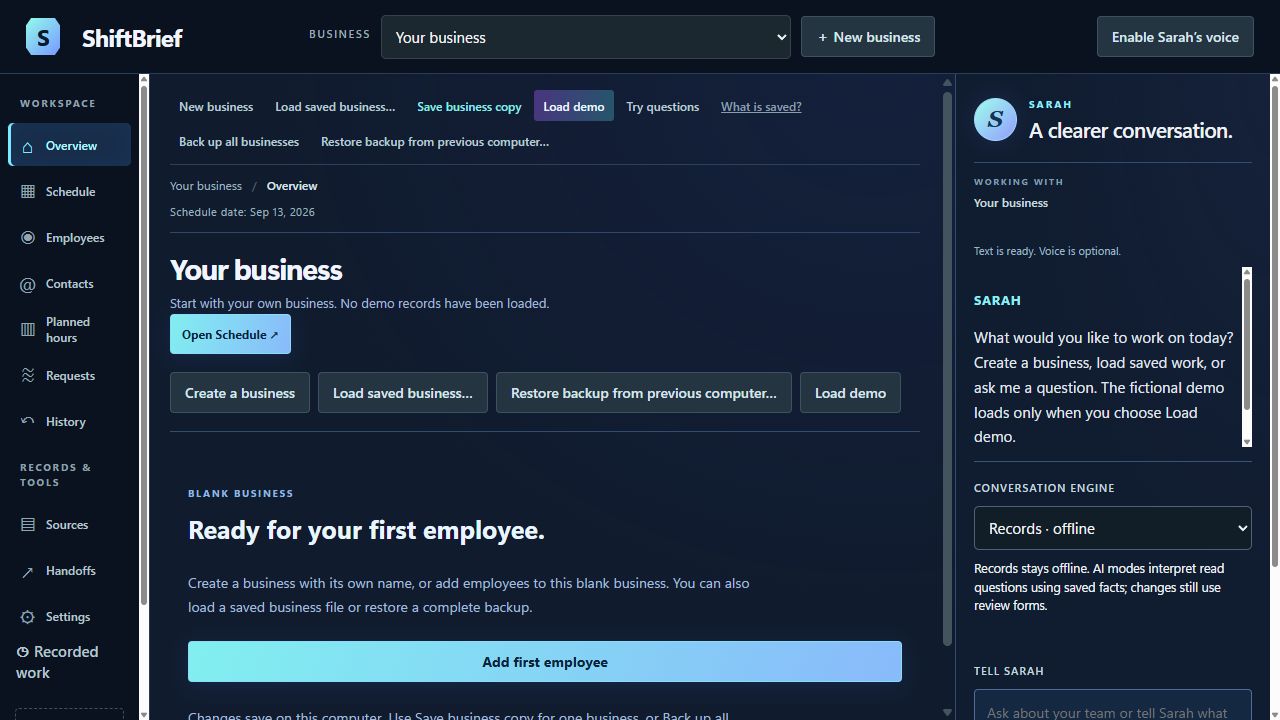
A new business starts empty. The optional Maple Street example contains eight fictional employees and several months of invented records. A saved business file can be opened separately, while a full backup moves all saved teams, conversations and history to another computer. Restoring previews what will change and preserves a recovery copy.
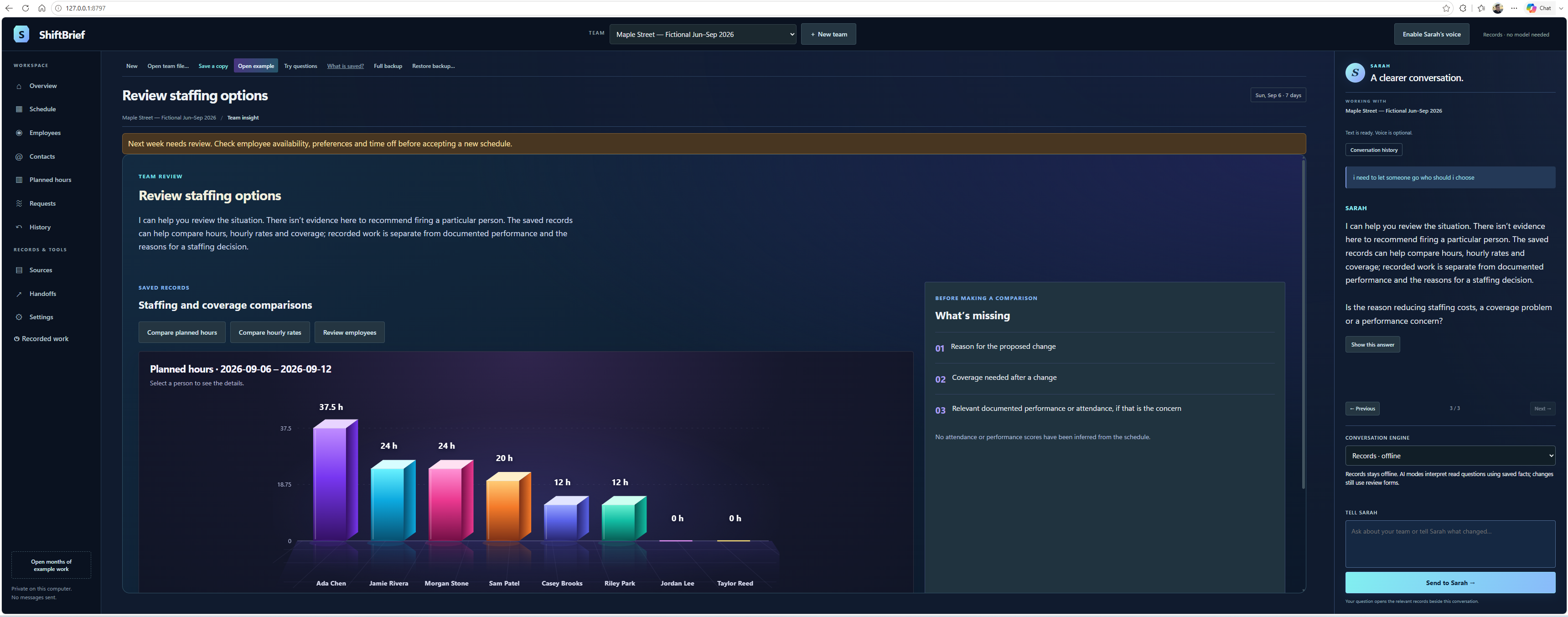
Sarah also keeps employment decisions with the person responsible. Asked whom to let go, she helps review the available records and missing context rather than selecting someone to dismiss.
How we built it
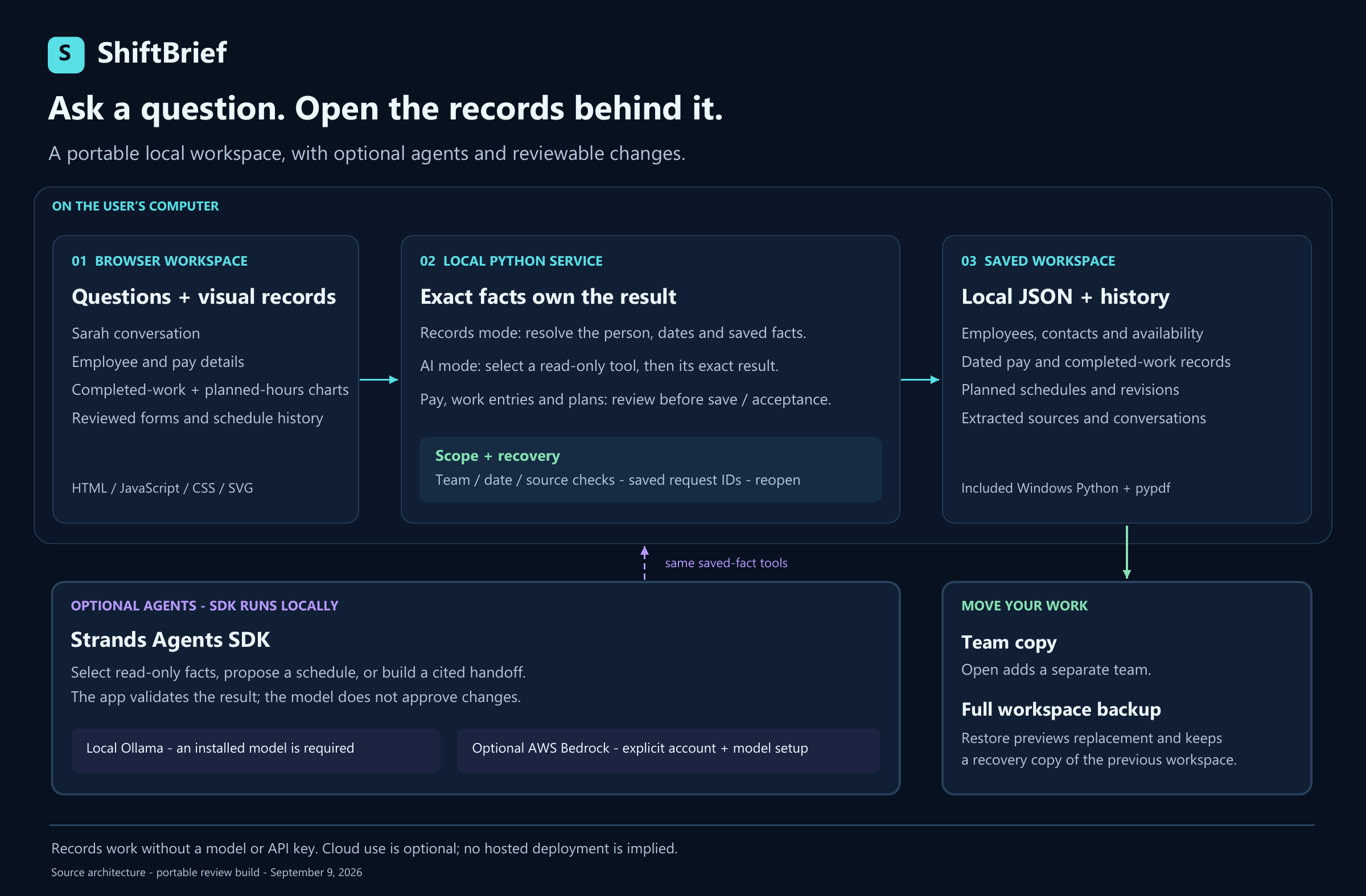
ShiftBrief uses a Python service with an HTML, CSS and JavaScript interface. Records and revisions are stored locally in JSON. Interactive charts connect to the underlying dated records, and validated requests protect against stale forms or interrupted saves.
The AI routes use the Strands Agents SDK. With local Ollama, the agent can call saved-record tools to answer a question, propose reviewable planning constraints, or prepare a cited handoff. The application calculates the facts and validates proposed changes. The agent cannot independently accept a schedule, change pay or contact an employee.
There is also a Records mode that works without a model. Its calculations and direct commands are deterministic application code, not an LLM. An optional AWS Bedrock adapter is implemented, but live cloud answer quality has not been tested. The local Strands/Ollama conversation route has been exercised in a six-question trial.
I developed the project with assistance from Codex and standard open-source tools. This iteration retained earlier ShiftBrief document-revision and Strands-adapter work, then expanded the team workspace, records, planning and portability features; it does not claim every component was created from scratch. The repository includes the new-work disclosure.
Challenges we ran into
The hardest part was preserving meaning. A question about past work must not produce a ranking of future shifts. Someone with no recorded raise must not be treated as receiving a zero-dollar raise. A saved schedule is not attendance or a performance score.
Another challenge was recovery: a delayed answer or interrupted import must not overwrite newer work or create duplicate actions. Separate record histories, request identities, validation and recoverable backup/restore paths made that behavior more dependable.
Accomplishments that we're proud of
ShiftBrief connects conversation with the actual workspace: completed-hours questions open dated work records, raise questions show recorded increases, and employee questions open the relevant details. It preserves the distinction between planned and completed work throughout those views.
The project also combines a usable local records workflow with real Strands agent routes, an optional fictional demo, and portable business files and full-workspace backups. People remain responsible for accepting changes and making consequential staffing decisions.
What we learned
A useful agent needs more than fluent answers. It needs the right tools, an honest account of what is known, and a clear connection between its response and the records on screen. Showing uncertainty and asking for a missing detail can be more helpful than guessing.
Portability and recovery also belong in the core experience. A business should be able to move its saved work to another computer without starting over.
What's next for ShiftBrief
Test more varied teams, questions and real-world record formats; improve clarification for unsupported requests; and broaden the local and cloud AI evaluations. Continue refining the setup and backup experience while keeping changes reviewable and preserving the owner's control.
Built With
- css3
- html5
- javascript
- json
- ollama
- python
- strands-agents-sdk
- svg

Log in or sign up for Devpost to join the conversation.