
Inspiration
Cybercrime and phishing scams are rising every year, and many users — especially students — don’t know how to recognize them. ShieldNet was inspired by the need to make cybersecurity education accessible and interactive.
What it does
ShieldNet detects suspicious links and phishing attempts in real time. It also teaches users how to identify threats through short lessons and quizzes, turning cybersecurity awareness into a game-like experience.
How we built it
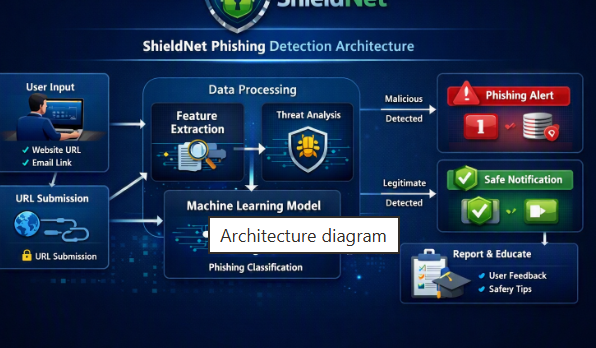
We used Python for backend logic, HTML/CSS and JavaScript for the interface, and integrated a simple machine learning model trained on phishing datasets. The app runs in a browser and uses APIs to analyze URLs and email patterns.
Challenges we ran into
Training the model with limited data.
Designing an intuitive interface under time pressure.
Balancing detection accuracy with speed.
Accomplishments that we're proud of
We built a working prototype that successfully flags phishing attempts and provides instant feedback. We’re proud of how we combined education and security in a single platform.
What we learned
We learned how machine learning can be applied to real-world problems, how teamwork accelerates development, and how important user experience is in cybersecurity tools.
What's next for ShieldNet: Smart Defense Against Online Threats
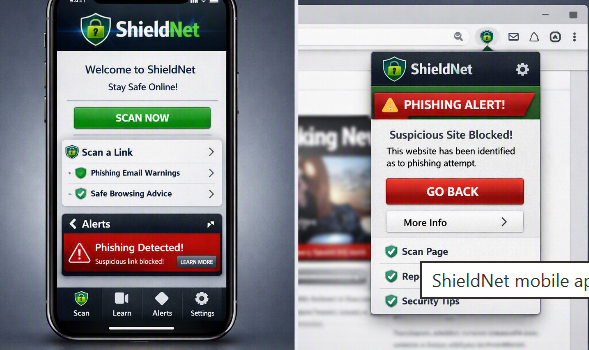
We plan to expand ShieldNet into a browser extension and mobile app, add multilingual support, and partner with schools to teach digital safety.


Log in or sign up for Devpost to join the conversation.