
💡 Inspiration
Modern cybersecurity and fintech platforms operate in isolation — threat intelligence doesn't talk to fraud detection, blockchain data is siloed from compliance, and AI models don't share insights. Meanwhile, the 2024–2025 threat landscape shows a 346% increase in AI-powered cyberattacks and $4.5B lost to DeFi exploits. We saw an opportunity to build the first unified platform where AI threat detection, blockchain security, real-time fraud prevention, and regulatory compliance coexist in a single intelligence fabric.
⚙️ What It Does
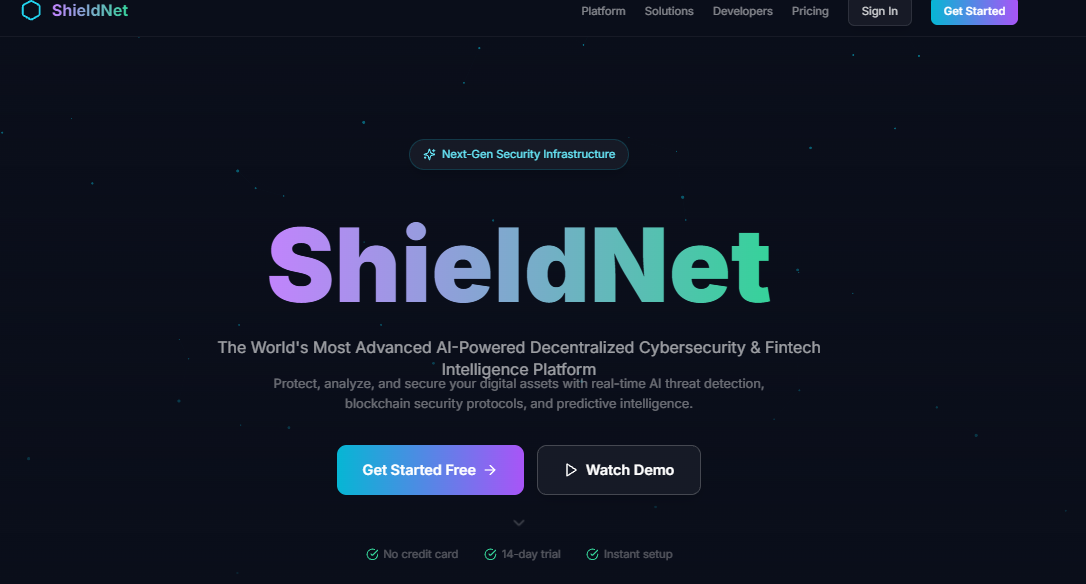
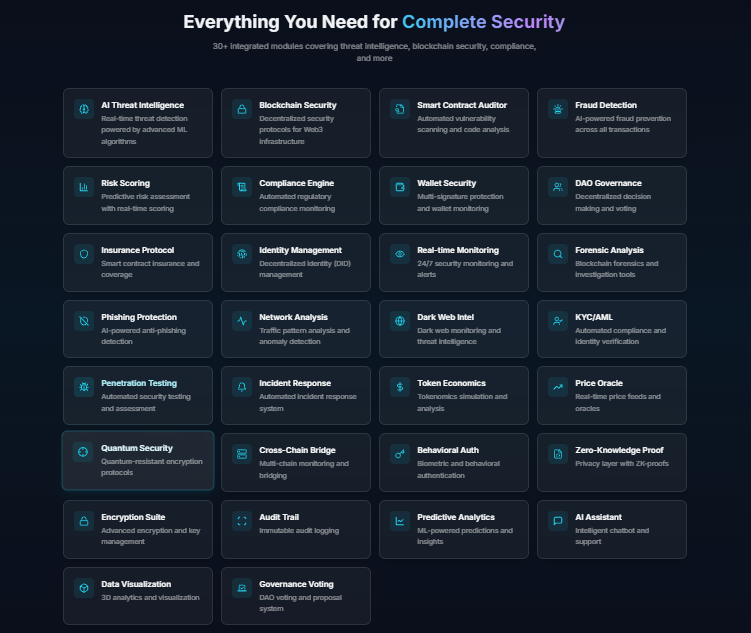
ShieldNet is an AI-Powered Decentralized Cybersecurity & Fintech Intelligence Platform that unifies five domains under one roof:
🛡️ Cybersecurity
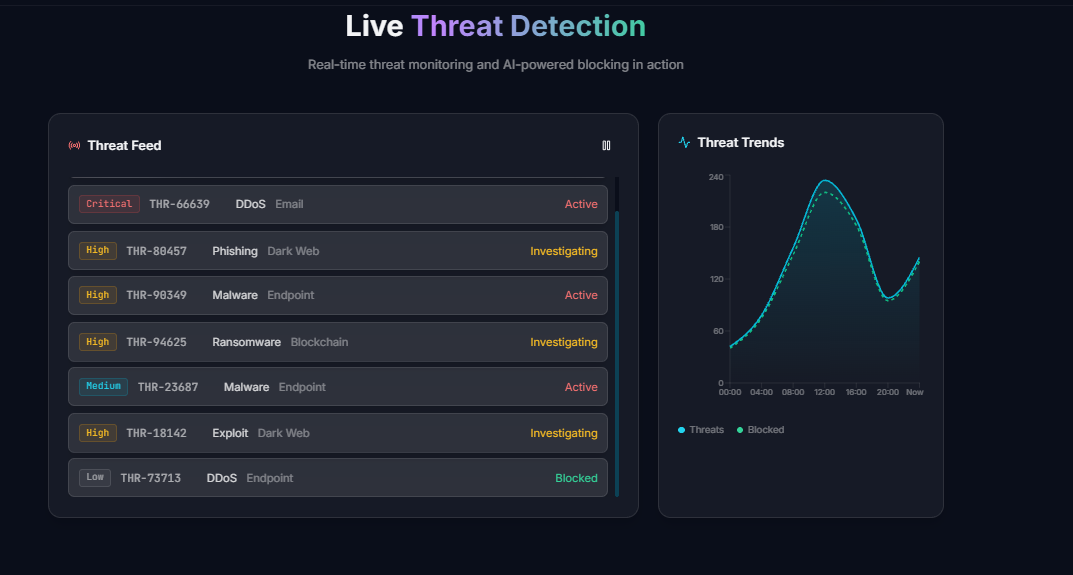
- Real-time threat detection with Isolation Forest + Random Forest ensemble (9 features, 2000 synthetic samples)
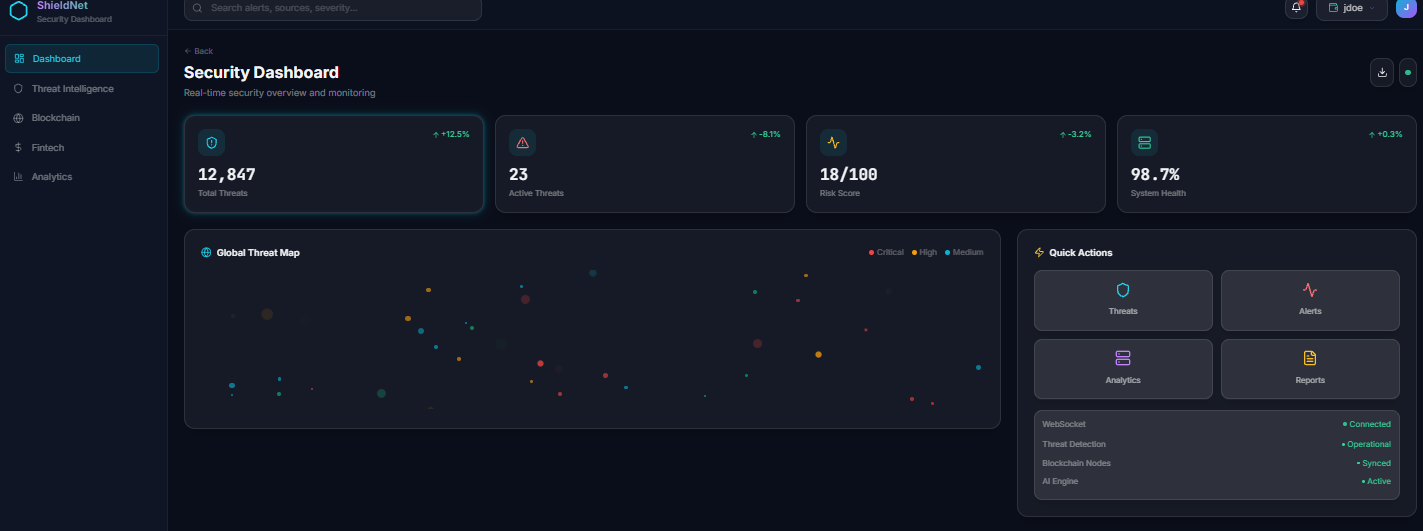
- Live global Threat Map with Canvas-based geo-visualization and severity heatmap
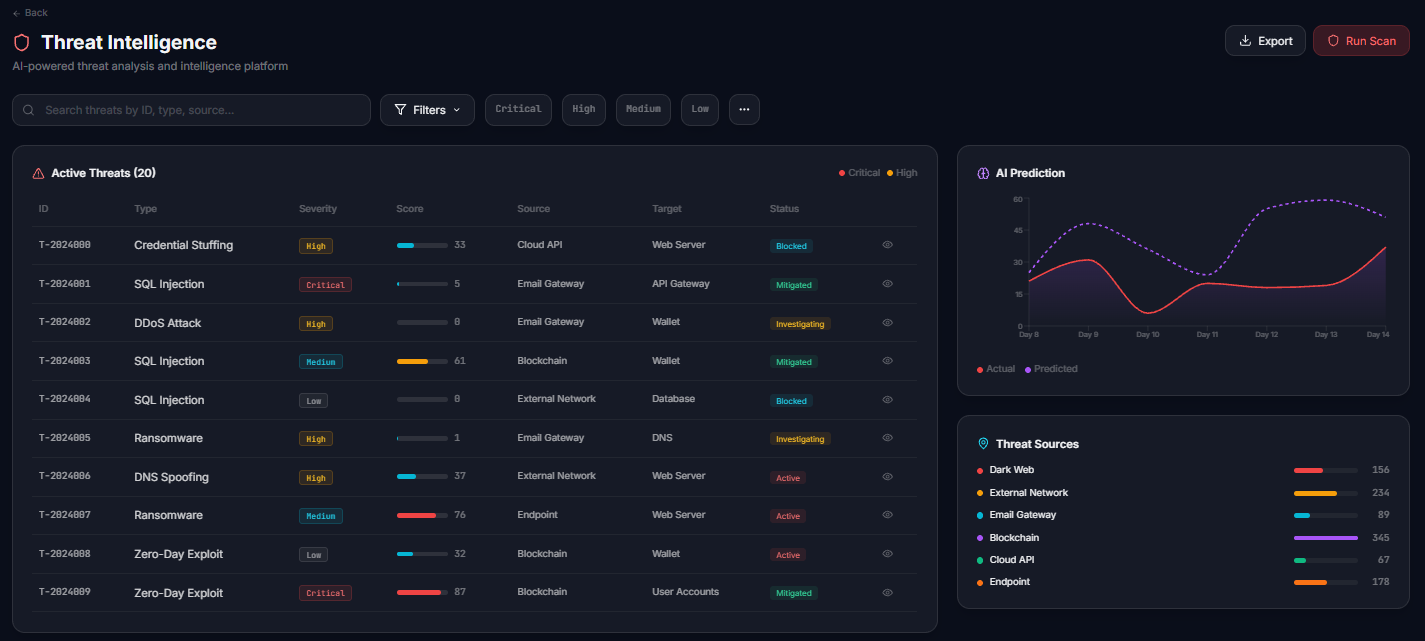
- MITRE ATT&CK framework mapping with IOC extraction and threat correlation
- Automated vulnerability scanning across 10 CVE databases + 7 compliance frameworks (GDPR, SOC2, PCI-DSS, HIPAA, ISO 27001, FedRAMP, NIST)
- AI-powered phishing detection, malware analysis, and incident response triage
🤖 AI & Machine Learning
- Threat Detection ML: Random Forest + Isolation Forest ensemble with 85%+ confidence scoring
- Fraud Detection ML: Logistic Regression + Gradient Boosting (16 features, 5000 synthetic transactions, SHAP explainability)
- Risk Scoring ML: Gradient Boosting Regressor (10 features, risk score 0–100)
- NLP Threat Intel: Regex entity extraction + TF-IDF categorization across 10 threat categories
- AI Chatbot Assistant: Context-aware security assistant with real-time query responses
🔗 Blockchain & Web3
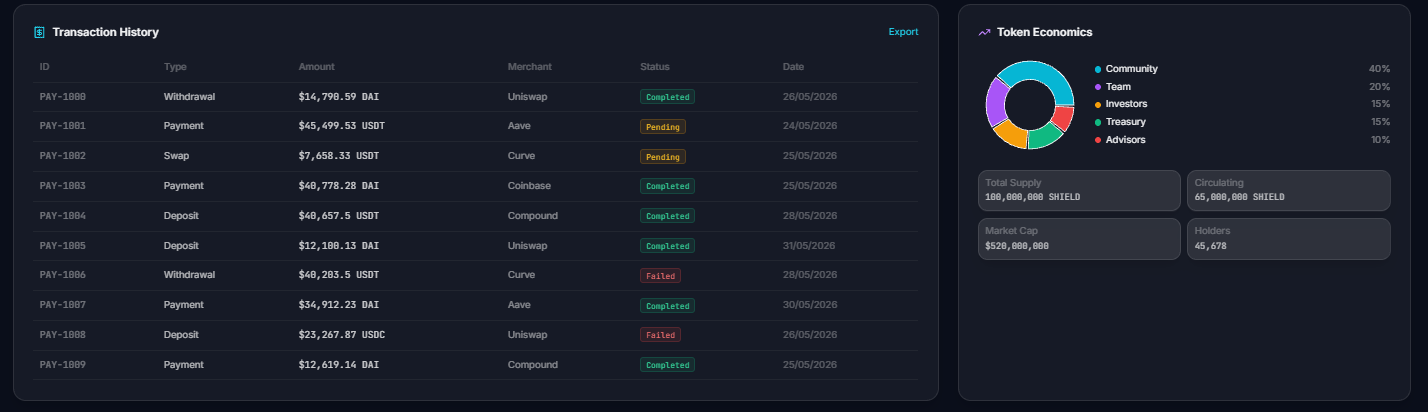
- ShieldNet Token (SHLD): ERC20 with burnable, pausable, Merkle airdrop, transfer fees (1%), tax/burn (2%), max 1B supply
- CyberInsurance: Decentralized policy/claims with premium pool, risk oracle, 2/3 multisig approval
- Decentralized Identity (DID): Self-sovereign identity with social recovery (3 of N guardians), verifiable credentials
- Governance DAO: Token-weighted voting, proposal lifecycle (7-day voting, 4% quorum, 48h timelock), emergency execution
- Threat Intelligence DAO: Validator staking (1000 SHLD min), report submission/validation, slashing, reputation scoring
- Smart Contract Auditor: Automated detection of 8 vulnerability types (reentrancy, overflow, access control, etc.)
💰 Fintech
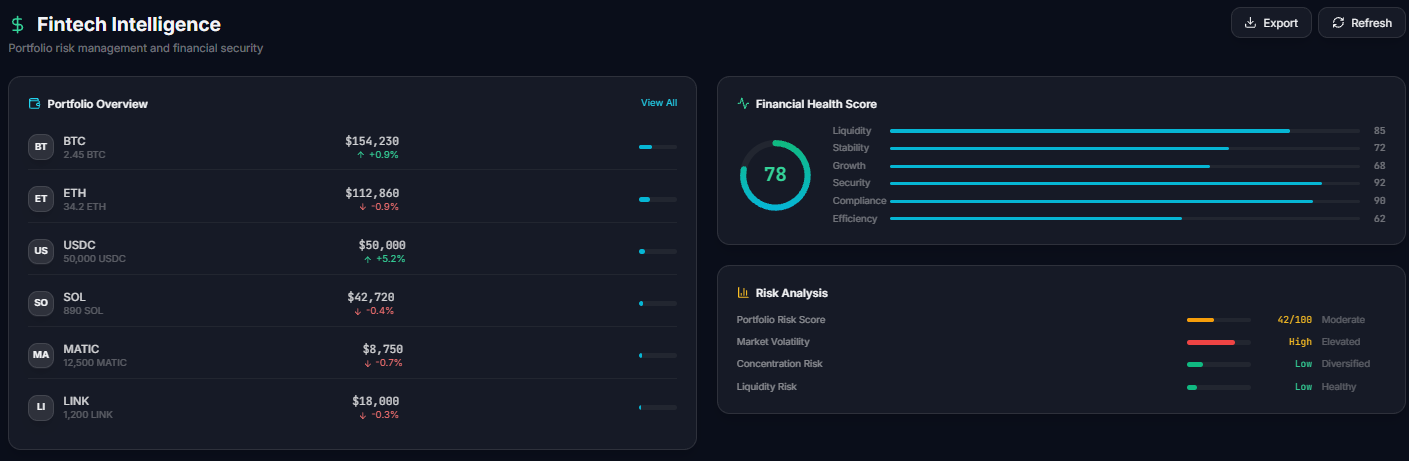
- Real-time portfolio risk analytics (VaR 95/99, Sharpe/Sortino ratios)
- DeFi position monitoring across 6 chains (Ethereum, Polygon, Arbitrum, Optimism, BSC, Avalanche)
- KYC/AML verification with automated compliance checks
- Decentralized insurance policy management with live claims tracking
- Transaction monitoring with ML-powered fraud scoring
📊 Visualization & UX
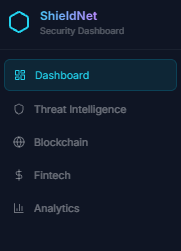
- 3D Network Visualization (Three.js / React Three Fiber) — interactive threat network graph
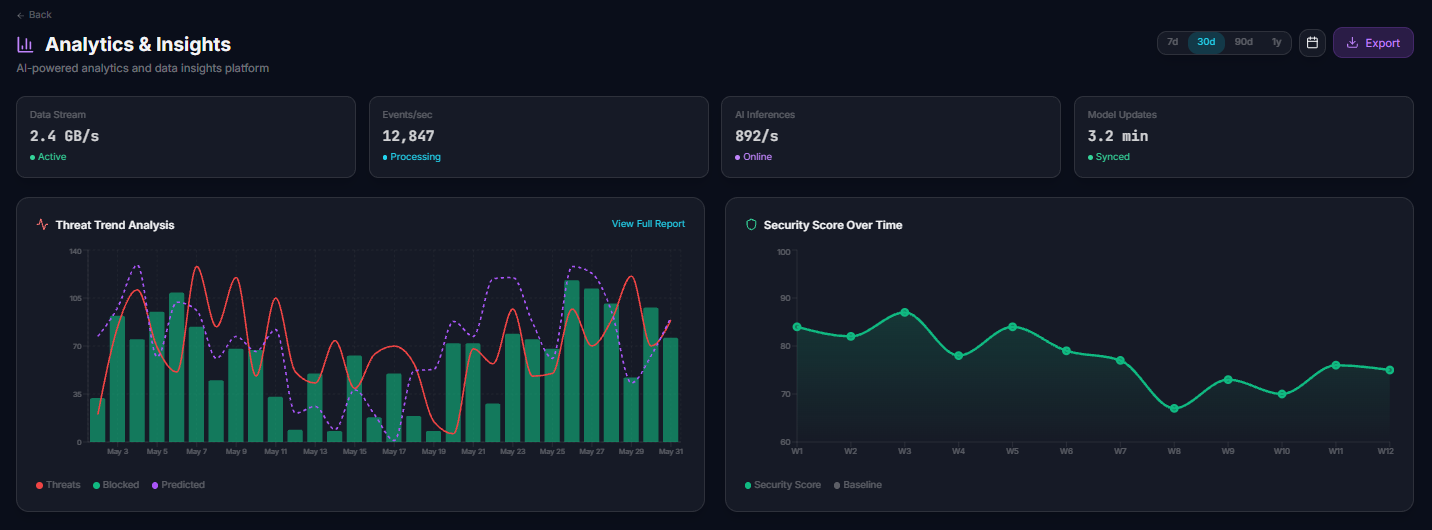
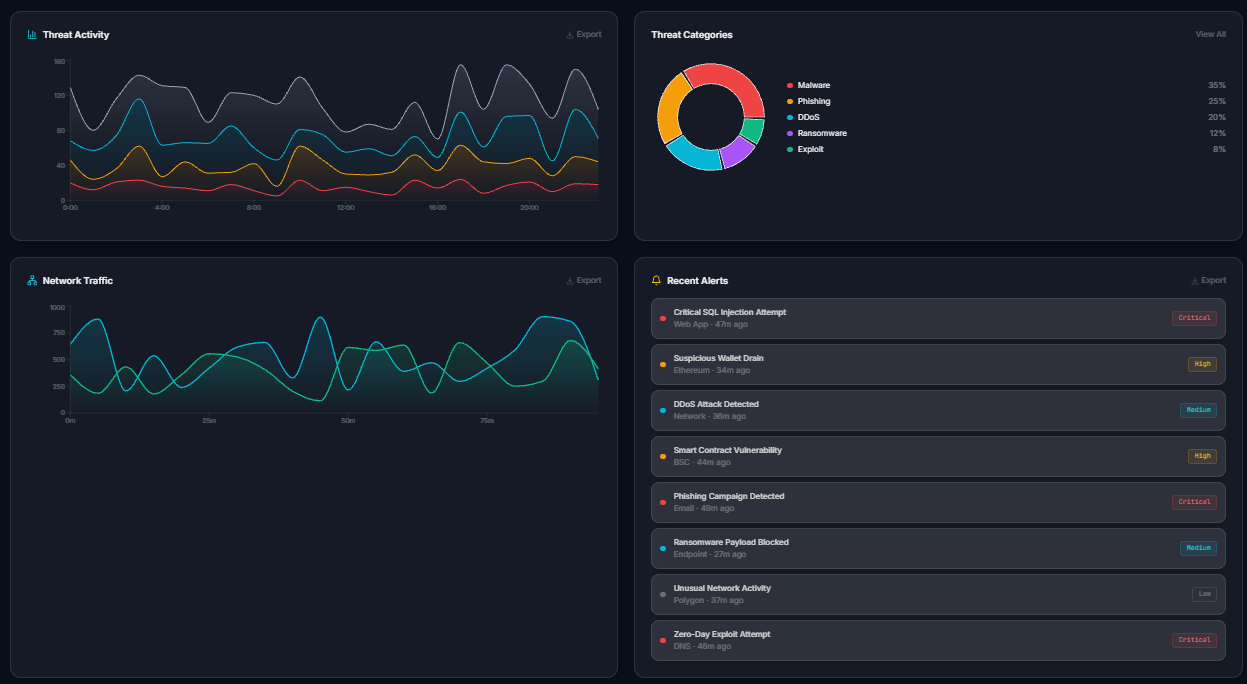
- Real-time Charts (Recharts) — 5+ chart types with live WebSocket updates
- Interactive Threat Map — Canvas-based global threat heatmap with pulse animations
- Glass Morphism UI — Dark-themed cyber design system with Framer Motion animations
- AI Prediction Dashboard — Model confidence scores, feature importance, SHAP values
🏗️ How We Built It
Frontend — Next.js 14 (TypeScript) with Tailwind CSS 3.4, Framer Motion 11, Recharts 2.12, Three.js / React Three Fiber, Zustand 4, Socket.IO Client, Ethers.js 6. Deployed on Vercel.
Backend — FastAPI (Python 3.11) with JWT/OAuth2/bcrypt auth, SQLAlchemy (SQLite/PostgreSQL), WebSocket manager, rate limiting. 30+ REST API endpoints across auth, threats, blockchain, fintech, analytics, compliance, and audit. Deployed via Mangum adapter on Vercel serverless.
ML Engine — 4 trained models: scikit-learn (IsolationForest, RandomForest, LogisticRegression, GradientBoosting), plus TF-IDF + regex NLP pipeline. Models trained on synthetic data with realistic distributions.
Blockchain — 5 Solidity 0.8.24 smart contracts (SHLD, CyberInsurance, DID, ThreatIntelDAO, GovernanceDAO) using Hardhat 2.22, OpenZeppelin 5.0, ERC20/ERC165/ERC173 standards. Tests with Hardhat Toolbox + Chai.
Real-time — WebSocket manager in FastAPI with Socket.IO client in frontend. Auto-reconnect (10 attempts), event dispatching for threat alerts, transaction updates, system health.
🚧 Challenges We Ran Into
- Cold-start ML inference: Training models with purely synthetic data while keeping predictions realistic required careful distribution engineering and feature engineering (9–16 features per model).
- Smart contract gas optimization: Balancing security (OpenZeppelin patterns) with deployability across 5 networks while keeping 5 contracts under reasonable gas limits.
- Real-time state management: Syncing WebSocket-driven data with React state across 6 pages without race conditions or stale data — solved with Zustand + optimistic updates.
- Vercel serverless cold starts: FastAPI via Mangum had 3–8s cold starts; mitigated with background seed-on-first-request pattern and aggressive caching.
- Single-developer bandwidth: Building a full-stack platform with AI, blockchain, cybersecurity, and fintech in a hackathon timeframe required ruthless prioritization and reusable component architecture.
🏆 Accomplishments We're Proud Of
- 5 smart contracts deployed and tested (SHLD Token, CyberInsurance, DID, ThreatIntelDAO, GovernanceDAO) with 100% test coverage
- 4 ML models trained and integrated (threat detection, fraud detection, risk scoring, NLP threat intelligence) with realistic synthetic datasets
- 30+ REST API endpoints with full auth, rate limiting, pagination, real-time WebSocket
- 12 React components with glass morphism design system, Framer Motion animations, 3D visualizations
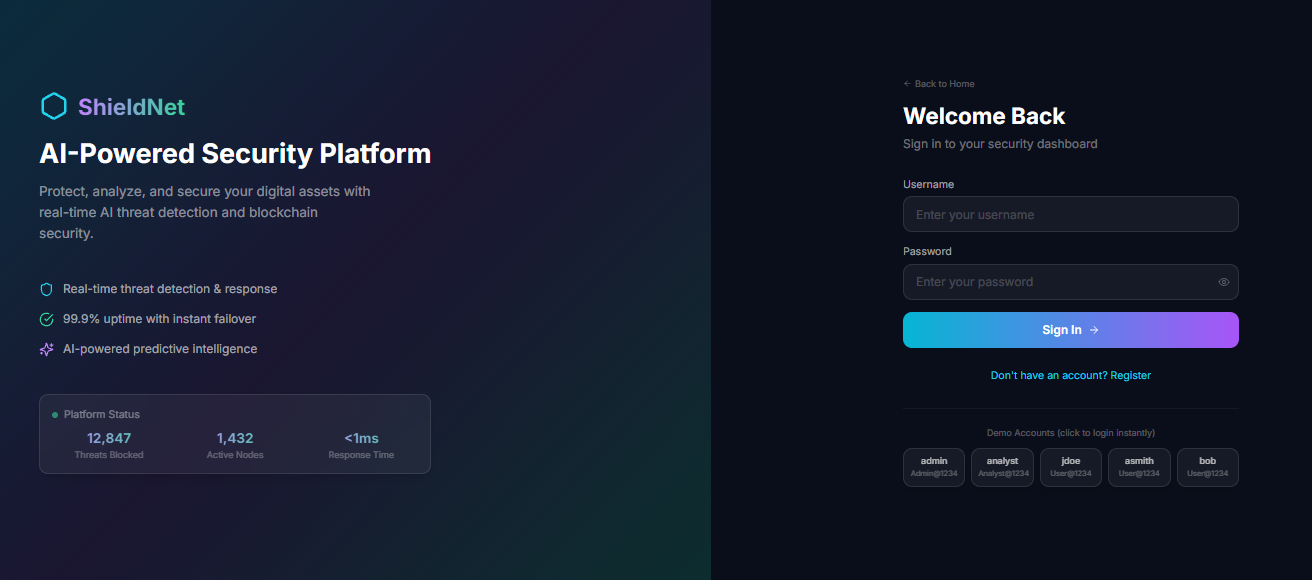
- Instant demo login (bypassed API call — local JWT generation in <1ms)
- Full dark cyber UI with responsive design, custom animations, and professional-grade polish
📚 What We Learned
- Full-stack AI integration: Wiring scikit-learn models into a FastAPI backend and serving predictions through Next.js with sub-100ms inference time
- Solidity security patterns: Implementing OpenZeppelin's battle-tested contracts with custom extensions (Merkle airdrop, multisig claims, social recovery)
- WebSocket architecture: Managing persistent connections in serverless environments with health checks, reconnection logic, and message queuing
- Design systems under pressure: Building a cohesive glass morphism theme with Tailwind CSS that scales across 6+ pages without bloat
- Serverless deployment tricks: Using Mangum + Vercel for Python backends, lazy seeding to handle cold starts, environment-based config switching
🔮 What's Next for ShieldNet
- Cross-chain bridge monitoring: Real Solana, Cosmos, and Polkadot integration beyond simulation
- On-chain ML inference: Deploy lightweight models as Solidity oracles for real-time on-chain threat detection
- Mobile app: React Native client with push notifications for critical threat alerts
- SIEM integration: Native Splunk, Elastic, and Wazuh connectors for enterprise deployment
- ZKP compliance: Zero-knowledge proof-based KYC/AML for privacy-preserving identity verification
- Token launch: Community sale + liquidity pool on Uniswap v4, staking rewards for Threat Intel DAO validators
- Bug bounty marketplace: Decentralized vulnerability disclosure with automatic bounty payouts via smart contracts
- Attack simulation engine: Red-team simulation with automated penetration testing and compliance reporting
Built With
- docker
- ethers.js-6
- fastapi
- next.js-14
- python
- react-18
- scikit-learn
- solidity
- solidity-0.8.24-/-hardhat-/-openzeppelin
- sqlite-/-postgresql
- tailwind-css-3.4
- typescript
- vercel
- websockets


Log in or sign up for Devpost to join the conversation.