-
-
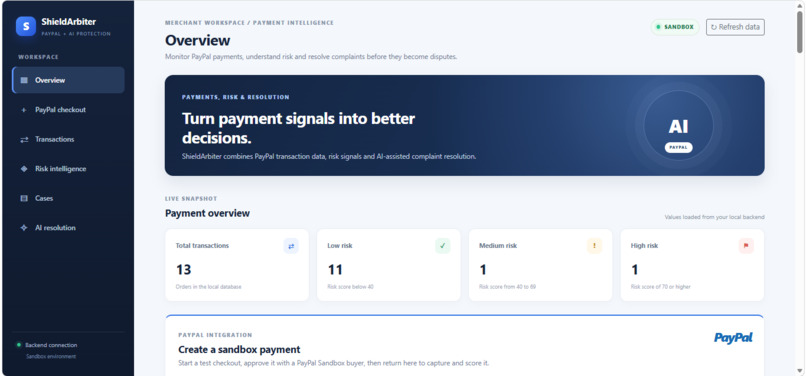
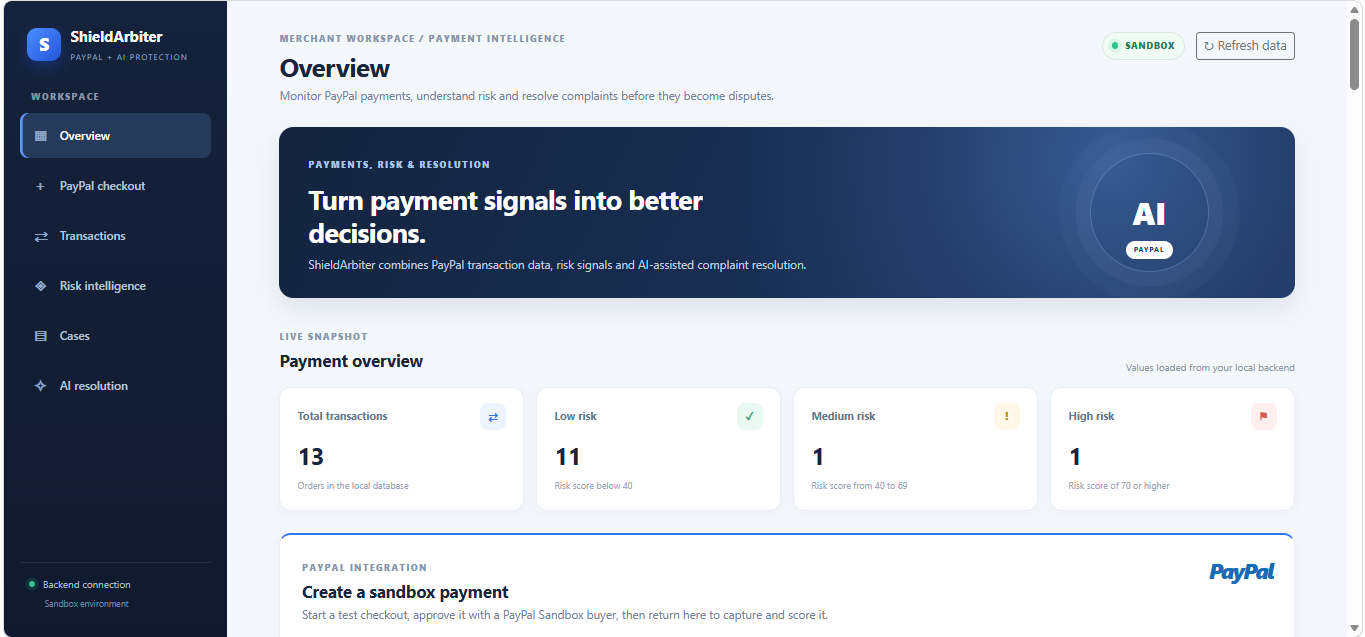
Payment and Risk Overview
-
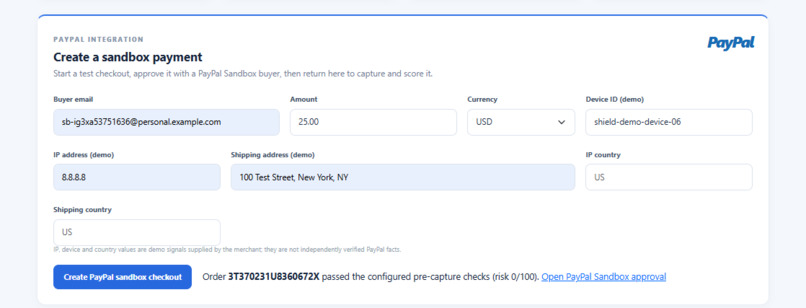
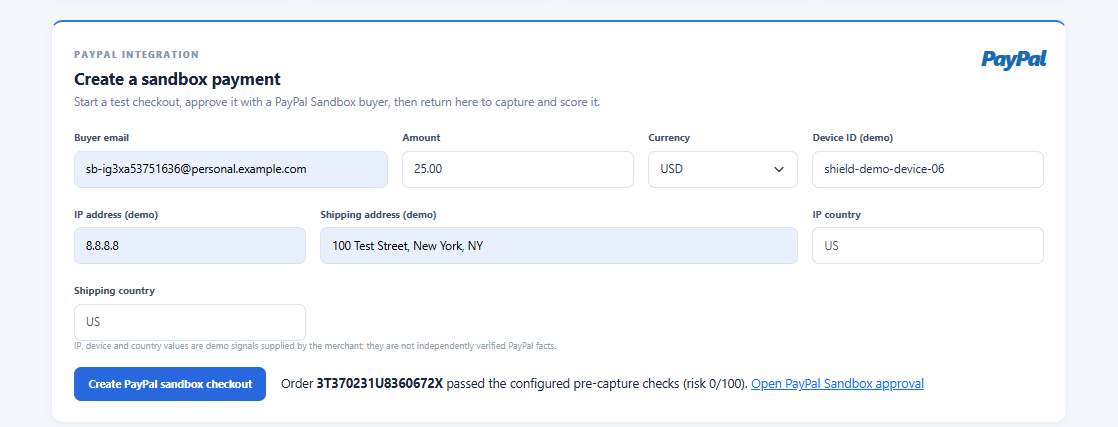
PayPal Sandbox Checkout
-
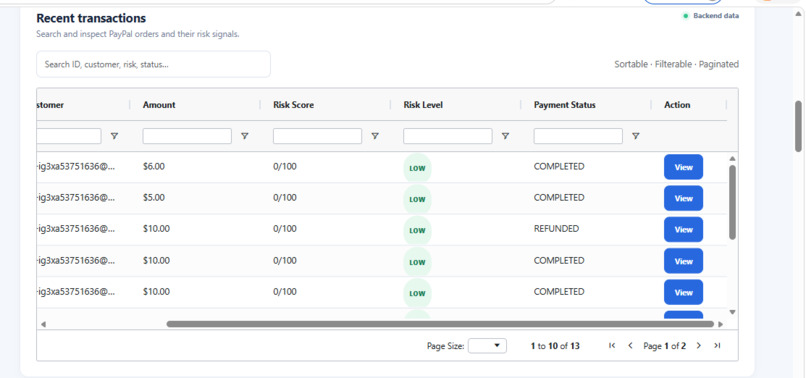
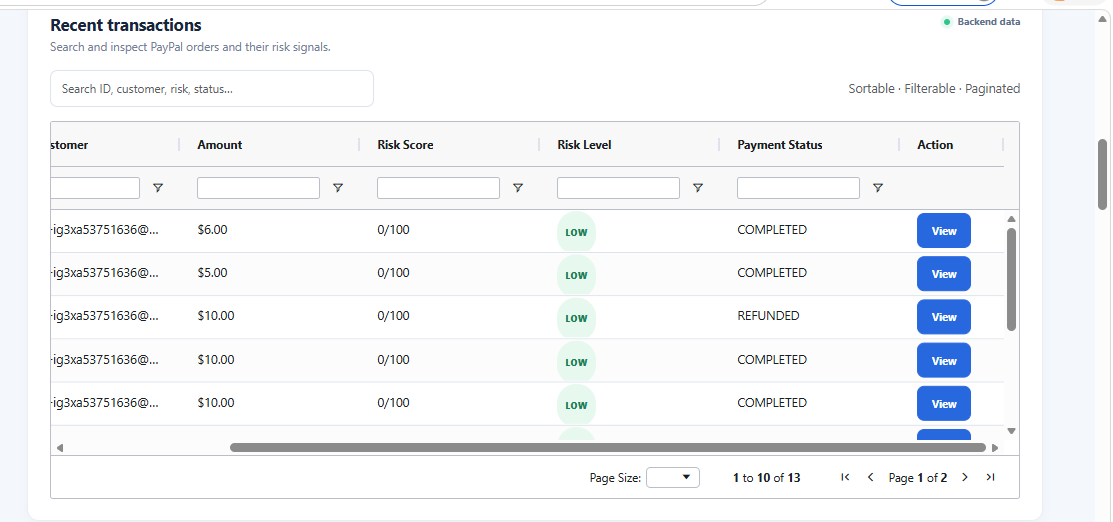
Recent Transactions Explorer
-
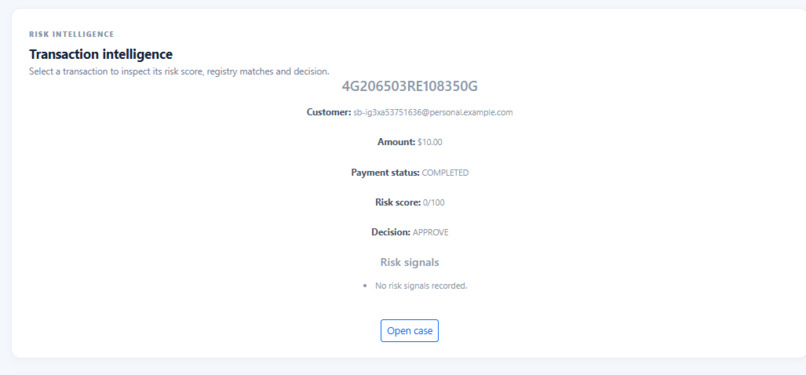
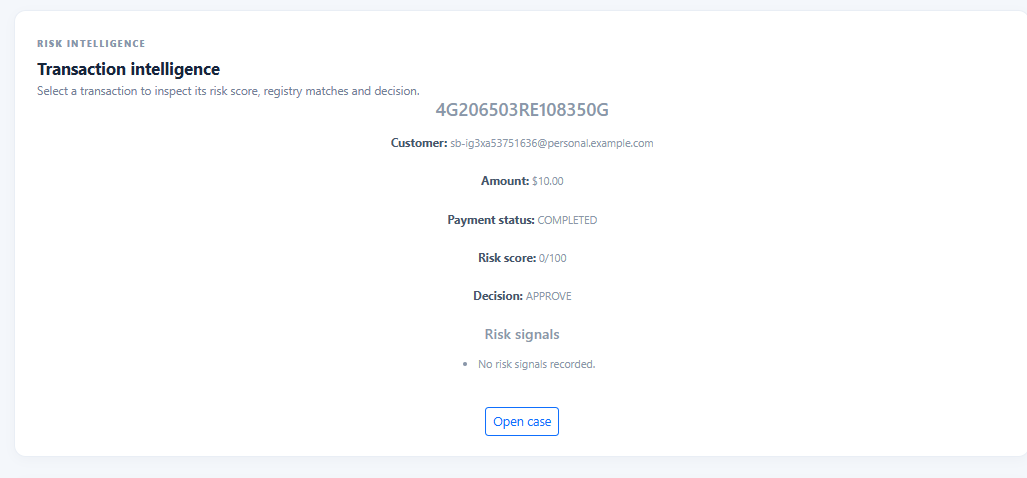
Transaction Risk Intelligence
-
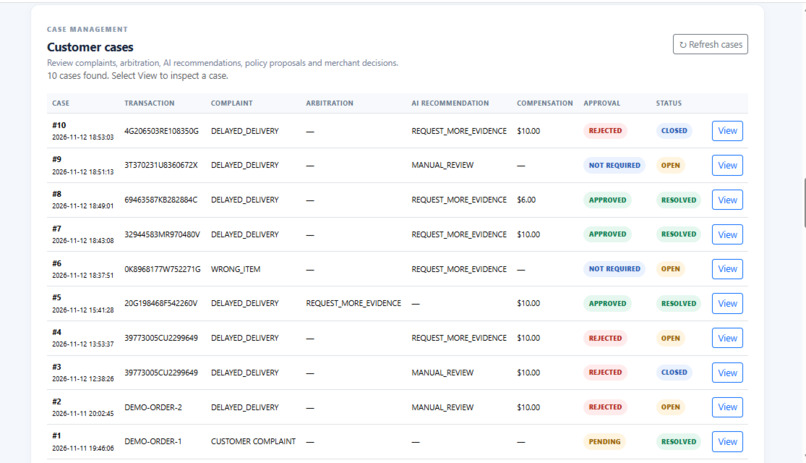
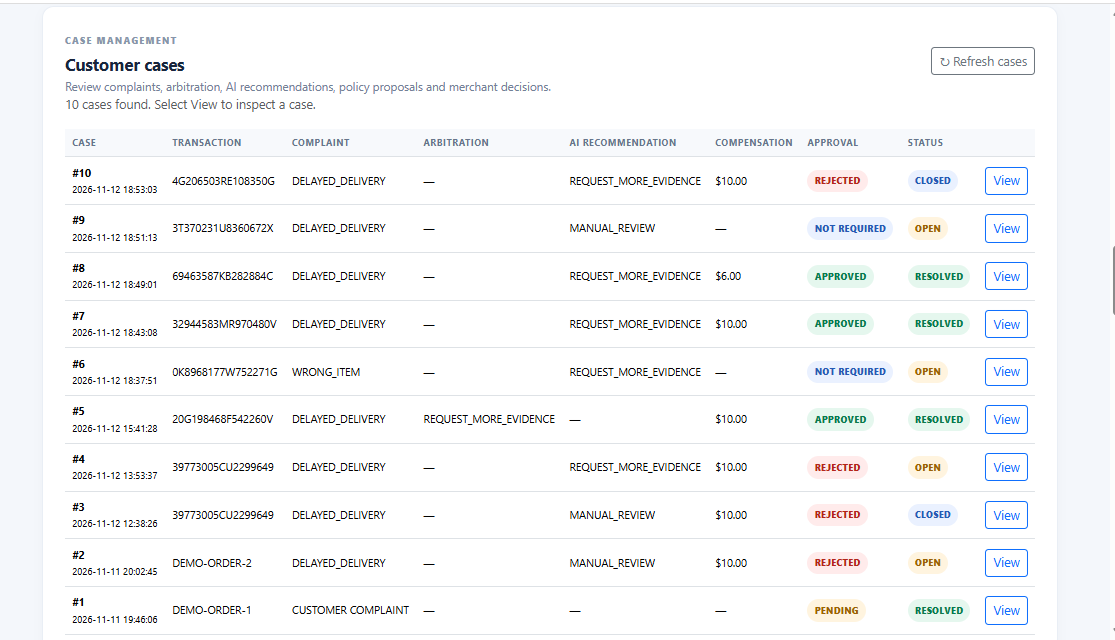
Customer Case Management
-
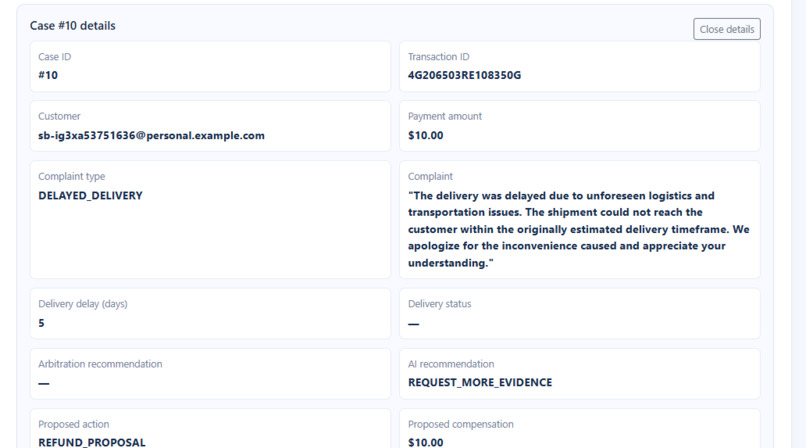
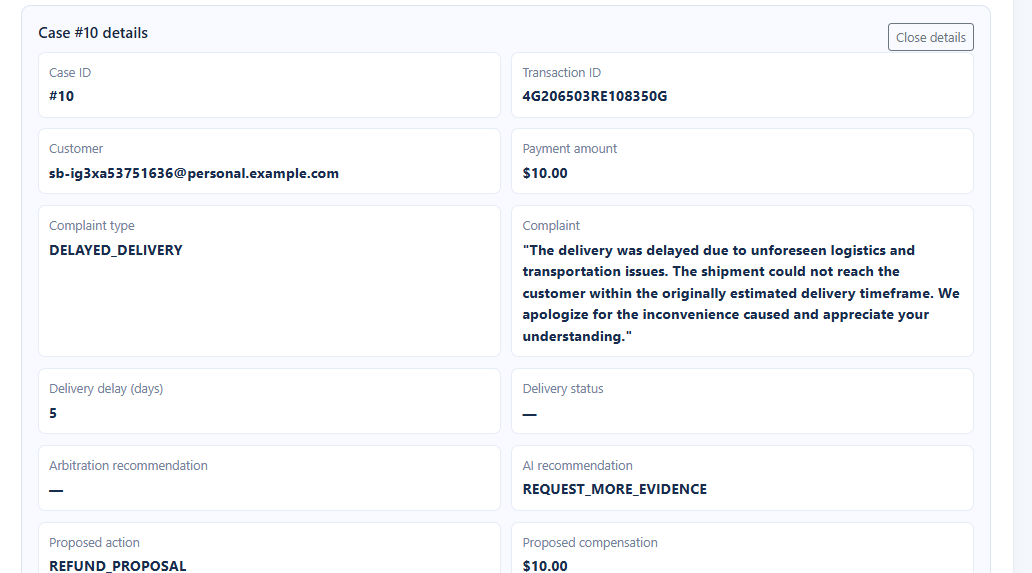
Case Details — Transaction and Complaint Information
-
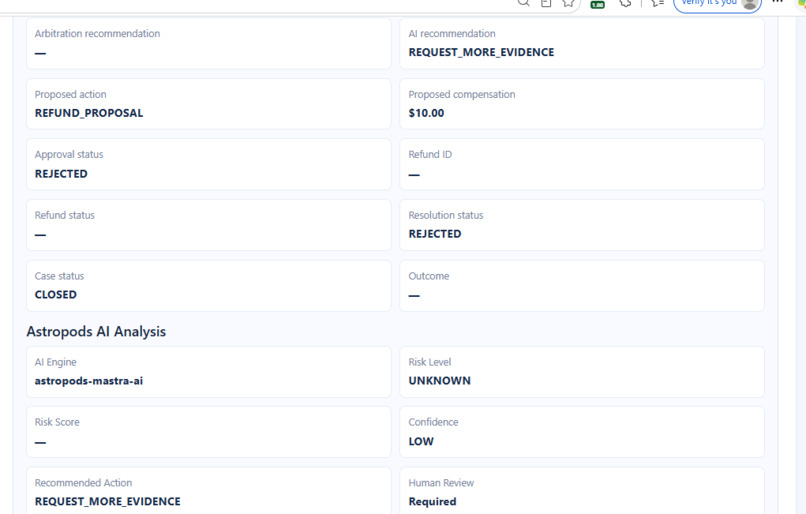
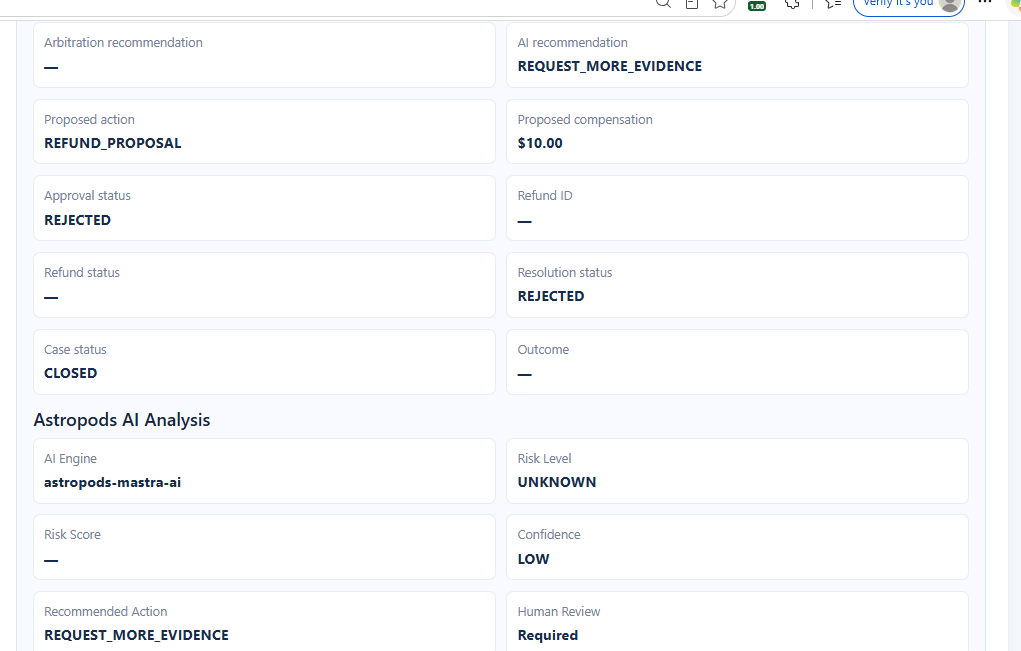
AI-Assisted Case Analysis
-
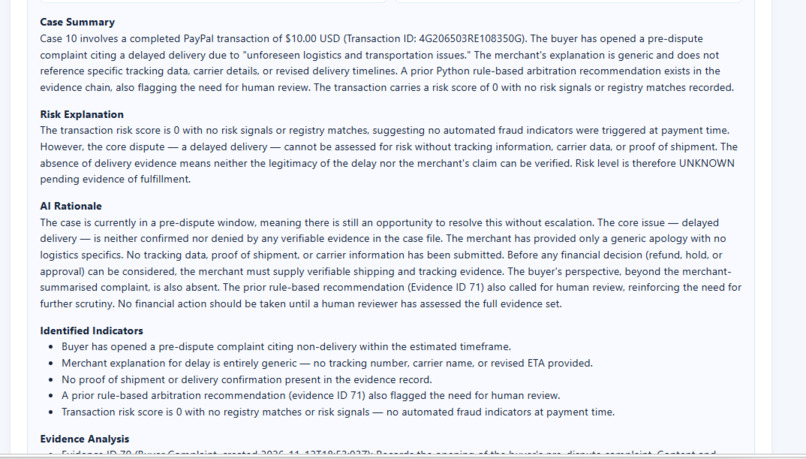
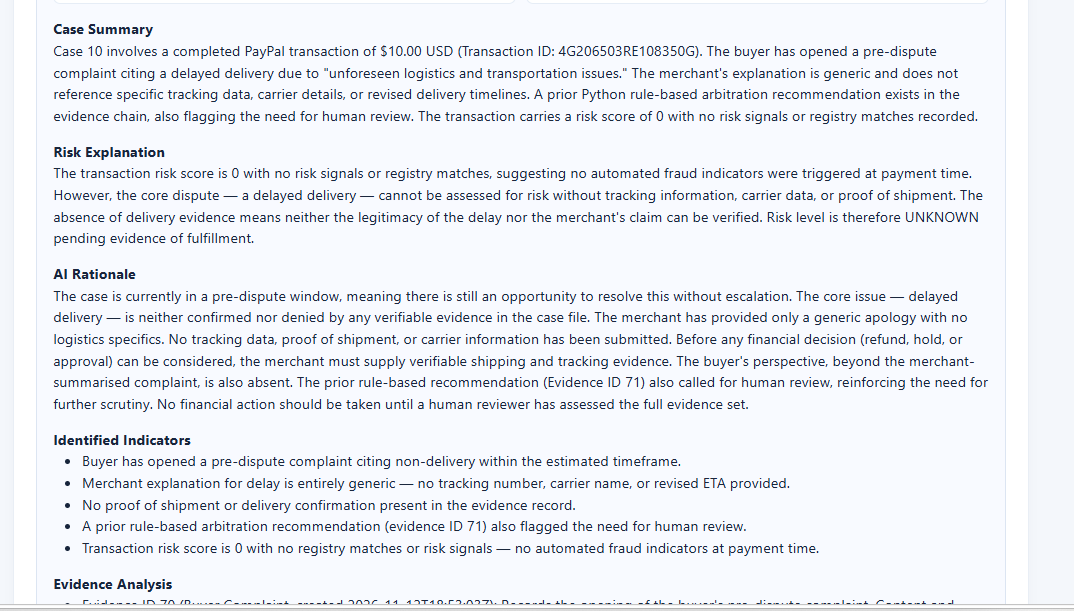
Case Summary and AI Rationale
-
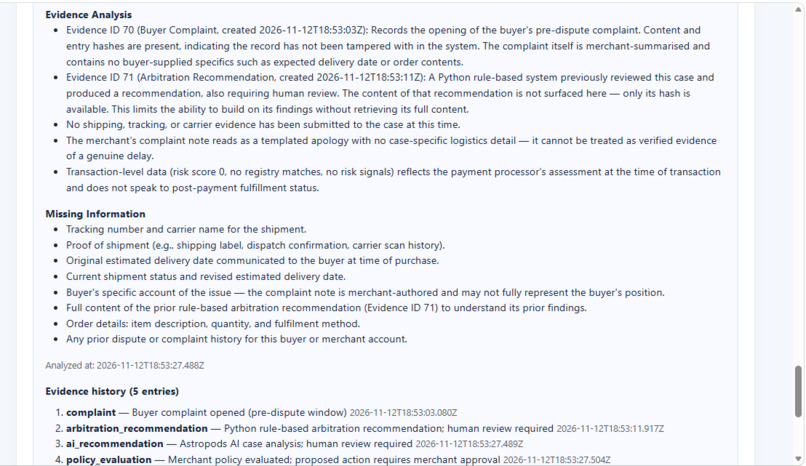
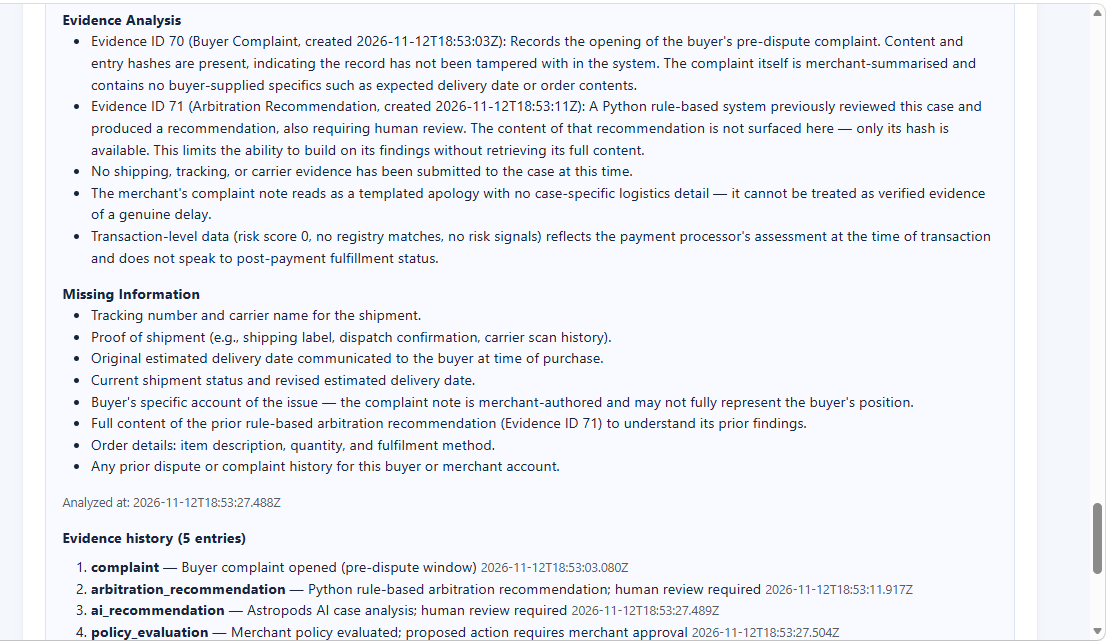
Evidence Analysis and Missing Information
-

Evidence History — Case #10
-
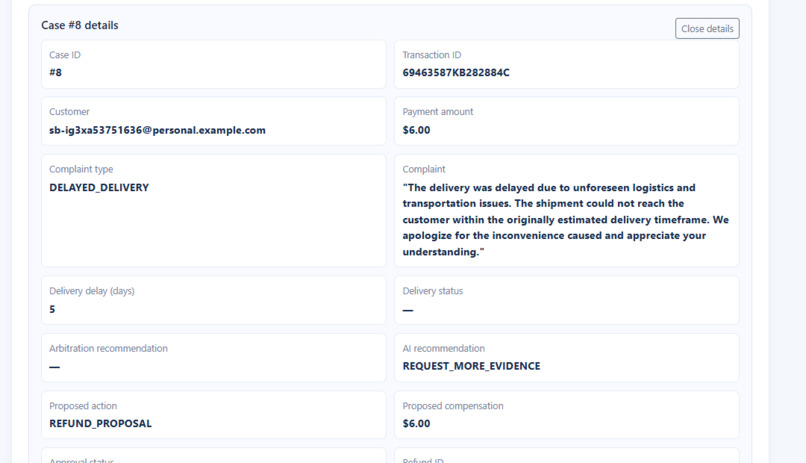
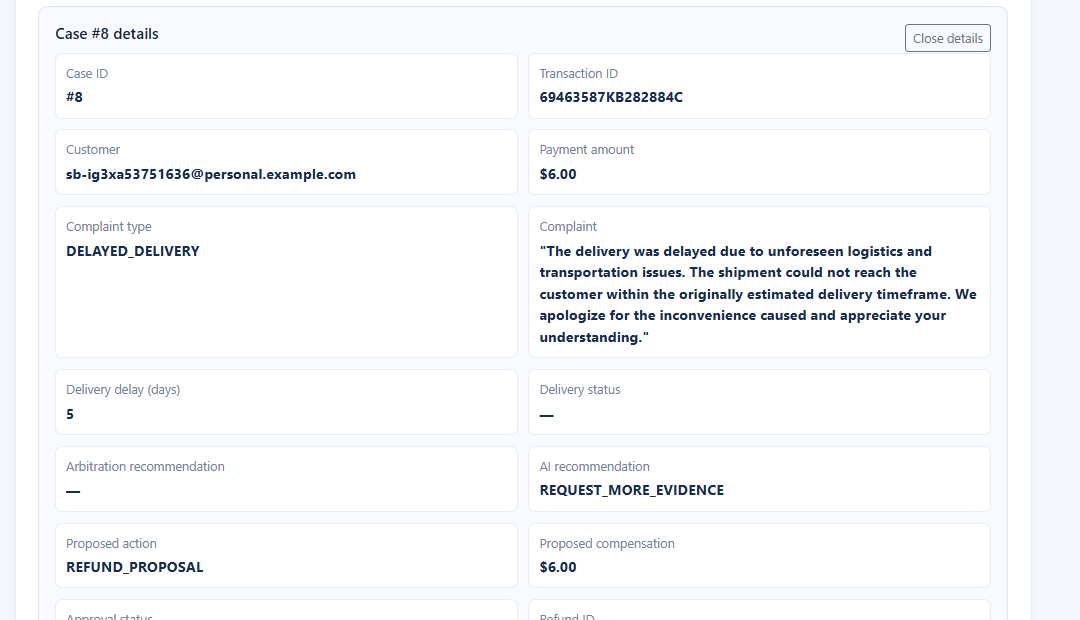
Case Details — Case #8
-
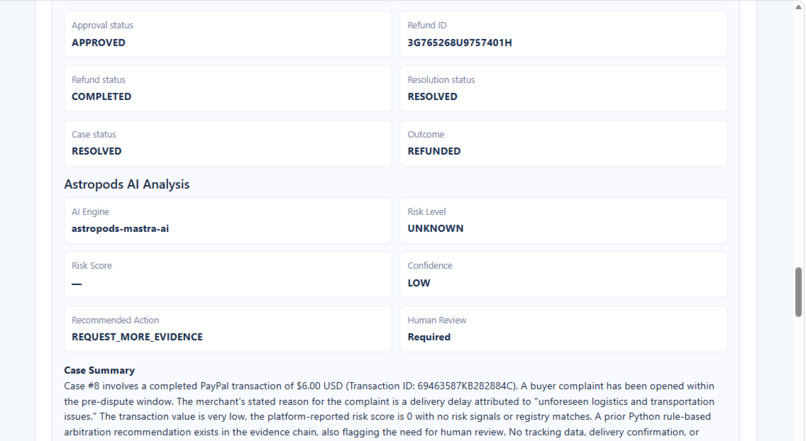
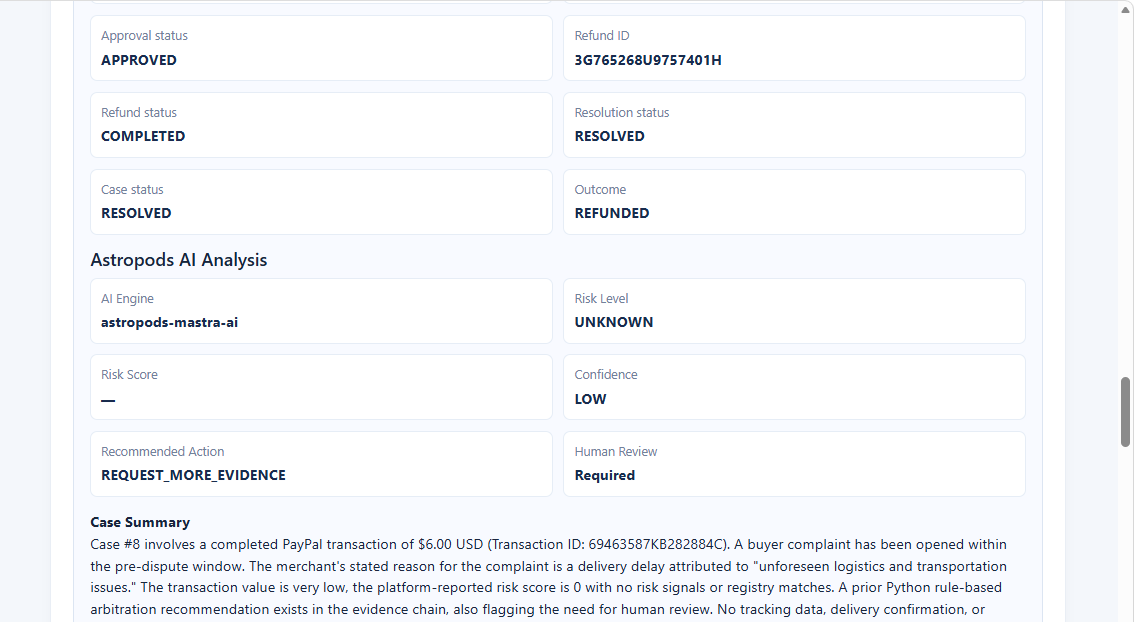
AI Recommendation and Refund Status — Case #8
-
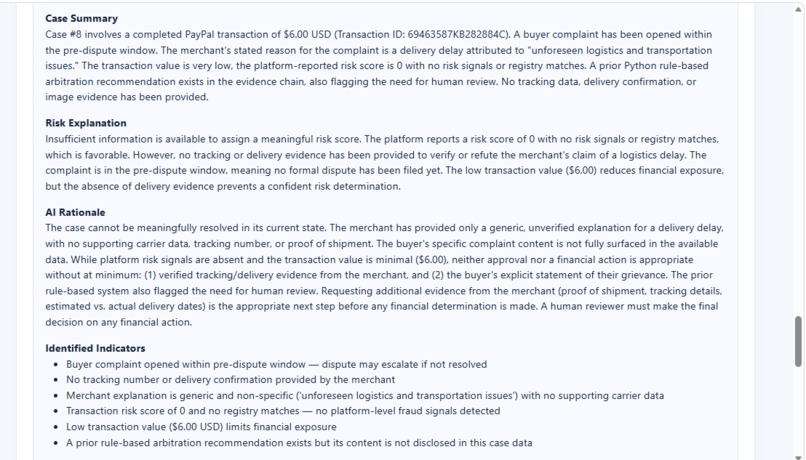
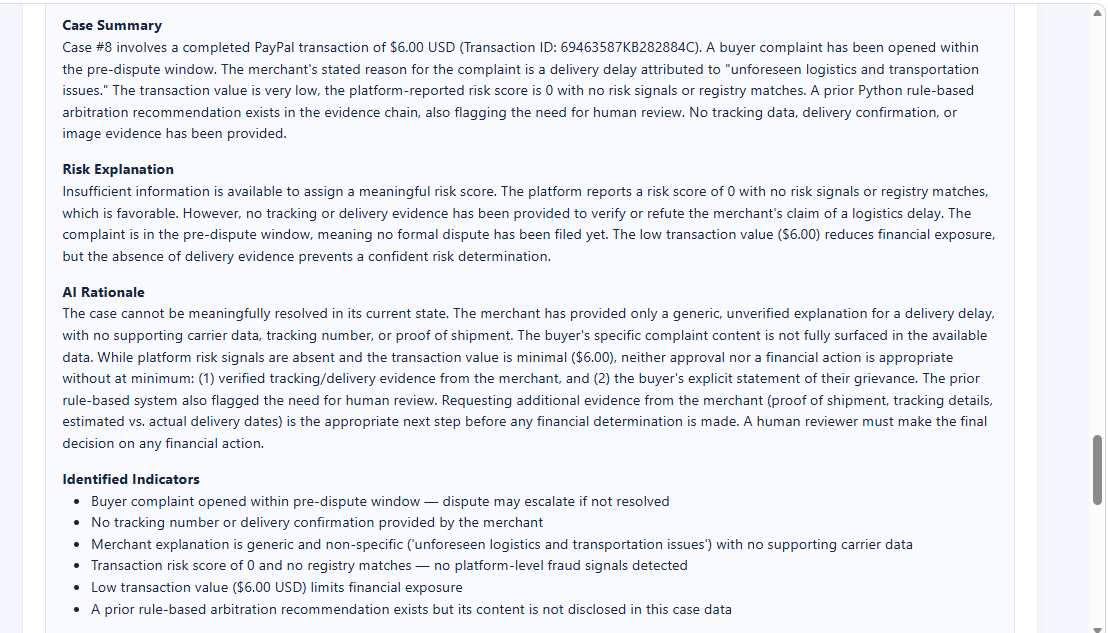
AI Case Summary and Decision Rationale — Case #8
-
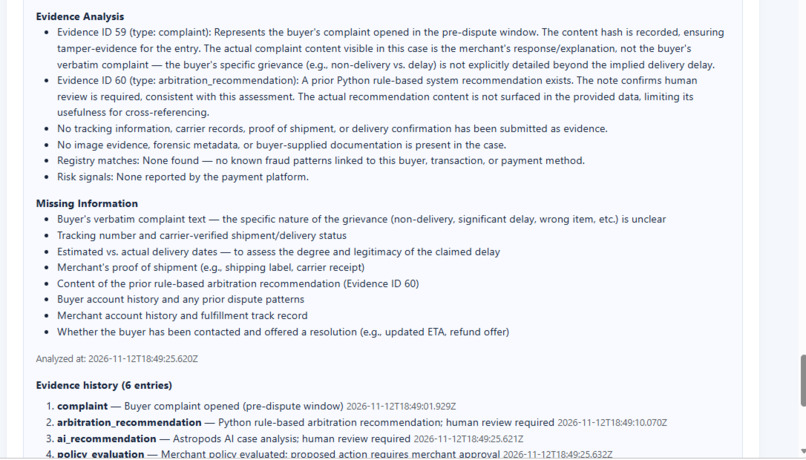
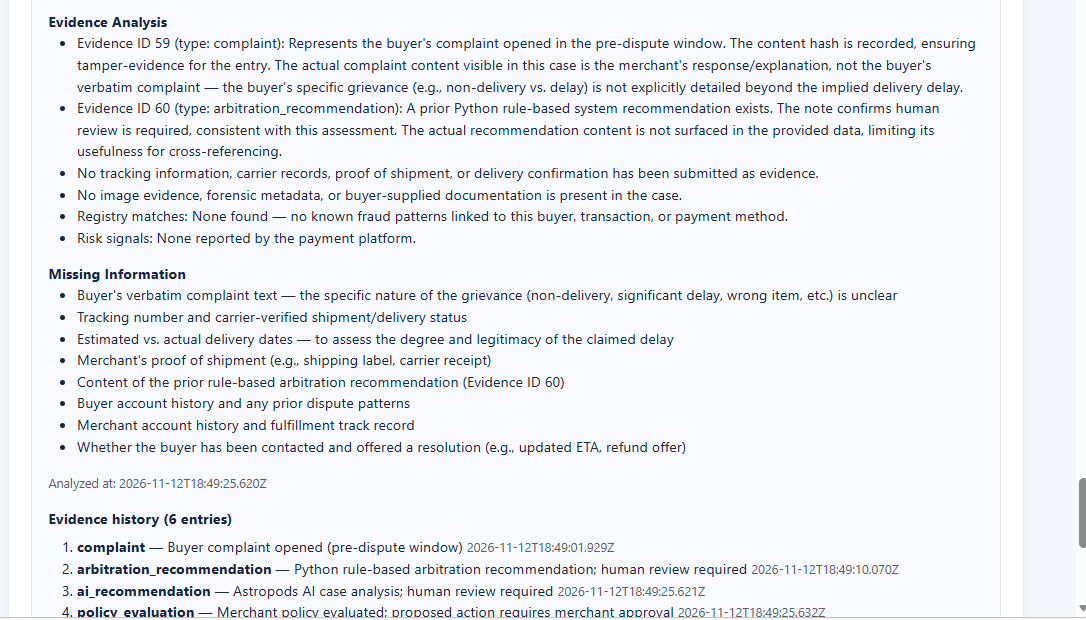
Evidence Analysis — Case #8
-
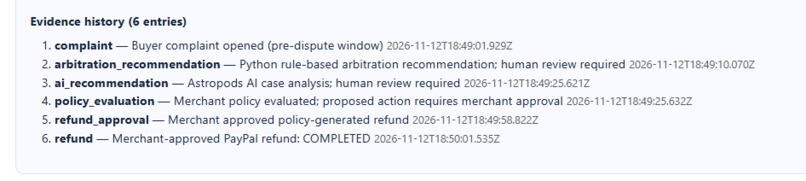
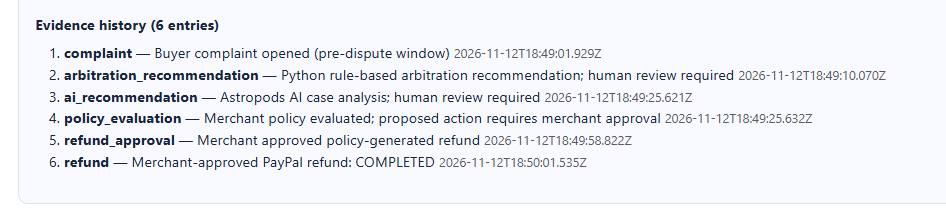
Complete Evidence History — Case #8

Inspiration
What it does
How we built it
Challenges we ran into
Accomplishments that we're proud of
What we learned
What's next for ShieldArbiter
ShieldArbiter – AI-Powered Payment Dispute Resolution
Inspiration
Online payment disputes and refund requests create challenges for merchants. When customers report payment issues, merchants must review transaction details, understand complaints, assess potential risks, apply refund policies, and determine an appropriate resolution.
This process can be time-consuming and may lead to inconsistent decisions when handled manually.
We developed ShieldArbiter to explore how Artificial Intelligence and PayPal payment technology can improve the payment dispute resolution process. Our goal is to create an intelligent assistant that helps merchants analyze complaints, evaluate transaction risks, and make informed, policy-based decisions while maintaining control over financial actions.
What it does
ShieldArbiter is an AI-assisted payment dispute resolution system that brings together payment processing, complaint management, risk assessment, and arbitration into one workflow.
Its main capabilities include:
- PayPal Payment Integration: Integrates with PayPal Sandbox to demonstrate payment creation and capture workflows.
- Complaint Management: Enables payment-related complaints to be created and processed through a structured case-management workflow.
- Transaction Risk Assessment: Evaluates transaction and complaint information using risk-scoring mechanisms to identify potentially suspicious or high-risk cases.
- Policy-Based Arbitration: Uses predefined rules and business policies to evaluate disputes and generate resolution recommendations.
- AI-Assisted Analysis: Uses an AI agent architecture to interpret complaint information and produce structured analysis to support decision-making.
- Interactive Data Management: Uses AG Grid to present structured transaction and dispute information in interactive tables.
- Refund Processing: Incorporates a controlled refund workflow using PayPal Sandbox.
- Case and Recommendation Storage: Uses SQLite to maintain complaint cases and associated recommendations.
ShieldArbiter is designed to support merchant decision-making by combining AI-generated insights with predefined business rules rather than relying entirely on automated decisions.
How we built it
We developed ShieldArbiter using a modular architecture that combines payment APIs, backend services, database storage, risk evaluation, and AI-powered analysis.
Backend and Payment Integration
- Node.js and Express.js: Used to build backend services, API endpoints, and coordinate application workflows.
- PayPal Sandbox: Used to integrate payment creation, capture, and refund operations in a controlled testing environment.
- SQLite: Used to store complaint cases and arbitration recommendations.
Risk Assessment and Arbitration
- Python: Used to implement transaction risk evaluation and arbitration logic.
- Rule-Based Evaluation: Applies predefined conditions and business policies to assess cases and produce structured recommendations.
Artificial Intelligence
- Mastra: Used as the AI agent framework for structuring AI-assisted workflows.
- Astropods: Integrated as the AI model gateway through its adapter.
- Claude Sonnet 4.6: Configured as the language model for complaint analysis and structured AI outputs.
Frontend and Data Visualization
- AG Grid: Used to create interactive data tables for displaying and managing structured transaction and dispute information.
The application connects these components to support a workflow in which payment information and customer complaints can be evaluated, analyzed, and presented for merchant review.
Challenges we faced
One of our biggest challenges was integrating multiple technologies into a single application while maintaining a consistent flow of information between the payment system, backend, database, Python arbitration engine, and AI components.
Integrating PayPal payment operations with the dispute-management workflow required careful handling of transaction information and financial actions.
Another challenge was determining how AI-generated recommendations should interact with predefined arbitration rules. We wanted the system to provide intelligent assistance without allowing AI outputs to independently trigger financial decisions.
Coordinating different programming languages, frameworks, and services while maintaining a modular architecture was also an important part of the development process.
What we learned
Building ShieldArbiter gave us practical experience with payment API integration, backend development, AI agents, model gateways, database management, risk assessment, and interactive data visualization.
We learned how to combine deterministic rule-based systems with AI-assisted analysis and how important controlled execution and structured decision-making are in financial applications.
We also gained experience integrating PayPal Sandbox into a larger application workflow rather than treating payment processing as an isolated feature.
Future Scope
ShieldArbiter can be extended with advanced fraud detection, explainable AI recommendations, evidence management, automated case prioritization, merchant analytics, and more comprehensive dispute tracking.
Our vision is to make online payment dispute resolution more efficient, consistent, transparent, and accessible for merchants through the combination of AI and payment technology.
Built With
- ag-grid
- artificial-intelligence
- astropods
- claude
- express.js
- mastra
- node.js
- paypal
- python
- rest-api
- sqlite
