Inspiration
Shield Labs was inspired by one simple problem: most security tools only tell developers “you have vulnerabilities”, but they do not clearly explain which ones matter first, how they connect into a real attack path, or how to fix them safely. The original idea was to build something more useful than a normal vulnerability scanner. I wanted Shield Labs to act like an AI security command center — a tool that can scan code, inspect a live web attack surface, reason about exploitability, connect separate issues into attack chains, monitor global CVEs, and help developers move toward remediation. Another major inspiration was privacy and trust. In real companies, the codebase is one of the most valuable assets. I did not want Shield Labs to become just another hosted web app where teams upload private code to someone else’s server. The long-term vision is a local-first enterprise tool that companies can run inside their own infrastructure, so their code and security data stay inside their own environment.
What it does
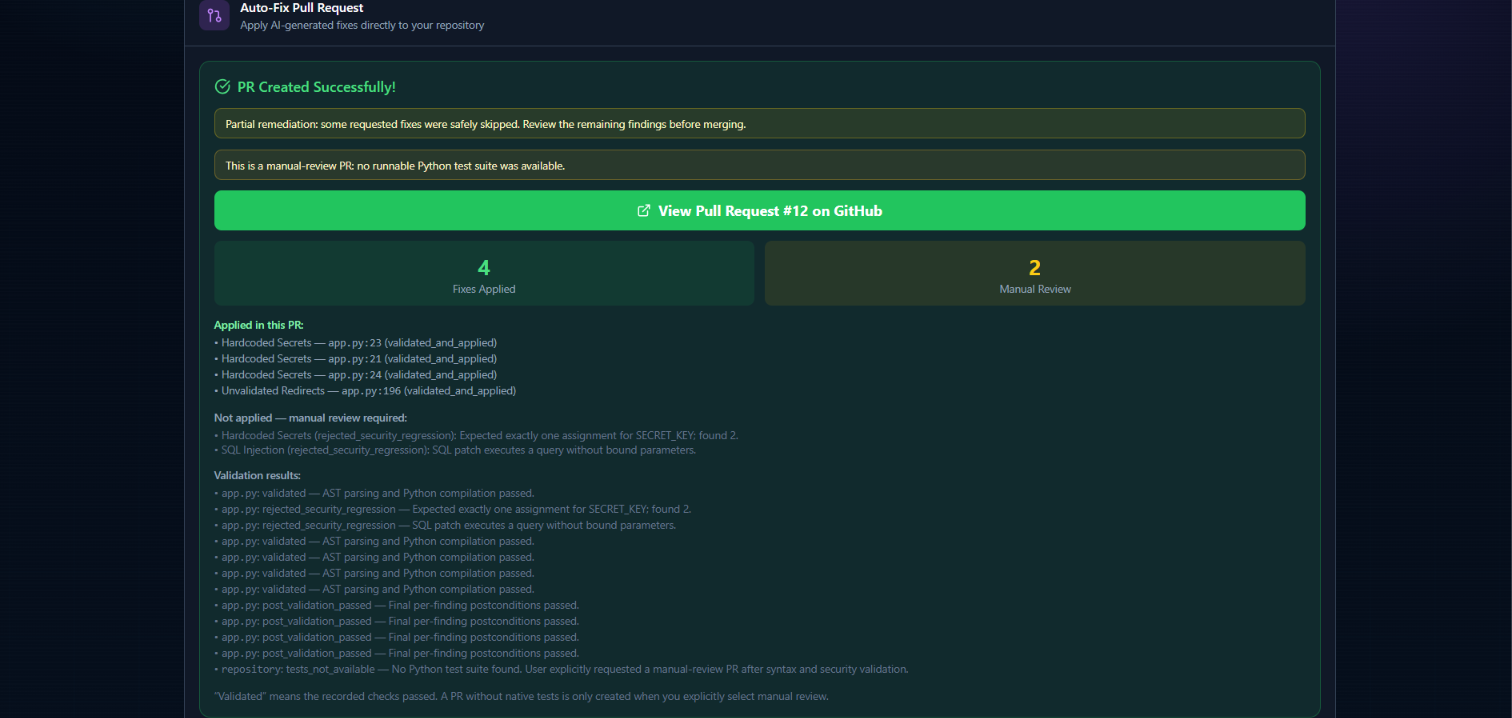
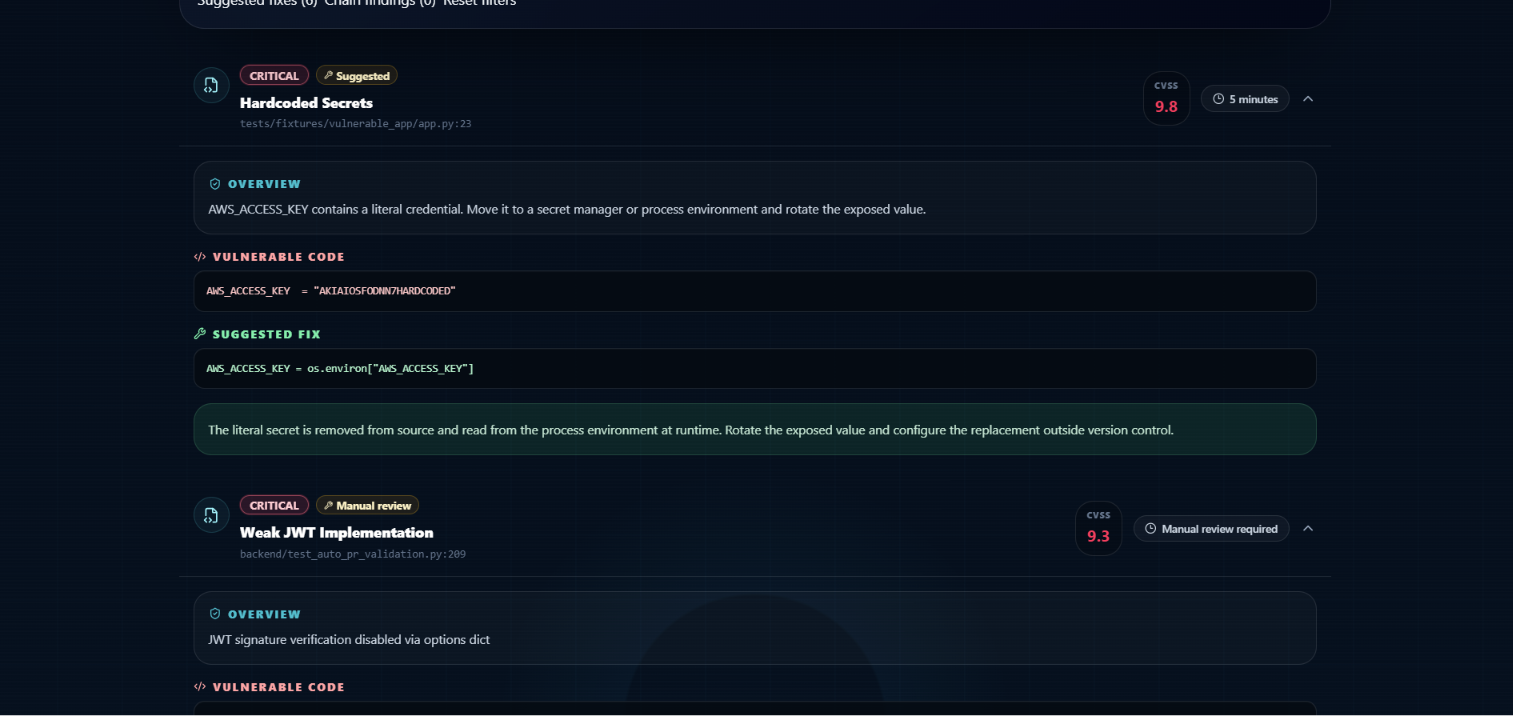
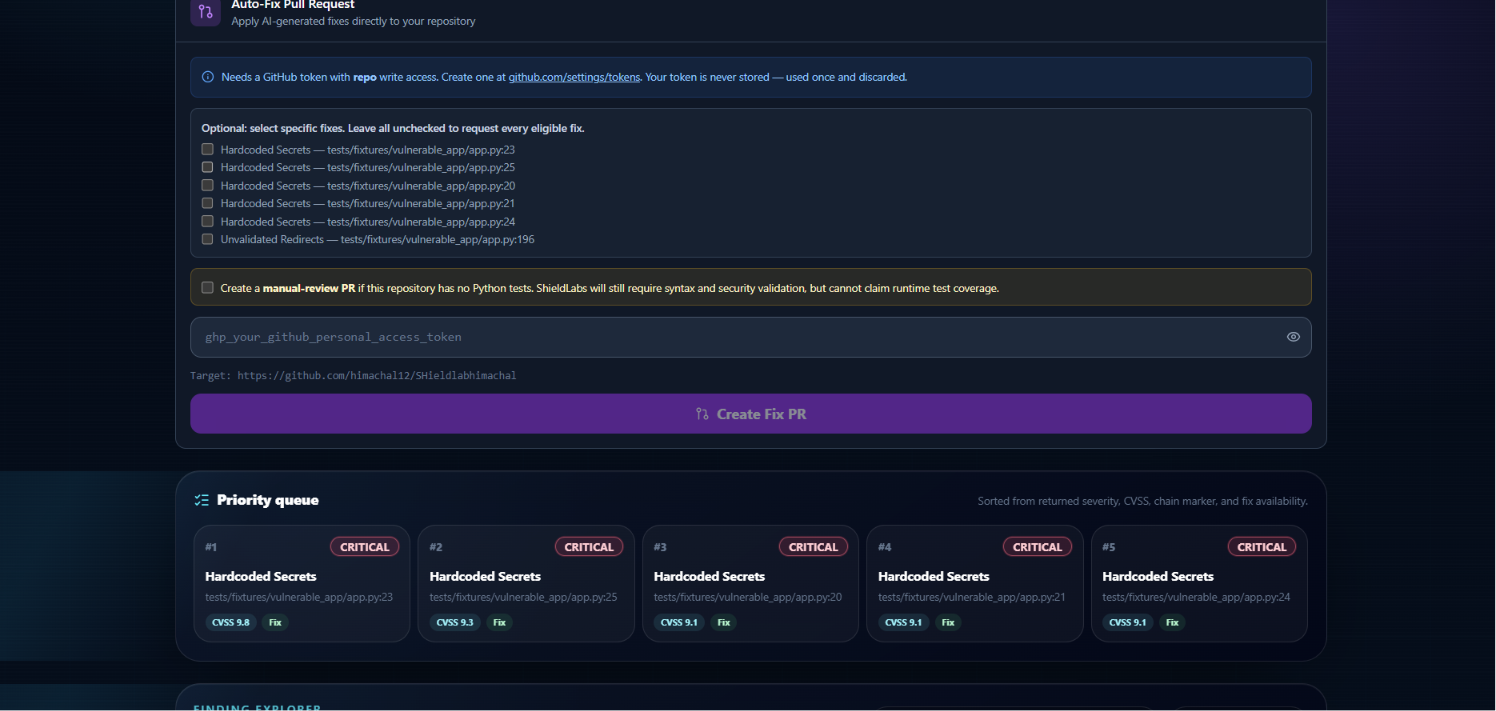
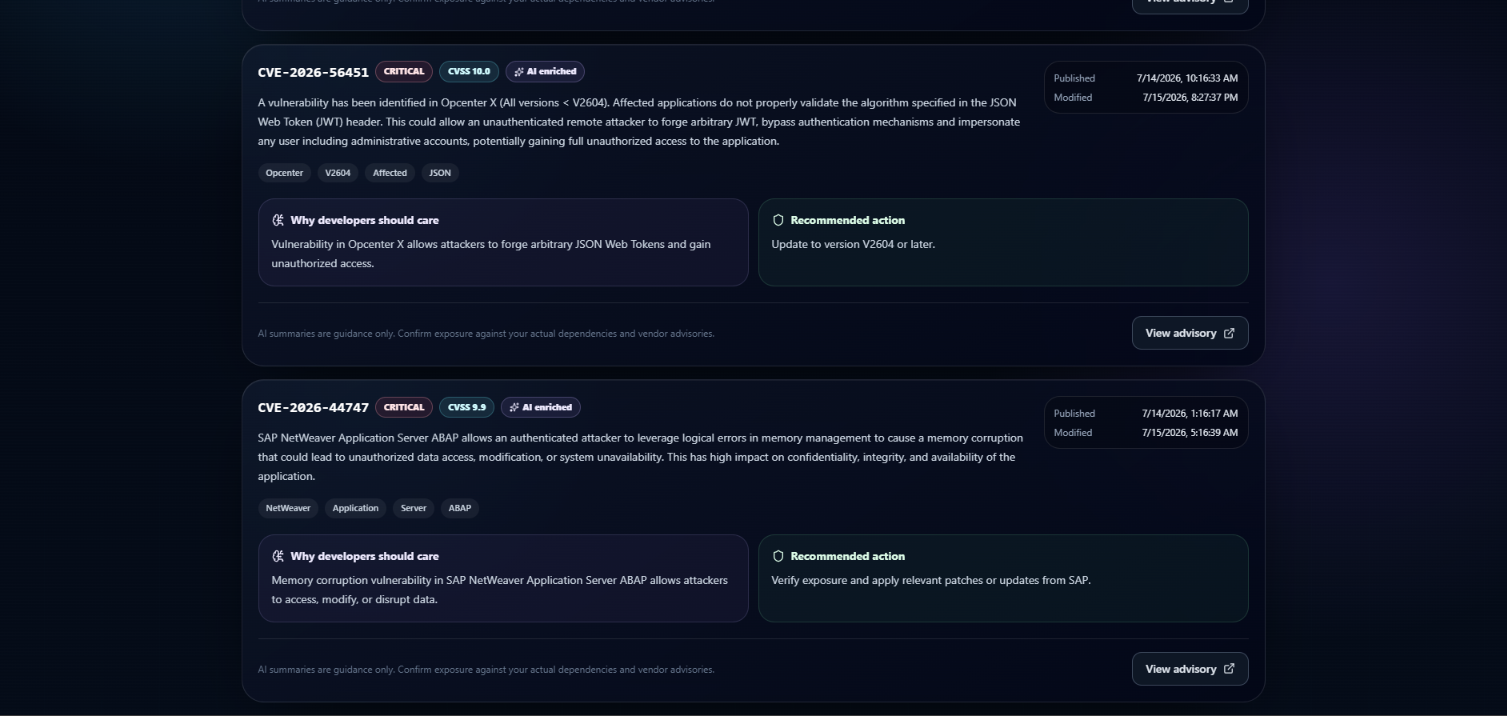
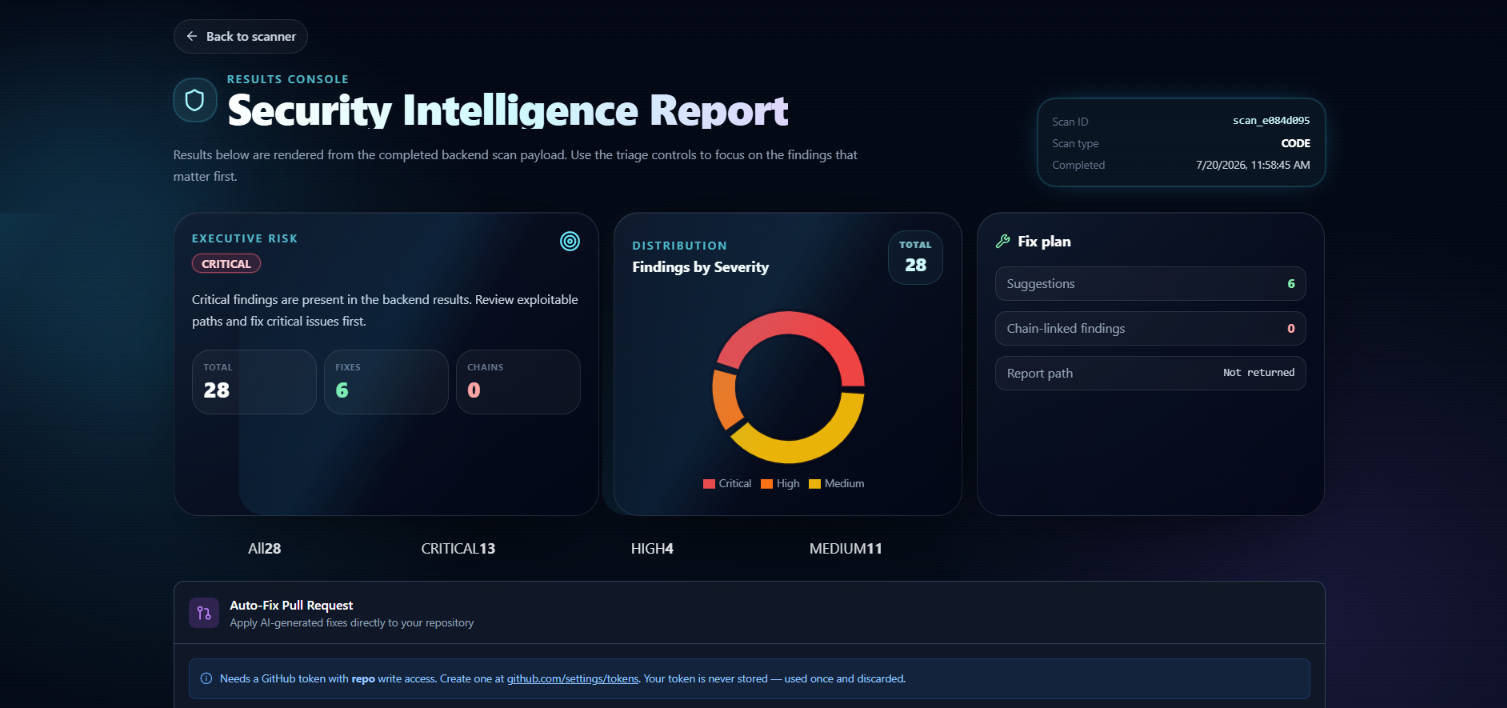
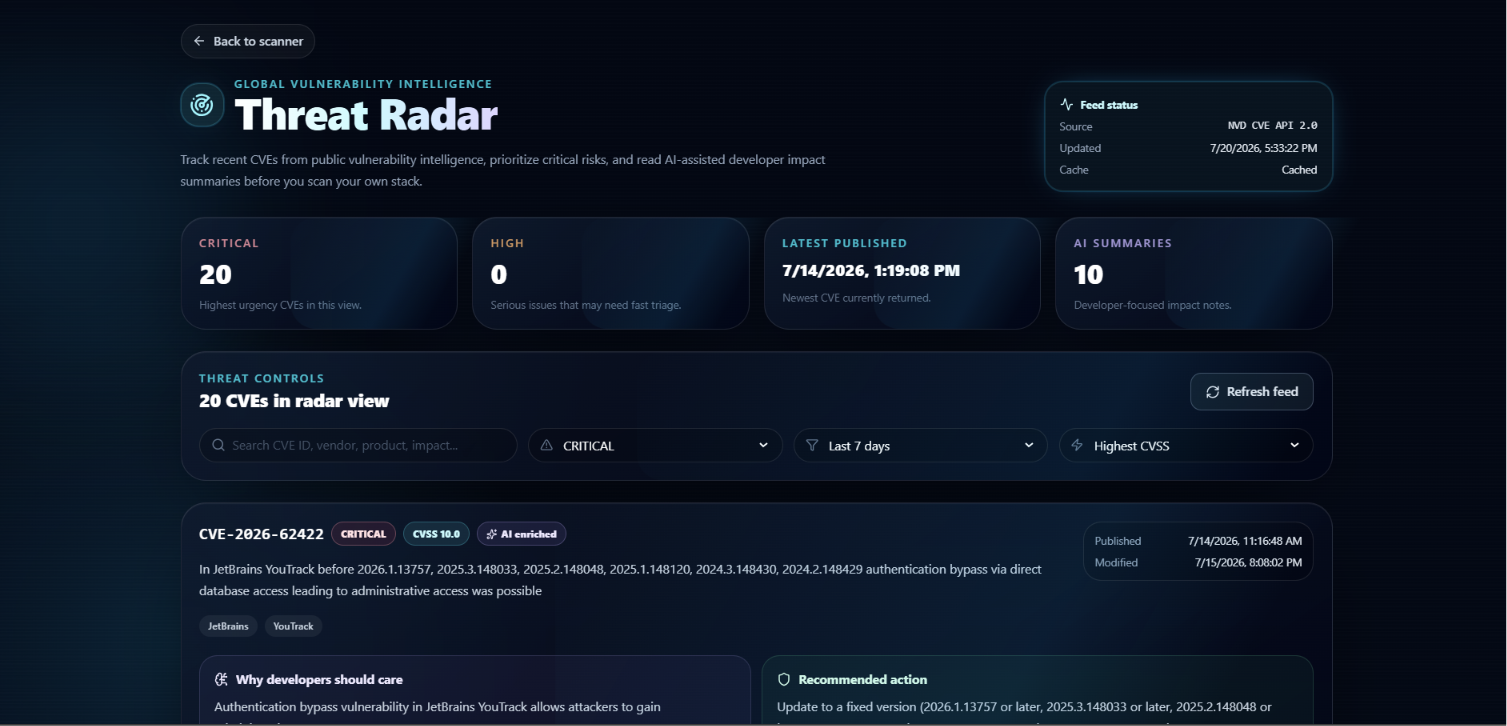
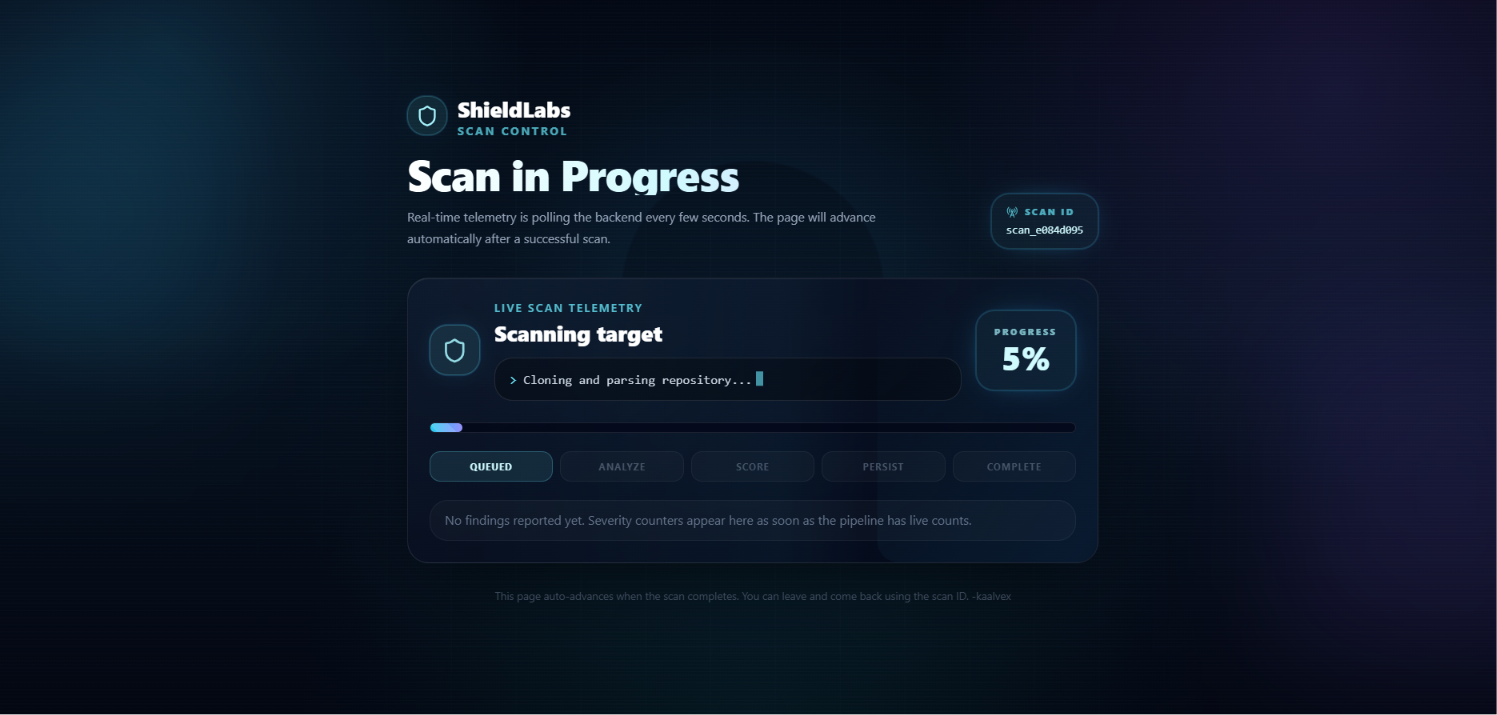
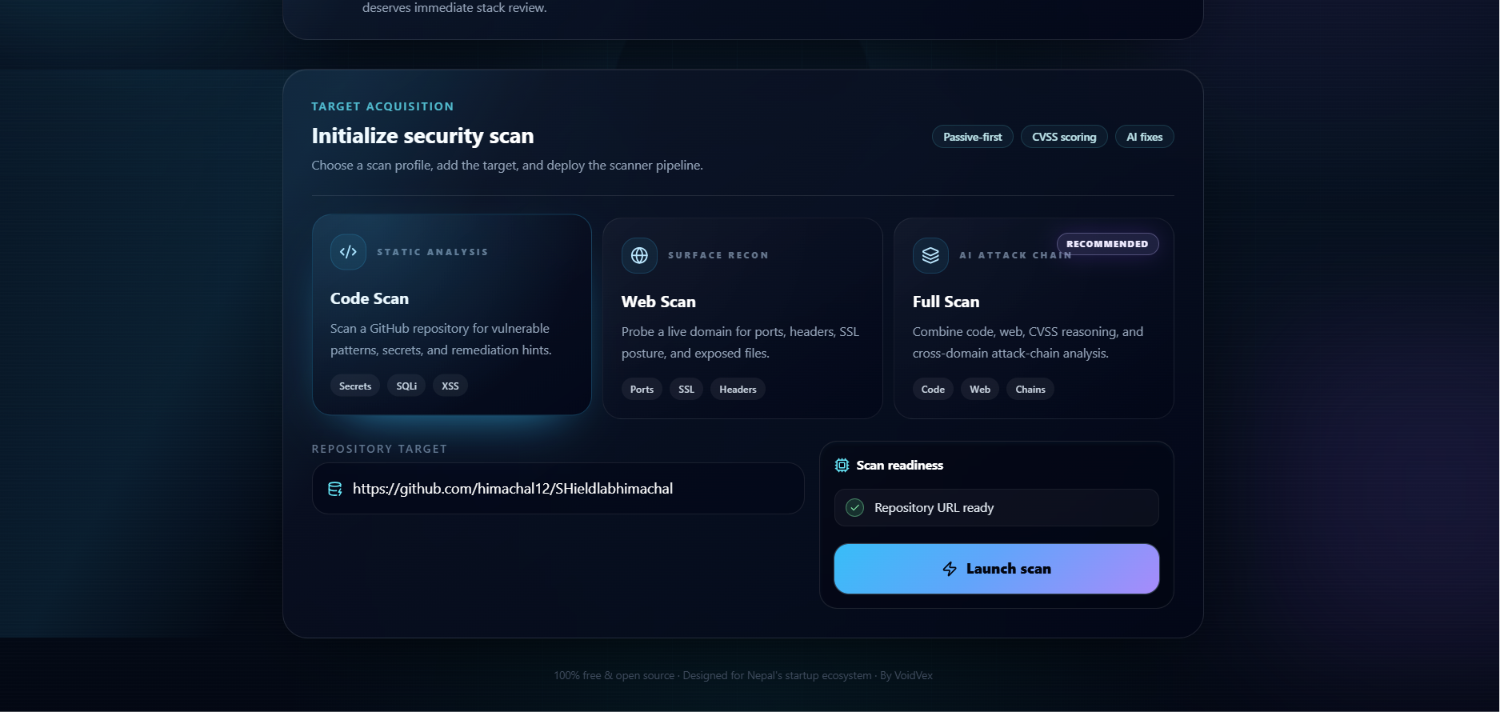
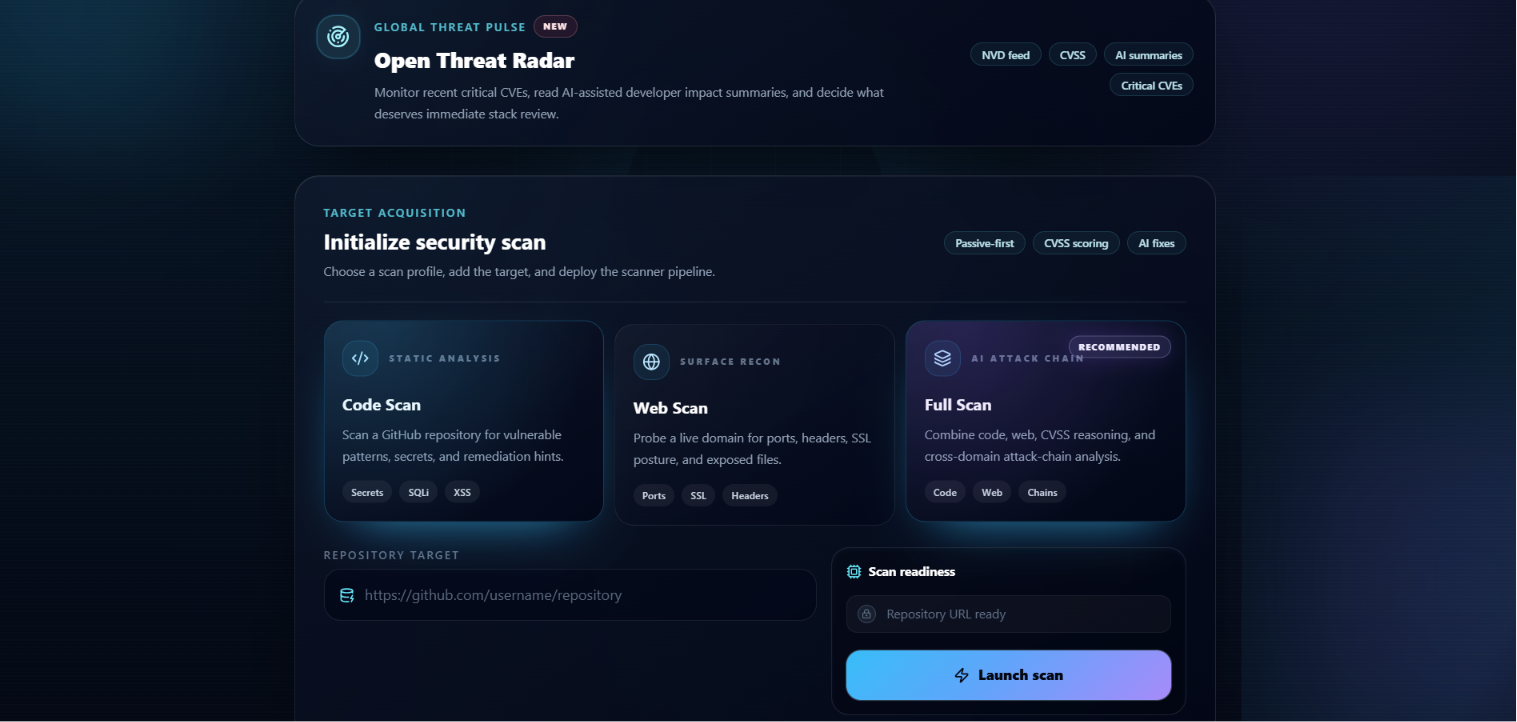
Shield Labs is an AI-powered security platform that helps teams go from: finding → reasoning → prioritization → remediation → pull request It currently supports: Code scanning for insecure patterns, secrets, weak JWT usage, XSS risks, CSRF issues, SQL injection patterns, missing security headers, missing rate limiting, unvalidated redirects, and other security weaknesses. Web scanning for open ports, exposed services, SSL/TLS problems, missing headers, exposed sensitive files, optional Nuclei findings, and consent-based SQLMap checks. Combined scans that analyze both the source code and the external web surface together. AI-assisted CVSS severity reasoning to help explain how exploitable a finding is. Cross-domain attack-chain analysis that connects separate code and web findings into realistic attacker paths. Threat Radar, which monitors recent CVEs from public vulnerability intelligence and adds developer-focused summaries. Live scan progress so users can watch each scan stage in real time. Results dashboard with severity counts, CVSS scores, filters, sorting, fixable-only views, and attack-chain cards. Fix generation using deterministic fixes, remediation guides, and bounded LLM-assisted proposals. Auto-PR remediation, where eligible fixes can be applied, validated locally, and prepared as a GitHub pull request. In short, Shield Labs is not just a scanner. It is an AI security analyst and remediation assistant that helps developers understand what matters and fix it faster.
How we built it
Shield Labs was built from the root as a full-stack security platform. The backend was built with FastAPI, using background scan pipelines so scans can run asynchronously while the frontend polls for status. The backend includes API routes for code scans, web scans, combined scans, result retrieval, scan progress, Threat Radar, health checks, and Auto-PR creation. For code security, we combined multiple approaches: Static analysis with Bandit-style findings. Custom pattern detection for common web security mistakes. AST-assisted parsing. Semantic false-positive review. Fix generation and remediation metadata. For web security, we added: Port scanning orchestration. Security header checks. SSL/TLS analysis. Exposed sensitive file checks. Optional Nuclei integration. Optional SQLMap active testing behind explicit consent. For AI reasoning, Shield Labs uses LLM support for tasks where context matters most: Severity reasoning. CVSS support. Semantic review. Cross-domain attack-chain analysis. Developer-friendly explanations. Threat Radar summaries. The frontend was built with React + Vite and designed like a cyber command console. It includes the scan launcher, active-scan consent UI, real-time scan progress page, results dashboard, severity charts, finding cards, attack-chain visualization, Auto-PR panel, and Threat Radar page. Codex and GPT-5.6 helped accelerate implementation by acting as an AI pair-programming partner. The core idea, architecture, workflow, and product direction were designed by Himachal Paudel / kaalvex, while Codex helped turn the vision into working backend code, frontend components, tests, debugging improvements, documentation, and final polish.
Challenges we ran into
One major challenge was that Shield Labs became much bigger than a simple scanner. The project had to connect many different systems together: Code scanning. Web reconnaissance. AI severity reasoning. Cross-domain attack-chain analysis. Threat intelligence. Fix generation. Auto-PR validation. Frontend dashboards. Database persistence. Making all of these pieces work together in one end-to-end flow was difficult. Another challenge was balancing security power with safety. Active scanning tools like SQLMap can send real payloads, so Shield Labs needed an explicit consent flow and a passive-first default. The future plan also includes domain ownership verification through DNS TXT records or hosted verification files before active scanning is unlocked. A third challenge was reducing scanner noise. Traditional scanners often produce many isolated findings, but the goal of Shield Labs was to explain which findings actually matter. That required severity reasoning, CVSS scoring, filtering, and attack-chain logic. Auto-remediation was also challenging. Generating a fix is not enough — the system also needs to validate patches, avoid unsafe changes, explain skipped fixes, and support manual review when full automation is not safe. Finally, building this as a solo developer in a short hackathon-style timeline was a challenge by itself. Codex helped accelerate coding and debugging, but the product still required many architecture and design decisions to make the workflow clear and useful.
Accomplishments that we're proud of
We are proud that Shield Labs became more than a vulnerability scanner. It became a working AI security command center that can detect issues, reason about them, connect them into attack paths, and help create fixes. Some accomplishments include: Building the project from the root as a full-stack platform. Creating three scan modes: Code Scan, Web Scan, and Combined Scan. Adding passive-first web reconnaissance for safer default scanning. Adding consent-based active scanning for SQLMap checks. Building cross-domain attack-chain analysis that connects code and web findings. Adding AI-assisted severity and CVSS reasoning. Creating a Threat Radar for recent CVE intelligence. Building a polished React frontend with live scan progress and result dashboards. Adding fix generation and remediation guidance. Building an Auto-PR workflow with validation-aware remediation. Designing the project around a local-first enterprise vision where private code stays inside the company’s own infrastructure. The biggest accomplishment is that Shield Labs does not stop at “we found bugs.” It tries to answer the more important questions: what can be exploited, why does it matter, what should be fixed first, and can we safely prepare the fix?
What we learned
We learned that security tooling becomes much more valuable when it focuses on context, not just detection. A vulnerability by itself is only part of the story. Developers need to know: Whether it is actually exploitable. Whether it connects with another weakness. Whether it affects the external attack surface. Whether it should be fixed before other issues. Whether a safe patch can be created. We also learned that AI is most useful when it is used for high-context reasoning instead of blindly replacing scanners. Static tools are good at detection, but AI can help explain risk, summarize impact, reason about attack paths, and make remediation more understandable. Another lesson was the importance of safe defaults. Security tools can be misused if they are too aggressive, so Shield Labs uses passive scanning by default and gates active payload testing behind consent. We also learned that developer experience matters. A security tool should not only produce alerts; it should help developers understand and act. Clear dashboards, progress updates, filters, fix explanations, and PR-ready remediation make security work easier to adopt. Finally, we learned how powerful AI-assisted development can be when the human drives the idea and the architecture. Codex helped move faster, but the project still needed strong product direction, workflow design, and judgment.
What's next for Shield Labs
Next, Shield Labs can grow into a more complete enterprise security platform. Planned future improvements include: Multi-language SAST support for JavaScript, TypeScript, Java, Go, PHP, and more. GitHub App installation instead of personal access token flow. SARIF export for GitHub Advanced Security compatibility. PDF and HTML executive reports. Container and dependency vulnerability scanning. Authenticated web scanning. XSS active scanning. Authentication testing. AI-powered business logic testing. Team dashboards and historical risk trends. CI/CD integration for pull-request security gates. Domain ownership verification before active scans using DNS TXT records or .well-known verification files. Stronger enterprise deployment packaging through Docker images or binaries. Threat Radar correlation against scanned repositories and dependency manifests. The long-term vision is for Shield Labs to become an autonomous security engineer for development teams — a local-first tool that continuously watches code, web exposure, and global threats, then helps teams understand and fix the risks that matter most.
Built With
- bandit
- css
- fastapi
- github
- gpt
- html
- javascript
- nmap
- python
- react
- sqlalchemy
- sqlmap


Log in or sign up for Devpost to join the conversation.