-
-
SheSense App Prototype
Inspiration
Did you know that women are three times more likely than men to experience common mental health problems, such as eating disorders and mood disorders including anxiety and depression? Did you know that many women experience postpartum depression (PPD) in isolation due to shame and a lack of understanding about the condition even in most developed countries? Stigma surrounding women’s mental and reproductive health remains a significant barrier to accessing care and support. Cultural taboos and misconceptions often lead to silence around issues such as menstruation, pregnancy, postpartum depression, and menopause. Many women feel ashamed or embarrassed to discuss their health concerns, fearing judgment or misunderstanding. This stigma not only isolates individuals but also discourages them from seeking help, exacerbating health disparities. By raising awareness and fostering open conversations, we can dismantle these stigmas, empowering women to prioritize their health and well-being without fear.
What it does
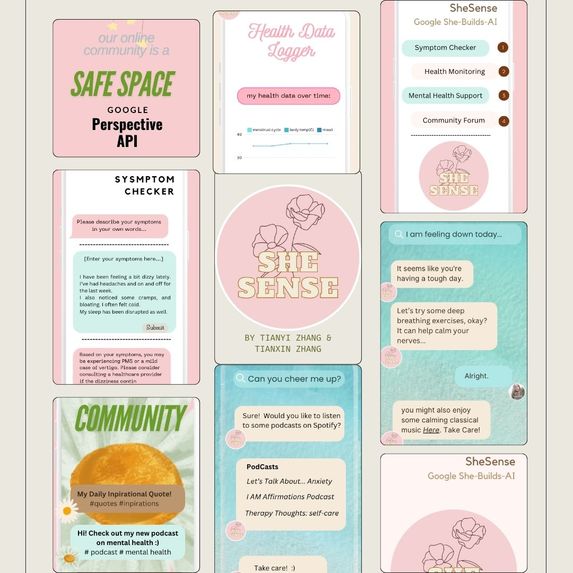
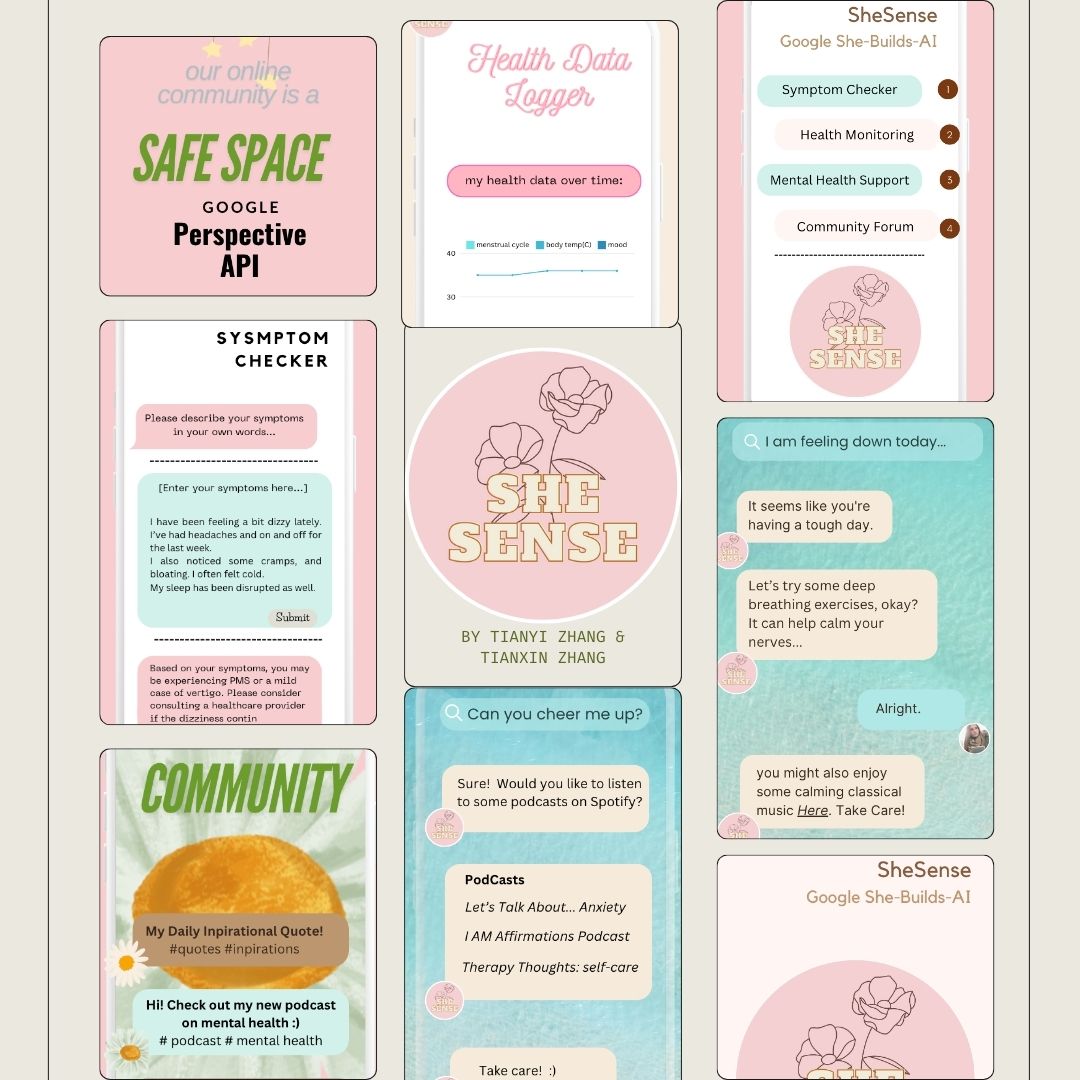
SheSense is designed to support women and girls’ physical and mental health in a compassionate, accessible way with AI-driven technology. We have 4 main features:
- symptom checker: Users can describe their symptoms in their own words, and SheSense provides a personalized health assessment to help identify potential issues. If necessary, it guides users toward the next steps, like consulting a healthcare professional or exploring self-care options.
- health monitoring: SheSense helps users track key health metrics, like menstrual cycles, mood, and physical symptoms, over time. The app then identifies patterns and provides helpful insights, alerting users if something might need medical attention.
- mental health support: SheSense lets users reflect on their feelings through journaling or chat, and offers personalized support based on their mood. Whether feeling happy, neutral, or down, the app provides helpful content, from self-care tips to resources for managing stress or anxiety, all aimed at improving mental well-being.
- community support: SheSense creates a safe space for women to connect and support each other. The app connects users with others who have similar experiences, so they can share stories and offer peer support. Moderated discussion boards ensure that the community remains a safe, positive environment for everyone.
By addressing the stigma surrounding mental health and women’s health issues, SheSense Health fosters open dialogue and encourages users to share their experiences without fear of judgment. Through education and community engagement, the app aims to break down barriers, helping women prioritize their health and well-being.
How we built it
We built SheSense by combining cutting-edge AI technologies with a user-centered design approach. We leveraged Google's AI products, such as the Cloud Language API for sentiment analysis and the AnalyzeSyntax API for processing user inputs, helping us deliver personalized health assessments. To ensure accurate, evidence-based recommendations, we integrated the Mayo Clinic API. For creating a conversational interface, we used Rasa to develop intuitive chat capabilities, making it easier for users to interact with the app. To enhance the app's scalability and reliability, we deployed our solution using Kubernetes, which allowed for seamless orchestration and management of our backend services. Additionally, Gemini helped guide us in selecting the best frameworks and tools, such as TensorFlow for predictive modeling and Dialogflow for refining conversational AI. Throughout the development, our goal was to create an accessible, safe, and supportive platform that empowers women to manage their health with confidence.
Challenges we ran into
Initially, we had a wealth of innovative ideas but were unsure of the most effective way to implement them. So we consulted with Gemini to gain insights on the most effective frameworks and tools for our project. For example, we explored TensorFlow and PyTorch for predictive modeling using health data, and platforms such as Rasa and Dialogflow for developing conversational interfaces. Additionally, we leveraged tools like Notion and Confluence for managing community features. Through AI-powered assistance, we were able to identify and select the most suitable technologies to support our desired functionalities.
One of the key challenges we faced was ensuring that our online community remained a safe and supportive space for all users. To address this, we turned to the Google Perspective API to actively monitor user-generated content, including posts and comments, for harmful or abusive language. By implementing this tool, we were able to effectively filter out toxic content, preventing it from reaching the community and ensuring a safe, respectful environment for all users.
Accomplishments that we're proud of
We were able to build the SheSense app using a lot of Google products we did not know before, for example, we used the Google Could language v1 for sentiment analysis and classification to detect potential mental and physical health concerns in women. We used the AnalyzeSyntax API to process the user's input through several stages. One unique aspect of our project is that we combine both the user's logged data and the Mayo Clinic API to generate an accurate and personalized symptom check. We also utilized Google Perspective API's powerful machine learning to identify abusive behaviors and toxic languages. We feel a strong sense of accomplishment after finishing this app. We truly believe that it could be a positive impact for women around the world!
What we learned
Women's Health Care Insights: We gained a deeper understanding of the stigma surrounding women’s mental and reproductive health. Issues like menstruation, postpartum depression, and menopause are often shrouded in silence due to shame and fear of judgment. This highlighted the need for safe, stigma-free spaces where women can openly discuss their health concerns. We also recognized the importance of accessible, personalized mental health resources, as many women’s issues—like anxiety and depression—are often underreported or misunderstood.
Technical Learnings: On the technical side, we gained valuable experience using tools like Google Cloud Language API for sentiment analysis, which helped us detect signs of mental and physical health concerns. The AnalyzeSyntax API enabled us to break down user inputs for more personalized symptom checks, while integrating the Mayo Clinic API allowed us to provide evidence-based health assessments. Additionally, Google Perspective API helped us monitor and reduce harmful language in the community, ensuring a safer environment for users. Overall, we learned how combining diverse technologies can create a holistic solution that supports both individual health and community well-being.
What's next for SheSense Wellness Hub
We are committed to enhancing community engagement by making the app more user-friendly, particularly for elderly women and young girls, in order to remove access barriers. By refining our recommendations, we aim to make them more personalized and accurate, ensuring that the app becomes a trusted and reliable source of information.
Additionally, we are exploring the integration of popular APIs such as Headspace or Calm to offer mindfulness and meditation exercises, providing women with valuable tools to manage stress. To further boost user engagement, we plan to incorporate gamification elements, daily inspirational quotes, and reminders, all designed to encourage regular participation and foster a supportive, interactive experience.
Built With
- gemini
- google-cloud
- google-persepctive-api
- kubernetes
- mayo-clinic-api
- rasa
- sentiment-analyzing-api
- tensorflow
- v1alpha1
- v1language


Log in or sign up for Devpost to join the conversation.