-
-
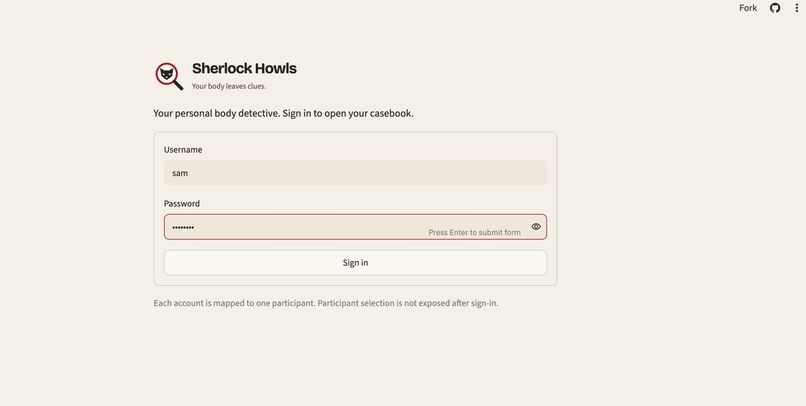
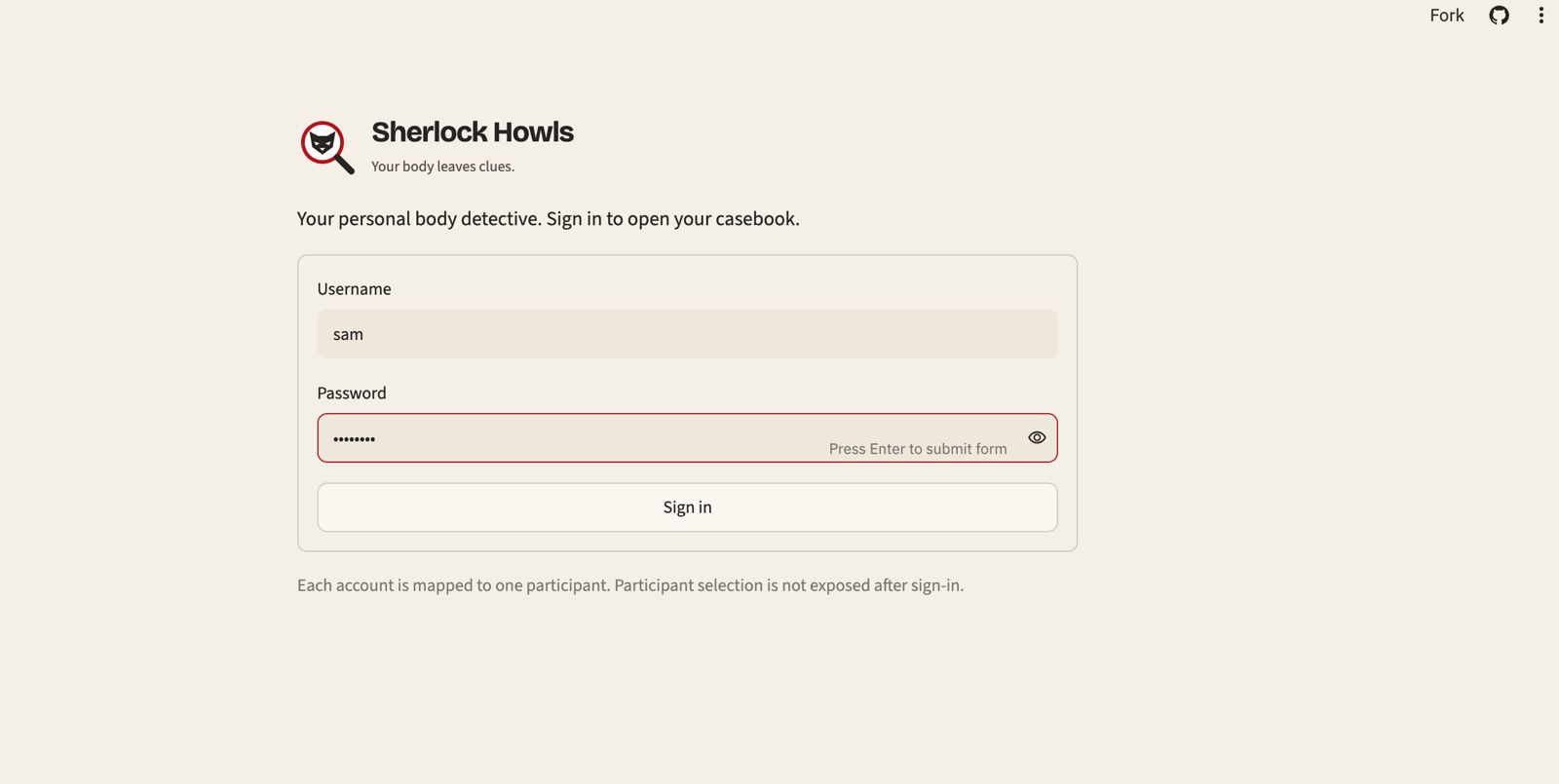
Secure Sign-In
-
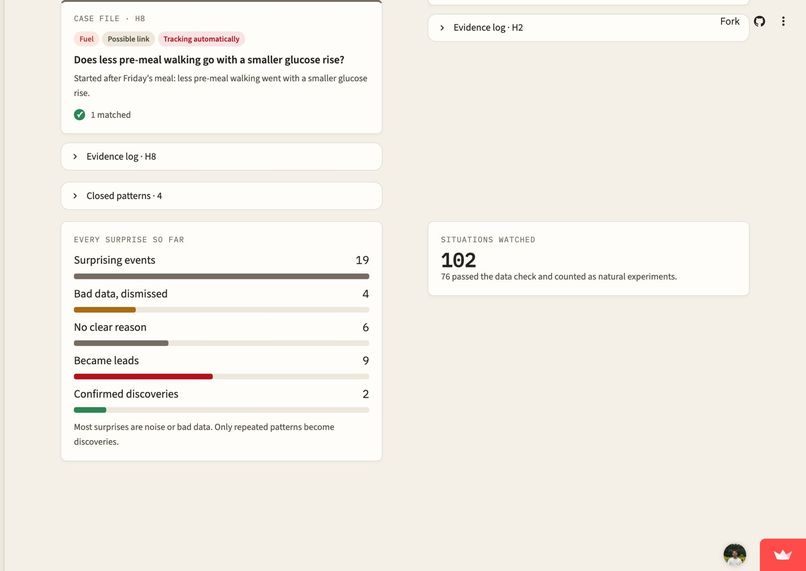
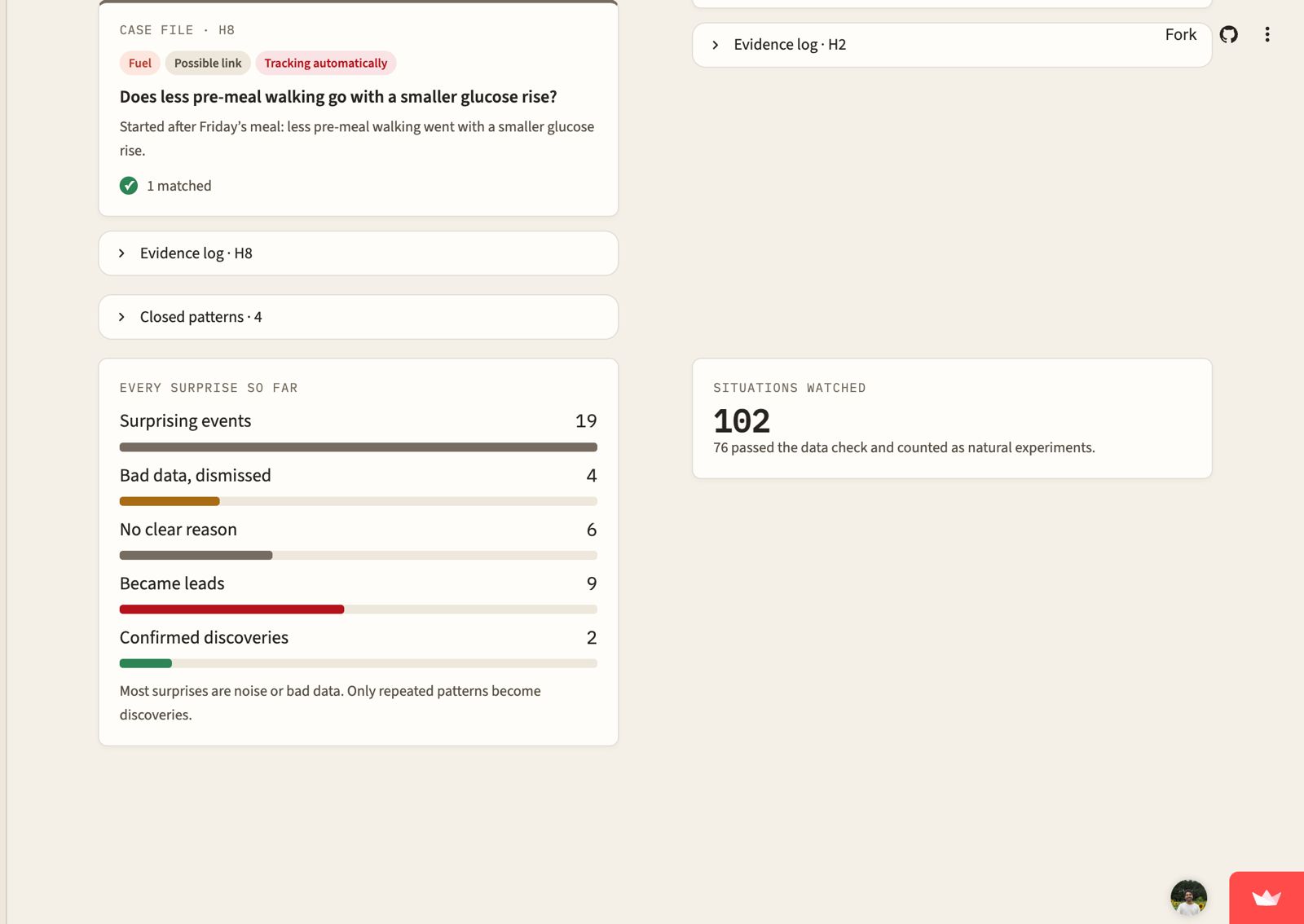
Investigation Funnel
-
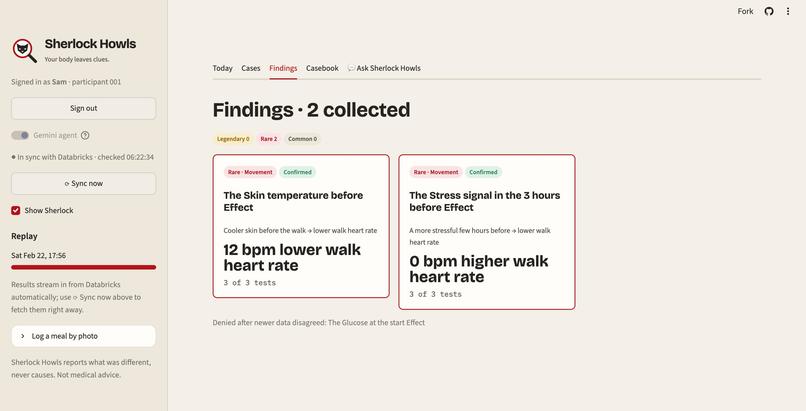
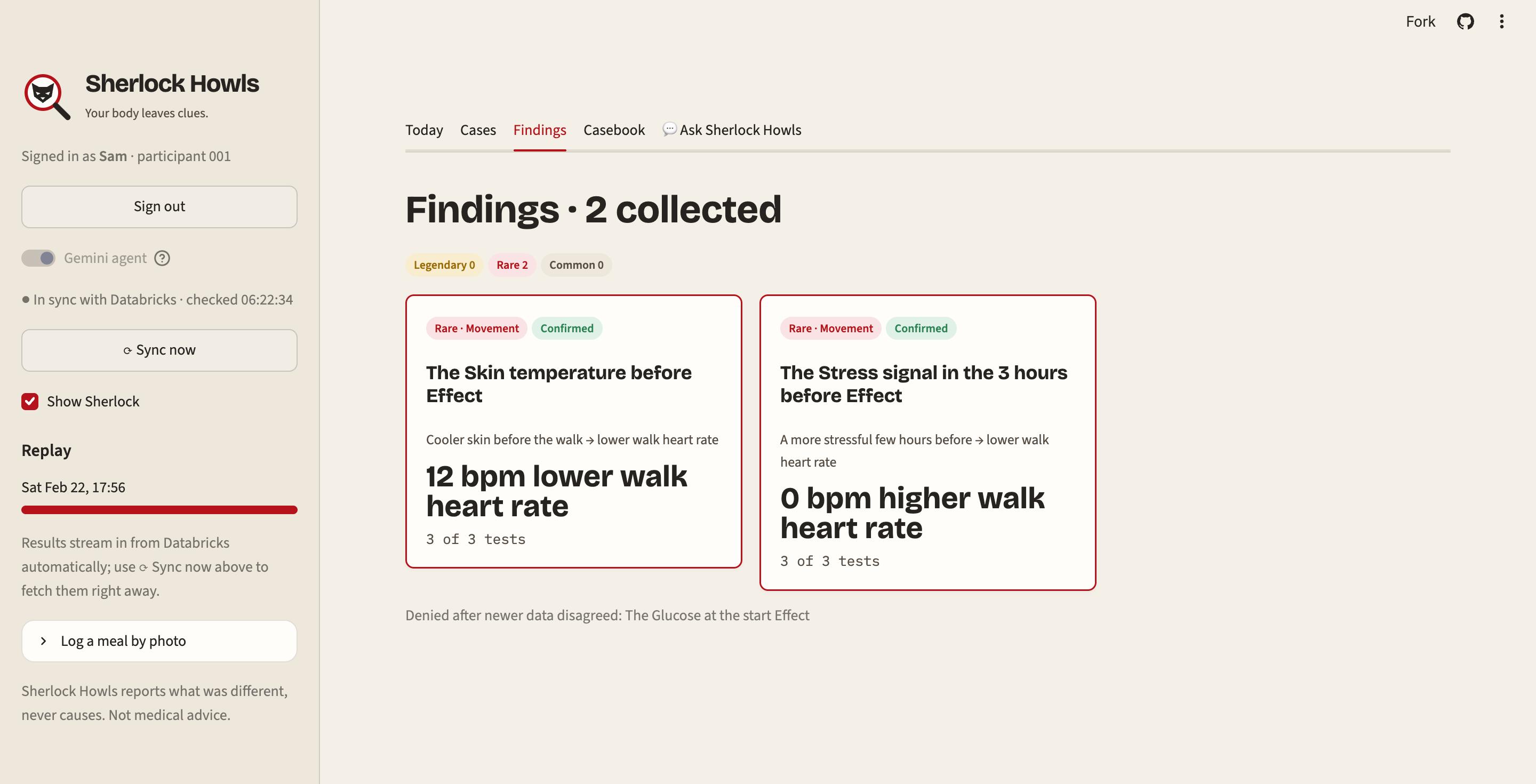
Findings
-
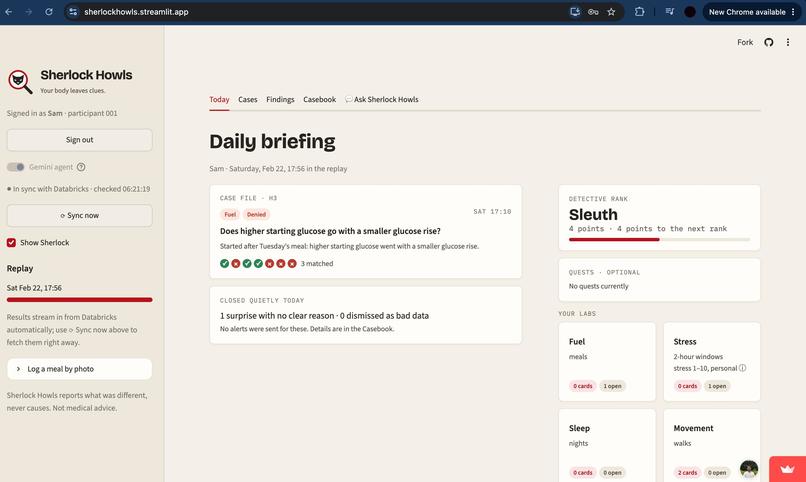
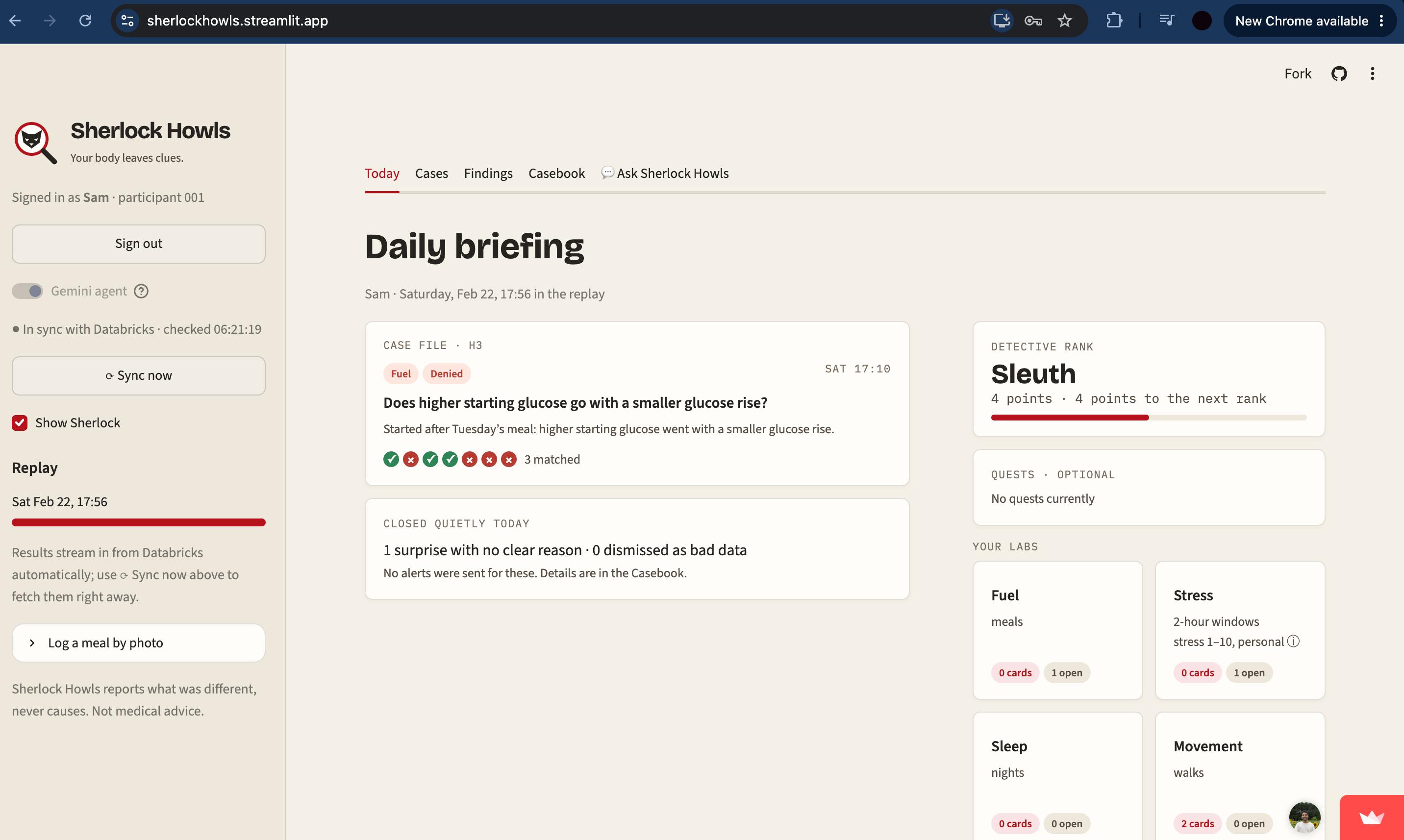
Daily Briefing
-
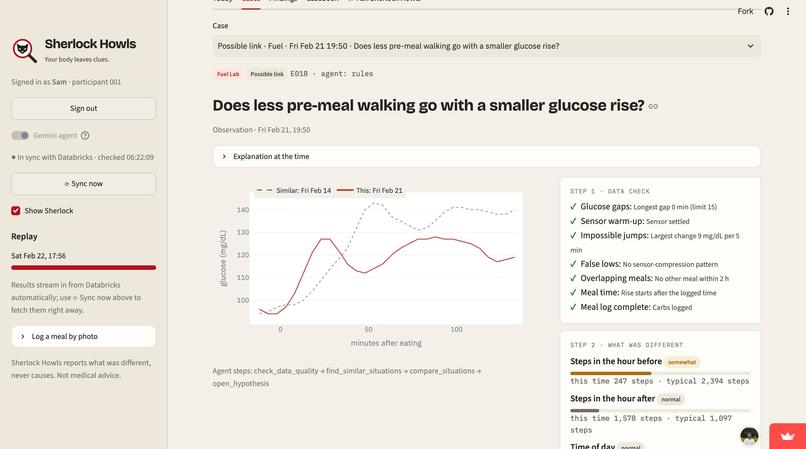
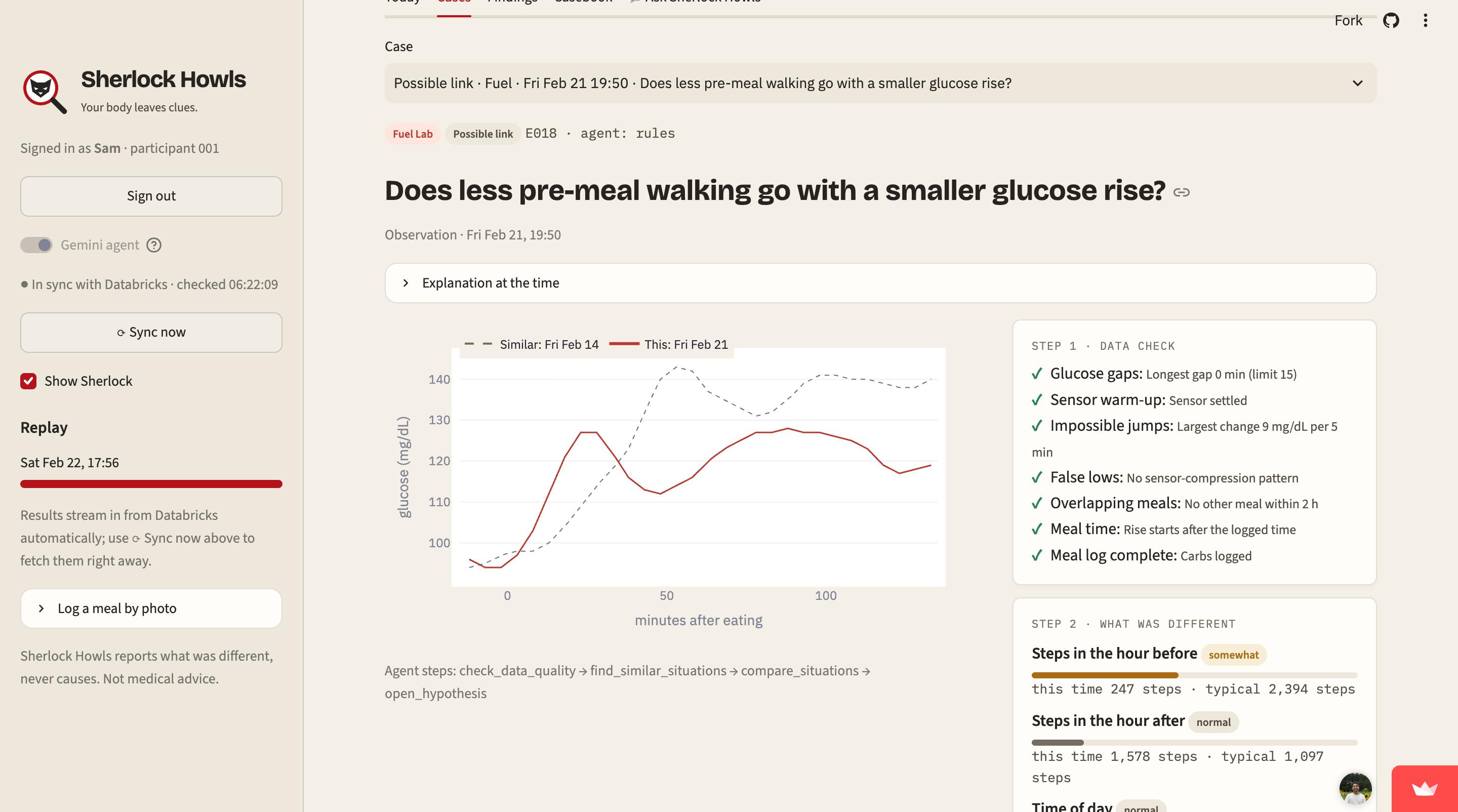
Case Investigation
-
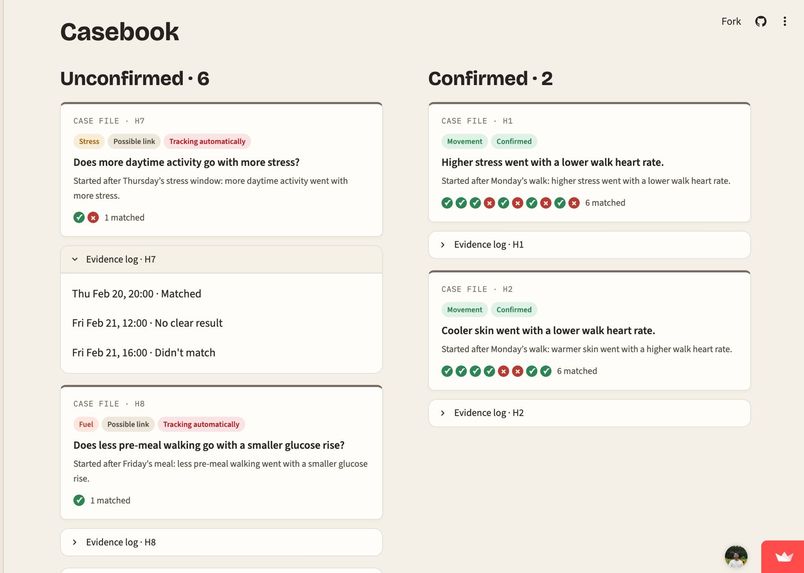
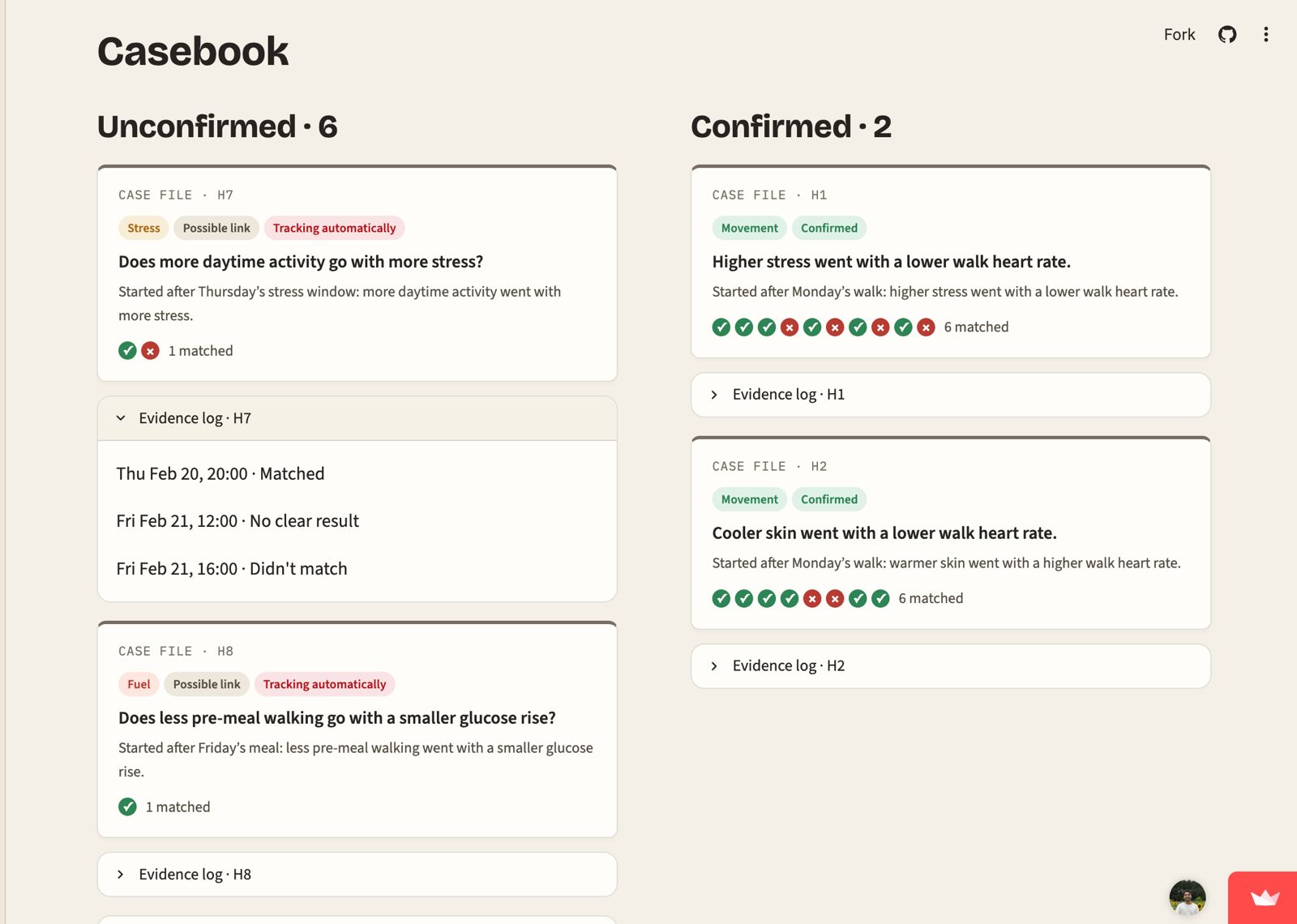
Casebook
-
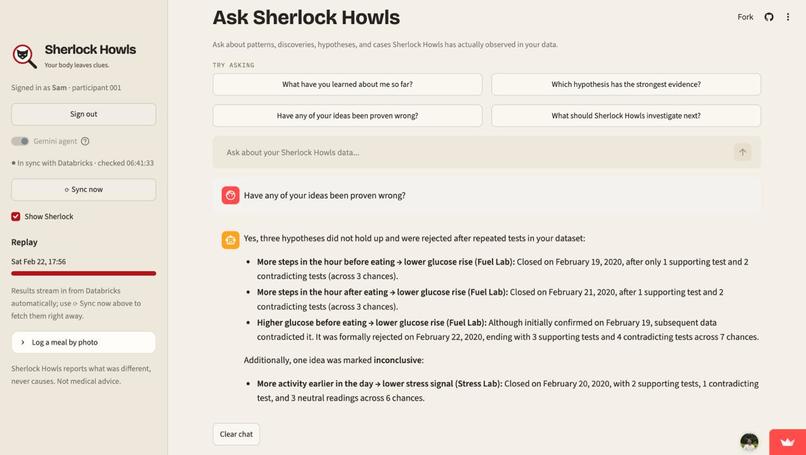
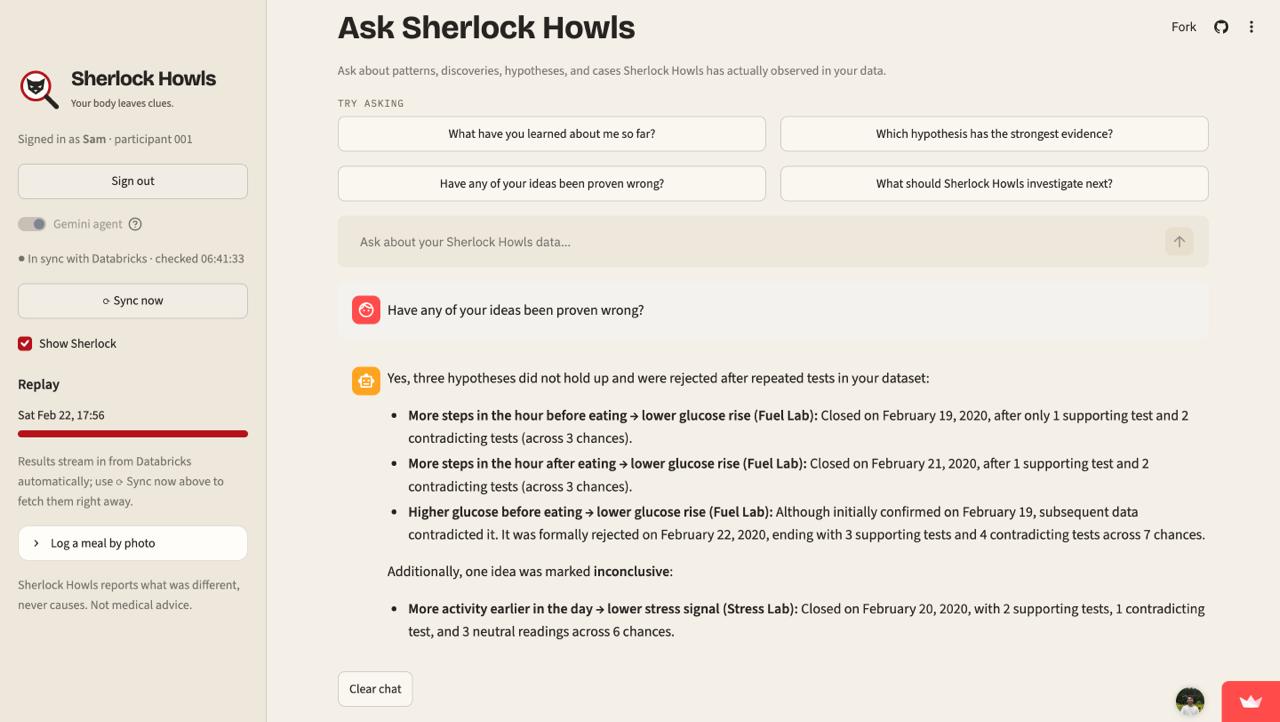
Ask Sherlock Howls
-
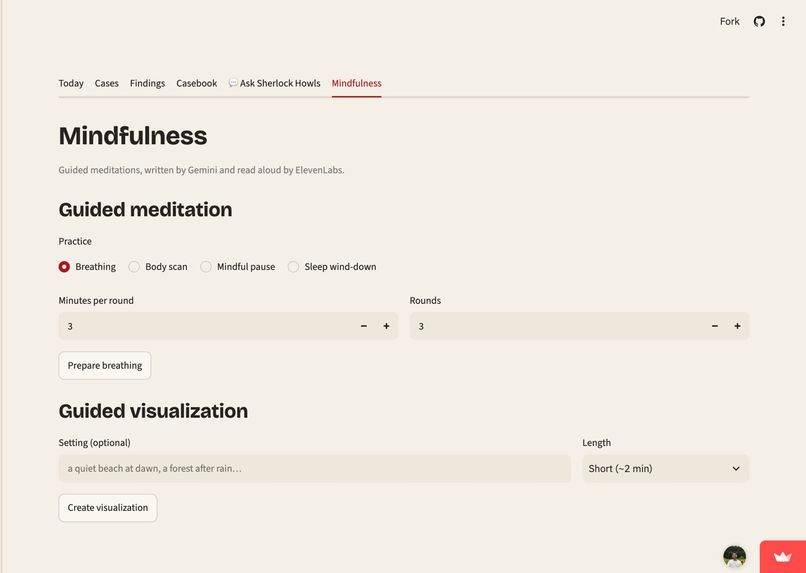
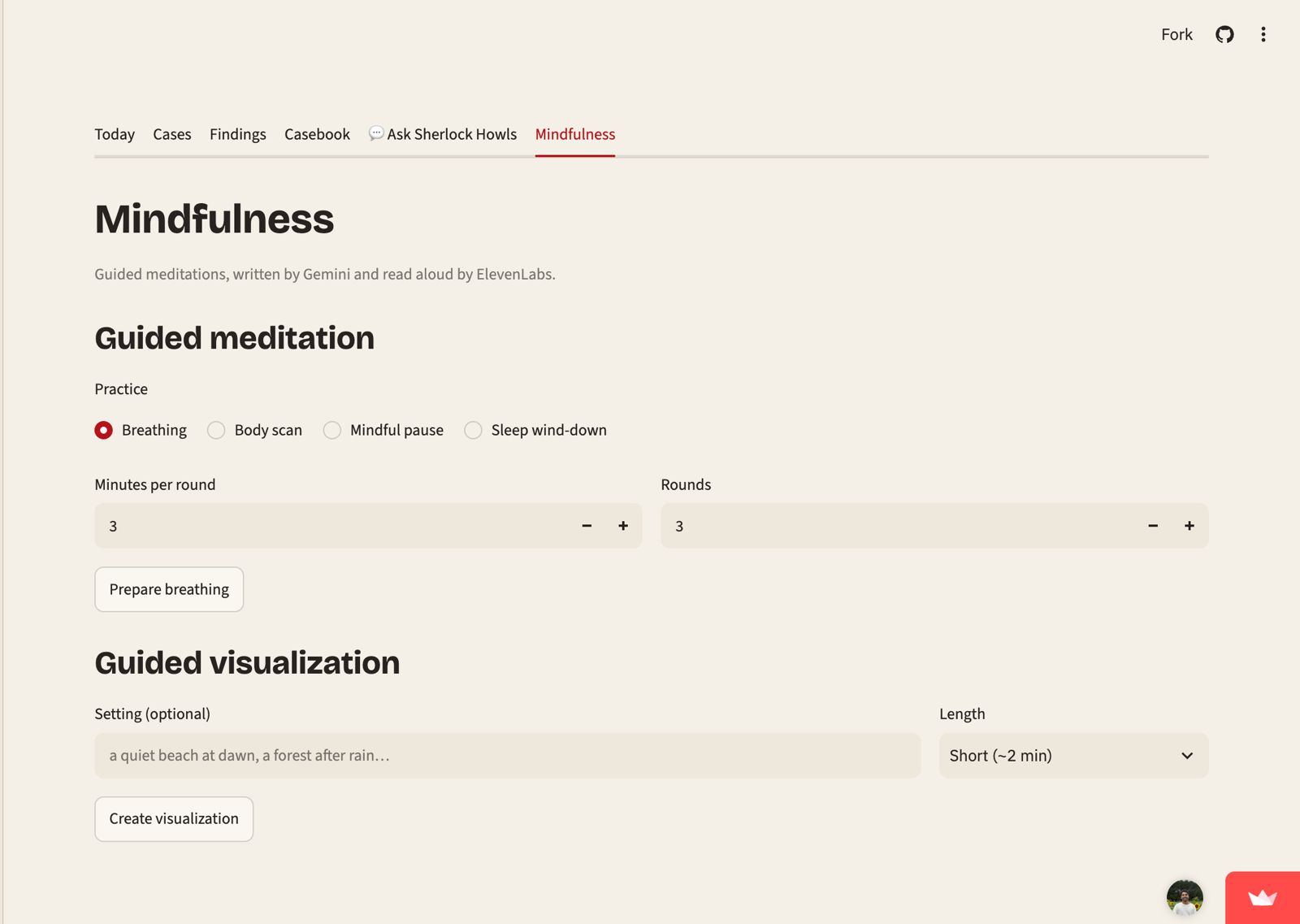
Mindfulness
Inspiration
Most health apps tell users what happened, but not why it happened. We wanted to investigate unusual health events instead of just displaying charts. That inspired Sherlock Howls, a personal body detective that follows clues hidden in health data.
What it does
Sherlock learns personal patterns across Fuel, Stress, Rhythm, and Sleep. When something unusual happens, it opens a case, investigates what changed, forms a hypothesis, and tests it against future events. Repeated evidence can turn a hypothesis into a Finding.
How we built it
We built the core system in Python, with Databricks for data processing and Gemini for reasoning and conversation. Streamlit powers the web app, while React Native/Expo + FastAPI power the mobile app. Both interfaces use the same cases, hypotheses, evidence, and findings.
Challenges we ran into
The biggest challenge was preventing one correlation from becoming an immediate conclusion. We created an evidence system where hypotheses can be supported, contradicted, faded, or rejected. We also had to keep Databricks, authentication, web, and mobile in sync.
Accomplishments that we're proud of
We are proud that Sherlock can change its mind when future evidence contradicts an earlier hypothesis. We also built a persistent Casebook that tracks investigations over time. Finally, we delivered the same investigation experience across both web and mobile.
What we learned
We learned that uncertainty can make AI more trustworthy. Separating observation → hypothesis → evidence → finding prevents the system from pretending to know more than it does. We also learned the value of comparing users against their own personal baseline.
What's next for Sherlock Howls
Next, we want Sherlock to find deeper connections across Fuel, Stress, Rhythm, and Sleep. We also want to improve how it compares similar situations and evaluates competing explanations. Ultimately, Sherlock should become better at following the breadcrumbs your body leaves behind.

Log in or sign up for Devpost to join the conversation.