-
-
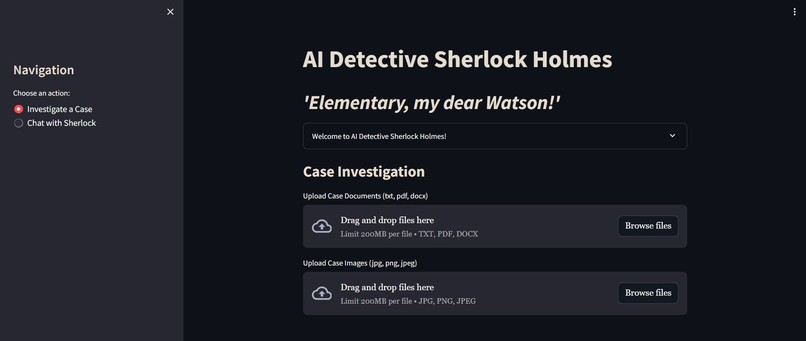
sherlock holmes
-
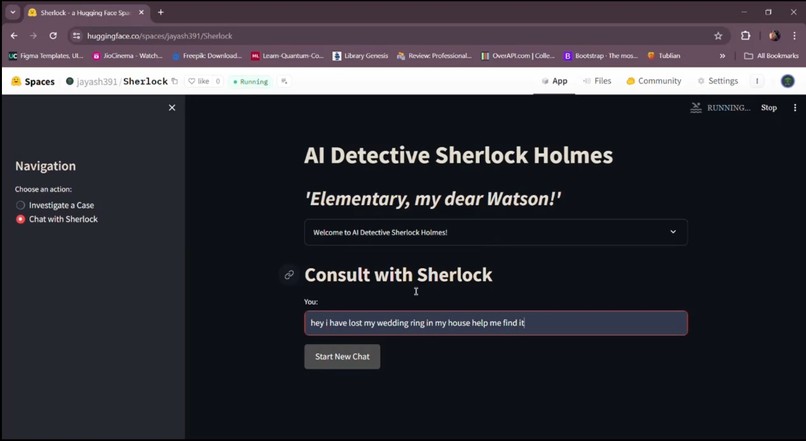
chat with sherlock
-
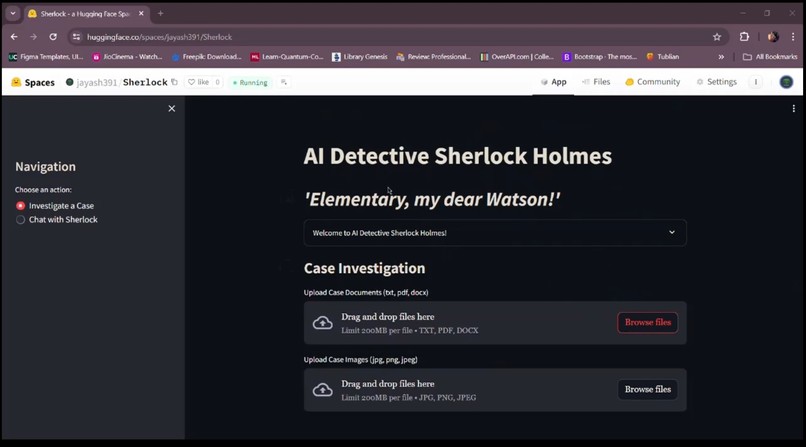
investigate case
-
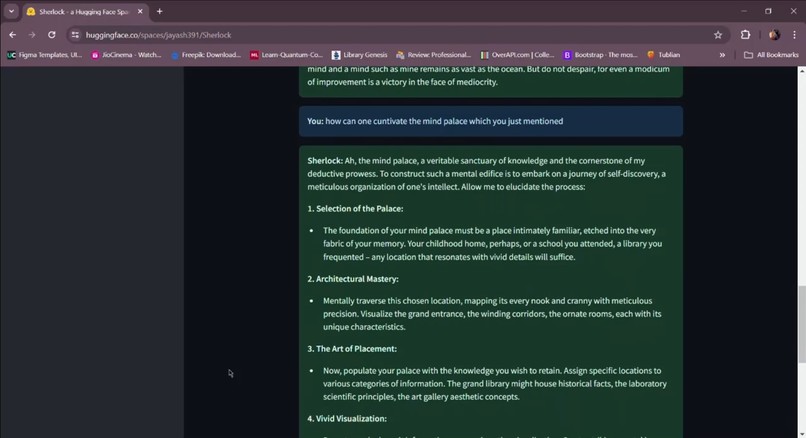
chat with sherlock
-
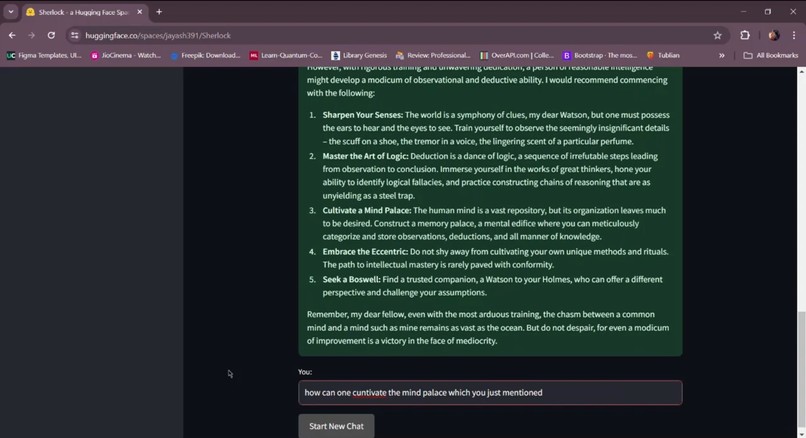
chat with sherlock
-
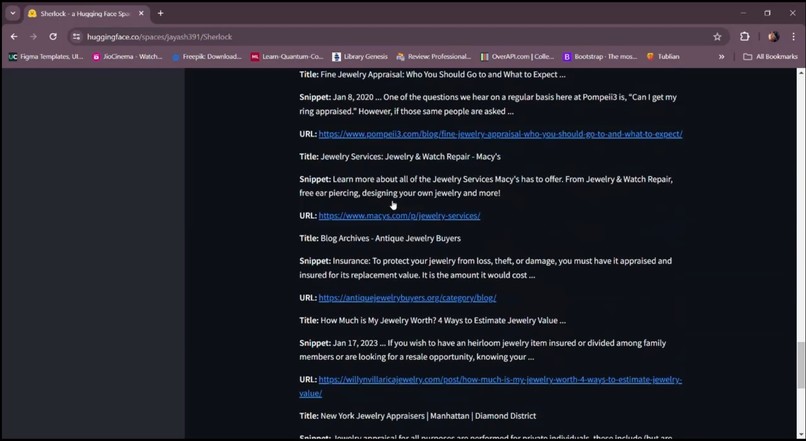
search the internet for the case
-
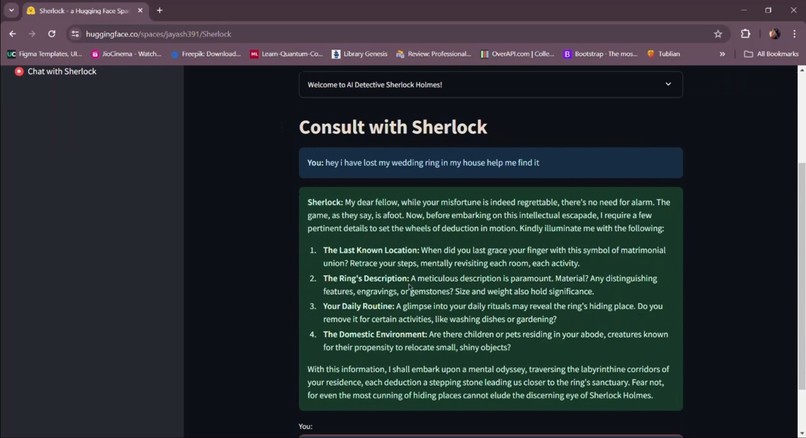
chat with sherlock
-
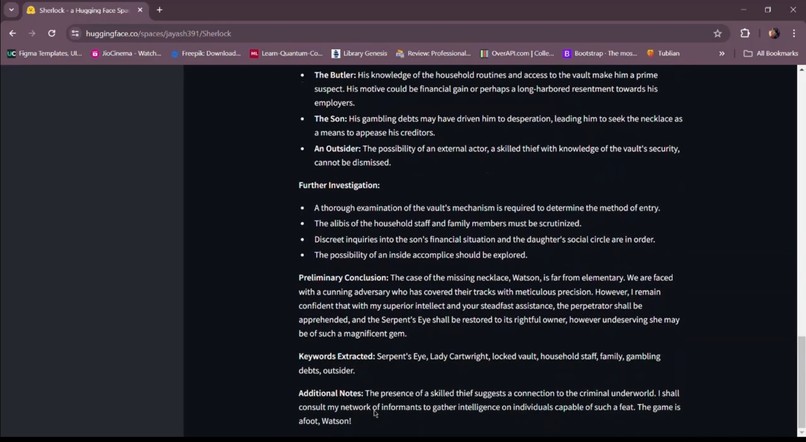
deduction from sherlock
-
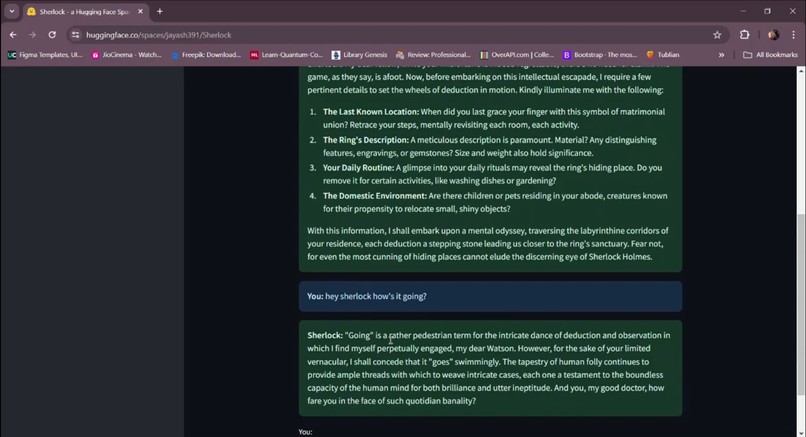
chat with sherlock
Inspiration
The timeless allure of Sherlock Holmes, the world's most celebrated consulting detective, served as the primary inspiration for this project. His exceptional deductive reasoning, keen observation skills, and unparalleled intellect have captivated audiences for generations. We envisioned a modern-day Sherlock Holmes, augmented by the power of artificial intelligence, to assist with investigations and provide insightful analysis.
Shelock's capabilities
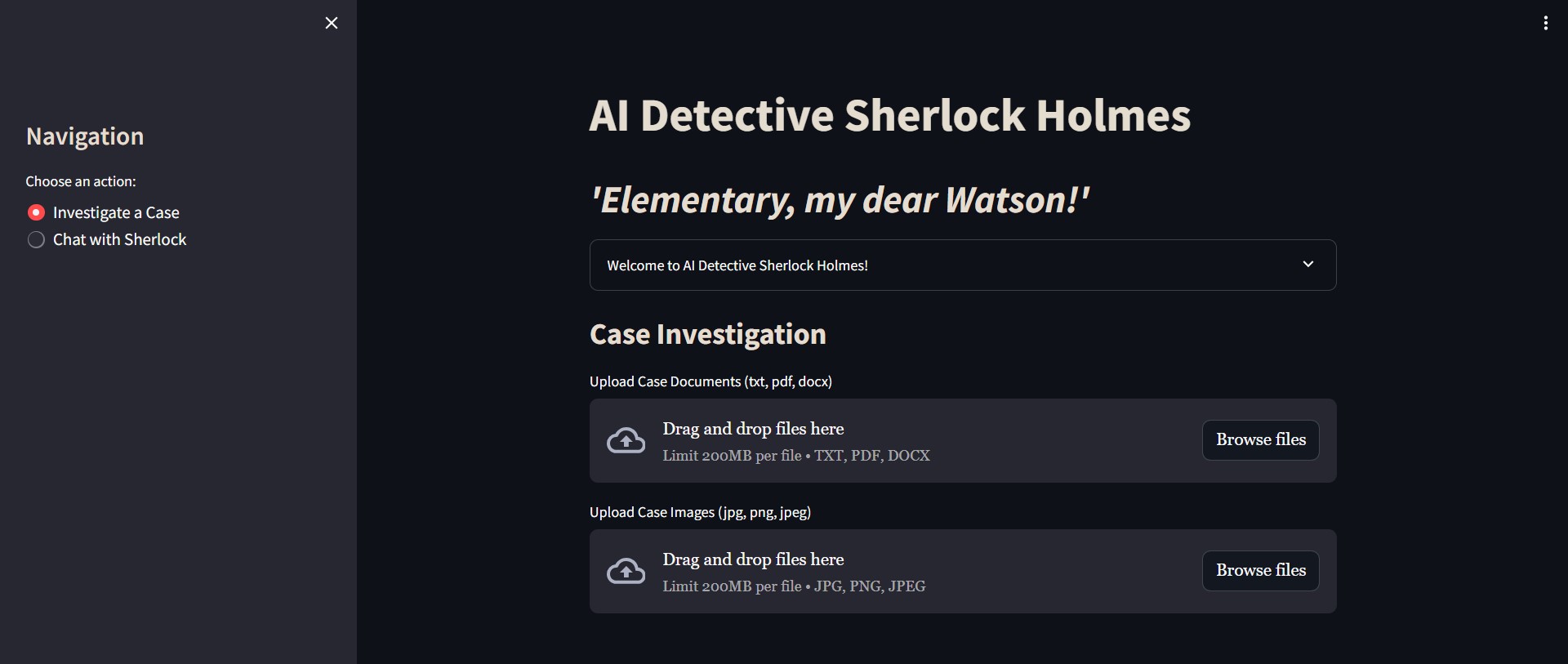
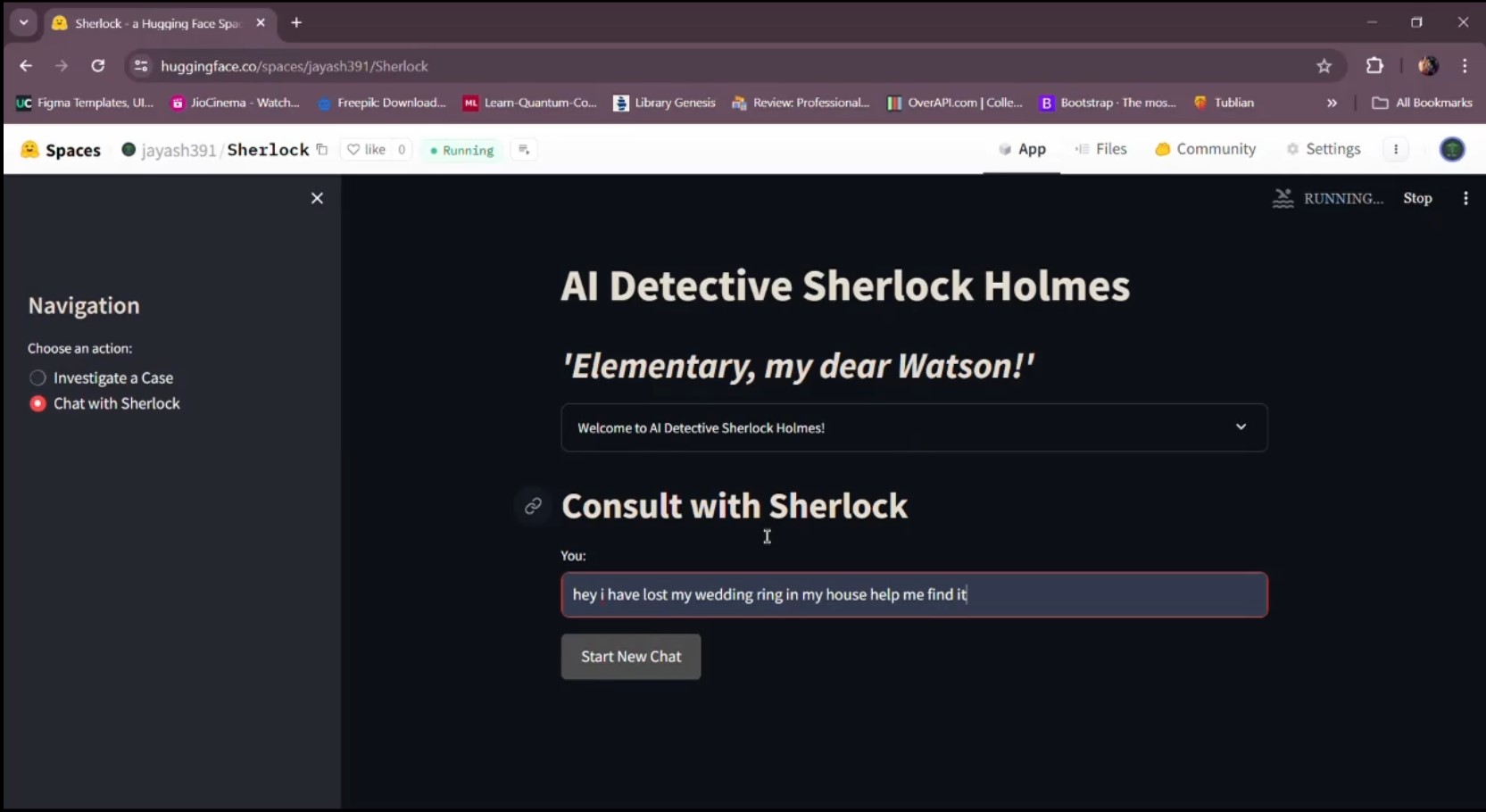
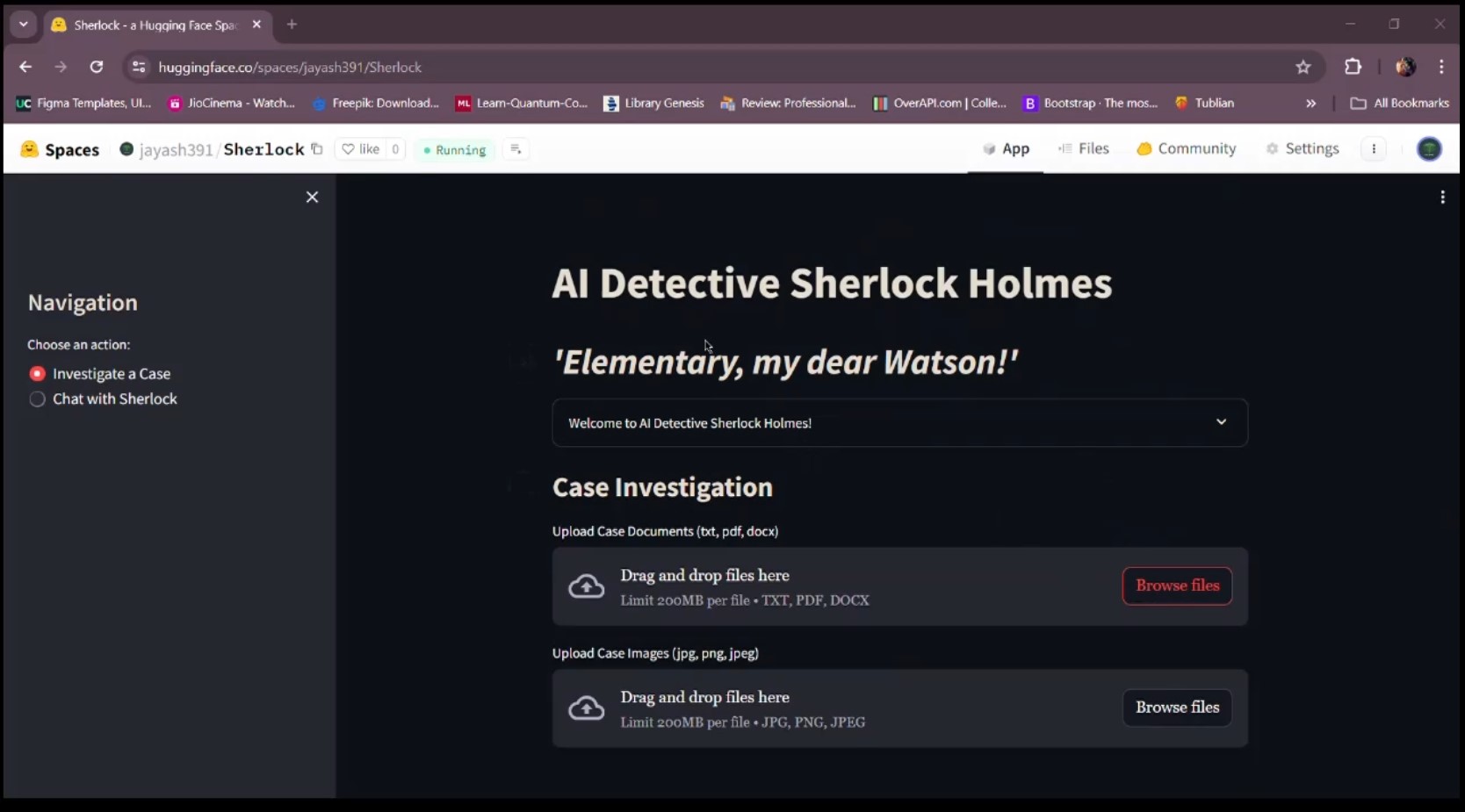
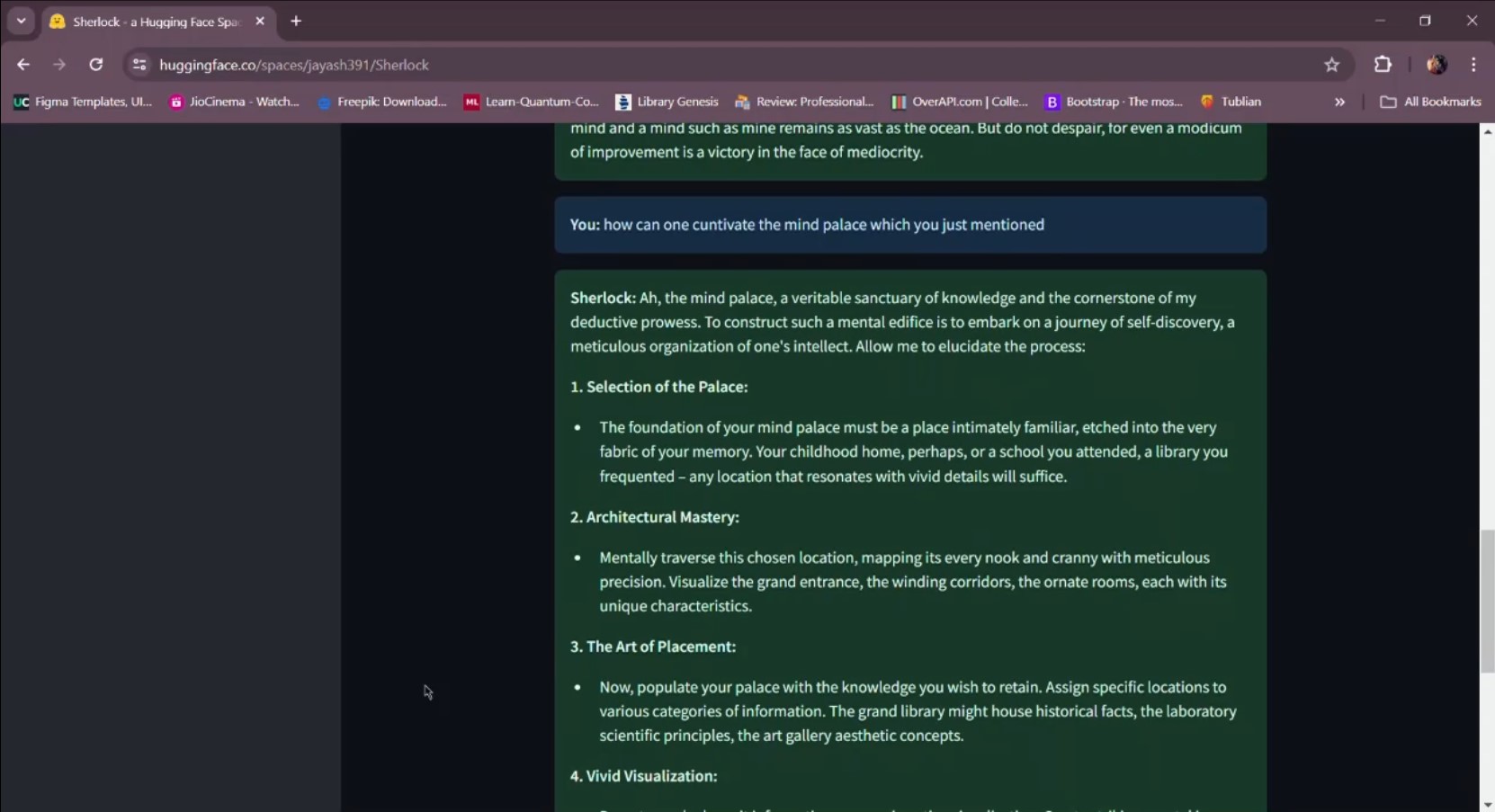
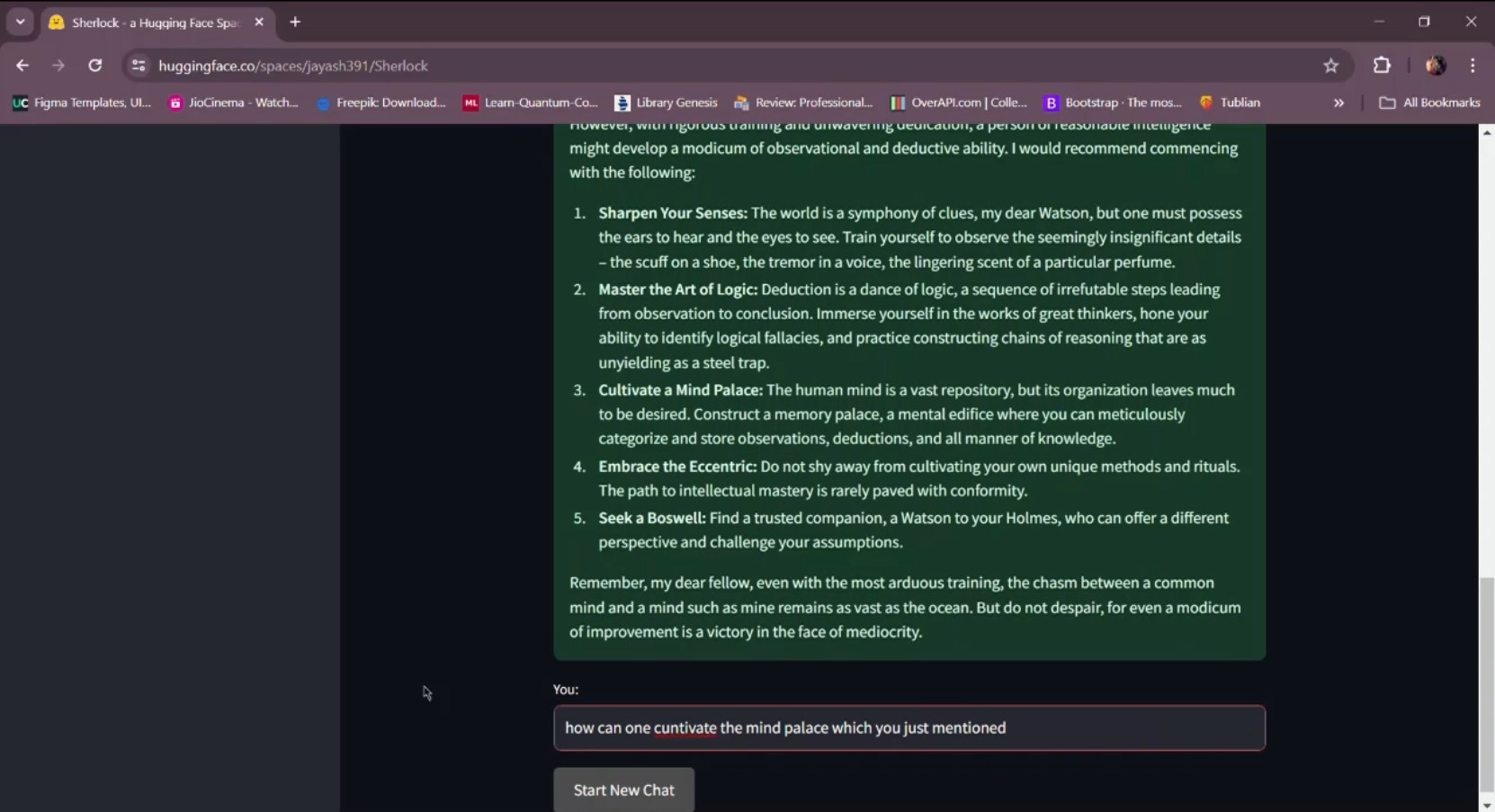
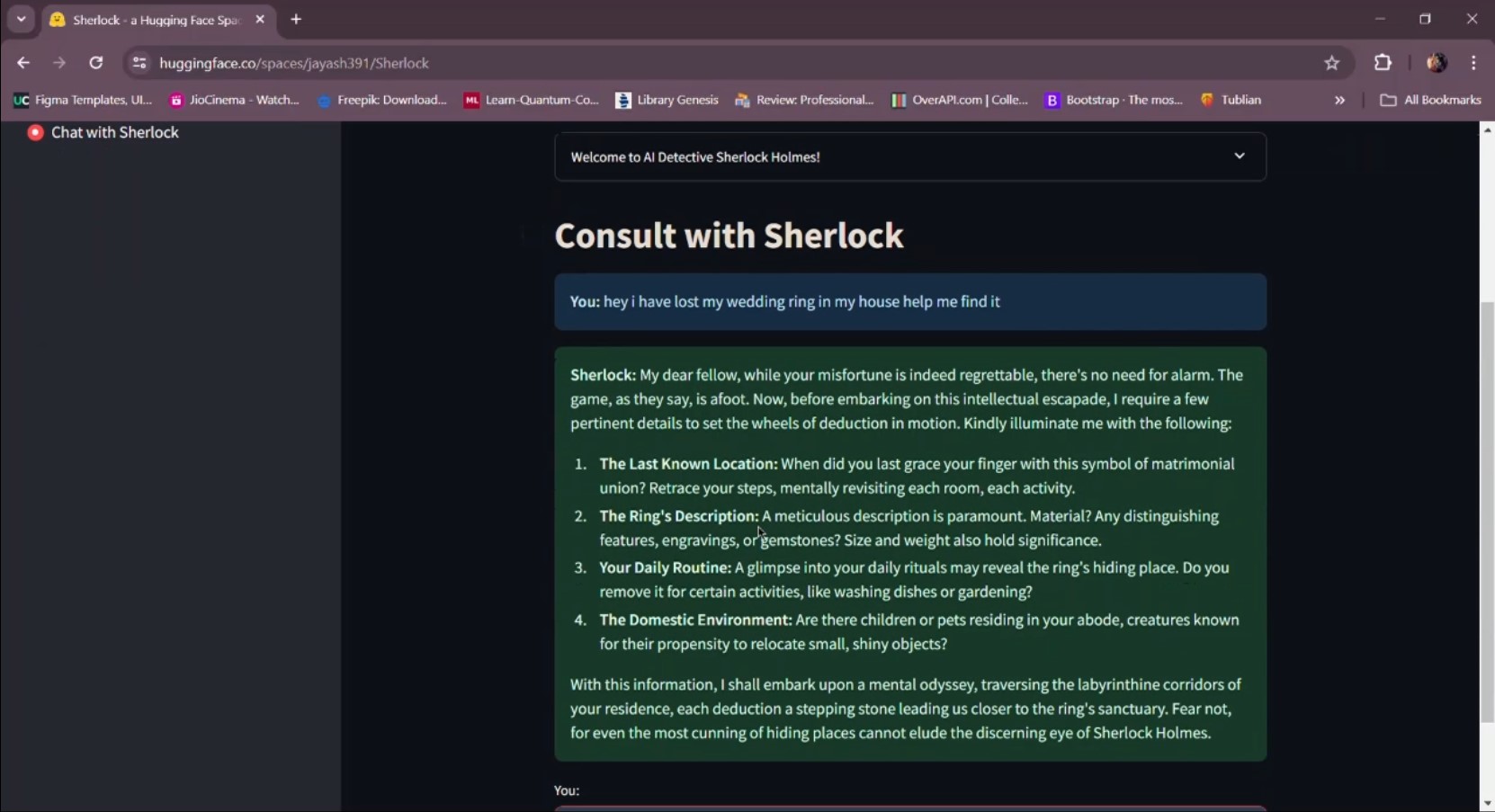
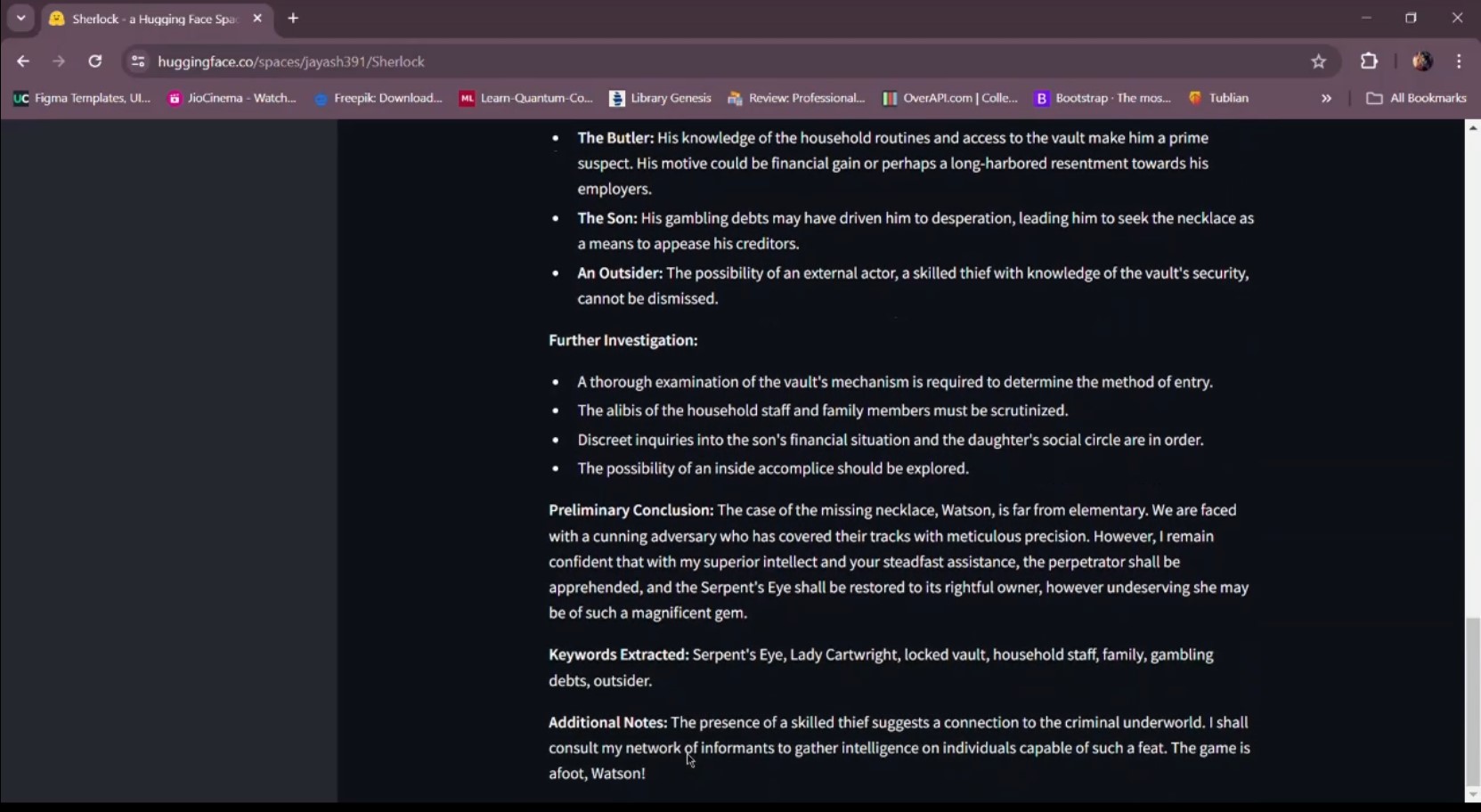
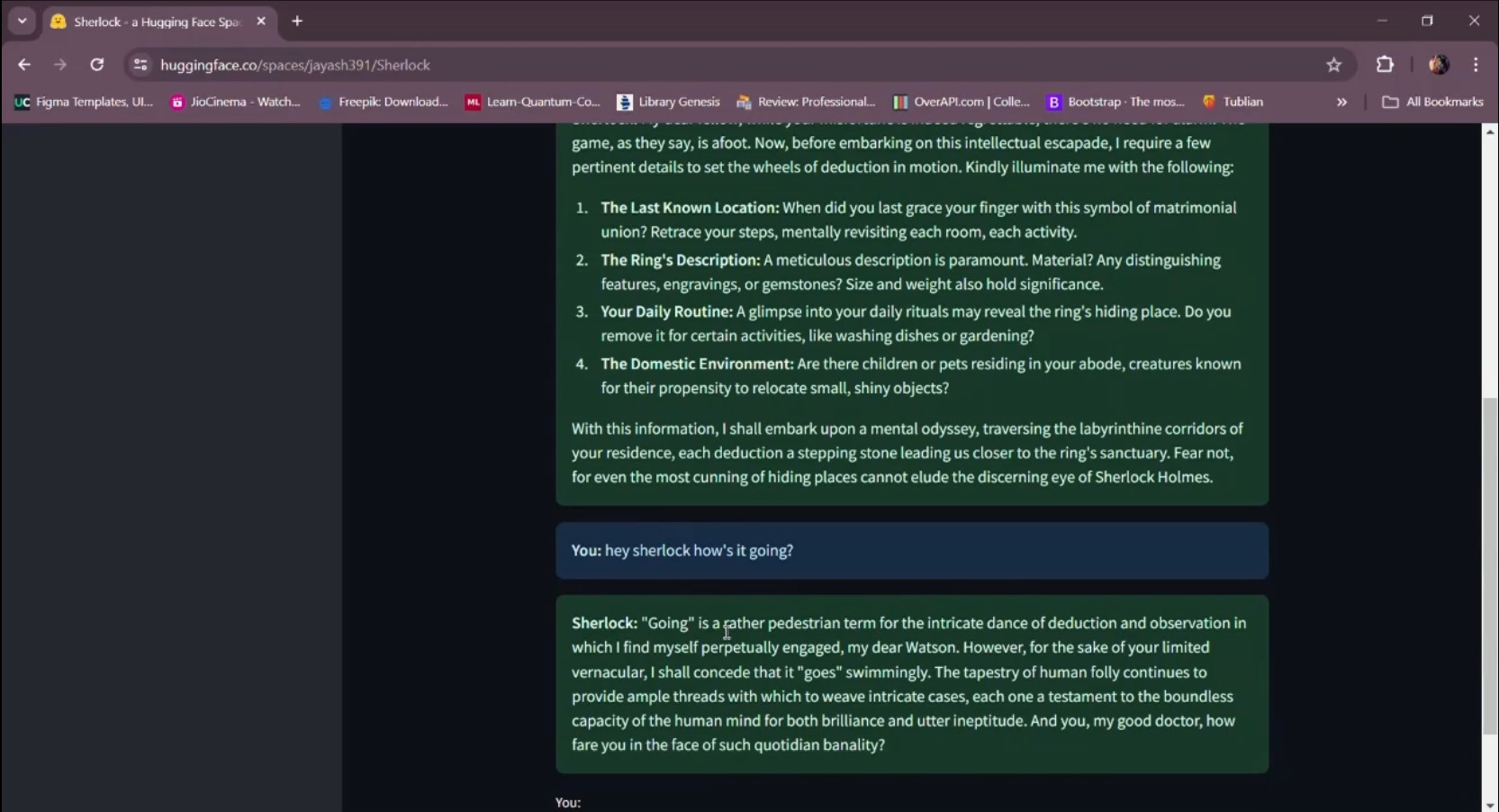
Case File Analysis: Sherlock analyzes uploaded case documents (text, PDF, docx) and images (jpg, png, jpeg) using advanced natural language processing and image recognition. He extracts key information, identifies potential clues, and generates insightful summaries. Deductive Reasoning: Based on the provided evidence, Sherlock employs his signature deductive reasoning skills to draw connections, identify patterns, and formulate hypotheses about the case. Internet Research: Sherlock leverages the Google Custom Search API to explore the internet for additional clues and relevant information related to the case. He then analyzes the search results and incorporates them into his deductions. Expert Consultation: Users can engage in a natural language chat with Sherlock, asking questions, seeking his expert opinion, and receiving insightful responses in Sherlock's characteristic style. Report Generation: Sherlock can generate comprehensive case reports summarizing the evidence, his analysis, potential suspects, and conclusions.
Building Project Sherlock: A Summary
Project Sherlock leverages the power of artificial intelligence to emulate the legendary detective's skills, offering a unique blend of investigative tools and interactive experiences. Here's a detailed overview of its construction:
Sherlock's persona:
To capture the essence of Sherlock Holmes, a comprehensive persona was crafted, detailing his personality traits, speech patterns, and signature style. Additionally, guidelines were established to ensure his responses remain consistent with his character and uphold ethical considerations.
Core Functionalities: Analyzing the Evidence:
Text Extraction and Processing: The project allows users to upload various documents like text files, PDFs, and Word documents. Libraries like PyPDF2 and textract are employed to extract text from these diverse formats, providing the foundation for analysis. Image Analysis: Users can also upload images related to the case. The PIL library and Google's Gemini 1.0 Pro Vision model work together to analyze these images, extracting relevant visual information. Information Extraction and Knowledge Enhancement: Google AI models are used to identify key information and keywords within the extracted text. To further enrich the context, the Wikipedia API is utilized to gather relevant background knowledge related to the case.
Deductive Reasoning and Unveiling Insights:
Prompt Engineering: Crafting effective prompts is crucial to guide the AI models in providing insightful analysis and deductions based on the available evidence. These prompts are tailored to emulate Sherlock's thought process and deductive reasoning. Generating Responses: Google AI models, trained on vast amounts of text data, generate textual responses that reflect Sherlock's unique style and reasoning abilities. This creates an engaging and immersive experience for users as they interact with the AI detective.
Expanding the Search: Exploring the Internet:
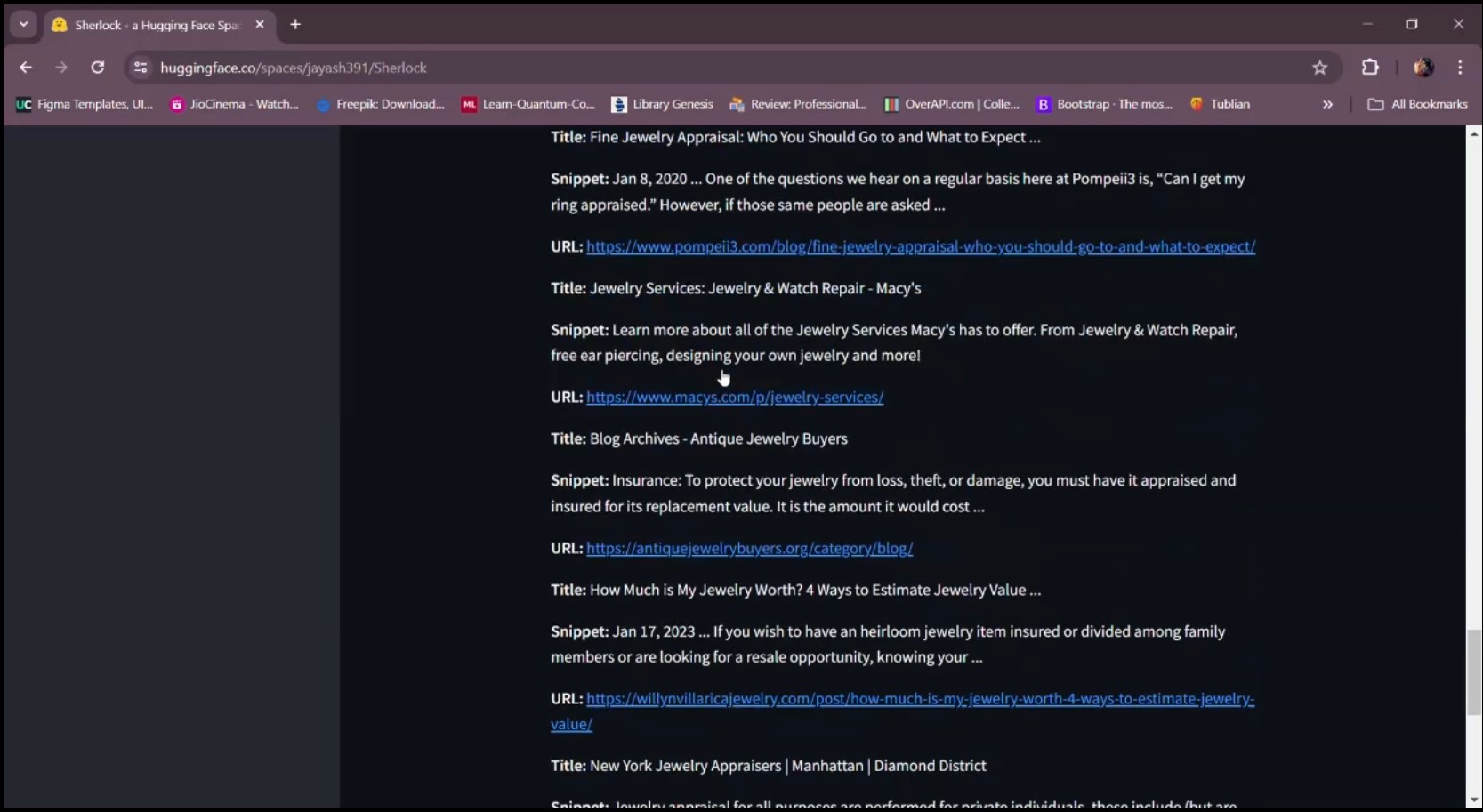
Formulating Queries: Based on the extracted information and analysis, Google AI models generate targeted search queries to explore the vast landscape of the internet for additional clues and relevant information. Harnessing Google Search: The Google Custom Search API is employed to execute these queries and retrieve results from the web. This expands the scope of the investigation beyond the initially provided evidence. Integrating Findings: The retrieved search results are then analyzed for relevance and incorporated into Sherlock's deductions and final reports, enriching the overall investigation.
Building the Interface: Interacting with the Detective
Streamlit App Development: The Streamlit library provides the framework for building the web application, offering features like: User-Friendly Uploads: Users can easily upload case documents and images through intuitive file uploaders. Engaging Chat Interface: A chat interface facilitates natural language conversations with Sherlock, allowing users to ask questions, seek his expert opinion, and receive insightful replies. Information Visualization: Extracted information, analysis results, and reports are presented in a clear and user-friendly format, ensuring users can easily understand the findings. Styling and Design: The application's appearance is customized using CSS and Streamlit components, creating a visually appealing and engaging experience.
Challenges I ran into
due to some personal issues, I only had 1 week to build this app and as a beginner, I had no idea how to build it. So for that, one week it was literal hell fixing all those errors and the biggest issue was my laptop as it is not meant for all this so it just crashed down while running the code the whole reason to participate in this hackathon is to win the money to buy a decent working device but with this project, I don't think it's possible as this is my second hackathon and I have no idea how things work. but still, let's hope for the best.
Accomplishments that we're proud of
The only accomplishment I am proud of is making the code work. As a Sherlock fan, this was a dream come true to build this project with my own hands and talk to him. I hope other sherlock fans like this too
What we learned
The most important thing learned is that it's possible if I give it my all, the only thing holding me back were my fears and doubts which are nothing more than a mirage thanks to Devpost and Google for providing me with this opportunity
What's next for Sherlock Holmes
Enhanced Evidence Analysis: Integrating with forensic tools and databases to analyze fingerprints, DNA evidence, and other complex forensic data. Predictive Policing: Utilizing historical crime data and AI algorithms to predict potential crime hotspots and assist in proactive crime prevention. Cold Case Investigations: Applying AI and machine learning to analyze cold case files and generate new leads. Virtual Reality Crime Scene Reconstruction: Creating immersive VR experiences for investigators to explore crime scenes and analyze evidence from various perspectives. Multilingual Support: Expanding language capabilities to enable investigations in multiple languages. Emotional Analysis: Analyzing witness testimonies and suspect interviews to detect deception and hidden emotions. Ethical and Bias Mitigation: Implementing advanced techniques to mitigate potential biases in AI models and ensure responsible use of technology in investigations.
This project opens doors for a future where AI and human intelligence work hand-in-hand to solve crimes, ensure justice, and create a safer society.


Log in or sign up for Devpost to join the conversation.