-
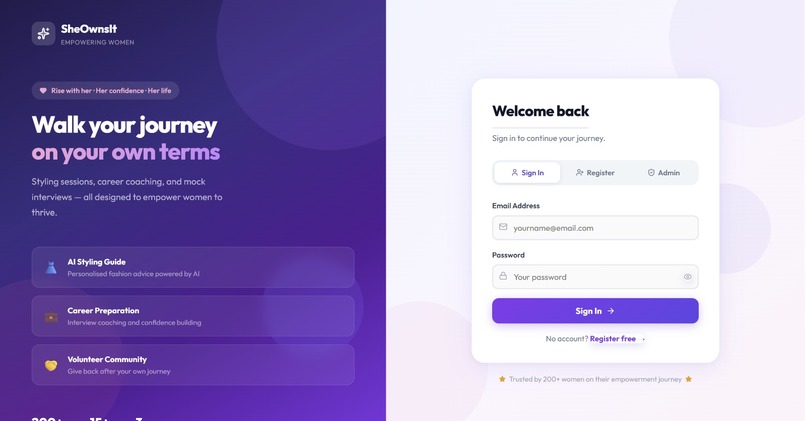
Login page
-
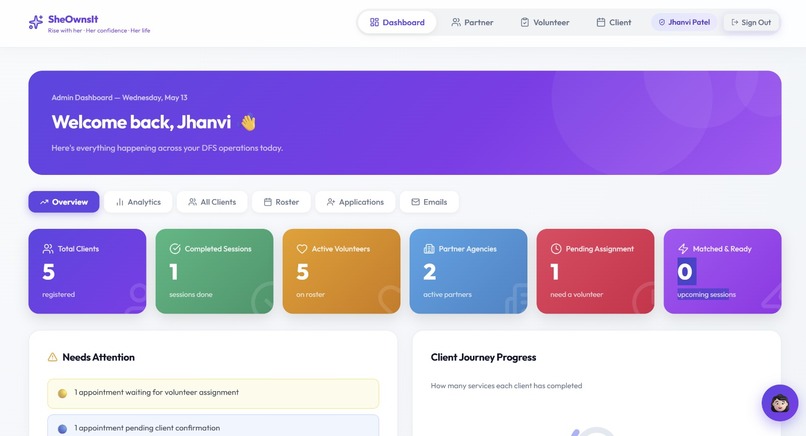
Dashboard
-
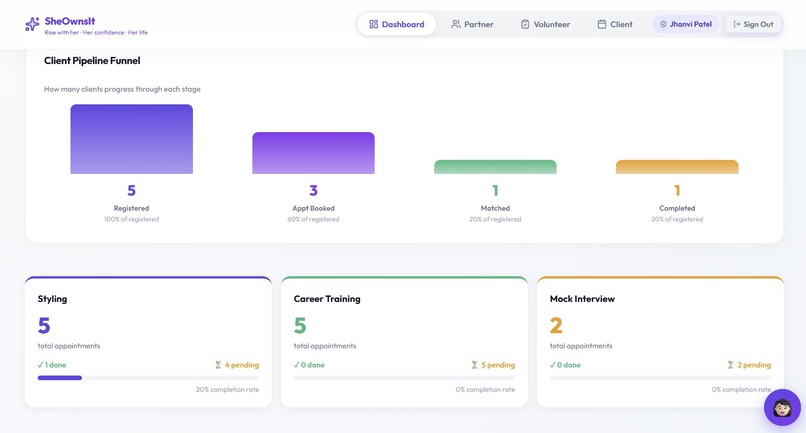
Stats
-
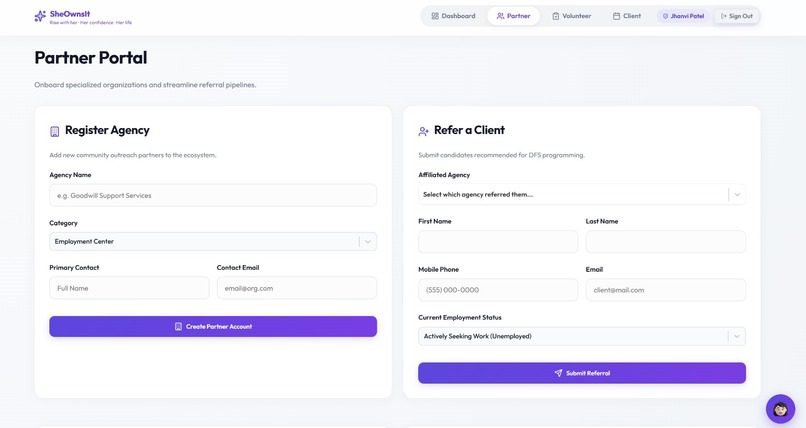
Partner portal
-
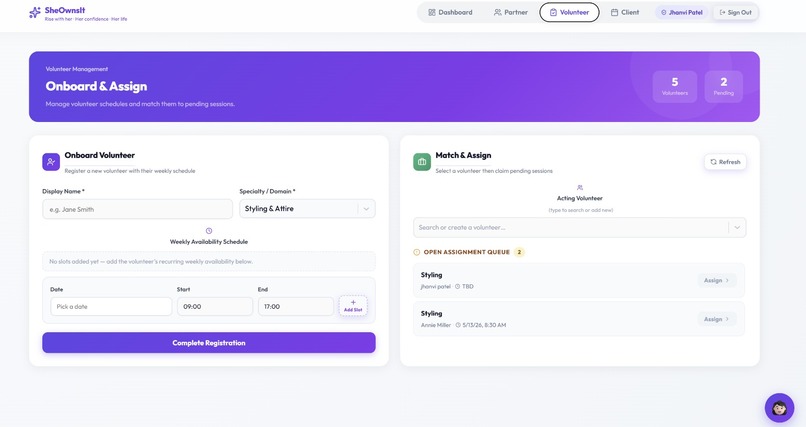
Volunteer Portal
-
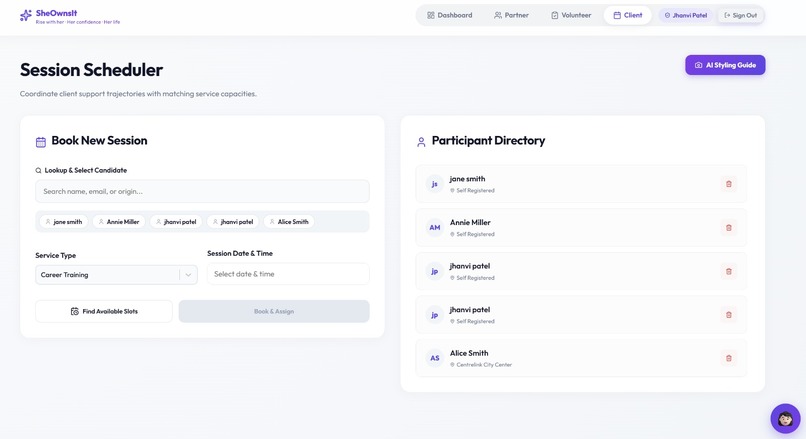
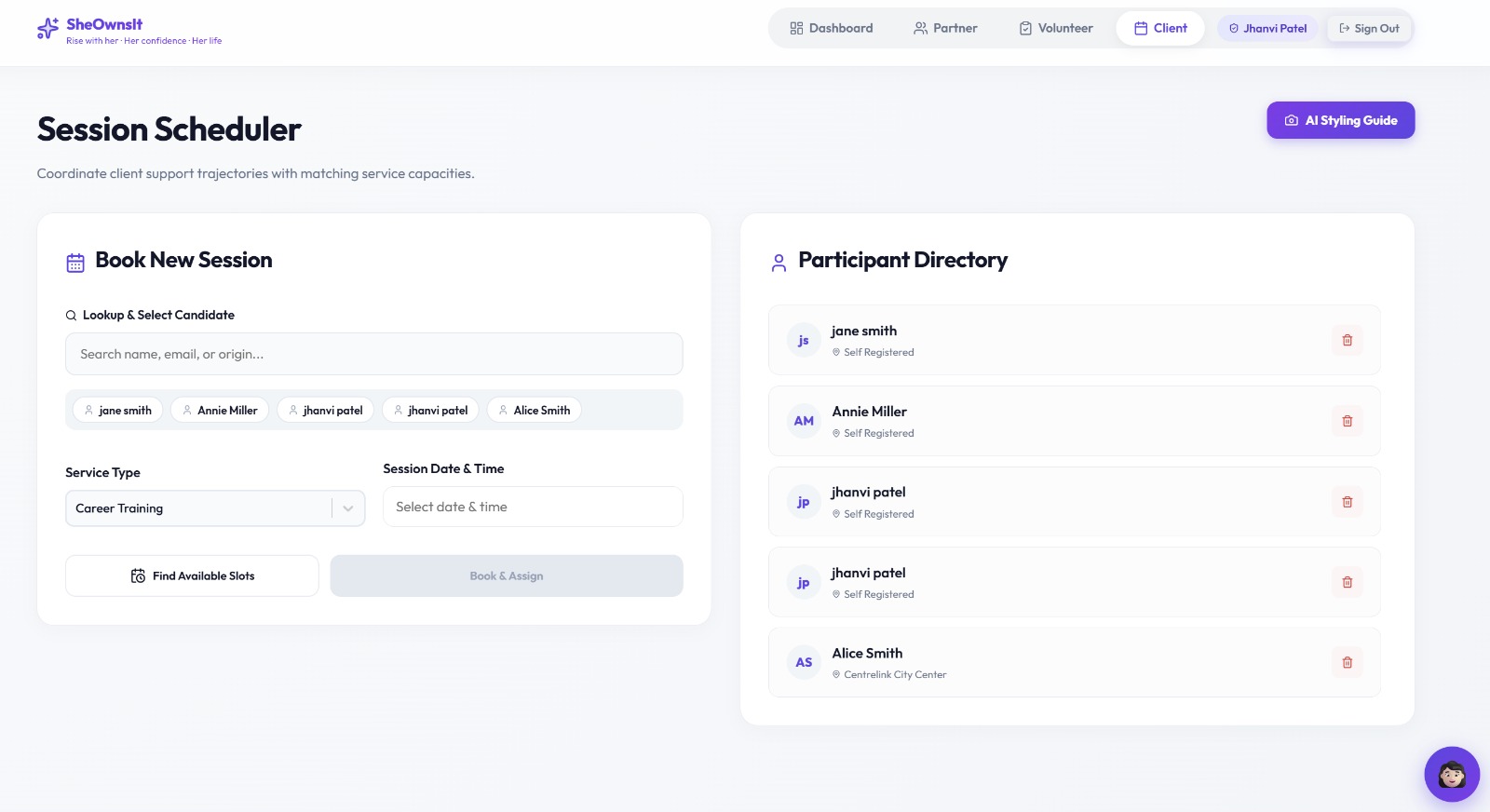
Client Portals
-
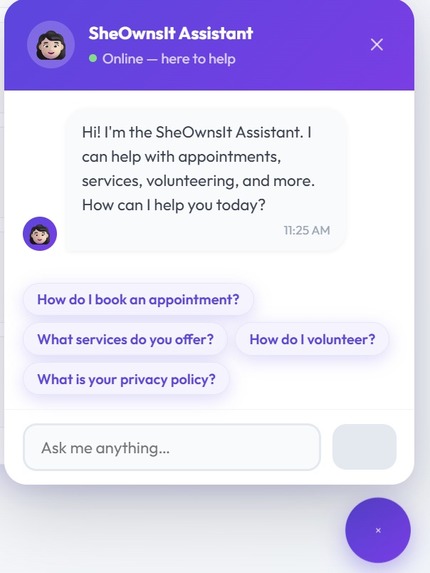
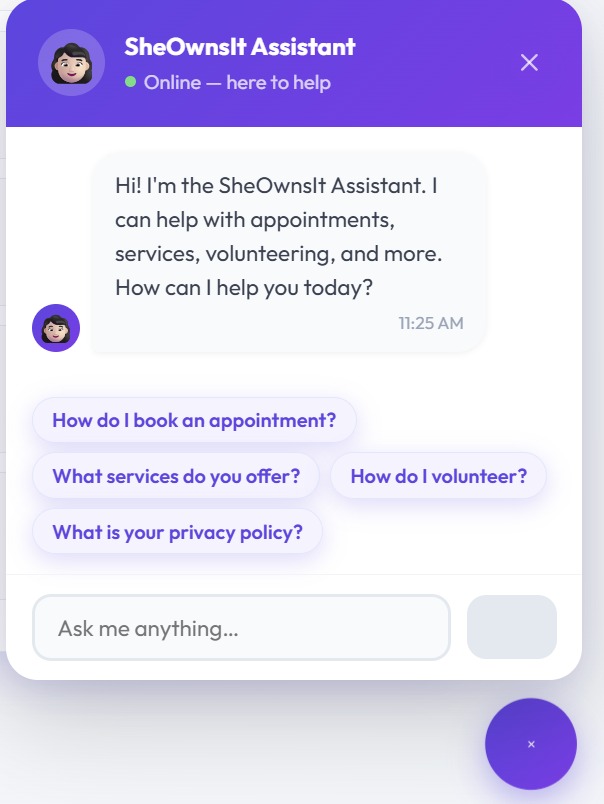
Chatboat
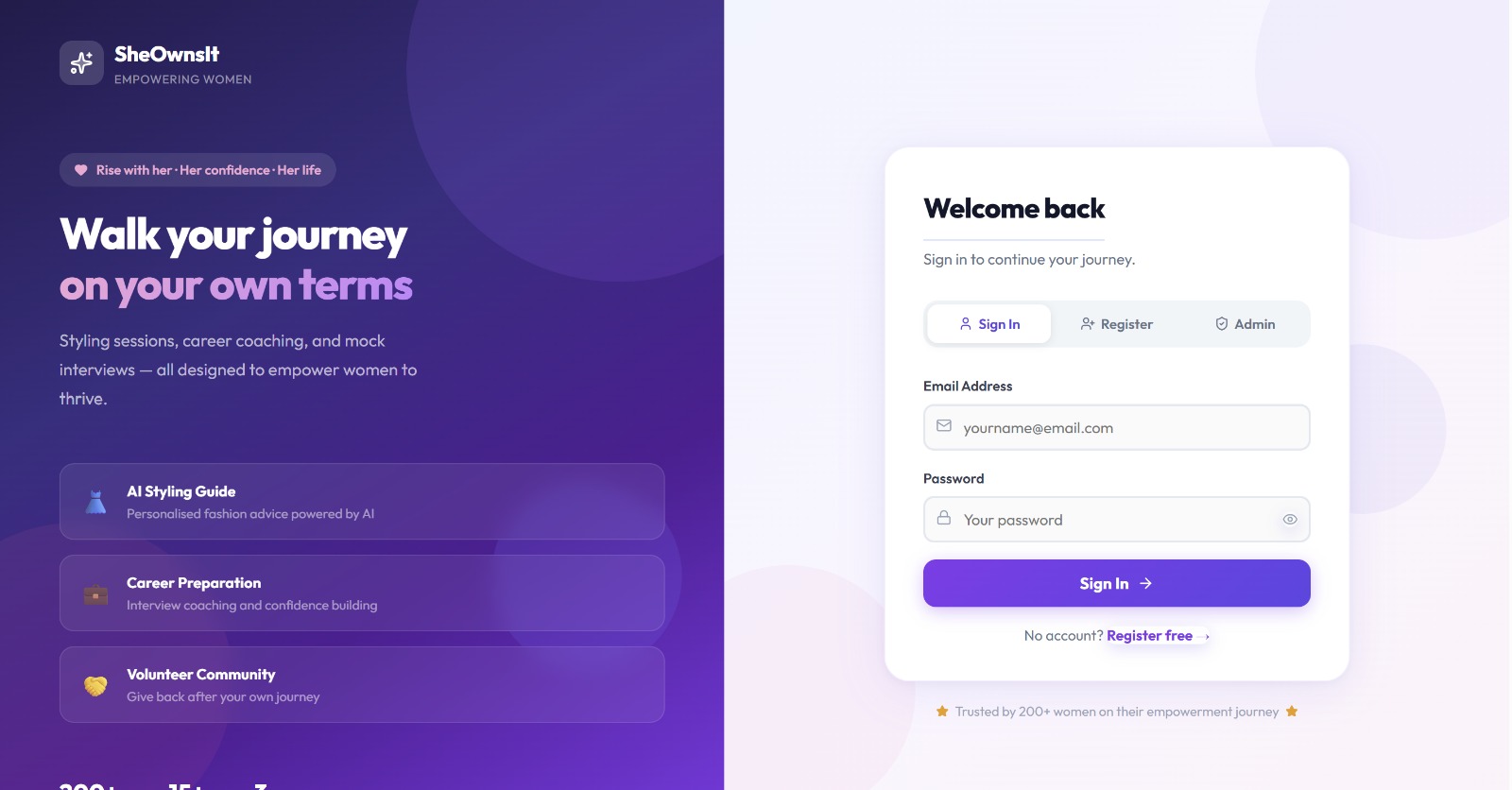
SheOwnesIt - Project Understanding
Inspiration
SheOwnesIt was inspired by the real challenge of helping women prepare confidently for employment opportunities while coordinating support across multiple stakeholders. We wanted to build a platform where referral partners, volunteers, and coordinators could work together in one place to reduce delays, improve appointment matching, and provide more personalized styling and interview readiness support.
What it does
SheOwnesIt is a full-stack referral and appointment coordination platform.
It enables:
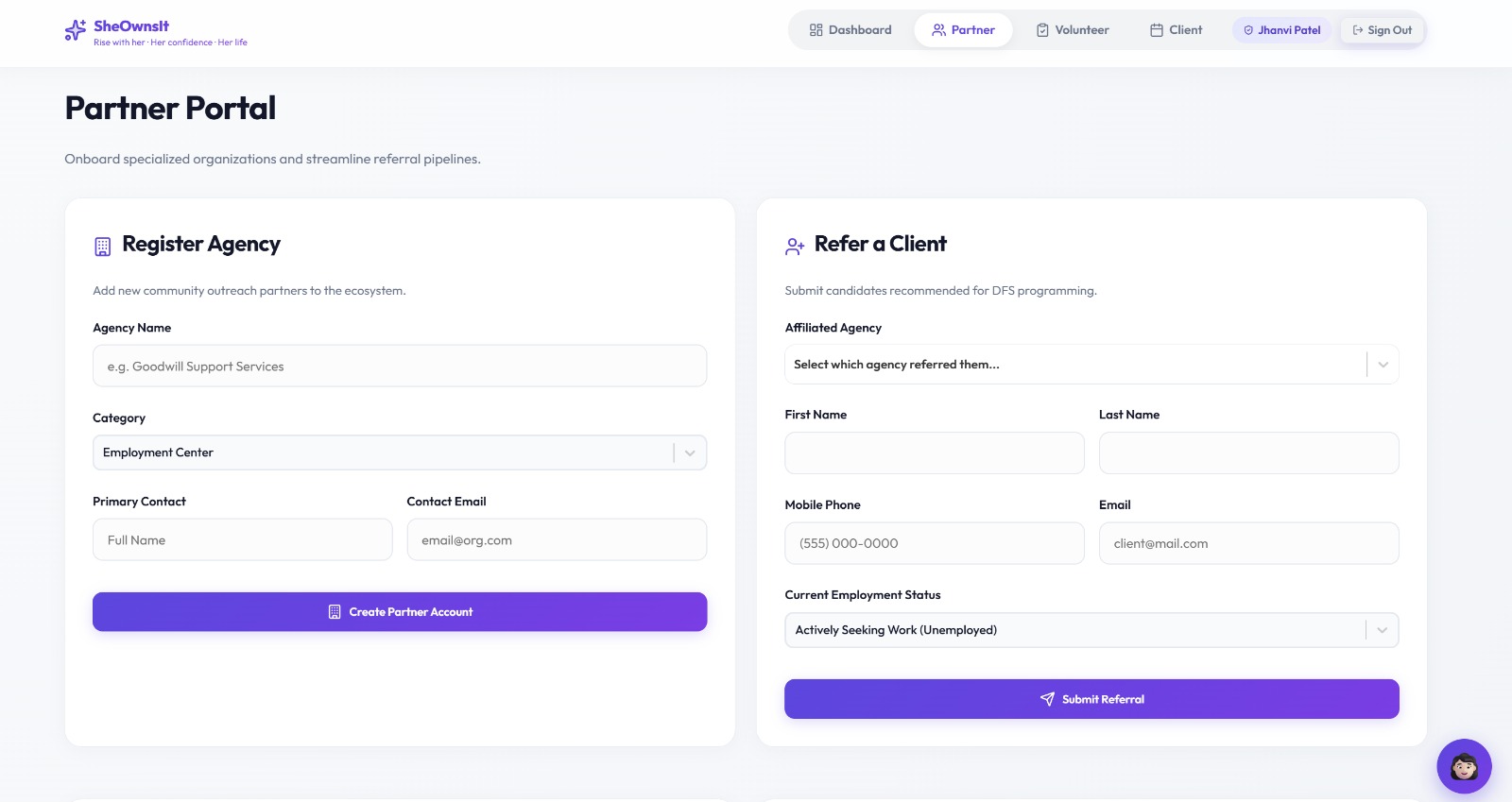
- Partner agencies to register and refer clients.
- Coordinators to create service appointments for career training, styling, and mock interviews.
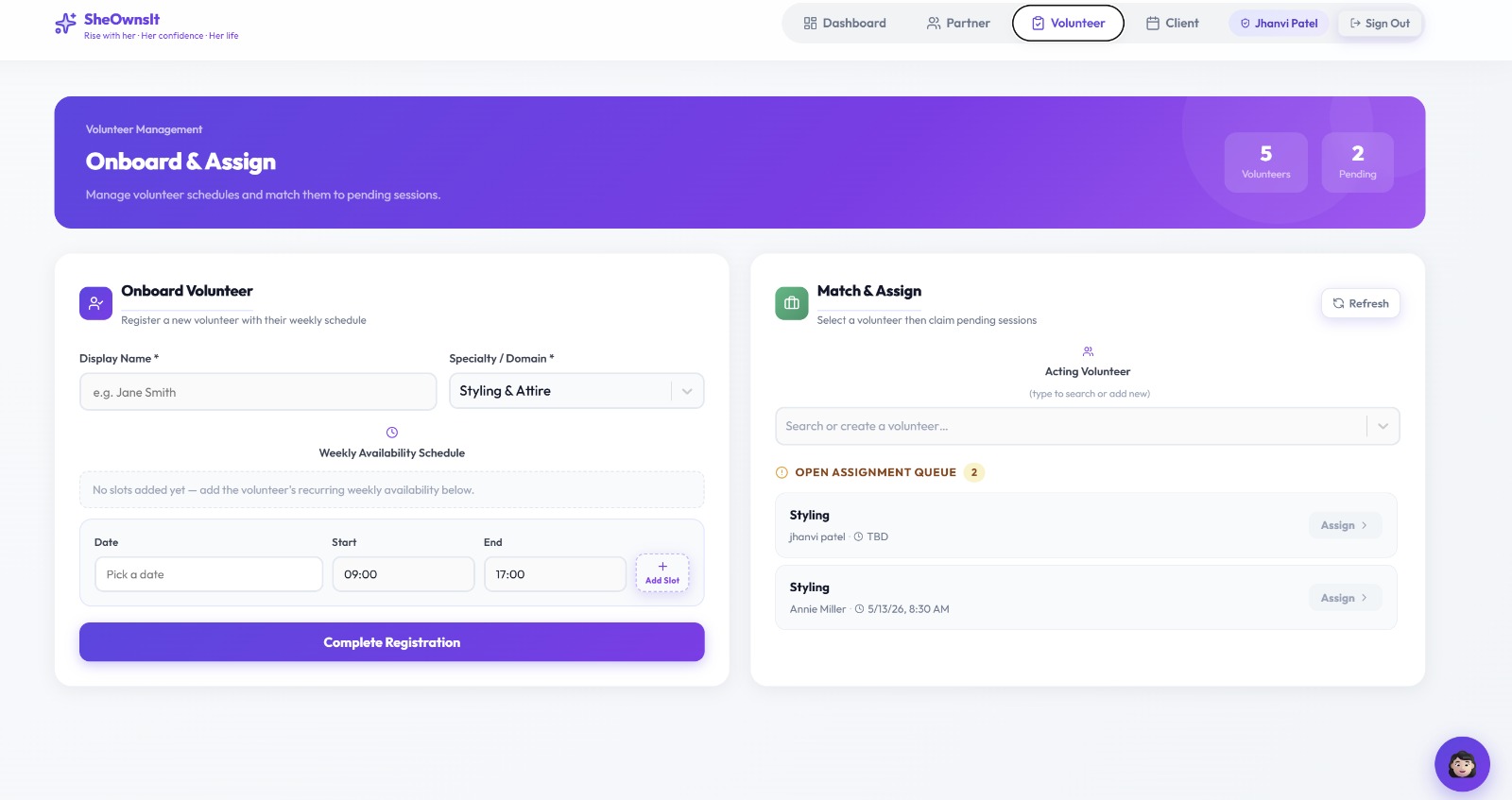
- Volunteers to register availability and receive assignment workflows.
- Auto-suggestion and approval flow to map volunteers to clients based on date/time windows.
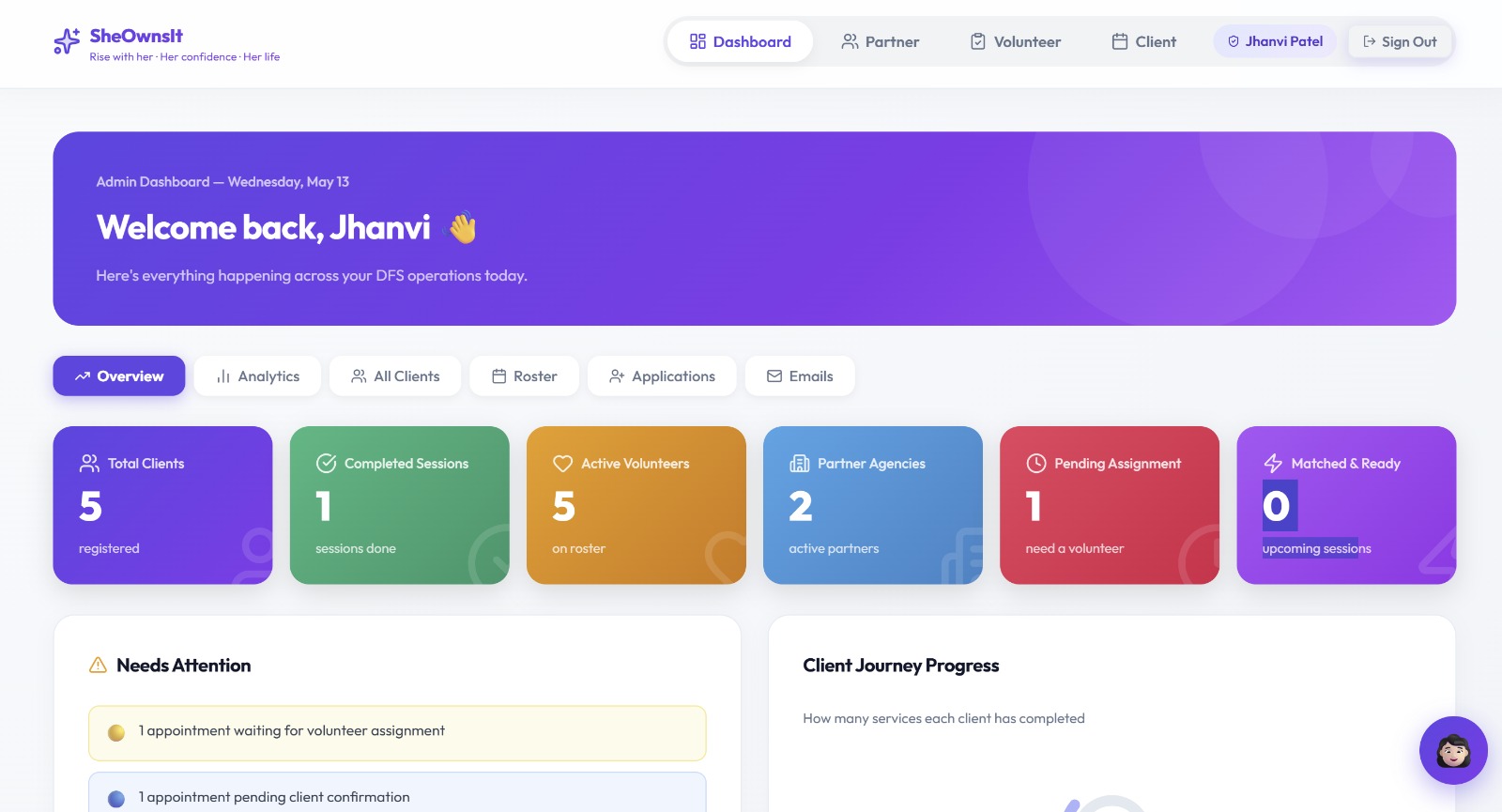
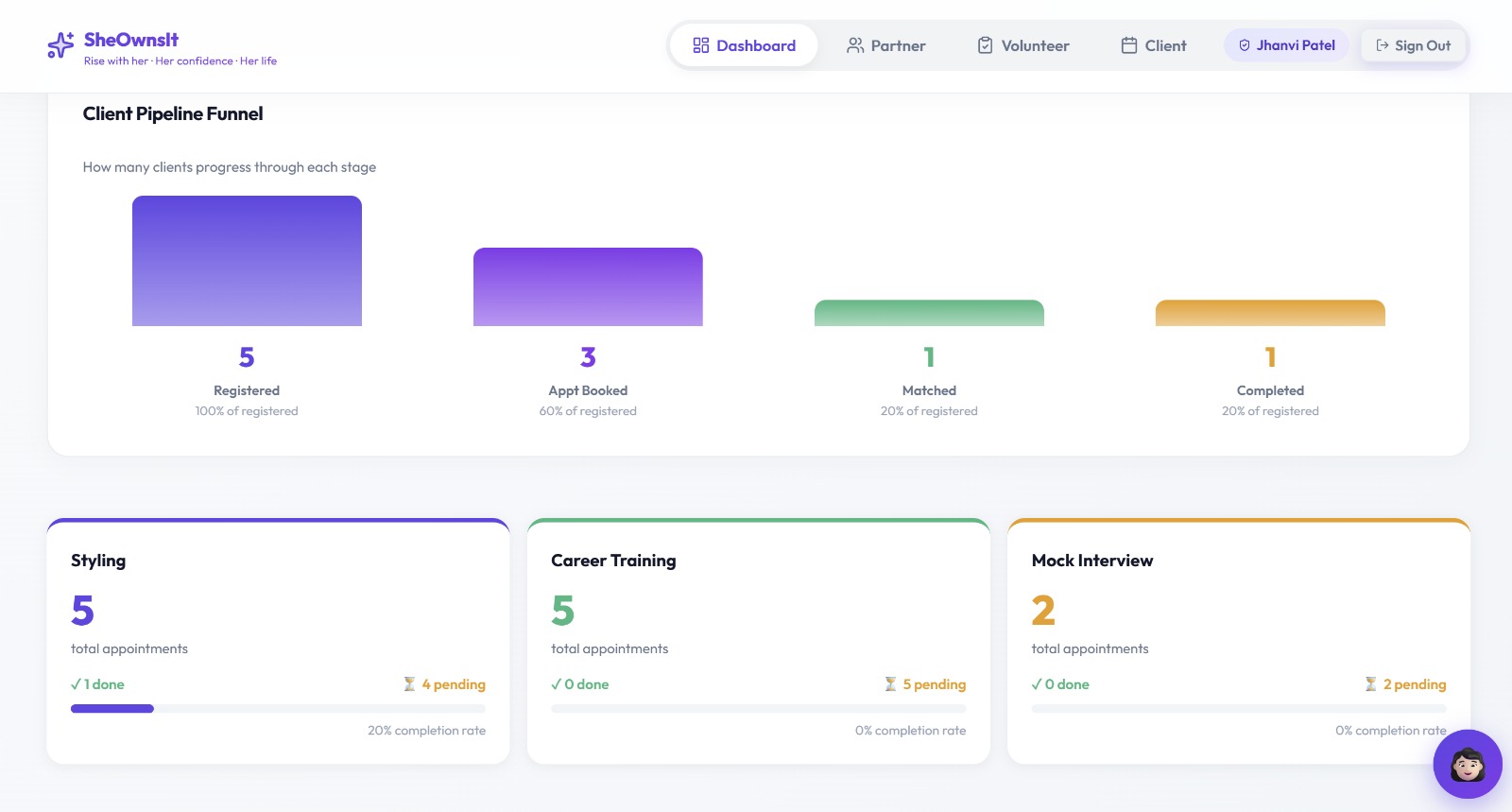
- Live dashboard metrics for clients, volunteers, pending confirmations, and completed/appointed sessions.
- AI-powered Styling Assistant in the Client tab:
- Photo upload (JPEG/PNG)
- Body shape classification
- Clothing measurement estimates (cm/inches)
- Size recommendations
- Style guidance and follow-up chat
How we built it
We built SheOwnesIt using a modern full-stack JavaScript architecture:
- Frontend: React + TypeScript + Vite
- Backend: Node.js + Express
- Database: SQLite
- API docs: Swagger
- Form handling: Formik + Yup
- Notifications: react-hot-toast
- AI integration: OpenAI GPT-4o (vision + chat)
Key implementation layers:
- Data model design for agencies, clients, volunteers, and appointments.
- REST APIs for full lifecycle actions (register, refer, schedule, assign, complete).
- Assignment engine that suggests mappings based on availability overlap and service datetime priority.
- Segmented status filtering and approval UX in the Assign module.
- Styling Assistant experience with structured AI output cards and contextual chat.
Challenges we ran into
- Designing a fair assignment model for edge cases where multiple clients match one volunteer slot.
- Handling unmatched states clearly in UI (Volunteer Unavailable, Free) while still showing complete data.
- Keeping status transitions meaningful across pending, assigned, and completed metrics.
- Managing environment configuration for external integrations (OpenAI + SMTP).
- Handling OpenAI quota/rate-limit behavior gracefully for user-facing reliability.
Accomplishments that we're proud of
- Built an end-to-end coordination workflow spanning partner referral to volunteer assignment.
- Delivered a dedicated Assign page with approval controls and status-based segmentation.
- Implemented deterministic auto-mapping rules using service-specific datetime logic.
- Added a practical AI styling assistant with structured outputs and follow-up chat capability.
- Added volunteer registration email flow for sharing submitted availability details.
- Kept the system modular and extendable with clean API boundaries.
What we learned
- Clear status taxonomy is critical in multi-role workflow products.
- Appointment logic becomes significantly more reliable when business constraints are encoded centrally in backend APIs.
- UI clarity (stacked data display, segmented filters, explicit disabled actions) reduces user confusion.
- AI features need strict prompt scoping and robust error handling to be production-friendly.
- Fast iteration with TypeScript + Vite + modular APIs improves development velocity.
What's next for SheOwnesIt
- Add role-based authentication and access controls for partner/coordinator/volunteer/admin users.
- Add persistent chat/session storage and analysis history for the Styling Assistant.
- Add calendar integrations and automated reminders (email/SMS) for appointments.
- Improve volunteer load balancing with smarter ranking beyond first eligible match.
- Add analytics dashboards for outcomes (confidence improvement, completion rates, placement impact).
- Add test coverage (unit + integration + end-to-end) and CI pipelines.
- Introduce deployment-ready environment profiles and observability (logs, alerts, metrics).
Built With
- javascript
- nodjs
- react

Log in or sign up for Devpost to join the conversation.