-
-
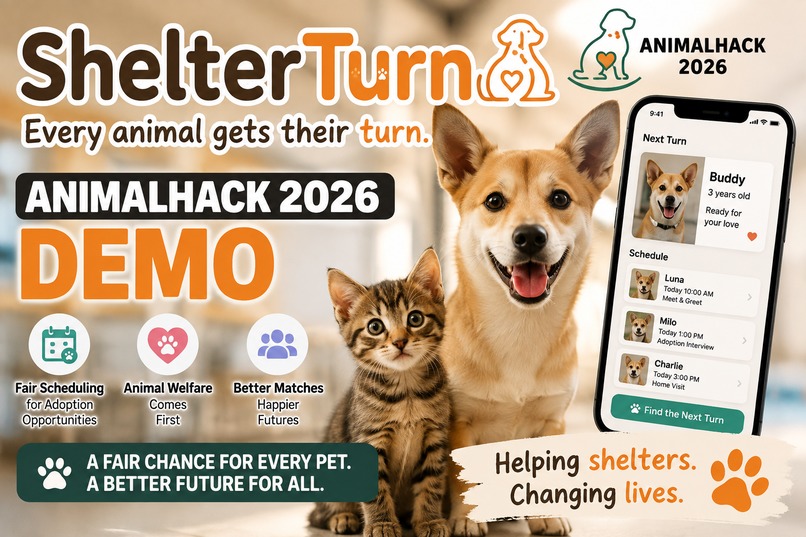
ShelterTurn helps animal shelters coordinate daily care, track completed tasks, and access animal profiles instantly through kennel QR codes
-
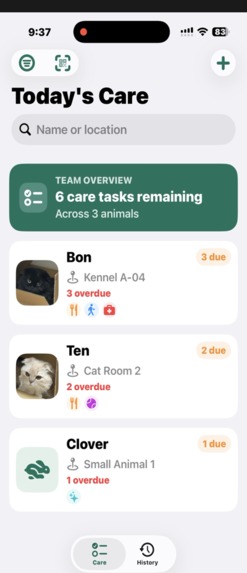
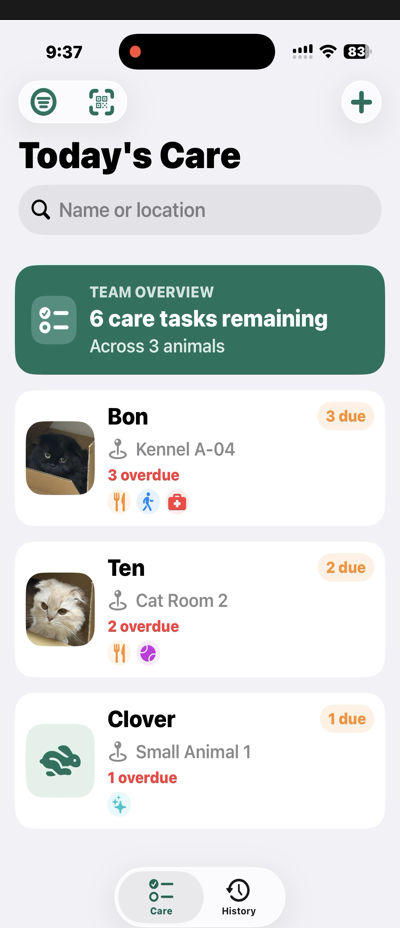
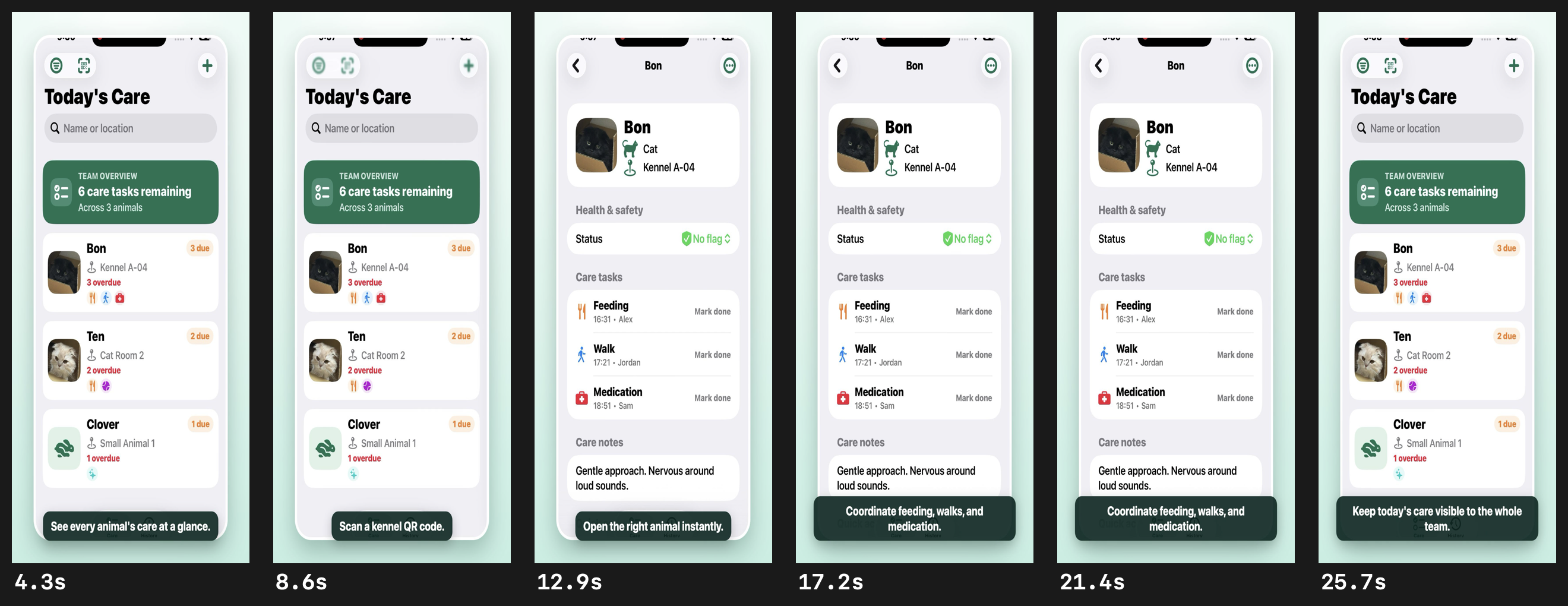
Today's Care keeps overdue tasks visible across multiple animals and locations.
-
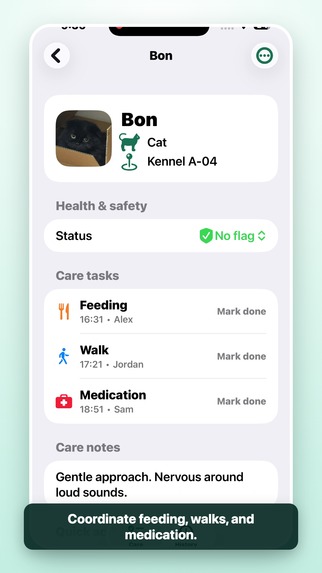
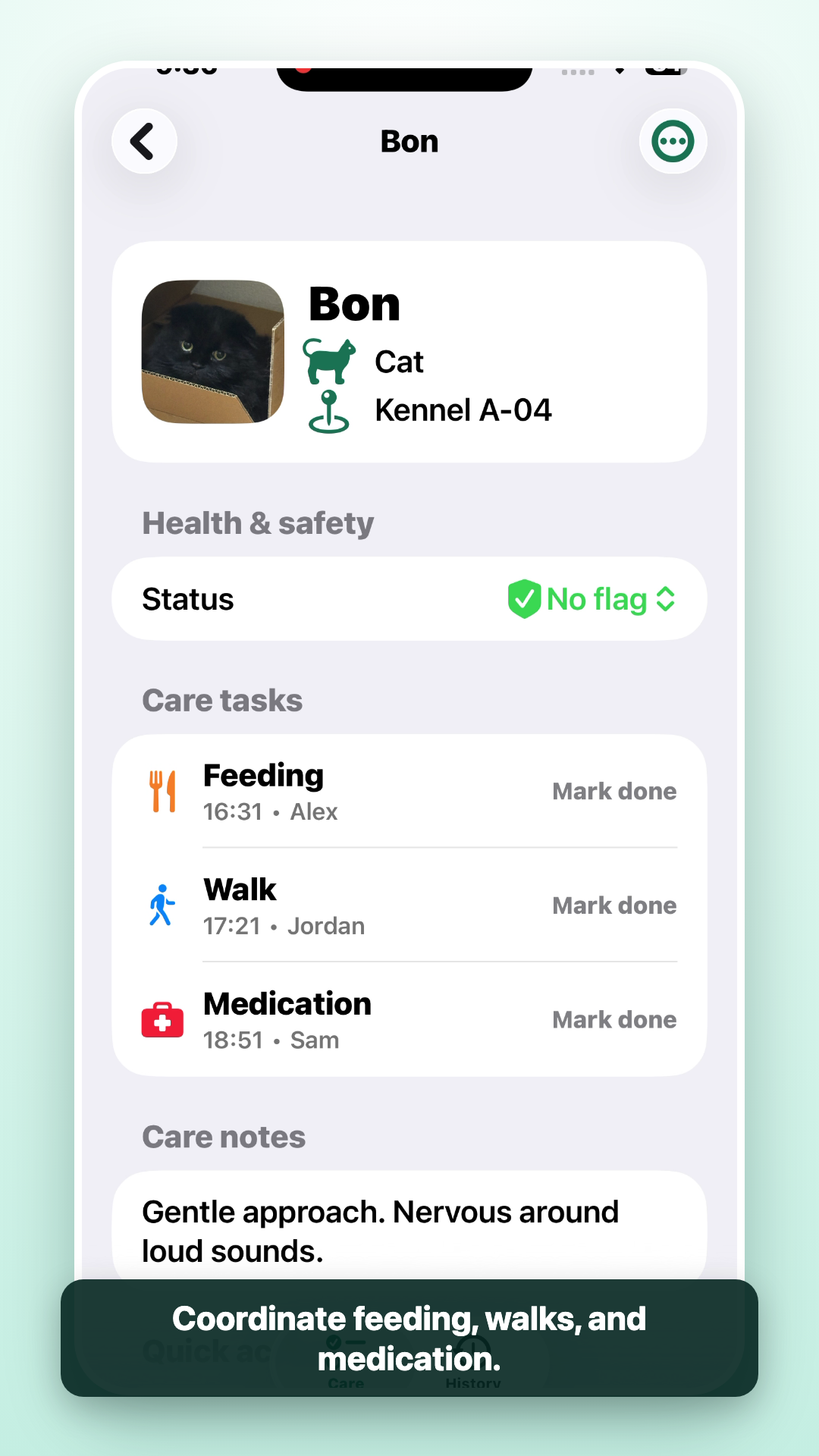
Each animal profile combines photos, health flags, care tasks, and handoff notes.
-
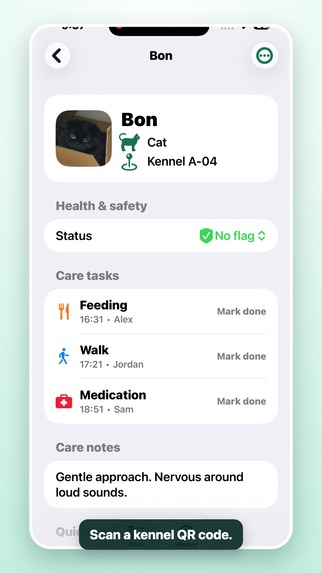
ShelterTurn generates a kennel QR code for quick access to an animal's care plan.
-
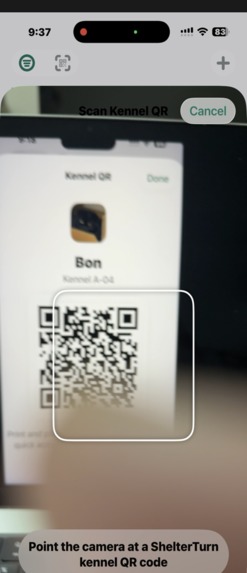
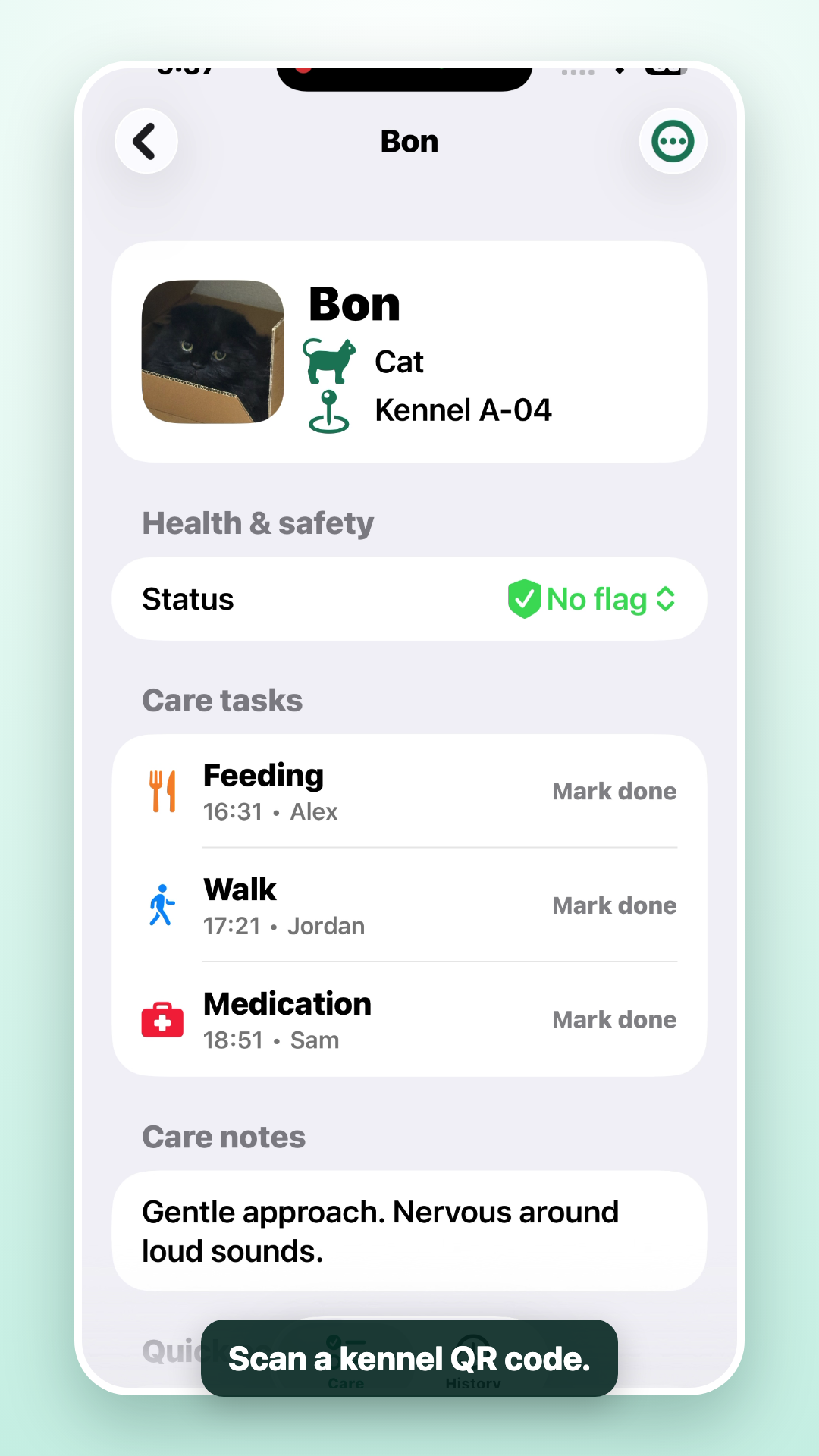
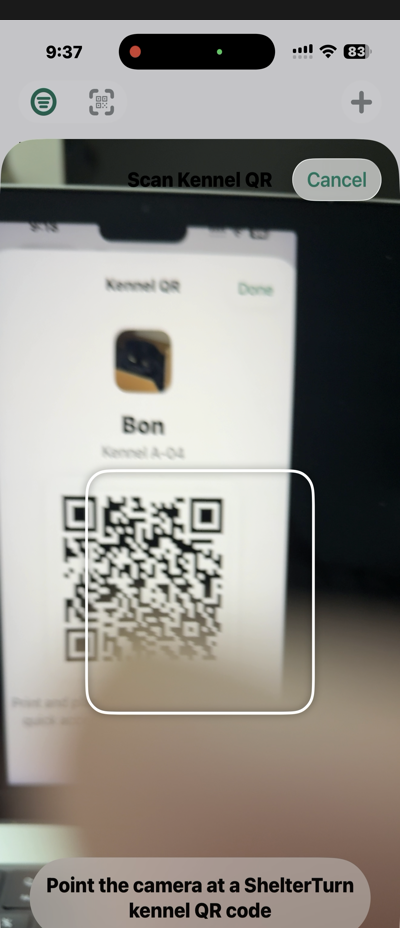
The in-app camera scanner opens the correct animal profile from a physical kennel QR code.
-
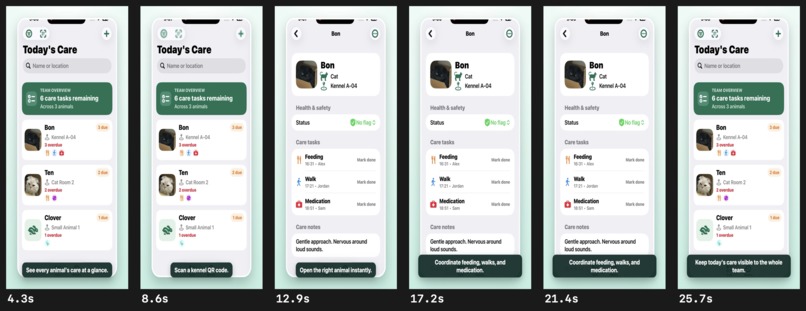
The ShelterTurn workflow: review today's priorities, scan a kennel QR code, open the animal profile, and coordinate care.
Inspiration
Animal shelters and rescue groups depend on staff and volunteers working across changing shifts. Important care information is often spread across paper sheets, whiteboards, spreadsheets, and verbal handoffs. When the next person cannot immediately see who has already been fed, walked, given medication, or monitored, an animal's needs can be delayed or missed.
ShelterTurn was inspired by a simple goal: every animal should get their turn for care, and every caregiver should know what comes next.
What it does
ShelterTurn is an English-first iPhone app for shelters, rescue groups, and foster teams. It provides:
- Photo-based profiles for dogs, cats, rabbits, birds, and other animals
- Care tasks for feeding, walks, medication, enrichment, and cleaning
- Due dates and staff assignments
- Automatic priority ordering for overdue or flagged animals
- Quick observations for appetite, mood, and care notes
- Health and safety flags for monitoring or urgent attention
- A care history showing who completed each task and when
- Search and filters for larger groups of animals
- Kennel QR codes and an in-app scanner for fast profile access
- Local notifications for upcoming care
- Local, privacy-conscious storage without requiring an account
There is no fixed animal limit in the prototype.
How we built it
ShelterTurn was built as a native iPhone app with Swift 6 and SwiftUI. The interface uses PhotosUI for animal profile photos, AVFoundation for QR scanning, Core Image for QR generation, UserNotifications for care reminders, and Codable JSON files for local persistence.
The project includes sample shelter animals so judges can immediately explore the care workflow. The app currently works without a backend or external API, making the prototype easy to demonstrate and suitable for environments with limited connectivity.
Challenges we ran into
A major design challenge was balancing speed with meaningful documentation. Shelter workers need to record care quickly, but the next shift also needs enough context to recognize changes in an animal's condition. We addressed this with a short completion flow that captures appetite, mood, an optional note, and a health flag.
We also had to design safe data migrations as new fields were added, generate readable kennel QR codes, handle camera and notification permissions, and satisfy Swift 6 concurrency checks around Apple frameworks.
Accomplishments that we're proud of
- Built a functional native iPhone prototype rather than only a concept
- Created a clear care handoff workflow from assignment to completion history
- Made urgent and overdue needs visible at a glance
- Added QR-based kennel access and profile photos for a strong real-world demo
- Kept the first version private and local-first
- Successfully compiled the project for a generic iPhone target
What we learned
We learned that animal welfare software is not only about storing records. Its greatest value is helping people notice what has not happened yet and preserving small observations between shifts. A useful shelter tool must be fast, visually clear, inclusive of different animal species, and careful not to present observations as veterinary diagnoses.
What's next for ShelterTurn
ShelterTurn has been tested successfully on a physical iPhone and is now approved for external testing through TestFlight. Next, we plan to collect feedback from shelter and rescue volunteers. Future versions may add secure multi-device team synchronization, staff roles and permissions, trend charts, exportable care reports, additional languages, and accessibility improvements. After AnimalHack, we will evaluate an App Store release based on testing and user feedback.

Log in or sign up for Devpost to join the conversation.