-
-
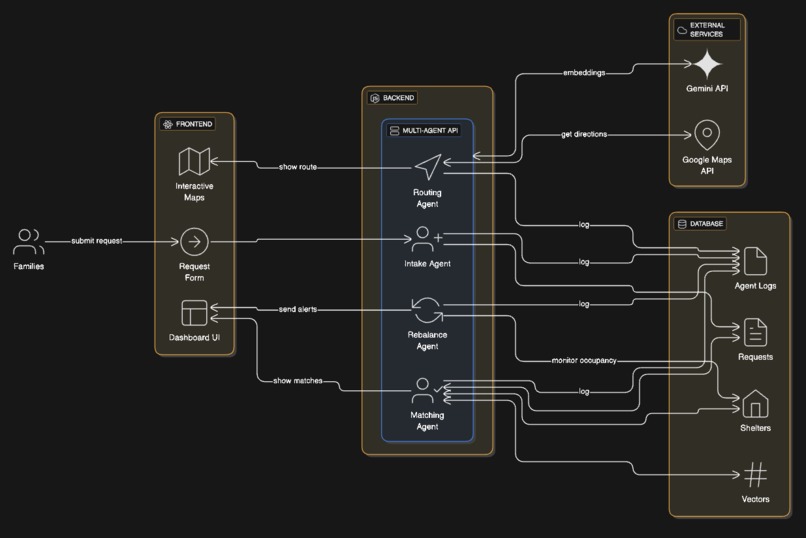
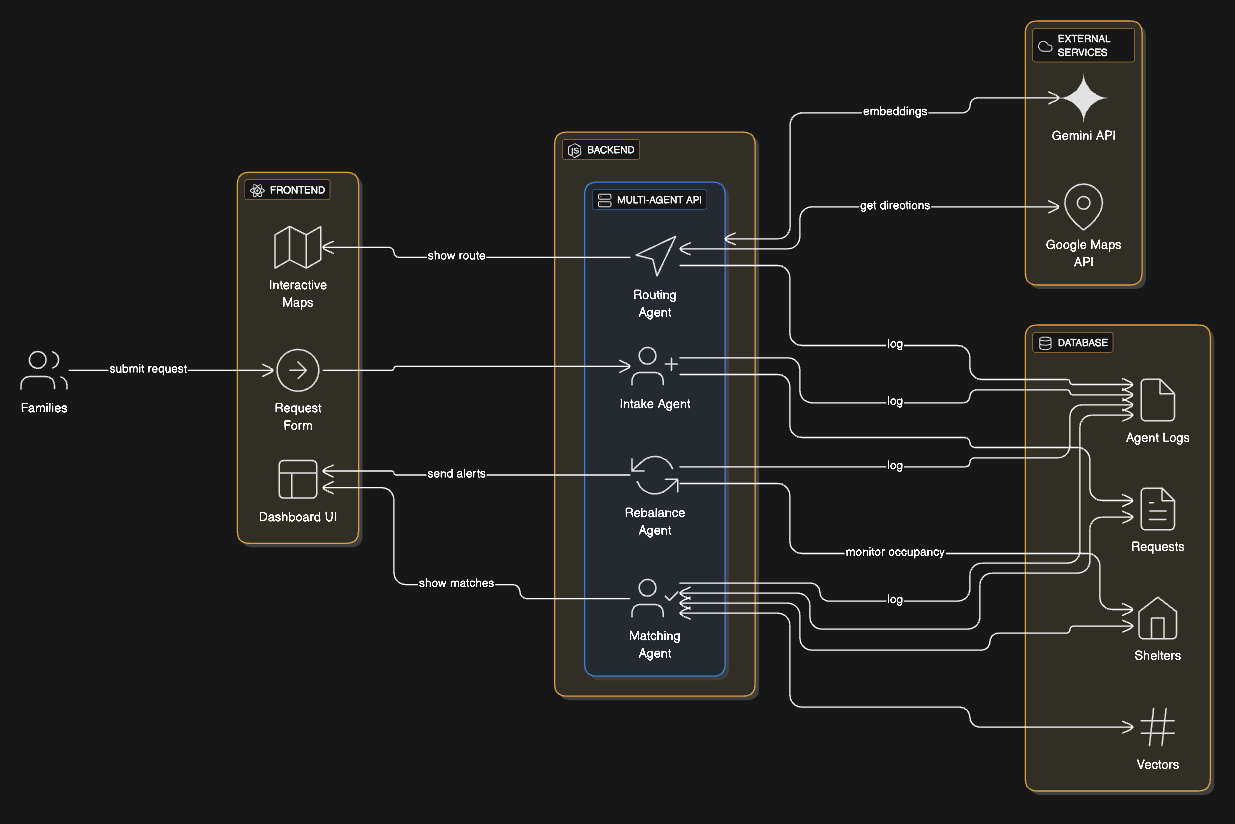
Architecture
-
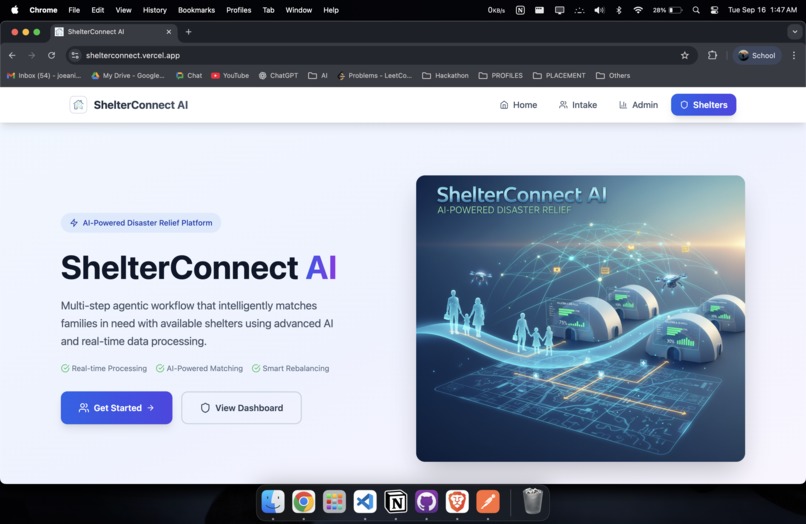
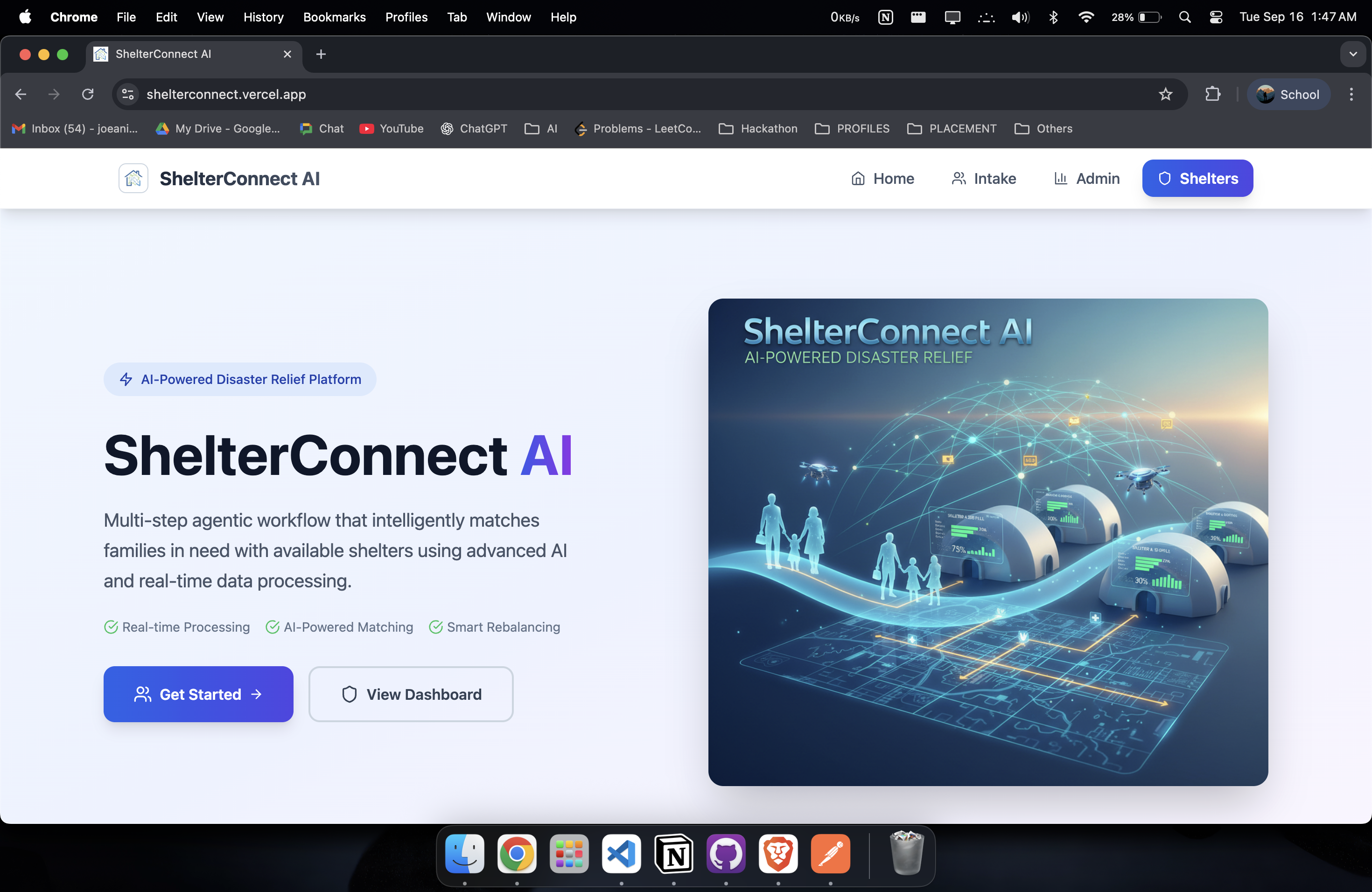
Landing Page
-
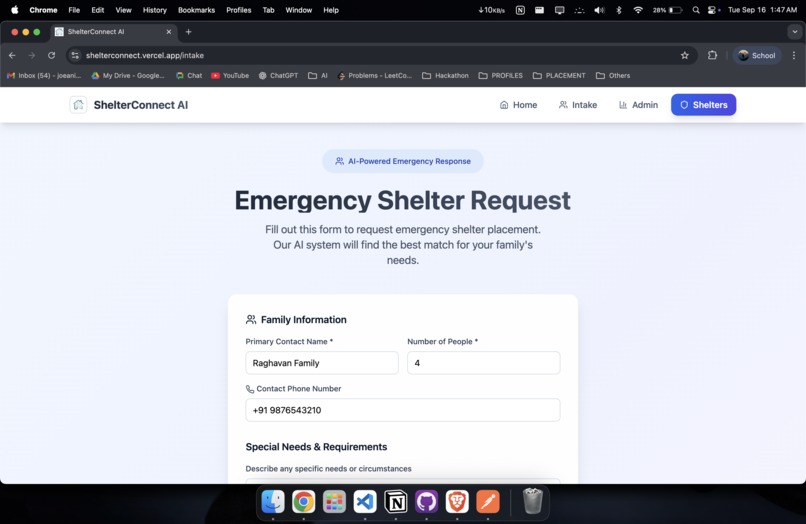
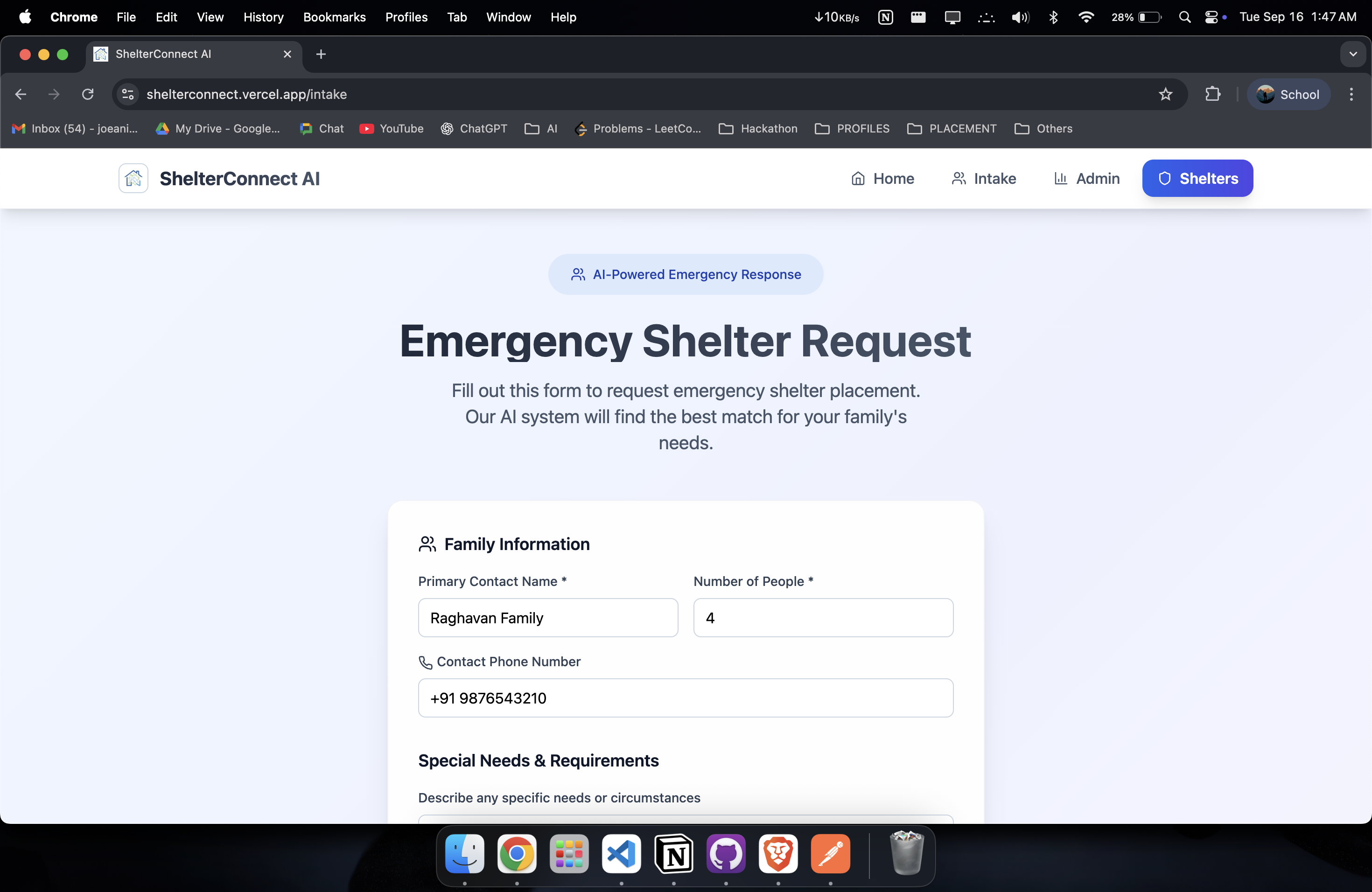
Intake Form Page
-
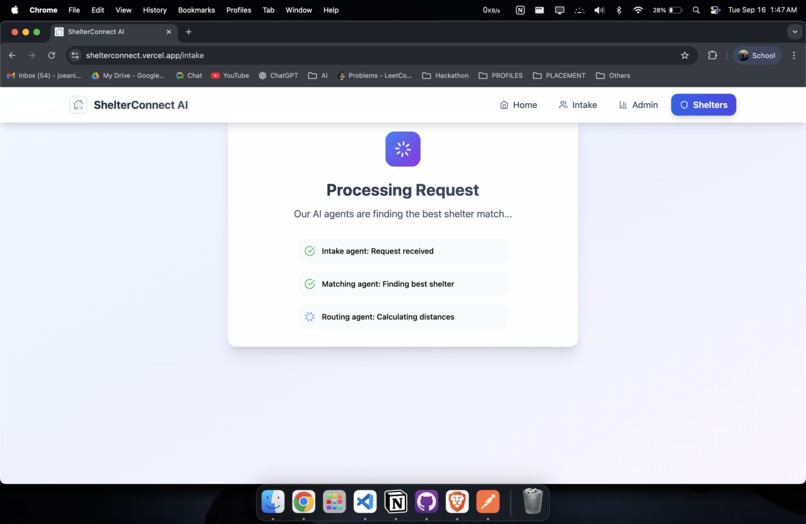
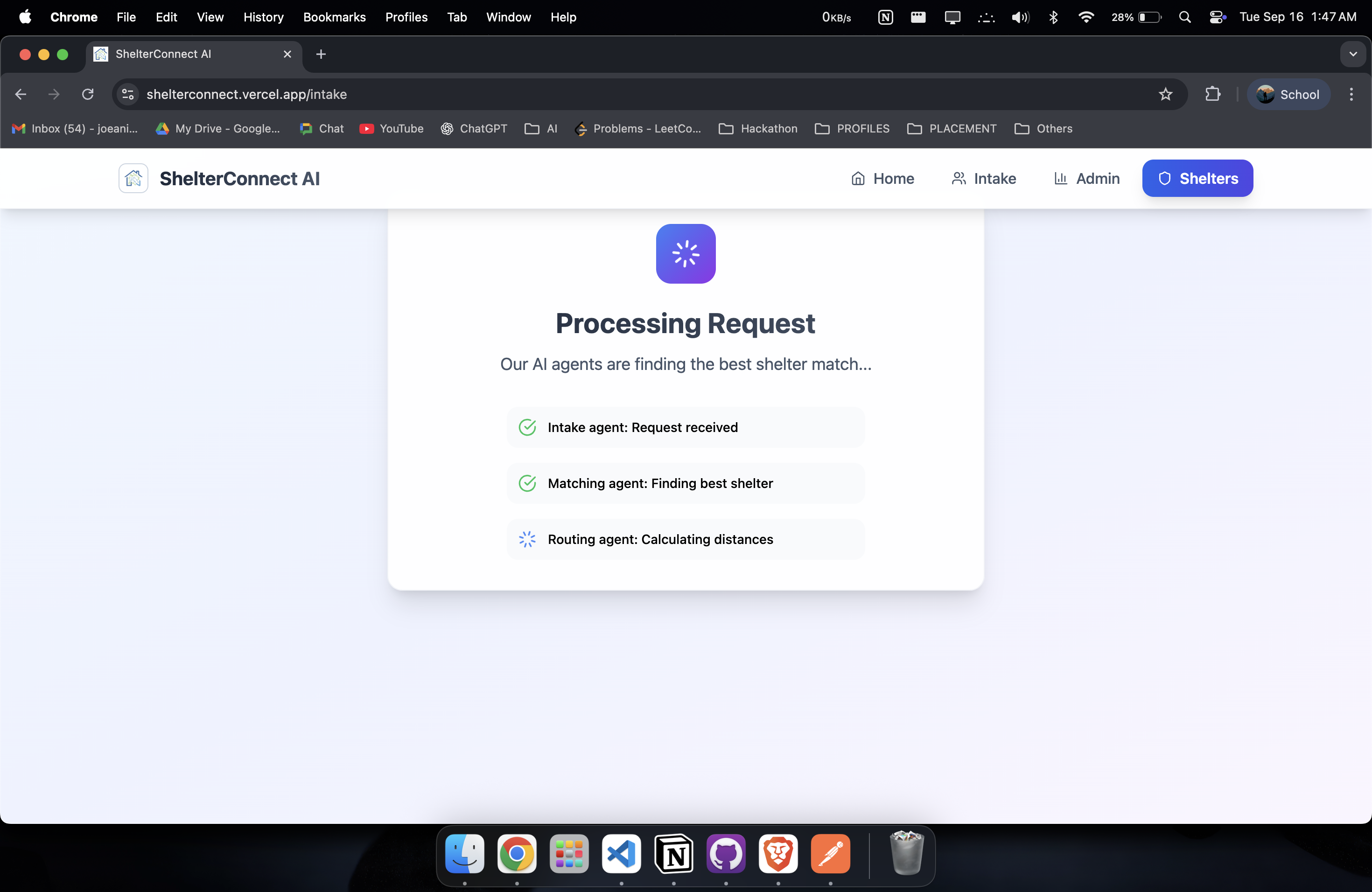
Processing Request
-
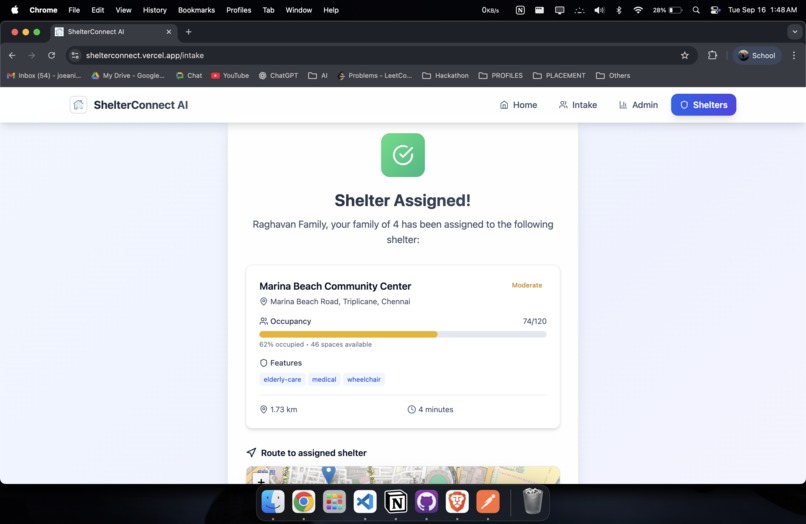
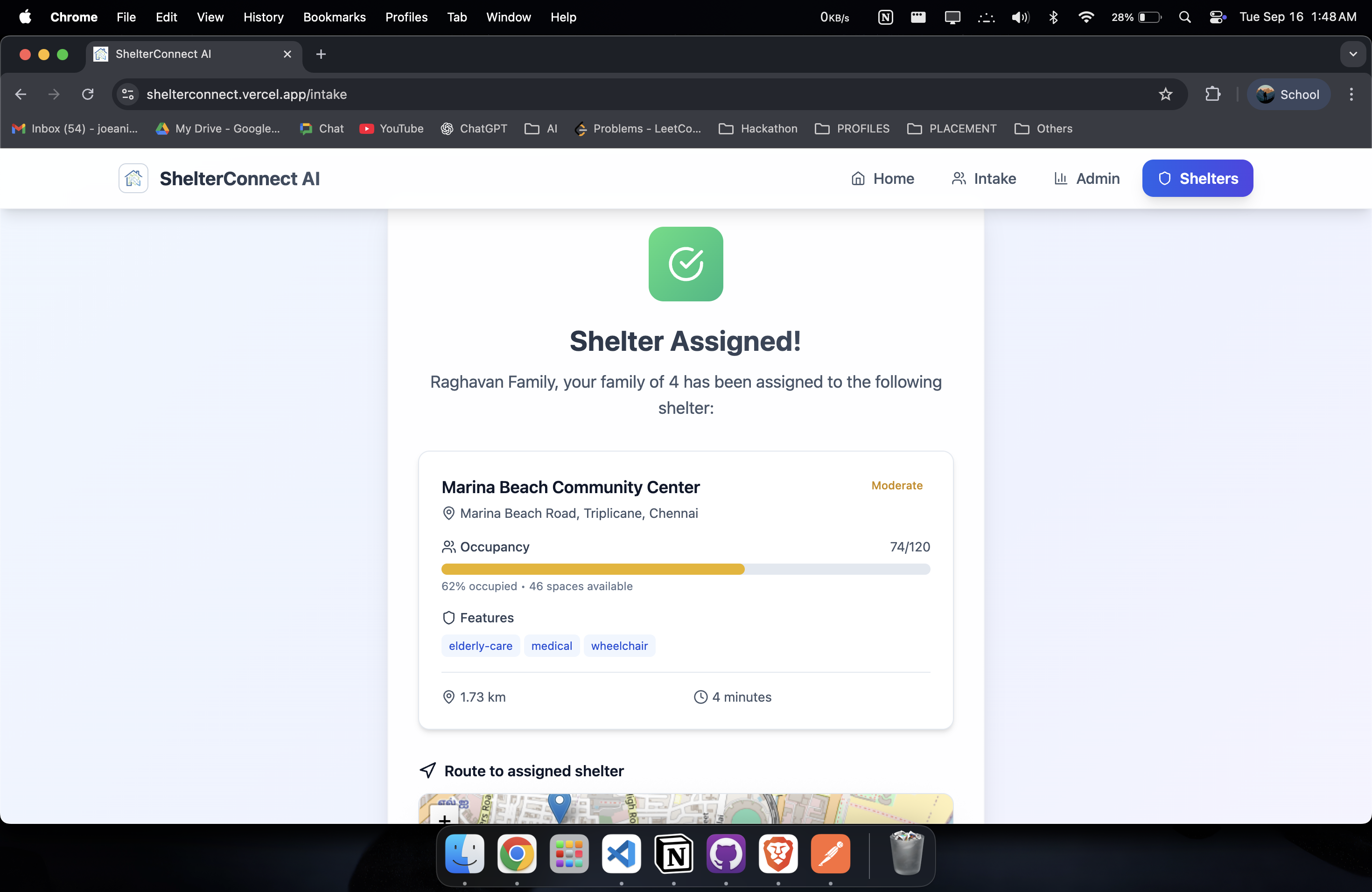
Shelter Assigned
-
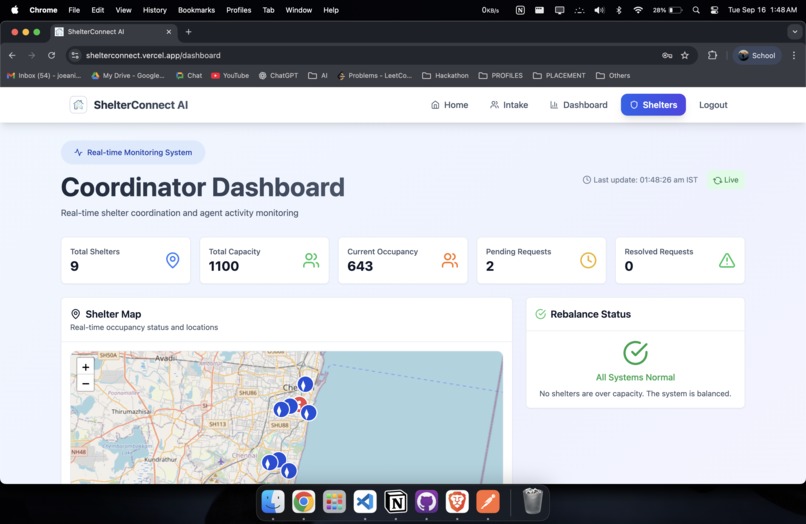
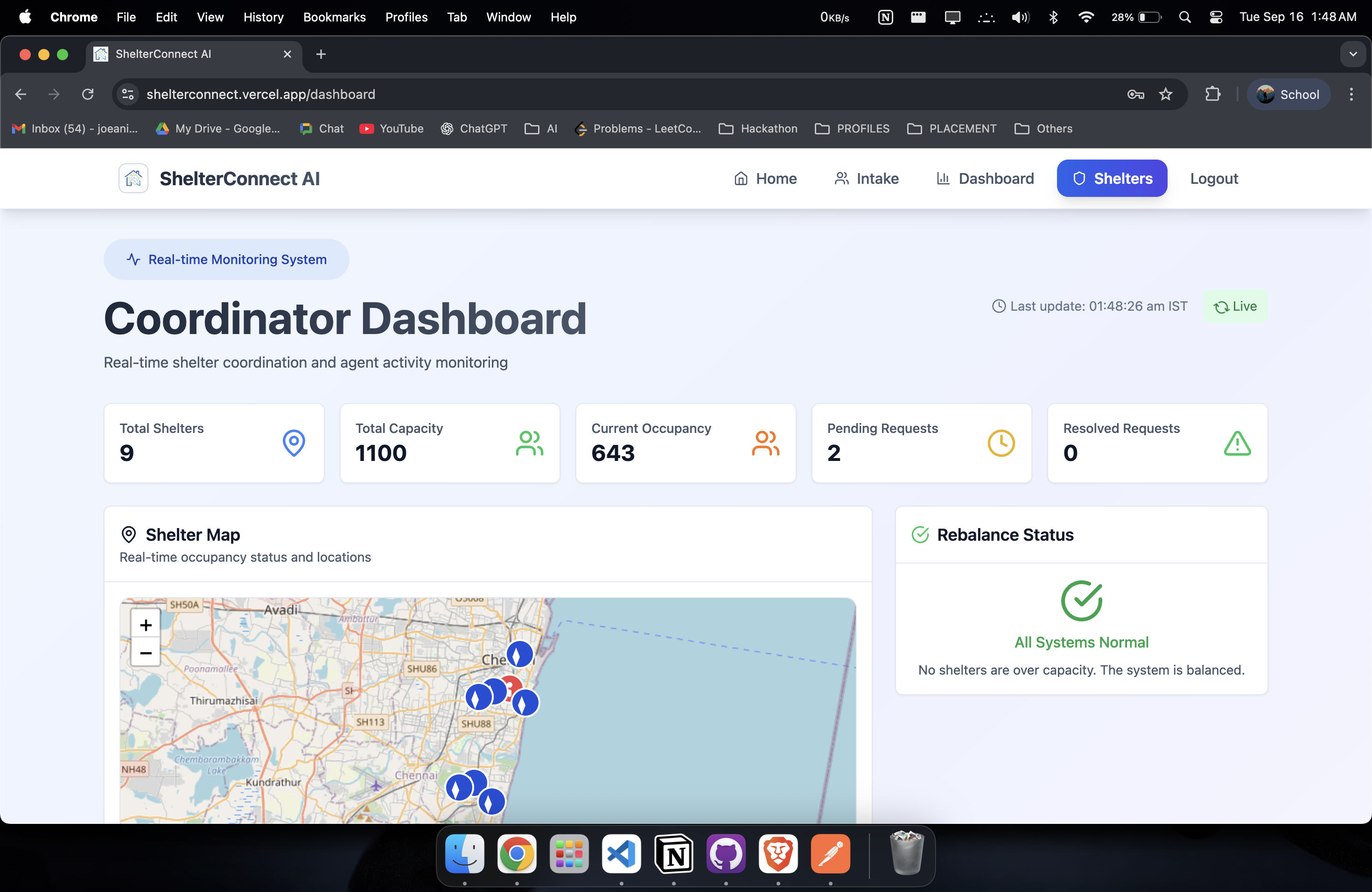
Admin Dashboard
-
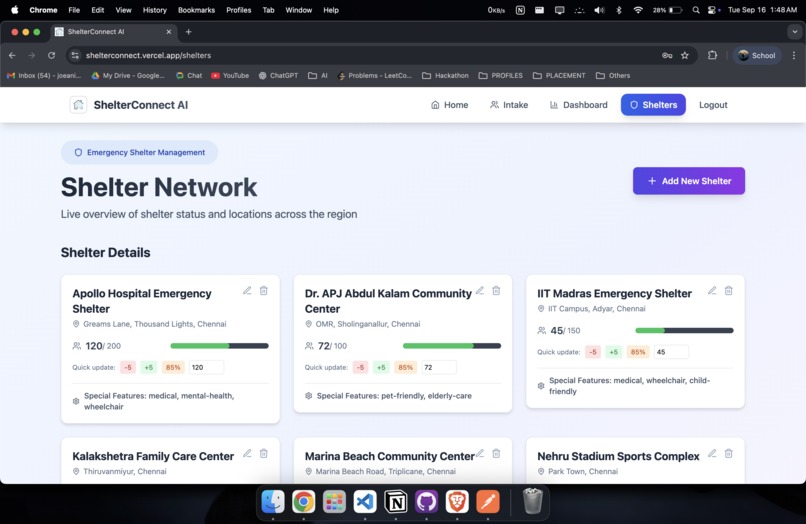
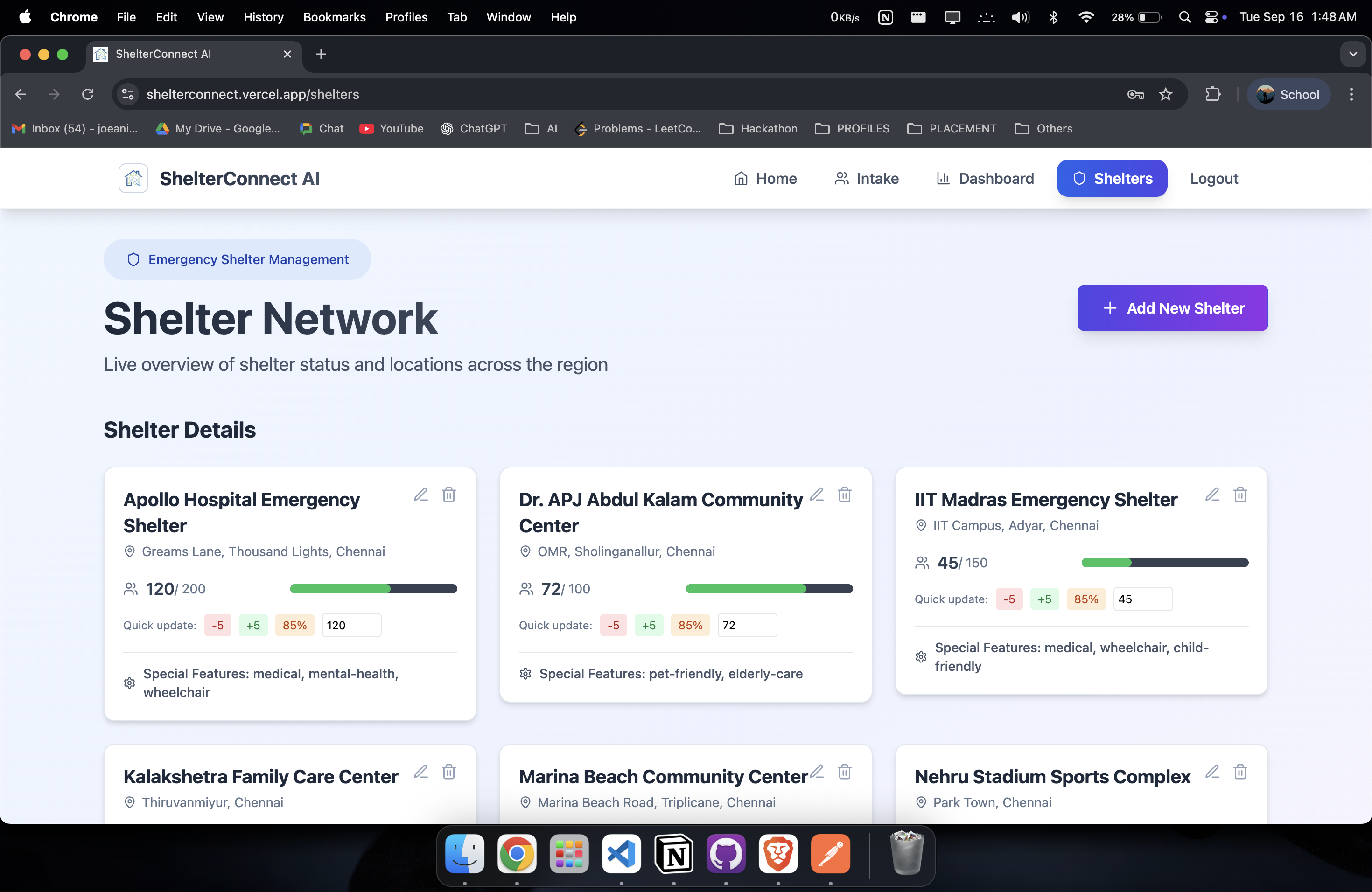
Shelter Network
📝 Project Story – ShelterConnect AI
🌟 Inspiration
The inspiration for ShelterConnect AI came from real-world disaster scenarios. During floods and cyclones in India, we noticed families struggling to find safe shelters, while many shelters stayed underutilized. Relief workers often relied on manual coordination, which slowed down response times and created imbalances in resource allocation.
We wanted to build a system that combines AI agents, vector search, and transparent decision-making to reduce chaos during emergencies and help families find safety faster.
🏗️ How We Built It
We followed an agentic, multi-step workflow:
- Intake Agent → Captures family needs, vectorizes them, and stores structured + embedding data in TiDB Serverless.
- Matching Agent → Uses vector similarity search + full-text filtering to find the best-fit shelter based on needs, distance, and capacity.
- Routing Agent → Invokes external APIs (Google Maps) for ETA and routing.
- Rebalance Agent → Continuously monitors shelter capacity; triggers reassignments if any shelter exceeds 80% capacity.
The stack:
- Frontend → React + Tailwind + Vite
- Backend → Node.js (Express + TypeScript)
- Database → TiDB Serverless (vector columns + full-text search)
- AI → OpenAI for embeddings, chained LLM calls for readable summaries
- External APIs → Google Maps for routing
📚 What We Learned
- How to leverage TiDB Serverless for vector + structured queries in real time.
- Designing multi-step AI agents that work in a transparent, auditable pipeline rather than as black-box models.
- Balancing semantic search (embeddings) with rule-based filters for precision.
- The importance of clear agent logs to build trust in humanitarian contexts.
A key takeaway:
$$ \text{Impact = Speed of Response} \times \text{Fairness of Allocation} $$
Our system aims to maximize both.
⚡ Challenges We Faced
- Data Simulation → Since real disaster datasets are not openly available, we had to create mock shelters and requests while ensuring realism.
- Vector Search Tuning → Balancing semantic similarity scores with hard filters (like distance and capacity) required careful query design.
- Real-time Updates → Ensuring agents continuously log activities without blocking requests was a challenge.
- Integration Complexity → Orchestrating multiple agents (intake, matching, routing, rebalancing) in one workflow while keeping it hackathon-feasible.
🔮 What’s Next
We plan to extend ShelterConnect AI with:
- SMS/WhatsApp intake for families without internet
- IoT sensor data for real-time occupancy tracking
- Predictive analytics to forecast shelter overflow before it happens
- Cross-region coordination across multi-database setups
✨ ShelterConnect AI shows how multi-step AI agents + TiDB Serverless can make disaster relief faster, fairer, and more transparent.
Built With
- express.js
- gemini-api
- google-maps
- node.js
- react
- tailwind
- tidb


Log in or sign up for Devpost to join the conversation.