-
-
Logo
-
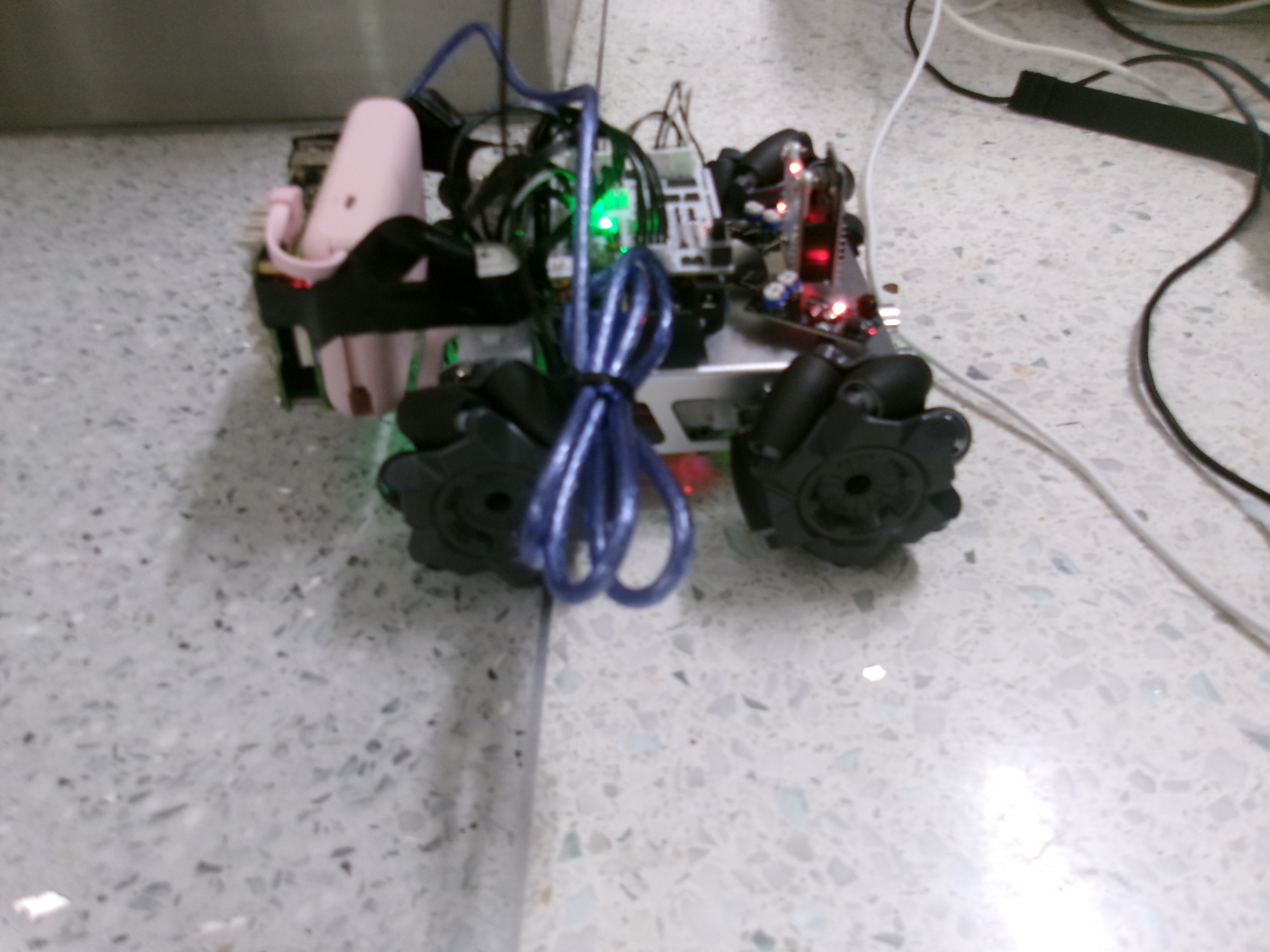
Robot
-
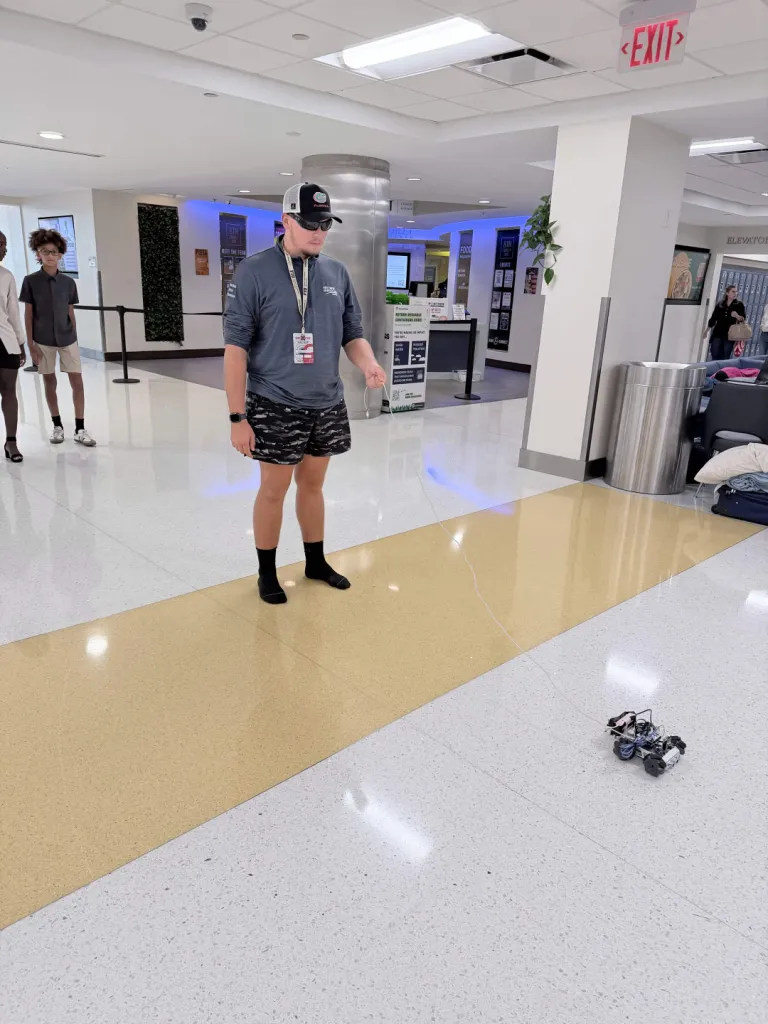
How it works
-
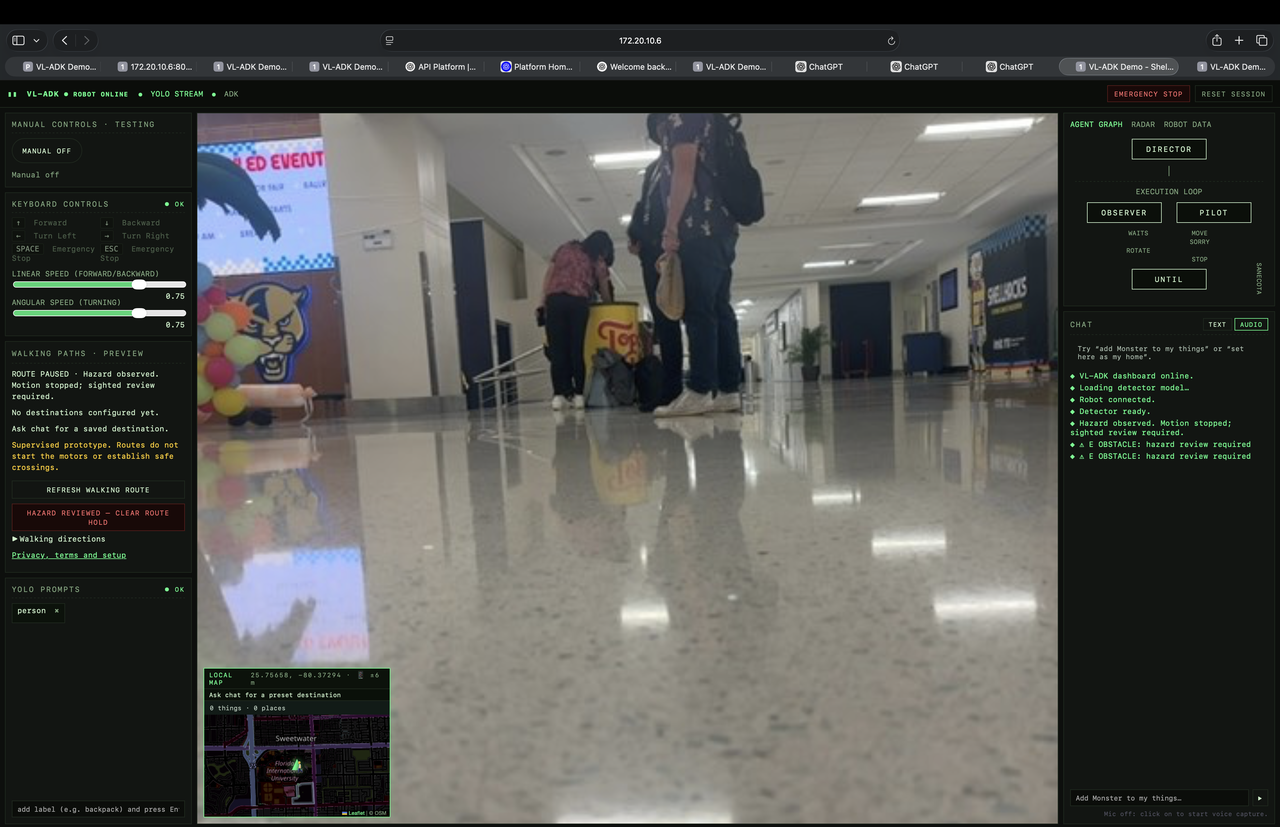
Robot Vision/ View
Inspiration
ShellVision was inspired by something very personal to our team. Kyle’s mom is blind, and we wanted to create something that could help her feel more independent and confident when going on walks.
Guide dogs are incredible, but not everyone has access to one. We started asking ourselves whether robotics and AI could provide a similar type of guidance in a small, affordable platform.
That idea became ShellVision — a fully autonomous robotic guide designed to travel ahead of a visually impaired person, understand the environment around them, detect obstacles, and help guide them safely to their destination.
What it does
ShellVision acts like a robotic guide dog.
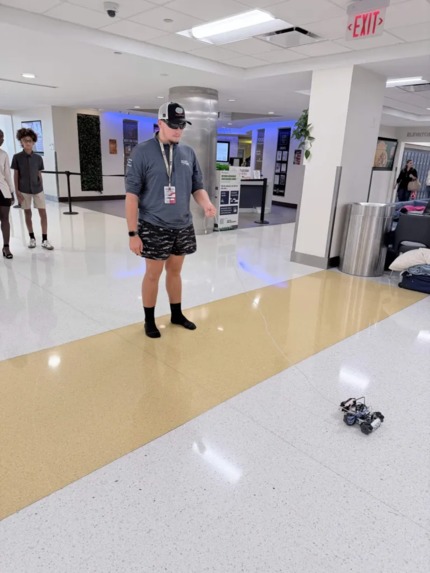
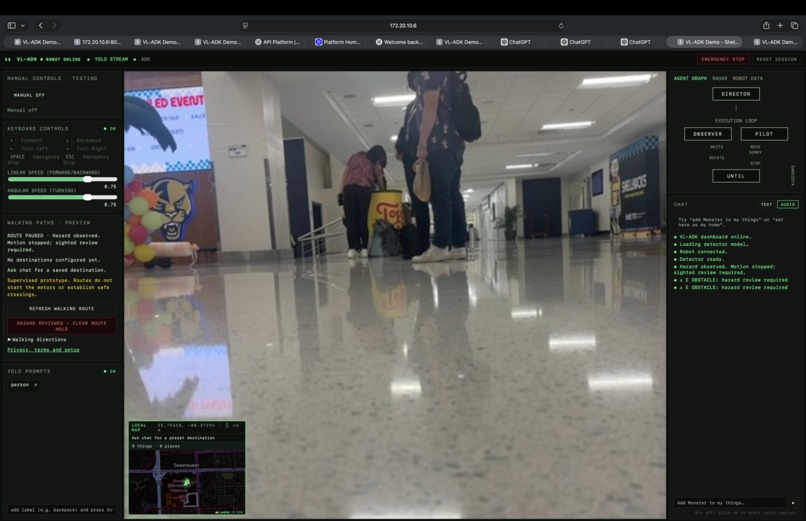
The user walks behind the robot while holding a lightweight tether or handle. ShellVision moves autonomously in front of the user and uses robot vision, AI-based object detection, sensors, and GPS navigation to understand where it is and what is happening around it.
The system can detect people, objects, and potential hazards in its path and make navigation decisions without requiring the user to remotely control the robot.
Our goal was to make the experience simple: the user chooses where they want to go, and ShellVision helps lead the way.
How we built it
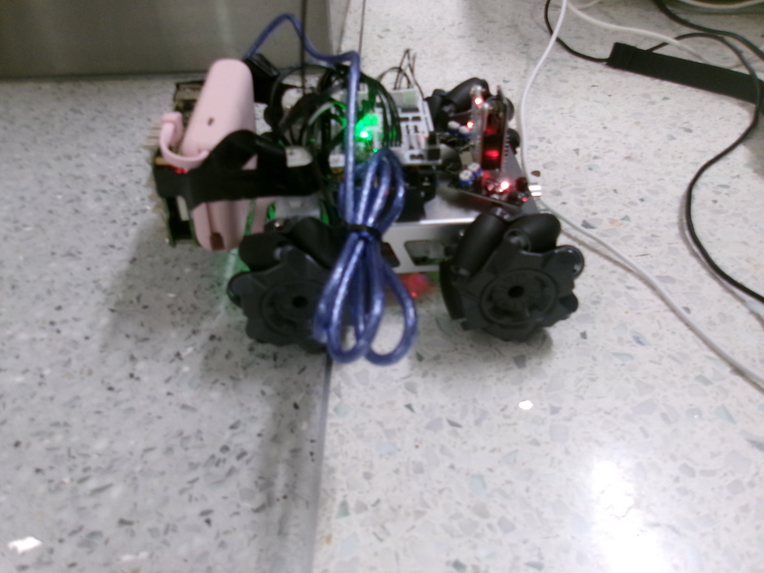
We built ShellVision using a small RC-car platform powered by a Raspberry Pi, which acts as the brain of the system.
The Raspberry Pi processes information from the onboard camera and sensors while controlling the movement of the robot.
Our system combines:
- Raspberry Pi for onboard computing and control
- Robot vision for understanding the environment
- AI object detection for identifying people, obstacles, and hazards
- Camera input for real-time visual awareness
- GPS for location and destination-based navigation
- Autonomous navigation logic for determining where the robot should move
- Motor control for steering and movement
- RC-car chassis as the mobile robotic platform
- Tether-based guidance so the user can physically follow the robot
Rather than simply functioning as a remote-controlled car, ShellVision is designed to make its own navigation decisions based on what it sees and where it needs to go.
Challenges we ran into
One of our biggest challenges was making the robot respond quickly and reliably to a changing environment.
Real-world navigation is unpredictable. People move, objects appear suddenly, hallways change, and the robot has to constantly interpret what it sees while continuing to navigate.
Another major challenge was combining multiple systems together. Robot vision, AI detection, GPS, motor control, sensors, and autonomous decision-making all had to work together on a small Raspberry Pi-powered platform.
Safety was also a major consideration. Because ShellVision is intended to guide someone who may not be able to see an obstacle ahead, the robot needs to be cautious when it detects something uncertain or potentially dangerous.
We also had to balance processing power, response time, battery usage, and the physical size of the robot.
Accomplishments that we're proud of
We are especially proud that ShellVision became more than just a remote-controlled prototype.
We created a system that can:
- Navigate autonomously
- Process a live camera feed
- Use AI to detect objects and obstacles
- Understand its surroundings using robot vision
- Incorporate GPS-based location awareness
- Make movement decisions on its own
- Operate on a compact Raspberry Pi-based platform
Most importantly, we built something around a real problem that directly affects someone close to our team.
Seeing the robot move through an environment and make decisions on its own was one of the most rewarding parts of the project.
What we learned
We learned that autonomous robotics is really a combination of many different technologies working together.
A robot does not just need to recognize an object. It has to determine whether that object is dangerous, decide what action to take, control its motors, understand its location, and repeat that process continuously in real time.
We also learned a lot about:
- Computer vision
- AI object detection
- Raspberry Pi development
- Autonomous navigation
- GPS integration
- Motor control
- Sensor integration
- Real-time decision-making
The biggest lesson was that building technology for accessibility requires thinking beyond whether something simply works. It has to be dependable, intuitive, and designed around the person using it.
What's next for ShellVision
Our vision for ShellVision goes much further than the prototype we built during the hackathon.
Future versions could include:
- Turn-by-turn GPS navigation
- Voice-controlled destination selection
- More advanced obstacle avoidance
- Sidewalk and crosswalk detection
- Curb and stair detection
- Traffic light recognition
- Real-time mapping
- Emergency alerts
- Haptic feedback
- Audio navigation cues
- Improved outdoor navigation
- More advanced autonomous path planning
We also want to continue making the robot smaller, faster, and more reliable.
Ultimately, the goal of ShellVision is simple:
Give visually impaired people another tool for navigating the world with greater independence, confidence, and freedom.
Built With
- adriano
- ai
- claude
- codex
- html
- javascript
- passion
- python
- raspberrypi
- robot
- robotvision


Log in or sign up for Devpost to join the conversation.