-
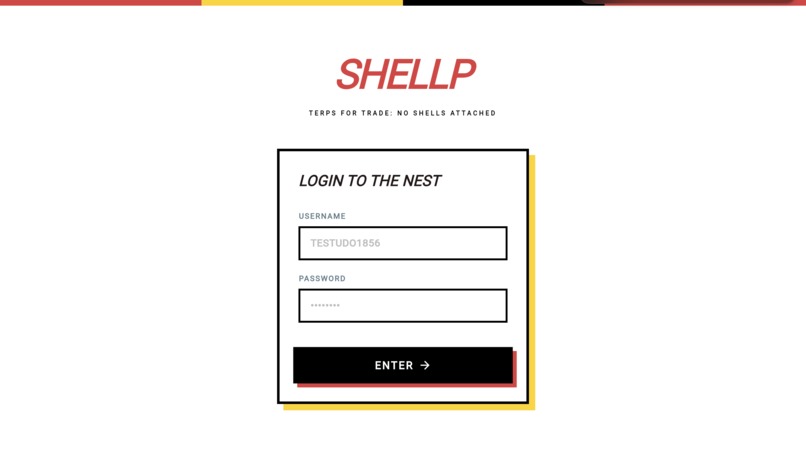
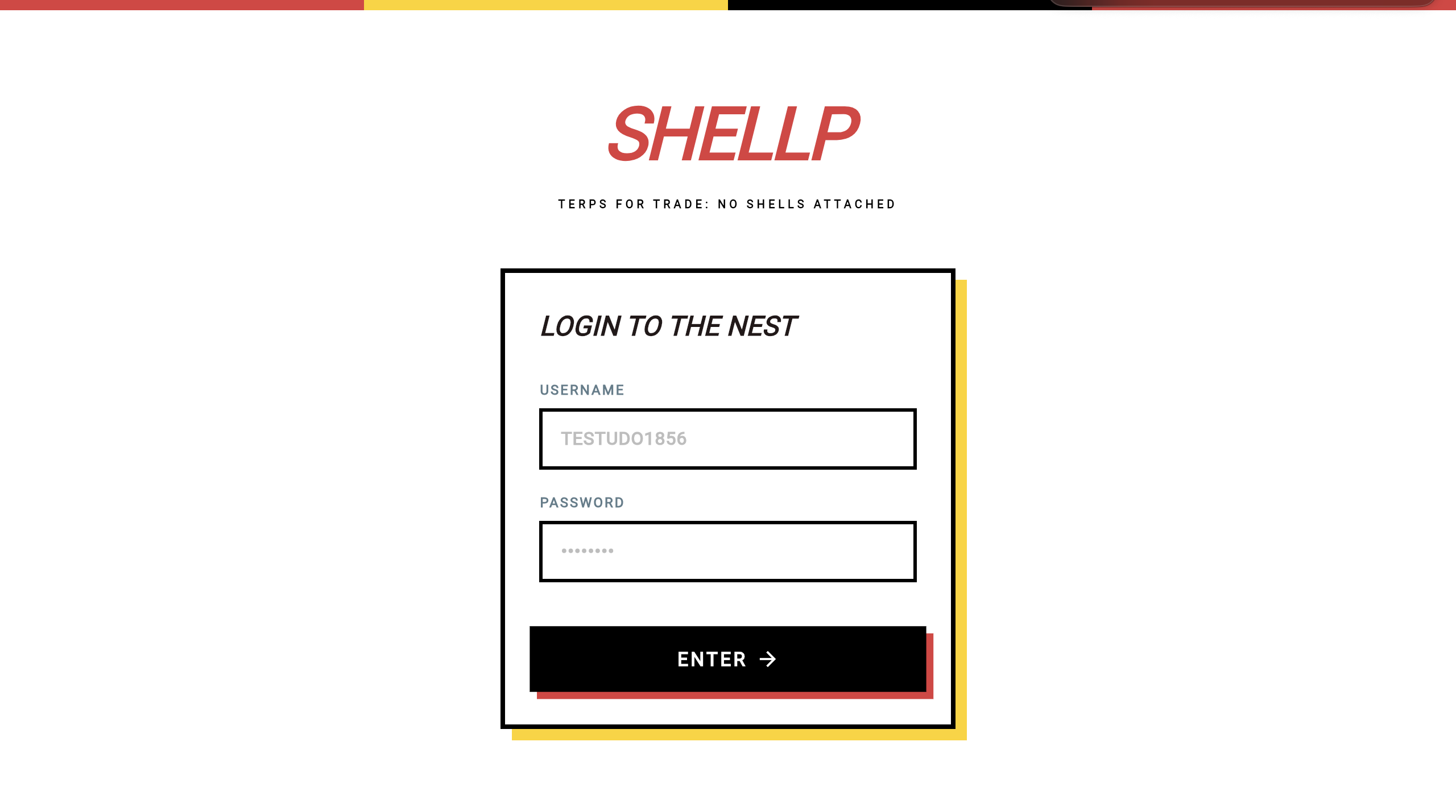
Login Page
-
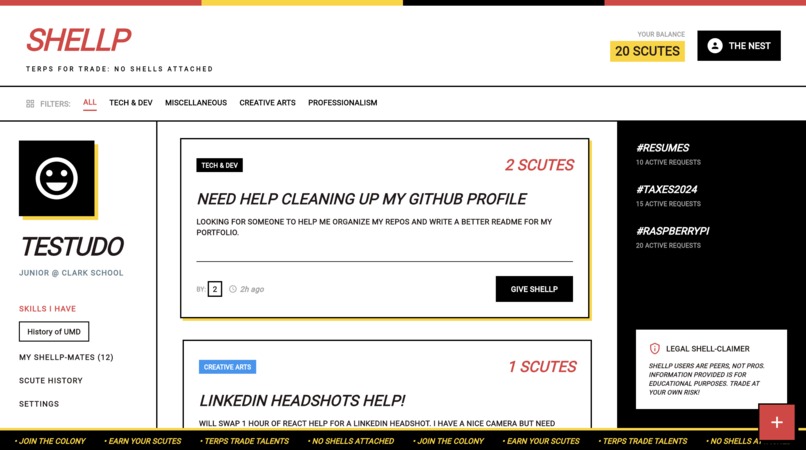
Home Page
-
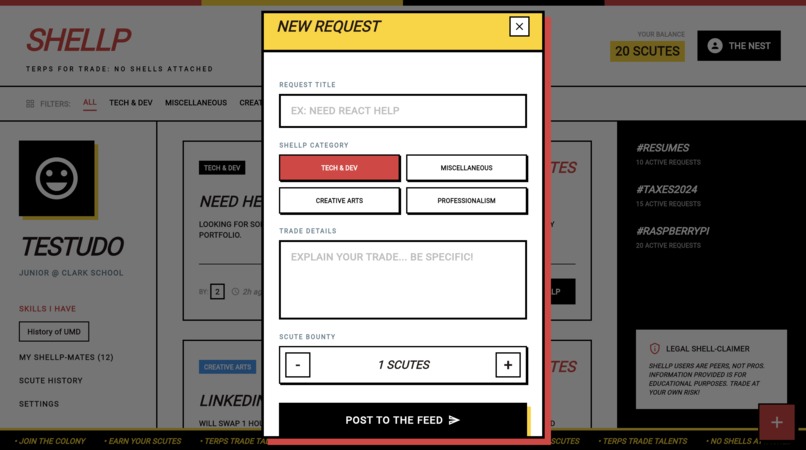
Post Feature
Shellp 🐢
Imagine a campus where the specialized talent locked inside a Computer Science major’s dorm is the literal currency used to pay for a car repair. Shellp is a decentralized "skill-bank" designed to transform the University of Maryland into a frictionless, circular economy. While UMD prepares you for the rigorous demands of a degree, Shellp prepares you for the practical demands of life by allowing students to trade any expertise—from Python scripting to professional photography—using a high-trust credit system instead of cash. By decoupling essential services from the traditional market, we aren't just saving students money; we are building a "fearless" ecosystem where the person sitting next to you in McKeldin isn't just a classmate, but a vital resource in your personal growth.
Our Inspiration
We were inspired to build a bridge between the pockets of expertise. We wanted to move away from the "transactional" nature of modern life and toward a circular economy—a high-trust ecosystem where a Terp's value isn't measured by their bank account, but by their willingness to contribute. By creating a platform where you can trade a Python script for a fitness plan, we are reclaiming the original spirit of a "University community." Shellp is our fearless response to student affordability and social isolation; it’s a way to ensure that when one Terp prospers, the entire "Shell" grows stronger.
What it does
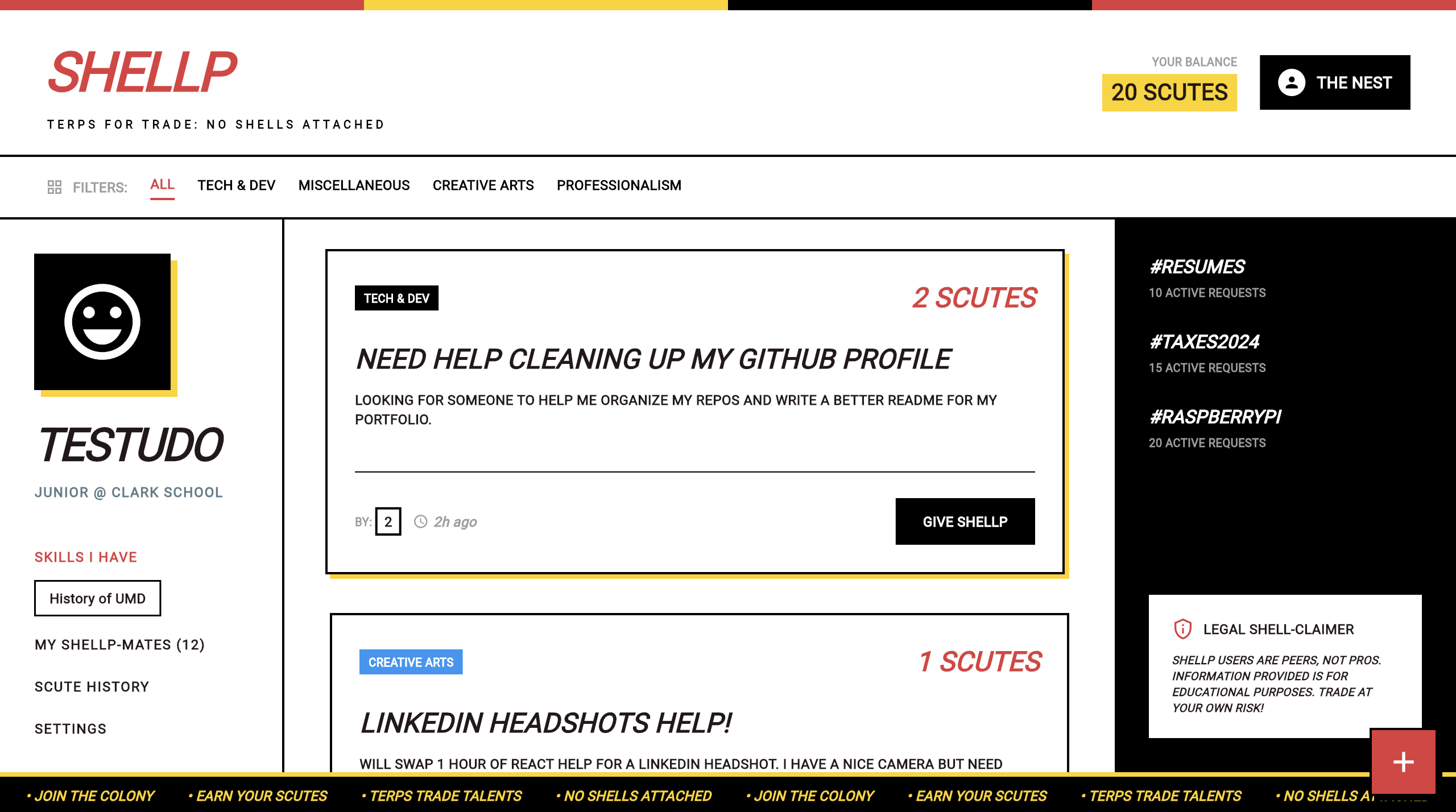
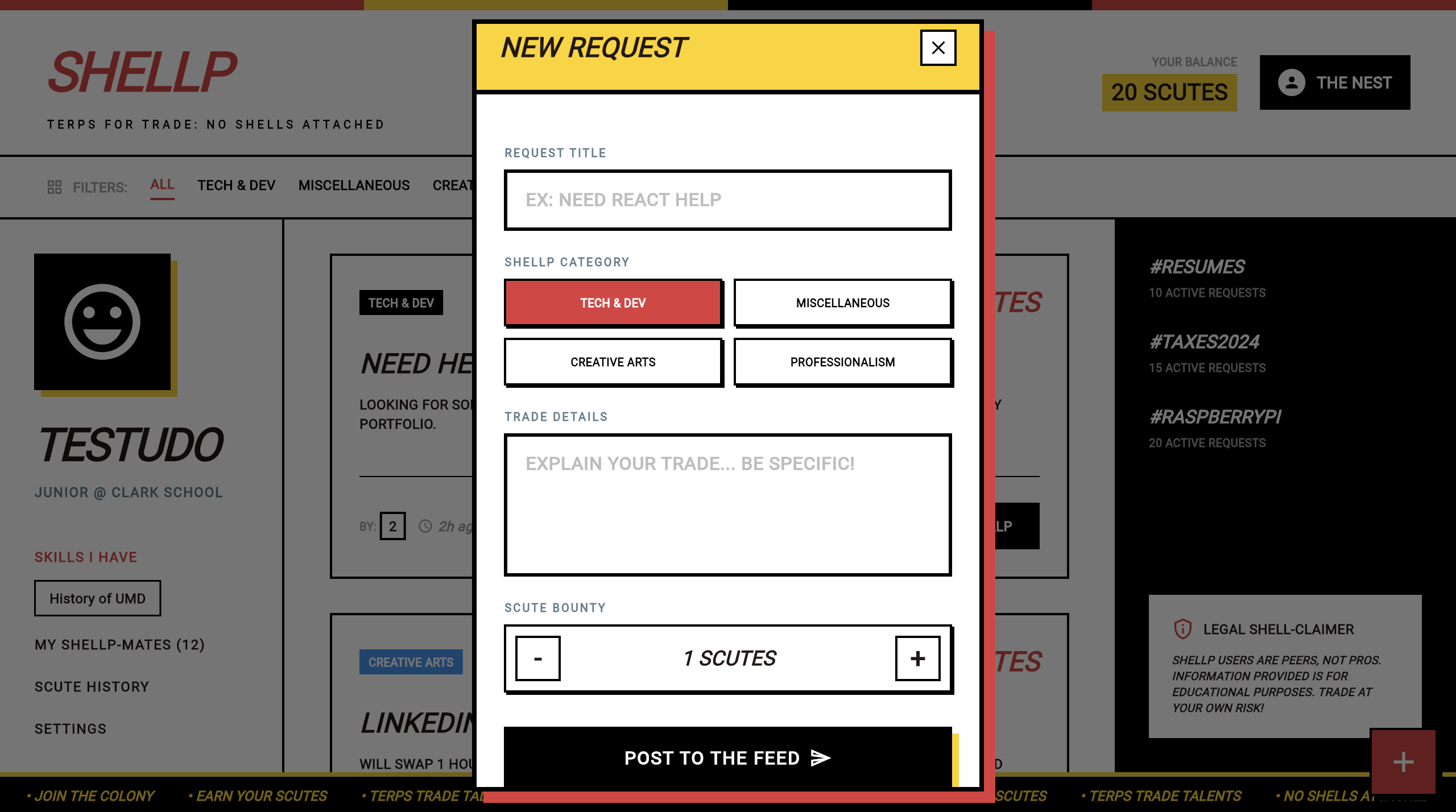
- Skill Listing: Users lists a "Service" (what they can do) or a "Request" (what they need). A CS student might list "Custom Python Scripts" while an Art major lists "Digital Portraits."
- The Match & Connect: Through a localized discovery feed, a "Seeker" finds a "Provider." They use an in-app chat to coordinate a meeting spot—like the Stamp Student Union or McKeldin Mall.
- The Proof of Work: Once the task is performed, the provider generates a unique, time-stamped QR Code within the app.
- Atomic Credit Transfer: The Seeker scans the code, which triggers a Firebase Transaction. In one millisecond, the database subtracts the credit from the Seeker and adds it to the Provider.
How we built it
We primarily used Google Gemini to rapidly iterate and integrate our conceptual ideas into a live application. We utilized Flutter and Dart for a responsive, cross-platform frontend, paired with a Firebase backend to facilitate real-time, peer-to-peer transactions. By leveraging Cloud Firestore, we built a secure, decentralized 'Skill-Bank' that maintains an atomic ledger of student credits, ensuring that every expertise exchange is synchronized instantly across the UMD community.
What's next for Shellp
This is the narrative of Shellp—our journey at this Google Hackathon to transform the University of Maryland into a circular economy of knowledge. The inspiration for Shellp came from the desire to bridge this gap. We wanted to move away from the "everything costs money" mindset and toward a social good model where the only currency is time. We looked at the UMD Do Good mission and decided to build a platform where "Fearless Ideas" included learning how to change a tire or file taxes from a peer.
Challenges We Faced
- The Integrity Guardrail: Our biggest challenge was ensuring the app wouldn't be used for academic cheating. We had to architect a robust category-filtering system and a keyword blacklist to automatically flag posts containing course codes (e.g., CMSC, MATH).
- Real-time Synchronization: Managing the "Double-Handshake" QR verification was tricky. We had to ensure that the ledger updated for both users simultaneously the moment the scan was confirmed, even on spotty hackathon Wi-Fi.
- UX of Value: Designing a "Time-Bank" UI that didn't feel like a boring bank app was a hurdle. We iterated several times to make the "Earning" and "Spending" of credits feel as rewarding as a social media interaction.
What We Learned
Beyond the code, Shellp taught us about the power of Human Capital. We learned that:
- Trust is a feature: Community-based apps thrive when people feel they are part of a "Shell" (a safe space).
- Constraint breeds creativity: By explicitly removing "Academic Support" from our scope, we discovered an entire world of student needs—from fitness coaching to sewing—that we had previously ignored.
- The "Google Way" is efficient: Integrating Firestore and Cloud Functions allowed us to focus on the Social Good aspect of the app rather than worrying about server maintenance.
What's next for Shellp
This is the narrative of Shellp—our journey at this Google Hackathon to transform the University of Maryland into a circular economy of knowledge.
The inspiration for Shellp came from the desire to bridge this gap. We wanted to move away from the "everything costs money" mindset and toward a social good model where the only currency is time. We looked at the UMD Do Good mission and decided to build a platform where "Fearless Ideas" included learning how to change a tire or file taxes from a peer.
The Vision
Shellp isn't just an app; it’s a commitment to our fellow Terps. We believe that by trading our time and talents, we can make the College Park experience more affordable, more connected, and truly fearless.
Go Terps!


Log in or sign up for Devpost to join the conversation.