Inspiration
As a group of individuals increasingly detached from the world of finance, the Schonfeld Sustainability Challenge inspired us to explore stocks, sustainability, and the S&P 500. At first, we considered our lack of domain knowledge to be a huge drawback, but our lack of preconceived ideas actually helped us think more organically and come up with innovative ways to identify sustainability using a number of unique factors.
We saw this challenge as an opportunity to bridge the gap between finance and sustainability, contributing fresh perspectives and diverse skills. Our journey emphasized that our different backgrounds, including computer science and information systems, could bring valuable insights to complex problems.
What it does
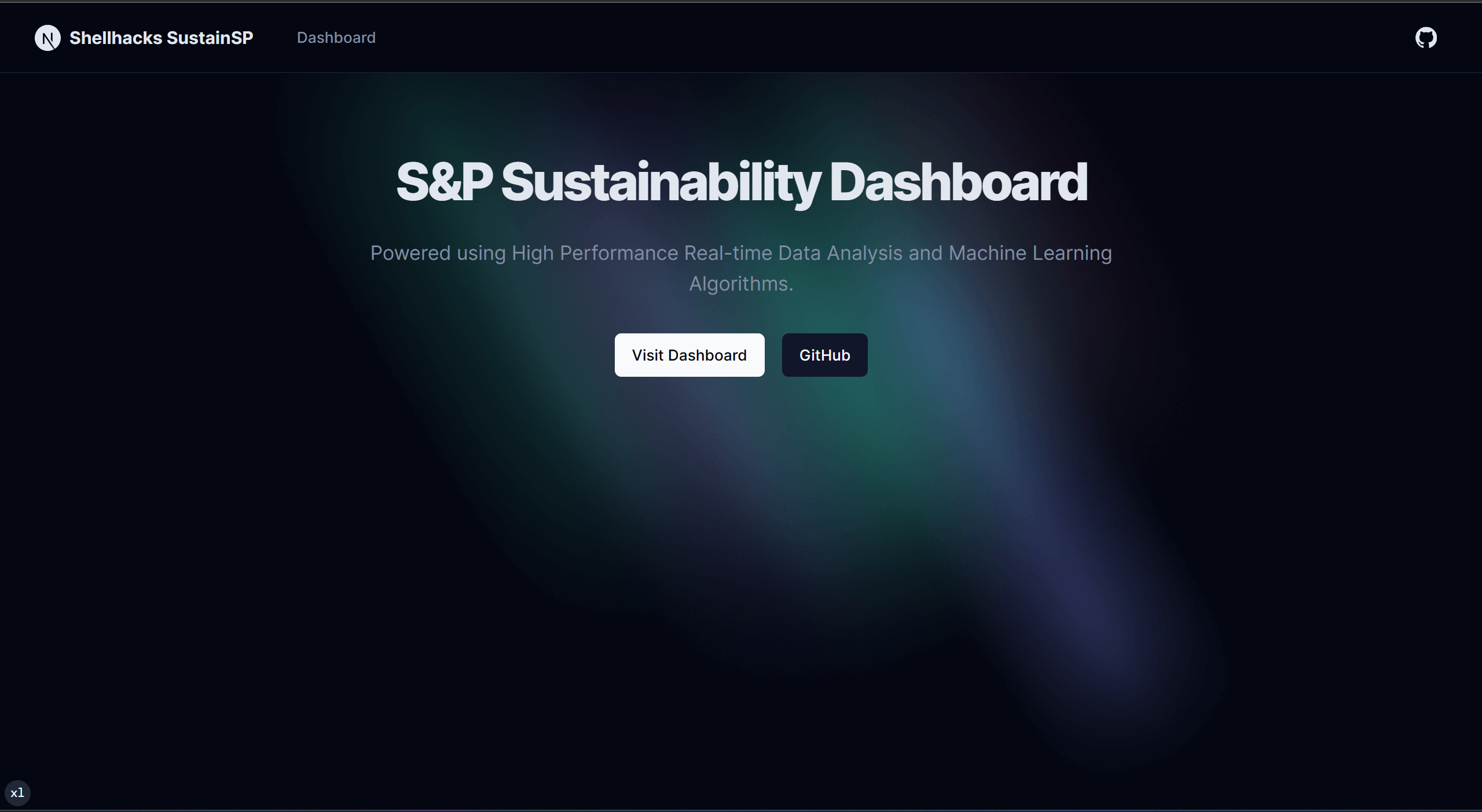
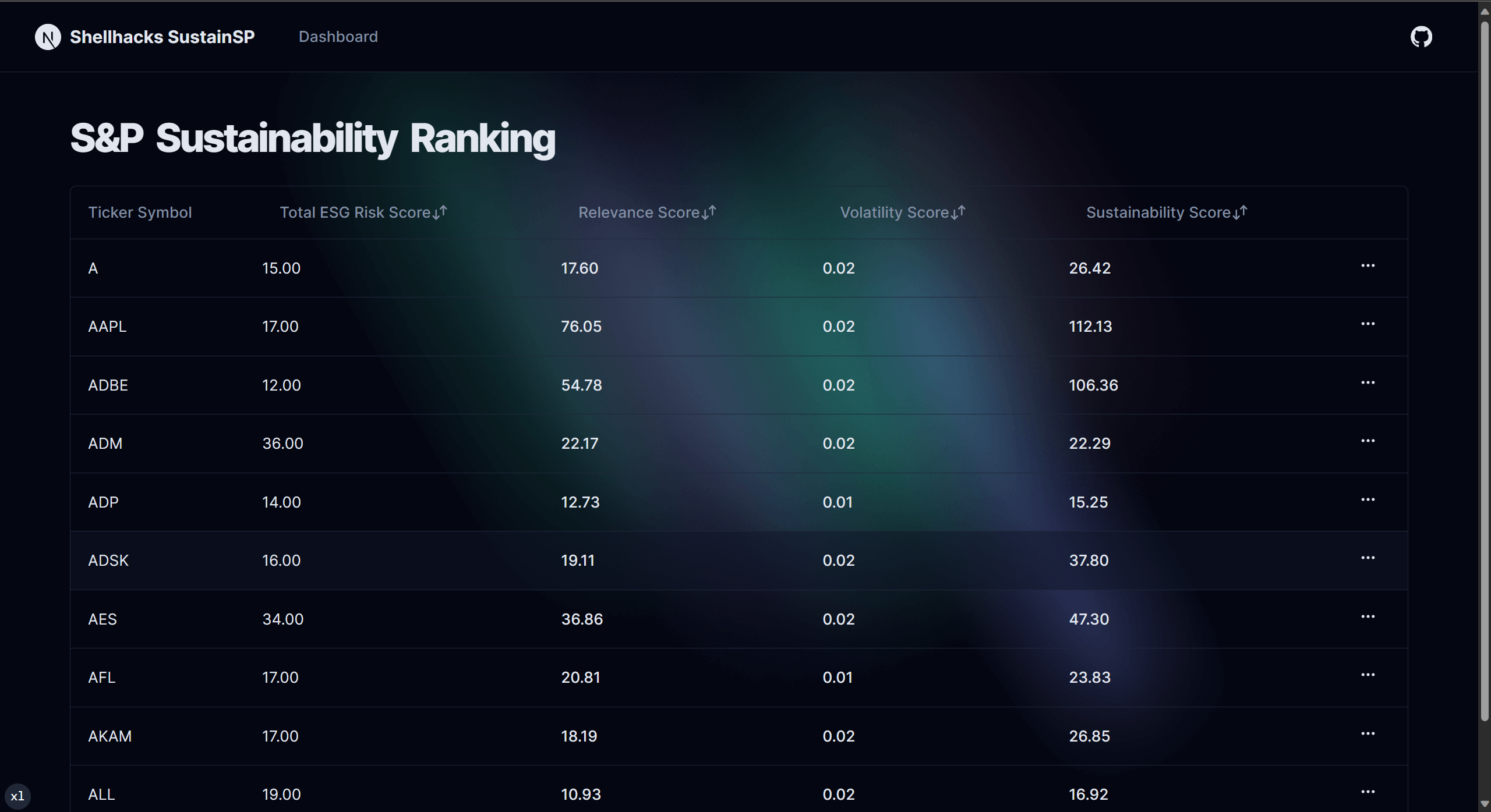
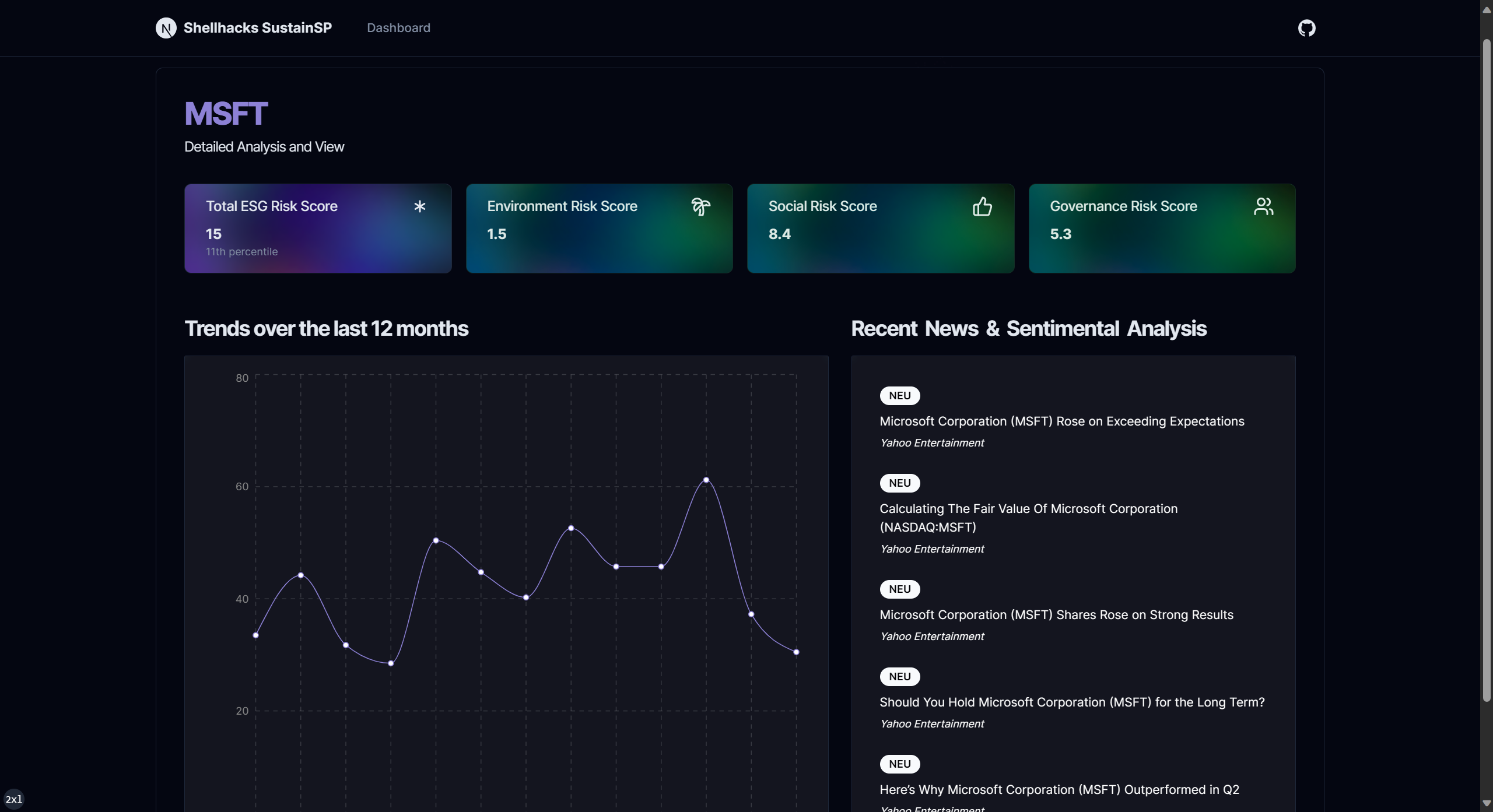
SustainSP does all the heavy lifting and number crunching to generate a unique Sustainability score for all the companies in the S&P 500 index. It comes with a carefully crafted dashboard that lets you quickly draw comparisons and insights in a glance. But simply giving an answer doesn't inspire confidence, so we show our working. SustainSP also provides a detailed view for each company that presents aggregated key insights, metrics and evidence so you can rest easy that your sustainable investments are backed by credible evidence.
For each company, Sustain SP calculates the Sustainability score using the following factors:
- ESG Risk Scores; sourced from Yahoo Finance
- A Volatility Score
- To measure how volatile a stock is over a period of time; calculated from analysis of stock prices and market cap over a period of last 12 months
- A Relevance Score
- To gauge public interest in the company; calculated using data from Google Trends
- A Sentiment Score
- To measure public perception of the company; determined using Sentimental Analysis of news articles about the company over a period of last 12 months
Learning Experience
Throughout the development of this project, we embarked on a profound learning journey. Here are some key takeaways:
Data Analysis: We gained hands-on experience in collecting, cleaning, and analyzing financial data. We learned to identify patterns and trends that are crucial for assessing sustainability.
Sustainability Metrics: Developing sustainability scales challenged us to think critically about what sustainability truly means. We delved into a wide range of factors, from ESG score to volatility score, to create comprehensive metrics.
Dashboard Design: Building an interactive dashboard required us to improve our data visualization skills. We discovered the art of conveying complex information in a visually appealing and understandable way.
Development Process
Our project followed an iterative development process:
1.Data Gathering: We sourced financial data from various reputable sources using web scraping, ensuring data accuracy and reliability.
2.Sustainability Scales: We conducted extensive research to identify sustainability factors and created a unique set of scales. These scales evolved as we refined our understanding of sustainability.
3.Dashboard Development: Our team worked collaboratively to design and develop the interactive dashboard using Python and relevant libraries.
4.Testing and Feedback: Rigorous testing and feedback from team members were integral to improving our project's quality.
The tech stack for SustainSP is as follows:
1. Backend: The backend is built with Python; using the Flask Framework for writing the server, and PyTorch for performing sentimental analysis using the bertweet-base-sentiment-analysis, a RoBERTa-based model; Pandas, and numpy for crunching the numbers.
2. Frontend: The front end is built with React and Next.js, using the Shadcn library.
3. Data: We also fetch real-time data from a number of sources including Google Trends, Yahoo Finance, NewsAPI, and more.
Challenges Faced
Our journey was not without its challenges:
Data Quality: Ensuring the accuracy and consistency of financial data was a continuous struggle. We had to implement robust data cleaning and validation processes.
Complex Metrics: Developing comprehensive sustainability metrics was complex. We needed to strike a balance between simplicity and depth.
Design Choices: Creating an intuitive and visually appealing dashboard required careful design choices and user experience considerations.
Time Constraints: Meeting project deadlines while addressing the various aspects of data analysis, metric development, and dashboard creation was a demanding task.
Despite these challenges, we are proud of the progress we've made and the insights we've gained along the way.
Accomplishments that we're proud of
Innovative Sustainability Scales: We developed unique sustainability scales that consider a wide range of factors, such as carbon emissions, workplace diversity, and ethical governance. These scales provide a comprehensive view of a company's sustainability, going beyond traditional metrics.
Interactive Dashboard: We successfully designed and implemented an interactive dashboard that allows Schonfeld's investment teams to visualize and explore the sustainability profiles of S&P 500 companies. The dashboard's user-friendly interface provides valuable insights at a glance.
Cross-Disciplinary Collaboration: Our team, consisting of computer science and information systems students, collaborated effectively to merge technical expertise with domain knowledge. This interdisciplinary approach enhanced the depth and breadth of our project.
Data Analysis Skills: We honed our data analysis skills by working with complex financial data. This experience improved our ability to extract meaningful insights from large datasets, a valuable skill in today's data-driven world.
What we learned
Finance and Sustainability: We gained a deep understanding of the relationship between finance and sustainability, discovering how ESG (Environmental, Social, and Governance) factors play a crucial role in investment decisions.
Innovation Through Diversity: Our diverse backgrounds brought fresh perspectives and creative solutions to the challenge. We learned that diversity in thinking can lead to innovative problem-solving.
Data Integration: We acquired skills in integrating and analyzing diverse data sources to create a holistic view of sustainability. This included working with financial data, environmental metrics, and social impact data.
What's next for SustainSP
Refinement: We plan to refine our sustainability scales based on user feedback and evolving industry standards. Continuous improvement is essential to providing accurate and meaningful sustainability assessments.
Machine Learning: Exploring machine learning algorithms for predictive analysis is on our horizon. We aim to develop models that can forecast a company's future sustainability performance based on historical data.
Wider Impact: We aspire to expand the reach of our project beyond Schonfeld by making our sustainability assessment platform accessible to a broader audience interested in sustainable investing.
Community Engagement: We will actively engage with the sustainability and finance communities to gather insights, share knowledge, and foster collaboration for a sustainable future in finance.


Log in or sign up for Devpost to join the conversation.