-
-
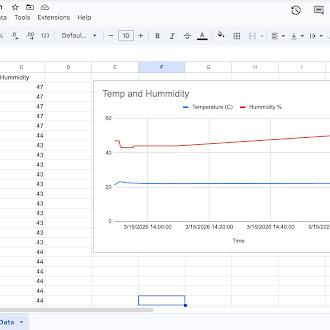
Temp and Humidity Chart
-
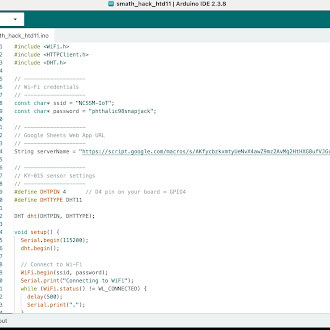
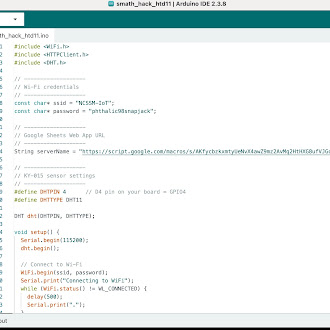
Temperature Sensor Code
-
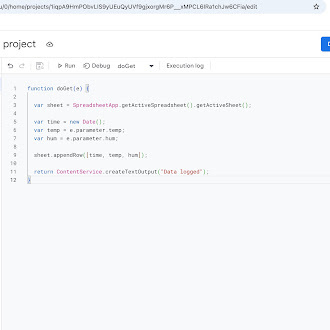
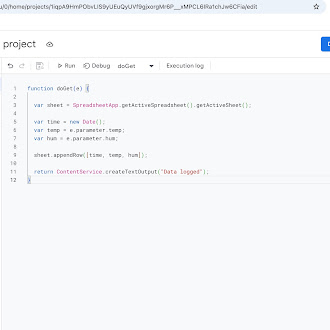
Google Sheet App Script
Inspiration
As NCSSM students, we take pride in our state and all the aspects that make it unique. North Carolina has an abundance of biodiversity, from the mountains that we call home to the beaches that host 5 of the 7 global sea turtle species. The diversity of our ecosystems is just one of the aspects that make North Carolina the state we love. While North Carolina has biodiversity, we can not let ourselves take this for granted; we now have to introduce innovative solutions to combat the mistakes of our past. Despite turtles being protected under international law, humans continue to harm their nests and poach their eggs, leading to all 5 of the turtle species that we see in North Carolina being labeled as endangered. The way that we plan to address our faults through our project is by working to protect the turtles that reside in our waters and on our beaches.
What it does
Our device serves two purposes. The first purpose is to monitor soil temperature for nesting turtles. According to the NOAA, turtles' gender is determined by incubation temperature: temperatures below 81.67 degrees produce male hatchlings, and temperatures above 88.8 degrees produce female hatchlings. With the issue of global warming becoming increasingly problematic, the number of female hatchlings has increased. The temperature sensor will send data to a spreadsheet where it can be accessed and monitored by researchers.
The next purpose is to alert predators as well as humans. Not only are turtle eggs fragile, but they are often buried in smaller layers of sand, making them especially vulnerable to human interference. Sea turtle eggs are most commonly poached by animals such as crabs, as well as smaller mammals such as raccoons, feral dogs, and foxes. Our system uses an AI-powered camera to detect humans and other predators of the eggs. When these predators are detected, a buzzer will make a sound to scare them away from the eggs.
How we built it
In order to gather temperature and humidity data, we used a DTH 11 (digital temperature and humidity sensor) that would be buried in the sand. This sensor is connected to an ESP 32: brain of the operating wifi chip, which is meant to take information from our DHT 11 to a spreadsheet continuously every 20 seconds. Via wifi, it sends the information through AppScript into Google sheets, where we monitor and graph the data. The data will also be color coded, red for temperature we don’t want and green for the right temperatures.
For the protection system, we created a machine learning model through Impulse Edge designed to detect when objects or animals enter the turtle enclosure. The model is run by an Arduino Nano 33 BLE Sense, and it takes the feed of an OV7635 camera in order to run its detection algorithm.
One of our future plans is to attach alarms to the Arduino Nano. The idea is that when the Nano detects an object in the turtle egg enclosure, it can sound an alarm to potentially scare predators away. This way, it can act as a defense system in addition to a monitor.
Challenges we ran into
The main challenge that we ran into was time constraints. Our computers would often take longer than we expected to download and run software we wished it would. However, this gave us the opportunity to try different methods and learn from our mistakes and challenges.
The next challenge we encountered was scheduling issues. Oftentimes not all of our group members were available to work on the project at the same time. Some of our group members had clubs during the time of this competition. This made communication oftentimes difficult and limited the efficiency that we could operate with.
The final challenge we had was accidentally ruining our ESP 32 chip with faulty wiring. This happened very late in our project and did not leave us with any opportunity to resolve. During our project we had everything working at a certain point yet it was unfortunate to not see it all come together.
Accomplishments that we're proud of
The thing that we are most proud of related to our project is the way that we used resources that we already had access to without the need to make new software from scratch. The main way we showcase this is through our use of Google Sheets. We used Google Sheets to store our data as it saved us time, which we could use on other parts of our project, while at the same time allowing us to store data in a way that would be easier to share with researchers and officials.
What we learned
The main thing that we learned during this project was working on our proficiency with the Arduino tools we were provided. We found how to connect them to wifi and have live updates happen on an external sheet. We also used an Arduino Nano to make a machine learning model and run it through a camera. This is the method that we used to create our predator detection in our device.
What's next for Shell Shield Turtle Monitor
While our project serves as a good starting point we have areas that can be improved. Right now our design relies heavily on human interaction for maintenance. If we had more than 36 hours to work on this project we would incorporate ways to control the temperature of the nests autonomously, we considered the idea of using fans to cool the nests down.
The next thing that we would implement into our project would be the ability to detect when baby turtles hatch. Baby turtles can often struggle to get to the ocean because they use the moon as guidance, which can often be overwhelmed by the lights of coastal cities. Alerting researchers and scientists when turtles hatch would allow them to aid the turtles in getting to the ocean and help them avoid any potential predators.

Log in or sign up for Devpost to join the conversation.