-
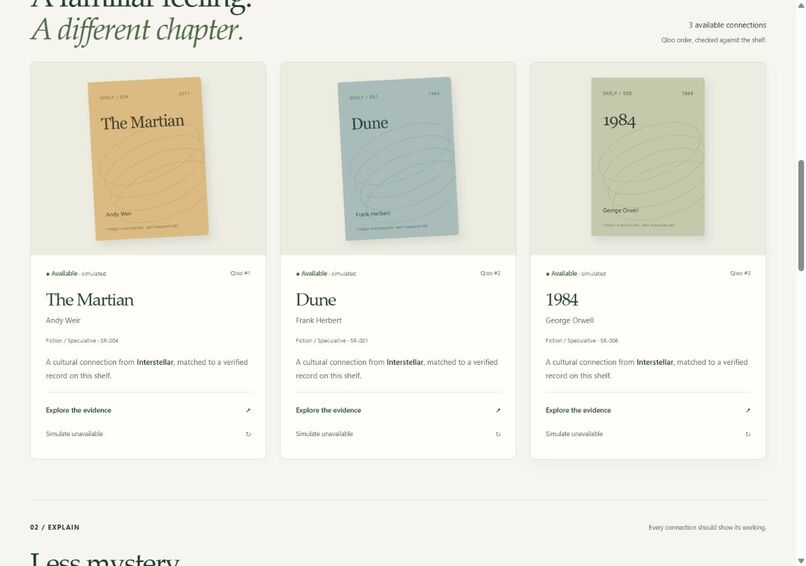
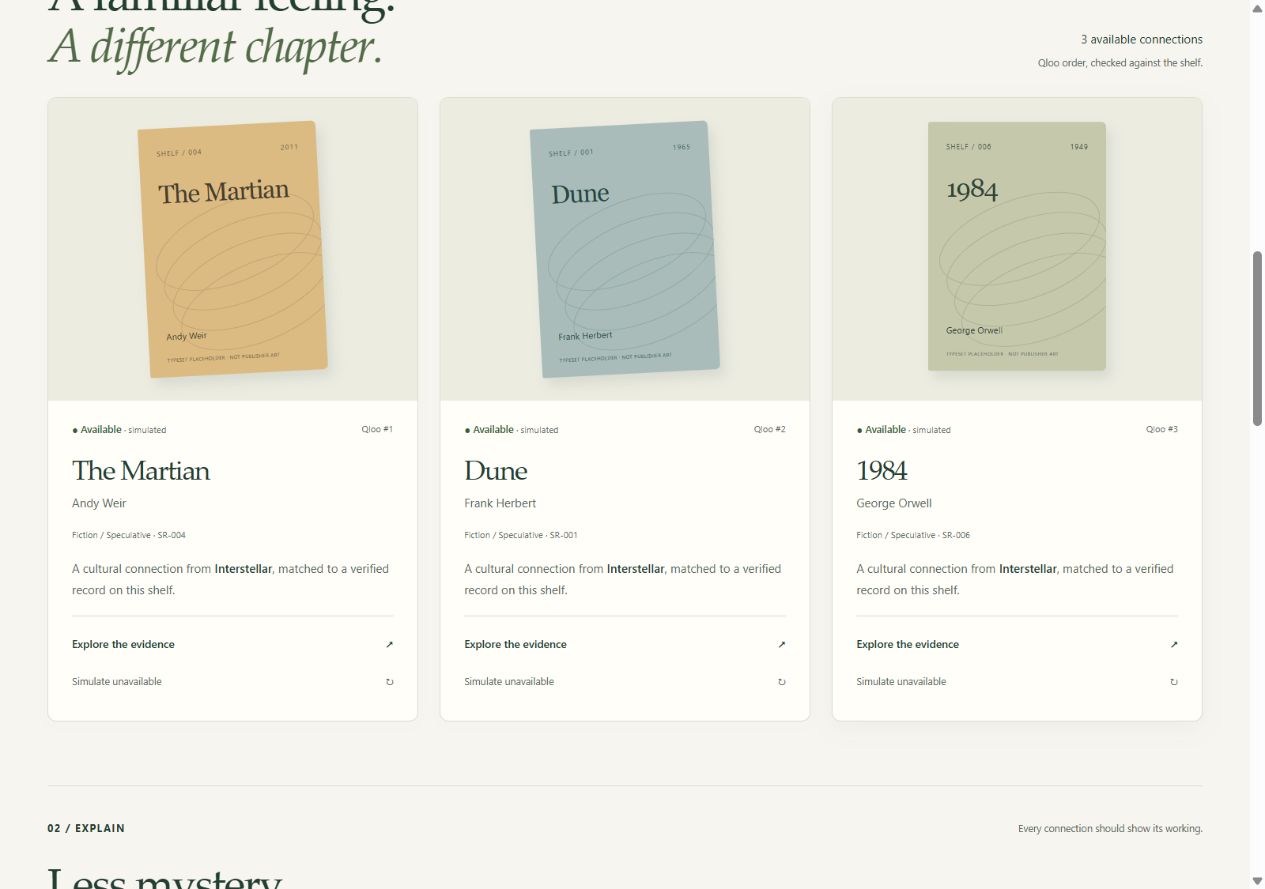
Discover — Qloo-powered cultural intelligence connects Interstellar (2014) to books in our simulated library catalog.
-
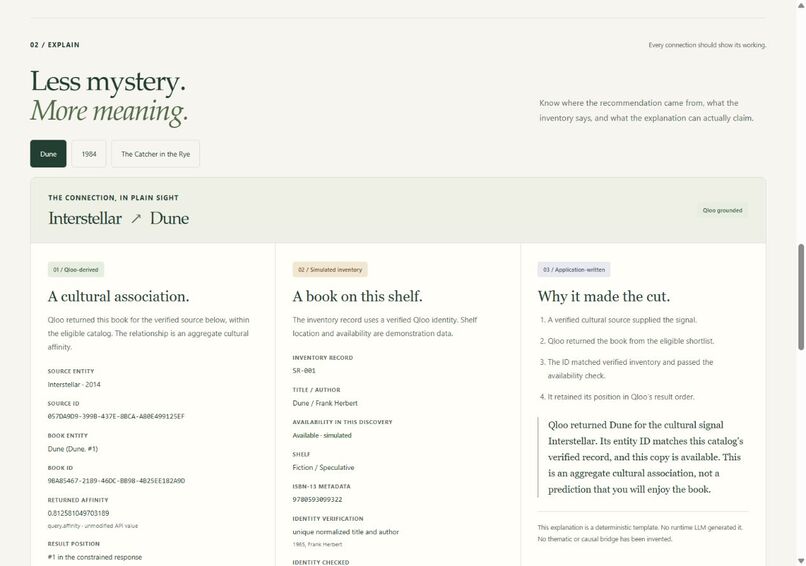
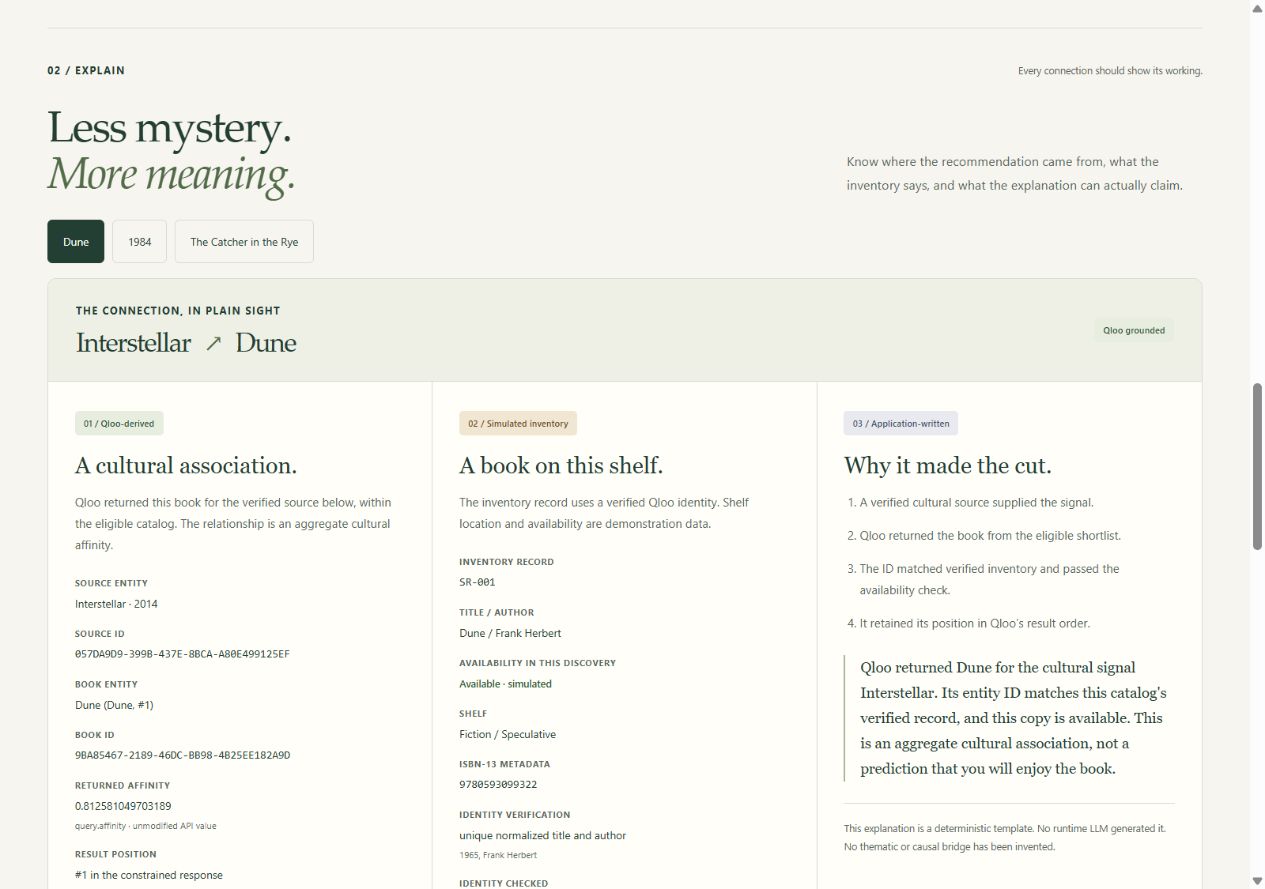
Explain — Transparent evidence tracing reveals Qloo insights, verified book identities, and inventory constraints.
-
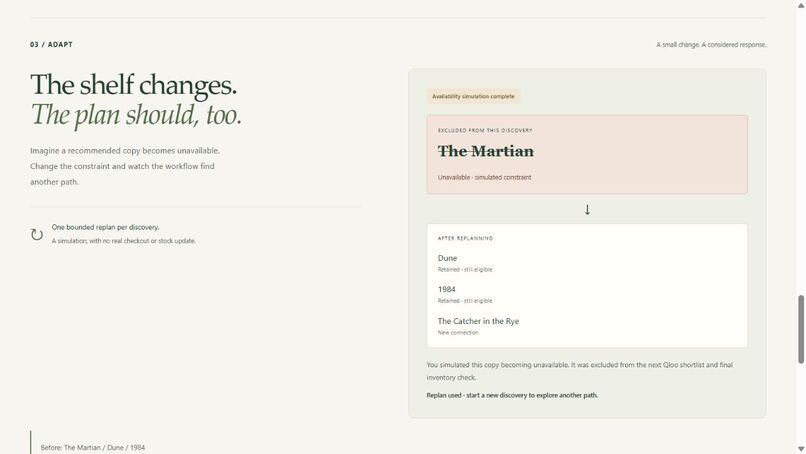
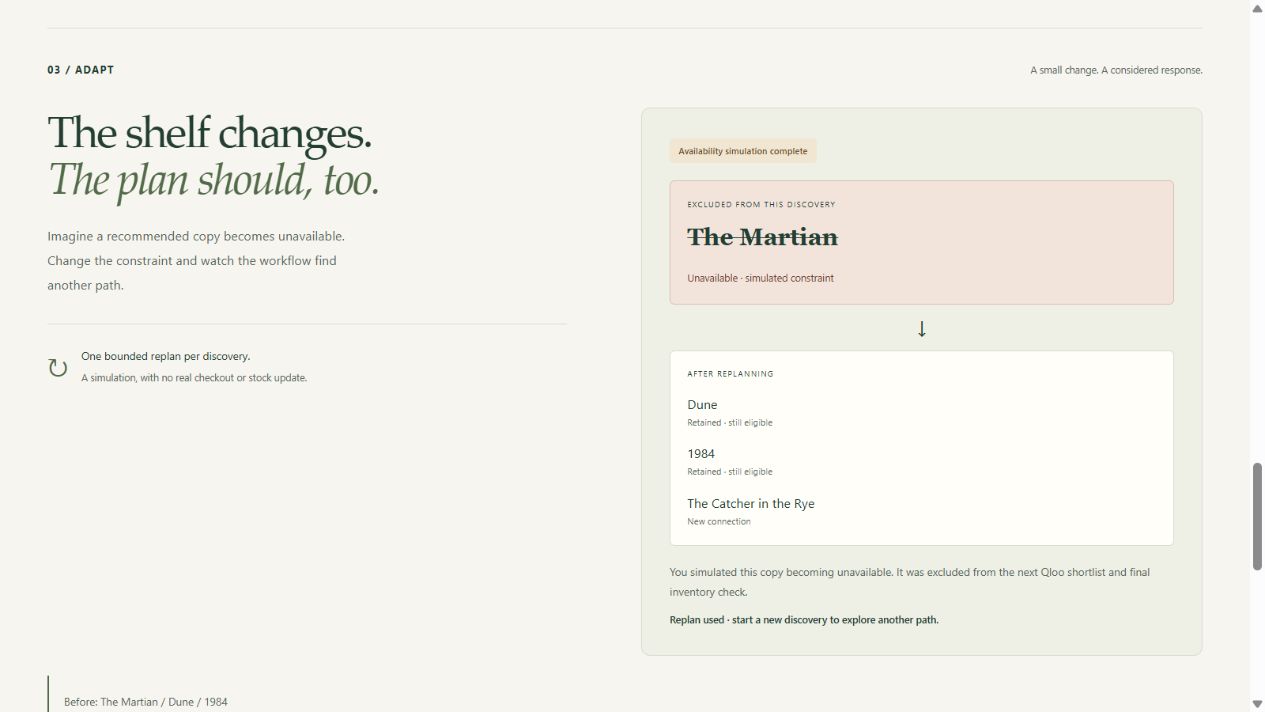
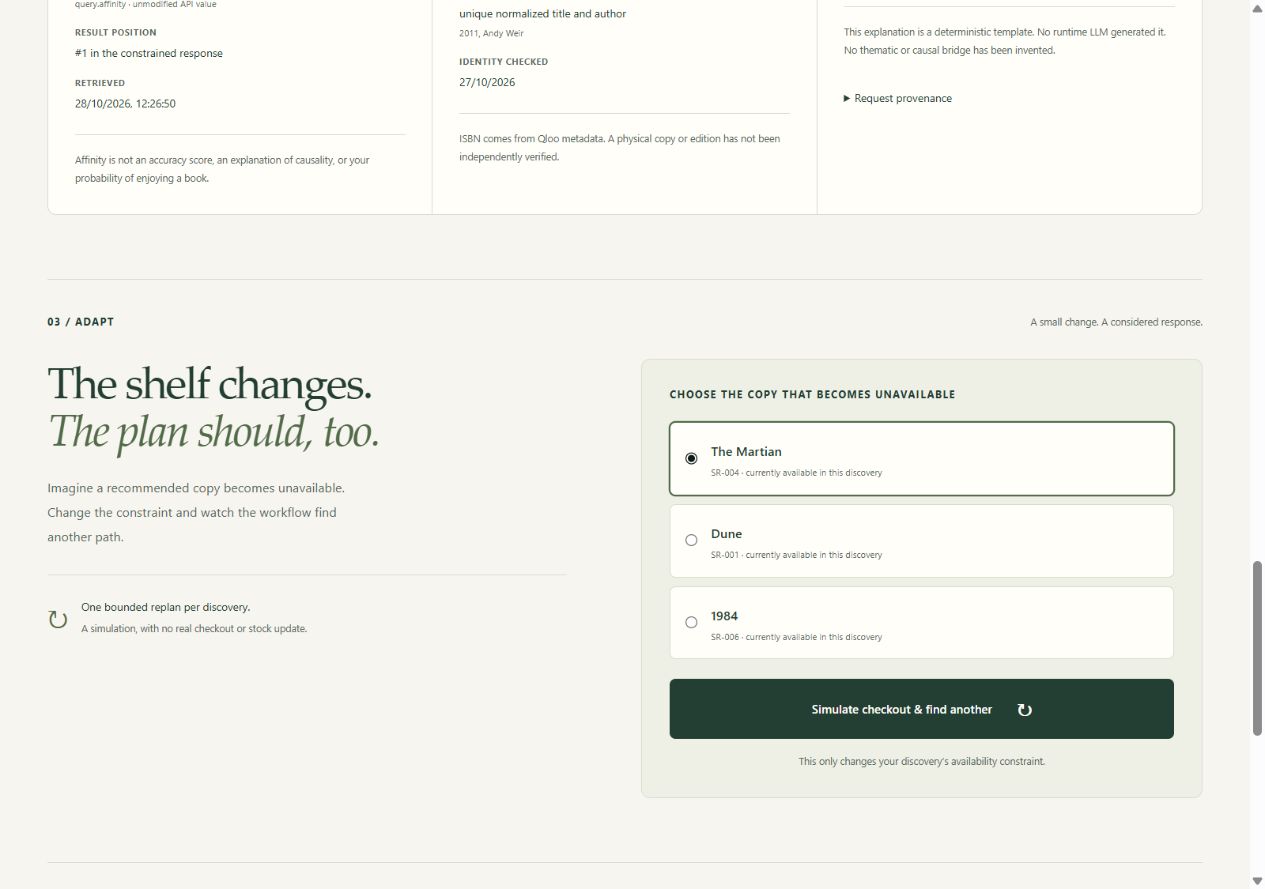
Adapt — Agentic replanning replaces an unavailable book while preserving valid recommendations.
-
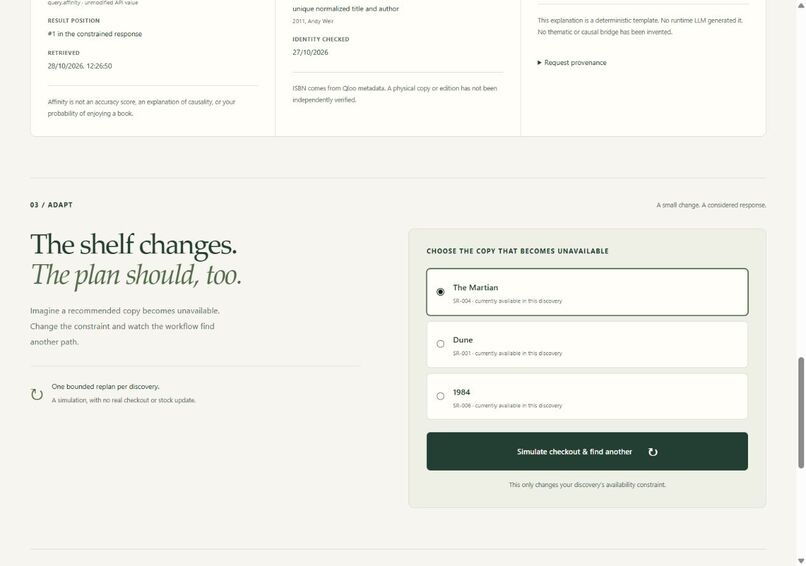
Adapt — Select a recommended book to simulate unavailability and trigger evidence-grounded replanning with Qloo.
-
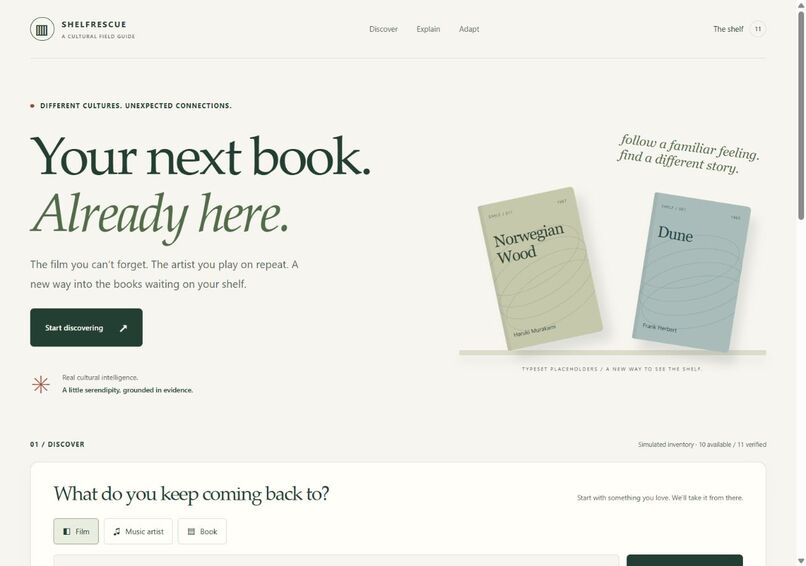
Landing — SHELFRESCUE — Your next book. Already here. Discover familiar feelings through unexpected stories.
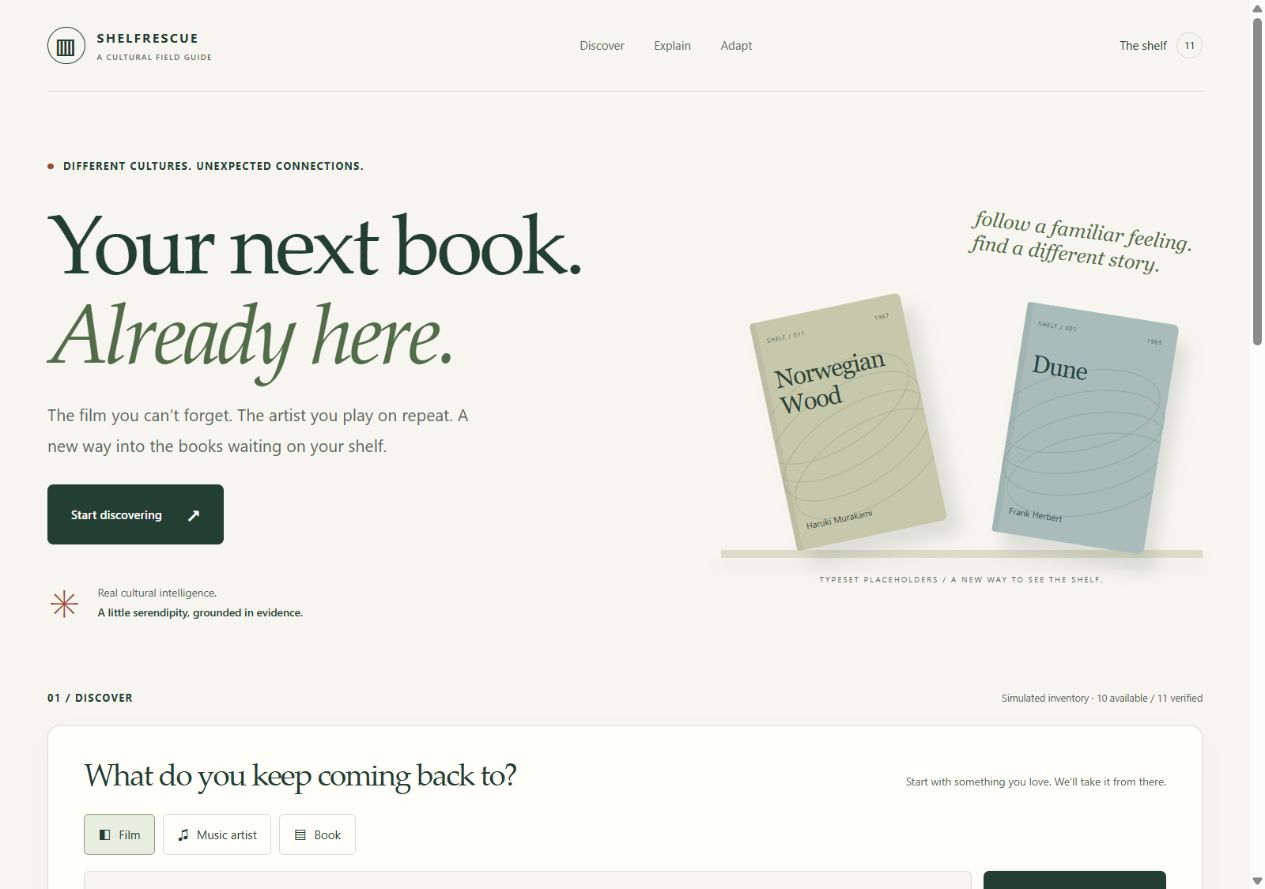
SHELFRESCUE — Your Next Book. Already Here.
Inspiration
Libraries and independent bookstores already hold incredible stories, but readers often struggle to discover books beyond familiar titles and conventional categories.
What if someone who loves a particular film or musician could discover a book already sitting on a nearby shelf?
SHELFRESCUE explores that possibility by connecting cultural preferences to existing book inventories through Qloo's cultural intelligence.
What It Does
SHELFRESCUE is an evidence-grounded cultural discovery tool that helps readers explore available books through the films, musicians, and stories they already love.
The application has three core experiences:
Discover: Enter a cultural interest and explore Qloo-powered book recommendations constrained to a verified demonstration catalog.
Explain: Inspect the cultural source, Qloo entity identifiers, returned recommendation evidence, inventory availability, and deterministic decision rationale.
Adapt: Simulate a recommended book becoming unavailable. The system excludes that book, reevaluates eligible alternatives, and shows how the recommendations change.
Rather than simply generating suggestions, SHELFRESCUE makes its decision process inspectable.
How We Built It
SHELFRESCUE uses Next.js, TypeScript, React, Tailwind CSS, Zod, and the Qloo API, deployed on Vercel.
Its server-side deterministic tool orchestrator follows five stages:
RESOLVE → DISCOVER → VALIDATE → RANK → EXPLAIN
The system resolves cultural entities through Qloo, retrieves cross-domain book insights, validates matches against inventory constraints, preserves the returned ordering, and produces evidence-backed explanations.
A bounded replanning mechanism handles simulated availability changes.
The runtime does not require an LLM. Qloo provides real cultural intelligence, while deterministic orchestration enforces eligibility and provenance.
Challenges We Faced
The biggest challenges were resolving ambiguous cultural entities, matching books to verified catalog records, preventing unsupported AI-generated claims, and preserving inventory constraints during replanning.
We also needed to distinguish actual Qloo signals from simulated availability data and application-written explanations.
Accomplishments
- Built a working application using real Qloo API integration.
- Verified 11 book identities in the demonstration catalog.
- Implemented transparent recommendation provenance.
- Added inventory-aware discovery and bounded replanning.
- Passed 72 automated tests during release-candidate verification.
In a limited three-scenario evaluation, Qloo-grounded discovery exposed seven distinct book titles compared with three from an alphabetical baseline, with zero catalog constraint violations.
These findings measure technical behavior and catalog exposure, not proven reader satisfaction or recommendation relevance.
What We Learned
Cultural intelligence becomes more useful when combined with real-world constraints and transparent evidence.
A trustworthy discovery system should not only recommend something; it should explain what information supported the recommendation and recognize when its options are limited.
What's Next
Future development will focus on real library inventory integrations, verified physical editions, larger catalogs, human-rated recommendation relevance, and partnerships with libraries and independent bookstores.
Our long-term vision is to help existing collections become more discoverable without requiring readers to already know which titles to search for.
Business Potential: SHELFRESCUE could evolve into a subscription-based discovery platform for independent bookstores, libraries, and educational institutions. Future integrations could help organizations surface underutilized inventory, understand discovery patterns, and measure catalog engagement. These opportunities remain hypotheses pending real-world validation.
Try SHELFRESCUE
Live Application: https://shelfrescue.vercel.app
Source Code: https://github.com/bssd874/SHELFRESCUE
Note: Inventory availability is simulated for demonstration purposes. Book covers are original typographic placeholders.
Built With
- next.js
- qloo-api
- react
- tailwind-css
- typescript
- vercel
- vitest
- zod

Log in or sign up for Devpost to join the conversation.