-
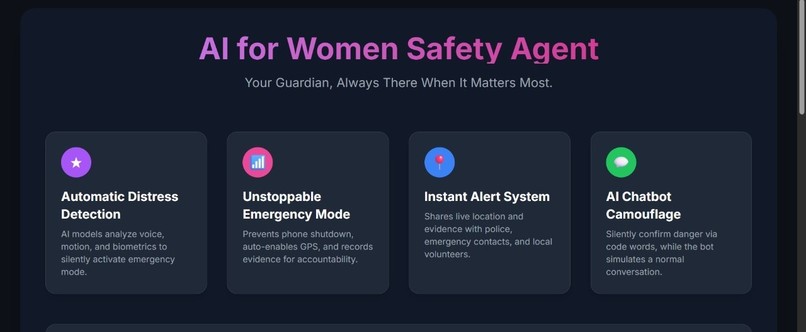
Interface
-
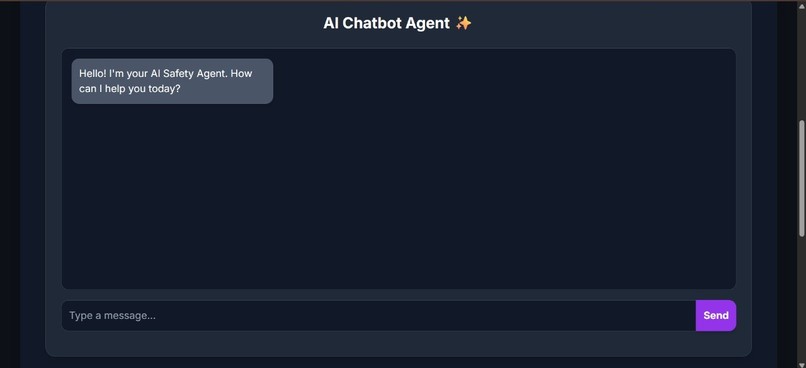
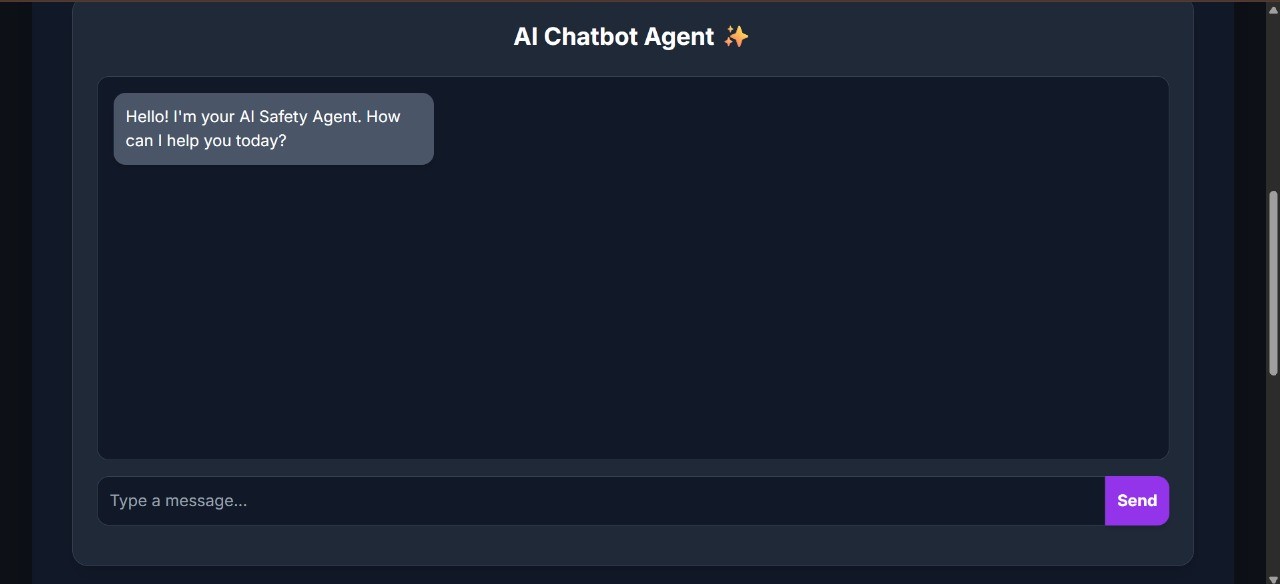
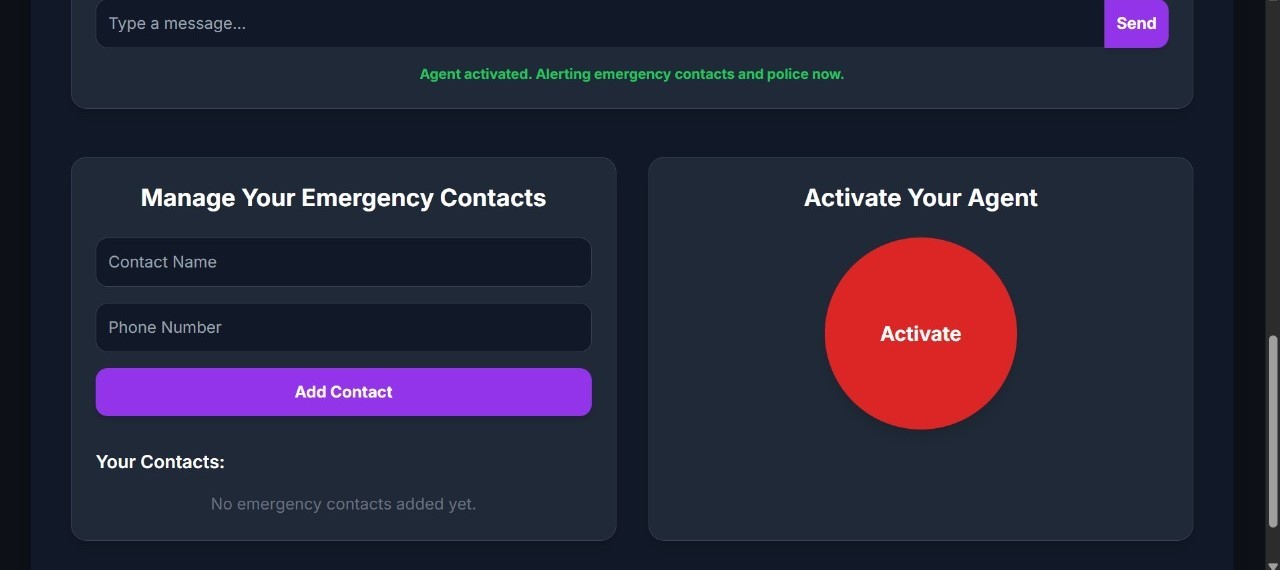
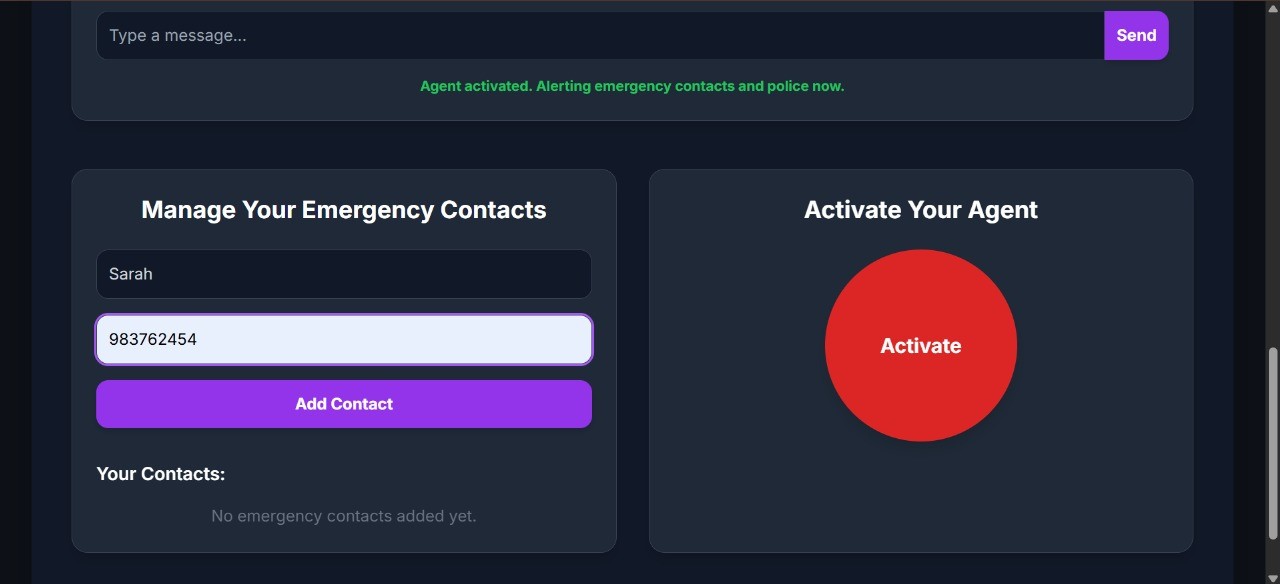
AI bot is sent a secret message to alert police and emergency contacts.
-
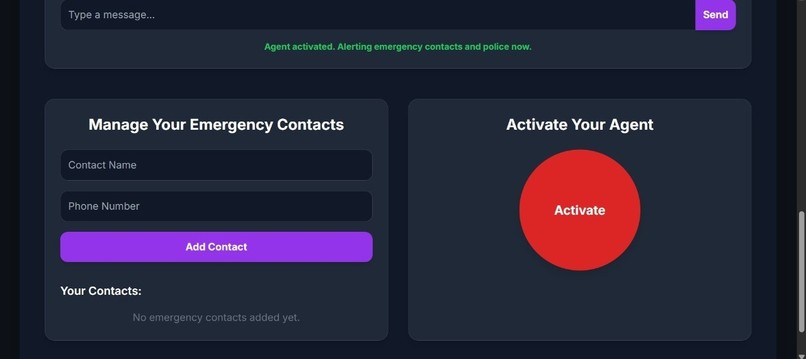
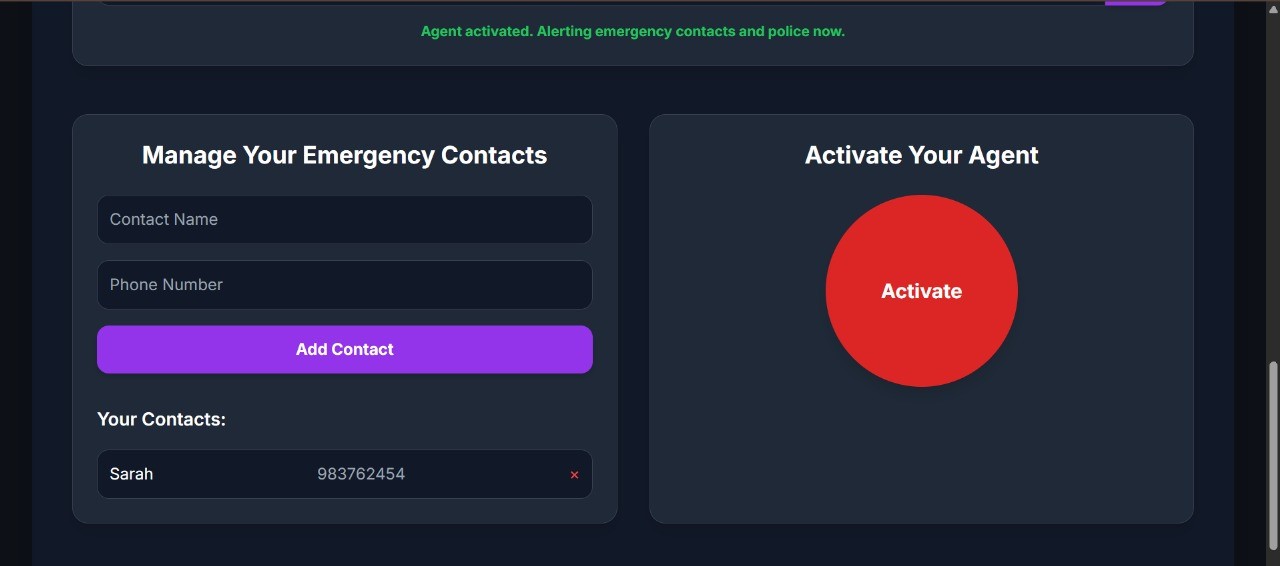
emergency contacts can be added.
-
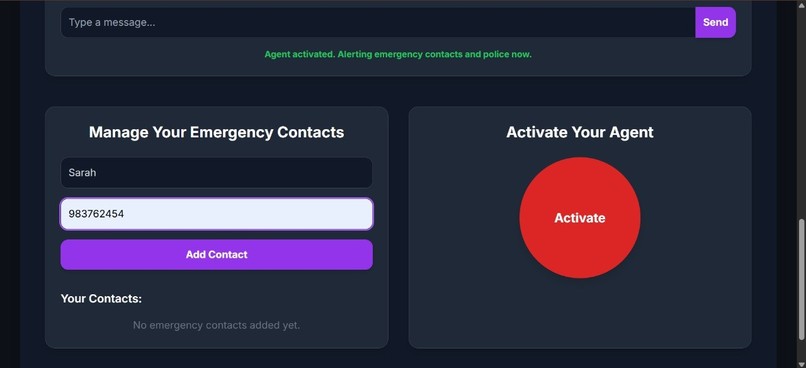
Successfully added emergency contact
-
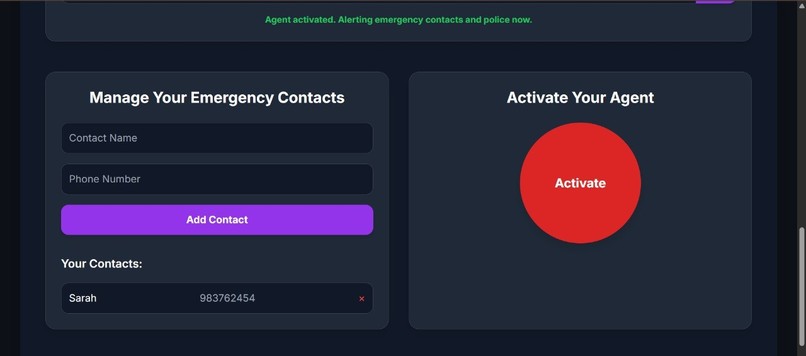
Alerted the emergency contact.
Inspiration
The inspiration for this project came from real-world incidents where women in distress could not reach out for help on time because they were either too panicked, restrained, or forced to switch off their phones. This highlighted a clear gap: safety solutions must work without requiring manual activation. That realization drove us to design an AI-Based Women’s Safety Agent that automatically detects danger and responds faster than human reaction.
What it does
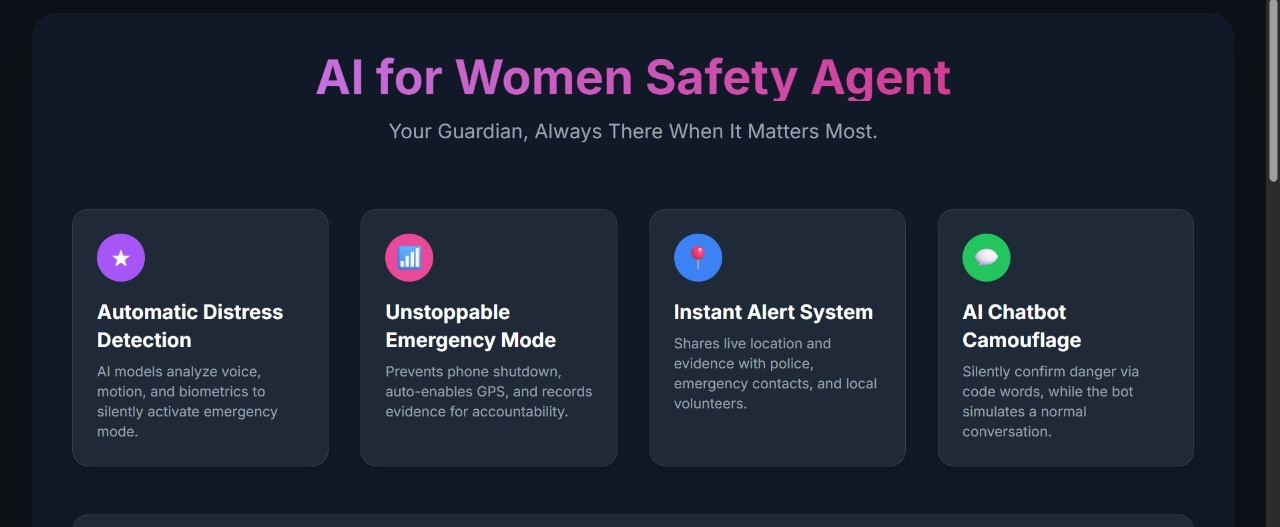
The system analyzes voice tone, abnormal motion, and wearable data to recognize signs of fear or struggle. Once activated, it enters Emergency Mode: the phone cannot be switched off, location services are automatically enabled, and live location is sent in real-time to nearby police stations, trusted contacts, and community volunteers. Simultaneously, the system begins secure background recording of audio/video, creating vital evidence.
How we built it
AI Layer: Deep learning models for speech stress detection (using MFCC + RNN).
Mobile App Layer: Android service that overrides shutdown, enables GPS, and starts background recording.
Communication Layer: WhatsApp/SMS chatbot powered by NLP for silent code-word interaction.
Backend Layer: Cloud server with real-time dashboards for police/help centers.
Mathematically, the goal was to minimize the response delay: Tr=Td + Tt + Tp Tr=response time Td=distress detection time Tt=transmission time of alert Tp=police/volunteer processing time
Challenges we ran into
Implementing automatic distress detection with minimal false alarms. Overriding OS restrictions (e.g., preventing shutdown and auto-enabling GPS) without affecting user experience. Ensuring secure, encrypted communication of sensitive data. Building trust: balancing privacy with the need for constant monitoring in emergencies.
Accomplishments that we're proud of
Designed a working prototype that demonstrates AI-powered distress detection.
Implemented a functional emergency mode with auto-location sharing and background recording.
Built an AI chatbot that works over WhatsApp/SMS with silent distress signaling via code words/emojis.
Ensured hybrid connectivity (Internet + SMS) for reliable operation even in low-network zones.
Developed a secure backend for real-time alerts and evidence storage with privacy-first design.
Most importantly, created a solution with the potential to save lives and empower women’s safety in critical moments.
What we learned
How AI/ML models can analyze speech emotion, motion patterns, and biometrics to detect distress.
The importance of system-level overrides (auto-enabling GPS, blocking shutdown) in Android for unstoppable emergency response.
Designing hybrid communication protocols (Internet + SMS) for reliable alerts even in low-network zones.
Integrating ethical AI — ensuring user privacy while handling sensitive data like voice and location.
What's next for SheGuard 24/7
Enhanced AI Models: Train on larger datasets of speech, motion, and biometric signals to improve accuracy and reduce false alarms.
Edge AI on Devices: Shift distress detection models onto smartphones/wearables for faster, offline detection.
Deeper Law Enforcement Integration: Collaborate with government helplines (112) and city police APIs for seamless dispatch.
Predictive Safety Alerts: Use crime-data analytics + AI to warn users about unsafe zones in real-time.
Global Scalability: Adapt SheGuard 24/7 for other vulnerable groups (children, elderly, travelers) and expand beyond India.

Log in or sign up for Devpost to join the conversation.