Inspiration
Music is chaos, memory, emotion, and magic all rolled into one. We wanted to capture that feeling and fling it straight into the internet apocalypse. We asked ourselves, “If the internet ended tomorrow, what would we build?” Something messy, ambitious, and fun. Since we love music, we decided to turn every song—any song—into a falling-notes visual experience.
What it does
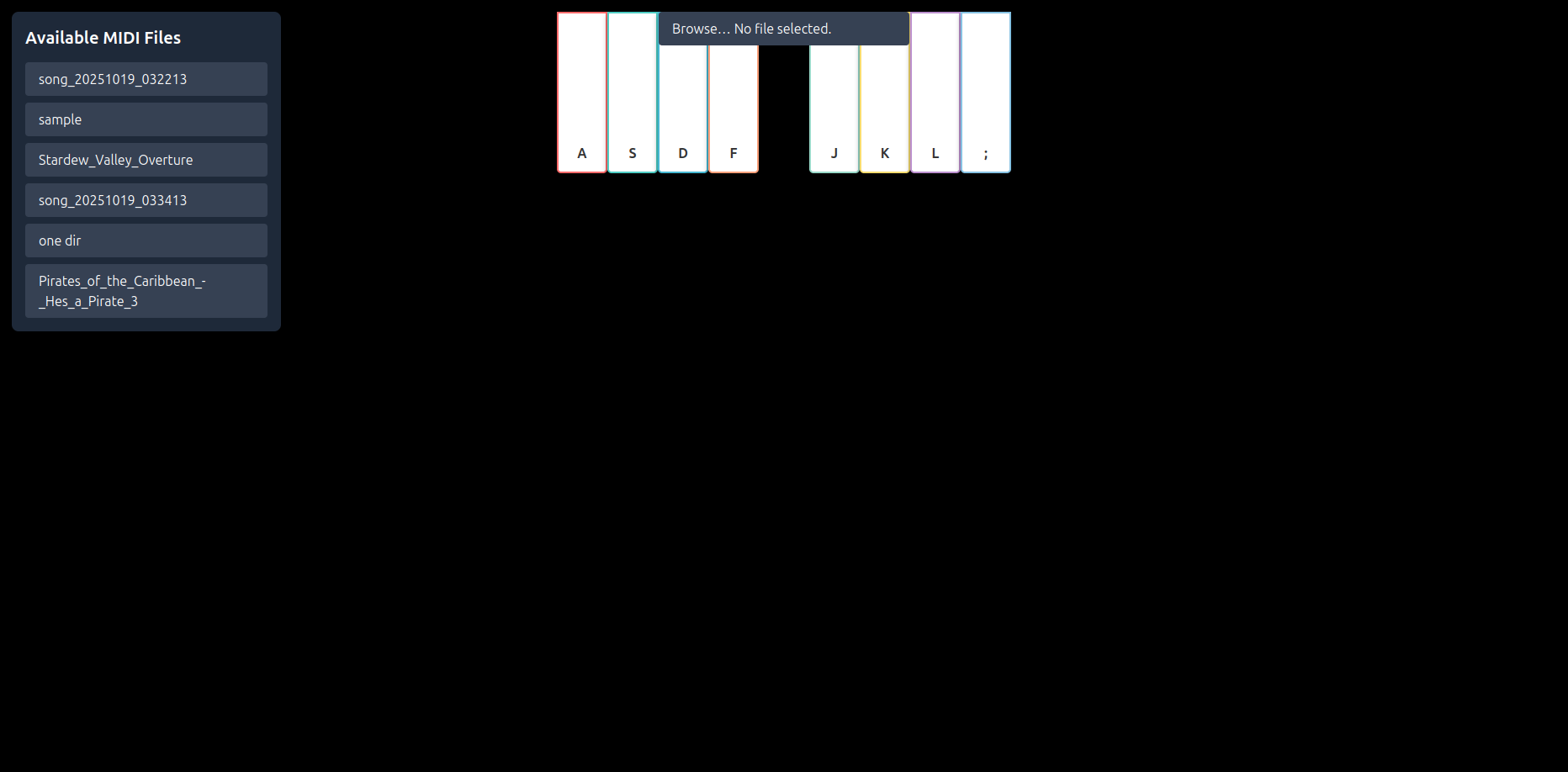
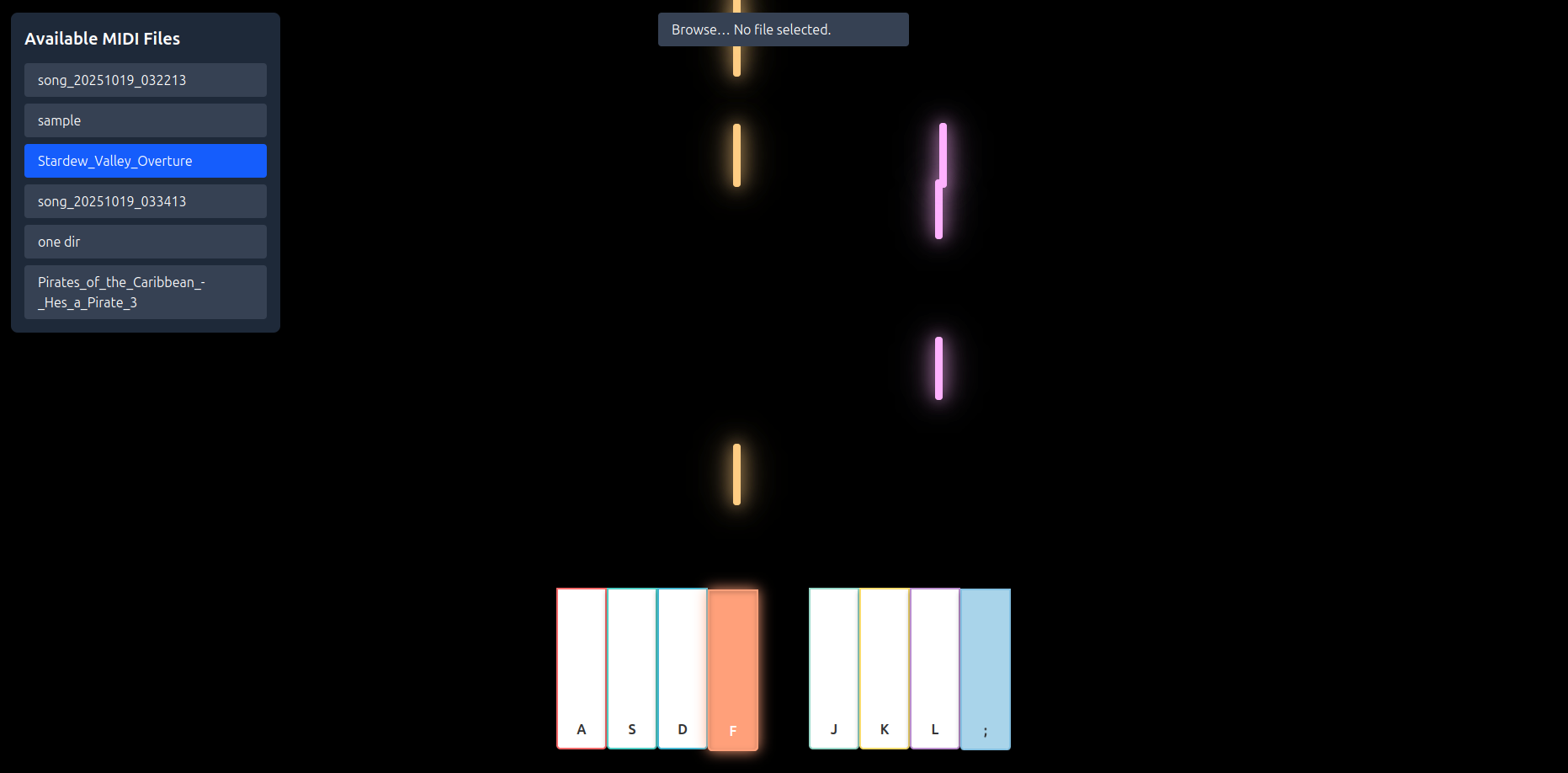
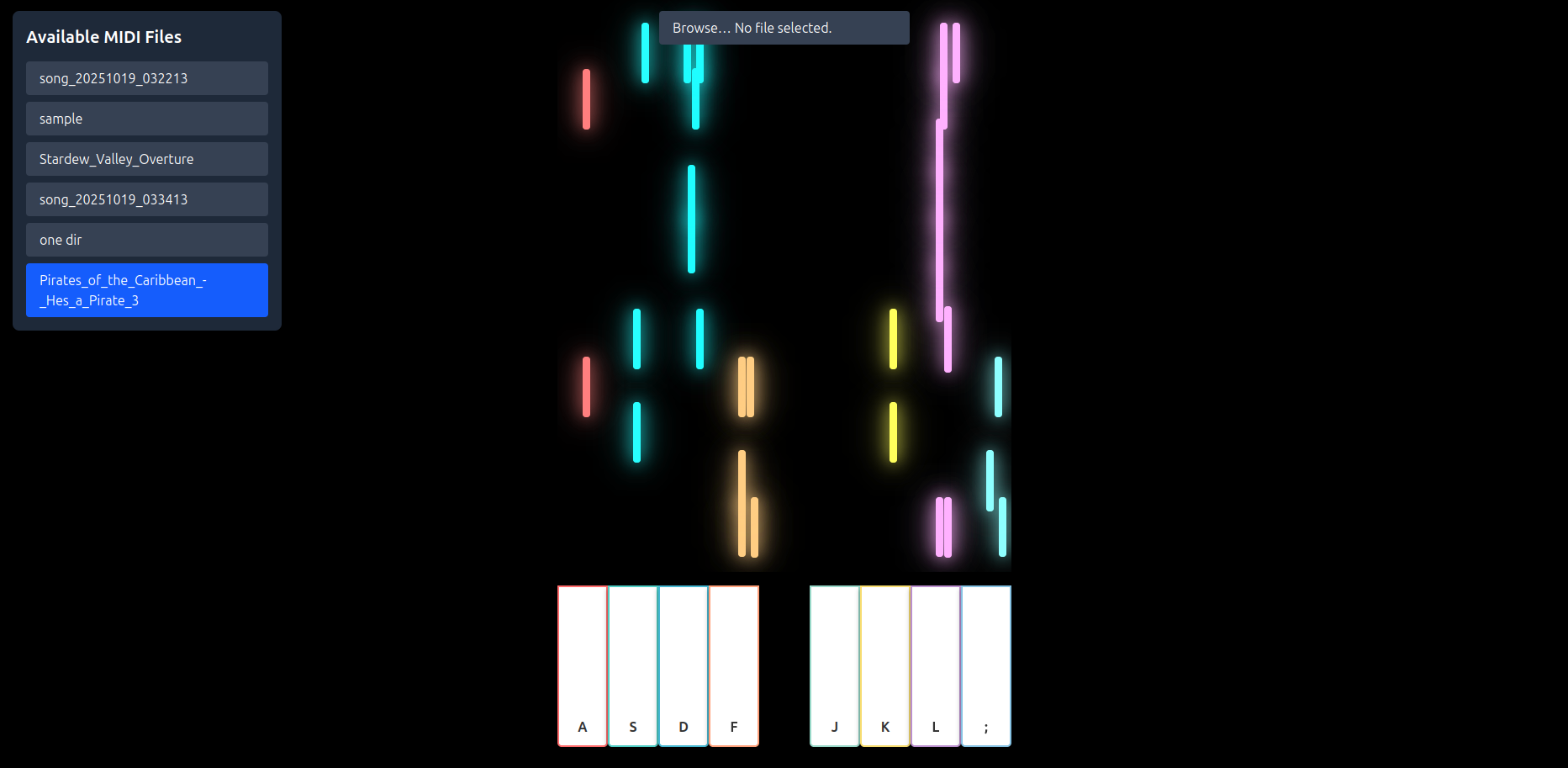
Symphonix lets you upload any audio file, and our system turns it into a live, falling-notes animation.
How we built it
Audio to MIDI: We make the audio speak to our system by converting it into MIDI—pitch, timing, and velocity. Visualization: A custom React engine takes those notes and throws them down the screen in real time. Performance tuning: We had to be clever to handle hundreds of notes at once without crashing the browser.
Challenges we ran into
Merging the project was chaos incarnate—everything broke. The audio system went haywire, notes refused to sync, and the visuals exploded. Debugging felt like wrestling a tornado. But somehow, from the mess, we got a system that’s fragile, wild, and kind of magical.
Accomplishments that we're proud of
Making any song visualizable, not just piano files. Creating a smooth, real-time, falling-notes animation that actually works. Building something fun, chaotic, and a little cursed—perfect for Codepocalypse.
What we learned
We learned that imperfection can be beautiful, that real-time audio visualization is brutally tricky, and that chaos can be inspiring. Most importantly, we learned that building something wild, messy, and ambitious is way more fun than doing it “right.”
What's next for Symphonix
Make polyphonic tracks actually behave instead of turning into chaos. Add interactive features so users can mess with the visuals or play along. Go beyond music—turn podcasts, speeches, or even ambient noise into a visual spectacle.
Built With
- ai
- flask
- framer-motion
- python
- react
- tailwind
- typescript
- vite

Log in or sign up for Devpost to join the conversation.