-
-
SHEcycle Logo!
-
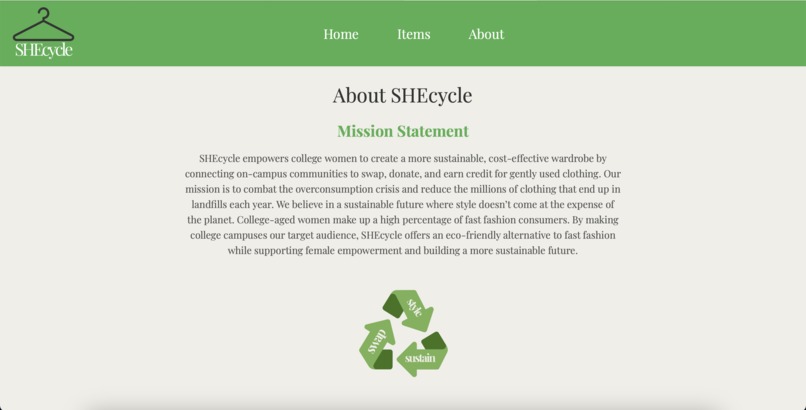
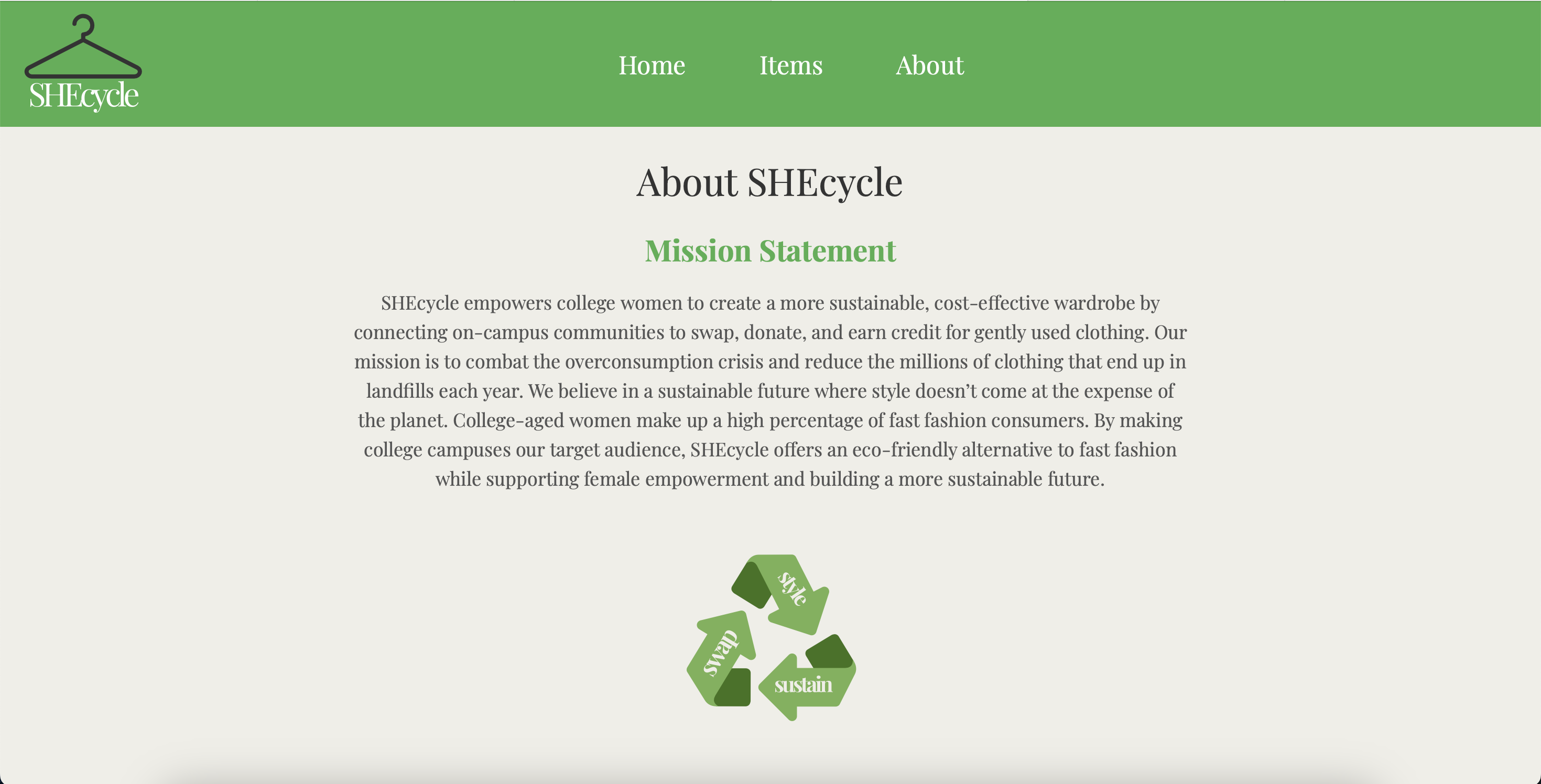
About Page, describing our mission and impact statement!
-
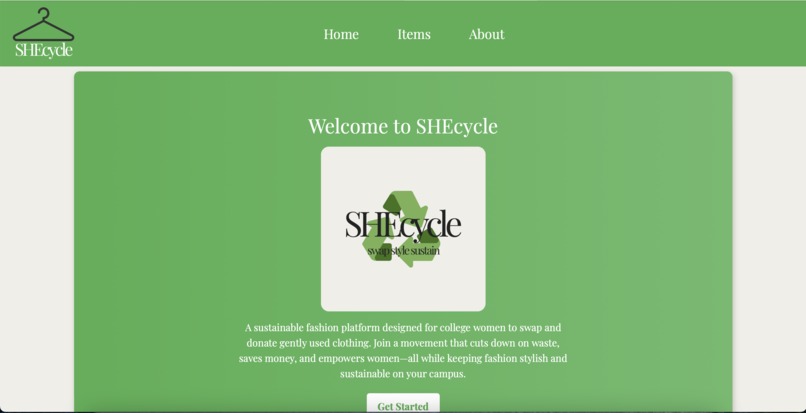
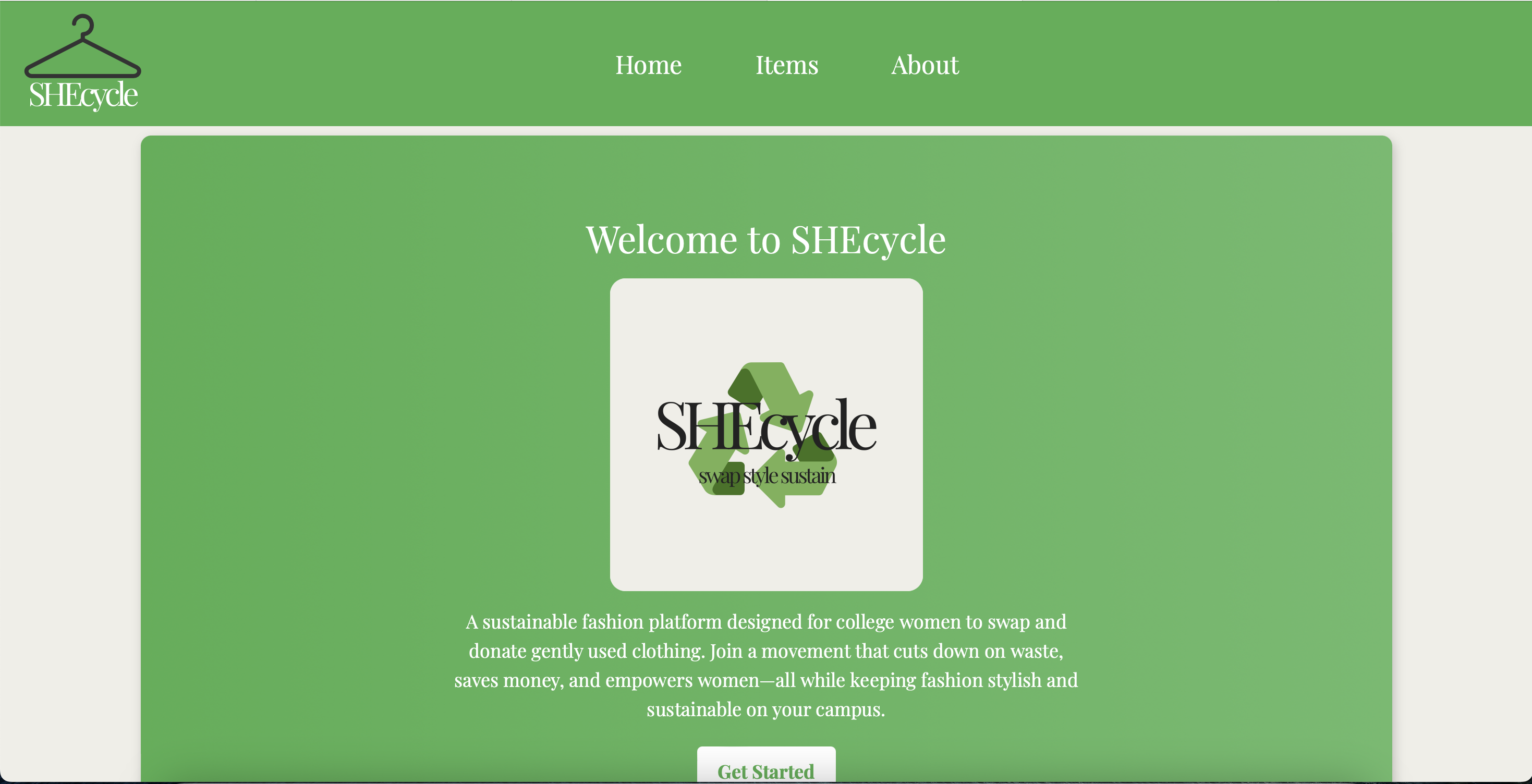
Home page to get new users started in the initiative!
-
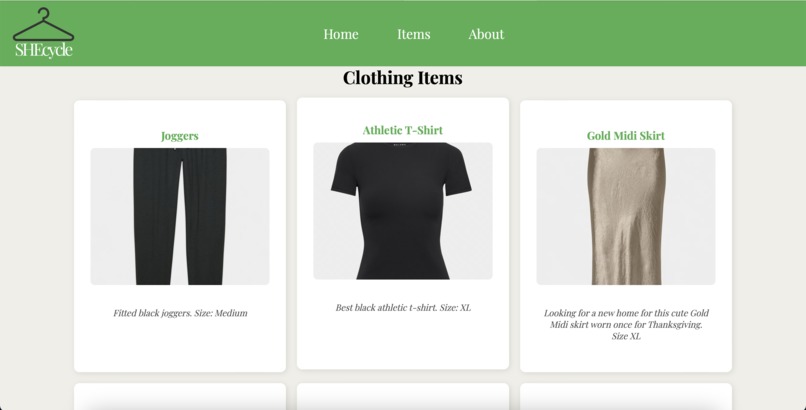
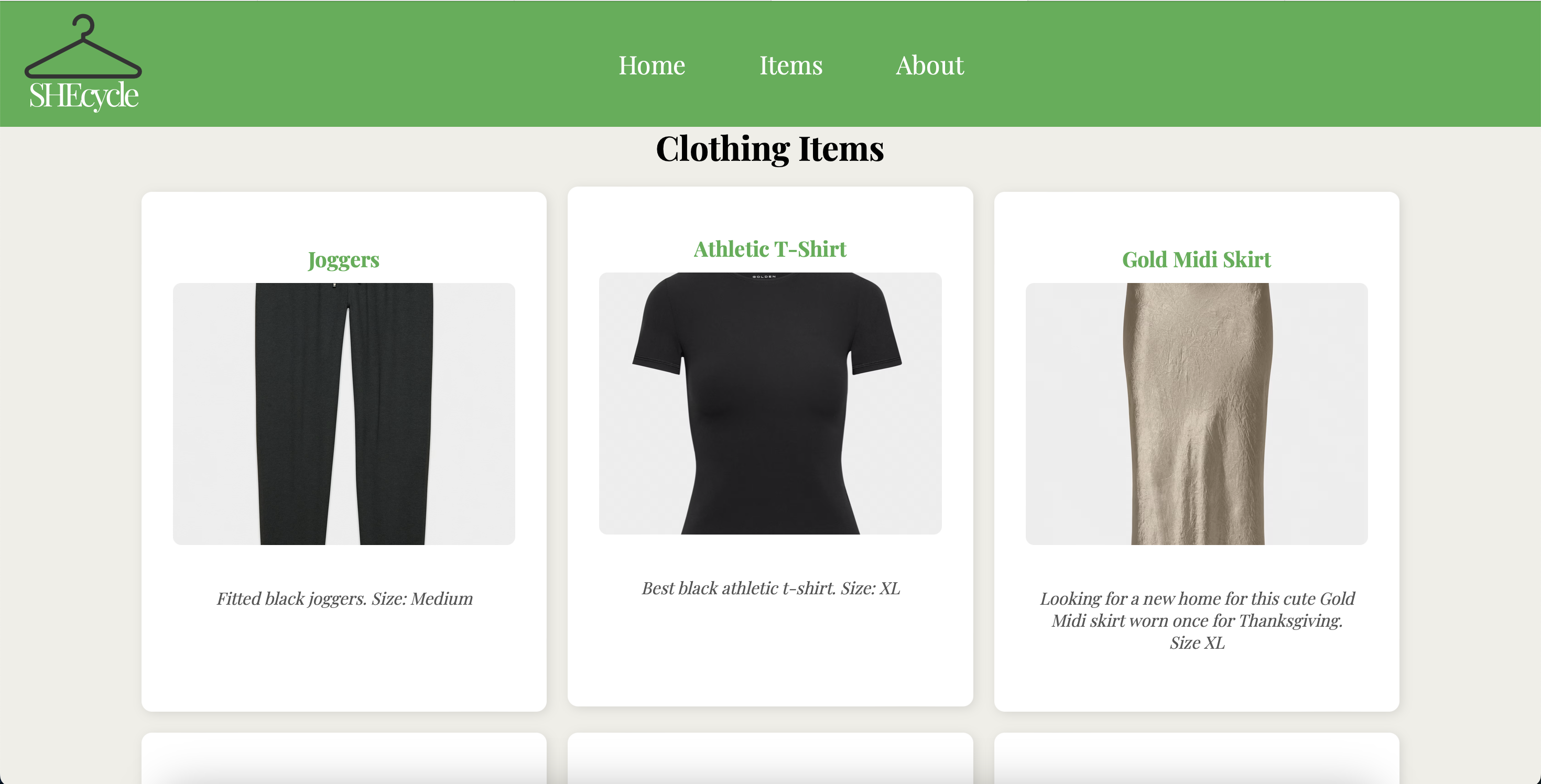
Browse available items up for being SHEcycled!
-
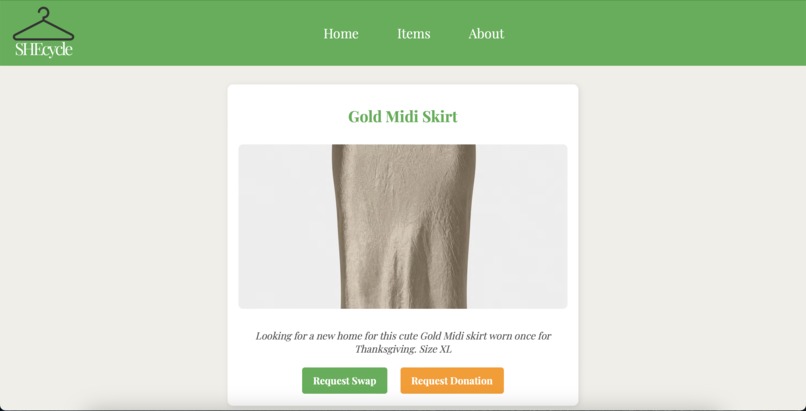
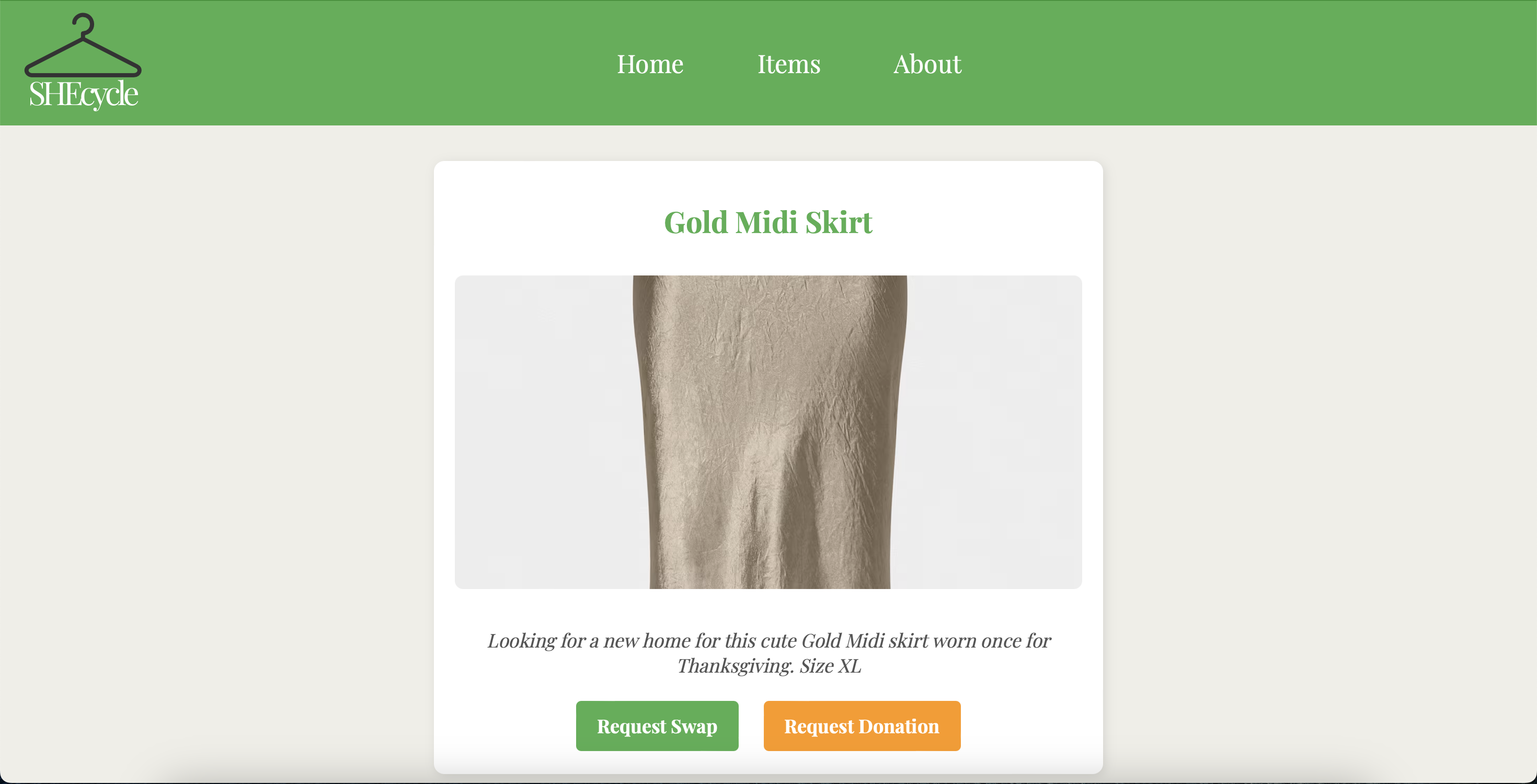
Item Detail Screen where you can request trade/swap or donation!
✨ Inspiration
Fast fashion is one of the largest contributors to environmental waste, with millions of tons of clothing ending up in landfills every year. Studies show that 41% of young women feel pressured to not repeat outfits, leading to increased consumption of unsustainable clothing. As college students ourselves, we noticed how quickly wardrobes cycle through trends and how many quality clothes go unused.
We wanted to create a sustainable, community-driven alternative. A place where students can swap, donate, and earn credits for clothing instead of throwing it away or buying fast fashion. SHEcycle empowers women on college campuses by offering an eco-friendly, cost-effective way to refresh their style without harming the planet.
🛠 What it does
SHEcycle is a sustainable fashion marketplace for college women to swap or donate clothing on their campus. The platform allows users to:
Create an Account – Sign up and connect with other students at their school.
Browse & List Items – Find second-hand clothing or list their own gently used pieces.
Swap or Donate – Trade clothing with others or donate items to earn credits.
Earn Credits – Donations and successful swaps reward users with credits to get new items.
Pick Up & Drop Off Locally – Since SHEcycle is campus-based, all exchanges happen in person, reducing shipping costs and waste.
By keeping clothing in circulation, SHEcycle helps reduce textile waste and makes sustainable fashion accessible and affordable.
💻 How we built it
Frontend: Built with Angular, providing a fast and scalable user interface.
Backend: Developed using Node.js & Express.js, handling user authentication and item listings.
Database: Powered by MongoDB, storing user accounts, clothing items, and swap history.
Cloud Hosting: Deployed using MongoDB Atlas for database management and a backend API hosted locally.
Design & UI: Styled using CSS Grid & Flexbox, ensuring a modern and responsive user experience.
We focused on creating an intuitive platform where users can quickly browse available clothing, list their own items, and initiate swaps in a seamless and engaging way.
🚧 Challenges we ran into
Database Filtering & Queries - Ensuring users can search and filter items efficiently based on type and category required advanced query optimization in MongoDB.
Styling & Responsive Design - We wanted the UI to feel clean and modern while still being easy to navigate. Aligning grid-based layouts and centering elements dynamically (like our "How It Works" section) took extra effort.
Click Events Not Registering - We encountered issues with Angular’s event binding, requiring debugging of router links, standalone components, and module imports.
🏆 Accomplishments that we're proud of
Fully Functional Item Browsing & Filtering - Users can seamlessly explore listings based on category, type, and availability.
Sustainable Mission-Driven Platform - We've built not just an app but a movement, encouraging more sustainable fashion choices among students.
Smooth & Intuitive UI - A well-designed grid layout, navbar, and interactive hover effects elevate the user experience.
Overcoming Technical Challenges - Debugging complex Angular and Node.js issues helped us grow as developers.
🧠 What we learned
Full-Stack Development in a Fast-Paced Setting – Working under time constraints helped us improve efficiency in both frontend and backend integration.
UI/UX Best Practices – Designing for ease of use and accessibility taught us the importance of simplicity and responsiveness.
Database Optimization – Structuring MongoDB schemas and query optimizations allowed us to improve item filtering performance.
Importance of Sustainability in Tech – Working on SHEcycle reinforced how technology can be leveraged for real-world sustainability efforts.
🌱 What's next for SHEcycle
Full Deployment & Domain Registration – Move from local testing to a fully hosted platform with a custom domain for broader accessibility.
User Authentication & Profiles – Allow users to create personal profiles with their closet, wishlist, and past swaps.
Campus-Specific Communities – Expand to more college campuses, enabling location-based filtering.
Credit-Based Marketplace Enhancements – Introduce better credit tracking and reward systems for donations and swaps.
Mobile Optimization & App Development – Build a mobile-friendly version for easier on-the-go access.
Partnerships with Sustainability Initiatives – Collaborate with eco-friendly brands and student organizations to expand our reach.

Log in or sign up for Devpost to join the conversation.