-
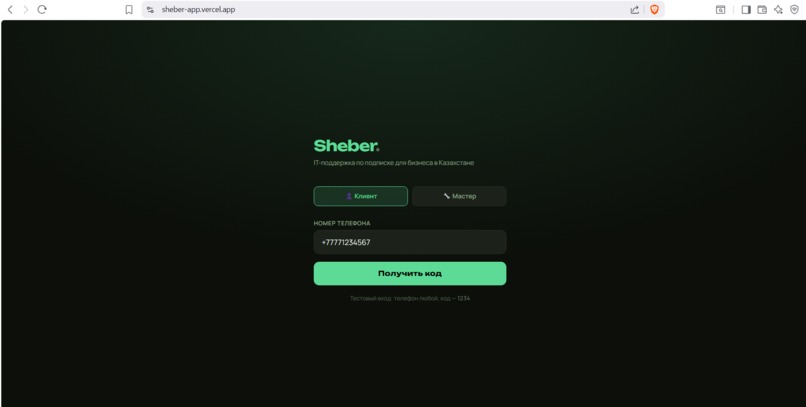
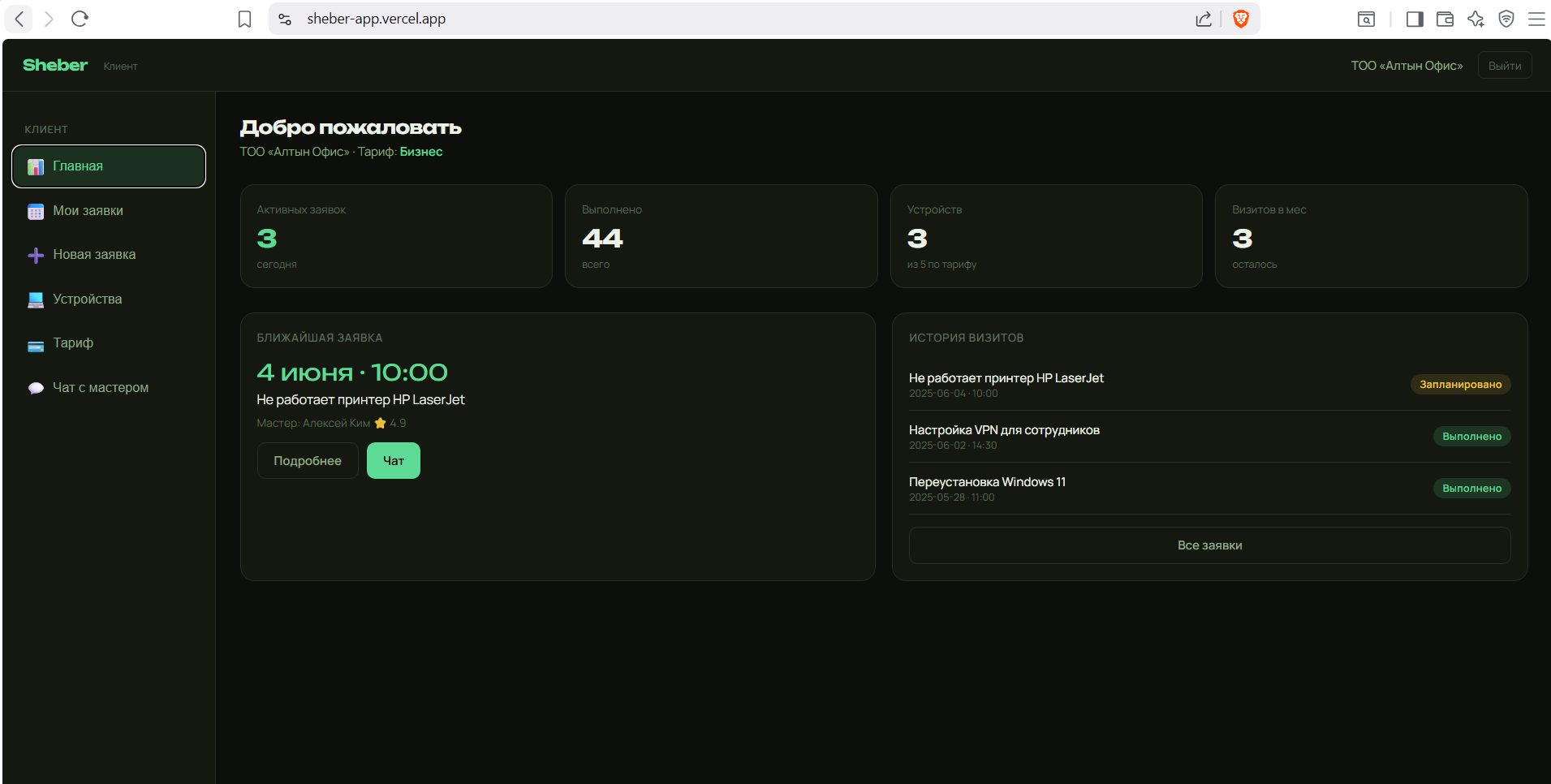
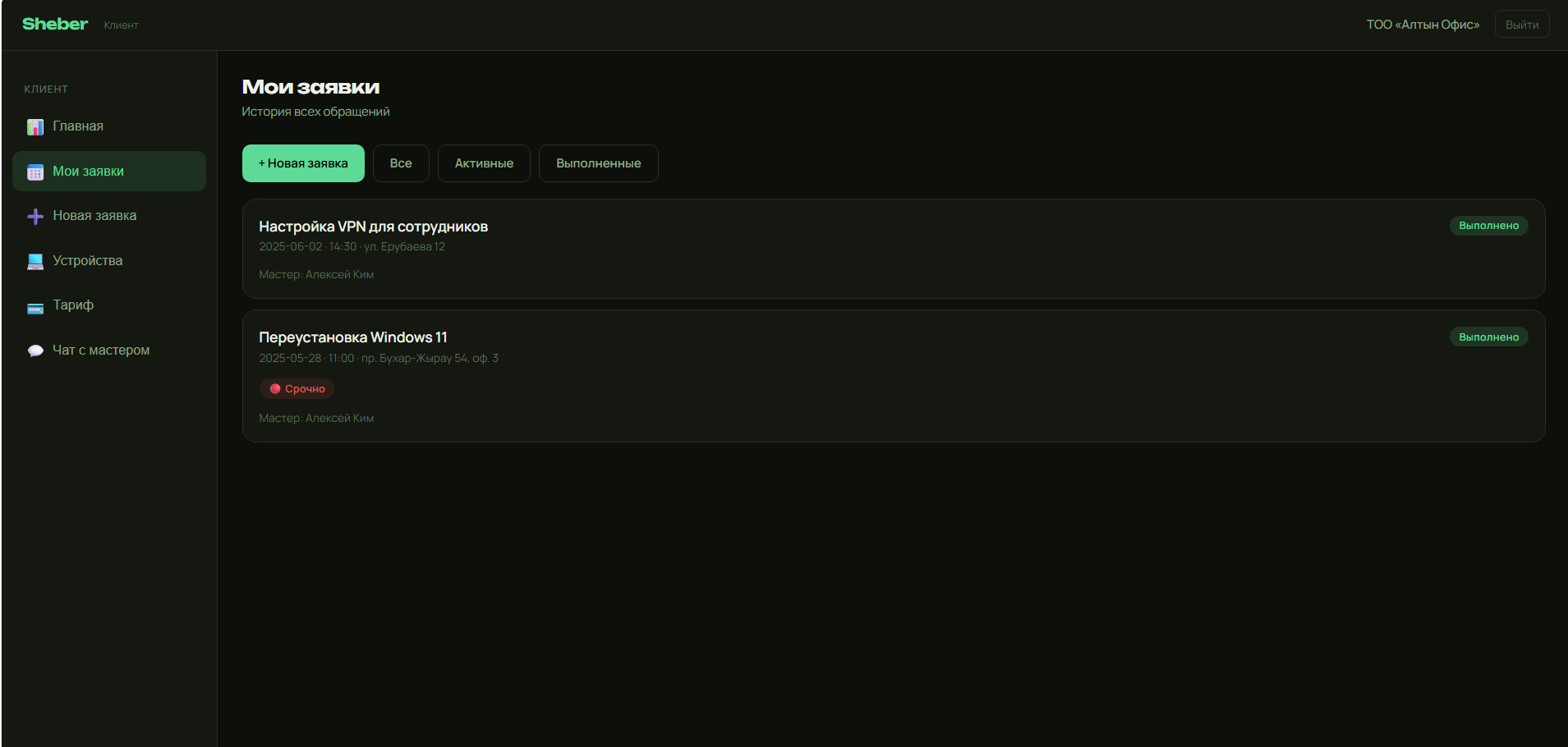
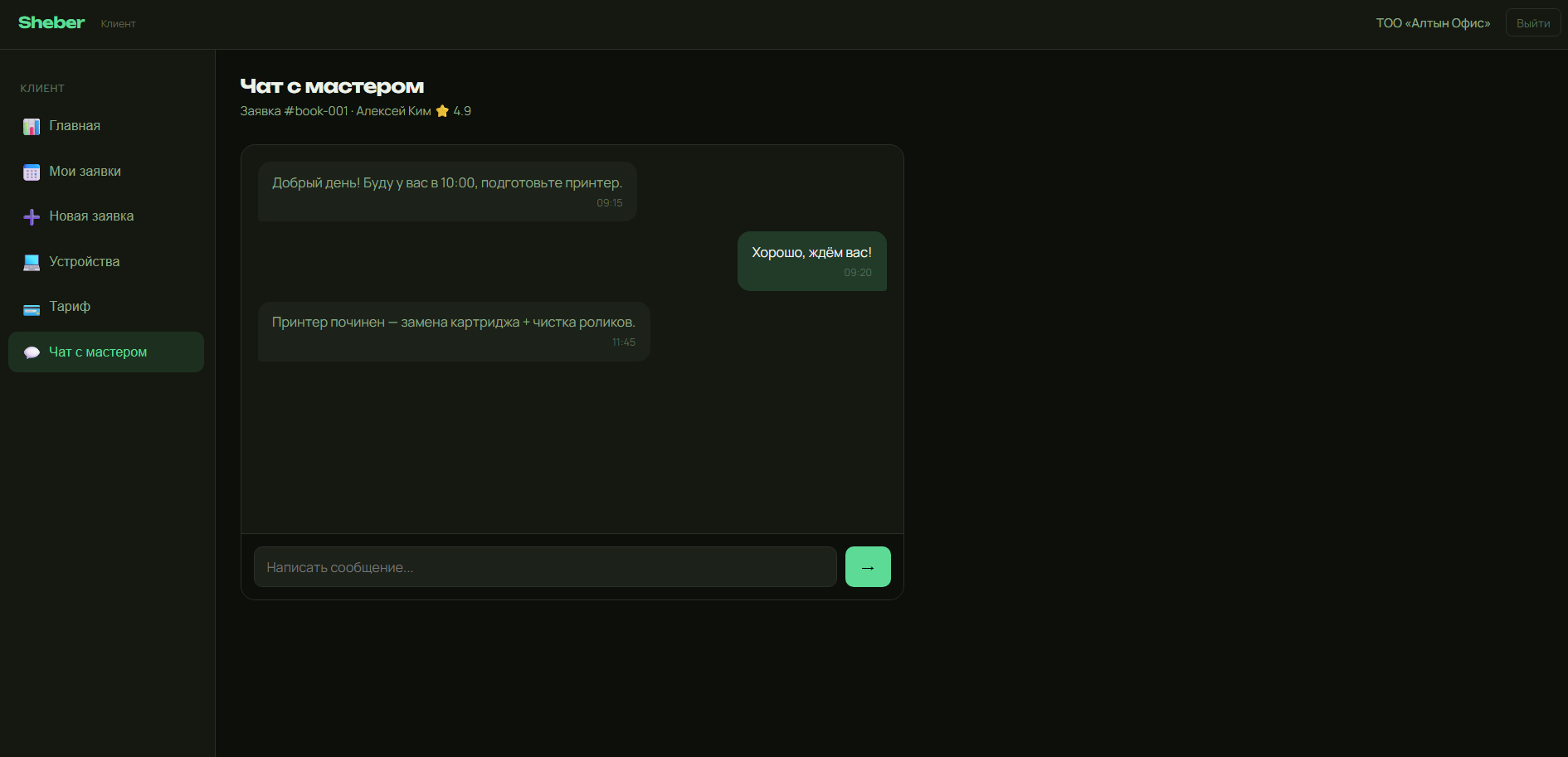
Client Dashboard
-
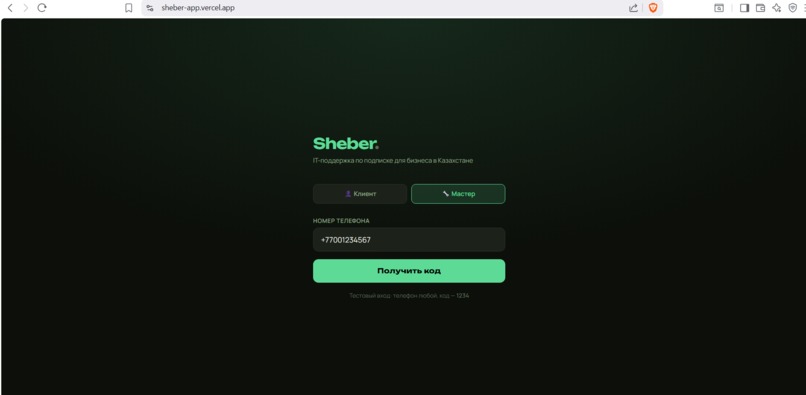
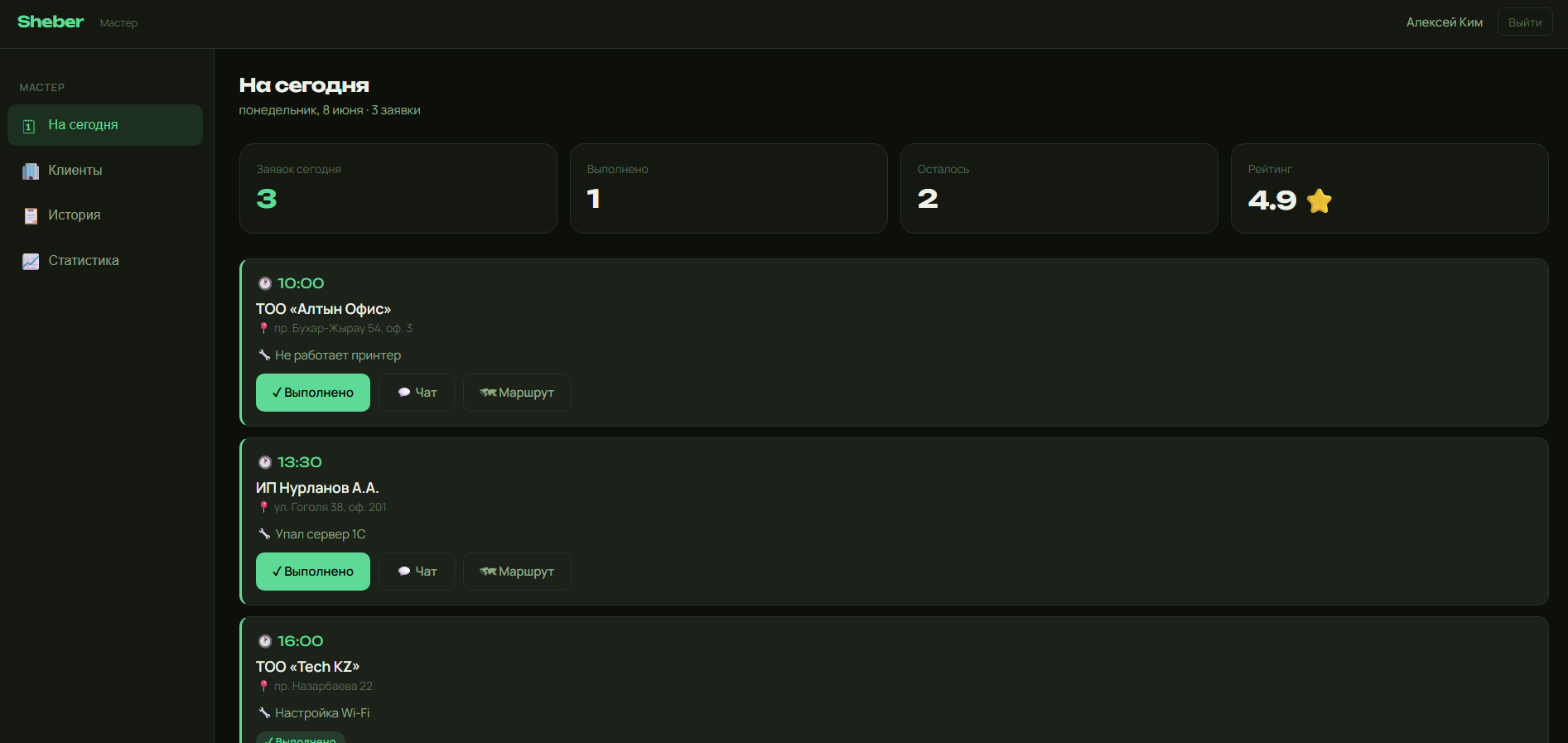
Master Workspace
-
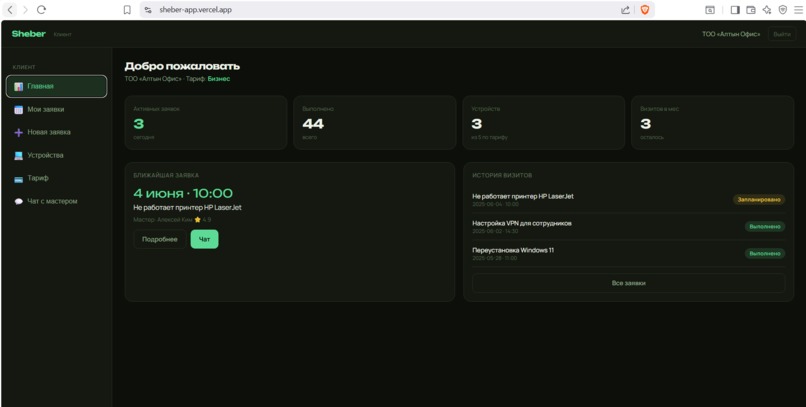
main
-
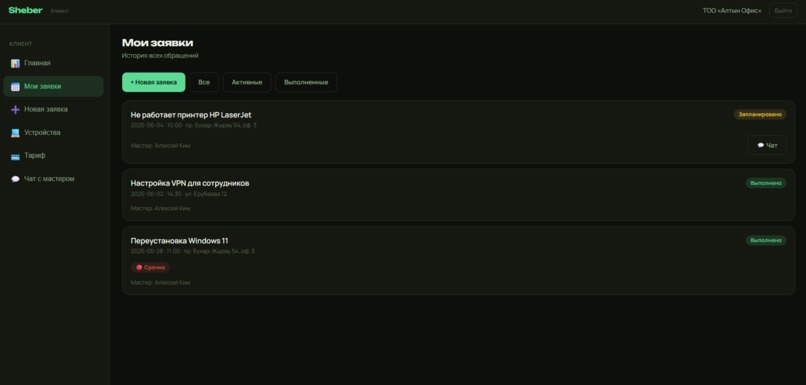
Technician Portal
-
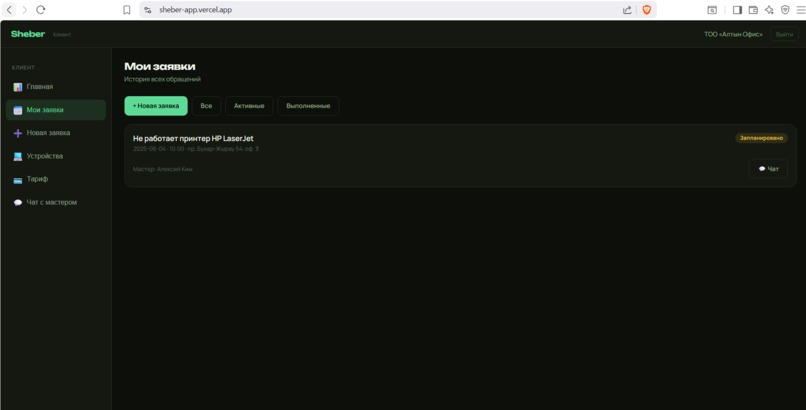
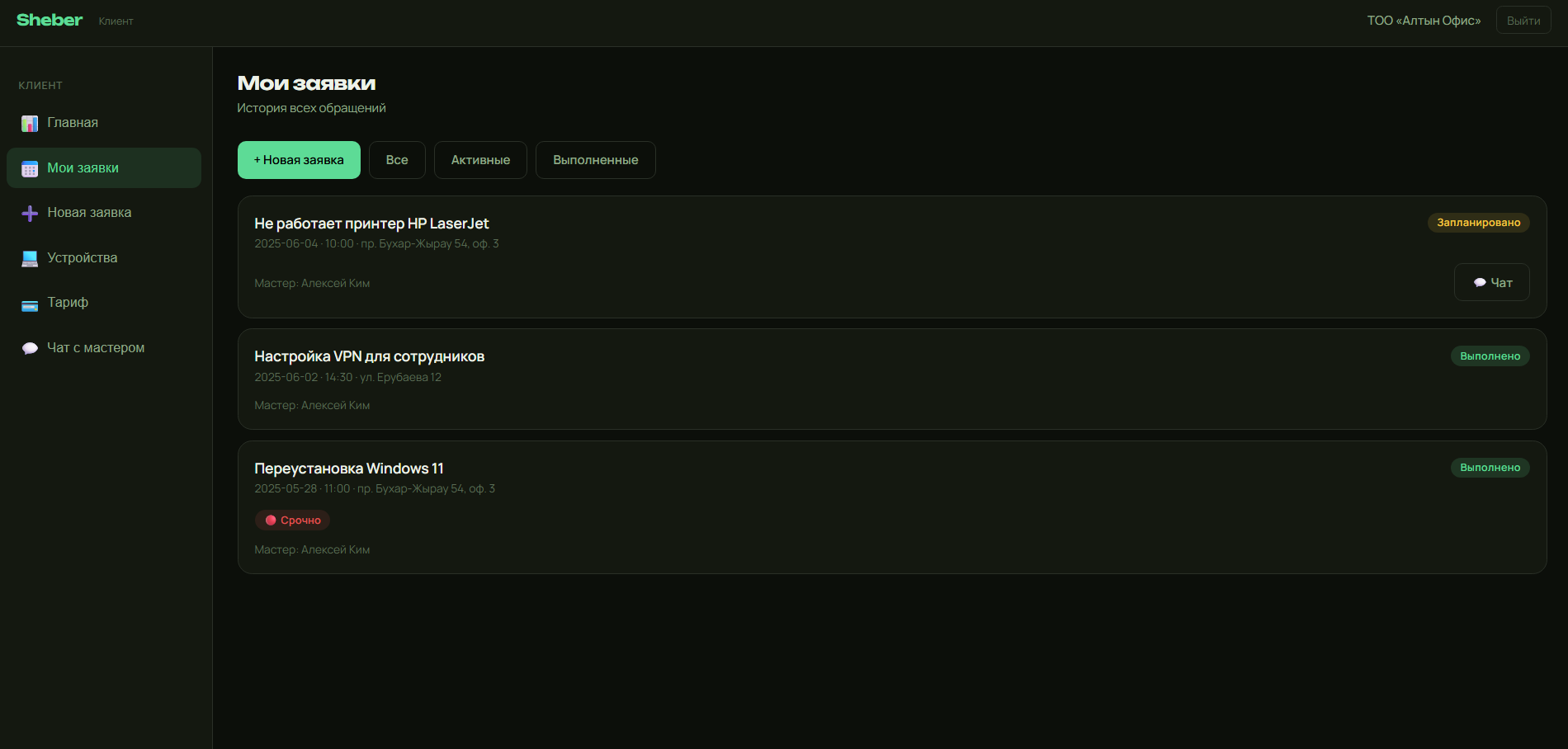
Resolved Tickets
-
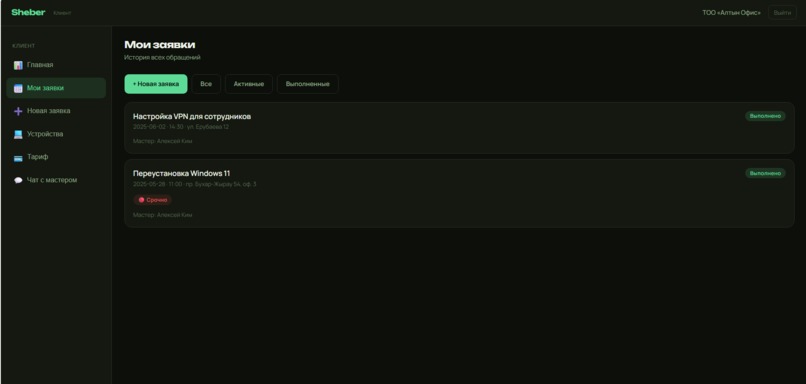
Cancel Ticket
-
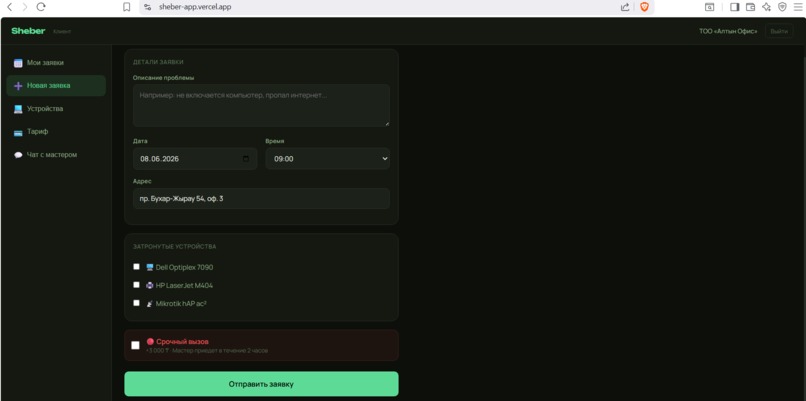
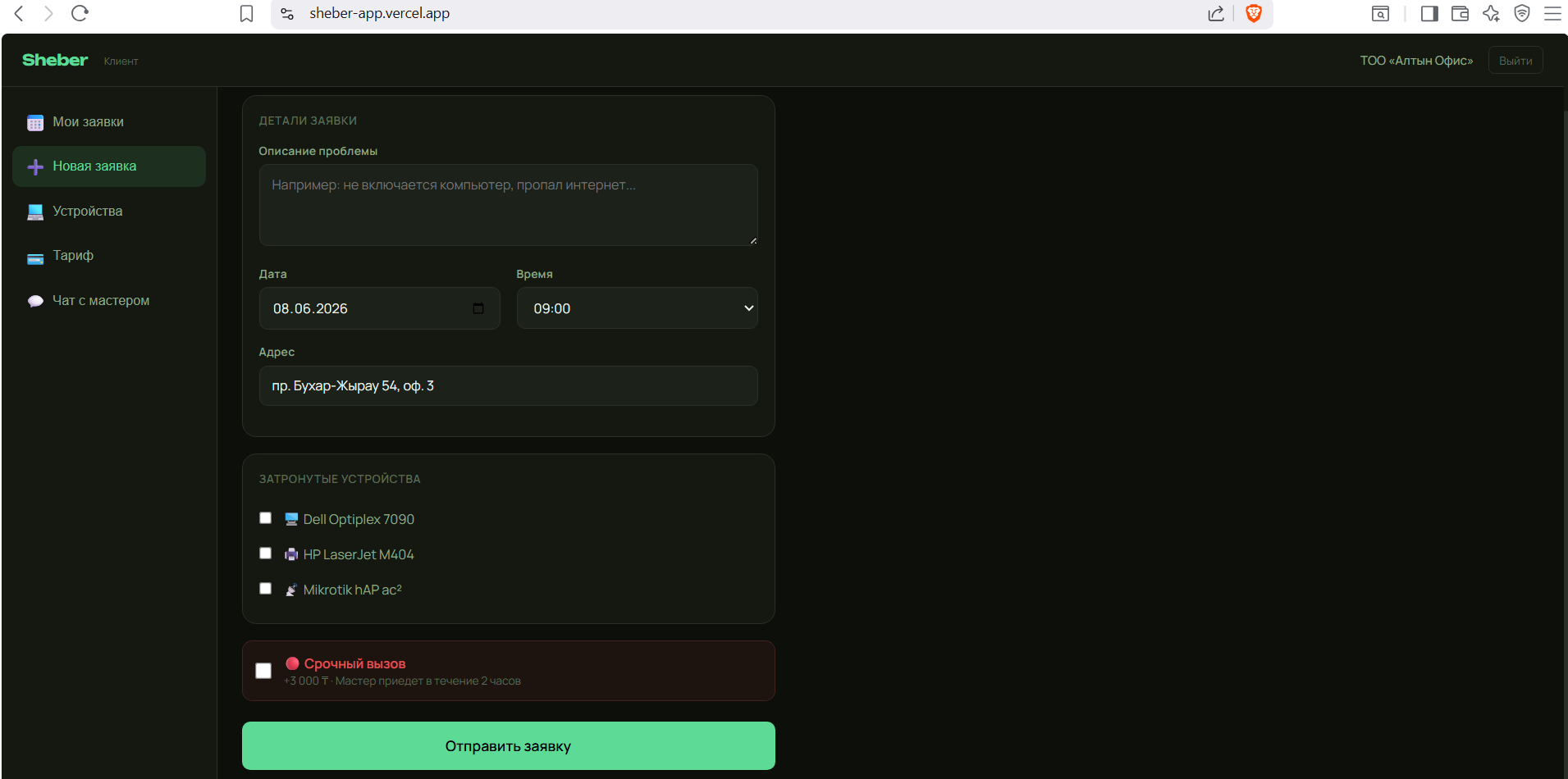
Urgent Assistance (+ Fee)
-
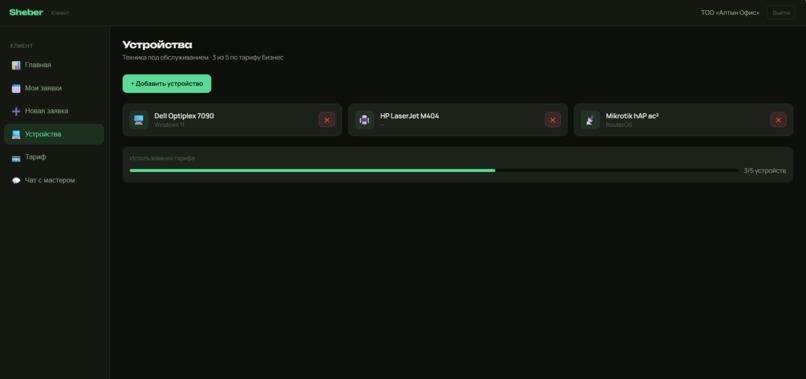
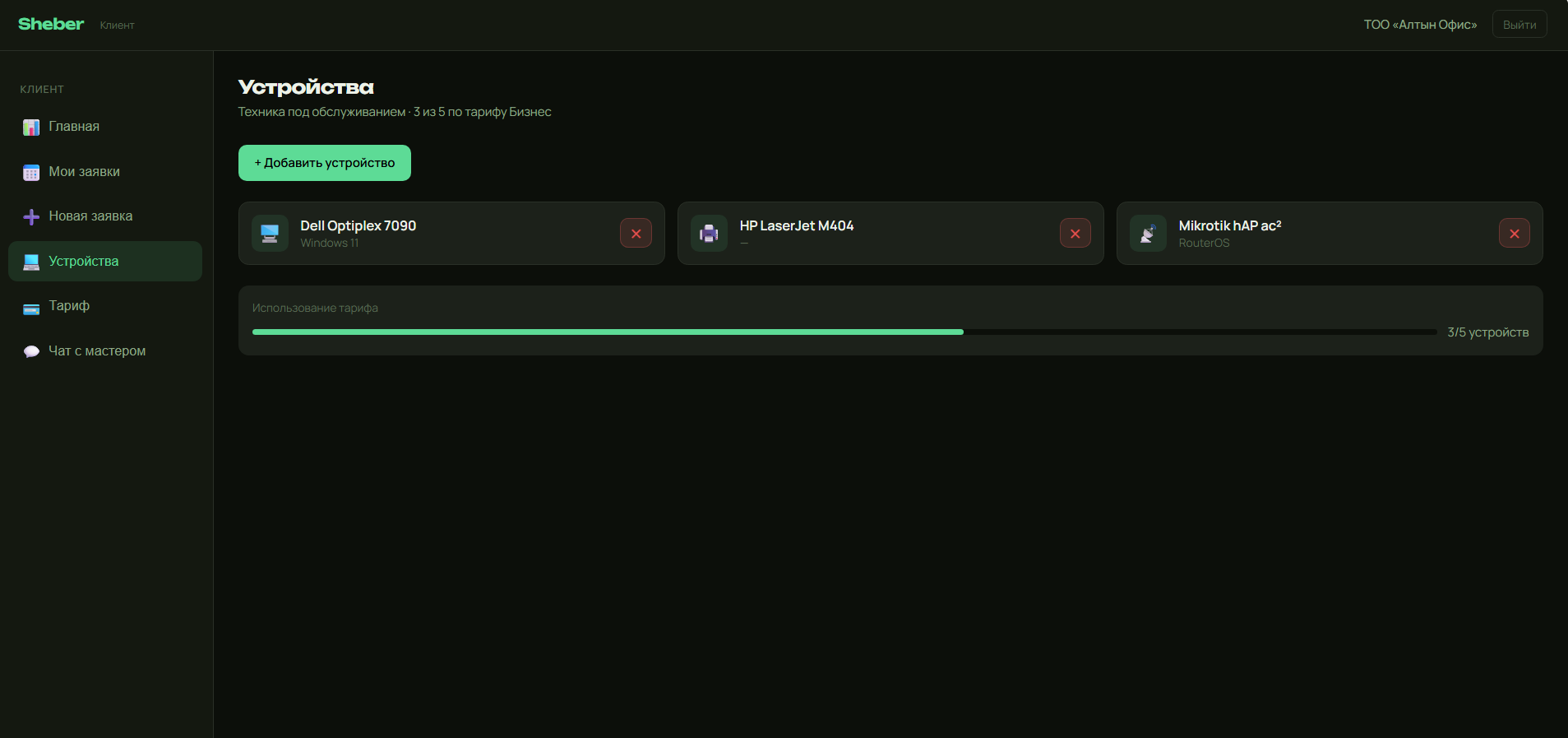
Subscription-based Device Management
-
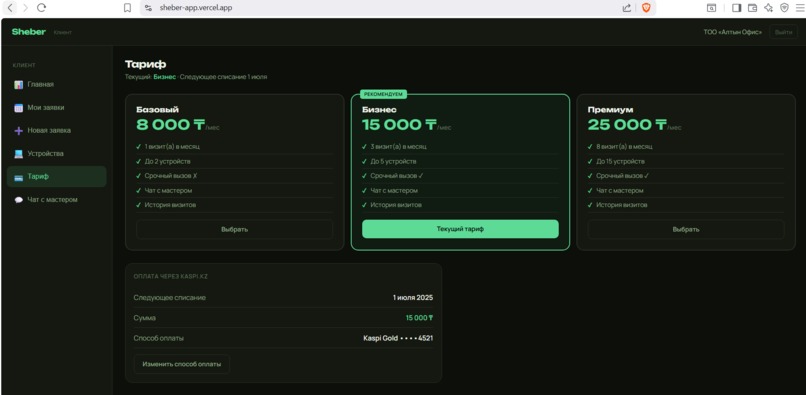
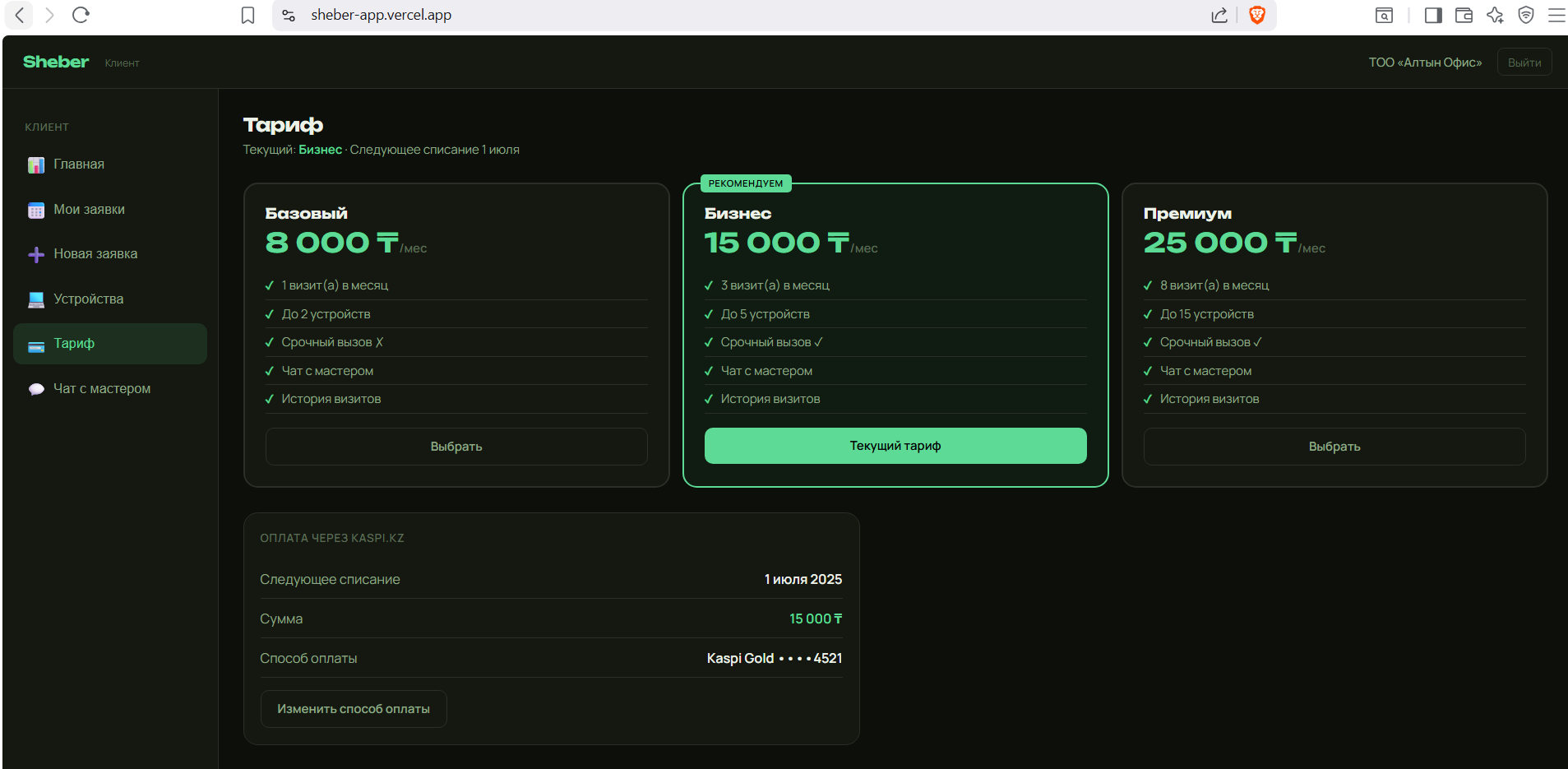
Pricing Plans
-
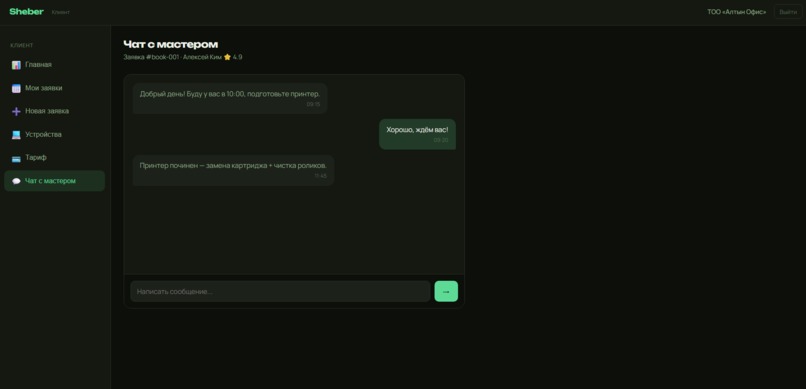
Support Chat
-
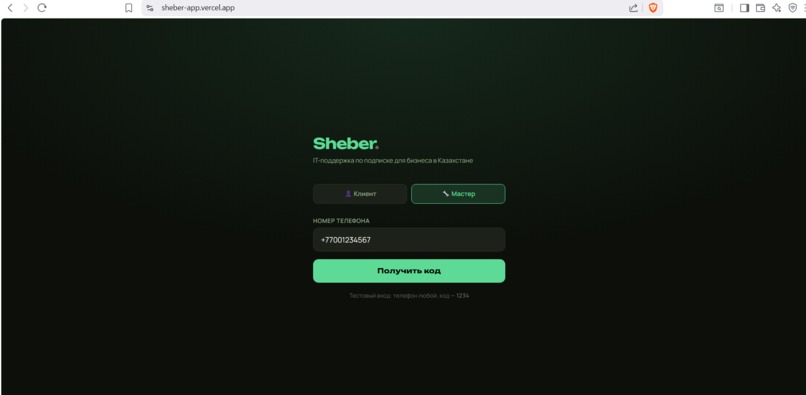
Master Workspace
-
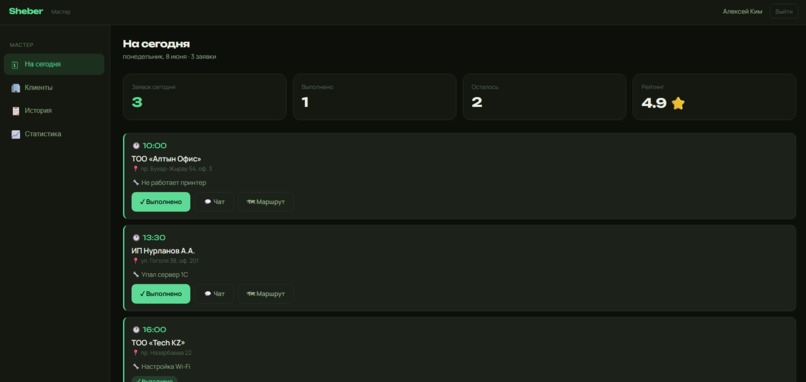
Here is the clean, production-ready English text specifically for the Master's / Technician's account to handle completed jobs.
-
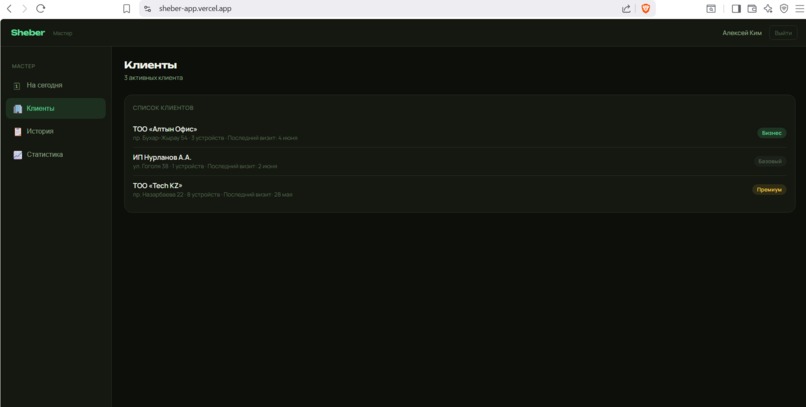
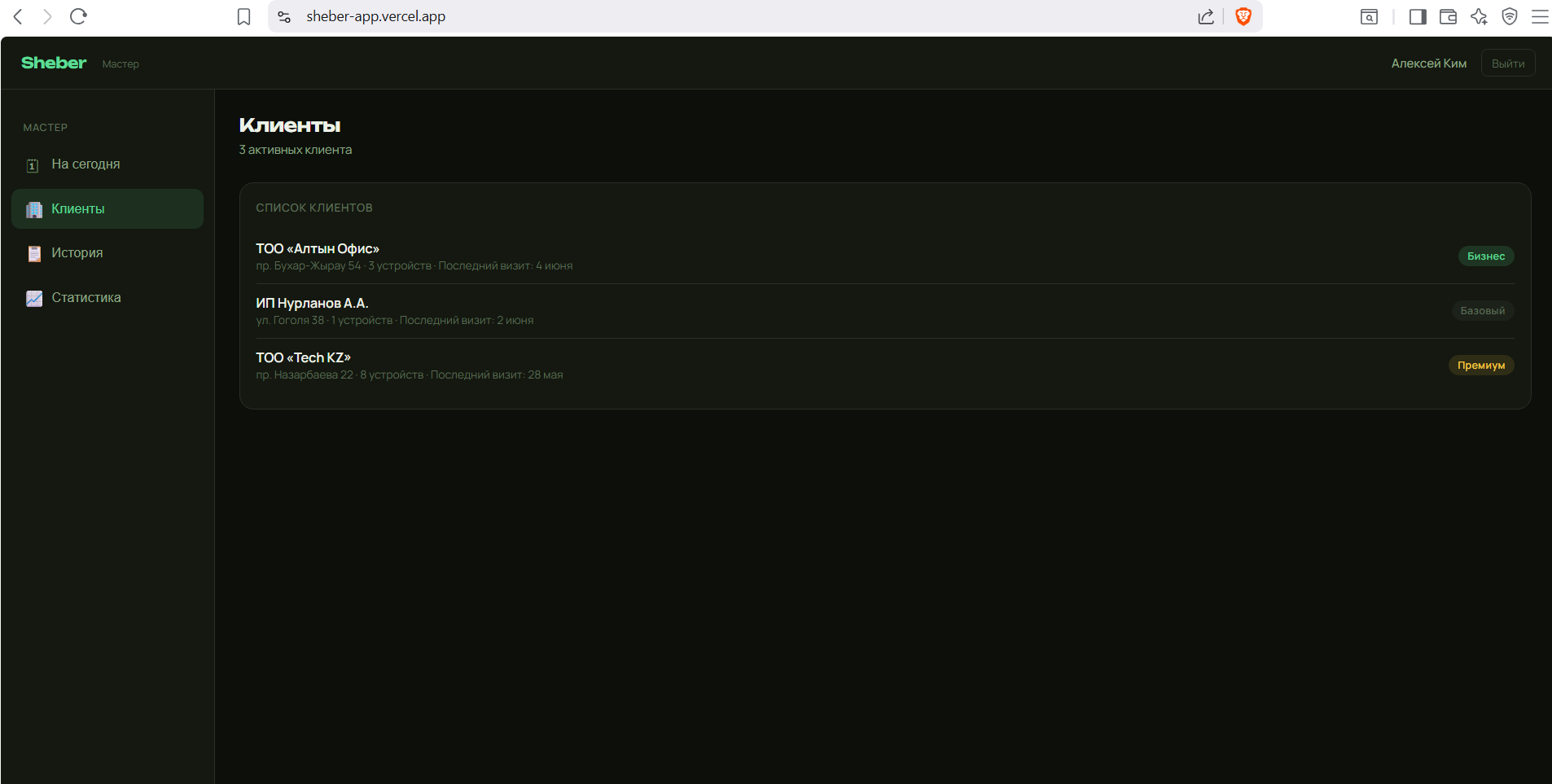
Clients or Company
-
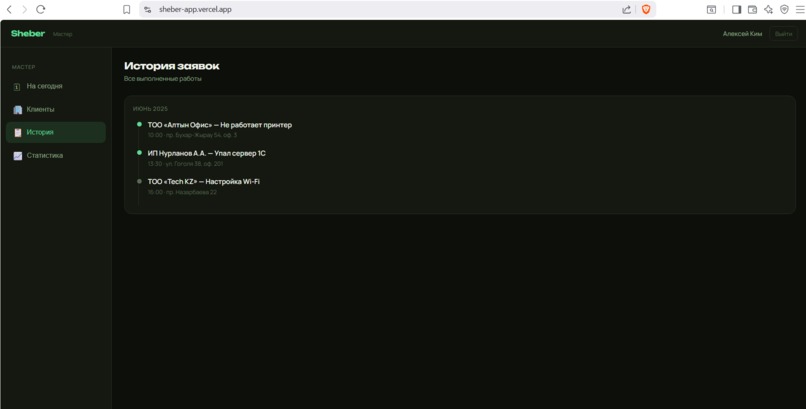
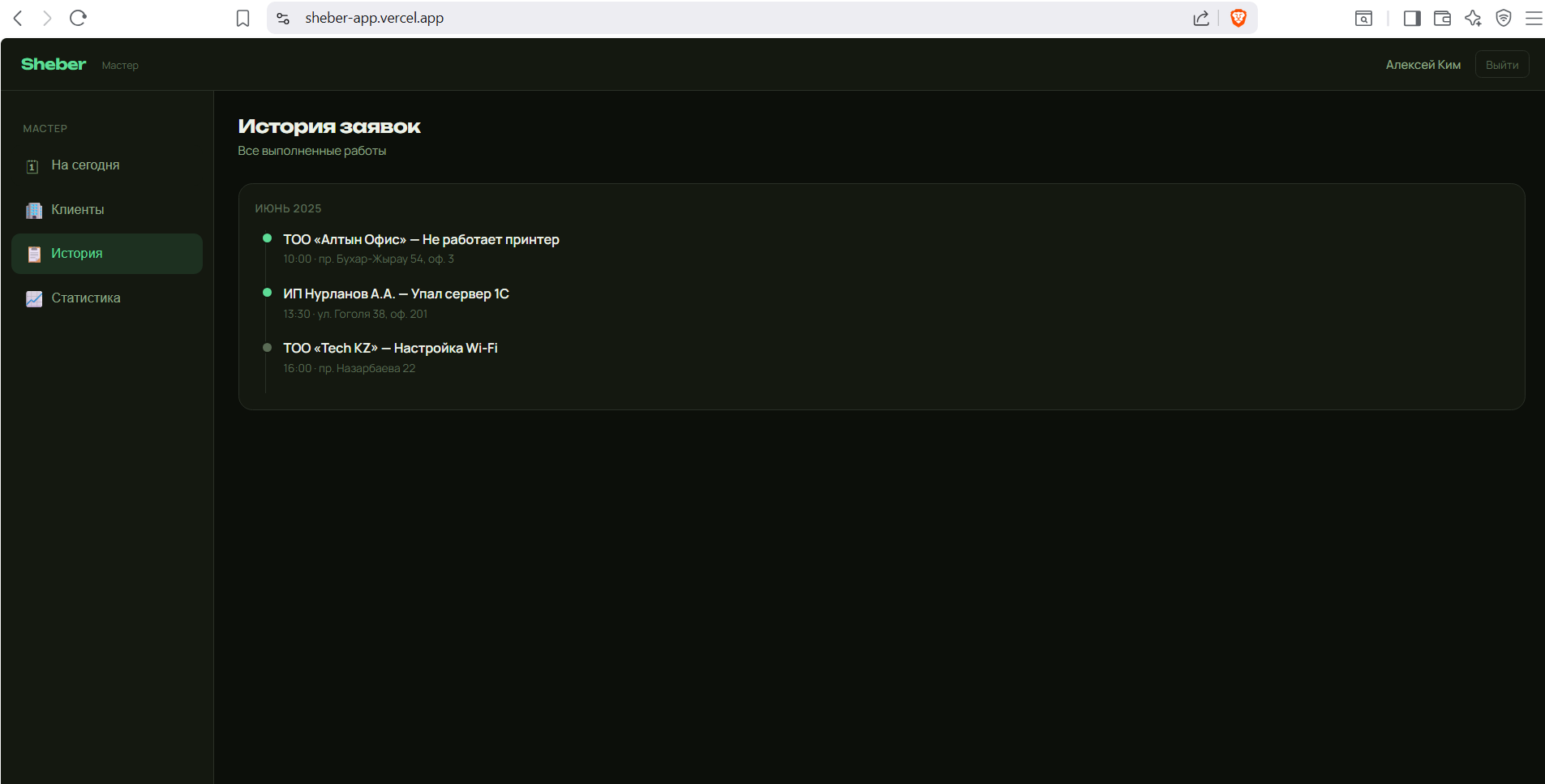
Ticket History
-
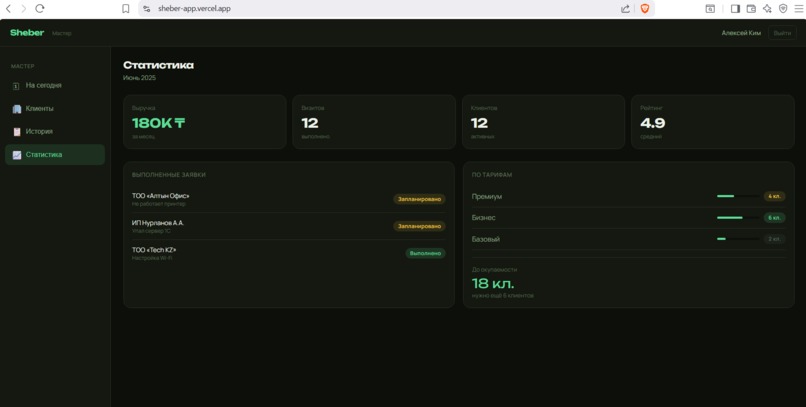
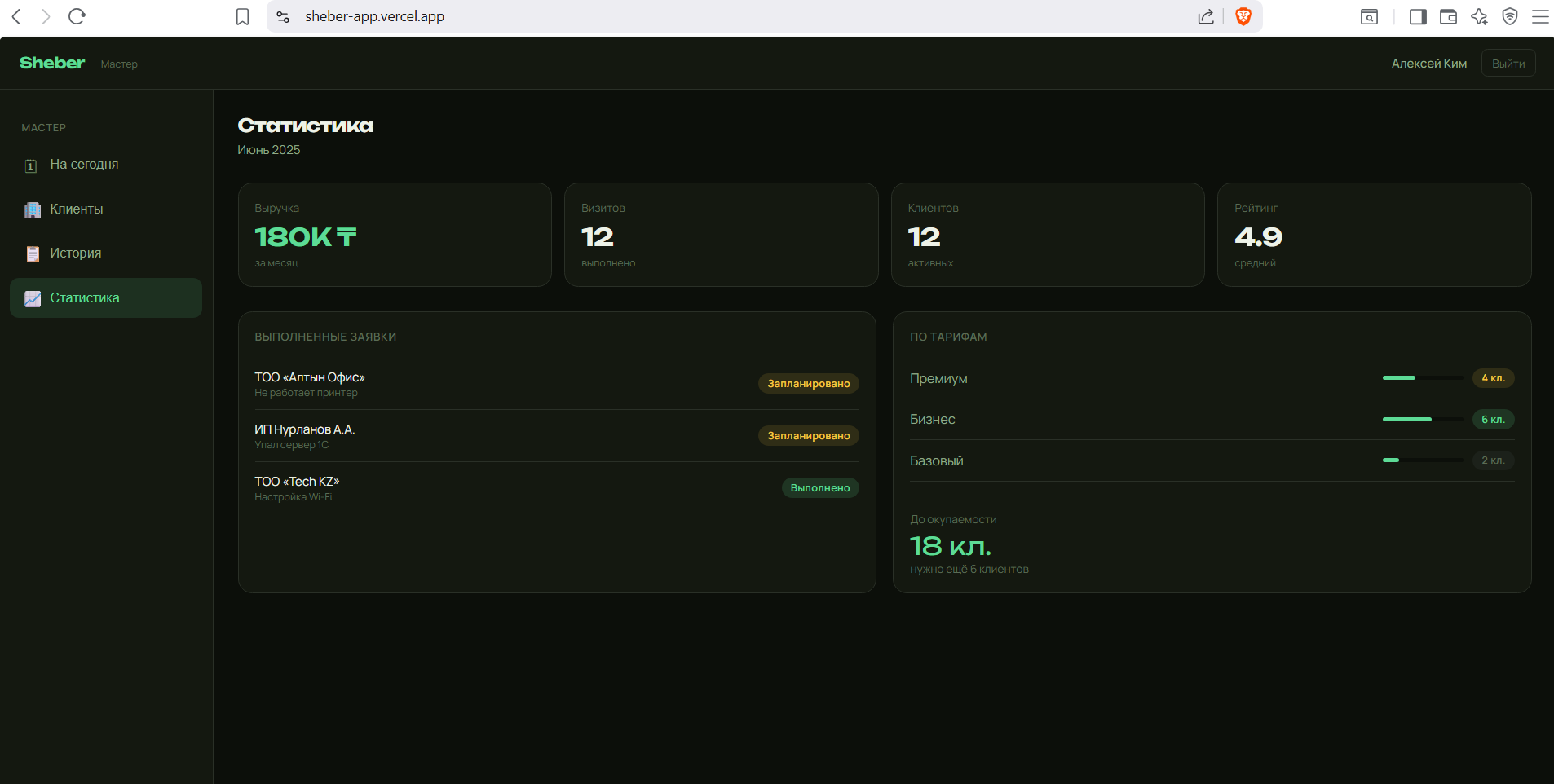
Statistics Plan for Master
Inspiration
The idea for Sheber came from a common real-world frustration: small and medium businesses often struggle with fragmented IT and hardware support. When an office computer breaks down, a printer jams, or network infrastructure fails, companies waste hours looking for reliable technicians, dealing with unpredictable pricing, and tracking repair requests via messy chat groups or spreadsheets. We wanted to build a reliable, transparent, and scalable ecosystem that transforms reactive repairs into a predictable, subscription-based service model.
What it does
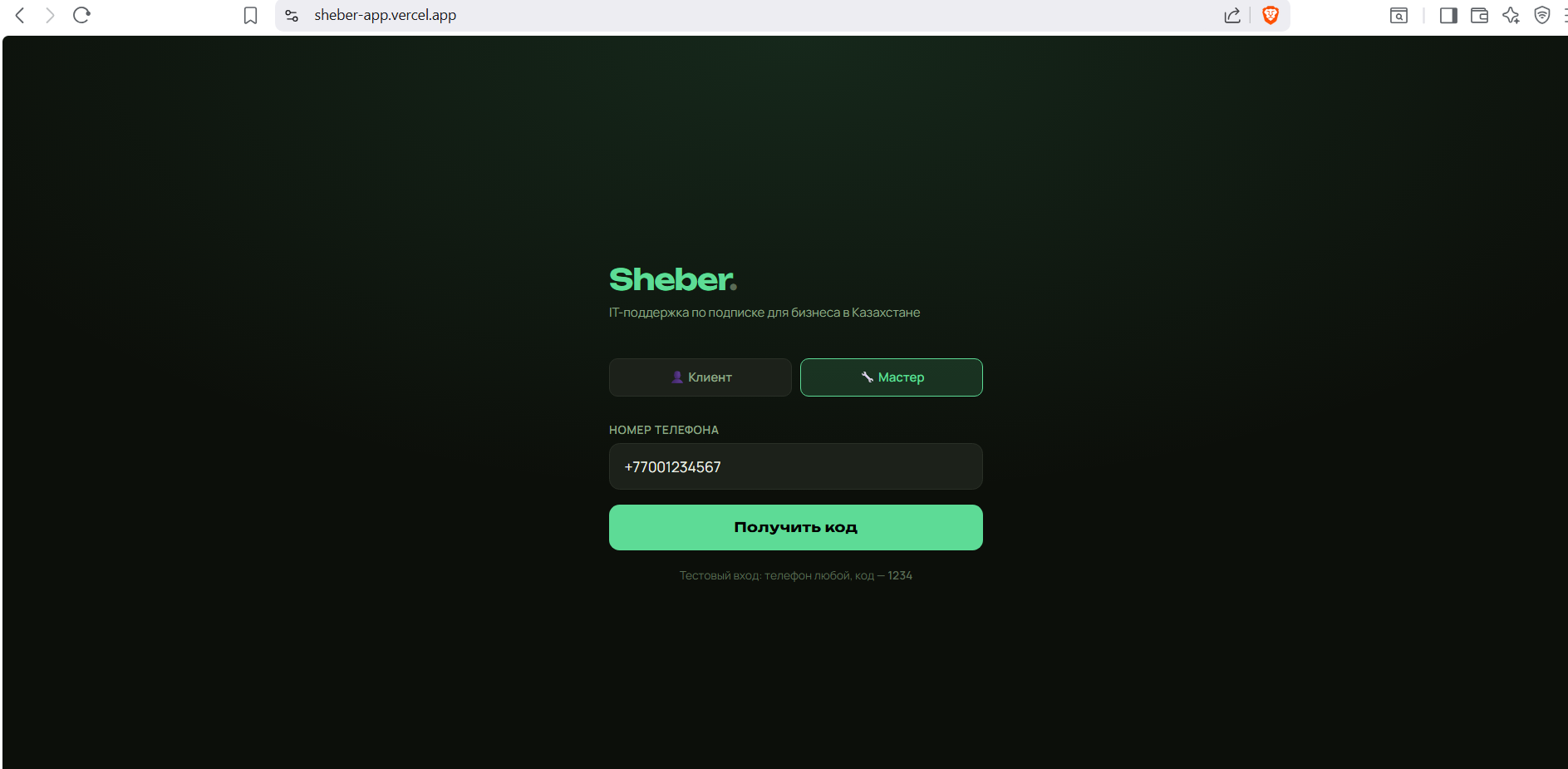
Sheber is a cross-platform SaaS ecosystem designed to automate hardware maintenance and IT infrastructure support for businesses.
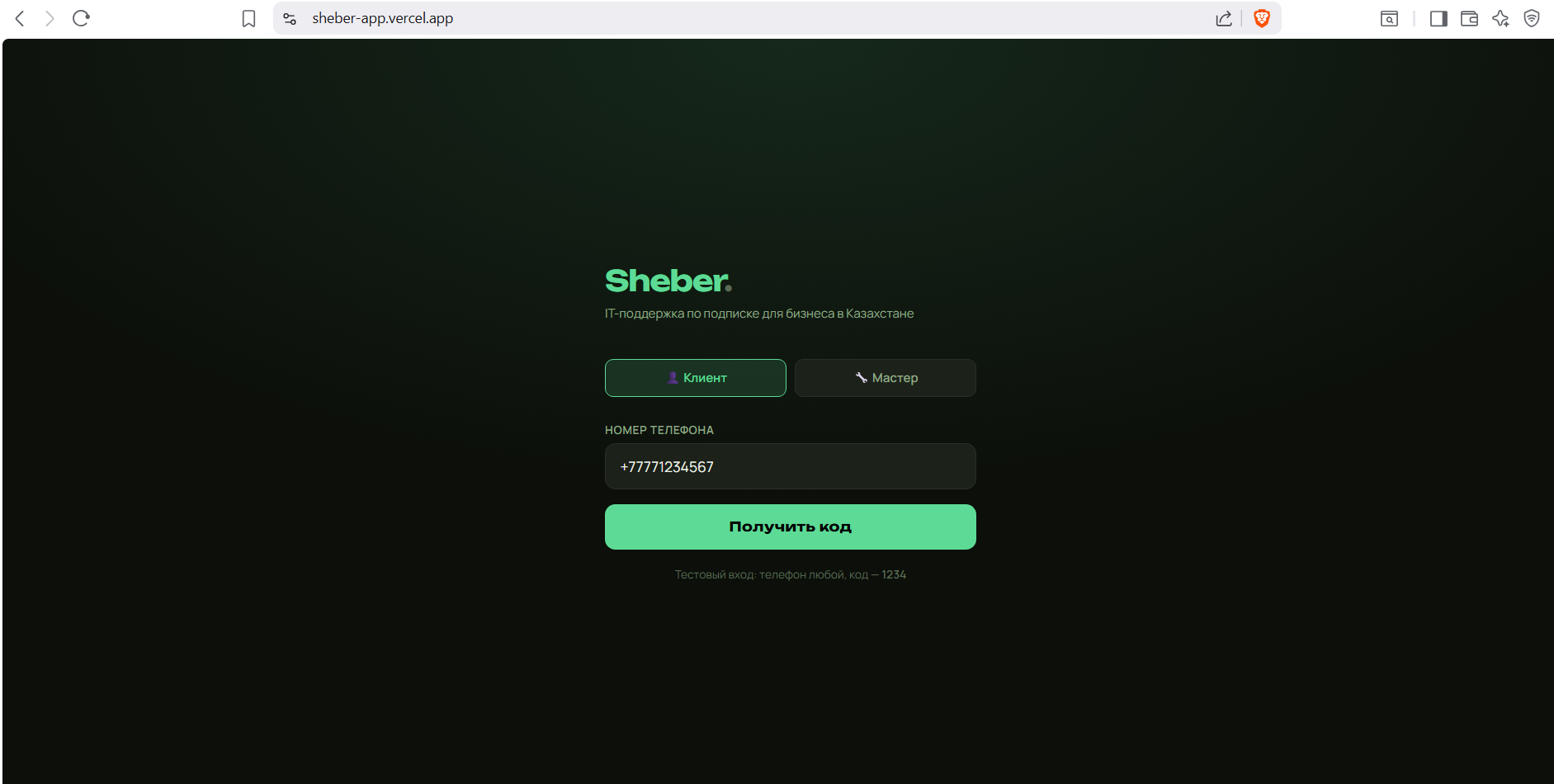
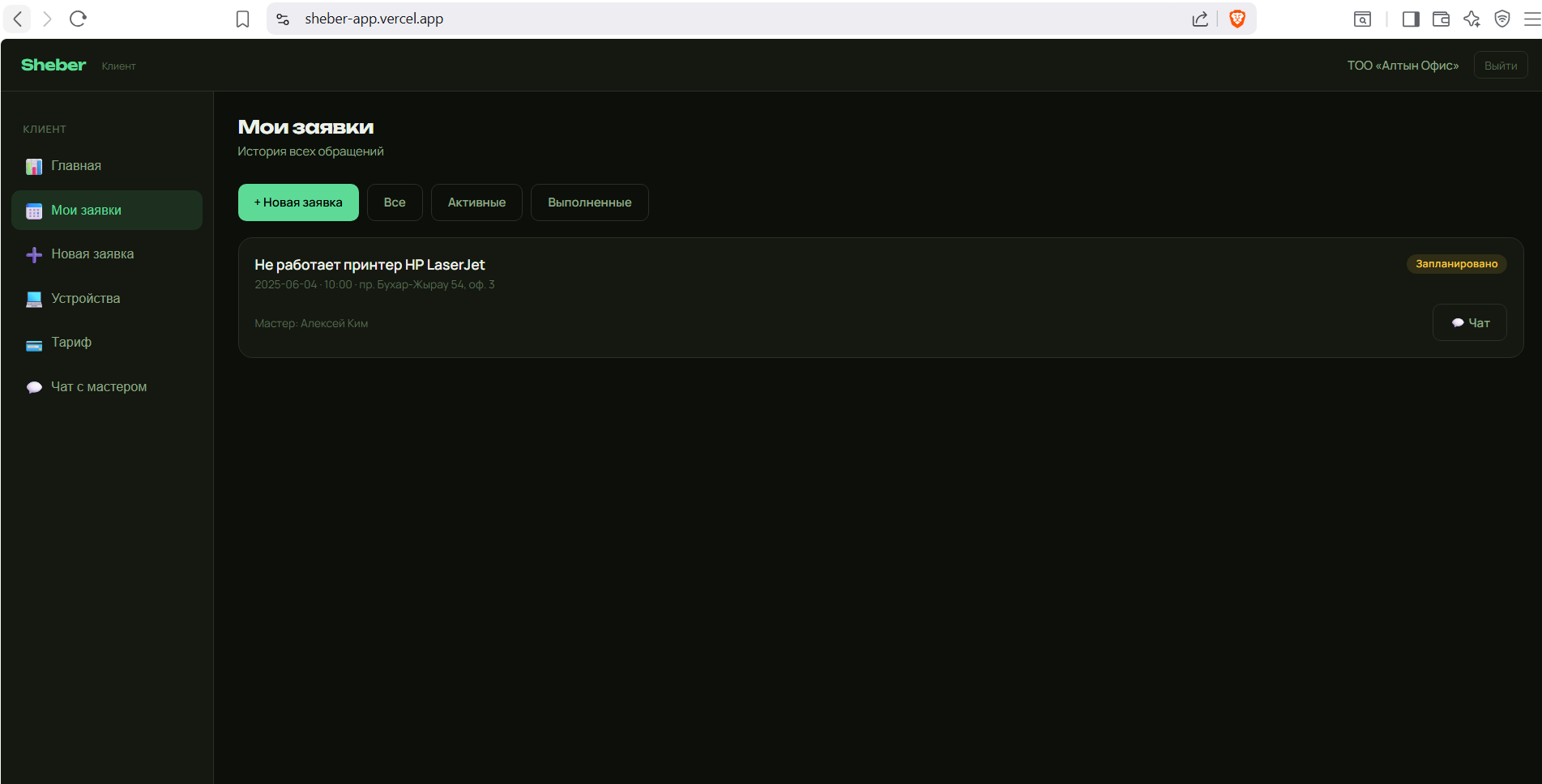
- For Clients (Businesses): It offers a seamless interface to purchase service subscriptions, quickly submit detailed support tickets, and track the real-time status of technical issues.
- For Technicians (Masters): It provides a dedicated workspace to view assigned tasks, update work statuses, and manage scheduled service visits.
- For Administrators: A centralized dashboard monitors platform metrics, monthly recurring revenue (MRR), user management, and manual or automated ticket routing.
How we built it
We engineered Sheber with a modern, decoupled architecture to ensure high performance and seamless cross-platform deployment:
- Backend: Built with Python and FastAPI utilizing fully asynchronous programming (
AsyncIOandAsyncSession) for high concurrency. Data persistence is handled by PostgreSQL with SQLAlchemy ORM. - Security & Auth: Implemented secure JWT-based session management and a localized two-factor SMS OTP authentication system integrated with the Mobizon Kazakhstan API.
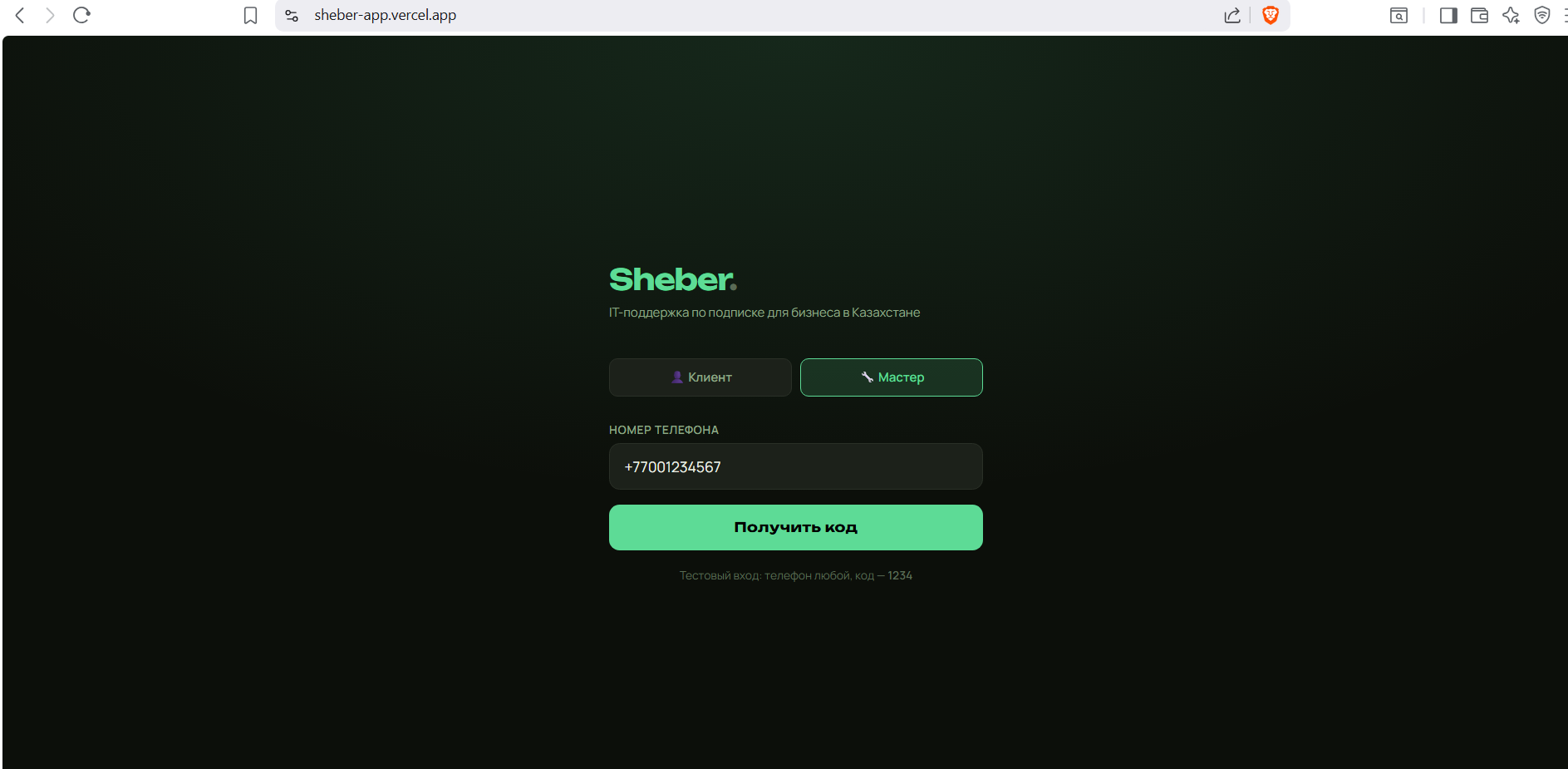
- Frontend & Distribution: Created a responsive frontend optimized for multiple screen sizes. The web client is deployed on Vercel, while the backend runs on Render. To avoid heavy native builds, the application is enhanced with Progressive Web App (PWA) capabilities, allowing users to install it effortlessly on iOS, Android, and Desktop environments directly from the browser.
Challenges we ran into
One of the main challenges was managing precise user access control and distinct data flows for three separate roles (Client, Master, Admin) within an asynchronous framework. Ensuring secure and efficient authorization state persistence required fine-tuning our FastAPI dependency injection layers. Additionally, optimizing cross-origin requests (CORS) between different cloud hosting providers (Vercel and Render) and configuring reliable database pool handling under asynchronous workloads required careful architectural testing.
Accomplishments that we're proud of
- Successfully engineered a completely asynchronous, production-ready backend that handles high-concurrency requests smoothly.
- Created a clean, robust, and industry-standard project architecture that isolates core logic, routing, services, and database schemas.
- Implemented a reliable SMS OTP authorization system tailored to regional communication providers (Mobizon) with a scalable development mock environment.
- Built a cross-platform distribution strategy that achieves mobile and desktop installation footprints without the overhead of native app store dependencies.
What we learned
Building Sheber taught us the true value of strict architectural separation of concerns. Designing an asynchronous system from the ground up highlighted how vital connection lifecycle management and clean schema validation are for system stability. We also learned how powerful modern web distribution tools like PWAs are for delivering a true app-like user experience efficiently across different operating systems.
What's next for sheber-app
Our roadmap for Sheber includes several major upgrades:
- Automated Ticket Dispatching: Integrating an AI-driven routing module to automatically assign tickets to the most suitable technician based on their workload, proximity, and specialization.
- Native Desktop Wrappers: Implementing Tauri to ship hyper-lightweight native desktop executables (
.exeand.dmg) for enterprise clients. - Payment Gateway Integration: Connecting local payment APIs to automate invoice generation and monthly subscription renewals directly inside the app interface.
Built With
- asyncio
- css3
- fastapi
- git
- github
- html5
- javascript
- jwt-authentication
- mobizon
- postgresql
- pwa-(progressive-web-apps)
- python
- render
- sqlalchemy
- tailwind-css
- vercel


Log in or sign up for Devpost to join the conversation.