-
-
ShasthoNote AI: A personal health information workspace designed to organize records and prepare for care conversations.
-
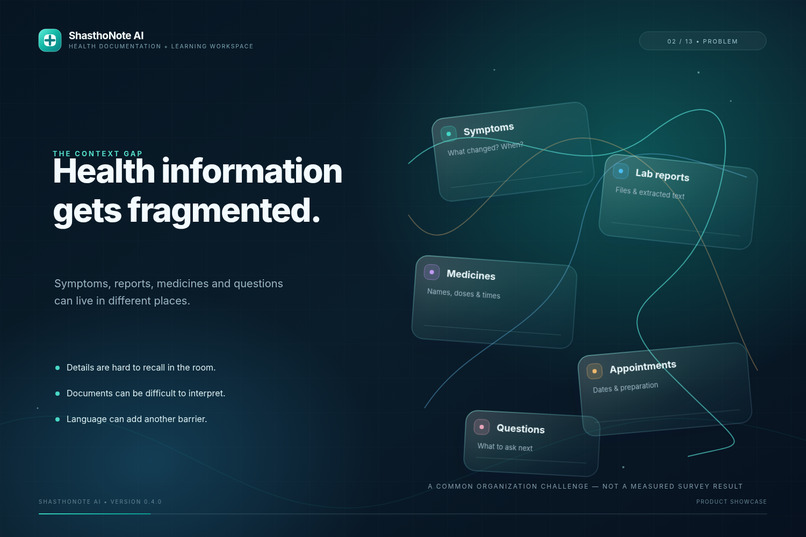
Health information is often scattered across notes, documents, and records.
-
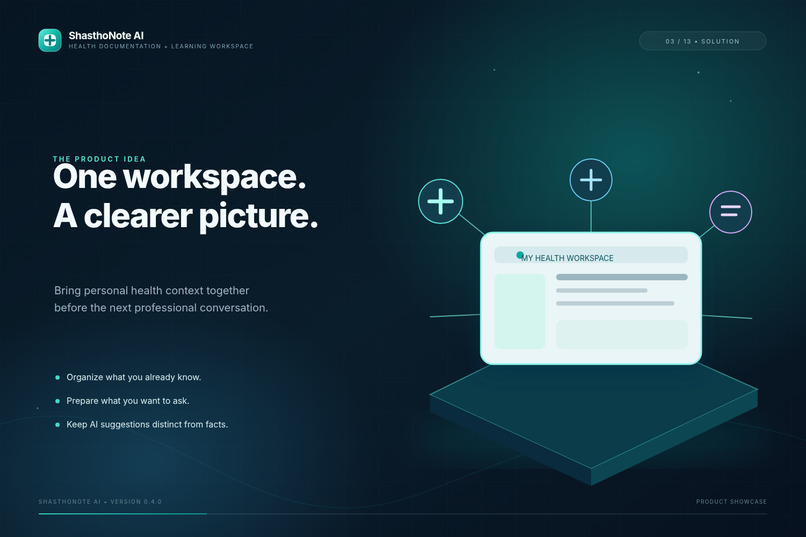
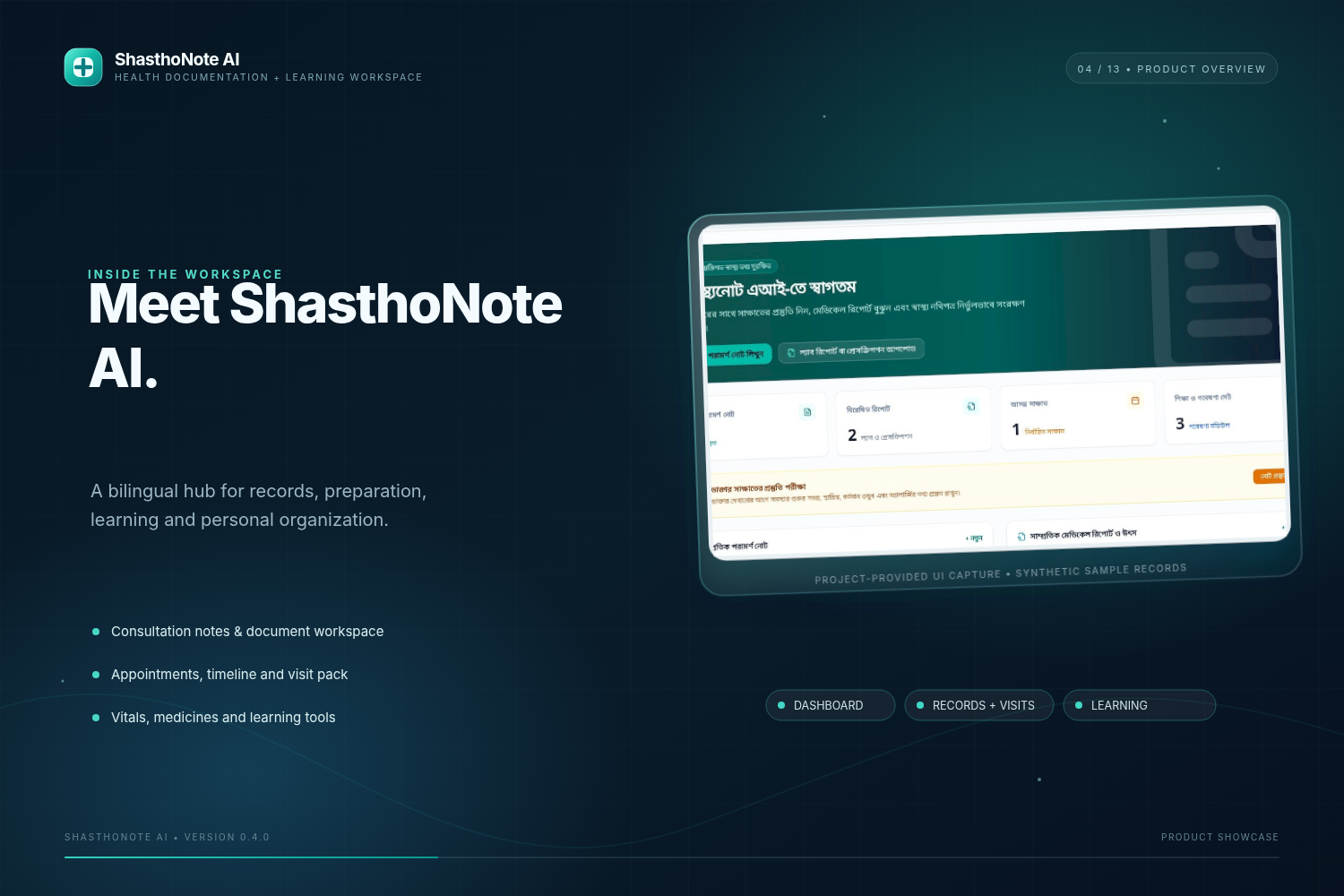
One workspace to organize personal health information and prepare for healthcare conversations.
-
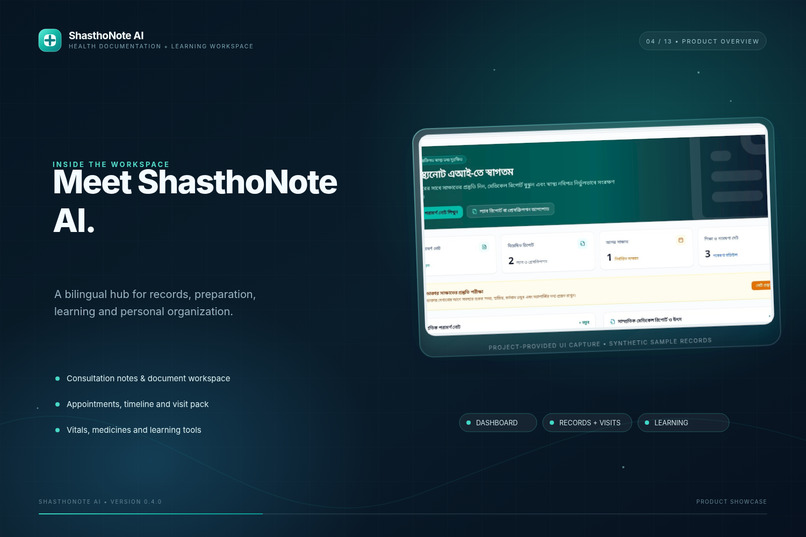
Explore consultation notes, documents, appointments, personal tracking, and learning.
-
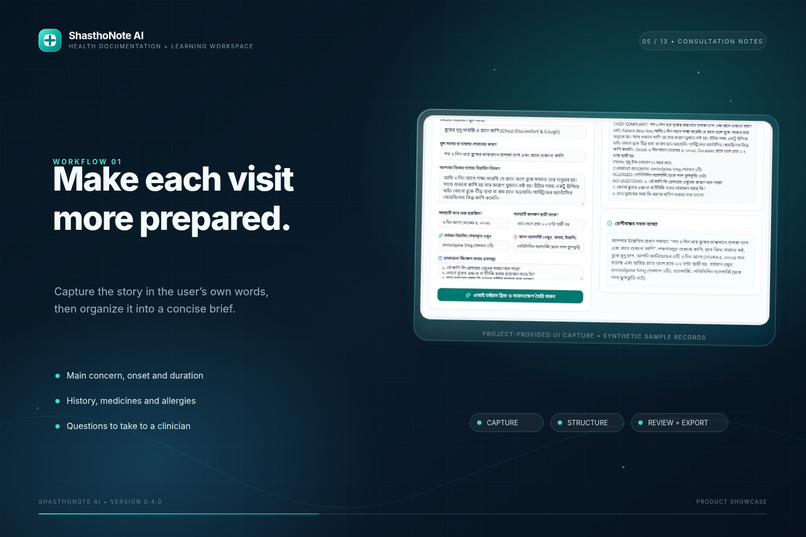
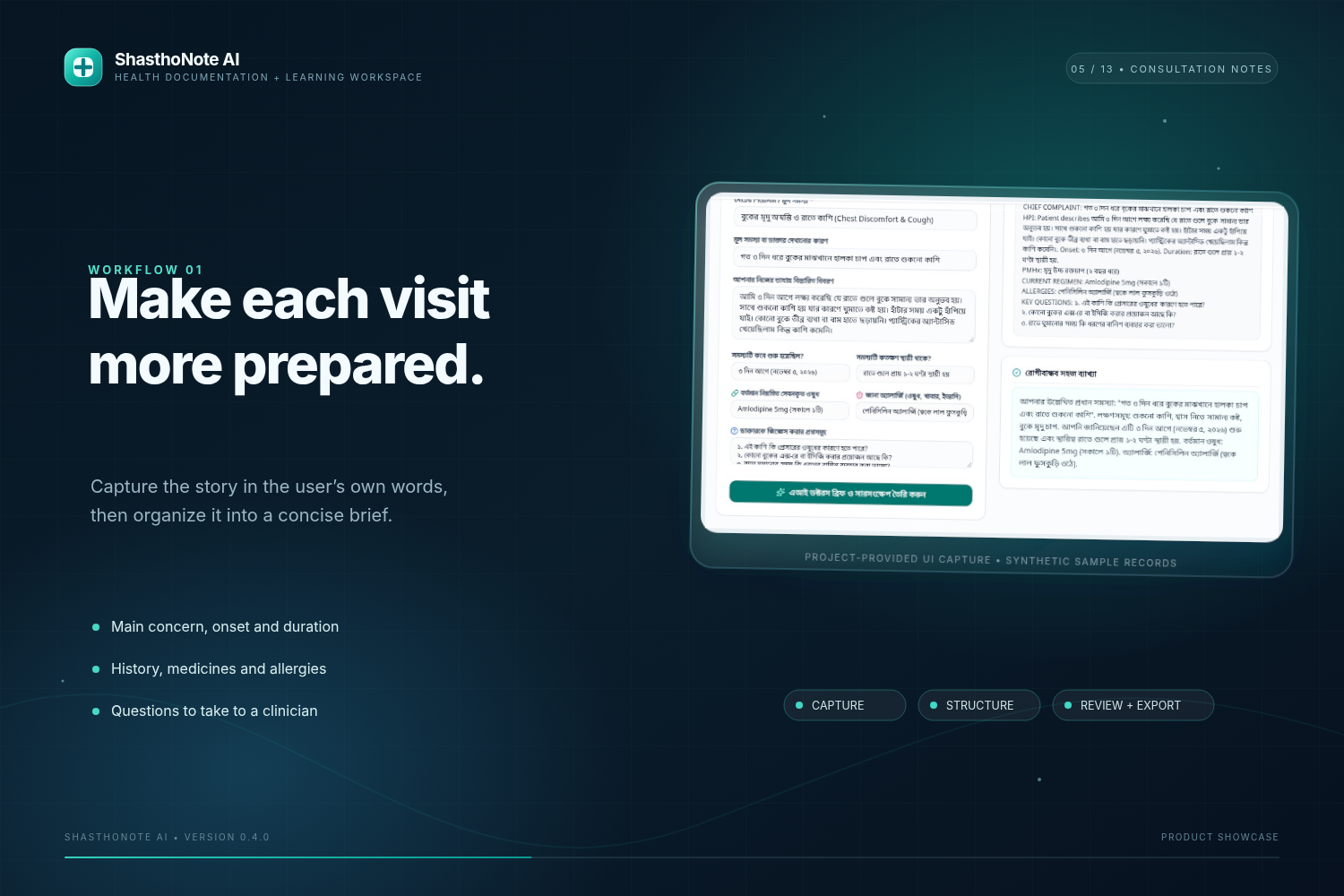
Organize health concerns, symptoms, medical history, medications, allergies, and questions before consultations.
-
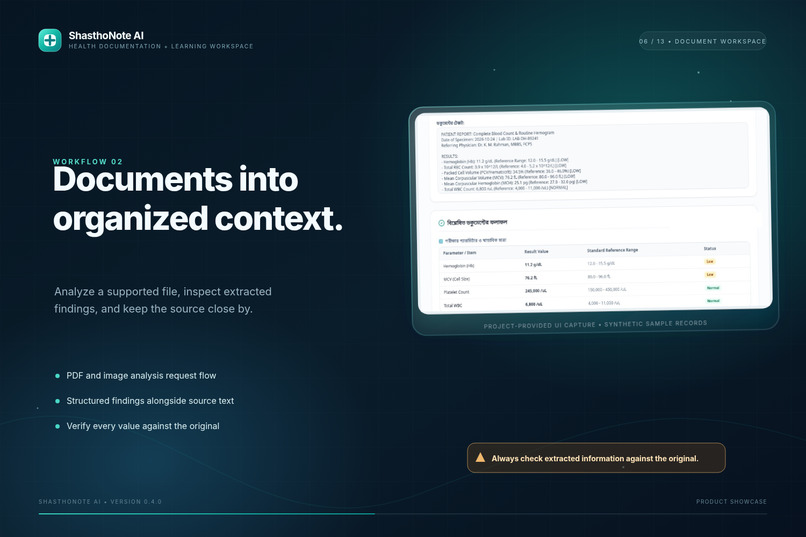
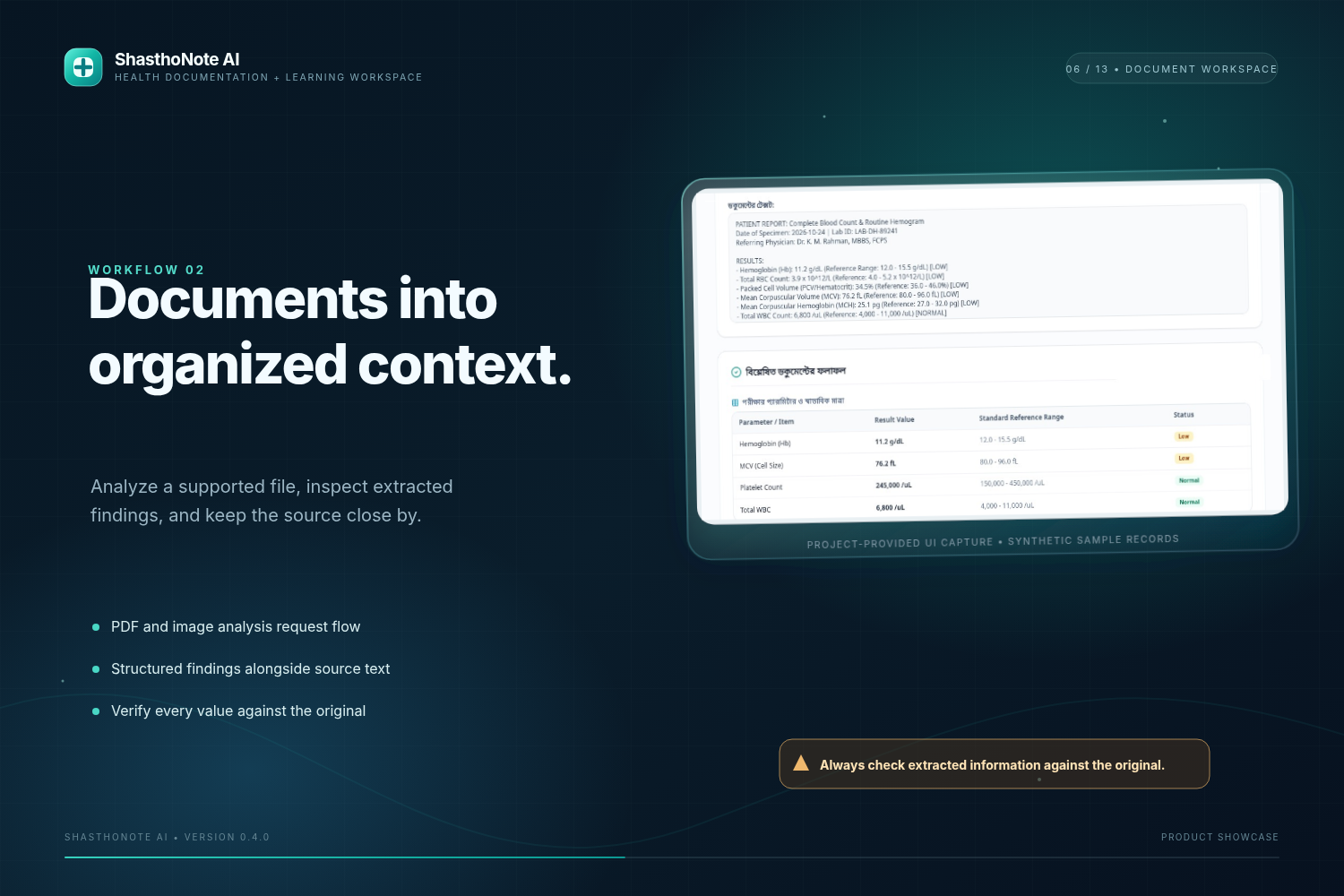
AI-assisted document analysis helps organize information. Always verify results against the original document.
-
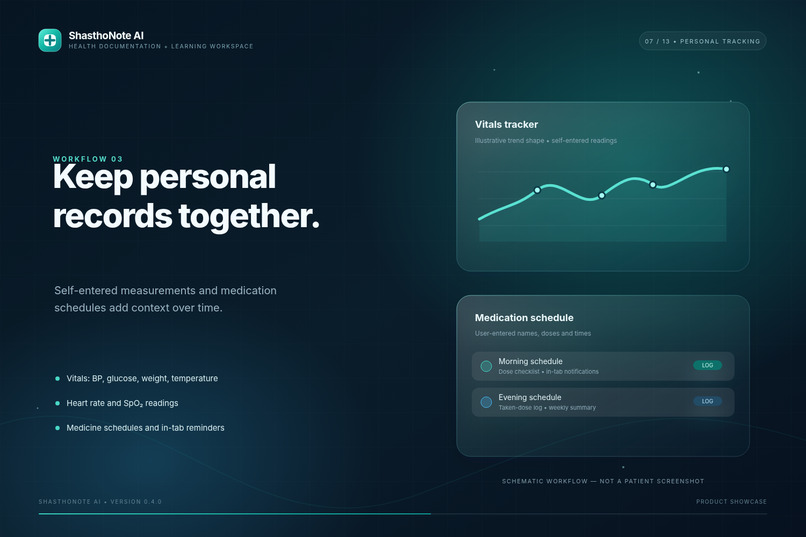
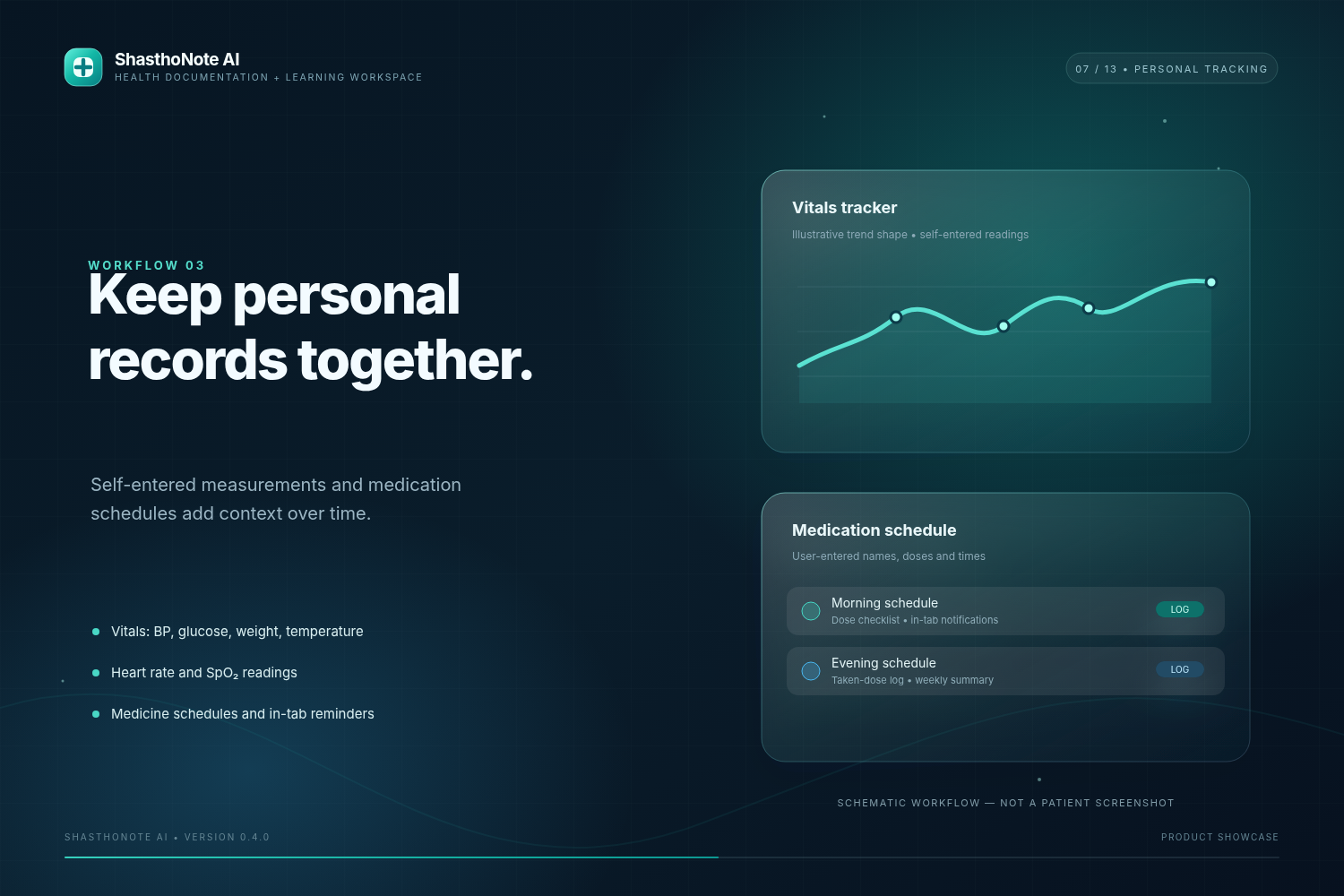
Keep personal health measurements and medication schedules organized. Demo data is synthetic.
-
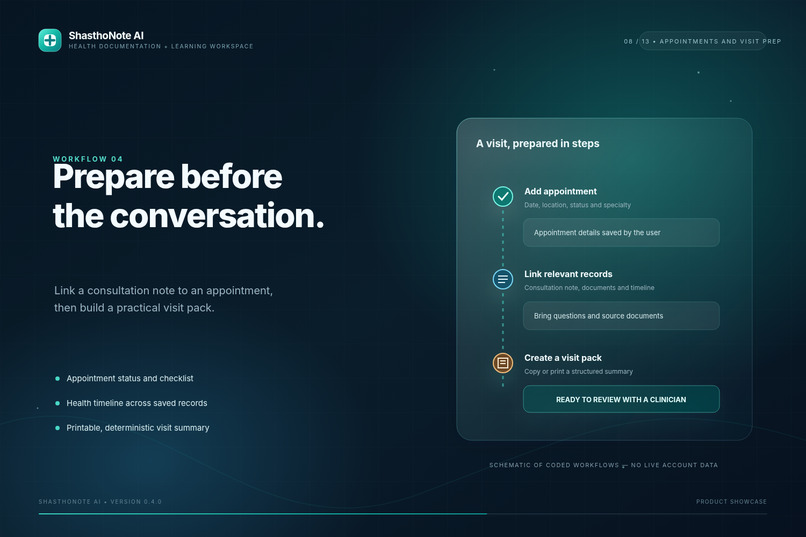
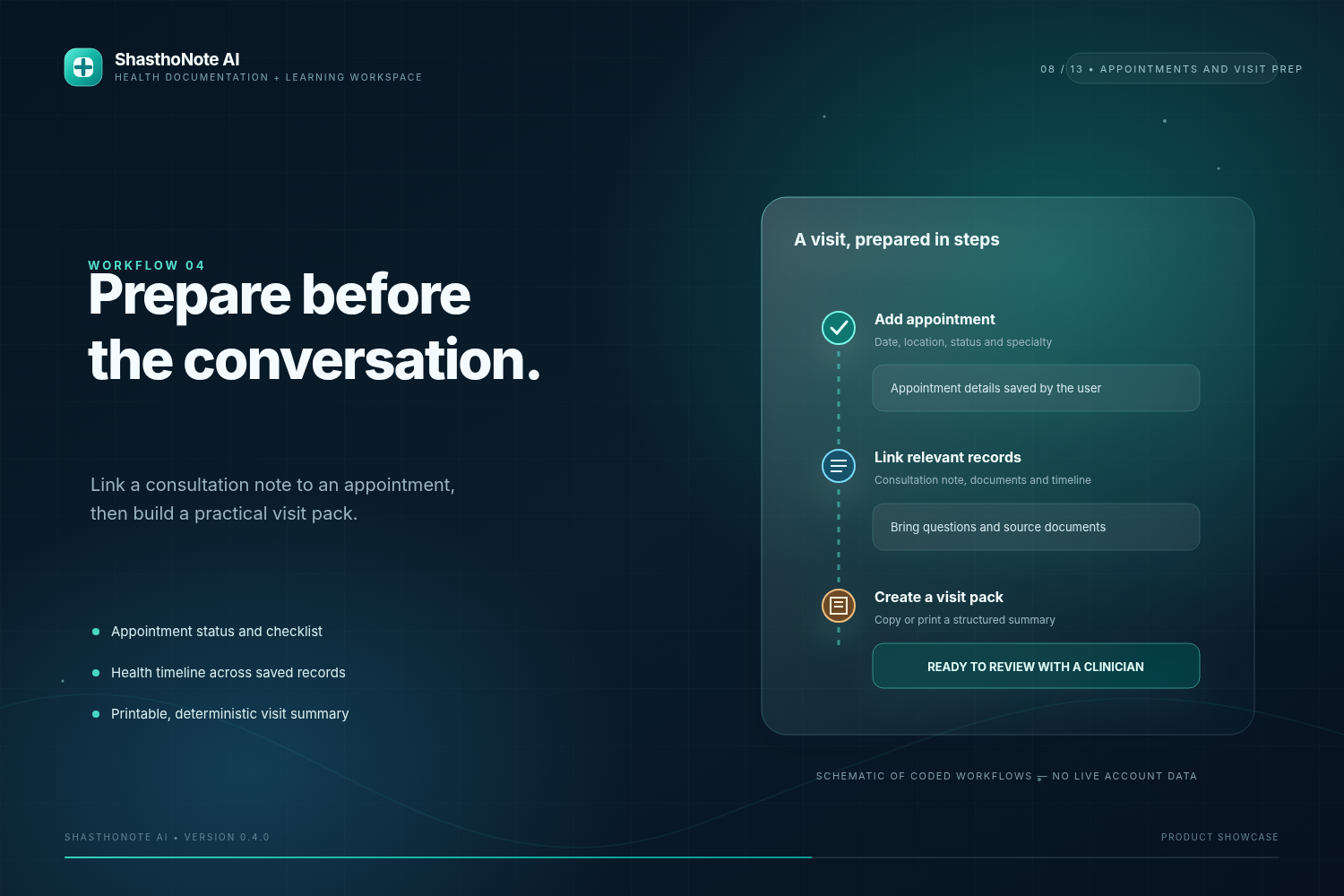
Organize appointment details and prepare questions before meeting a healthcare professional.
-
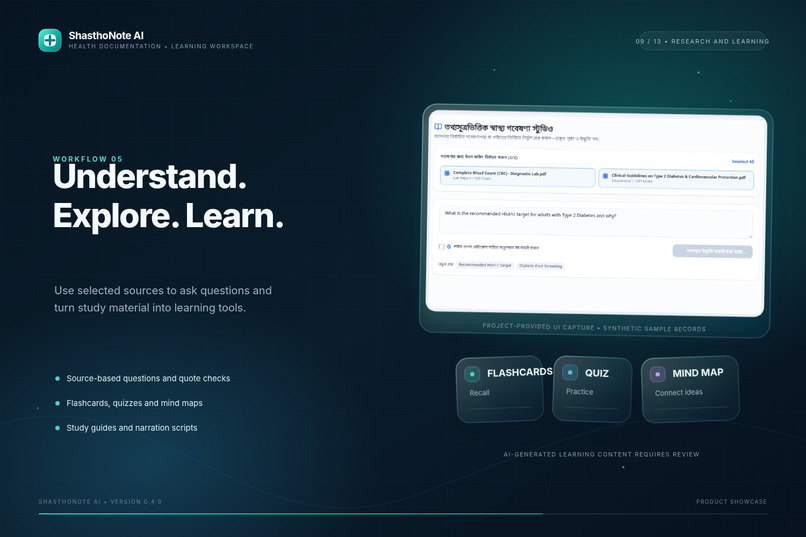
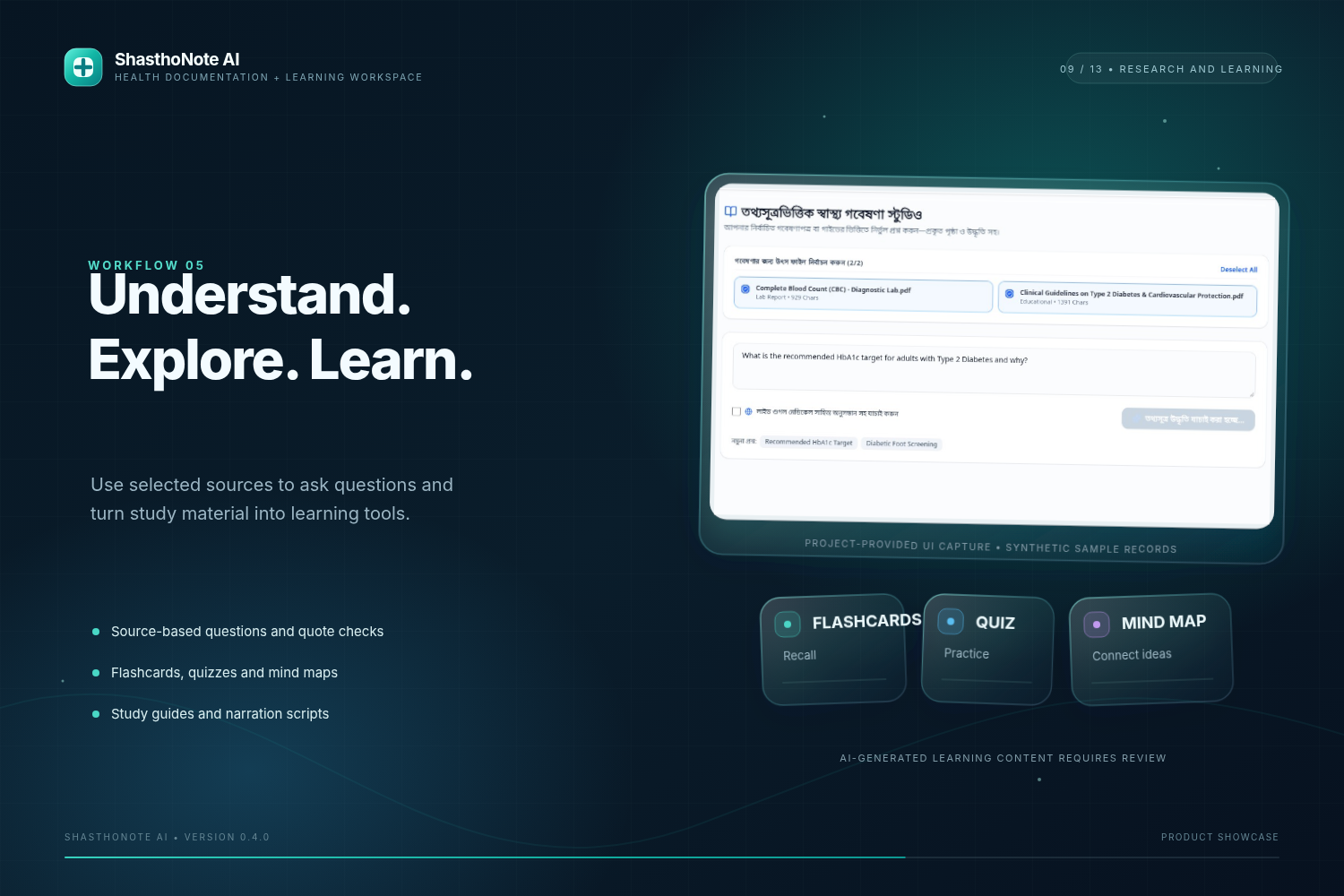
Explore AI-assisted research, learning tools, and study materials in one workspace.
-
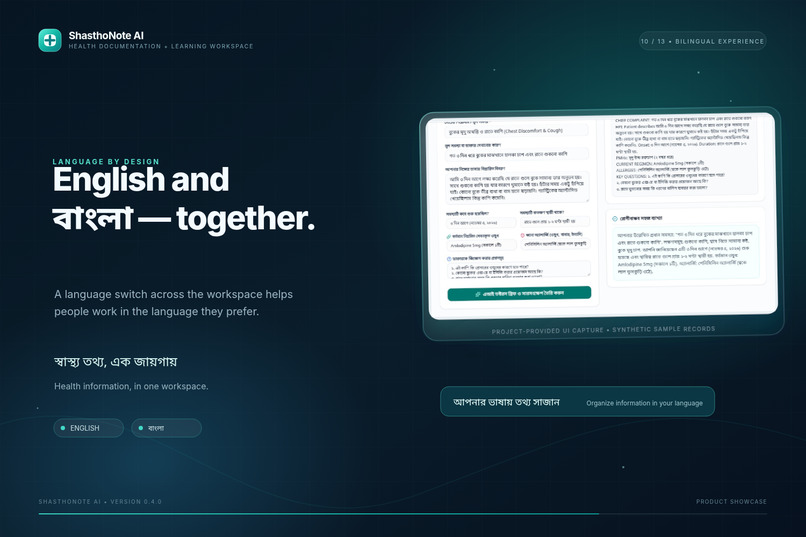
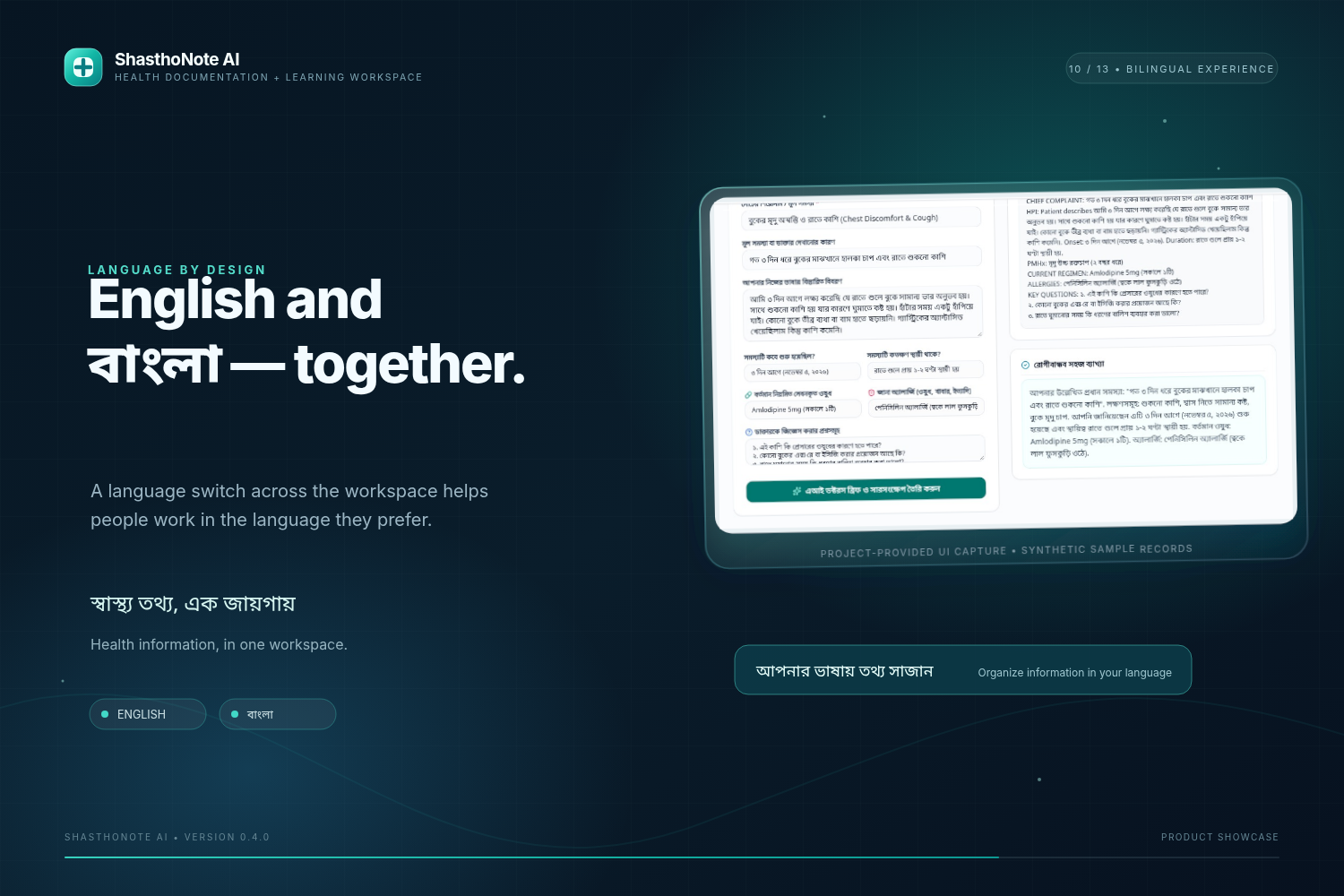
A bilingual experience designed for users who prefer English or Bangla.
-
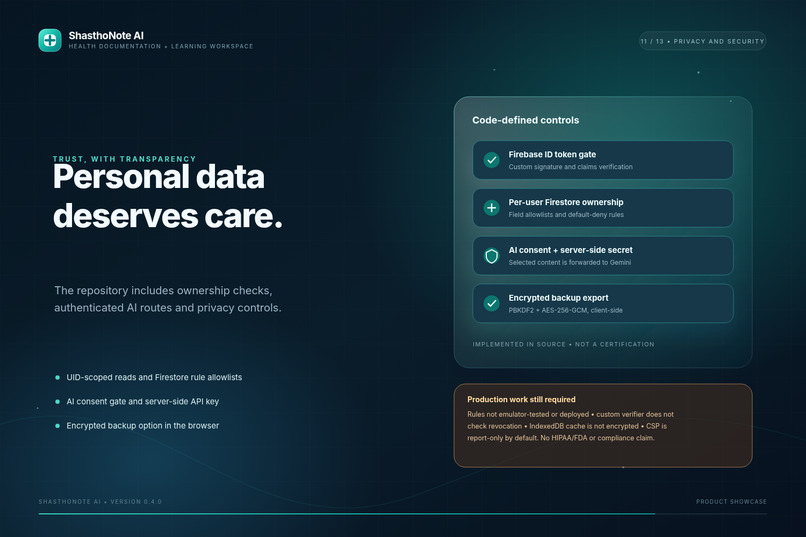
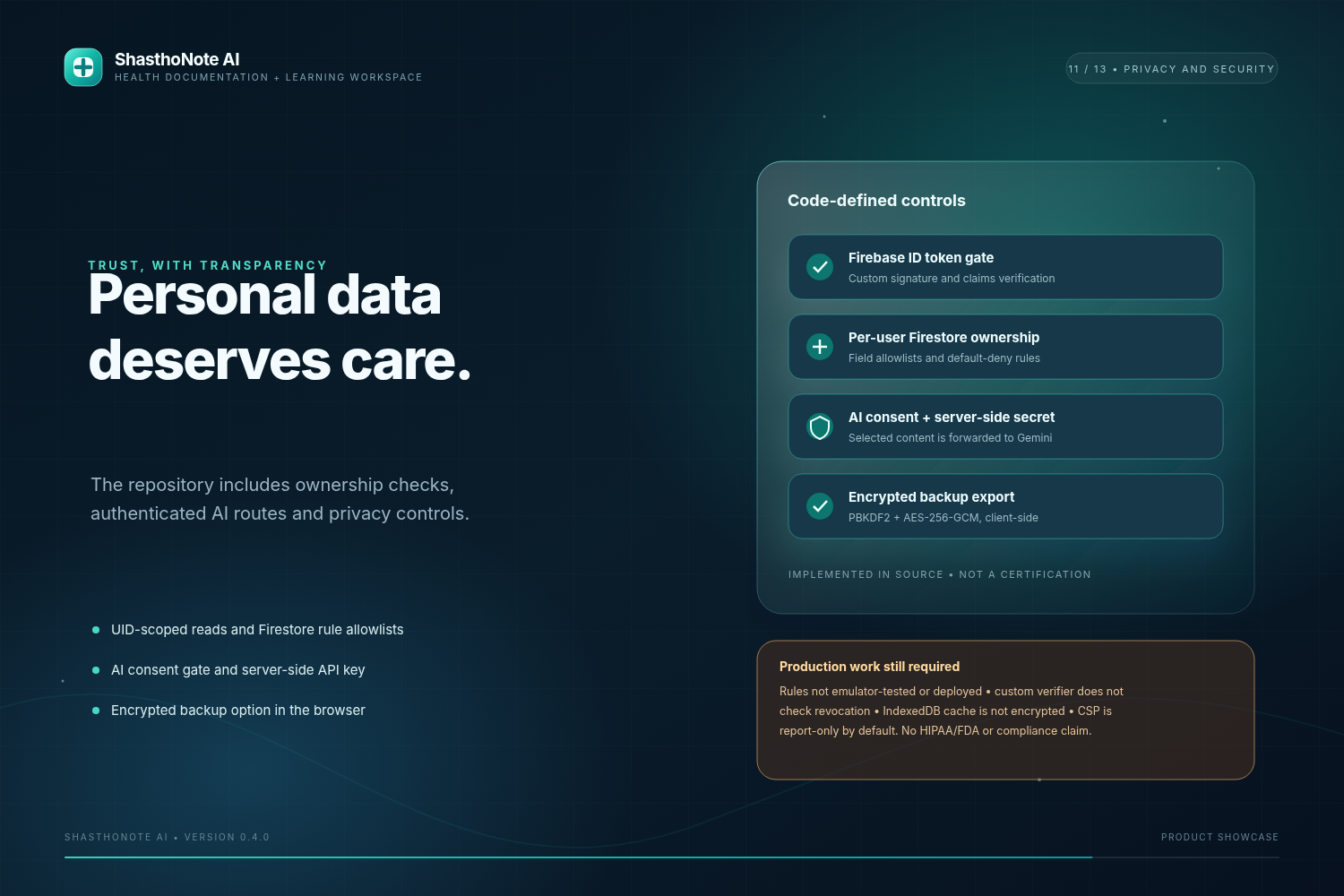
Explore authentication, data access controls, and server-side AI security considerations.
-
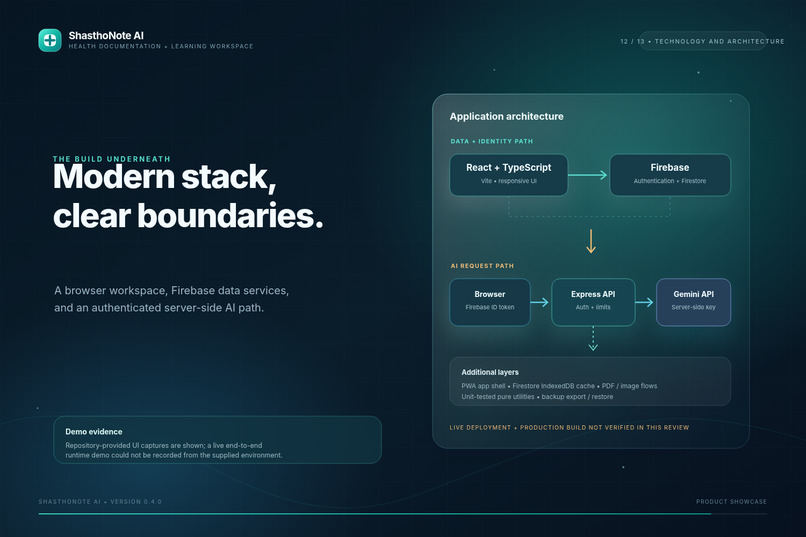
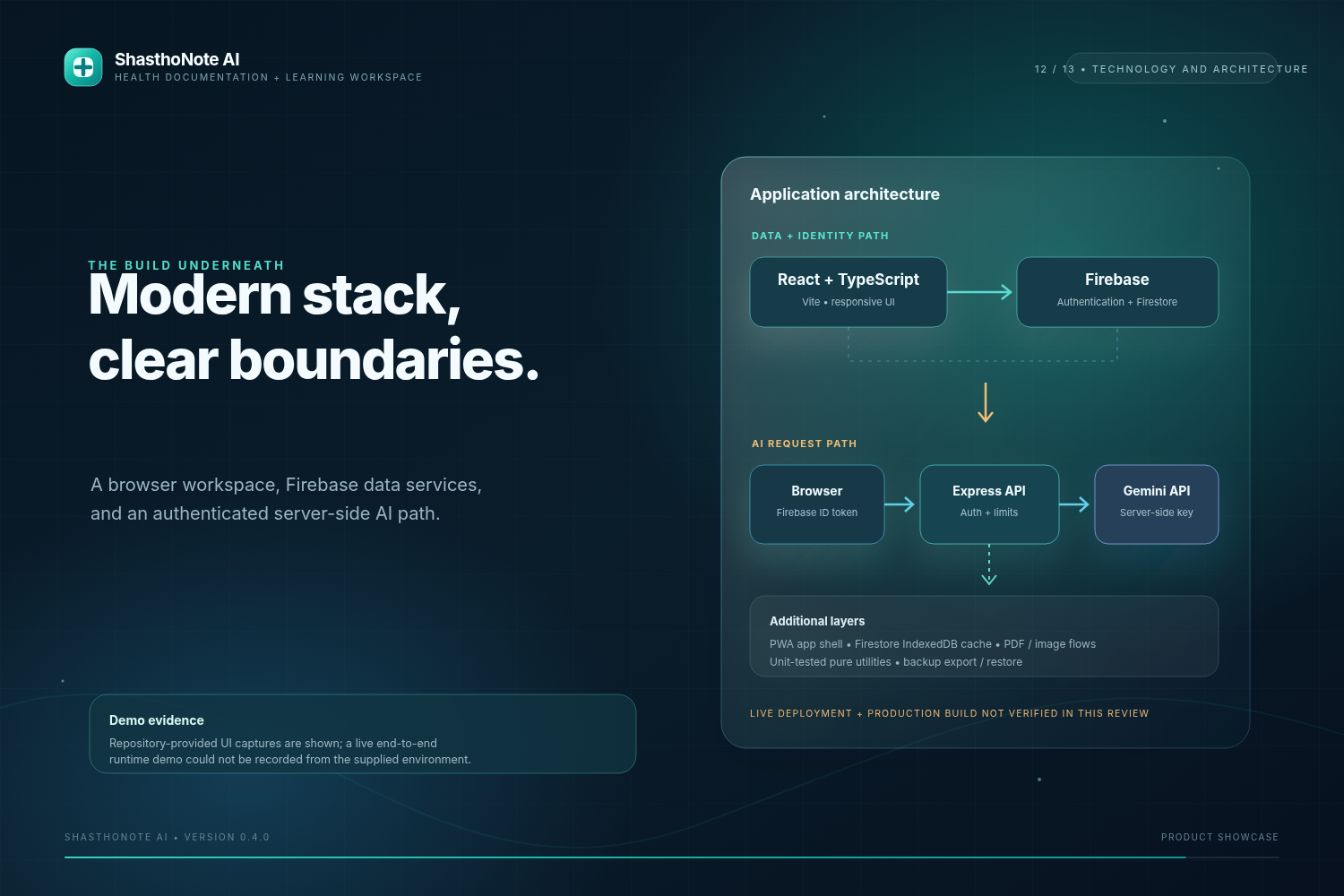
Built with React, Firebase, Express .
-
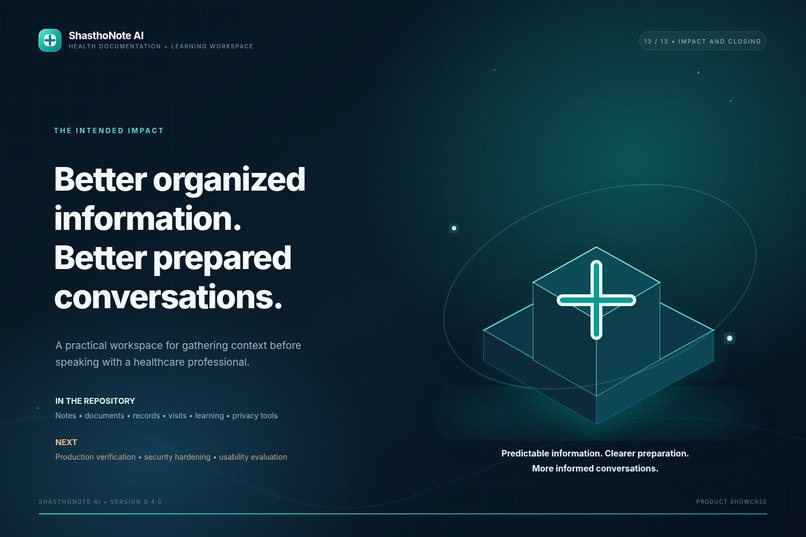
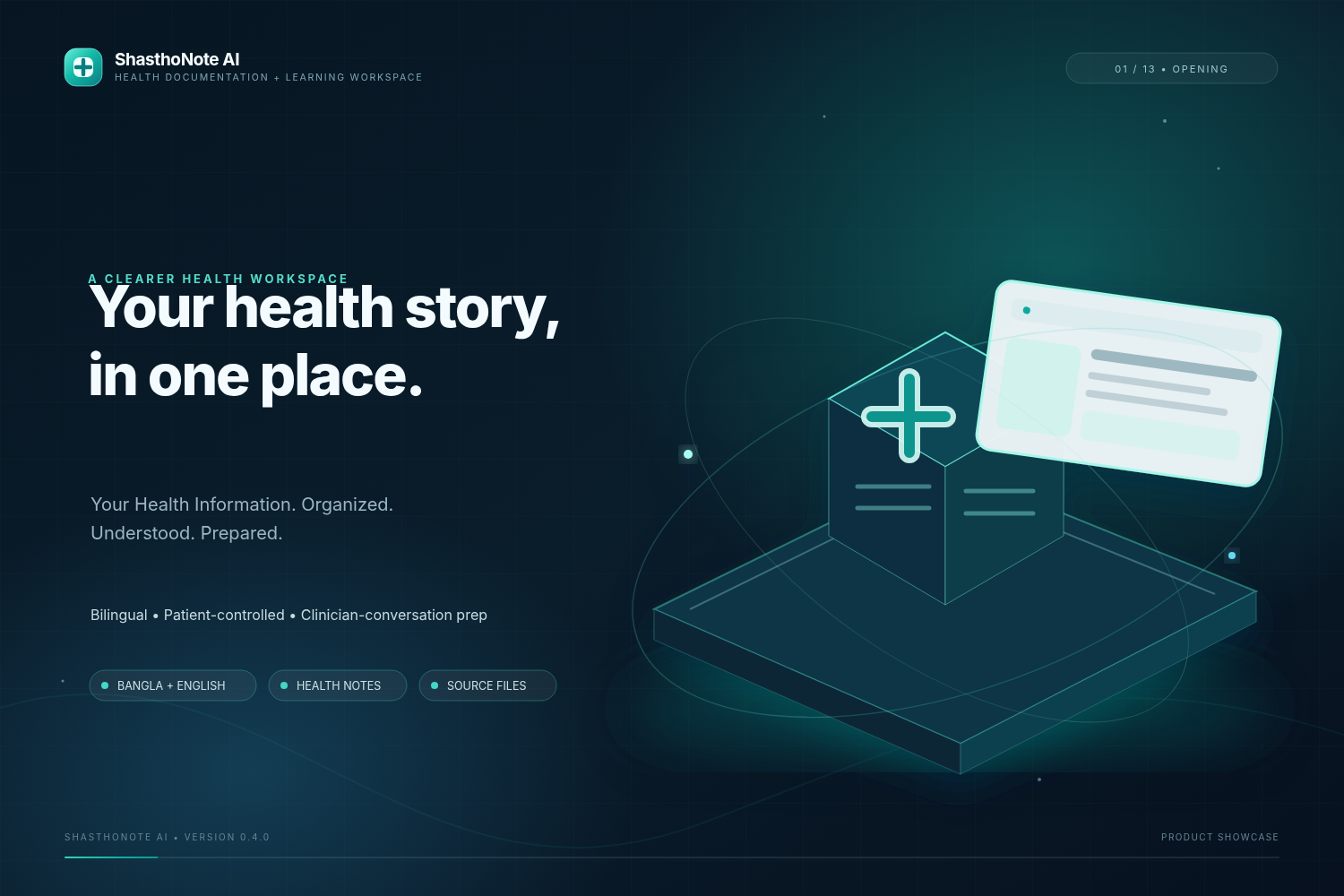
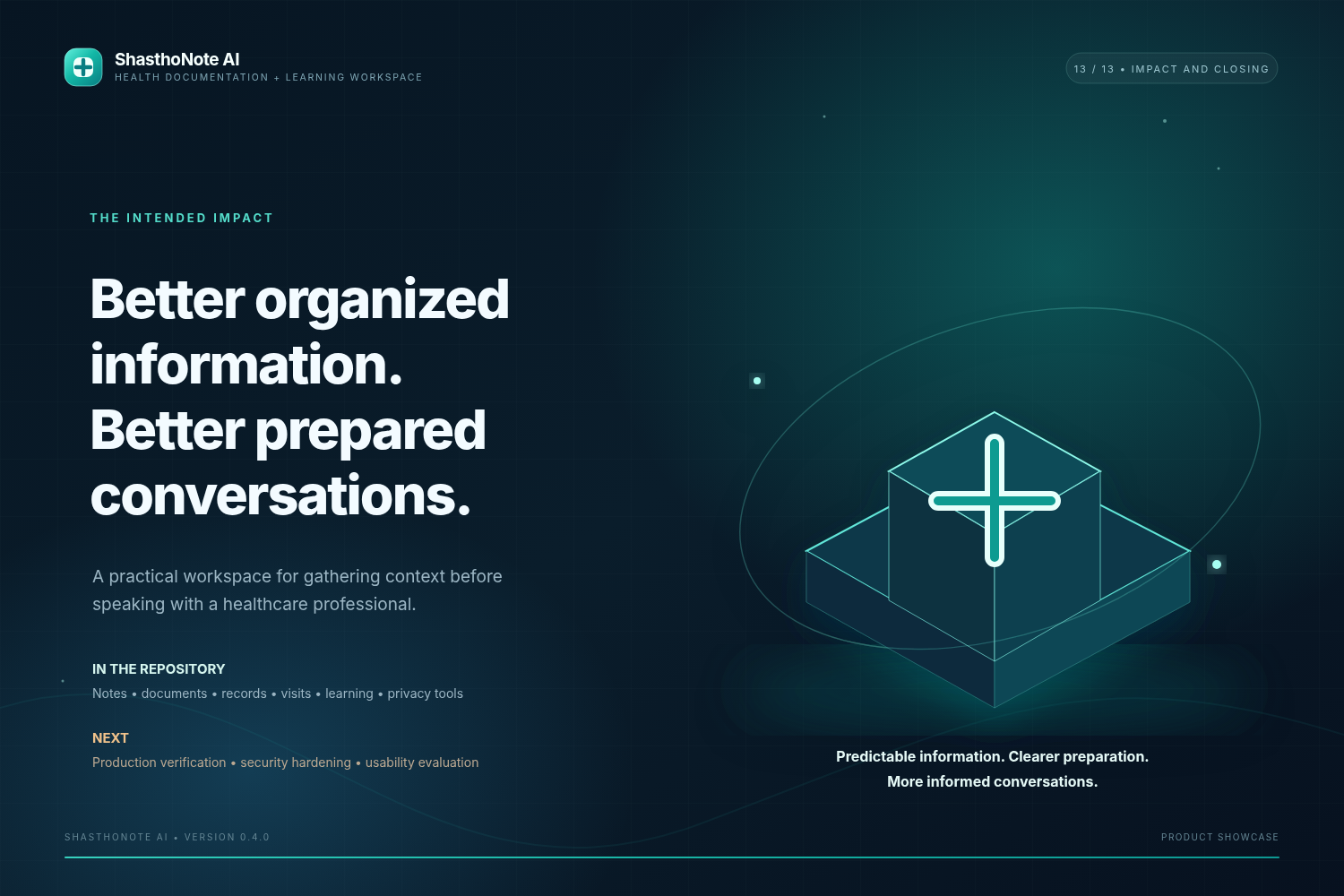
Better organized information. Better prepared conversations. Meet ShasthoNote AI.
Inspiration
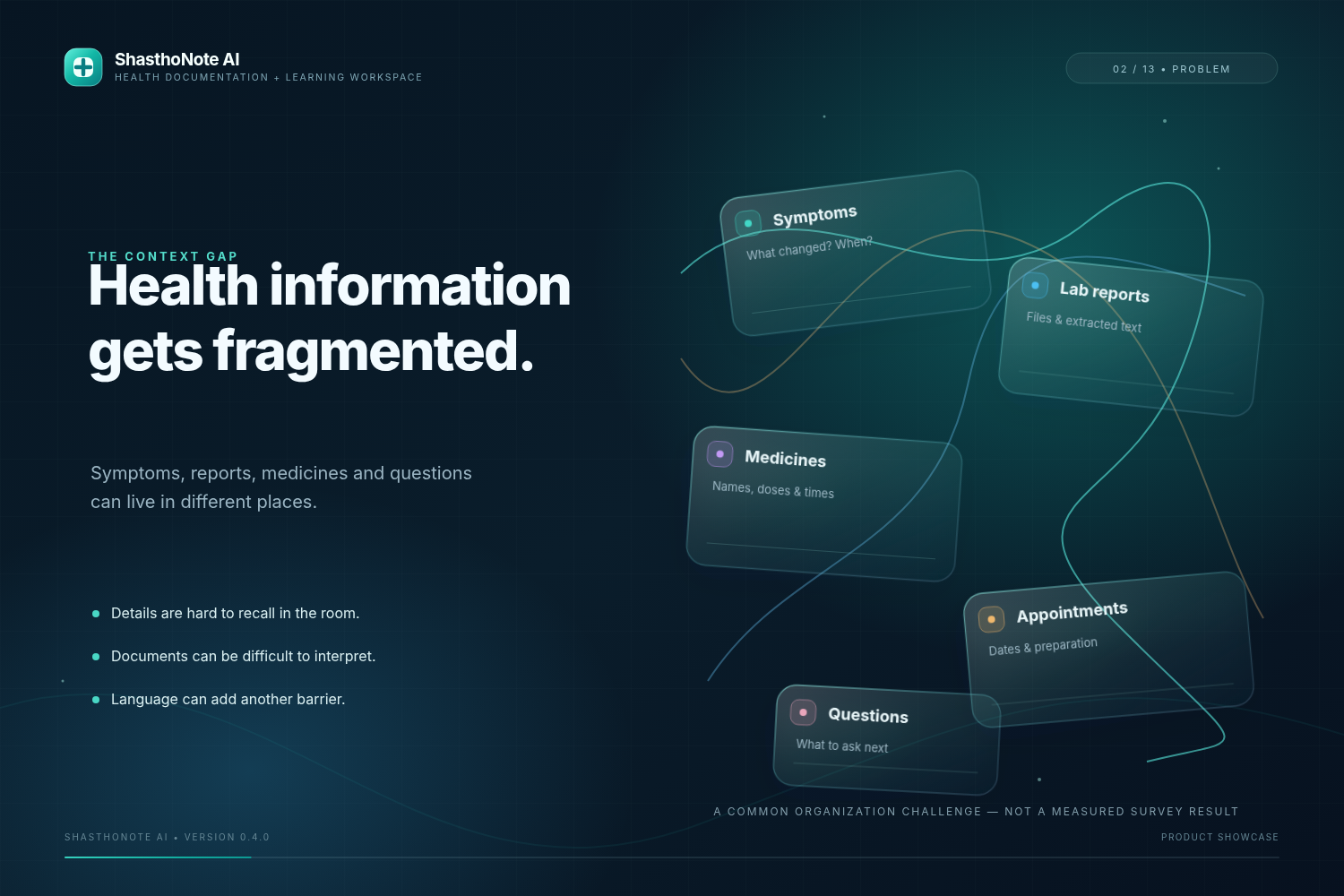
Health information is often scattered across medical reports, appointment notes, medication lists, and personal records. When visiting a healthcare professional, people may struggle to remember important details or explain their health concerns clearly.
This challenge can become even harder when people face language barriers or have difficulty understanding medical terminology.
I wanted to build something that could make organizing health information easier, particularly for people who communicate in Bangla and English.
That idea led to ShasthoNote AI — a bilingual health documentation and learning workspace designed to help people prepare for more informed conversations with healthcare professionals.
What it does
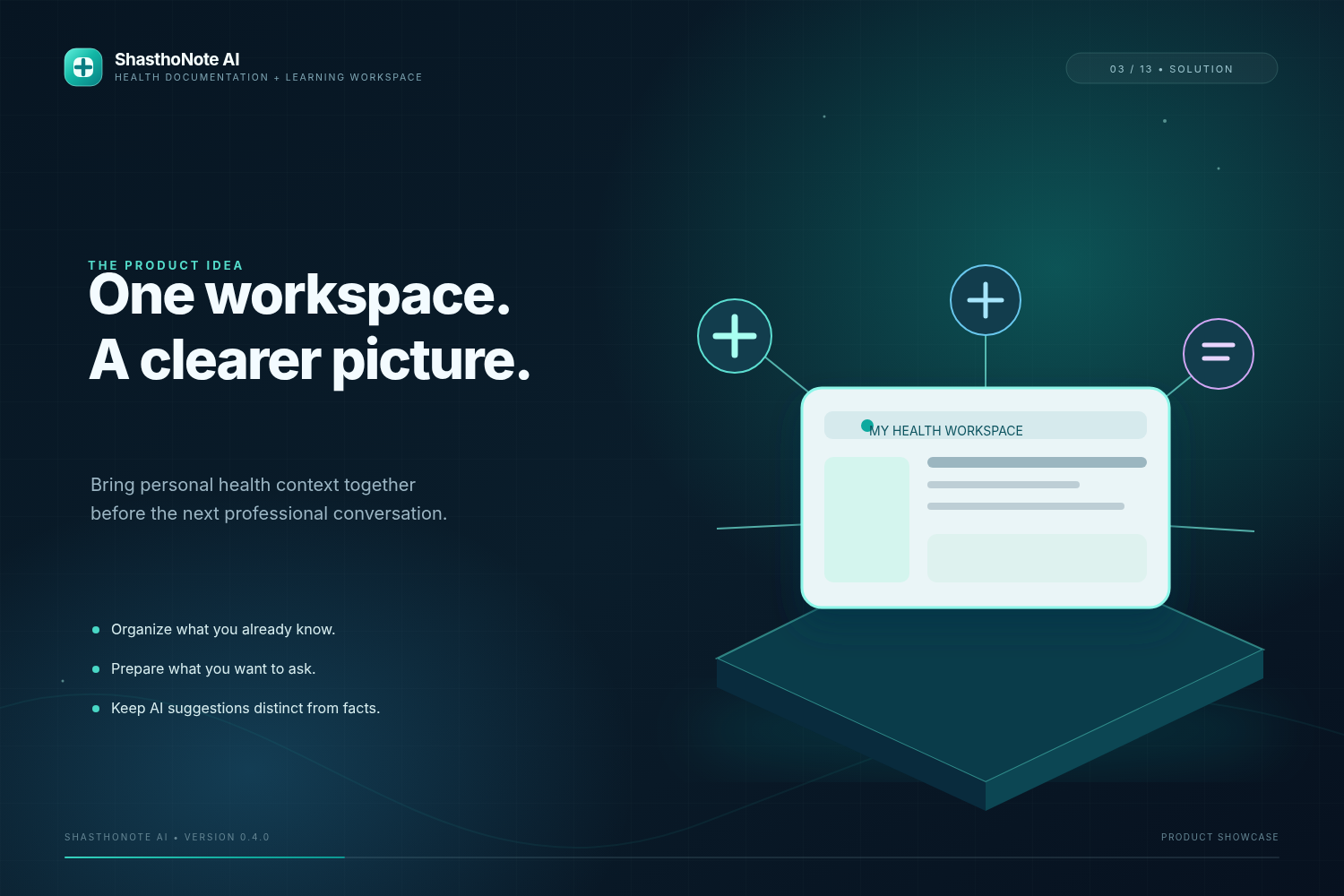
ShasthoNote AI brings several health organization tools into one workspace.
Its main features include:
- Consultation Notes: Record symptoms, health concerns, allergies, existing medications, and questions for healthcare professionals. AI can help turn selected notes into patient summaries and clinician-facing briefs.
- Medical Document Analysis: Submit PDF, image, or text-based medical documents for text extraction and AI-assisted explanations.
- Appointment Management: Organize healthcare appointments, connect consultation notes, and prepare printable visit summaries.
- Personal Health Tracking: Record blood pressure, glucose, weight, temperature, heart rate, and SpO₂ readings. View trends and export measurements.
- Medication Management: Maintain personal medication schedules and dose check-ins without providing prescriptions.
- Health Insights: Generate rule-based observations from saved measurements, medication schedules, appointments, and documents.
- Research & Learning: Use selected source material to create flashcards, quizzes, study guides, mind maps, and narration scripts.
- Privacy & Data Center: Manage personal records, export backups, restore validated backups, and review AI data-use information.
The interface supports both Bangla and English.
ShasthoNote AI is designed for documentation, organization, and learning. It does not diagnose diseases, prescribe medication, or replace qualified healthcare professionals.
How we built it
We built ShasthoNote AI using a modern full-stack architecture.
Frontend
- React 19
- TypeScript
- Vite 8
- Tailwind CSS 4
- Lucide React
Backend
- Node.js
- Express 4
- TypeScript
- Google Gemini API through the server-side
@google/genaiclient
Authentication and Database
- Firebase Authentication
- Cloud Firestore
- User-specific record ownership and queries
- Firestore IndexedDB persistence
Additional Engineering
- Progressive Web App manifest and service worker for static application assets.
- Browser-side password-protected backups using PBKDF2-SHA-256 and AES-256-GCM.
- Modular utility functions for health calculations, validation, trends, and data exports.
- Automated unit tests using Node.js's built-in test runner.
AI requests are handled through authenticated backend endpoints. The Gemini API key remains server-side rather than being exposed in the browser.
We also implemented a GitHub Actions CI workflow that automatically installs dependencies, checks TypeScript, runs the test suite, and builds the production frontend on pushes and pull requests targeting the main branch.
Challenges we ran into
One of the biggest challenges was handling different types of health information without treating every data point as automatically reliable.
For example, vital readings may contain invalid values, incomplete blood pressure measurements, or incorrect dates. We needed validation and consistent rules so that misleading information would not be presented as a current observation.
Another challenge was keeping guest demonstration data separate from authenticated users' personal records. We implemented separate guest storage and UID-based Firestore queries to maintain that separation.
AI reliability was another important consideration. Generated explanations and summaries can be incomplete or inaccurate, so we removed fabricated fallback responses and added clearer limitations around AI-generated content.
We also had to consider offline storage, backup integrity, authentication, request validation, and keeping sensitive API credentials out of frontend code.
These challenges pushed us to think beyond the interface and focus on data handling, maintainability, and responsible AI integration.
Accomplishments that we're proud of
We are particularly proud of bringing consultation preparation, document organization, personal tracking, and learning tools into one bilingual workspace.
Some accomplishments include:
- Building a working React and TypeScript application with a modular component structure.
- Integrating Firebase authentication and user-specific Firestore records.
- Implementing server-side Gemini API integration.
- Creating deterministic health insight calculations with validation for malformed and future-dated readings.
- Developing password-protected personal backup and restore functionality.
- Adding regression tests for important data-processing and validation logic.
- Establishing automated GitHub Actions CI.
Our latest GitHub Actions run successfully completed dependency installation, TypeScript type-checking, unit tests, and the production frontend build.
We are also proud that the project explicitly communicates what AI can and cannot do instead of presenting generated information as medical authority.
What we learned
Building ShasthoNote AI taught us that a useful AI-powered application requires much more than connecting an API to a user interface.
We learned about:
- Designing a full-stack application with clear frontend and backend responsibilities.
- Managing authenticated user data and separating guest information.
- Using validation and deterministic calculations alongside generative AI.
- Handling unreliable or incomplete input data.
- Protecting API credentials and considering privacy throughout the development process.
- Writing regression tests and using continuous integration to catch technical problems.
- Communicating product limitations honestly, especially in a healthcare-related application.
Most importantly, we learned that responsible AI development means understanding when automation is useful and when human judgment must remain essential.
What's next for ShasthoNote AI
There is still significant room to improve ShasthoNote AI.
Our next priorities are:
- Stronger Security: Complete Firebase Emulator testing, improve token verification, and strengthen production security controls.
- Better AI Reliability: Evaluate document extraction and generated summaries using carefully prepared synthetic test data.
- Improved Accessibility: Make the bilingual experience easier to use for people with different levels of digital and medical literacy.
- Clinical Feedback: Seek feedback from qualified healthcare professionals before considering any clinical-facing capabilities.
- Better Testing: Introduce browser-based end-to-end tests and more comprehensive integration testing.
- Production Readiness: Improve deployment monitoring, API abuse protection, privacy documentation, and operational reliability.
Our long-term goal is to make ShasthoNote AI a more accessible and trustworthy health information organization tool, helping people prepare better for conversations about their health.
ShasthoNote AI — Organize Better. Understand More. Communicate Clearly.
Development Transparency
AI-assisted development tools were used for selected implementation, debugging, and documentation tasks. I reviewed and adapted development suggestions and used automated tests and CI checks to validate the project. AI-generated health content is provided as assistance, not as a substitute for professional medical judgment. No clinical validation is claimed.
Built With
- app
- cloud-firestore
- css3
- express.js
- firebase
- google-gemini-api
- html5
- javascript
- node.js
- progressive
- pwa
- react
- rest-api
- tailwind-css
- typescript
- vite
- web

