-
-
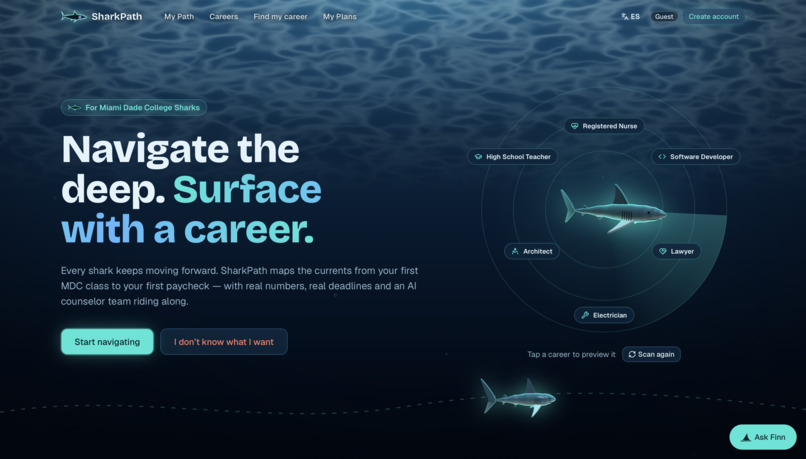
Home Page
-
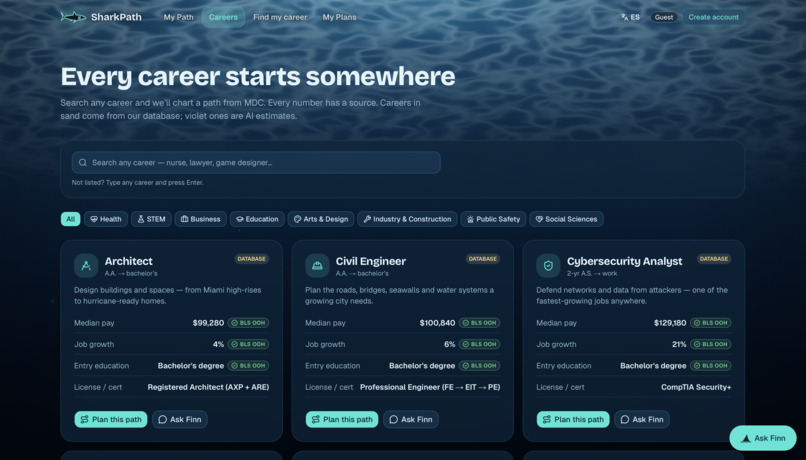
Career Options Page
-
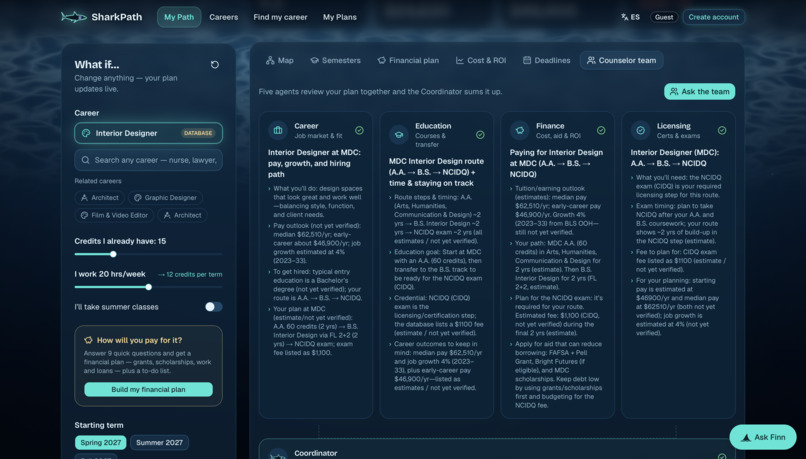
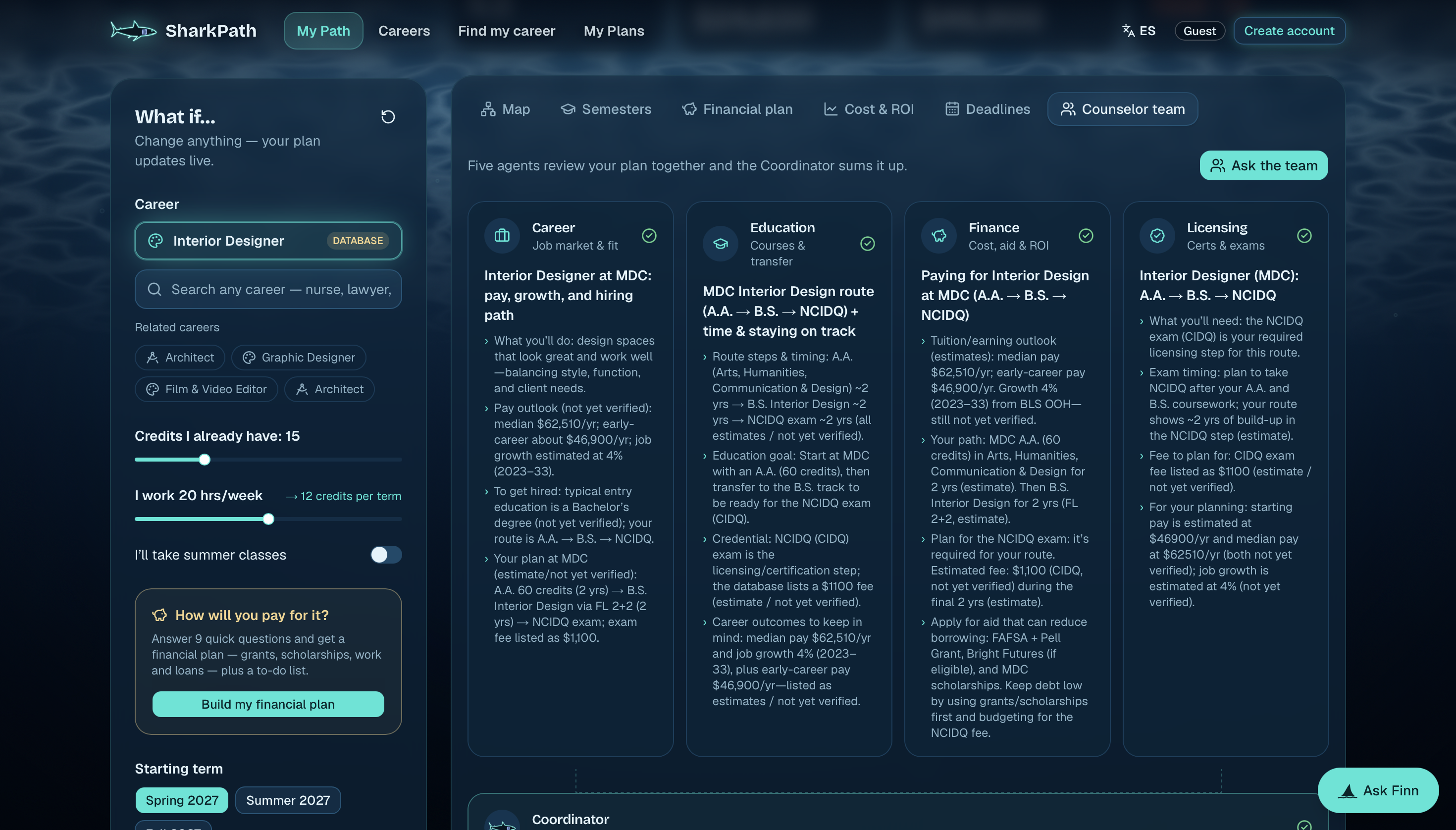
Swarms AI Advisor Portfolio
-
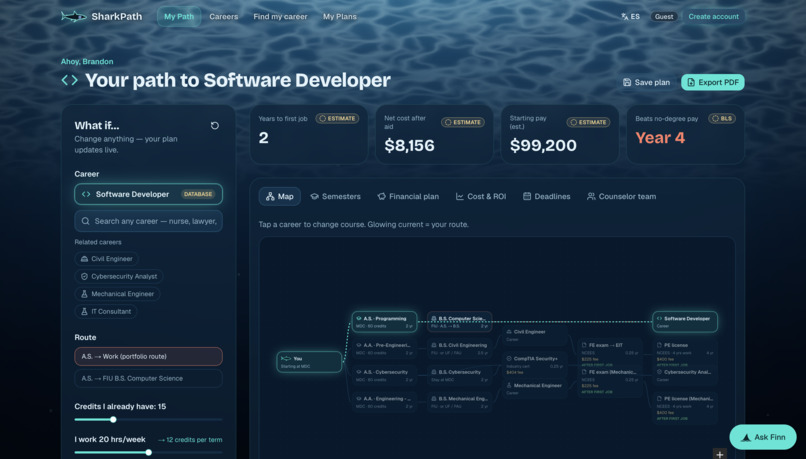
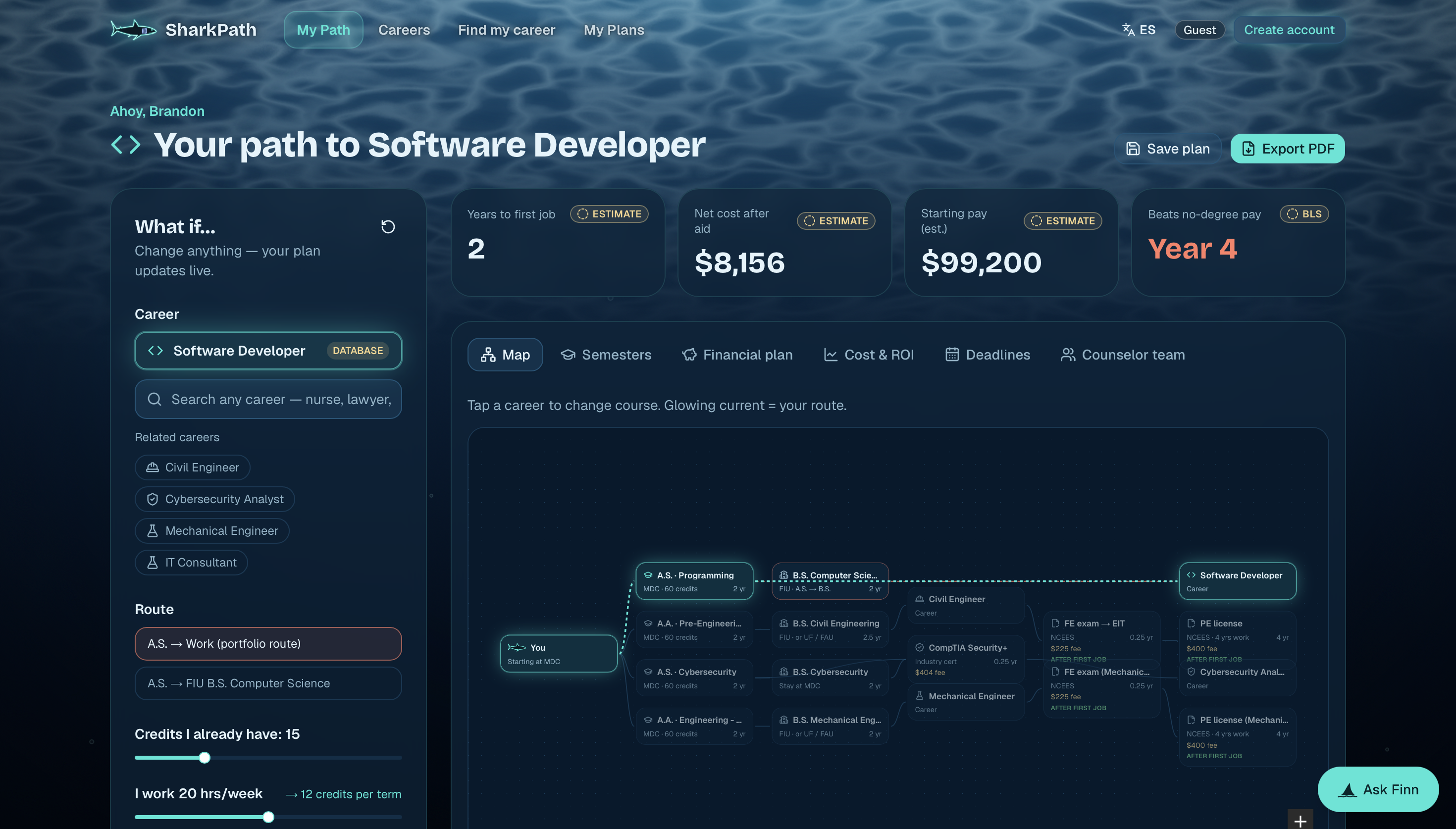
Career Path Portfolio
-
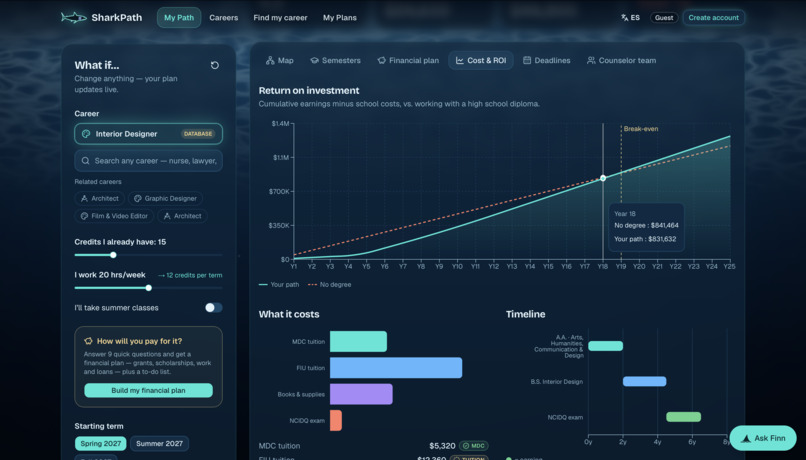
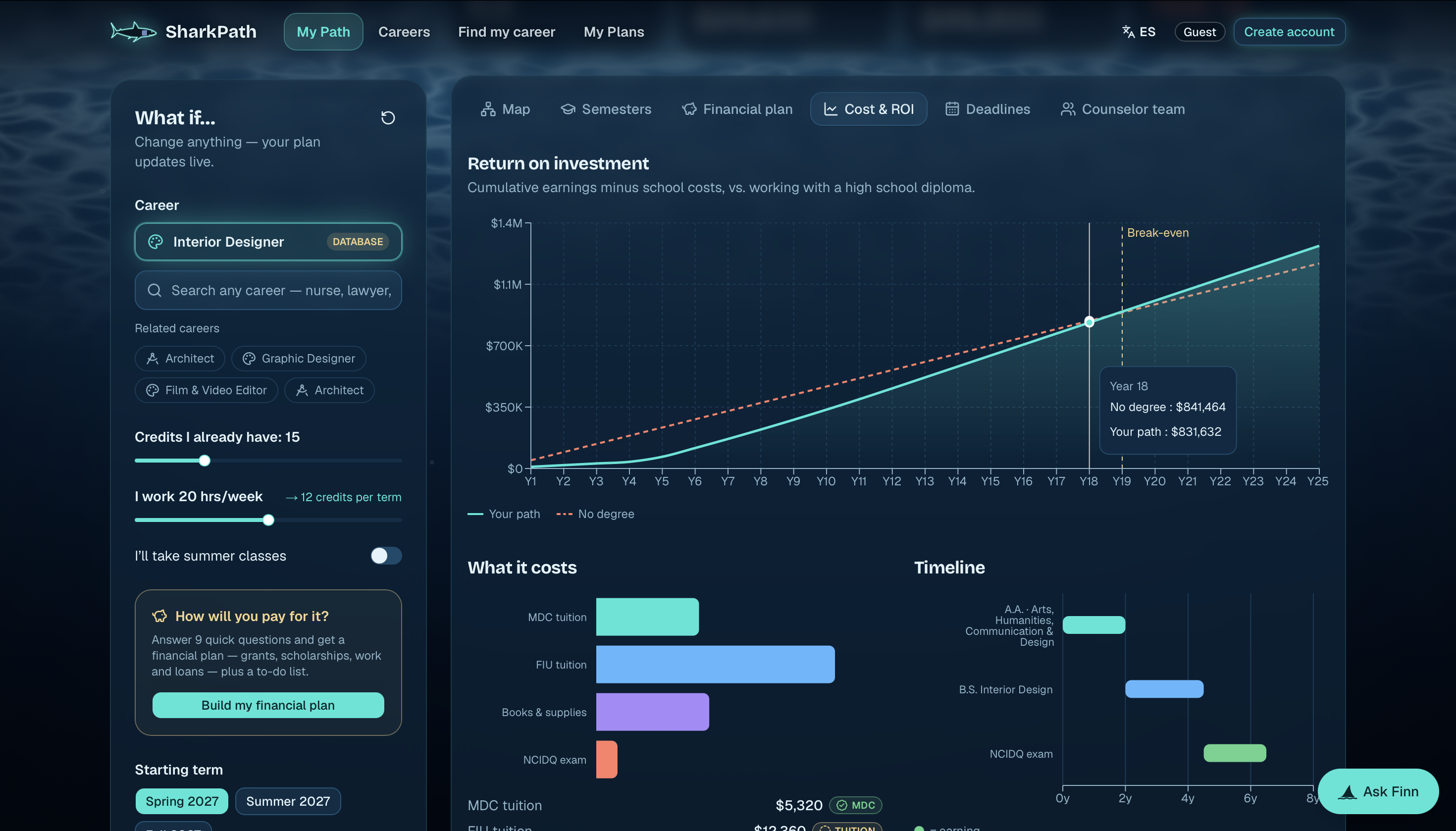
Return On Investment Portfolio
-
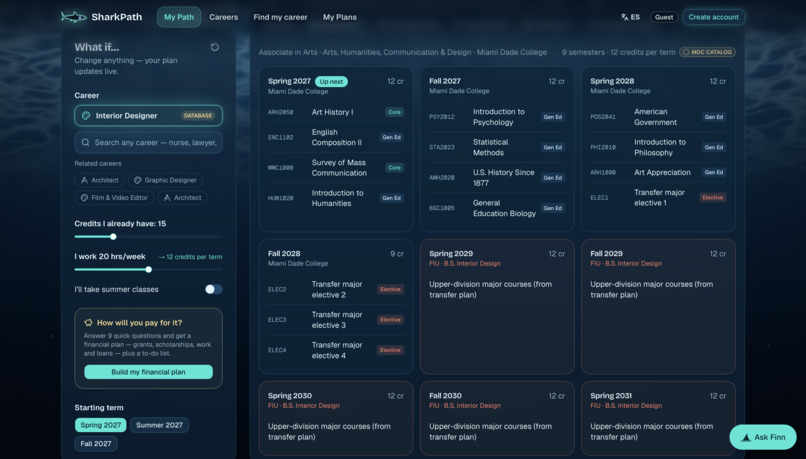
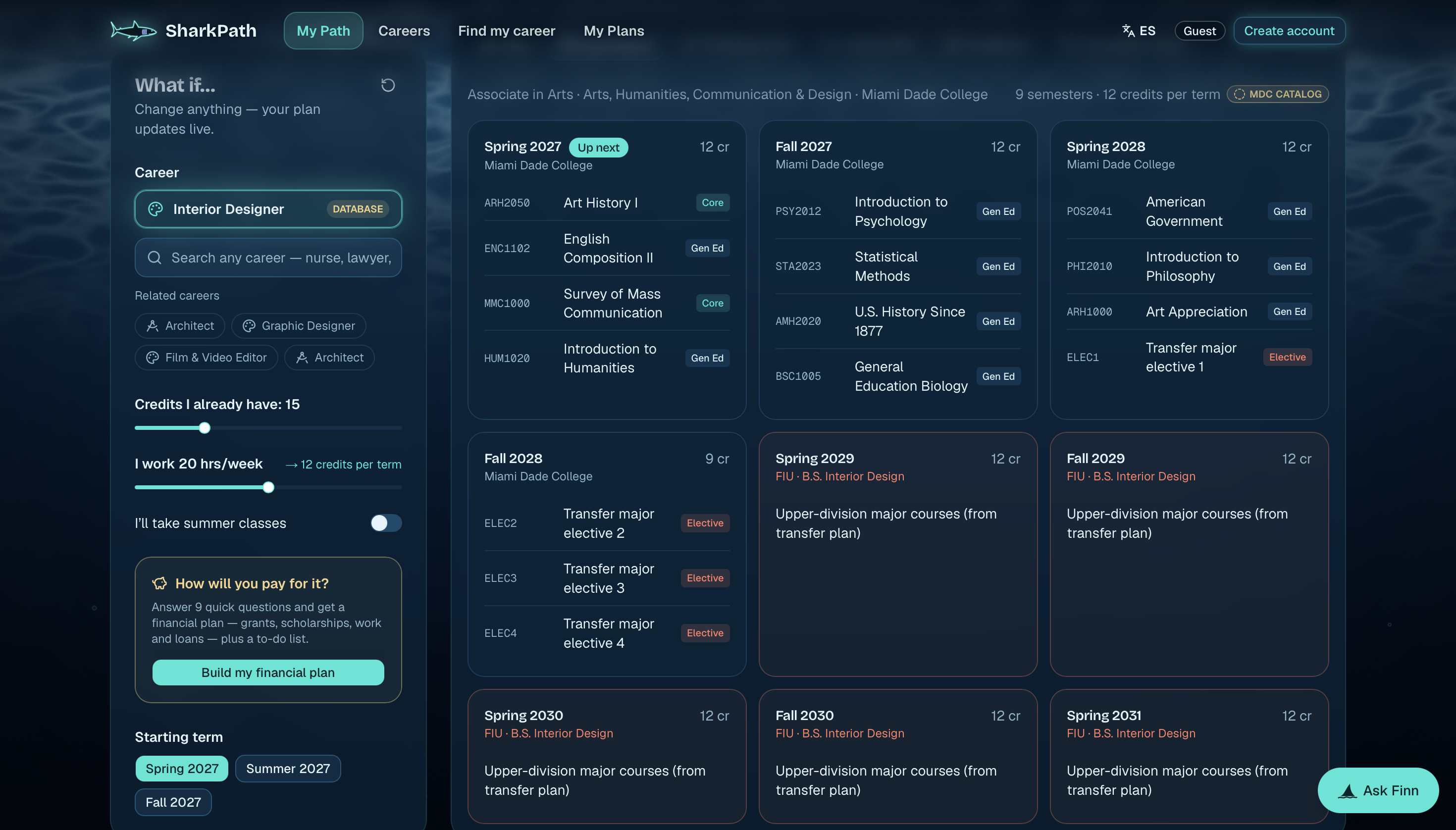
Future Classes For Career Page
-
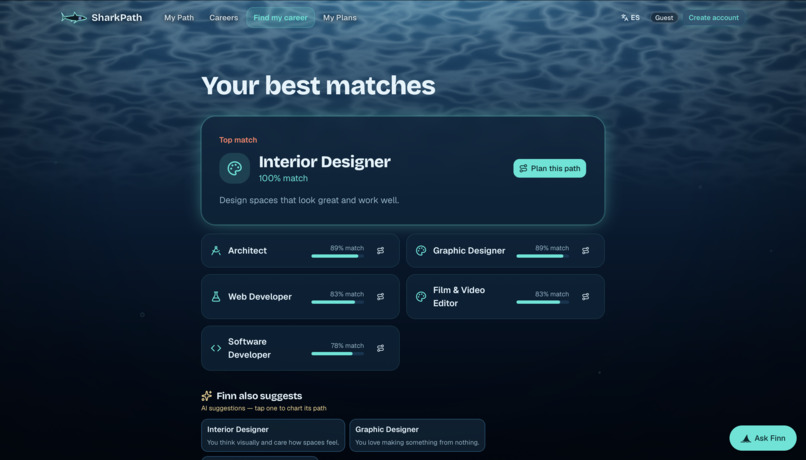
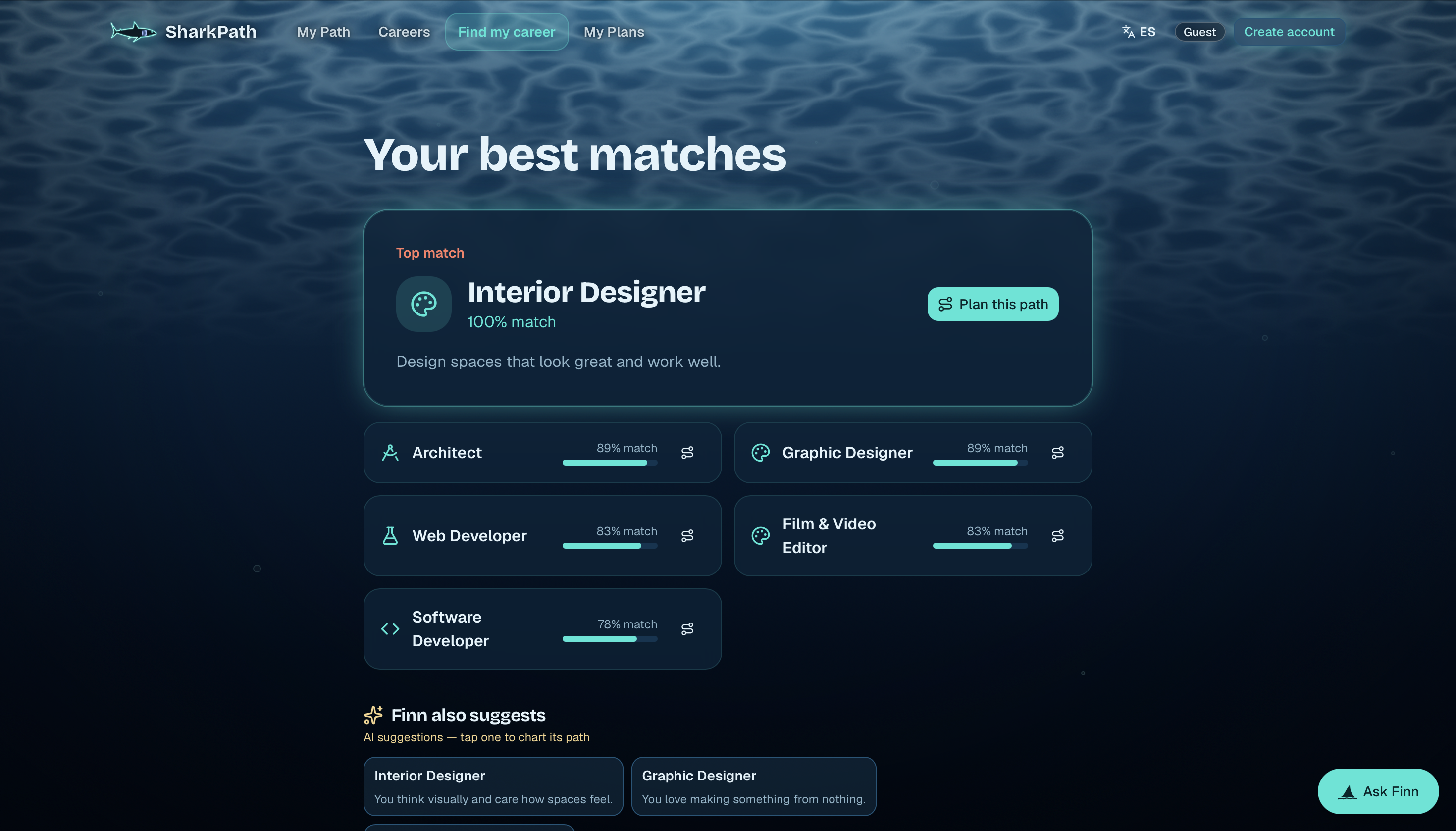
Best Matches For Your Career Page
-
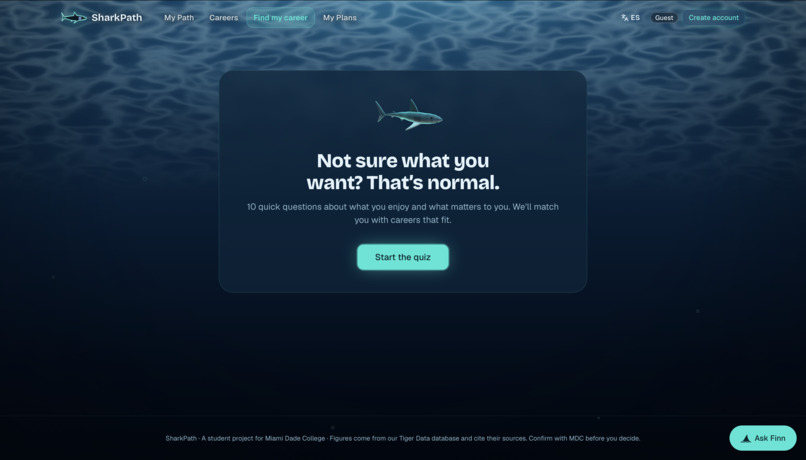
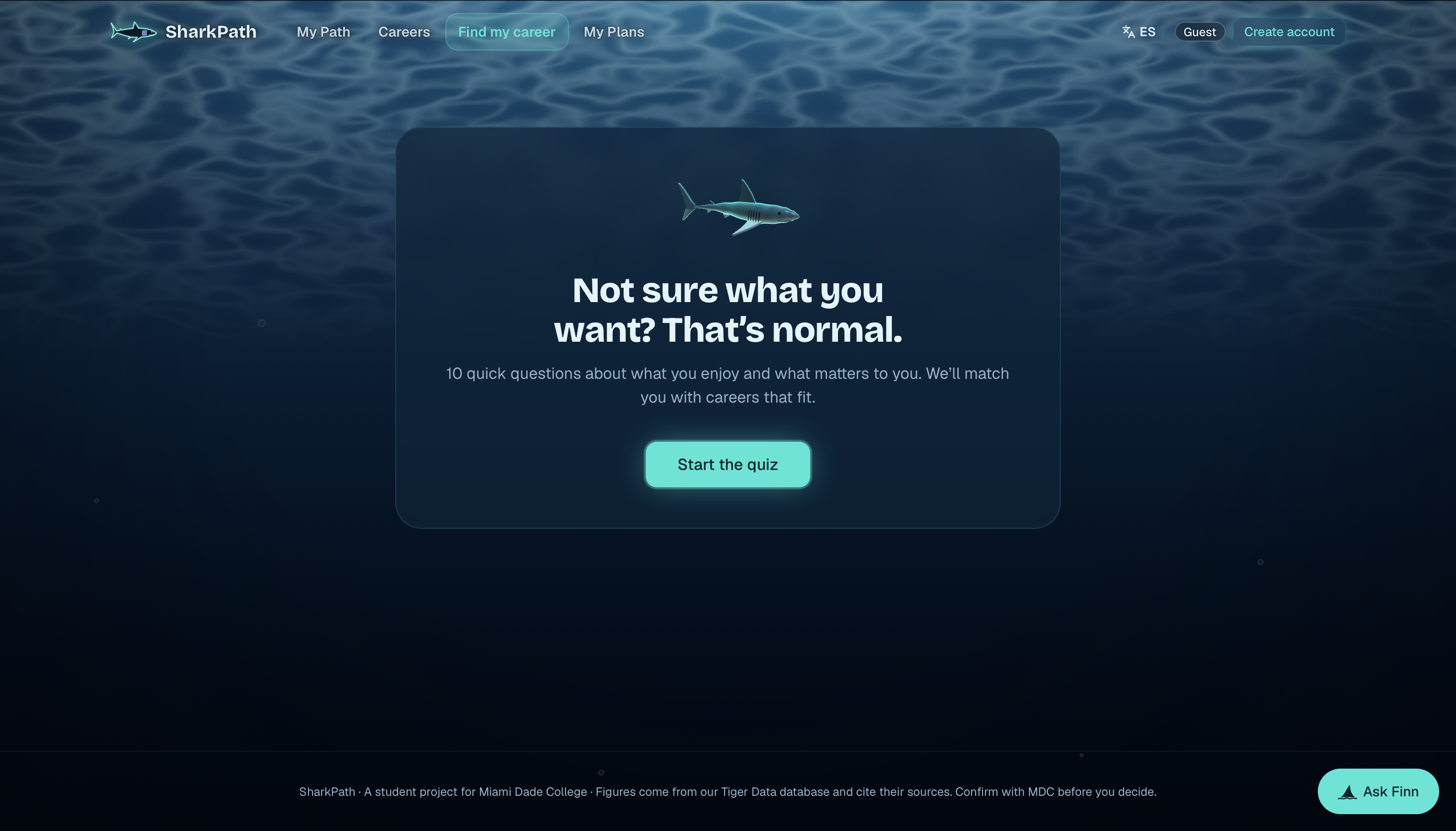
Future Career Quiz Starting Page
-
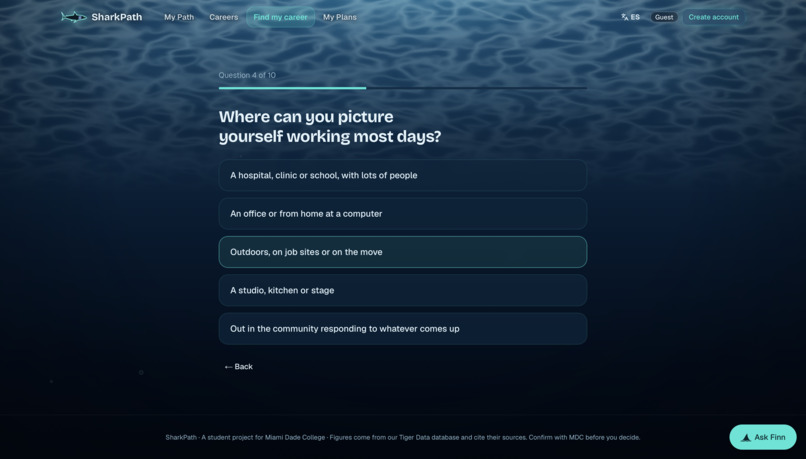
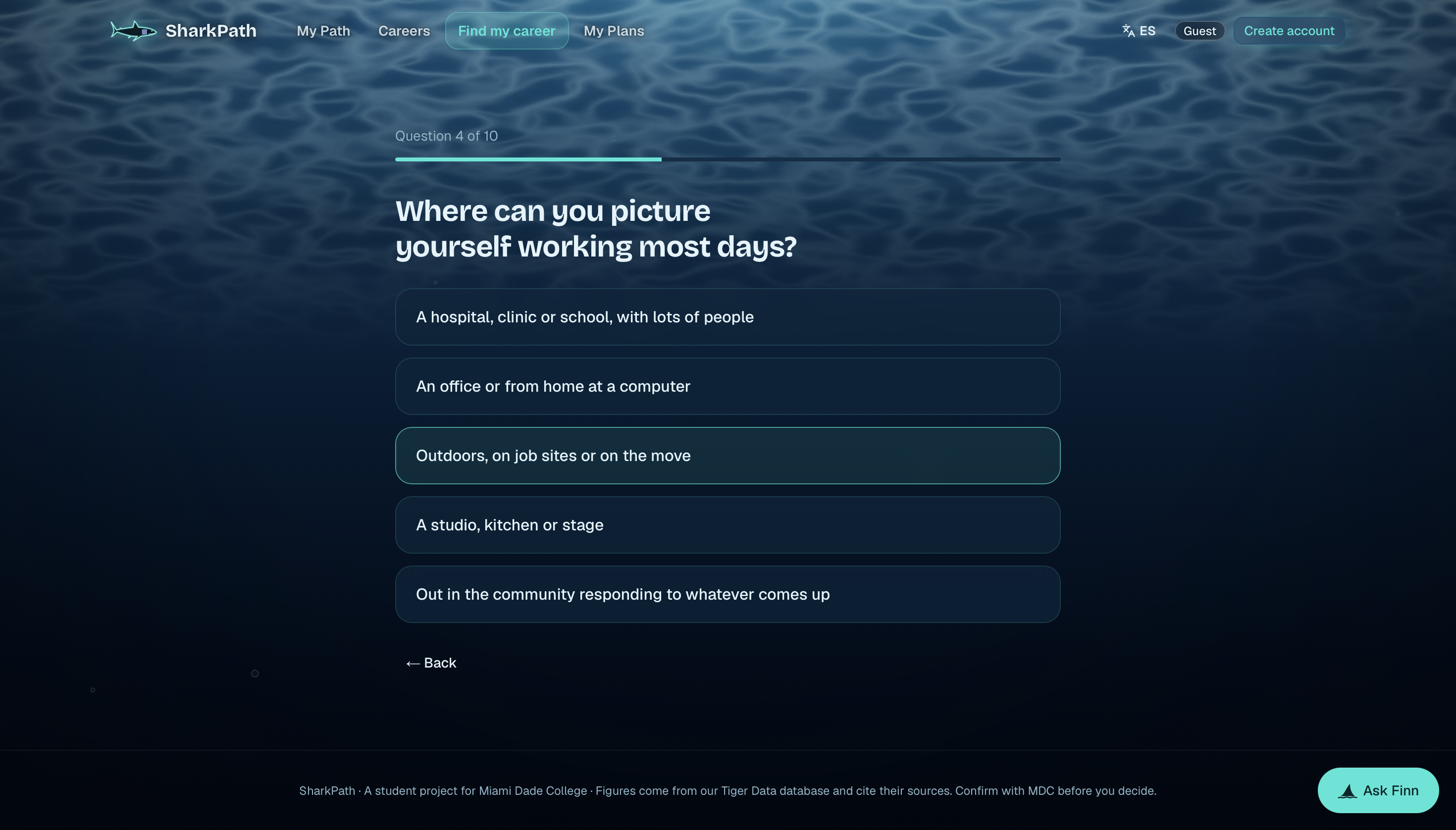
Career Quiz Questions page
-
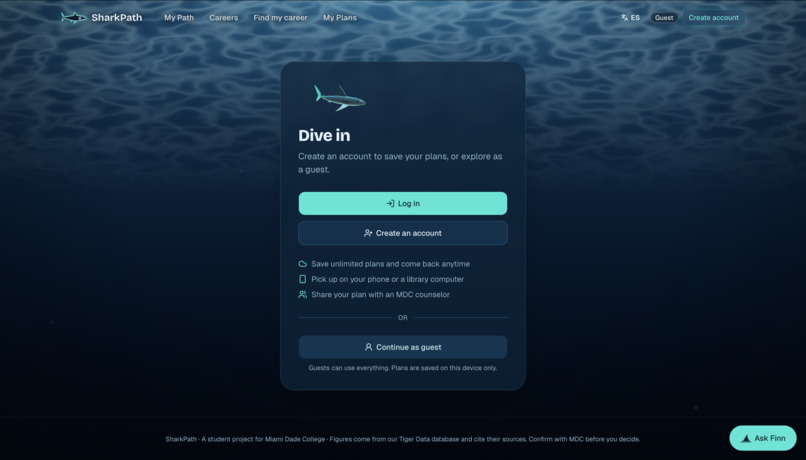
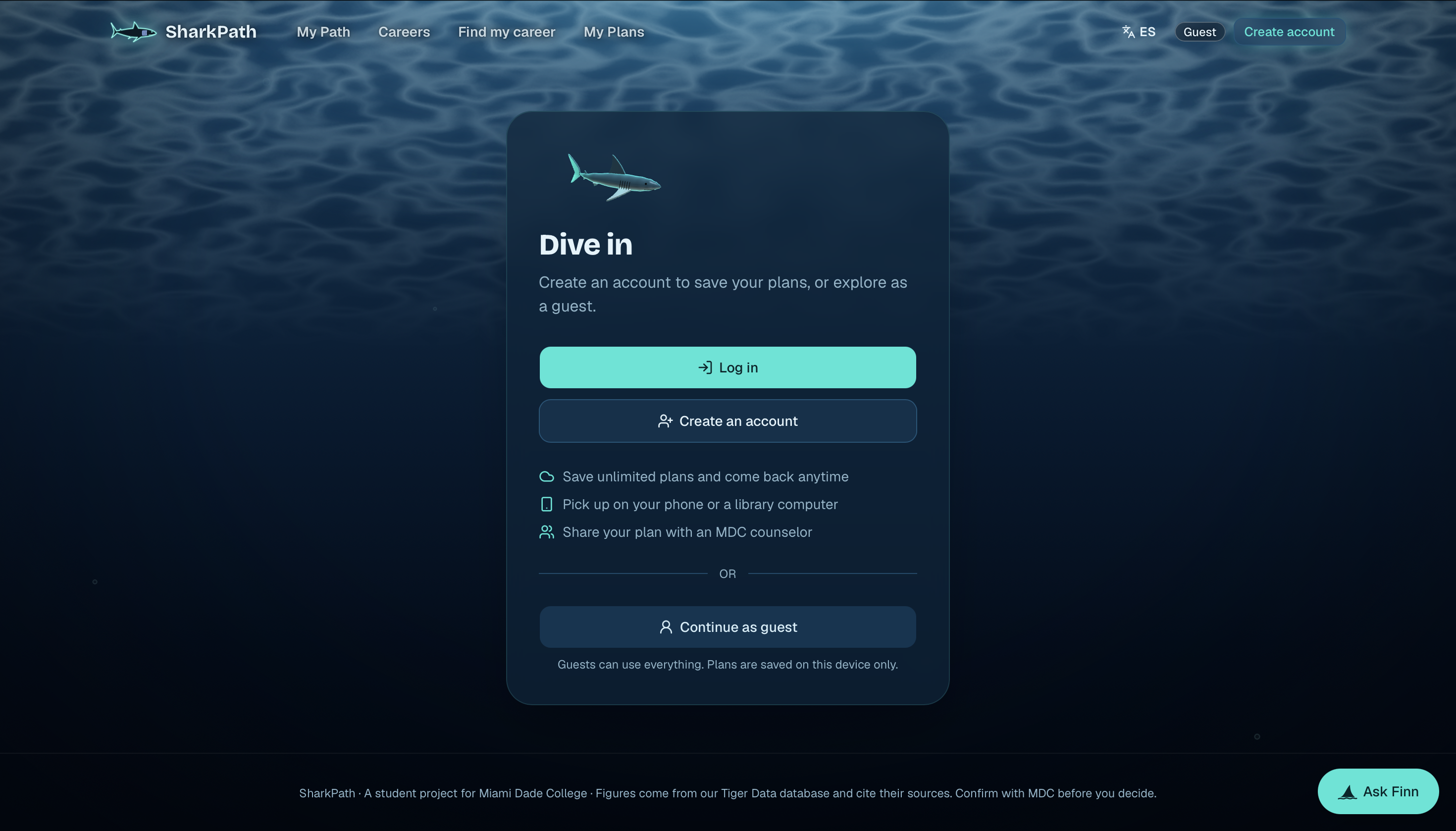
Sign Up/Login Page
Inspiration
Every semester, Miami Dade College students say "I want to be an architect" or "I want to work in cybersecurity" and then hit a wall of questions: Which MDC program do I start with? Where do I transfer? What exams do I need? How long will it take, and what will it cost? The answers exist, but they're scattered across catalogs, university sites, licensing boards, and labor statistics. Many of us on the team have lived that confusion, so we wanted to build the guide we wish we'd had: one place that turns a career goal into a clear, honest plan that starts at MDC.
What it does
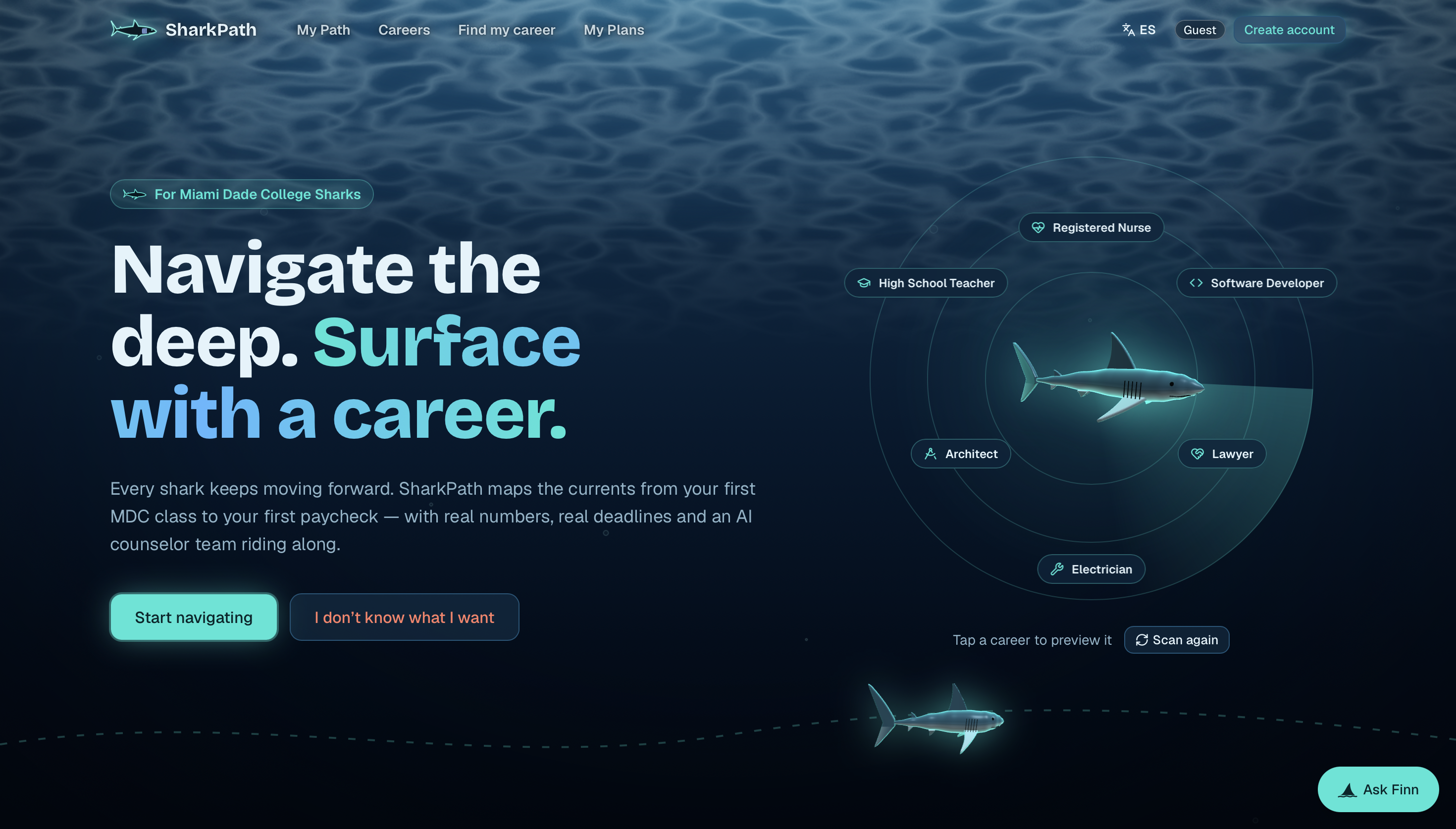
SharkPath turns a career goal into a personalized, step-by-step roadmap that begins at Miami Dade College.
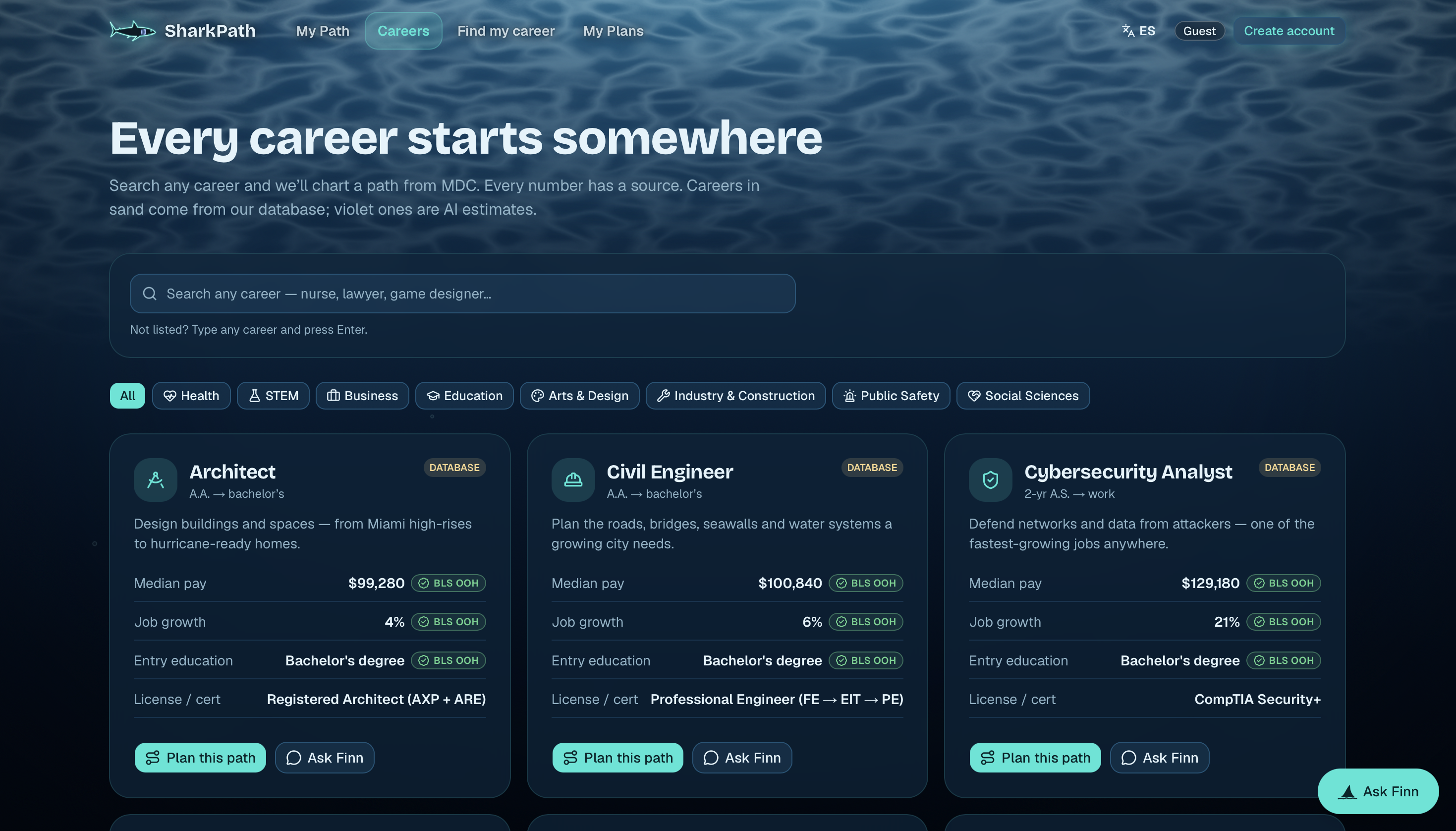
- Pick or discover a career. Choose from 36 careers, search for any career, or take the "Find my career" quiz if you're not sure yet.
- See your route on a map. Each pathway appears as a transit-style line: MDC programs, transfer options, certifications, licensing exams, and points where you can start working early.
- Plan with "What if…" controls. Set credits you already have, hours you work per week, and summer classes, and your time to first job, net cost, and return on investment update live.
- Trust the numbers. Every figure shows its source. Verified figures link to official pages like MDC, the Bureau of Labor Statistics, NCARB, NCEES, and CompTIA, with the date we checked them. Anything we couldn't confirm is clearly labeled as an estimate.
- Ask Finn. Our AI counselor answers questions in English or Spanish, using only SharkPath's sourced data, and points students to an MDC advisor for big decisions.
- Meet your Counselor Team. Four AI counselors (Career, Education, Finance, and Licensing) analyze your path in parallel, and a coordinator turns their reports into next steps for this week, this semester, and later.
- Save and export. Log in to save and compare plans, export a PDF, and track deadlines.
How we built it
- Frontend: Next.js, TypeScript, Tailwind CSS, and shadcn/ui, with React Flow for the pathway map, Recharts for cost and ROI charts, Zustand for live what-if state, and next-intl for English/Spanish.
- Database (Tiger Data): A managed Postgres database holds careers, programs, 383 courses, stages, routes, sources, deadlines, saved plans, and cached AI reports. API routes rebuild each career from its tables in the exact shape our app's types expect.
- AI (Gemini + Swarms): Finn runs on Gemini, with an automatic fallback to a lighter model when the main one is busy. The Counselor Team runs on the Swarms API as four parallel agents plus a coordinator. Both get the same shared block of sourced facts, so they always quote the same numbers.
- Auth (Auth0): Secure login with email/password or Google, so saved plans follow a student across devices.
- Hosting: Deployed on Vercel.
Cost estimates add up each stage of the route, so a student's total cost is
$$\text{Total cost} = \sum_{\text{stages}} \text{credits} \times \text{cost per credit} + \text{fees} - \text{aid}$$
Challenges we ran into
- Getting the data right. We checked about 35 official pages and found 13 figures in our first draft were outdated, mostly 2023 numbers that had newer 2025 data. Some official pages blocked automated reading, so those figures stay labeled as estimates until a person confirms them by hand.
- Careers that don't fit neatly. "IT consultant" isn't an official occupation, so we based it on BLS's closest match, Computer Systems Analysts, and say so in the app. We also learned that mechanical and civil engineers don't need a license for their first job, so we moved licensing after the first job instead of making the path look years longer.
- AI reliability. Gemini hit high demand and quota limits during testing. We added a second model, time limits, and built-in fallback answers, so students always get a reply.
- Privacy with caching. Saved Counselor Team reports are shared by everyone viewing a career, so we made sure they never include one student's personal details.
- Learning the tools. For some of us, this was our first time using Git branches, pull requests, environment variables, and production deploys under a deadline.
Accomplishments that we're proud of
- All five careers from MDC's challenge (architect, mechanical engineer, chef, cybersecurity specialist, and IT consultant) are covered, with key figures verified from official sources.
- The app never shows a blank screen: if the database, Gemini, or Swarms fails, it falls back gracefully.
- Saved Counselor Team reports load in about 0.1 seconds instead of 6–8, and rate limits protect our AI credits.
- Full English and Spanish support for Miami's students.
- We were honest about uncertainty instead of labeling everything "verified."
What we learned
We learned that the hardest part of a career tool isn't the AI, it's the data. A confident-sounding wrong number does more harm than an honest "estimate." We also learned how to design for failure, how to keep AI grounded in real sources, and how to coordinate four people's work through branches and pull requests.
What's next for SharkPath
- Verify the remaining figures (entry pay, program credits, transfer timelines) with MDC advisors.
- Add every MDC program and more transfer partners.
- Give MDC staff an easy way to update programs and costs.
- Add a counselor view so advisors can review students' saved plans.
- Launch on a custom domain and pilot it with real MDC students.
Built With
- api
- auth0
- claudecode
- css
- data
- flow
- gemini
- github
- jspdf
- next-intl
- next.js
- node.js
- postgresql
- react
- recharts
- shadcn/ui
- swarms
- tailwind
- tiger
- typescript
- vercel
- zod
- zustand
