-
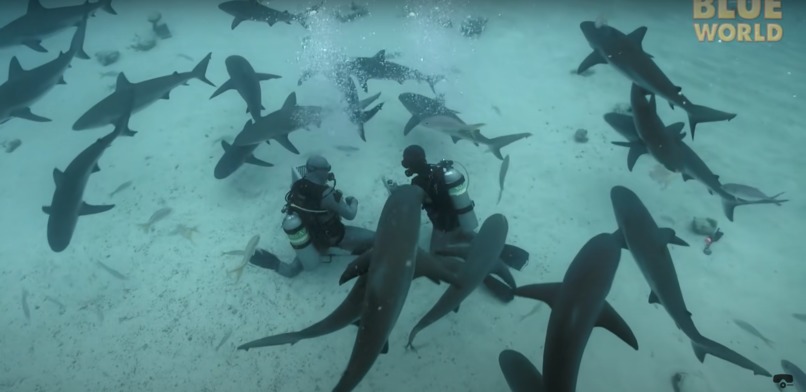
Shark feeding on the Bahamas: Divers regularly feed sharks which leads to interesting swarm-like patterns.
-
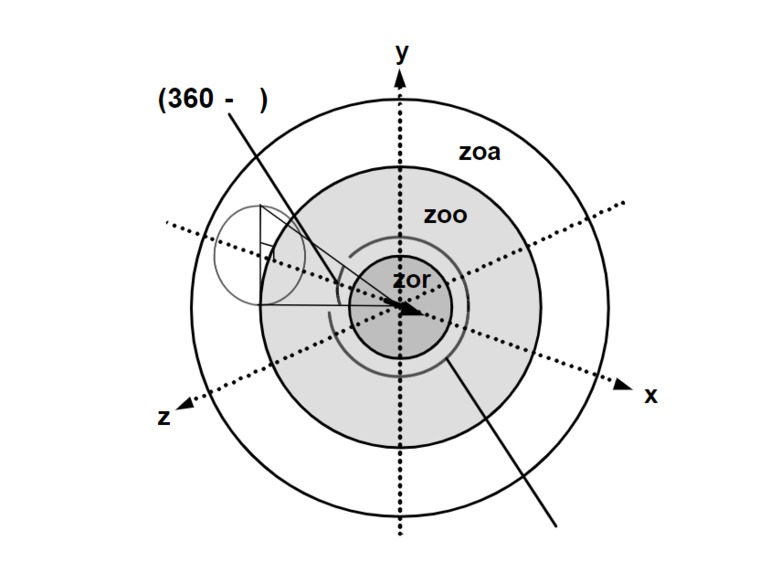
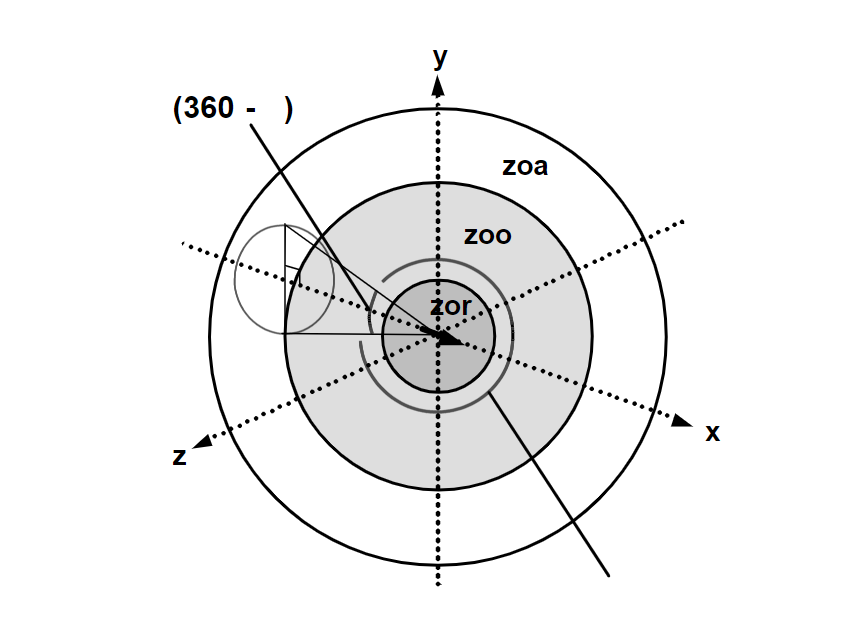
Each individual shark is modeled with three "zones" of interaction: Zone of repulsion (zor), orientation (zoo) and attraction (zoa).
Shark Art-tack
Ancient creatures roam through the depths and breadths of ocean basins. Their size, their jaws, their might, and their electroreceptive abilities are some of the qualities that inspire both awe and fear of these apex predators. But how do sharks go about in their predation?
In contrast to cultural depictions of the lone hunter, many shark species hunt collectively. Ecologist Mourier argues this feeding pattern is a demonstration of how "sharks can use collective behavior with simple rules to benefit and increase their fitness".
Our objective, then, was to simulate sharks gathering around a feeding ground in order to assess potentially relevant parameters governing these 'simple rules' in collective hunting.
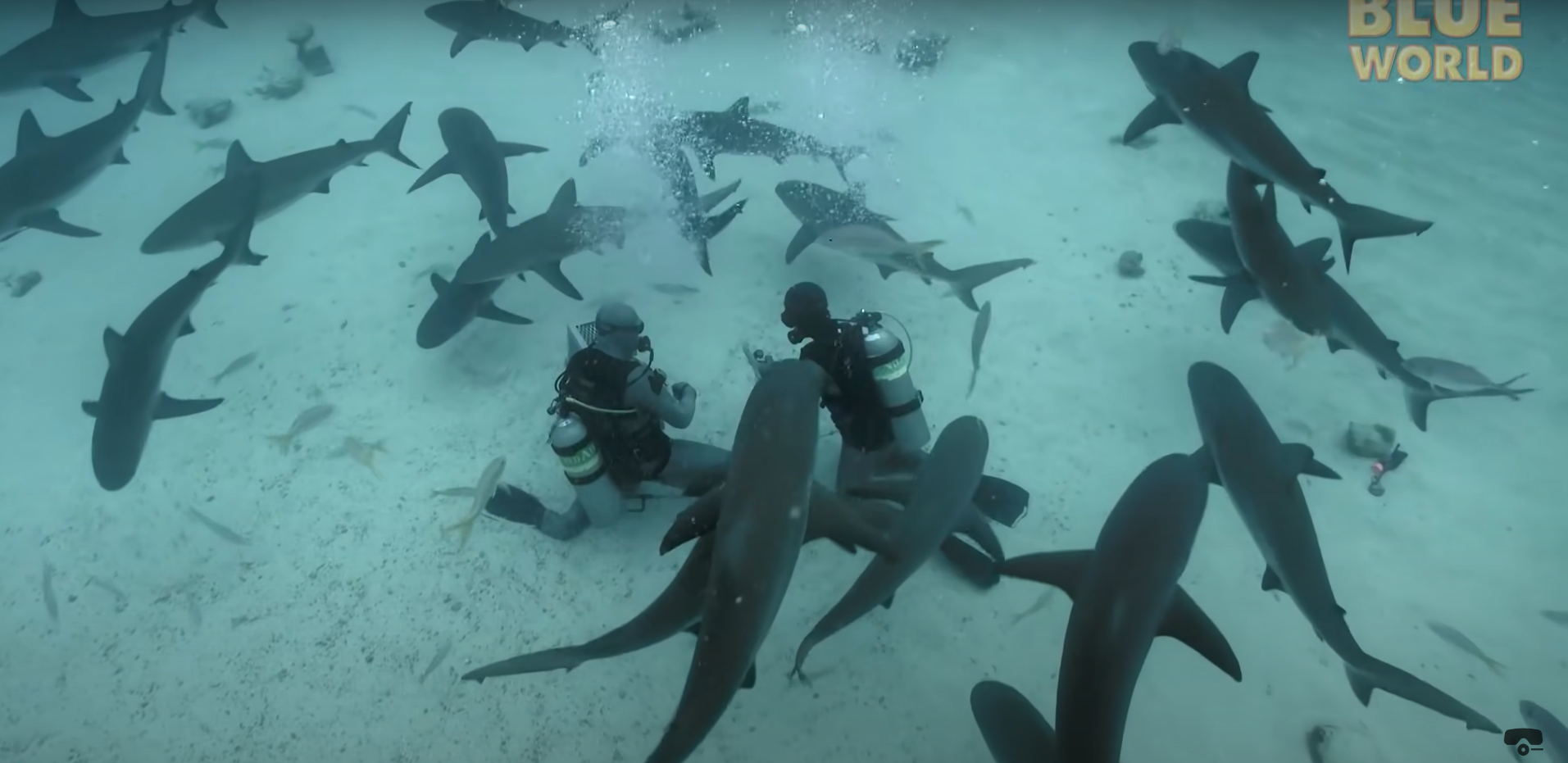
Our inspiration were patterns we observed in a documentary in which divers would regularly feed sharks in the Bahamas for research purposes. See the figure below for a snapshot from the documentary
The Model
The simulation of collective hunting takes into account the following parameters: velocity of shark, position of shark, hunger level, which in turn influences proximity to food source, and repulsion from other sharks.
How it works: We adopted a simplified 3D swarming model defined by Couzin et. al and modified it to take feeding into account. The position and direction of a particular shark changes in every time-step according to a set of rules. Unfortunately, we cannot display equations properly here, so we would like to refer to our webpage or our GitHub (see below) for a detailed explanation.
The Visualization
Art moves the soul . In this visualization, the collective movement of sharks in turn produces a simple yet mesmerizing pattern of dynamic interactions, balanced between attraction towards the food source and repulsion in space from others, to yield a state in which nourishment of the soul is achieved, both of the sharks, and of the perceiver of this beautiful simulation.

Log in or sign up for Devpost to join the conversation.