-
-
Sharing Memories Saves Lives_MemoryLink1985
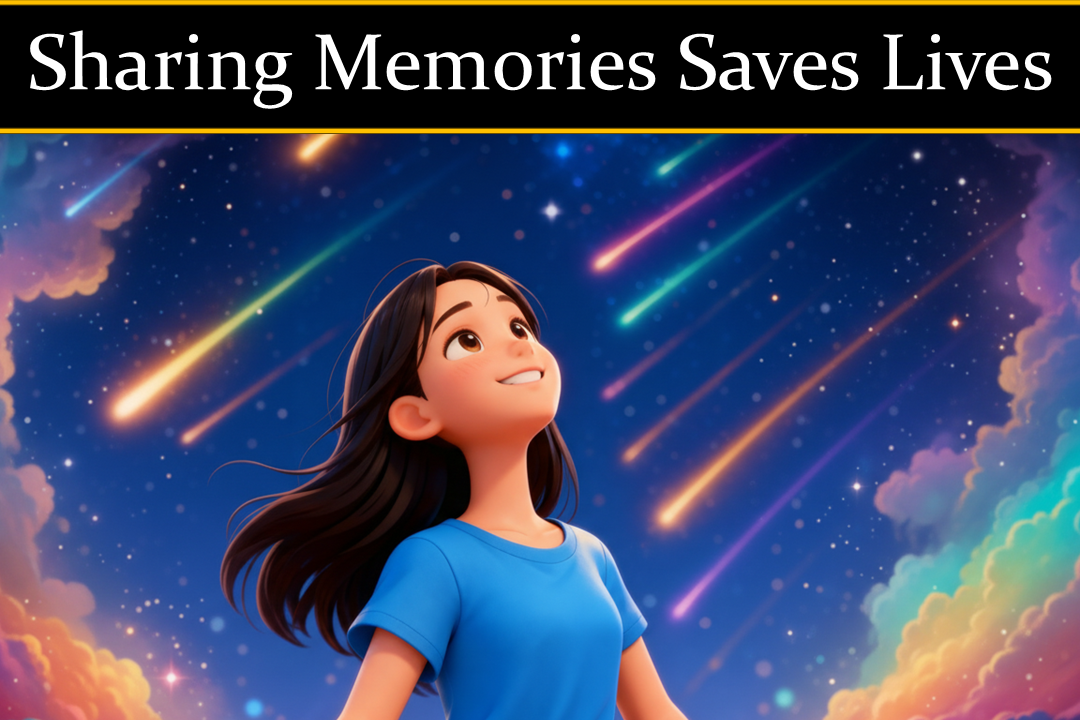
Sharing Memories Saves Lives
This film addresses a global challenge: preventing the recurrence of tragic events by passing on our memory. We believe that remembering and sharing the past supports prevention and, ultimately, helps save lives. It also poses a practical challenge to all of us: "How we transmit memory" and "How we use generative AI in that effort" are up to us. By employing generative AI as a creative tool, this work explores a new possibility: a piece of remembrance that preserves and conveys difficult memories across time, languages, and borders. We hope you will consider this film as evidence of generative AI’s expanding possibilities, and that it helps foster a culture of memories that protects our shared future. We also hope this work will touch hearts across generations.
Inspiration: Where This Film Begins
The inspiration for “Sharing Memories Saves Lives” comes from real tragedies that should never be repeated—accidents, disasters, and sudden losses that changed families and communities forever.
For many of us, these events are not abstract “history.” They are personal: a missing voice at the dinner table, an empty seat on a family trip, a place we can no longer visit without feeling a sharp ache.
At the same time, we noticed a tension in society:
- People say, “We must never forget,” but
- The details, emotions, and lessons often fade with time.
This film was born from a simple but urgent question:
If memory can help prevent future tragedies, how can we share it more effectively, across time, languages, and generations?
Generative AI offered us a new tool: not to replace human memory, but to extend it.
What We Learned While Making This Film
During the project, we learned several key lessons:
Memory is both fragile and powerful.
Stories can disappear in one generation, yet a single remembered detail can change how someone reacts in a moment of danger.Generative AI can visualize what is difficult to look at.
We did not want to show graphic images of tragedy. Instead, we learned to use generative AI illustrations and videos to express:- The silence after a loss
- The weight of regret
- The hope that comes when someone chooses to act differently because they learned from the past
- The silence after a loss
Bilingual storytelling multiplies reach.
By working in both Japanese and English, we saw how a local memory can become a shared global lesson. The same images and sequences can resonate differently in different cultures, but the core emotion is universal.Technology is neutral; intention is everything.
Generative AI can entertain, distract, or mislead—but it can also protect and educate. The responsibility lies in how we use it. In a sense, our guiding “equation” became:
[ \text{Memory} \times \text{Sharing} \rightarrow \text{Prevention} ]
How We Built the Project
From the beginning, we treated this film as both a creative work and a practical experiment in using generative AI for remembrance.
1. Researching and Structuring the Story
We started by collecting:
- Personal anecdotes and family memories
- Public records and factual timelines of past incidents
- Reflections from people who survived or were indirectly affected
From this material, we structured the film around three layers:
- Past – moments before and after real tragedies, expressed symbolically
- Present – people today who inherit these memories
- Future – a possible world where remembering has concretely changed behavior and saved lives
2. Visual Concept: From Stars to Rivers of Memory
To avoid direct re-enactments of trauma, we used generative AI illustrations to create visual metaphors:
- Star fields representing countless individual memories
- Rivers and flowing water symbolizing the passage of time and the transmission of stories
- Light bridges and connections between generations, across borders
These key images were first sketched as prompts, then iteratively refined in generative AI tools until they felt emotionally precise and respectful.
3. From Illustrations to Moving Images
Next, we used generative AI video tools to:
- Animate transitions from cosmos to everyday life
- Warp scenes between past and present
- Create gentle camera movements (slow zooms, pans, and focus shifts) that guide the viewer’s attention
Each sequence went through multiple cycles:
- Prompt design
- Generation and review
- Adjustment for emotion, pacing, and clarity
We then edited these clips into a coherent narrative timeline, matching visual beats with narration, music, and silence.
4. Bilingual Script and Subtitles
Because memory crosses borders, the storytelling needed to do the same.
We created:
- A core script in English, focused on clarity and universality
- A Japanese script that preserved emotional nuance and cultural context
- Subtitles in both languages, carefully timed so that the viewer never has to choose between reading and feeling
This bilingual approach ensures that the film can be screened in international settings while still honoring its roots.
Challenges We Faced
We encountered several significant challenges:
1. Representing Tragedy Without Sensationalism
Our first and biggest challenge was ethical:
How do we depict events connected to death and loss without exploiting the pain?
We deliberately avoided graphic imagery and instead used abstract, symbolic scenes. This required many iterations in generative AI, because the tools often produce overly dramatic or cinematic results. We had to “teach” the system, through prompts and selection, to be quiet, respectful, and restrained.
2. Balancing Accuracy and Emotional Truth
Real events involve specific dates, places, and numbers. But film is about emotional truth.
We struggled with:
- How much detail to include
- When to be specific, and when to be symbolic
- How to honor real victims while keeping the film accessible to those who do not know the full history
The solution was a layered approach: we kept the narrative universal, while letting certain visual elements subtly reference real histories.
3. Working With the Limitations of Generative AI
Generative AI is powerful but imperfect:
- Faces would sometimes change slightly between cuts
- Visual continuity (clothing, lighting, age) could be inconsistent
- Complex scenes (crowds, vehicles, subtle gestures) required many prompt refinements
To address this, we:
- Simplified some compositions
- Chose camera angles and editing patterns that reduce continuity errors
- Accepted that part of the “look” of this film is shaped by the current state of AI technology itself
This limitation became a creative constraint: an honest snapshot of what generative AI can and cannot yet do.
4. Emotional Distance vs. Emotional Overload
Another challenge was emotional calibration.
- Too distant → the film feels like a technical demo.
- Too intense → the film becomes overwhelming, especially for younger viewers or those with similar experiences.
We experimented with:
- The amount of narration vs. silence
- The brightness and color palette of each scene
- The rhythm of showing “painful” versus “hopeful” images
The final cut tries to maintain a delicate balance: enough intensity to be unforgettable, enough gentleness to be watchable.
Conclusion: Toward a Culture of Protective Memories
“Sharing Memories Saves Lives” is more than a film; it is a proposal:
- That we treat memory as a shared safety system, not just personal nostalgia
- That we use generative AI not only for entertainment, but also for education, remembrance, and prevention
- That we build a culture where telling and listening to stories of the past is seen as a concrete way to protect the future
Our hope is that this work:
- Encourages viewers to talk about difficult memories within their families and communities
- Demonstrates how generative AI illustrations and videos can support that process, across languages and borders
- Touches hearts across generations, so that the next time someone faces a moment of danger, a remembered story quietly guides them toward safety
If this film can help even one person think, “I will remember this and pass it on,” then the project has already begun to achieve its purpose.
Built With
- chatgpt
- english
- higgsfield
- kling

Log in or sign up for Devpost to join the conversation.