-
-
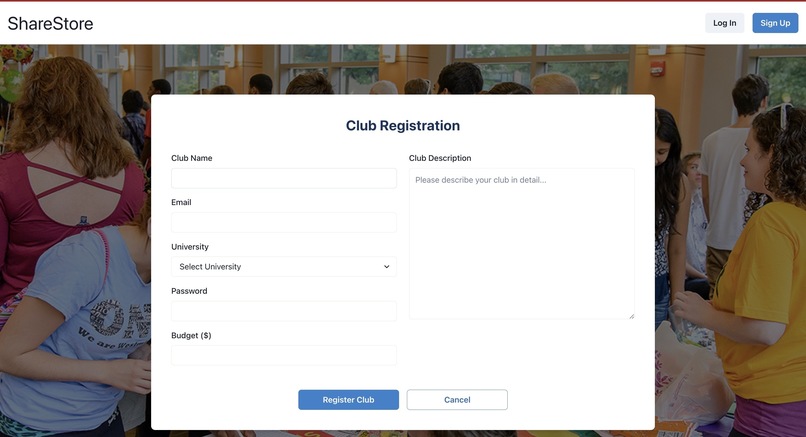
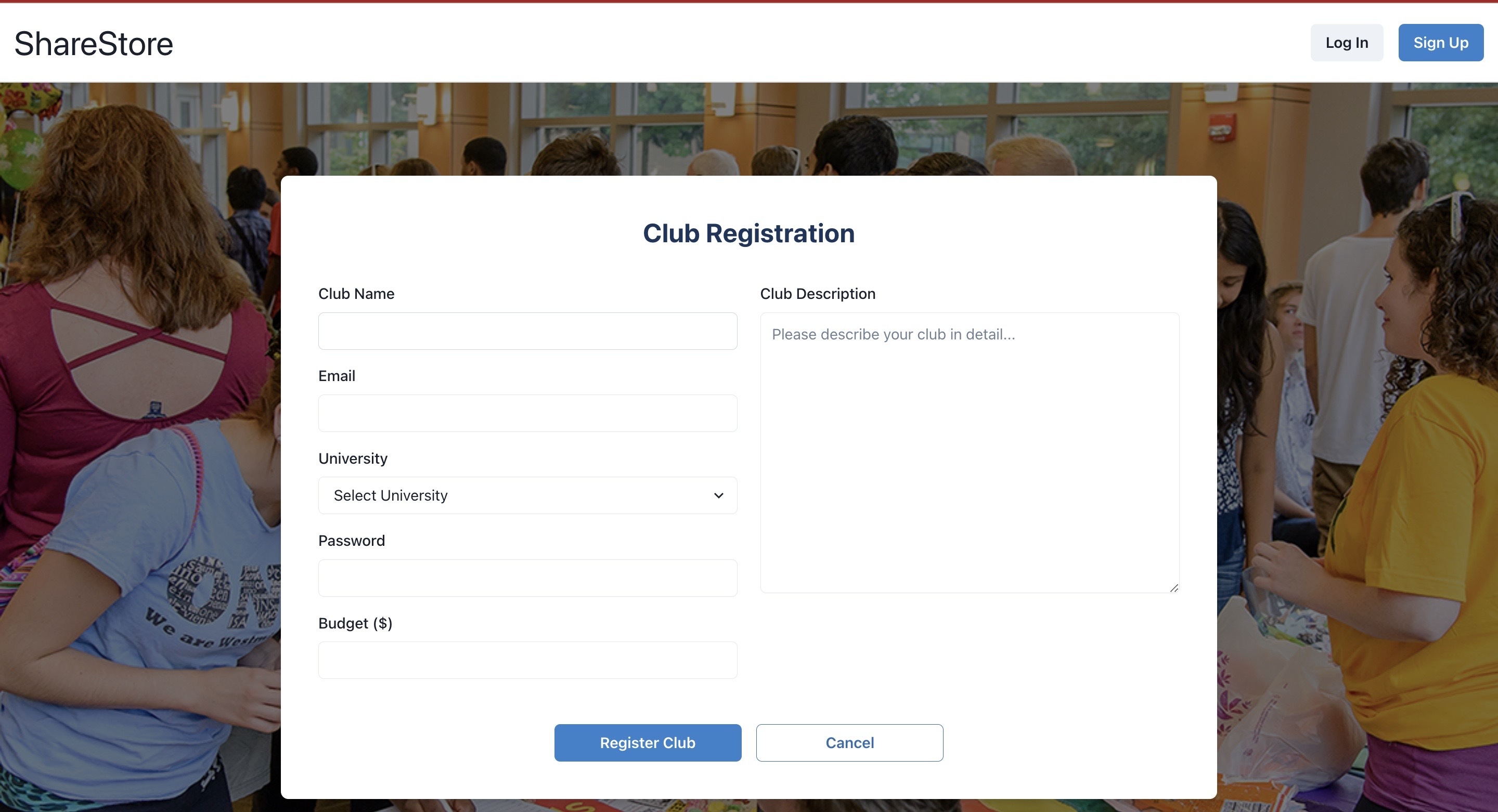
Registration Page
-
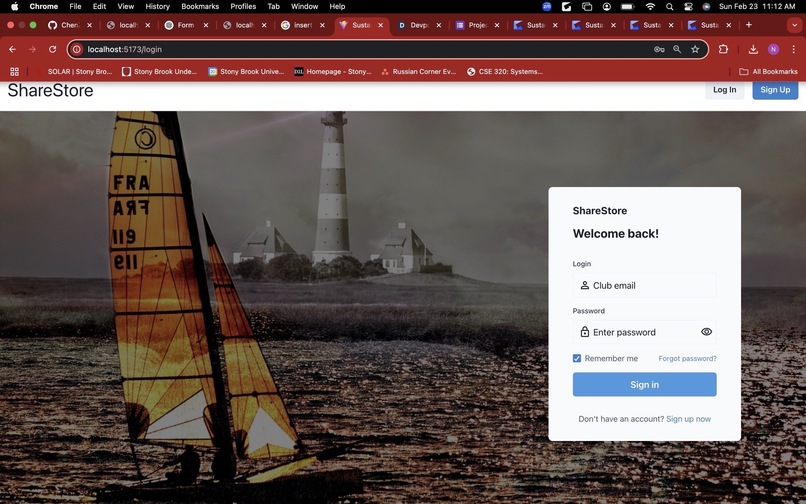
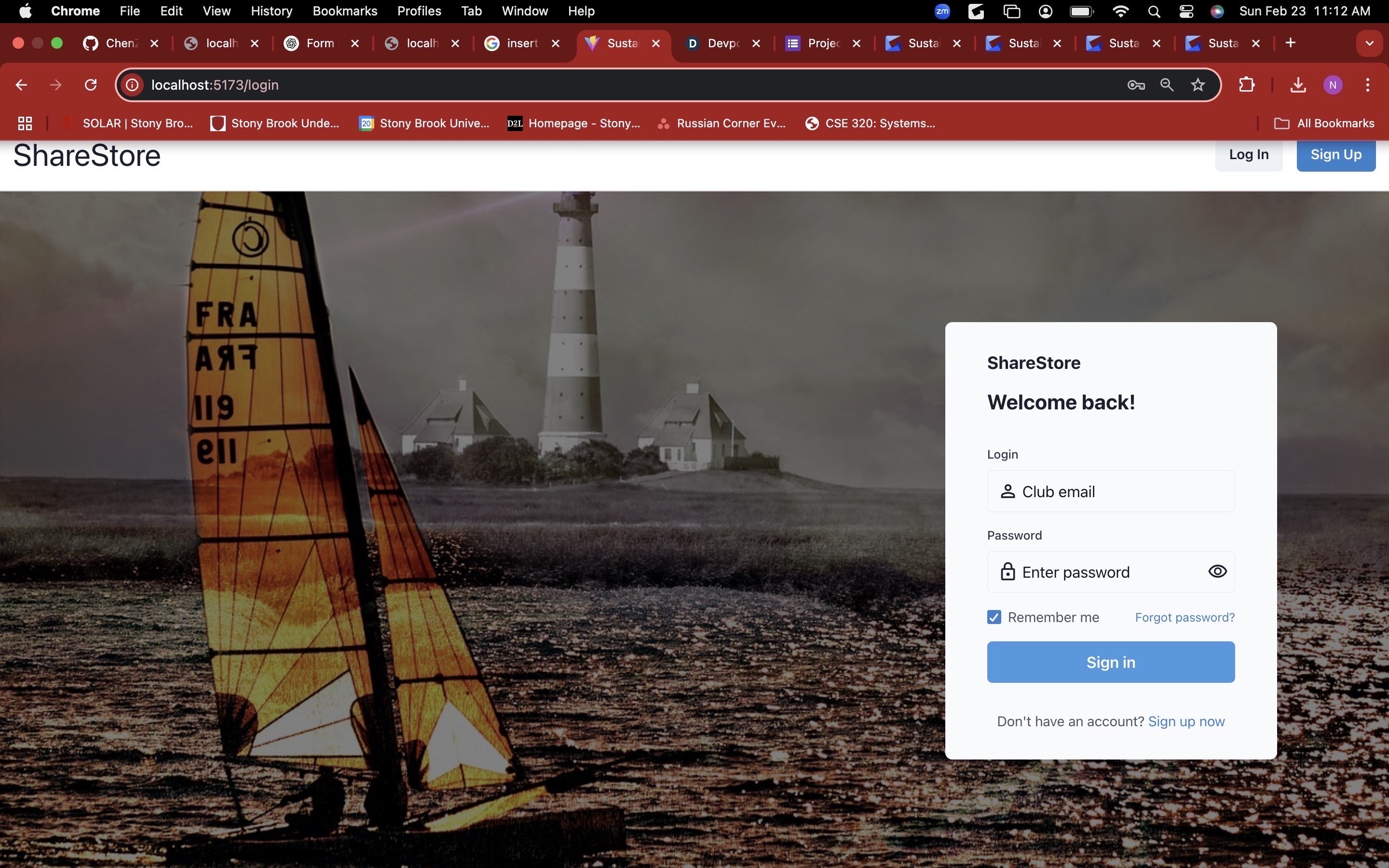
Log In Page
-
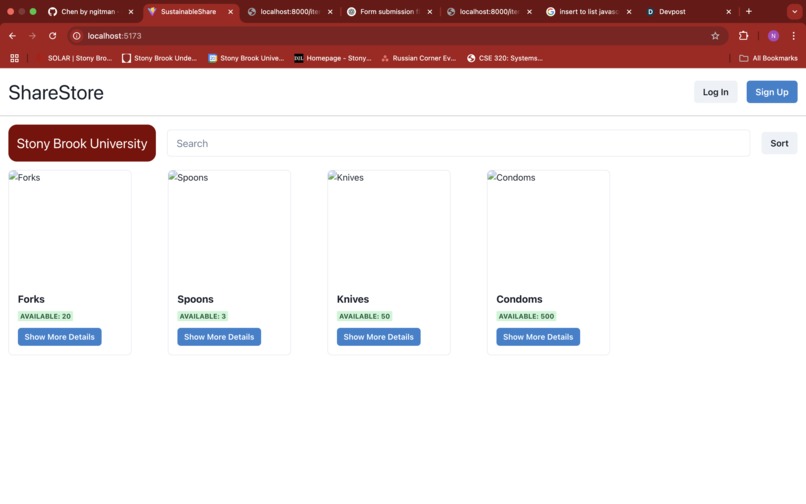
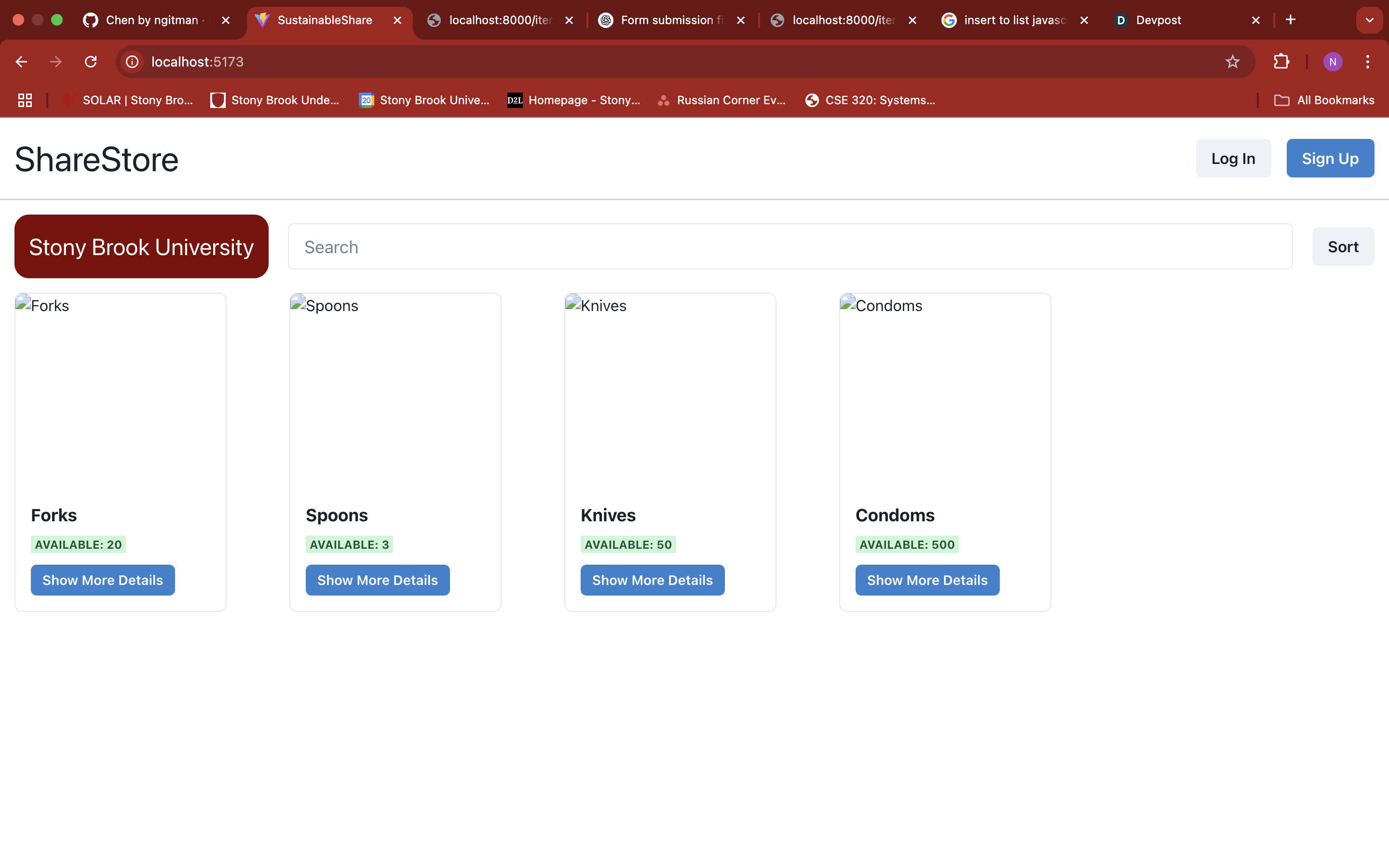
Home page
-
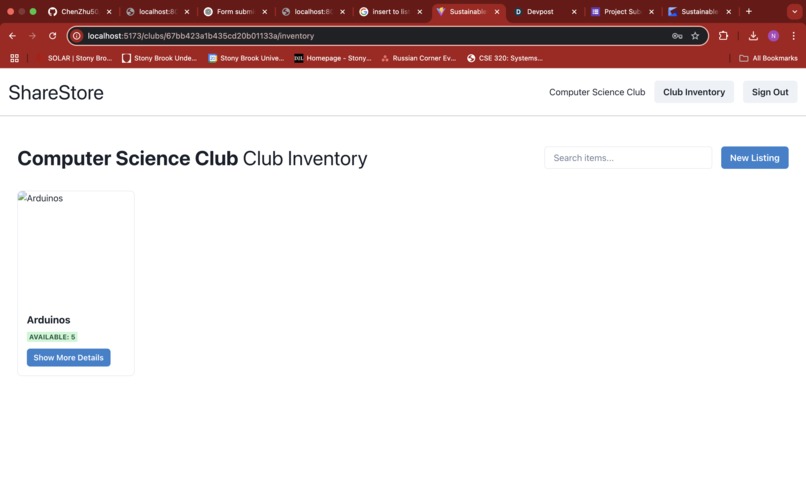
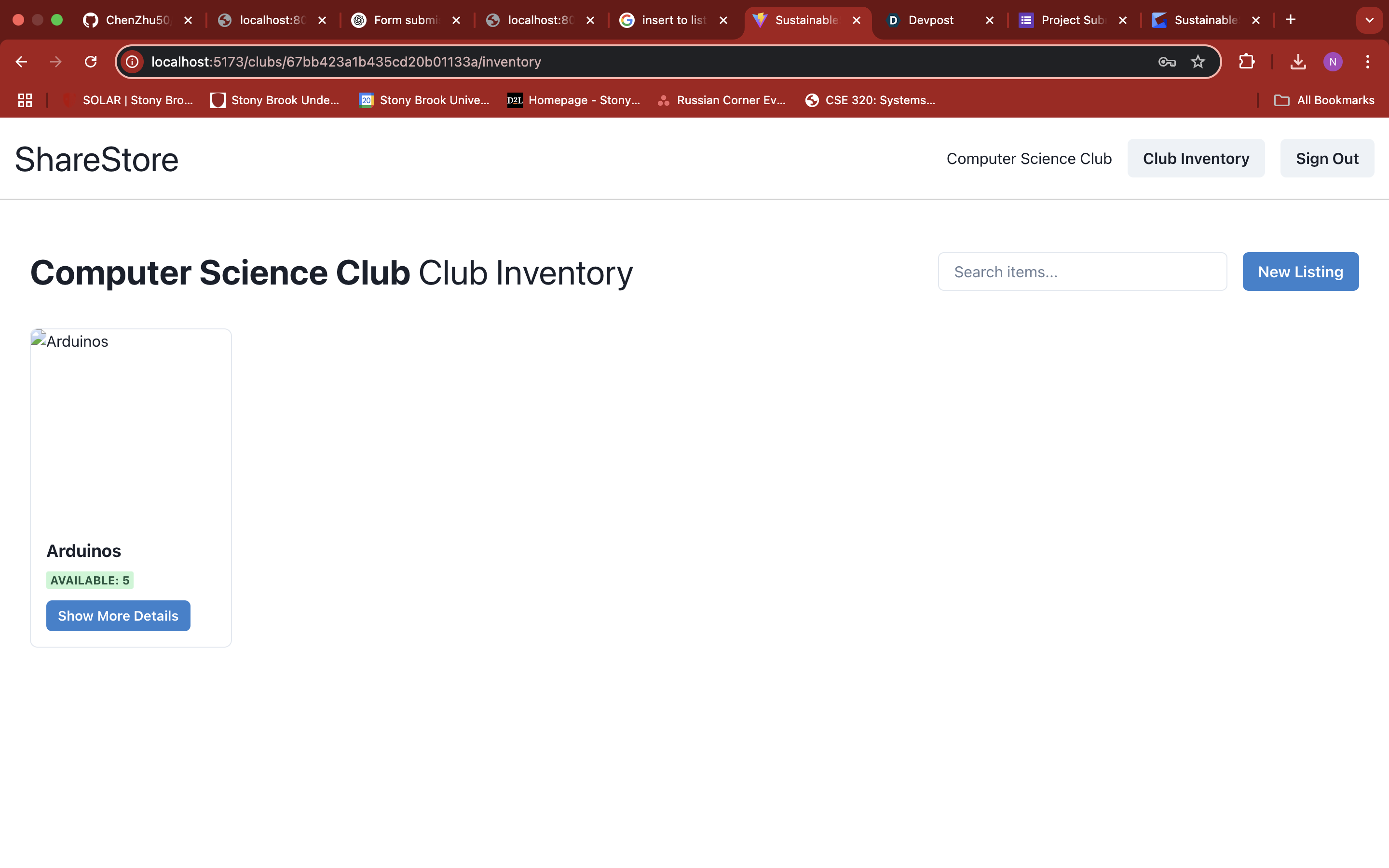
Club inventory page
-
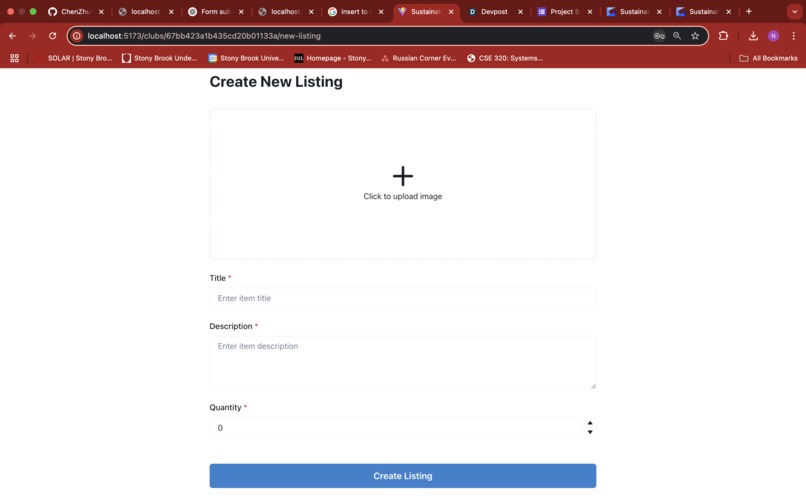
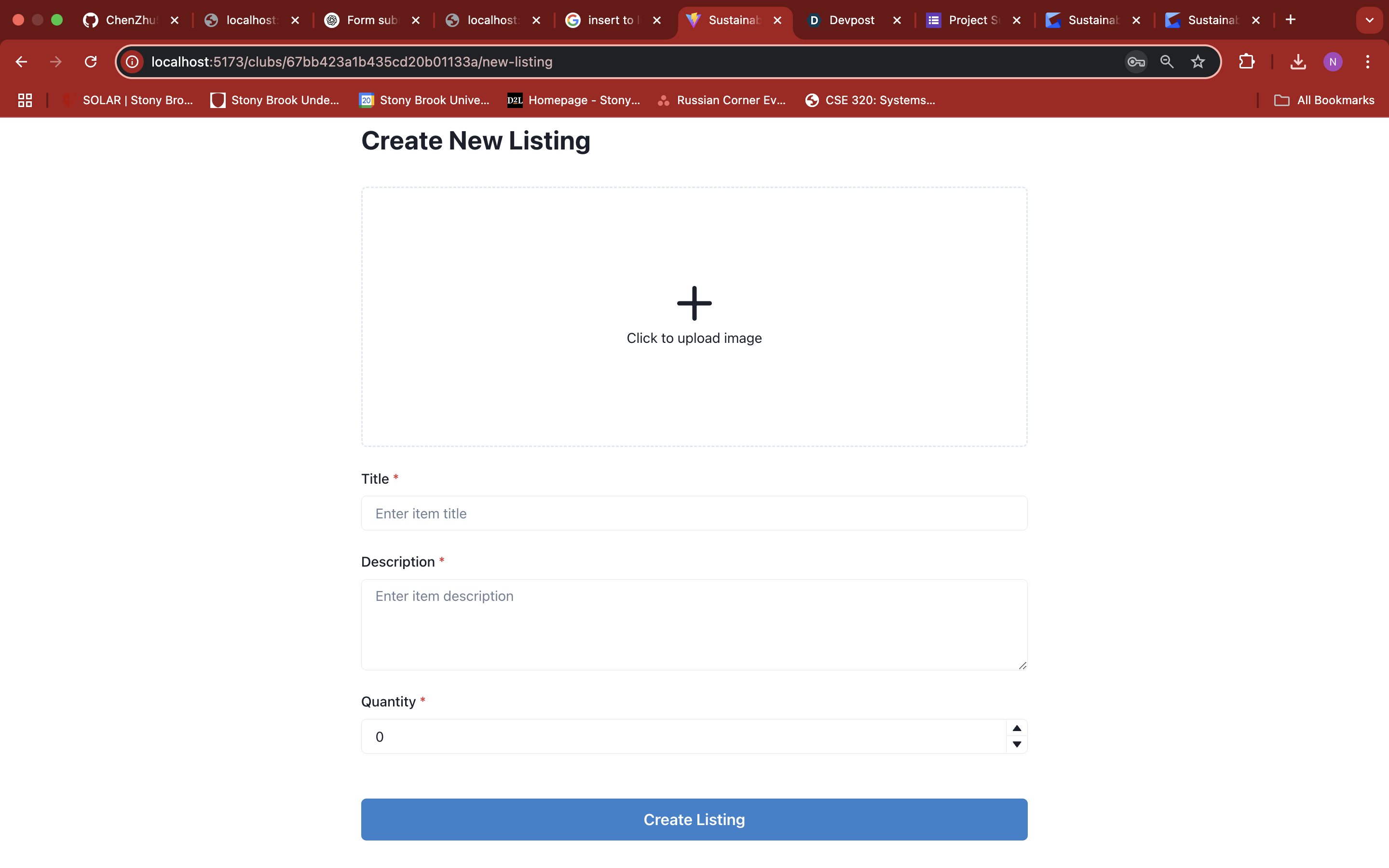
Create new listing page
-
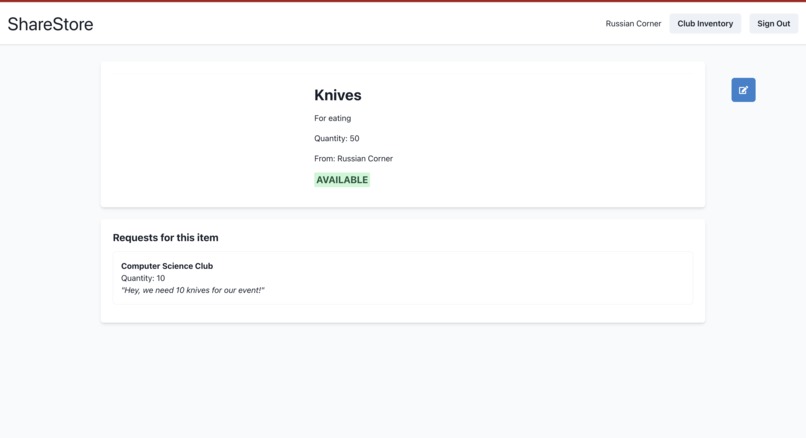
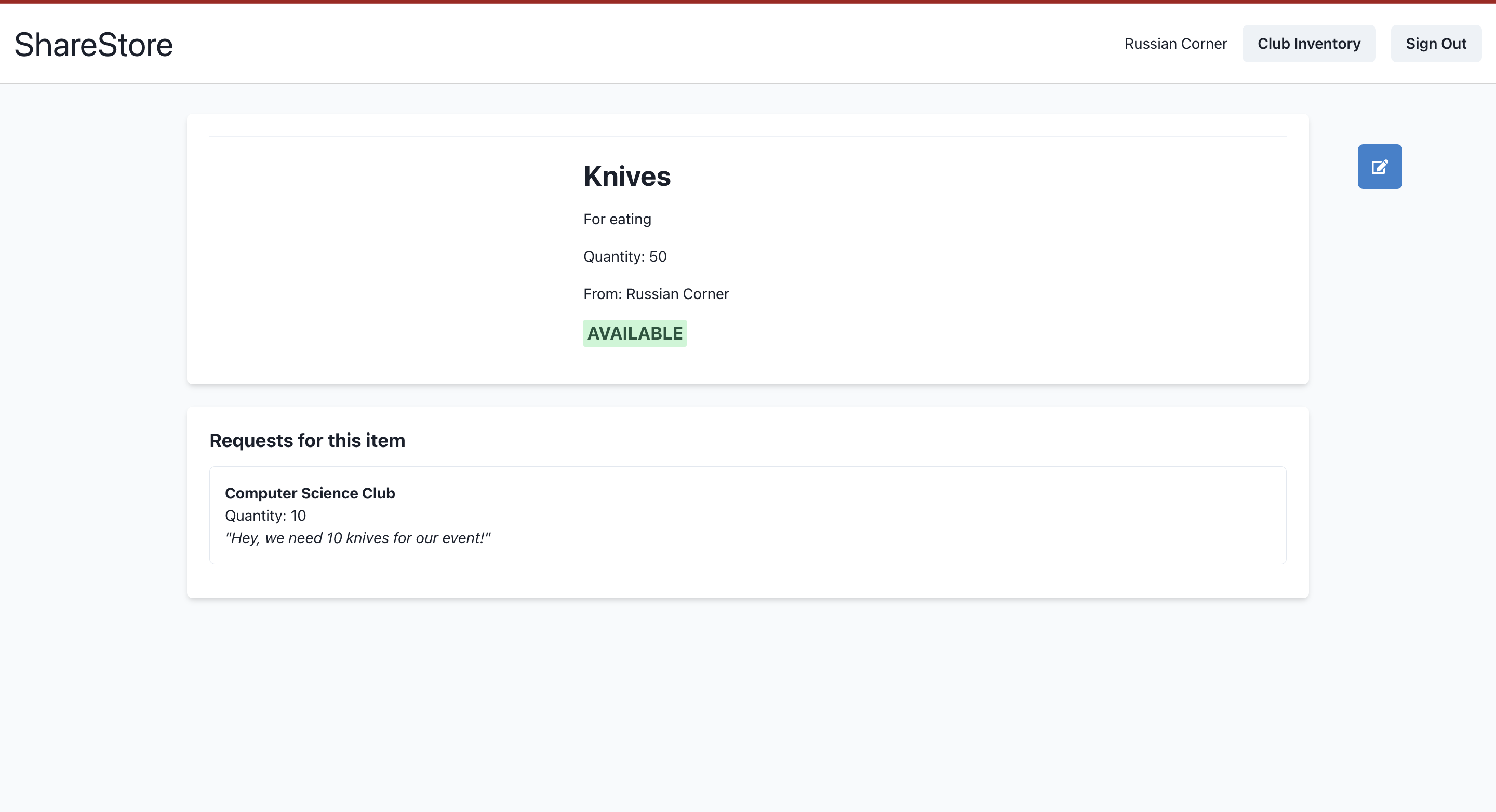
Item Listing (with publisher's view)
-
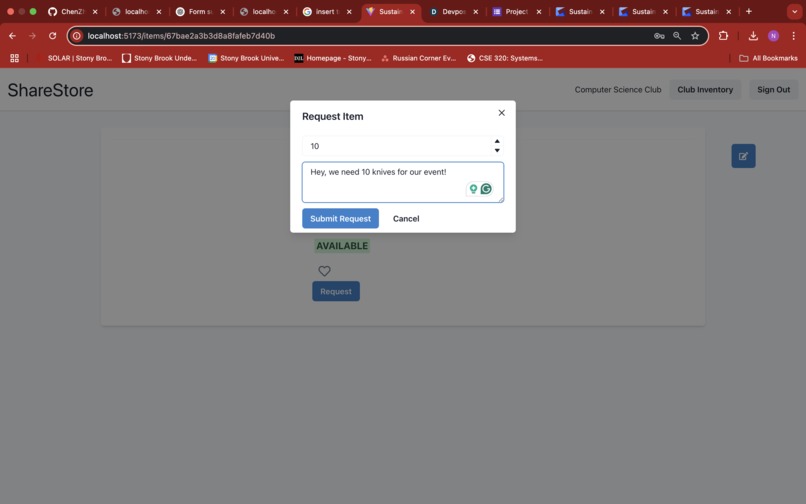
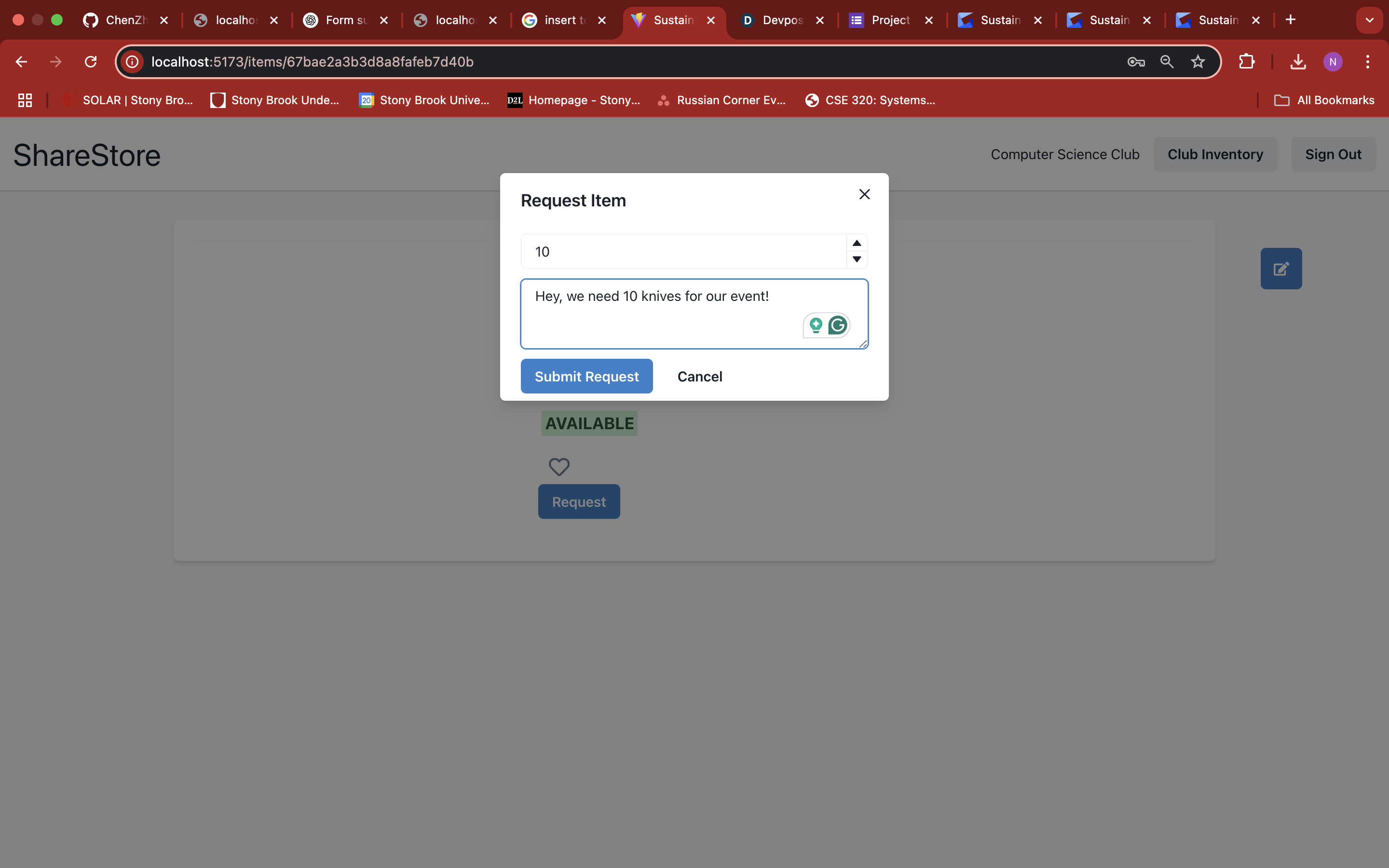
Request form
Inspiration
As an active member of a club e-board, I’ve seen firsthand how leftover event materials often take up valuable dorm space, sitting unused until the next event—if they even get used at all. In some cases, clubs over-purchase items, while others struggle with limited funding or delays in procurement through student government.
We needed a better way to manage excess inventory and foster collaboration between clubs. That’s why we created SustainableShare—a centralized platform where clubs can efficiently track their inventory, share surplus materials with other organizations, and reduce waste. By making it easier for clubs to access resources within their university, SustainableShare promotes sustainability, minimizes unnecessary spending, and cuts down on carbon emissions from constant reordering and shipping.
What it does
SustainableShare allows university clubs to register their organizations and manage their inventory through a user-friendly platform. Clubs can add listings for surplus items, complete with a title, quantity, and description. While we initially planned to support image uploads, we weren’t able to implement that feature in time.
All active listings are visible on the home page, and you can even view individual clubs' listings as well. When a club finds something they like, they submit a request form for the item, and they can specify the quantity of items they wish. For instance, if Club A has 100 plates, but Club B only needs 50, Club B can request 50 plates from Club A by submitting a request form.
Once a request form is submitted, the club that made the listing will be able to view all requests for their listings and reach out to the organizations to arrange a handoff.
Of course, a club does not have to accept a request form. They are free to use SustainableShare to manage their inventory and participate in asset sharing.
How we built it
SustainableShare was developed using the MERN stack:
- Frontend: React with TypeScript
- Backend: Node.js and Express
- Database: MongoDB TypeScript was also used on the backend to ensure scalability and maintainability.
Challenges we ran into
While we made great progress, we encountered a few hurdles along the way:
- Image Uploads: We aimed to support embedded images for listings but couldn't implement it within the given timeframe.
- Scalability: Designing the platform to handle multiple clubs, requests, and interactions efficiently was a significant challenge.
- Git Merge Conflicts: With a large team working in parallel, we faced numerous version control conflicts, but we powered through them!
Accomplishments that we're proud of
Despite the challenges, we’re incredibly proud of what we accomplished:
- We successfully built a fully functional platform from scratch in a limited timeframe.
- We prioritized user experience, ensuring that SustainableShare is visually appealing, intuitive, and easy to navigate.
- We effectively collaborated as a team, overcoming technical hurdles and working toward a shared vision.
What we learned
The most valuable lesson we took away from this experience was the power of teamwork. Balancing different tasks and skill sets was challenging, but we learned how to coordinate efficiently and support each other.
We also gained hands-on experience with new libraries and frameworks, particularly those that helped enhance SustainableShare’s styling and usability.
What's next for SustainableShare
SustainableShare has the potential to redefine how clubs operate on campus by making resource-sharing seamless and sustainable. Moving forward, we hope to:
- Implement image uploads to improve listing quality.
- Enhance security and access controls, ensuring a safe and reliable experience.
- Refine public/private listing functionality for better inventory management.
- Partner with student governments (like SBU USG) to expand SustainableShare to other universities, supporting sustainability initiatives on a national scale.
By fostering a culture of sharing and reducing waste, SustainableShare can help student organizations make the most of their resources—while doing good for the planet.


Log in or sign up for Devpost to join the conversation.