-
-
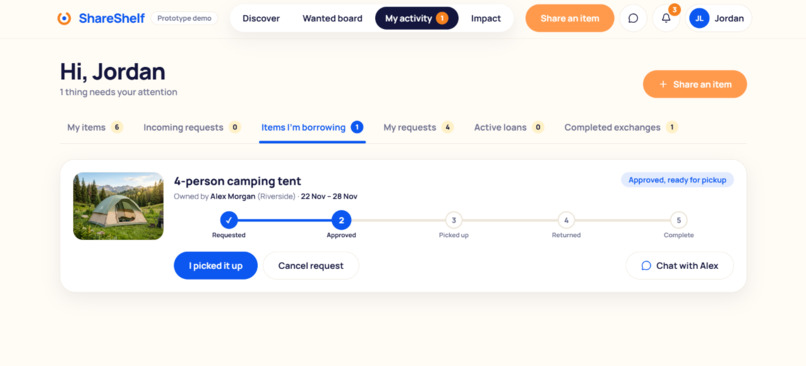
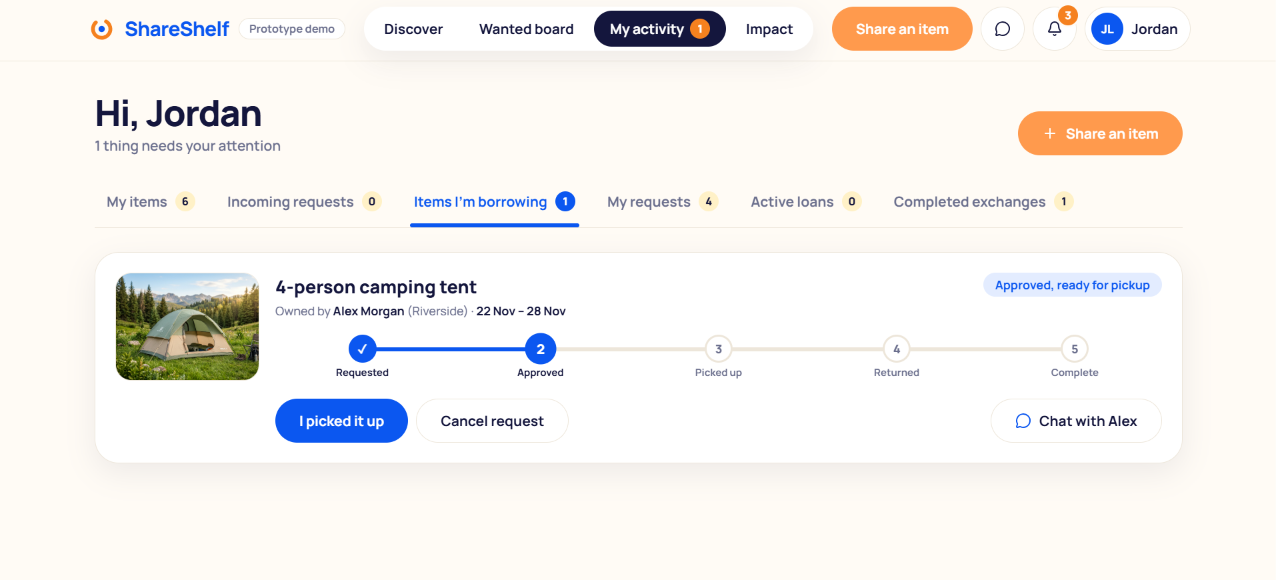
My activity
-
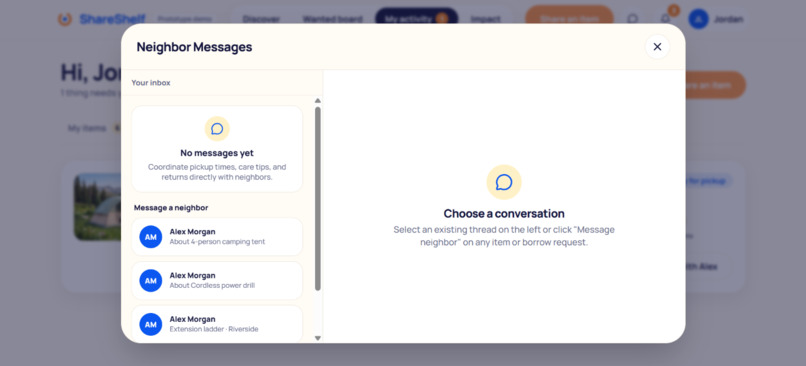
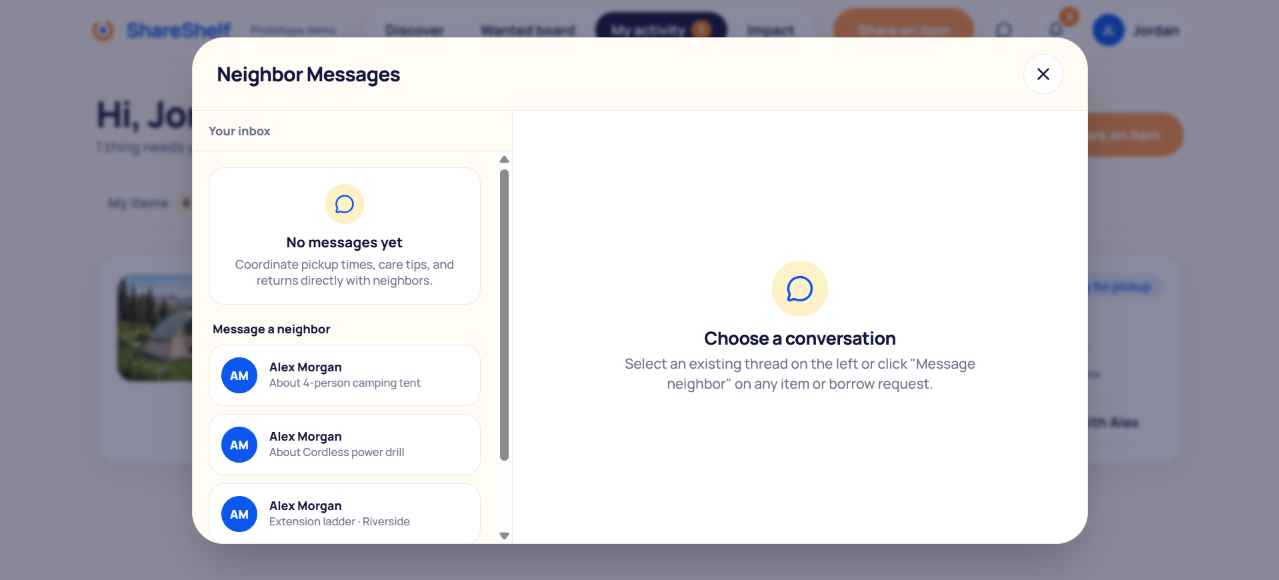
In built messaging
-
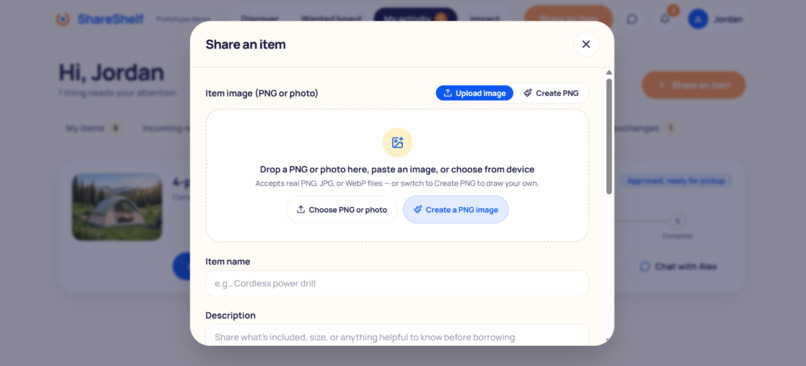
Add shared items
-
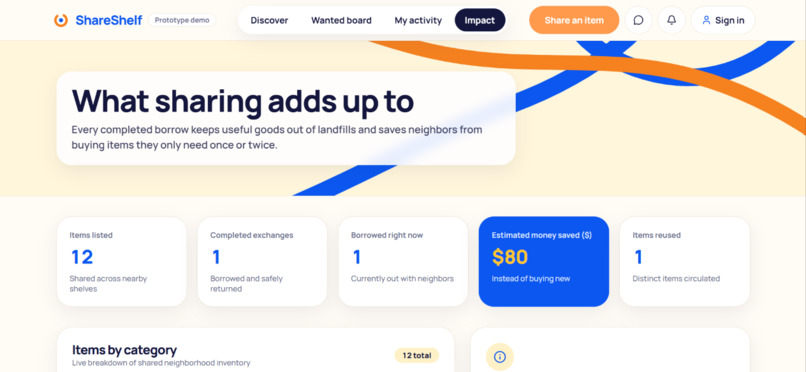
Impact page
-
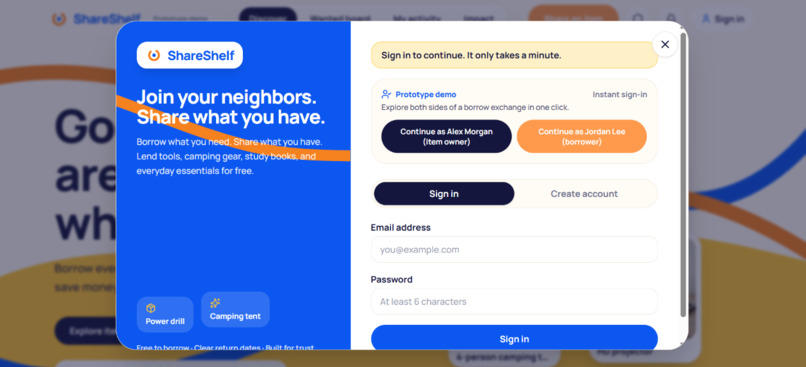
Sign up / sign in
-
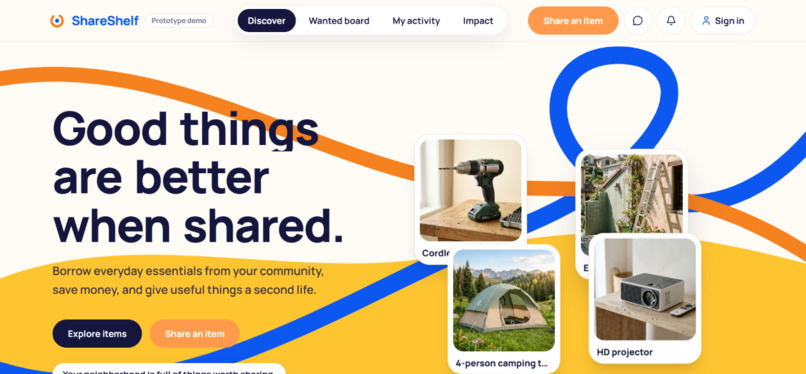
home page
Inspiration
Most of us have bought something we only needed for one afternoon: a drill for a single shelf, a ladder for one repair, a calculator for one exam week. Then it sits in a cupboard for years. Meanwhile, someone a few streets away owns the same item and barely uses it.
That gap means wasted money, more waste, and neighbors who never get to help each other. We wanted borrowing from the people around us to be as easy as shopping online, but free and good for the community.
What it does
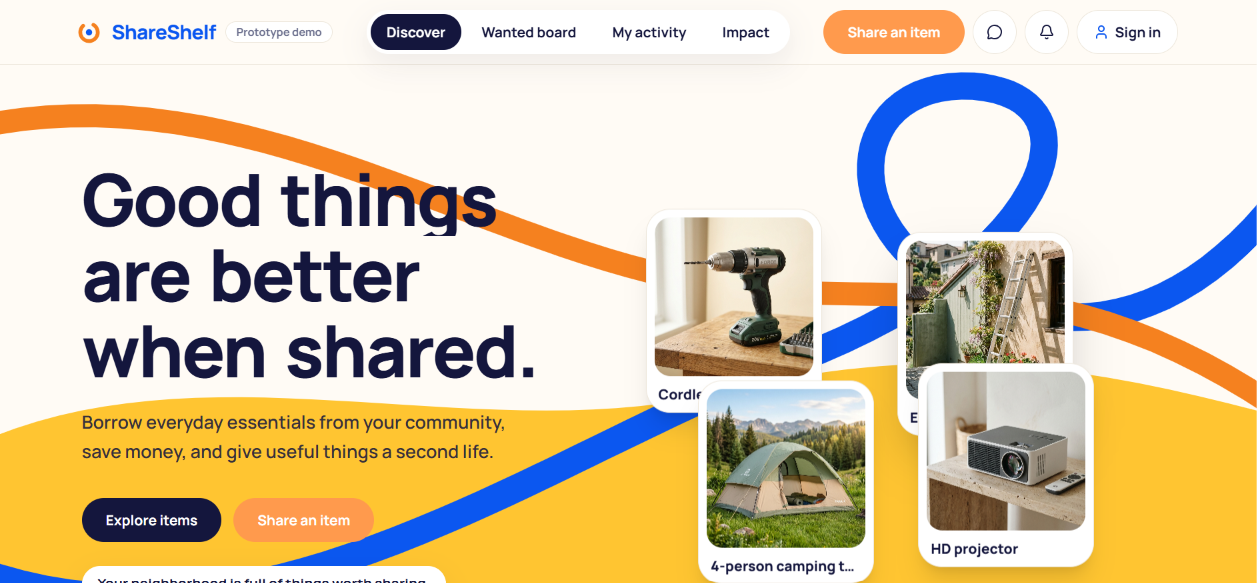
ShareShelf is a neighborhood item-sharing platform. Borrow what you need. Share what you have.
- Discover nearby items with live search and category filters
- Request an item for specific dates, with a message to the owner
- Approve or decline requests as the owner
- Track the full loop: requested, approved, picked up, return requested, completed
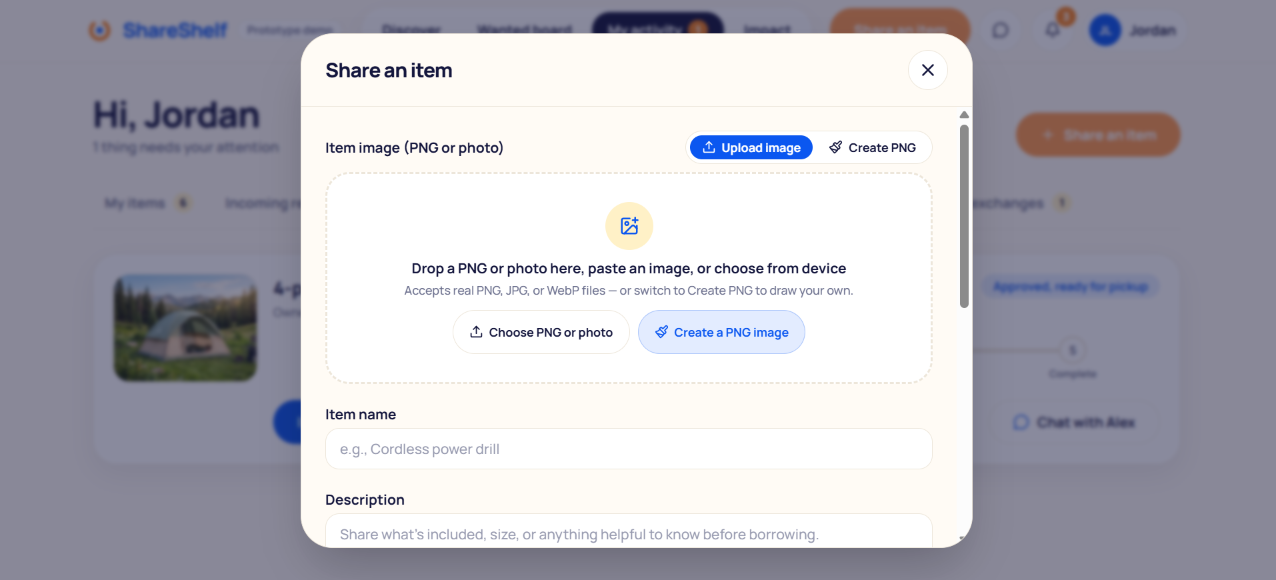
- Share your own items with photos, condition and borrowing rules
- Wanted board to ask neighbors for things nobody has listed yet
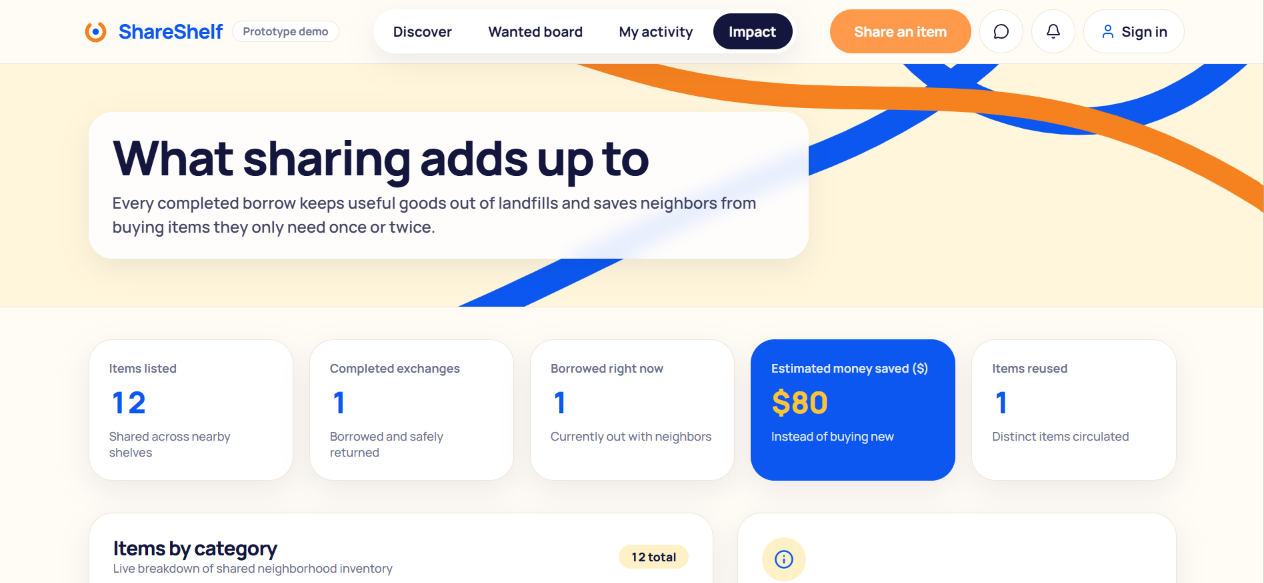
- Impact page with figures calculated from real activity in the app
- Live notifications, so an approval appears instantly on the other person's screen
The brand idea is the loop: things go out into the community and come back.
How we built it
We built the frontend with React, TypeScript, Vite and Tailwind CSS, so it feels fast and clean on both phones and laptops.
Supabase (PostgreSQL) powers user accounts, item listings, borrow requests, real-time updates and image storage. We also built a local Express and SQLite backend, so the app runs smoothly during local development.
To stop double bookings, the app checks existing loan dates before a request is sent, and the backend enforces the same date rules.
A built-in chat drawer connects to item pages, borrow cards and the top bar, so conversations stay organized by item and neighbor.
Instead of asking people to paste external image links, we added real file uploads, plus an HTML5 canvas tool that generates PNG images.
Challenges we ran into
- Double bookings. Two people must not get the same item on overlapping dates. We moved this check into the database, so it can't be bypassed from the interface.
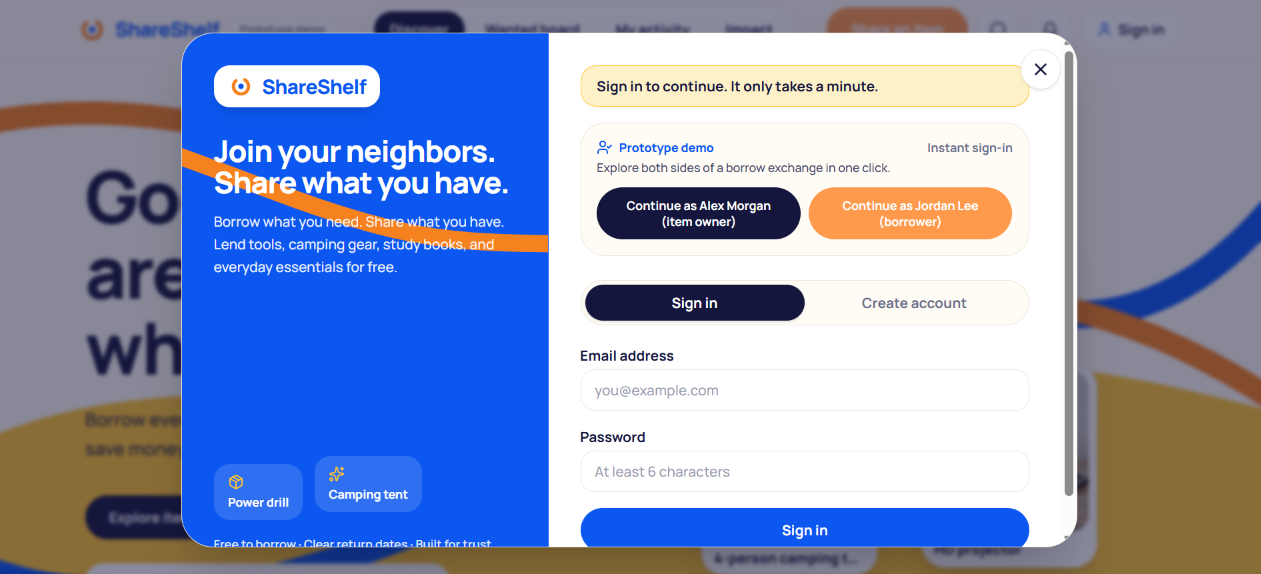
- Demoing both sides in one video. Real accounts mean real security, so we added one-click demo accounts for an owner and a borrower, plus a quick user switch.
- Friendly errors. Database errors had to become plain messages like "Those dates are already reserved. Try another range."
- Time. Designing, building and polishing a full-stack app against a hackathon deadline meant choosing carefully what to build first.
Accomplishments that we're proud of
- A complete borrowing loop that works end to end: discover, request, approve, pick up, return, complete
- Business rules enforced by the database, including no double bookings and no invalid status changes
- Live updates between two users, so approvals appear without refreshing
- A distinctive, animated brand that feels like a real startup, with a mobile-friendly design
- An impact page that stays honest: calculated from real data, with demo records labeled
- Going from a simple prototype to a working full-stack app within the hackathon
What we learned
- How Row Level Security and database rules can keep an app safe
- How to build realtime experiences with Supabase
- How to write precise prompts that turn a product idea into a working app
- That good UX comes from small details: empty states, clear status labels, and wording that sounds like a neighbor, not a system
What's next for ShareShelf
- Neighborhood groups and verified communities such as schools, estates and workplaces
- Ratings and trust badges after completed exchanges
- In-app chat between borrower and owner
- Pickup and return-date reminders
- Optional deposits for high-value items
- A long-term impact dashboard showing how many purchases and items were kept out of the waste stream
Built With
- css3
- express.js
- framer-motion
- gemini
- google-ai-studio
- html5
- javascript
- lucide-react
- node.js
- postgresql
- react
- sqlite
- supabase
- supabase-auth
- supabase-realtime
- supabase-storage
- tailwindcss
- typescript
- vercel
- vite
