Inspiration
Living in London, I’d waste hours switching between apps to find the cheapest way to commute—e-scooter here, shared car there, ride-hailing for the last mile. I wanted a single tool to simplify this chaos, while also highlighting the environmental impact of choosing shared mobility over private cars. That’s how SharedMobility Hub was born: to make urban travel easier, cheaper, and greener for city dwellers like me.
What it does
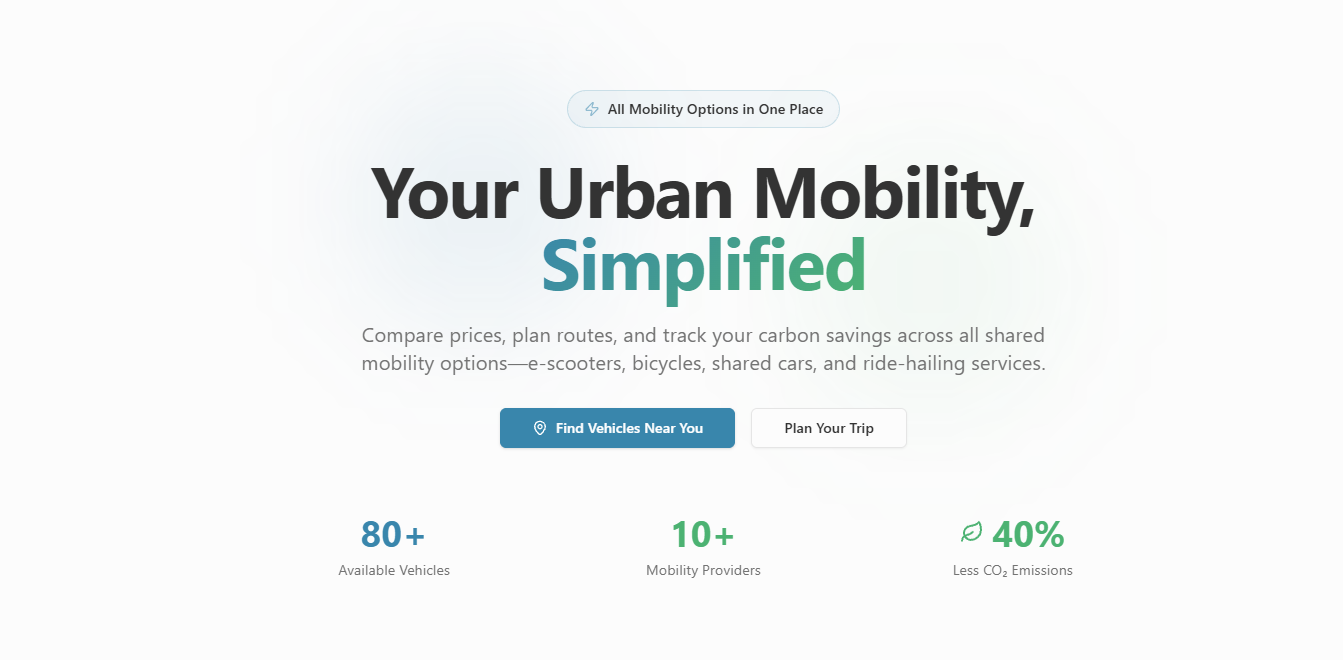
SharedMobility Hub consolidates all shared mobility options (e-scooters, bikes, shared cars, ride-hailing) into one platform. Users can plan multi-modal routes (cheapest/fastest/eco-friendliest), manage provider subscriptions, book trips in one click, and track carbon emissions saved vs. driving a private car. It’s built for city residents who rely on shared mobility for daily commutes and short trips.
How we built it
We started with React Native for cross-platform compatibility (iOS/Android), using Google Maps API to power the interactive map and routing. We integrated REST APIs from 10+ mobility providers (Lime, Bird, Uber, Zipcar) to pull real-time vehicle availability, pricing, and account data. AWS hosted our backend, PostgreSQL stored trip/subscription data, and Chart.js visualized carbon savings. We prioritized WCAG 2.1 accessibility guidelines for inclusive design.
Challenges we ran into
The biggest hurdle was syncing real-time data from multiple providers—each had unique API structures and update frequencies. We also struggled with accurate carbon emission calculations, needing to align with industry standards while adapting to varying trip distances and mobility modes. Additionally, ensuring seamless account linking across providers (each with different auth flows) required rigorous testing.
Accomplishments that we're proud of
We built a fully functional app that unifies 10+ mobility providers, delivers real-time updates every 30 seconds, and provides personalized subscription recommendations based on user travel habits. We achieved WCAG 2.1 compliance, making the app accessible to all users, and validated carbon calculation logic against industry benchmarks. Most importantly, beta users reported cutting their commute planning time by 40% and saving an average of $20/month on subscriptions.
What we learned
We deepened our expertise in API aggregation and real-time data synchronization, and learned to balance user experience with technical constraints (e.g., offline mode for low-connectivity areas). We also gained insight into urban mobility behavior—users prioritize cost and convenience above all, but care deeply about their environmental impact when it’s visible.
What's next for this project
First, we’ll integrate public transit (buses/trains) to expand multi-modal routing. We plan to add in-app support chat for user assistance, and a premium tier with ad-free access and priority booking. We’re also exploring sponsored (but transparent) provider recommendations and advanced route optimization (e.g., scenic routes) to cater to diverse user preferences. Finally, we’ll expand support to more European/American cities and add corporate account features for businesses.

Log in or sign up for Devpost to join the conversation.