
Inspiration
The idea for ShareDeck came from attending photography meetups. You meet interesting people, but connecting can be awkward: spelling out an email address, searching for the right social-media handle, or trying to remember which profile contains your portfolio link. The same thing happened more recently at a conference. Business cards are no longer universal, but the alternative is often a slow, error-prone exchange of usernames and links. I wanted a simpler way to share the right information at the right moment.
What it does
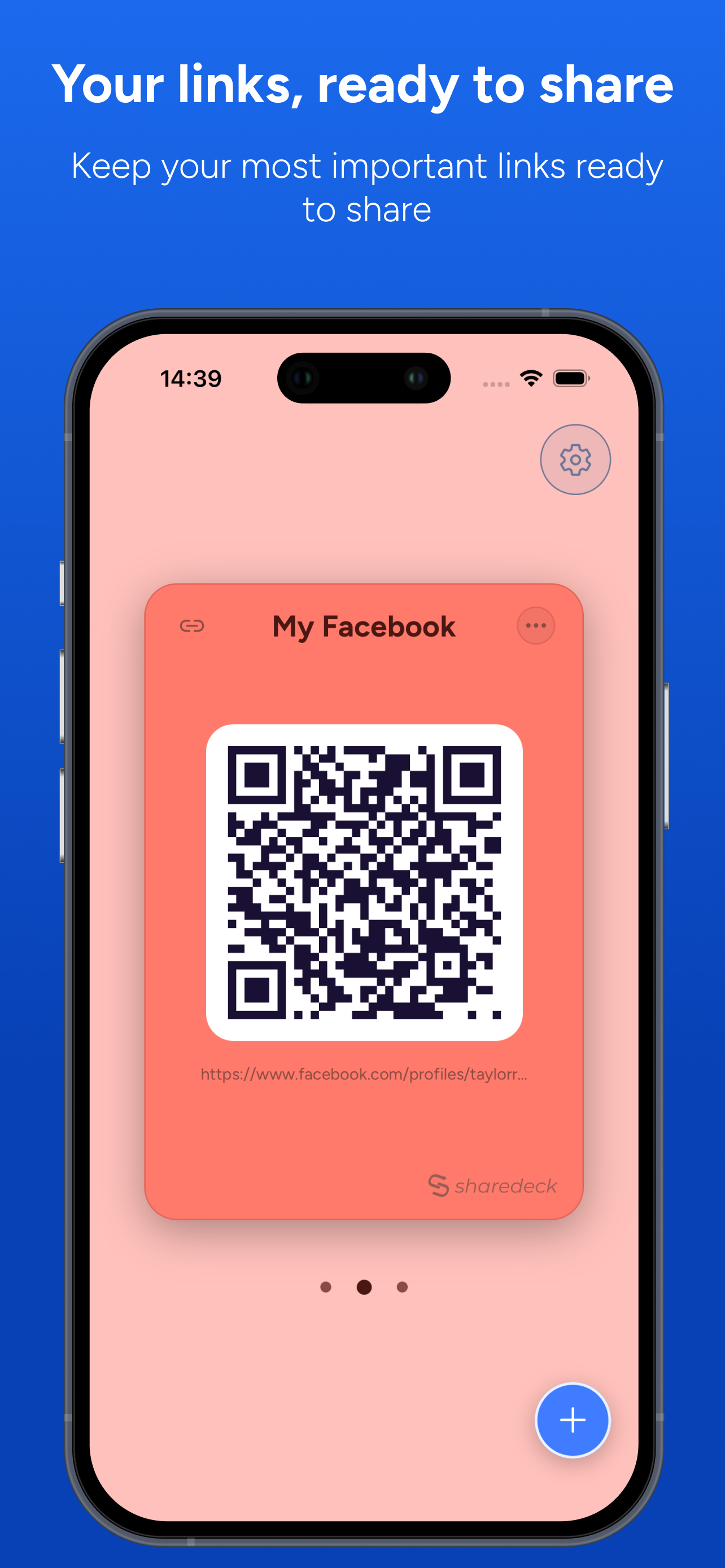
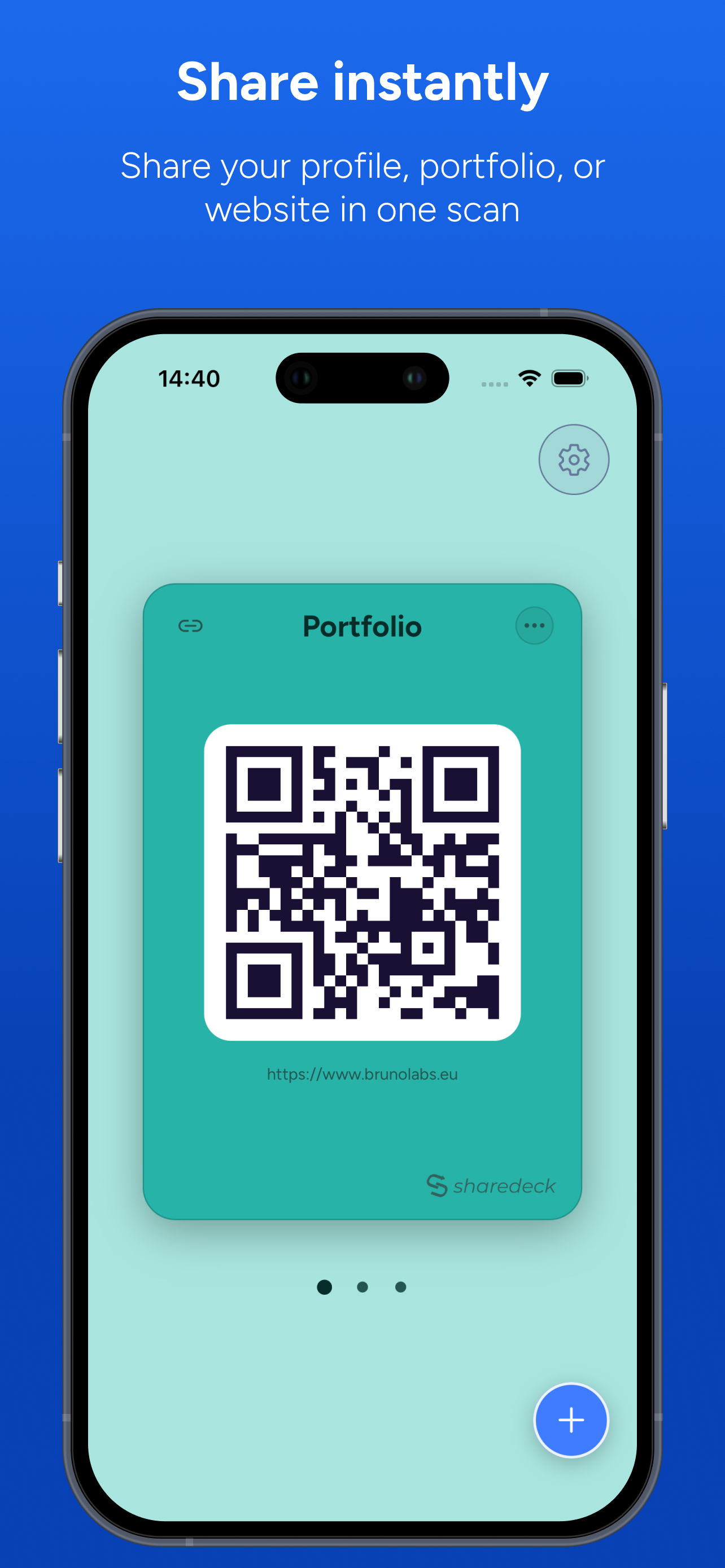
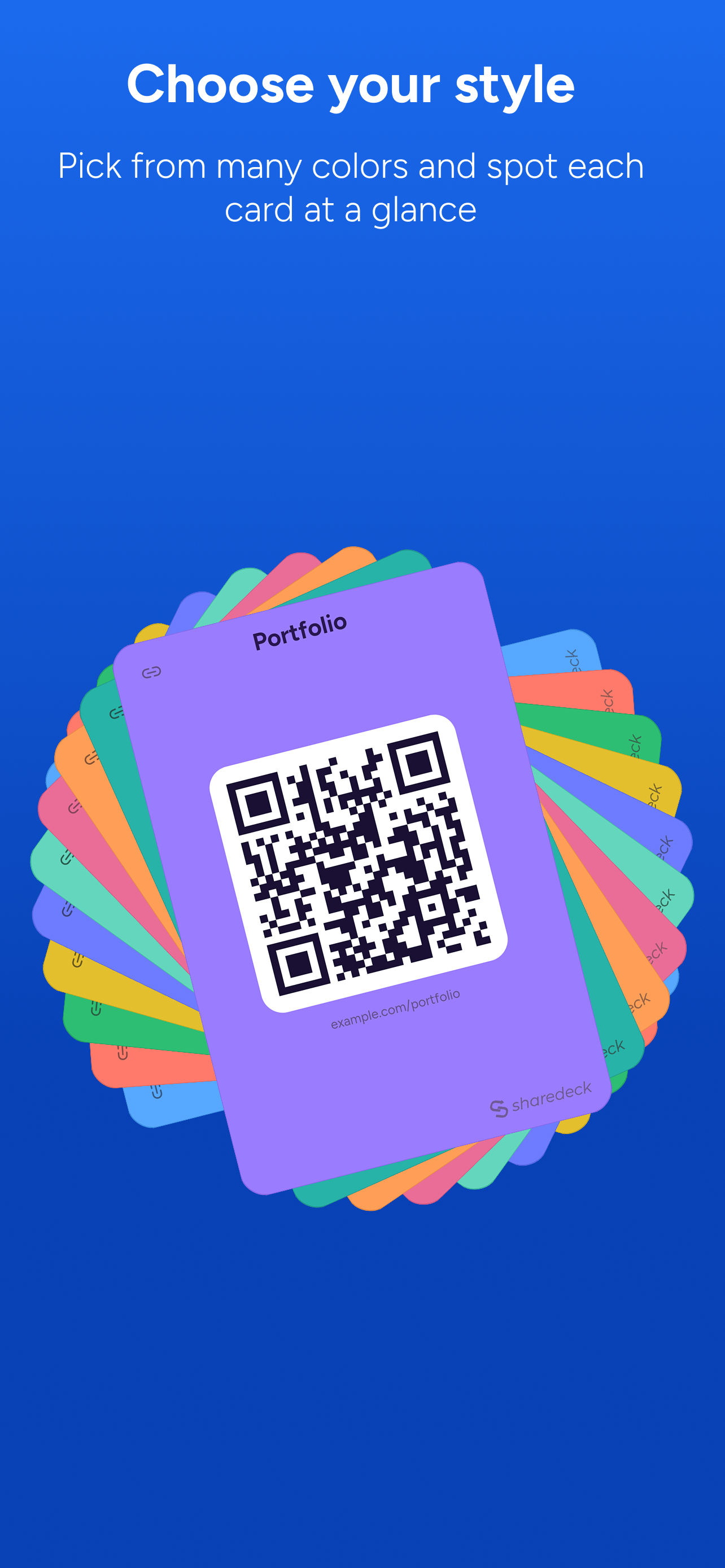
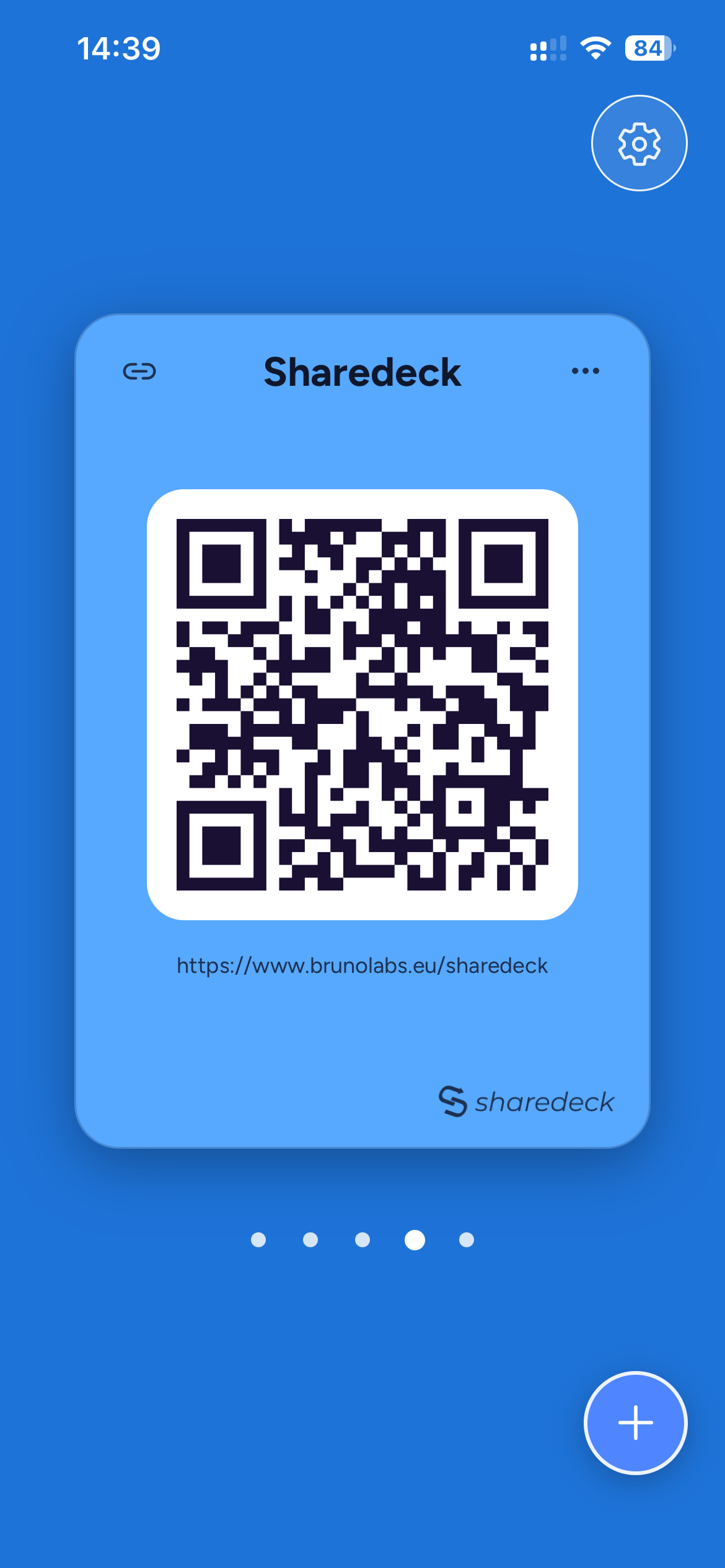
ShareDeck lets people turn links and contact details into colour-coded QR cards that are ready to share in seconds: open the right card, let someone scan it with their phone camera, and they can open the link instantly, without needing the ShareDeck app. Some platforms can generate a QR code, but their feature is often buried several menu levels deep and difficult to find when someone is standing in front of you. It can also be unreliable when connectivity is poor. With ShareDeck, instead, your important links live in one place and are always at hands.
How we built it
I built ShareDeck with React Native and Expo. This project was also an opportunity to keep learning and improving as an independent developer. From the beginning, I approached it with the mindset and engineering practices of a big-scale production application rather than a side project. That means investing in analytics, monitoring, end-to-end testing, infrastructure, and a reliable release process. RevenueCat is an important part of the stack. I had not implemented in-app purchases before, and supporting purchases across iOS and Android can be intimidating. RevenueCat allowed me to focus on the ShareDeck experience rather than building platform-specific purchase infrastructure from scratch. As an icing on the cake, after the release I realised that the RevenueCat stats are way more accurate and real-time than those provided by Apple or Google stores, so I used the RevenueCat APIs in a personal dashboard and small backend service that I use for monitoring adoption and trends.
Challenges we ran into
As a professional React Native developer, building the core app was probably the most familiar part. The biggest challenge was working independently and taking responsibilities that normally belong to several other specialised roles: project management, product decisions, UI design, marketing, analytics, release operations, and customer-support setup. Besides, one underrated challenge is shipping and maintaining a production app. Many apps look great in a simulator, but they are not ready for store review or real users. Privacy policies, support email, marketing pages, analytics, app-store assets, and Apple/Google requirements all matter.
Accomplishments that we're proud of
I am proud of how polished and focused ShareDeck has become. It does not try to solve the biggest problem in the world, but it solves a small one very well. The main accomplishment was taking a product from concept to release independently and confidently: product design, mobile development, a marketing site, domain setup, support email, App Store assets, monetisation, and submission. I am especially pleased that Apple approved the app on its first review, even if the review process took longer than expected.
What we learned
This project pushed me beyond the role of mobile engineer and into the role of a whole product team. I improved how I prioritise work, test and iterate on ideas, and make product decisions with incomplete information. I also strengthened my web-development skills by taking ownership of the React marketing site and the dashboard, rather than treating web work as separate from mobile development. Obviously, I used several AI-assisted tools throughout the project. That was valuable not only for speed, but for understanding where these tools are useful, where they need careful direction, and where manual design or engineering judgment still matters. Finally, the release and submission process gave me practical experience that will be useful for every future app I build.
What's next for ShareDeck
I have several ideas for future improvements, for example sorting and searching cards. However, I want to take a data-driven approach before adding complexity. For example: how many cards do people actually create, and would search or sorting genuinely improve the experience? The goal is not to add every possible feature. It is to keep ShareDeck minimal, focused, and distraction-free while improving it based on real user needs.
Built With
- eas
- expo.io
- mixpanel
- react
- react-native
- revenuecat
- sentry

Log in or sign up for Devpost to join the conversation.