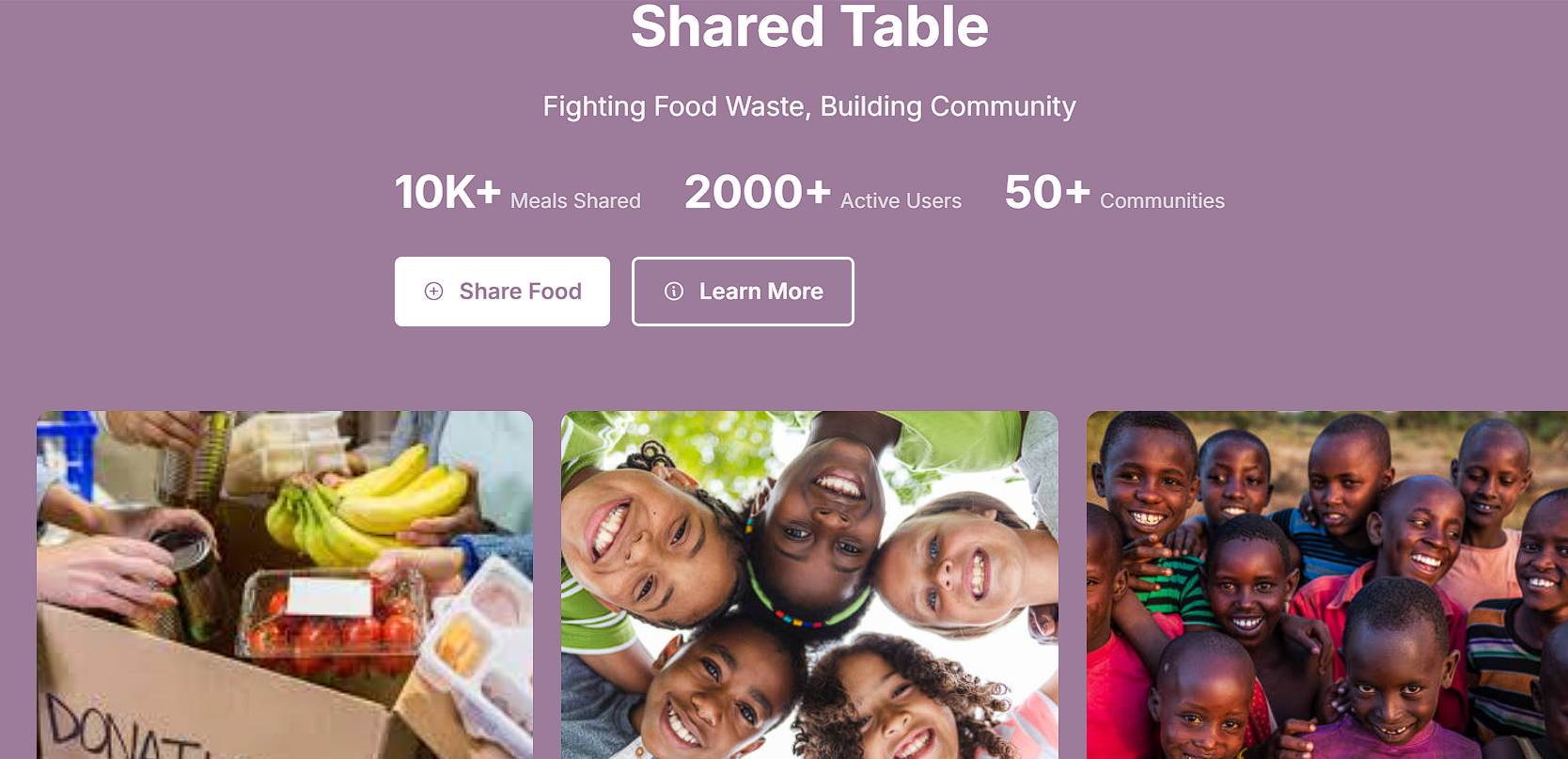
What Inspired Me: The inspiration behind Shared Table came from the alarming global issue of food waste and food insecurity. According to the UN, nearly one-third of all food produced worldwide is wasted, while millions go hungry daily. I wanted to create a platform that bridges this gap by connecting people with excess food and those in need. The idea was to build a community-driven solution that reduces food waste and fosters a sense of togetherness and support.
What I Learned: Throughout the development of this project, I gained valuable skills and insights:
Web Development: I deepened my understanding of HTML, CSS, and JavaScript, especially creating responsive and user-friendly interfaces.
User Experience (UX): I learned how to design forms and navigation that are intuitive and accessible for all users.
Problem-Solving: Tackling challenges like form validation, dynamic content rendering, and ensuring cross-browser compatibility taught me how to think critically and debug effectively.
Community Impact: I realized how technology can be a powerful tool for social good, and I became more aware of the importance of sustainability and community building.
How I Built the Project: The project was built using a combination of front-end technologies:
HTML: Structured the content and created forms for donating and receiving food.
CSS: Styled the website to make it visually appealing and responsive, ensuring it works well on desktop and mobile devices.
JavaScript: Added interactivity, such as form validation, dynamic loading states, and simulated API calls for form submissions.
Phosphor Icons: These are used for intuitive and modern icons to enhance the user interface.
Google Fonts: Integrated the Inter font for a clean and modern typography style.
The project was designed with a mobile-first approach, ensuring accessibility and usability across all devices. I also focused on creating a clean, minimalist design to make the platform easy to navigate.
Challenges I Faced:
Form Validation: Implementing real-time validation for the donation and request forms was tricky. I had to ensure all required fields were filled out correctly before submission.
Responsive Design: Making the website look good on all screen sizes required careful planning and testing, especially for the hero section and form layouts.
Dynamic Content: Initially, I wanted to dynamically show forms on the same page based on user selection. However, separating them into different pages (donate.html and receive.html) was more practical.
Simulating Backend Functionality: Since this is a front-end project, I had to simulate backend processes (like form submissions) using JavaScript, which required creative problem-solving.
Conclusion: Shared Table is more than just its site—it's a vision for a world where food waste is minimized and communities come together to support one another. Building this project taught me the importance of empathy in design and the power of technology to create meaningful chanterelle. There's room for improvement (like integrating an actual backend or adding a food-matching algorithm). Still, I'm proud of what I've accomplished and excited about the potential impact this platform could have.
Together, we can fight food waste and build stronger communities—one shared meal at a time.

Log in or sign up for Devpost to join the conversation.