-
-
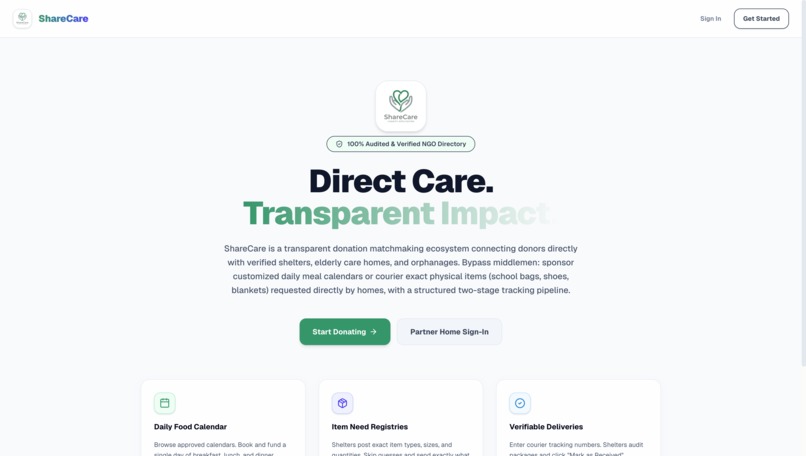
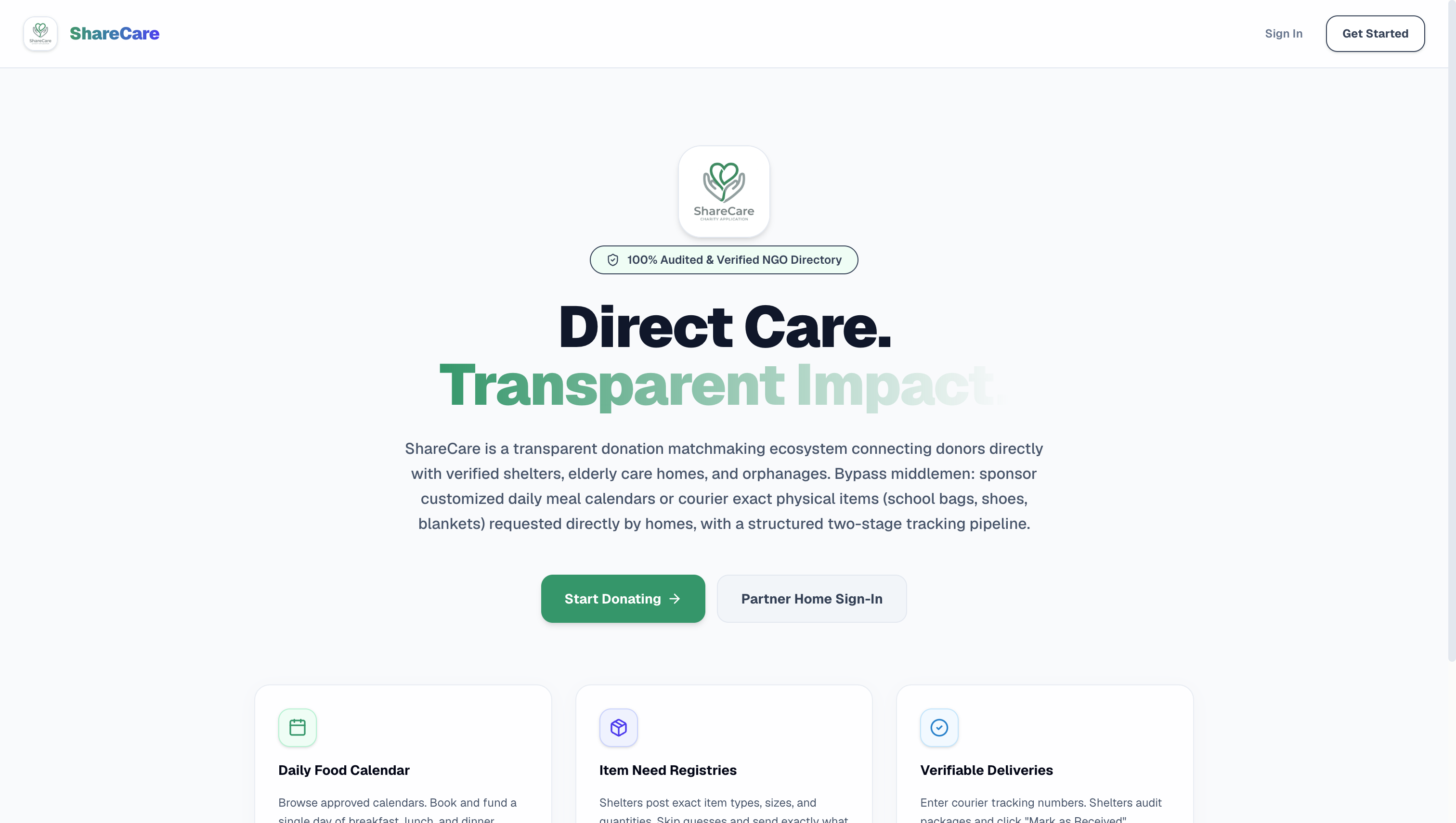
Home Page
-
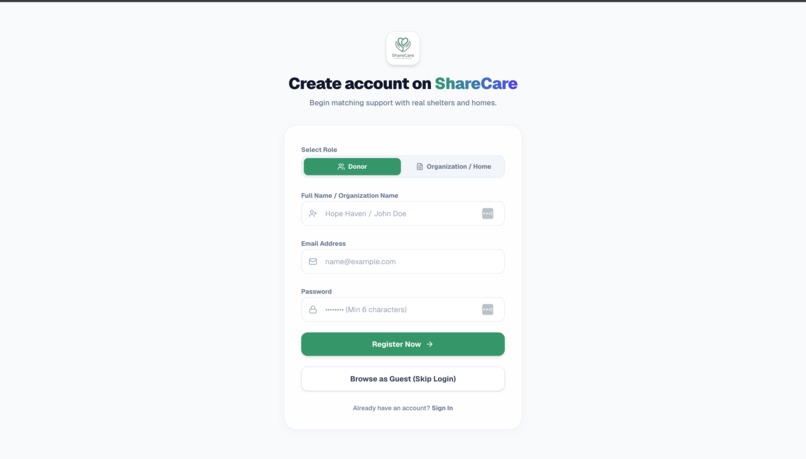
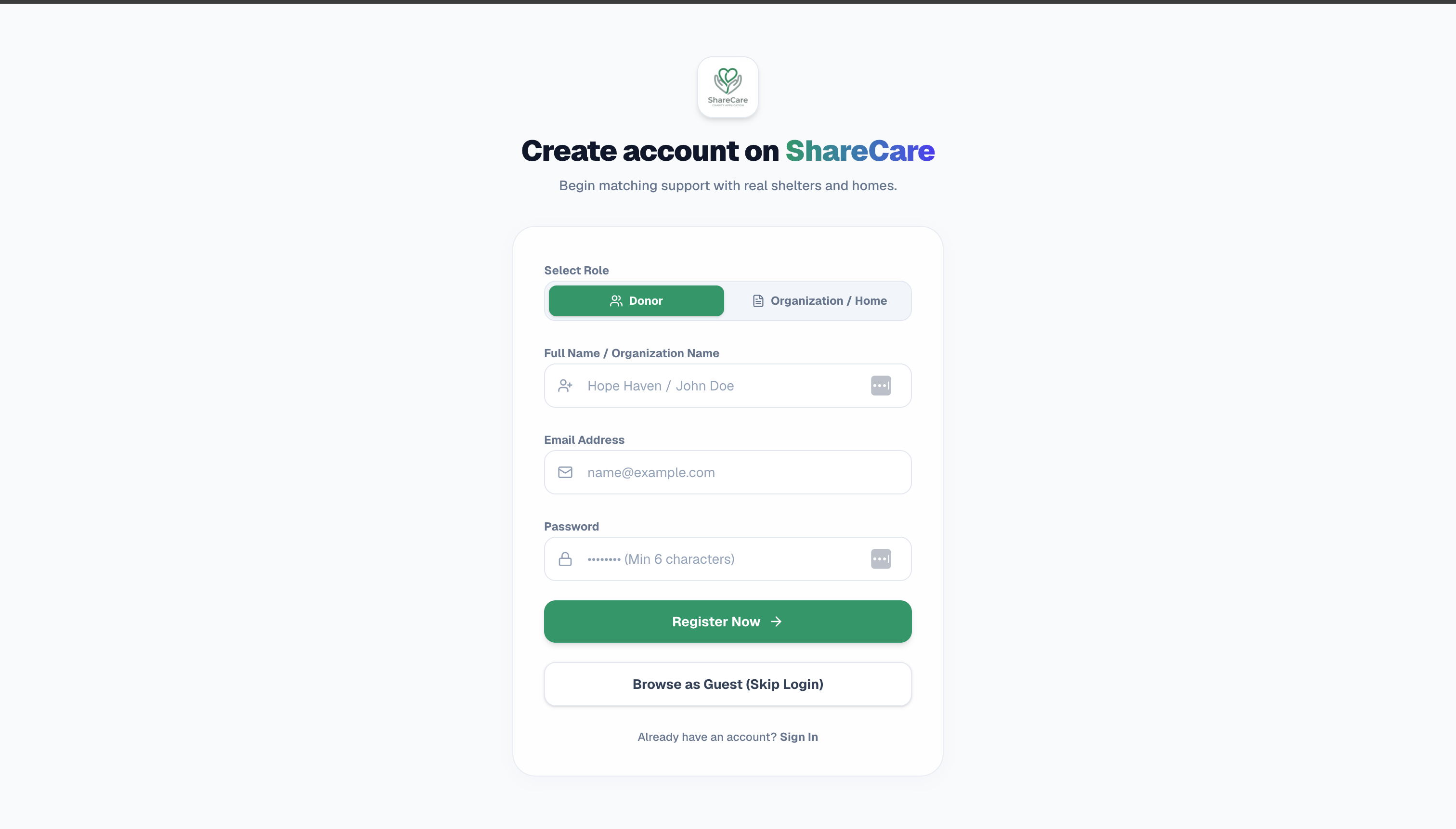
User Sign up
-
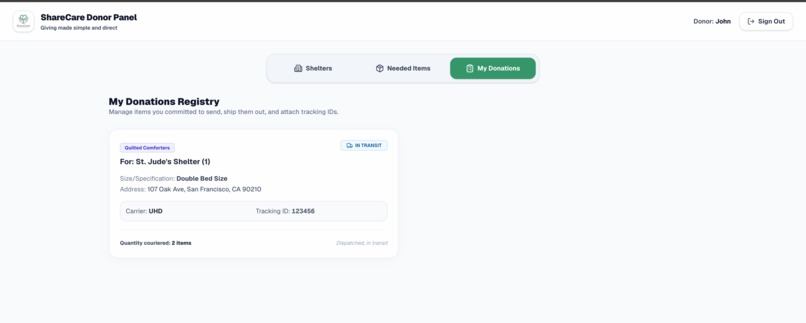
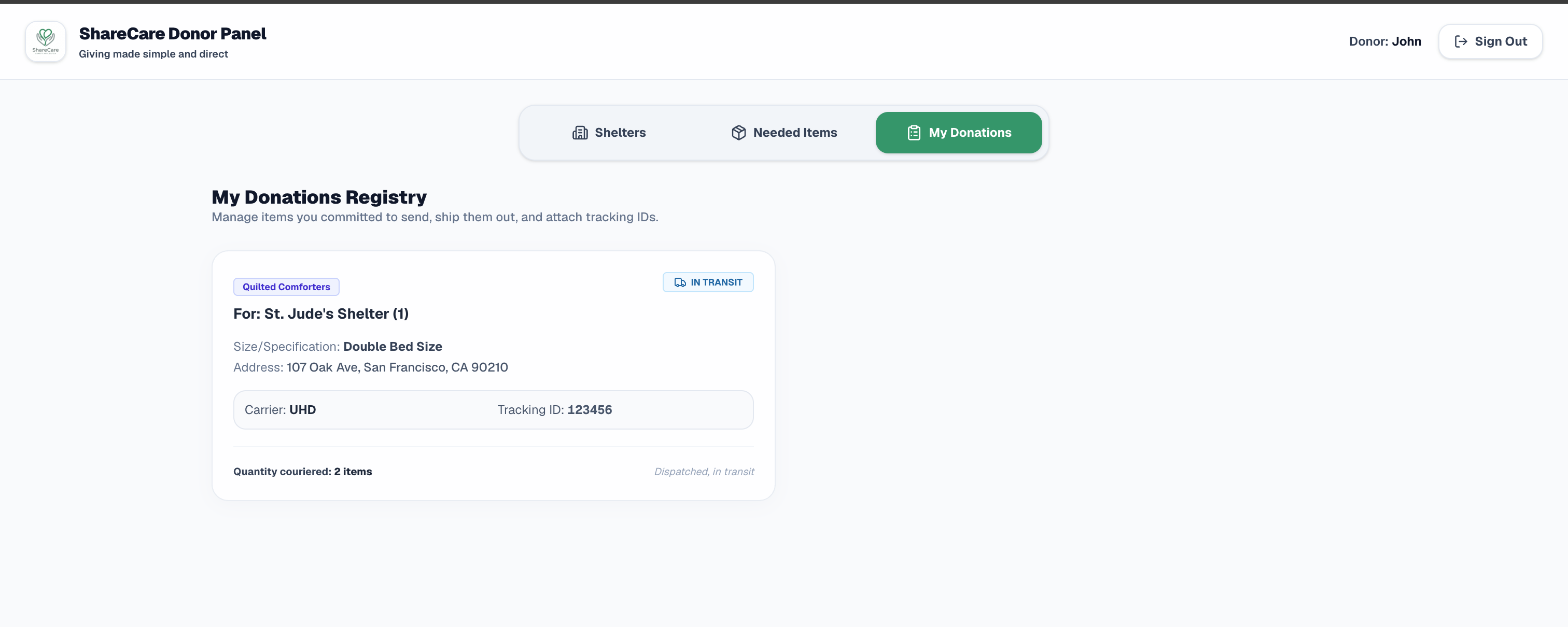
Donation Tracker - Intransit
-
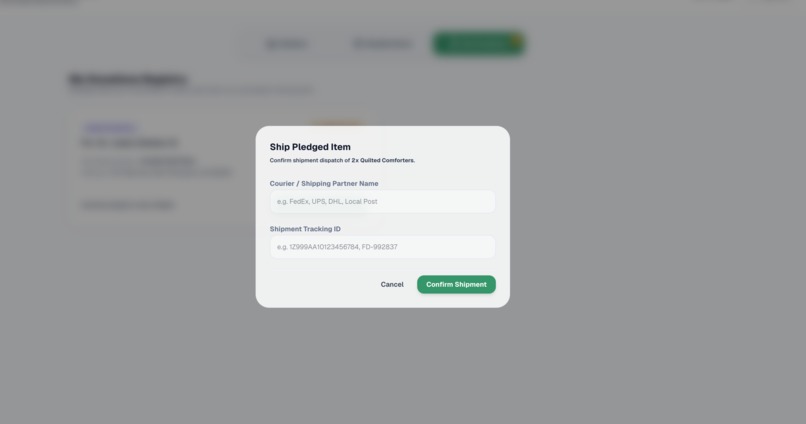
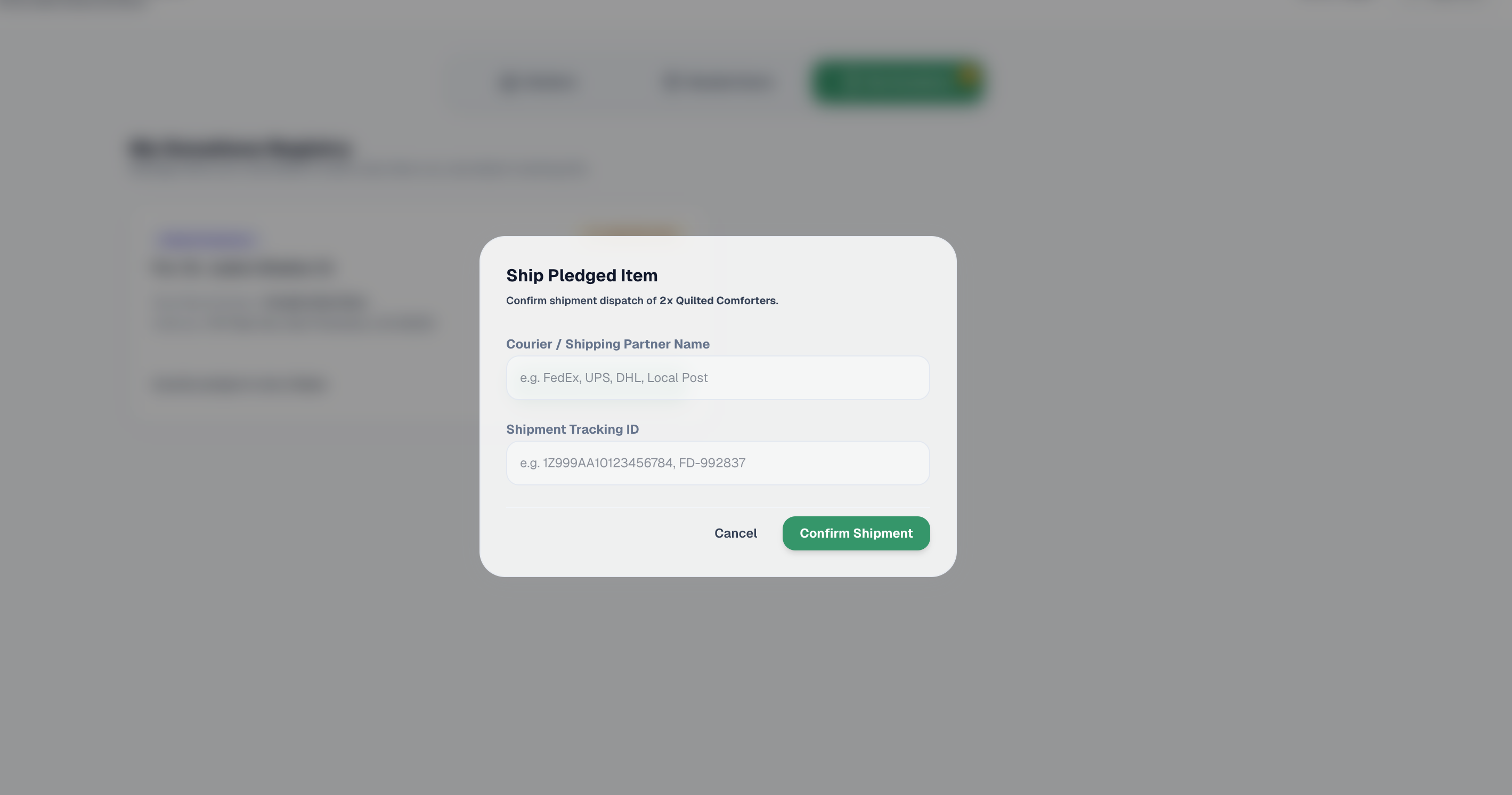
Tracker Id input
-
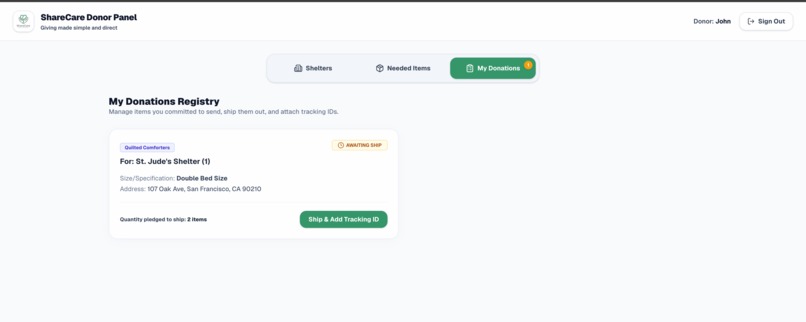
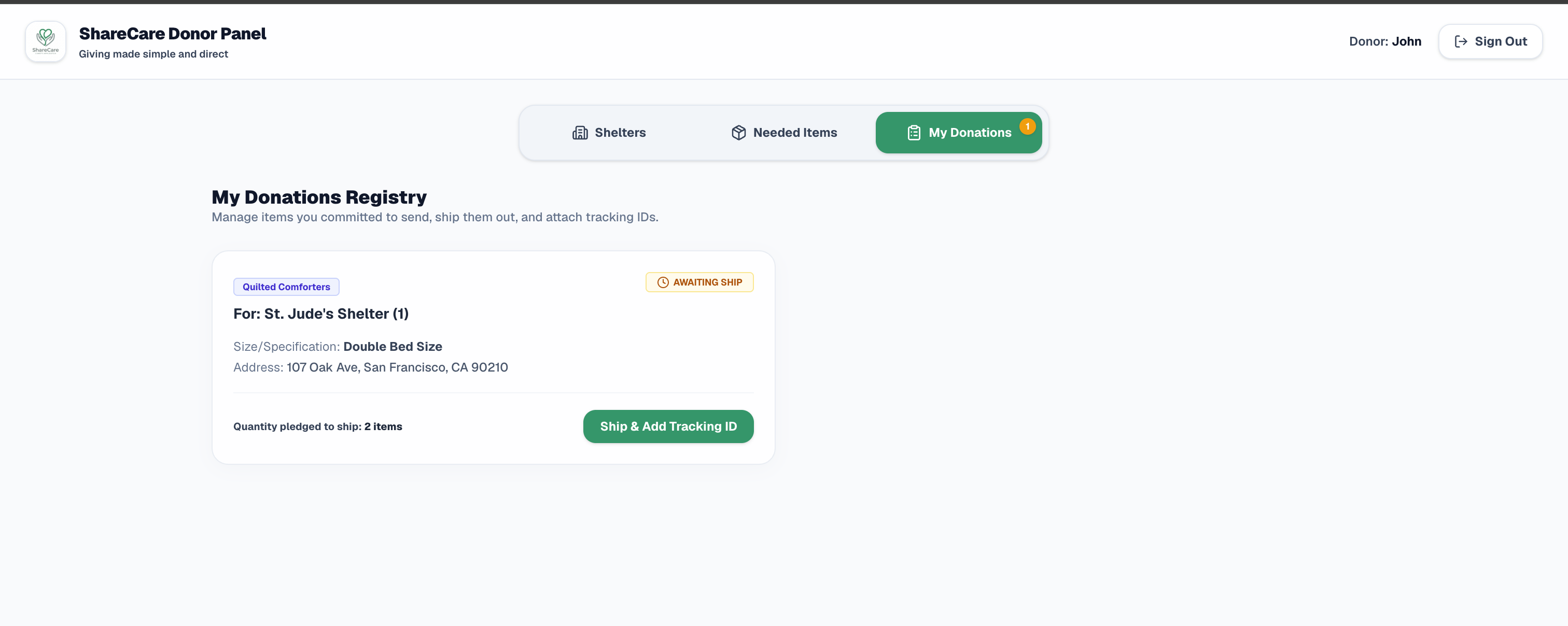
Donation Tracker screen - Pending state
-
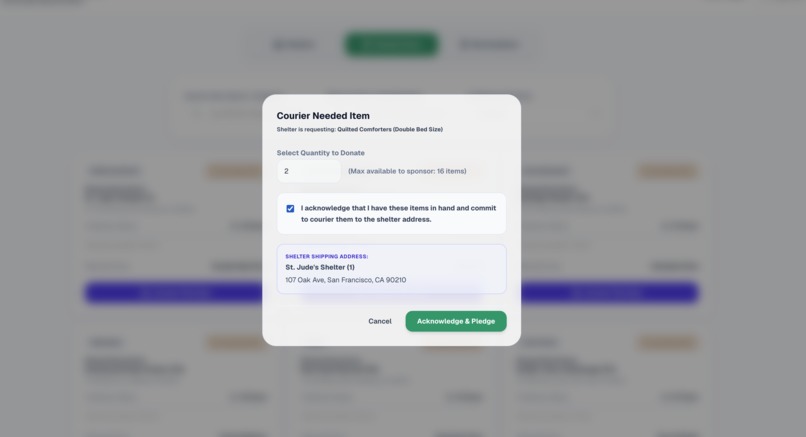
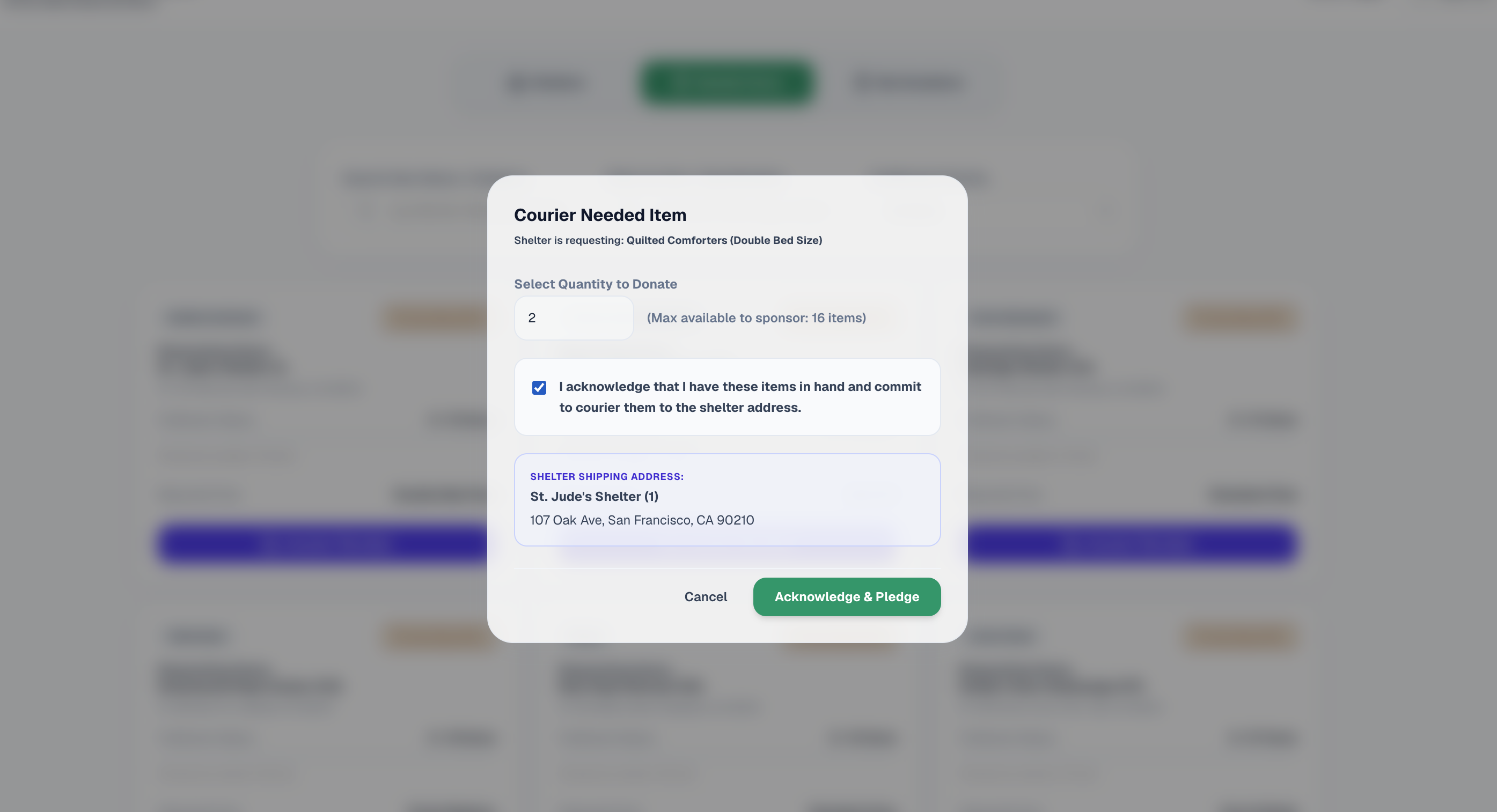
Acknowledgement
-
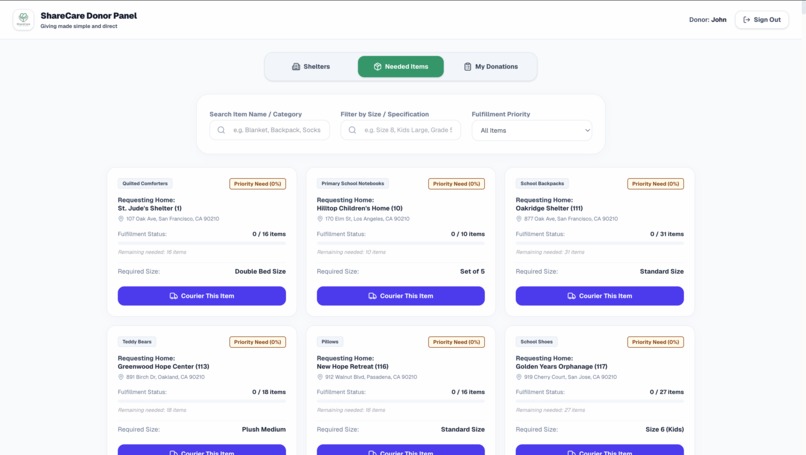
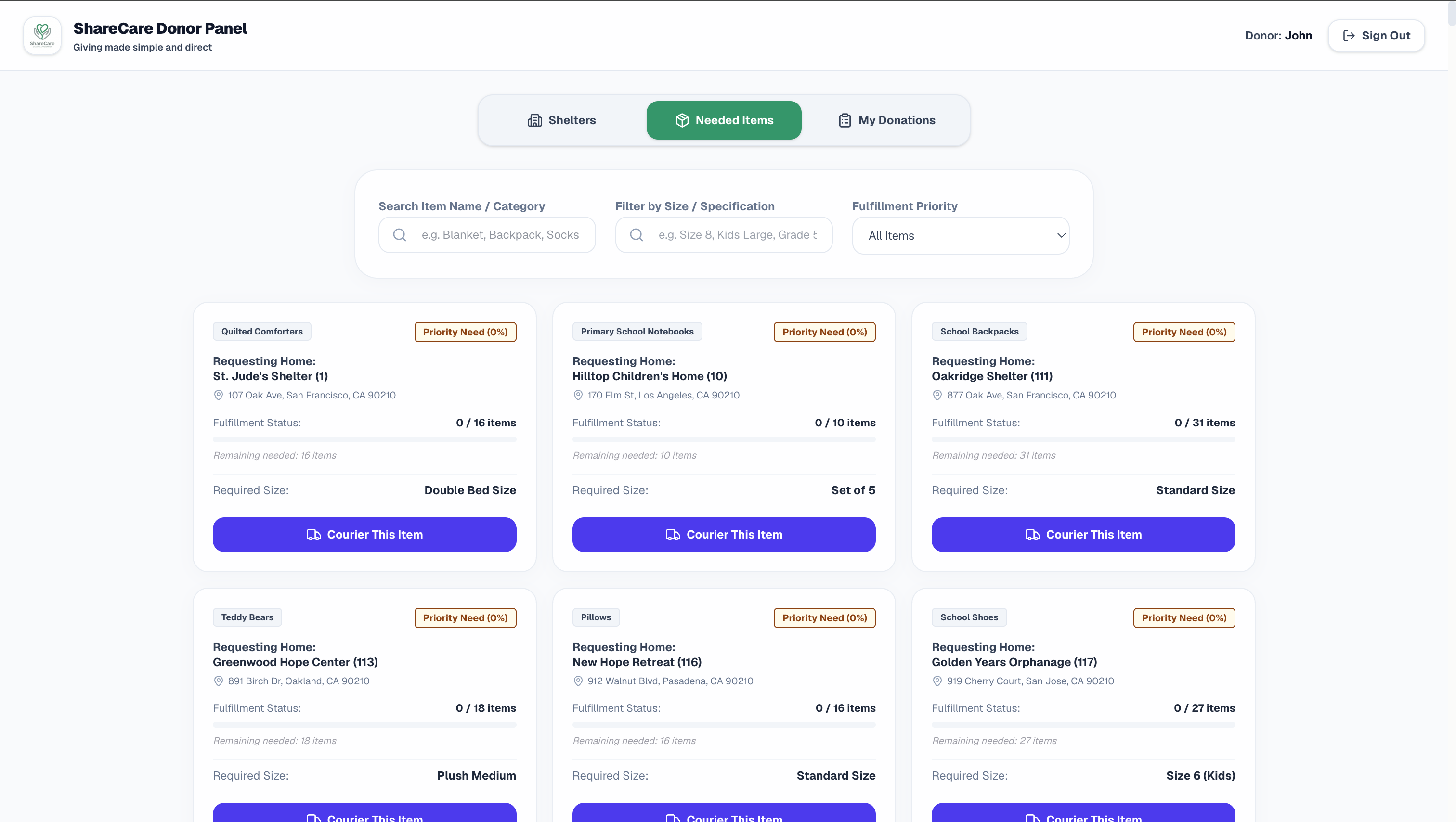
Dashboard - Needed Item
-
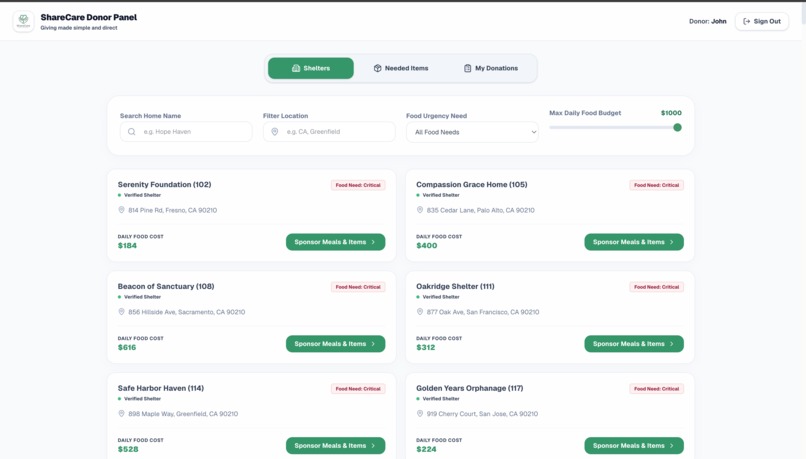
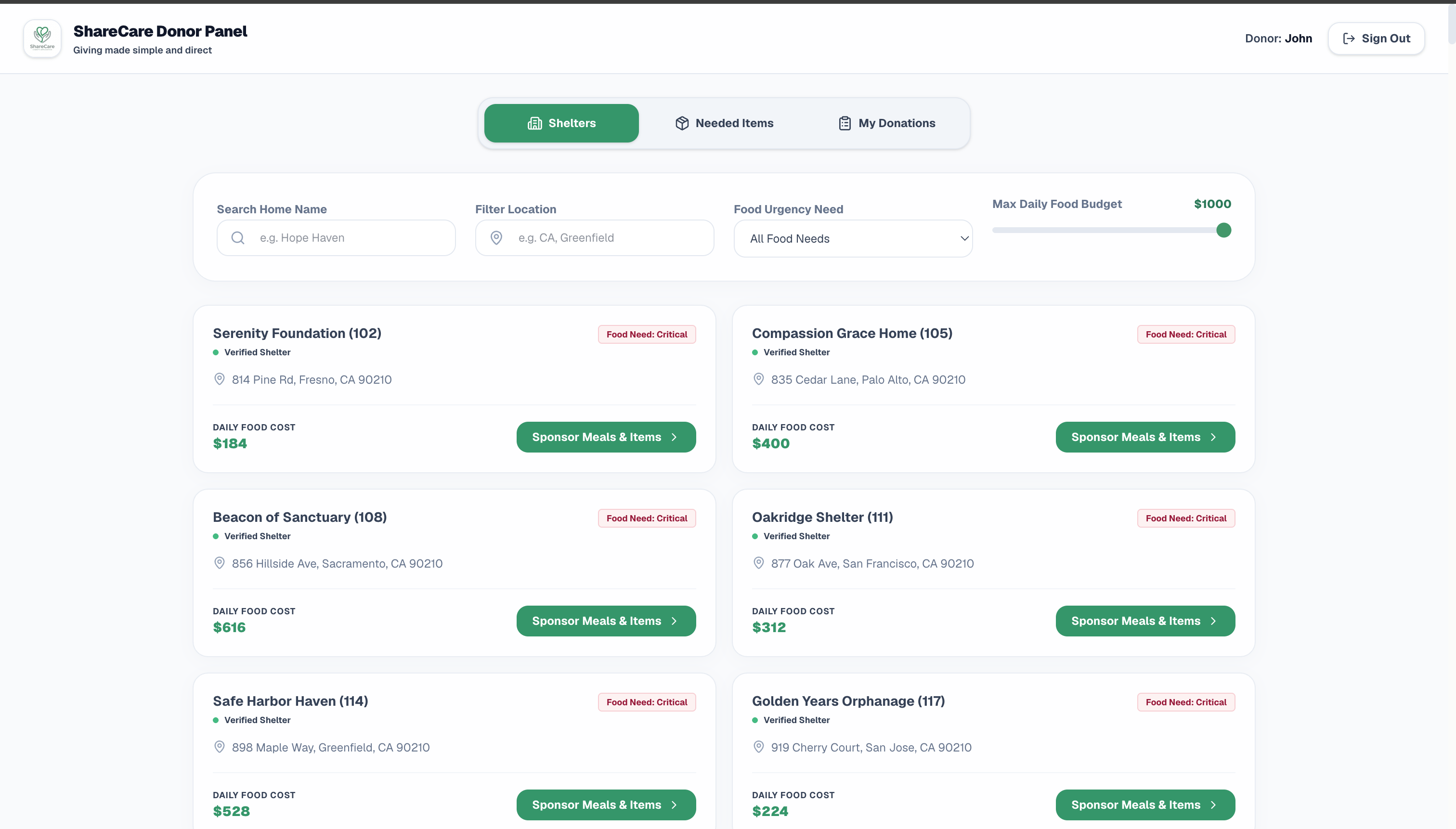
Dashboard - Food
-
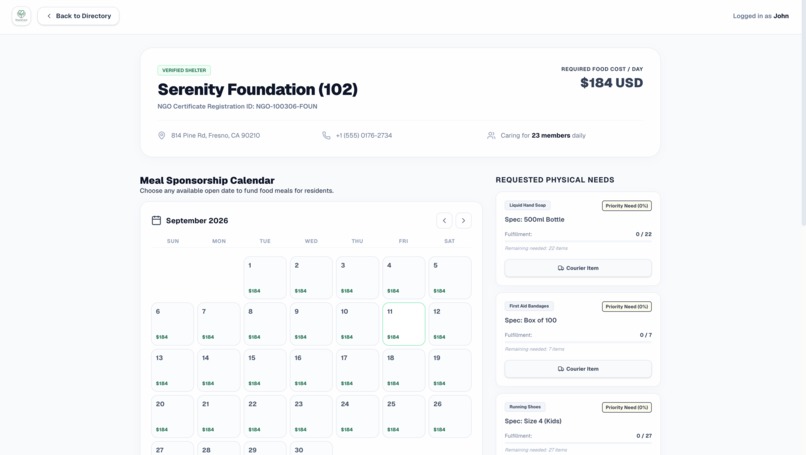
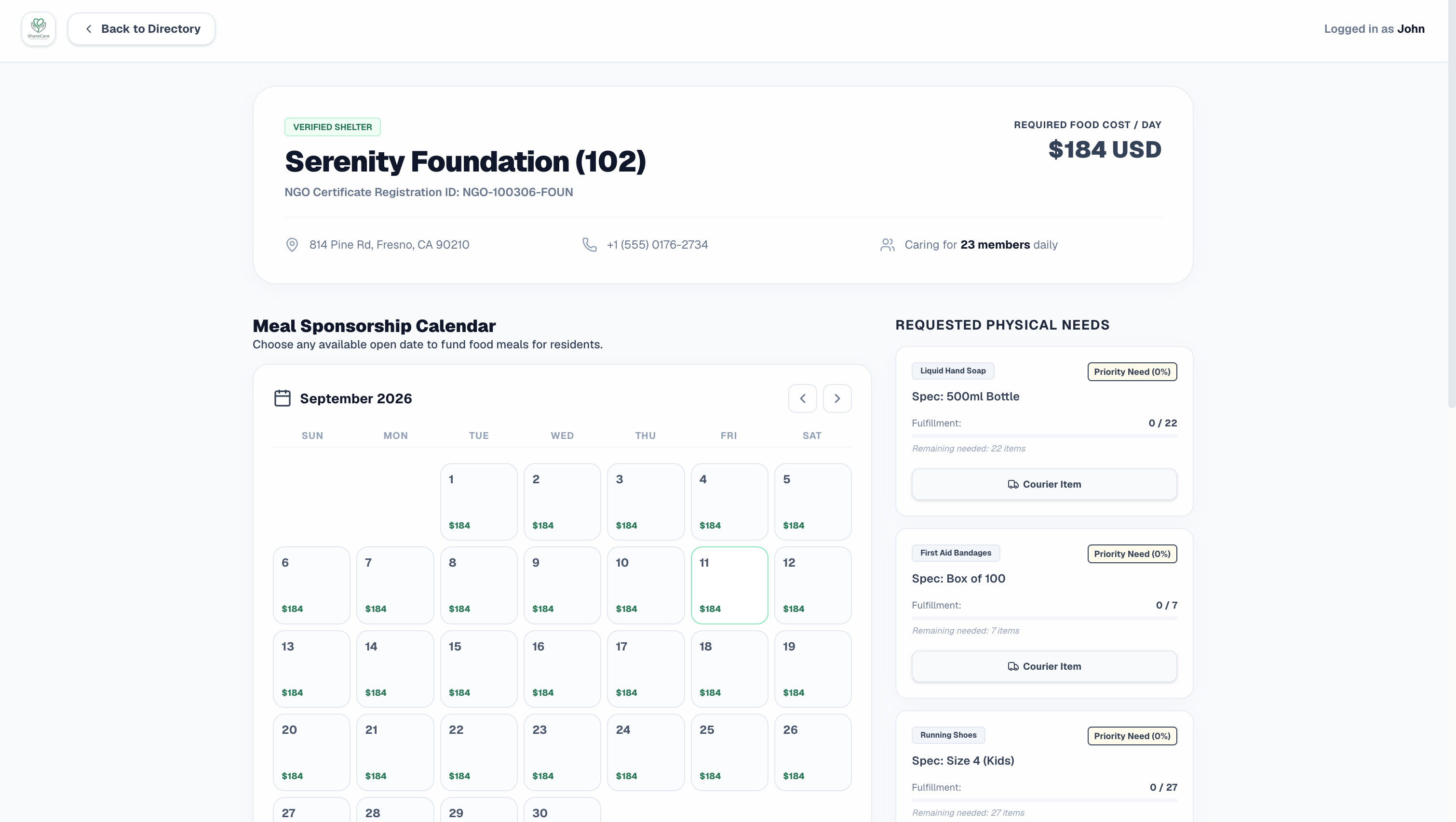
Food Date selection
-
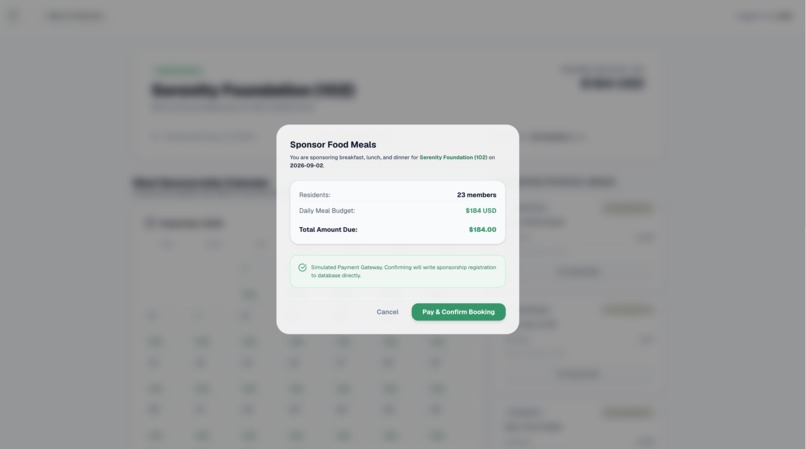
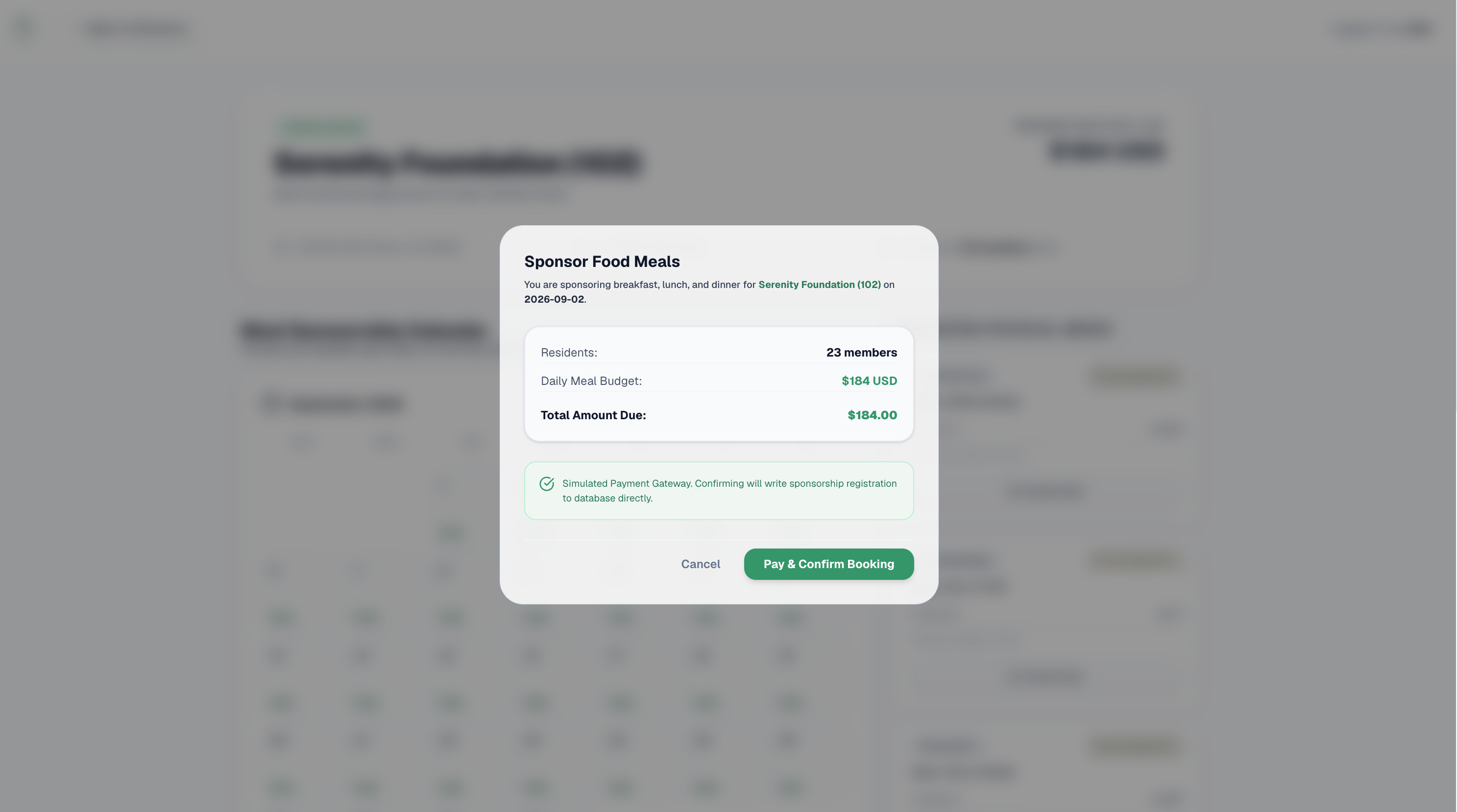
Food Payment Confirmation
Inspiration
The inspiration for ShareCare comes from a childhood memory. My grandmother used to pack bundles of clothes, books, and blankets every month to donate to a specific orphanage near our home. One day she returned home upset. She had noticed the items she donated in previous months sitting in a storage room, completely unused—there simply weren't children of the right age or size at that home to use what she had given. She said to me: "I know there must be other shelters that are desperately running out of these exact things right now. How can I find them?"
Recently, this came back to me when I received phone calls from local shelters describing severe daily shortages of food. Yet, nearby prominent facilities were receiving excess donations. This confirmed a systemic inefficiency: charity is distributed unevenly when there is no coordination.
ShareCare was built to solve this. By centralizing directories, showing real-time item requests, and sorting homes by urgency, we ensure donations go exactly where they are needed most.
What it does
ShareCare coordinates charity through three integrated portal views, creating a transparent, closed-loop matching marketplace:
1. The Donor Portal (Direct Giving & Guest Discovery)
Designed to remove friction and inspire confidence, the Donor Portal provides a clean, visual directory of all verified shelter partners.
- Guest Browsing: Anyone can skip login to browse active shelters and physical item registries, encouraging open discovery before commitment.
- Interactive Meal Sponsorship Calendar: Donors can review a shelter's daily breakfast, lunch, and dinner menus. They can select any open date to sponsor all three meals directly based on the shelter's precise, audited daily budget.
- Needed Items Registry: A centralized registry displaying physical item requests (blankets, clothing, books) posted directly by shelters. Donors can search by name, filter by location, item category, and specific sizes. To prevent rotting waste and storage decay, raw grocery items are strictly prohibited.
- Two-Stage Courier Tracking: When a donor claims an item, it is marked as "Pledged (Awaiting Dispatch)". Once shipped, the donor enters the courier carrier (UPS, FedEx, etc.) and Tracking ID, moving the item to "In Transit" and allowing the shelter to expect the package.
- Fulfillment Urgency Indicators: Shelter lists are sorted descending by food security level (Critical Need at the top), while item cards are sorted ascending by claimed percentage to highlight underfunded requests first.
2. The Organization Portal (Shelter Operations)
The dashboard for verified partner homes, old-age shelters, and orphanages to declare their needs and track incoming aid.
- Physical Needs Manager: Shelters create requests for specific items, detailing the type, required size/specification, and quantity. They can edit or delete these needs as their local demographics change.
- Daily Menu & Budget Planner: Shelters input details of their standard daily breakfast, lunch, and dinner, alongside their calculated daily food cost. This automatically generates their interactive public sponsorship calendar.
- Incoming Shipment Tracker: A real-time log of pledged and shipped donations. It lists carrier names and tracking IDs. Once a box arrives, the shelter clicks "Receive", which credits the quantities, updates the fulfillment ratio, and notifies the database.
3. The Super Admin Portal (System Auditing)
An administrative control center designed to protect the integrity of the ecosystem.
- Vetting Pipeline: Admins review all pending organization profiles. They can inspect uploaded verification documents, registration numbers, addresses, and choose to "Approve" (publishing the shelter live) or "Reject" them.
- Systemic Auditing: Allows admins to monitor registered users, ensure compliance with the grocery-free registry rules, and monitor global resource distribution.
How we built it
- Frontend: Built with React and Next.js 16 (App Router). Styled using Tailwind CSS following a customized "Peace Theme" visual system (warm off-whites, frosted glassmorphic card containers, and soothing sage/emerald highlights).
- Database / Backend: Powered by a simulated client-side Firebase SDK wrapper that manages data tables inside browser LocalStorage.
- Scale Validation: Programmatically pre-seeded exactly 200 homes (approved, pending, and rejected states) and 1,000 request requirements to test search filter performance.
Challenges we ran into
- The "Promised Donation" Loophole: Donors often pledge items but forget to ship them, leaving shelters expecting pantries to fill. We resolved this by building a strict Two-Stage Courier Pipeline that separates claims from dispatch records, reserving quantities but showing them as pending until a tracking ID is registered.
- Search Discovery at Scale: Navigating 1,200 records caused clutter. We implemented high-performance search queries (item name/category search, location search, size filters, daily budget limits, and urgency filters) paired with dynamic priority-based sorting.
Accomplishments that we're proud of
- Zero-Warning Production Build: The entire codebase compiles cleanly under Next.js static generation page optimizations with 0 compiler warnings and 0 TypeScript type errors.
- Cohesive Visual Identity: The app looks premium, neat, and highly consistent across the public homepages, login portals, donor panels, and admin verification dashboards.
- Impactful Mission: Designed a practical, logistics-driven solution to solve real resource matching problems for shelters.
What we learned
- Feedback loops build trust: Donors want logistics transparency. Providing a courier tracking portal changes charity from a game of chance into a reliable logistics loop.
- Dataset Seeding: Seeding high-fidelity mock data early in development is critical to verify search filters, sorting orders, and component performance before shipping.
What's next for ShareCare
- Live Firebase Integration: Transitioning the LocalStorage mock engine into a live production cloud Firestore, Firebase Authentication, and Cloud Storage cluster.
- Route Optimization: Integrating local map APIs to plan optimal physical donation collection routes for local courier drivers.
- Tax Exemption Tokens: Automatically generating downloadable tax receipt certifications (e.g. 501(c)(3) cards) for verified donor transactions.
Built With
- css3
- firebase
- html5
- javascript
- localstorage
- next.js
- node.js
- npm
- react
- tailwind-css
- typescript

Log in or sign up for Devpost to join the conversation.