
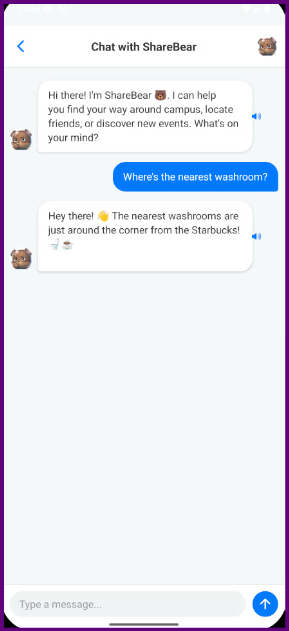
ShareBear 🧸 Accessibility-Native Campus Companion
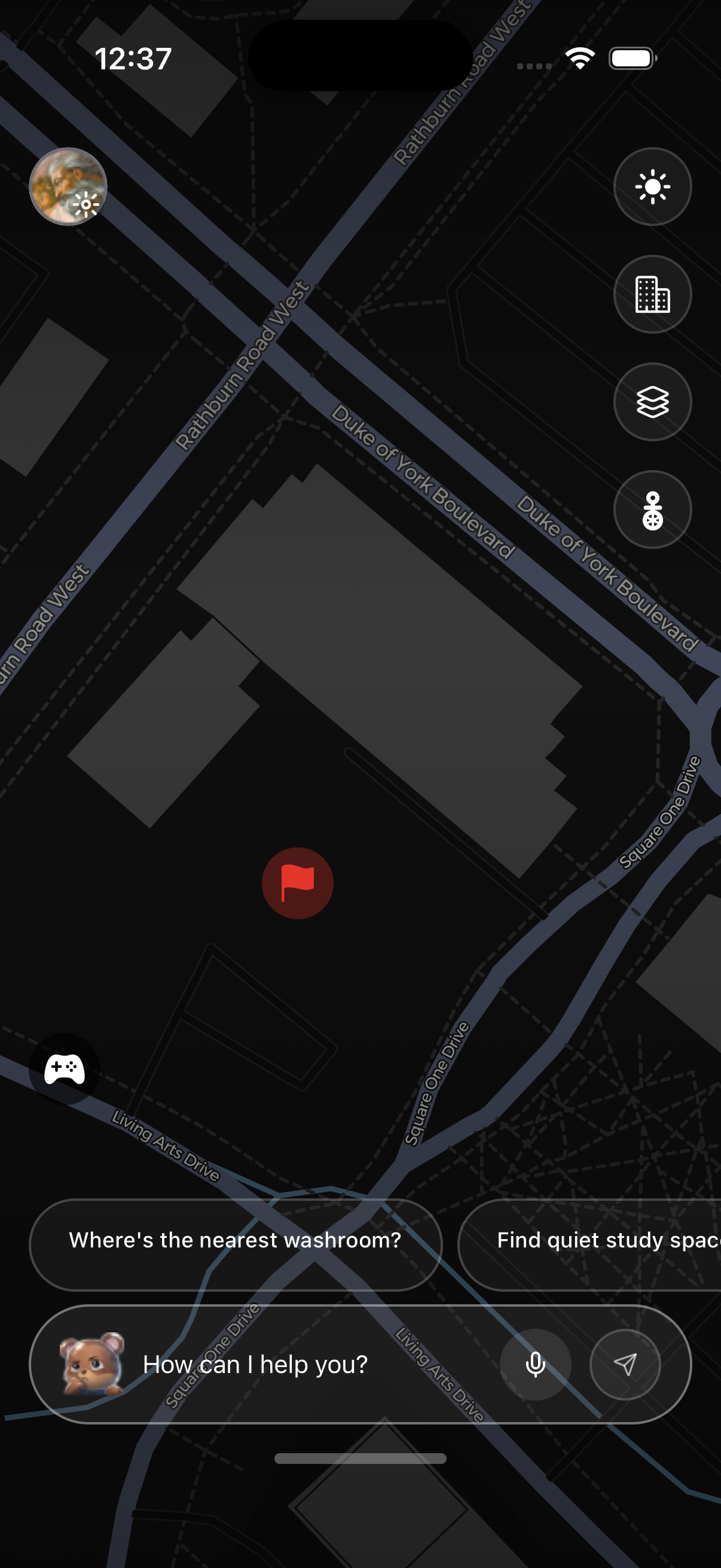
The Elevator Pitch ShareBear is an AI-powered indoor navigation system designed for accessibility. We combine Google Gemini 2.0 with custom Sensor Fusion algorithms to turn vague student questions into haptic-guided missions, helping visually impaired and neurodivergent students navigate campus independently.
The Problem Campuses are inaccessible in three ways:
Physical: GPS fails indoors, and maps are hard for color-blind users to read.
Social: Asking "Where is the registrar?" creates anxiety for students with autism or social disorders.
Cognitive: Complex administrative processes are overwhelming without clear steps.
What It Does We replace confusing maps with a simple 3-step pipeline:
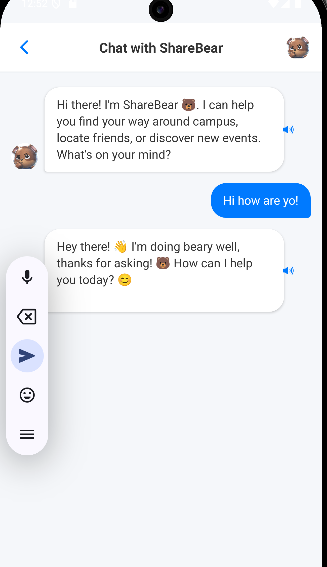
Contextual AI: You ask, "I need to drop a class." The AI (Gemini 2.0) understands the intent, finds the Registrar, and generates a "Mission Card" with a script of exactly what to say.
Sensor Fusion Navigation: Since GPS doesn't work indoors, we use the phone’s gyroscope and accelerometer to track your location floor-by-floor.
Haptic Guidance: The phone vibrates to tell you where to turn (e.g., Double Pulse = Left). Visually impaired users can navigate without ever looking at the screen.
How We Built It (The Tech Stack) We didn't just use APIs; we built a custom navigation engine.
Sensor Fusion (The Hard Part): We implemented Pedestrian Dead Reckoning (PDR) combined with a Kalman Filter. By tracking step counts and heading changes from the IMU sensors, we calculate position without GPS.
Map Matching: To stop the user "drifting" through walls, we wrote an algorithm that snaps the user's location to the nearest valid hallway node on our floor graph.
Google Gemini 2.0: We use few-shot prompting to inject campus context (hours, room numbers, services), turning the LLM into a campus expert.
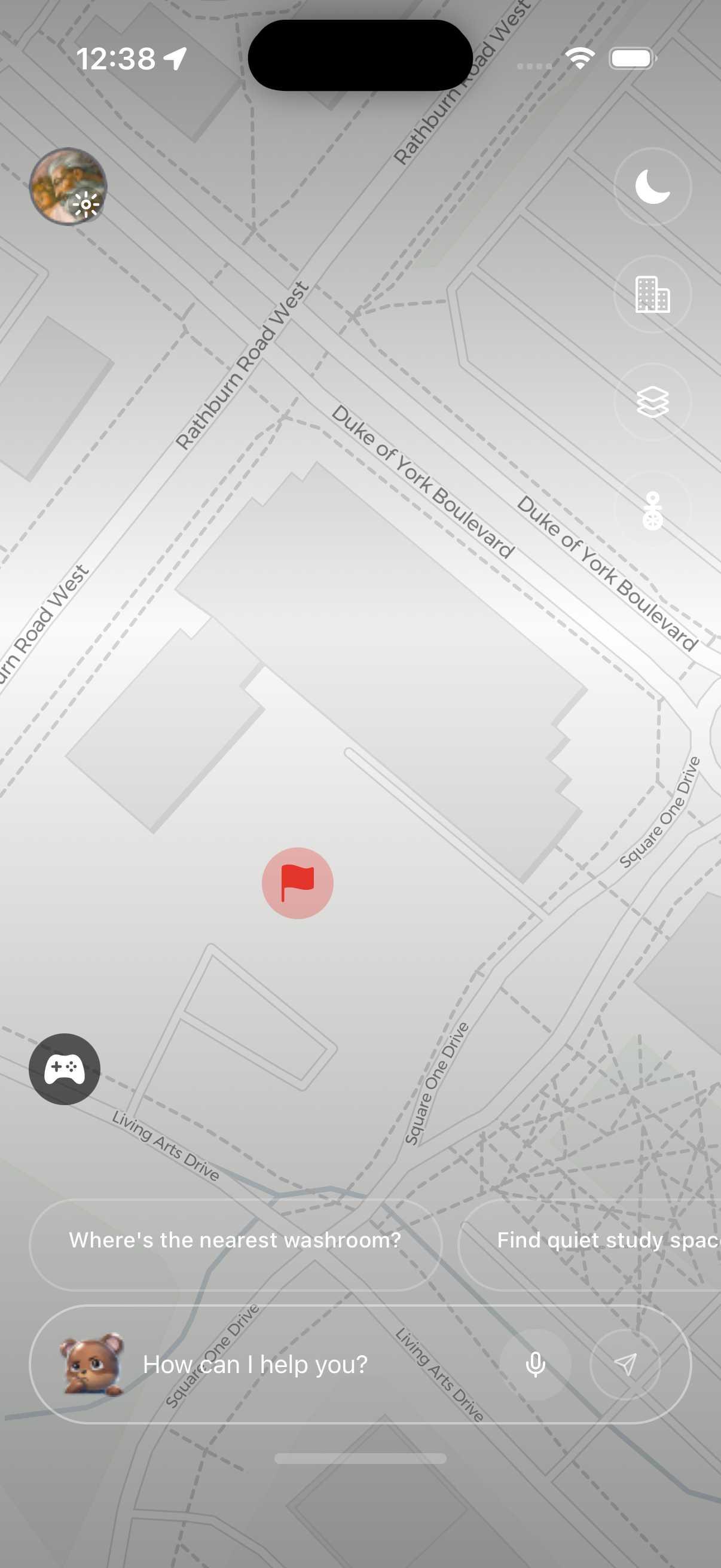
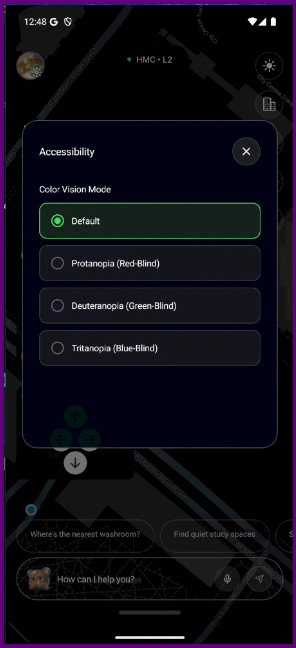
React Native & Haptics: We engineered a custom "vibration language" and used Reanimated for a 60fps glassmorphic UI that is fully high-contrast accessible.
Challenges & Accomplishments The "Drift" Challenge: Sensors are noisy. We spent hours tuning our Map Matching algorithm to correct position errors when the sensors drifted.
Haptic Tuning: We blind-tested vibration patterns to ensure "Turn Left" felt distinct from "Turn Right" without looking.
The "Anxiety" Feature: We are proudest of the Script Generator—giving students literal text to read when they reach an office reduces social anxiety significantly.
What's Next :) WiFi Fingerprinting: Using signal strength to correct location drift automatically. Background Nav: Running the PDR engine while the phone is locked. Solana Campus Credits: A reward system for checking into study zones.


Log in or sign up for Devpost to join the conversation.