Problem Statement: Food insecurity is still a serious problem in our culture since many individuals struggle to meet their basic nutritional needs while a large amount of food is wasted. There aren't any effective procedures that link surplus food donors with NGOs and people helping underprivileged communities. As a result, there is more food wasted and ongoing hunger among vulnerable communities. This results in missed opportunities for food redistribution. A web-based solution is required to close the gap between surplus food donors and NGOs, enabling the efficient and smooth distribution of surplus food to people in need. The goal of the proposed project is to create a website that acts as a central platform, linking food donors with NGOs and individuals and allowing them to communicate and coordinate.
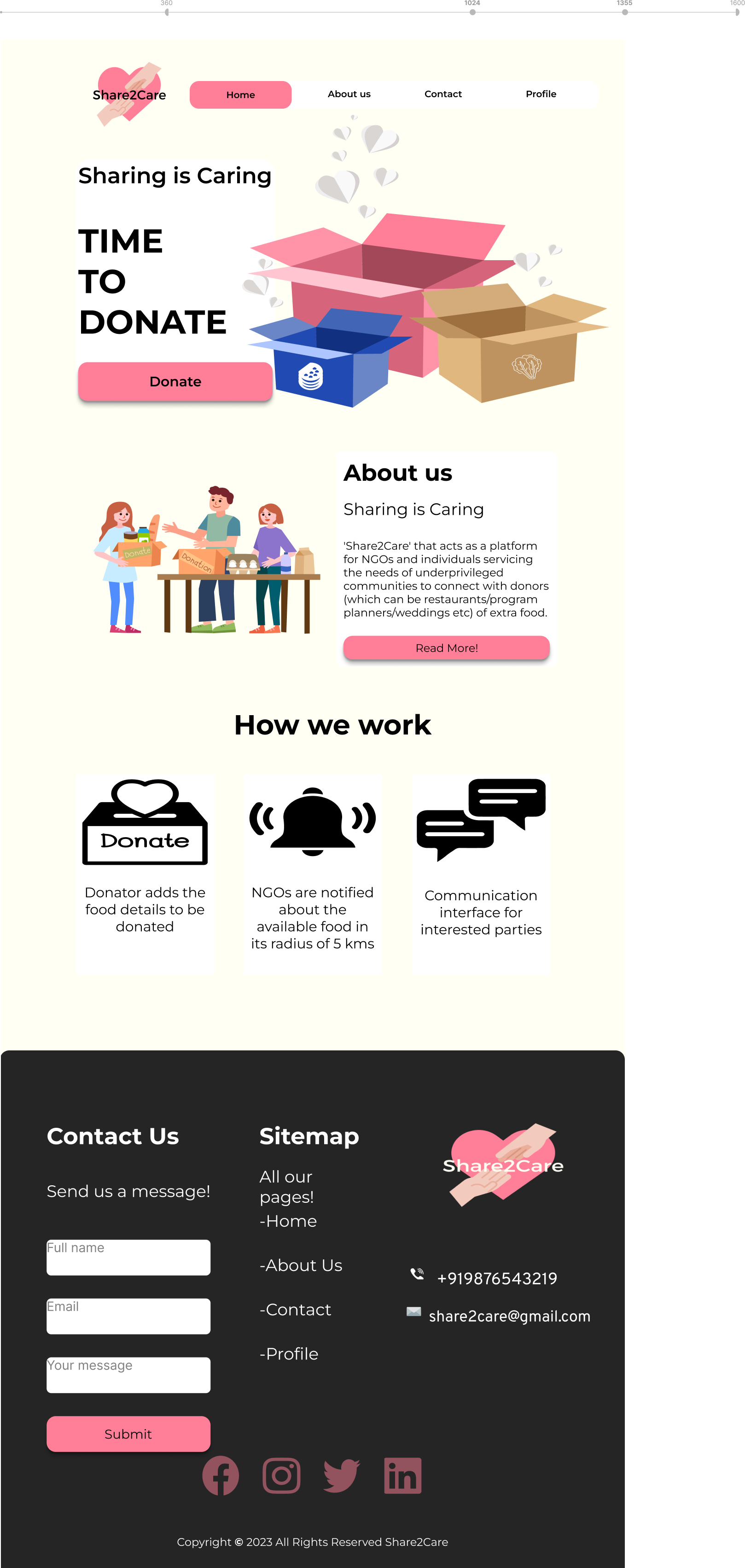
Abstract/Solution: The solution is to create a website 'Share2Care' that acts as a platform for NGOs and individuals servicing the needs of underprivileged communities to connect with donors (which can be restaurants/program planners/weddings etc) of extra food. The website offers a central location for food donors to list their excess supplies, making it simple for NGOs to find and gather these donations for distribution to people in need. The website encourages timely and effective food redistribution, as well as waste reduction and the solution of the problem of food poverty. The proposed platform enables seamless collaboration between donors and NGOs, increasing community participation and promoting a more sustainable approach to food distribution through intuitive user interfaces, comprehensive search and filtering capabilities, and secure communication channels. The project will be created as a hackathon initiative, with an emphasis on delivering a usable prototype within the allotted timeframe while taking scalability and possibilities for further development outside of the hackathon into consideration.
Future Scope Going ahead, we can implement concepts of AI and big data analytics to obtain precise results. The observations made from the results can help streamline the process.
Intelligent Matching Algorithm: Develop an AI-powered algorithm that can match available food donations with suitable NGOs based on proximity, dietary requirements, capacity, and urgency. This algorithm could optimize the allocation of food resources and streamline the donation process.
Image Recognition and Food Classification: Utilize computer vision and image recognition techniques to identify and classify different types of food items. This technology can assist in automating the process of cataloging and inventory management, making it easier for restaurants and NGOs to track and distribute donated food.
Predictive Analytics and Demand Forecasting: Use data analytics and machine learning algorithms to predict future food donation trends and demand from NGOs. By analyzing historical data, the platform can provide insights on when and where food donations are likely to be more abundant or needed, enabling better planning and coordination.
Natural Language Processing (NLP) Chatbots: Implement NLP-based chatbots to provide real-time assistance and support to NGOs and restaurant managers. Chatbots can answer frequently asked questions, guide users through the donation process, and offer personalized recommendations based on user preferences and needs.
Route Optimization and Logistics: Employ AI algorithms to optimize food collection and distribution routes, considering factors such as traffic conditions, available vehicles, and delivery schedules. This can help minimize travel time, reduce transportation costs, and maximize the efficiency of food redistribution efforts.
User Behavior Analysis: Leverage AI to analyze user behavior, interactions, and feedback on the platform. This analysis can provide valuable insights for improving user experience, identifying potential bottlenecks, and tailoring the platform to meet user needs effectively.
Blockchain for Transparency and Traceability: Explore the use of blockchain technology to ensure transparency and traceability in the food donation process. Blockchain can help maintain an immutable record of transactions, donor-NGO interactions, and food safety information, thereby enhancing trust and accountability in the system.
Mobile App with Advanced Features: Develop a mobile app with advanced features such as geolocation-based notifications, real-time updates on available food donations, and seamless communication between NGOs and restaurants. AI-based recommendation systems can suggest relevant donation opportunities to NGOs based on their preferences and past engagements.
Create Awareness via Informative Blogs: We provide informative blogs that bridge the gap between nutrition and food wastage, offering valuable insights for readers interested in maintaining a nutritious diet while addressing the issue of food waste. Our blogs explore ways to make conscious food choices that not only promote health but also contribute to reducing food waste, ensuring a sustainable and mindful approach to eating practices, which will ultimately result in less wastage of food.

Log in or sign up for Devpost to join the conversation.