-
-
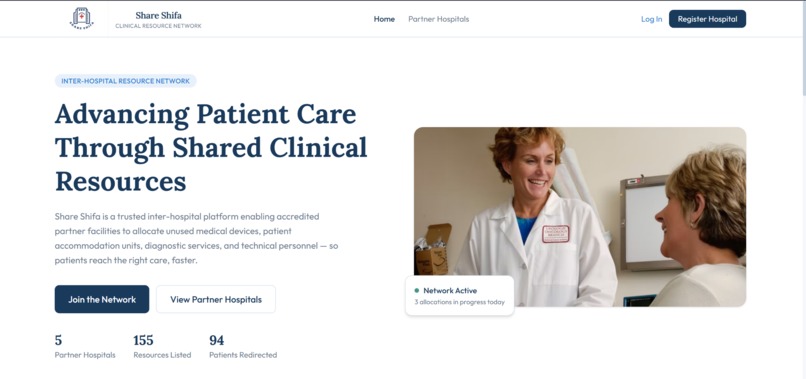
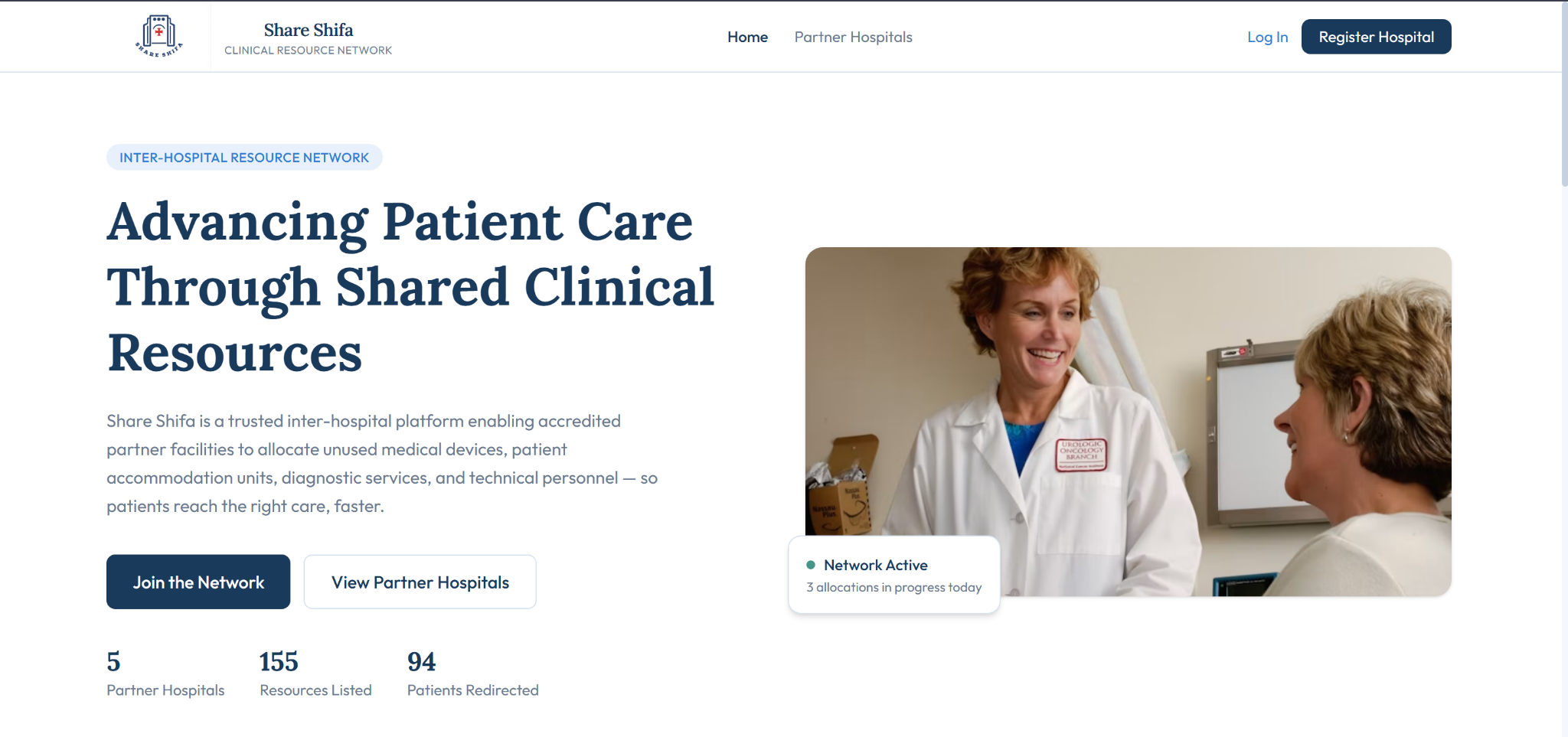
Home Page
-
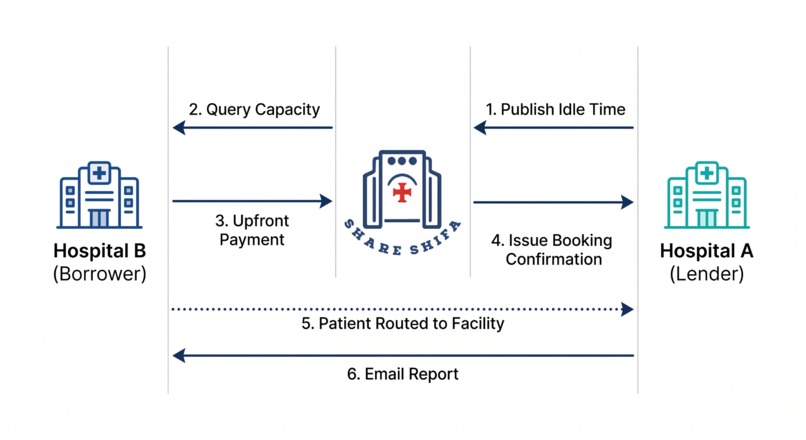
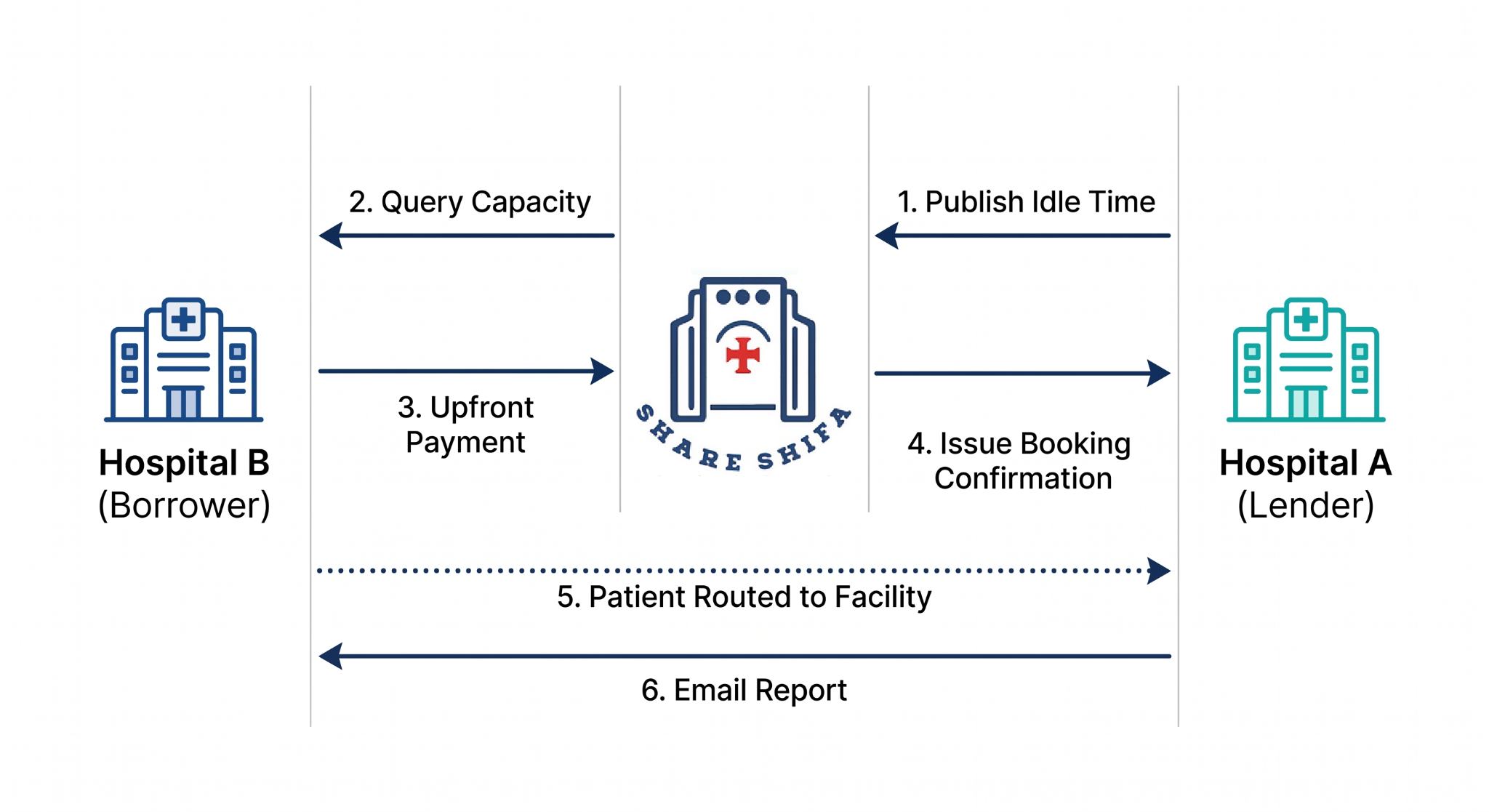
Workflow
Share Shifa
Inspiration
Our team didn't start directly with a desire to build a medical platform. Instead, we started with a conversation about a shared frustration. Every single one of us knows someone (a family member, a friend, a neighbor) stuck in the exhausting limbo of a healthcare waitlist. You sit by the phone, waiting months just for an image that will tell you what happens next.
When we looked at the data, the reality was worse than we thought. According to the June 2026 report from the Canadian Institute for Health Information (CIHI), 1 in 10 Canadians are waiting more than 200 days for an MRI. But the real shock came when we started researching why. We assumed there just weren't enough machines.
That isn't true. The bottleneck is often a routing and utilization failure.
Right now, Ontario hospitals are facing operating deficits exceeding $400 million. They cannot afford to build new wings or buy more machines. Yet, across the city, a multi-million-dollar MRI or specialized gait lab might sit completely powered down for the weekend or go unused for hours simply because patients did not route their way to a "less-crowded" hospital.
It feels frustrating. The healthcare system is trying to build its way out of a crisis with capital it doesn't have, while existing, life-saving infrastructure sits idle behind administrative silos. We realized that if we stopped treating this as purely a medical problem and started treating it as a localized supply-chain and optimization problem, we could unlock capacity that already exists. That is when we created Share Shifa.
What it does
Share Shifa is a B2B marketplace that lets hospitals instantly share idle resources to clear patient backlogs, completely avoiding the need for new capital expenditure. By using an upfront B2B leasing fee, the platform bypasses the bureaucratic nightmare of government shadow-billing.
Hospitals can instantly exchange three critical resource categories:
- Lab Services & Imaging: Hospital B books Hospital A's idle MRI. The patient travels, Hospital A's staff performs the scan (bypassing credentialing friction), and the DICOM report is securely emailed back.
- Patient Beds: Facilities facing a surge can instantly locate and lease empty Alternate Level of Care (ALC) or overflow rehab beds at neighboring hospitals.
- Take-Home Diagnostics: Idle physical inventory, like Holter monitors, continuous EEGs, or glucose monitors, can be leased and couriered directly to hospitals facing acute shortages.
Share Shifa transforms a multi-million-dollar infrastructure bottleneck into a simple, frictionless logistics solution.
How we built it
The Tech Stack
- Architecture: Built entirely in full-stack TypeScript for a unified frontend and backend environment.
- Database and Authentication: Powered by Supabase to securely handle hospital user logins, subscription tiers, and transaction records.
- Matching Logic: We wrote custom SQL queries to track hourly utilization fees and match real-time equipment availability against incoming hospital requests.
- UI and UX: Designed the initial layouts, custom branding, and marketplace navigation in Figma before translating them directly into the frontend build.
The Platform Workflow
- Publish: Hospital A lists its idle equipment or beds and sets the resource pricing.
- Query: Hospital B searches the marketplace for immediate availability to clear a patient backlog.
- Transact: Hospital B submits an upfront payment through the automated billing system to secure the slot.
- Confirm: The system logs the transaction and issues a booking confirmation to Hospital A.
- Route: The patient travels to Hospital A for the procedure under the Host-Operated model.
- Report: Hospital A securely transfers the diagnostic report back to Hospital B for the final diagnosis.
Challenges we ran into
- Setting up authentication with Supabase, particularly getting session handling and credential verification working reliably for the digital credentialing passport feature.
- Writing SQL queries to correctly store and calculate billing info, since pricing depends on both the resource category set by the lending hospital and the subscription tier the borrowing hospital is on.
- Translating the Figma Make designs into working frontend code, especially getting the logo and header layout to render correctly.
- Losing commit history in Git partway through the project, which we recovered using a force push.
- Debugging incorrect environment variables that were silently breaking Supabase connections.
Accomplishments that we're proud of
- Getting Supabase authentication fully working end to end despite it being new territory for the team.
- Designing a clean, functional UI in Figma Make and successfully carrying that design through to the built product.
- Designing a billing system that correctly ties together dynamic pricing, resource categories, and subscriptions.
- Recovering the project after losing Git history, without losing our progress.
- Shipping a working prototype of the capacity marketplace and credentialing workflow in the hackathon timeframe.
What we learned
We came into this weekend thinking exactly like engineers. We assumed the healthcare crisis was a technology problem and that we just needed to write a better scheduling algorithm. We were completely wrong.
We learned that writing the TypeScript and Python pipeline was actually the easiest part of this project. The real challenge is the administrative reality of the medical system. The best code in the world is entirely useless if it ignores hospital liability and clinical workflows.
We realized you cannot ask a tapped-out hospital to change its legal framework to fit a new app. You have to build a tool that respects their boundaries. Most importantly, we learned that the capacity to fix this crisis is already sitting right in front of us. We just had to build the bridge to connect it.
What's next for Share Shifa
- Real-World Piloting: Our immediate next step is running a localized pilot between two regional hospital networks. We need to validate our upfront leasing model in a live environment and test the physical logistics of routing patients across different hospital domains.
- Predictive Machine Learning: Right now, hospitals manually list their open slots. We plan to train ML models on historical shift schedules and clinic hours to predict when high-value equipment might sit idle, automatically forecasting capacity before the downtime even occurs.
- In-Platform Secure Reporting: Instead of relying on secure emails to transfer diagnostic reports, we are moving the data handoff directly onto our website. Host technicians will be able to upload imaging files and results straight to the Share Shifa dashboard, keeping the entire workflow centralized in one secure place.
- Integrated Secure Chat: To streamline coordination, we will build a dedicated chat feature directly into the website. This allows hospital staff to instantly communicate about specific bookings, equipment details, or patient logistics, while automatically maintaining secure chat logs for administrative records and accountability.
Built With
- figma
- git
- make
- node.js
- postgresql
- react
- sql
- supabase
- tailwindcss
- typescript
- vite


Log in or sign up for Devpost to join the conversation.