-
-
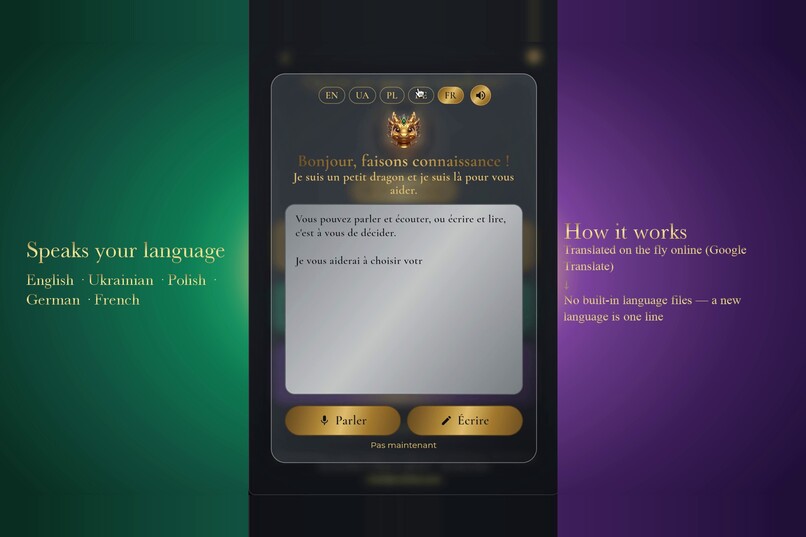
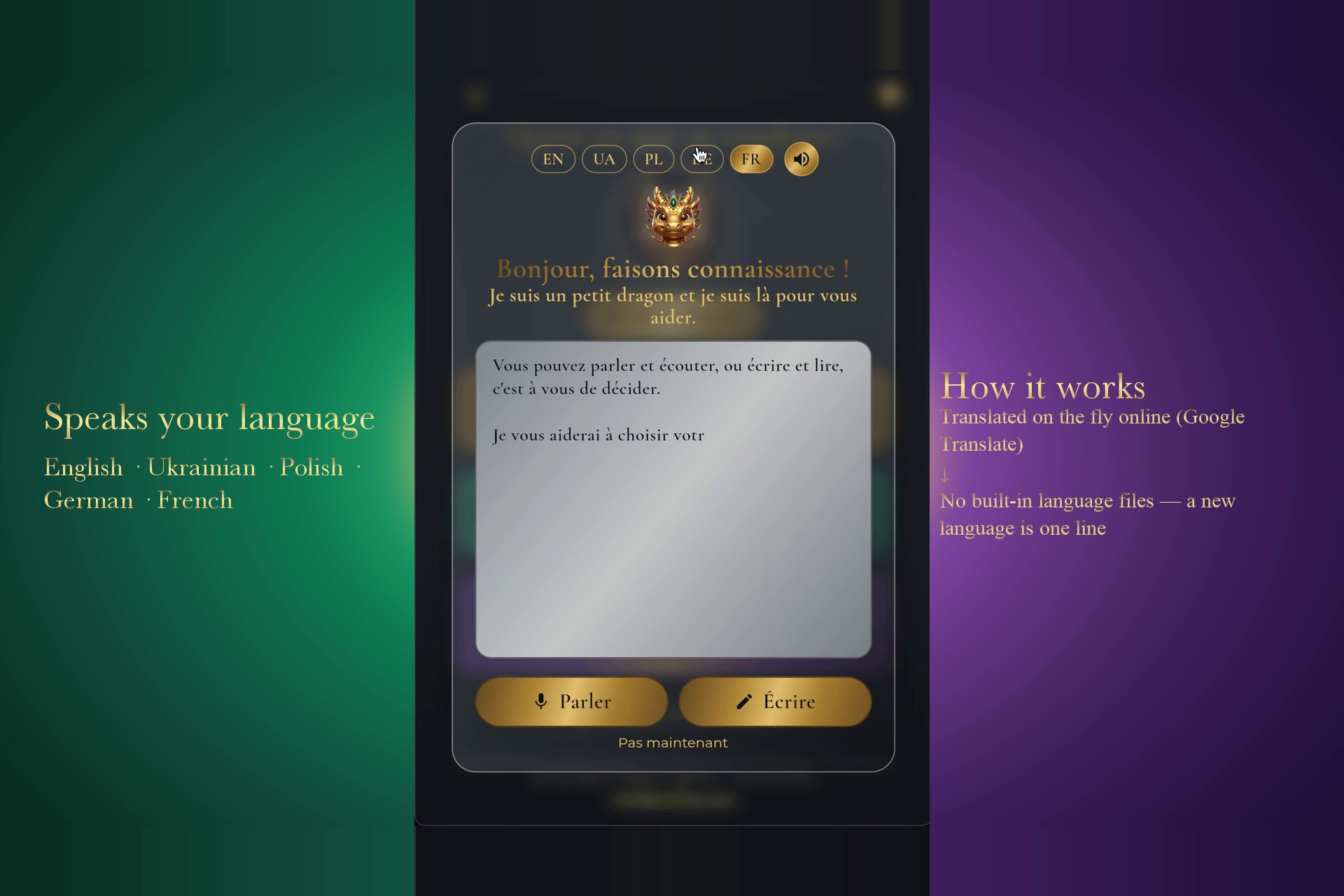
Start: the greeting switches between EN, UA, PL, DE and FR
-
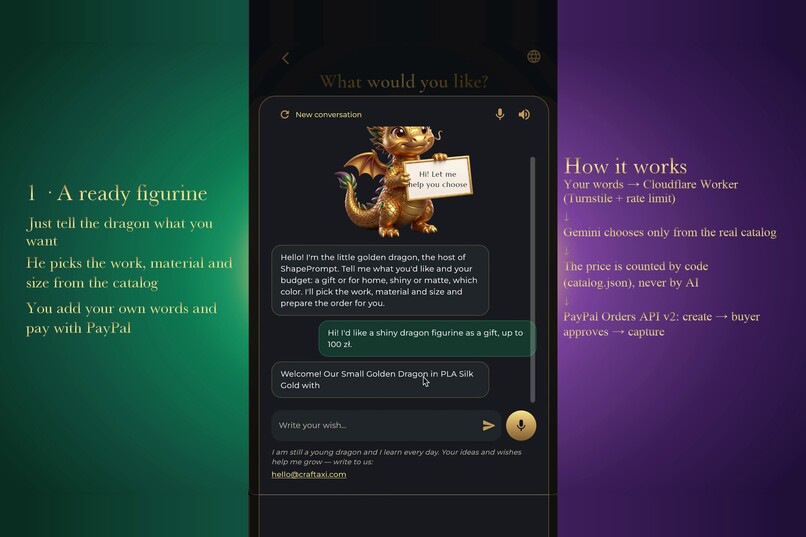
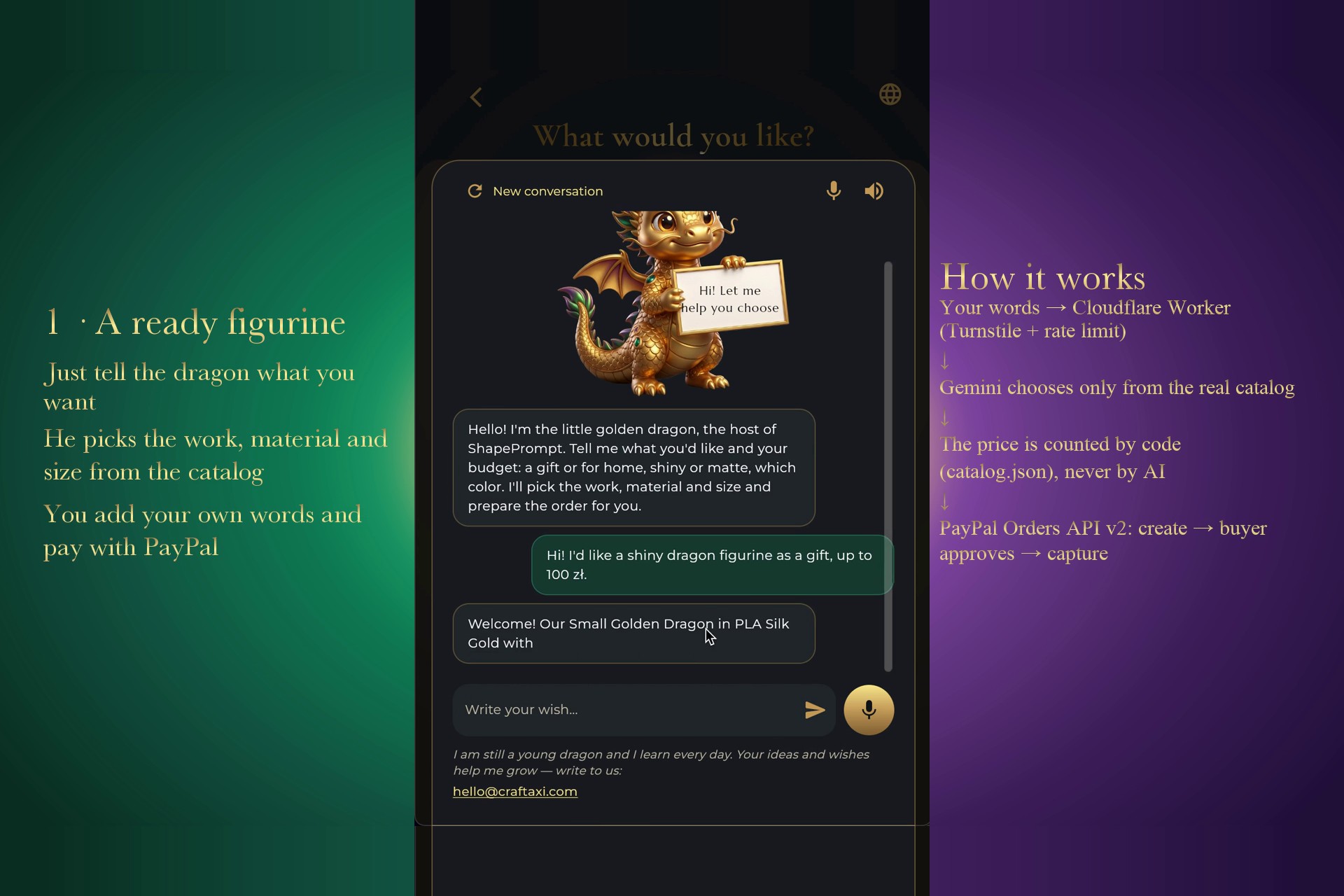
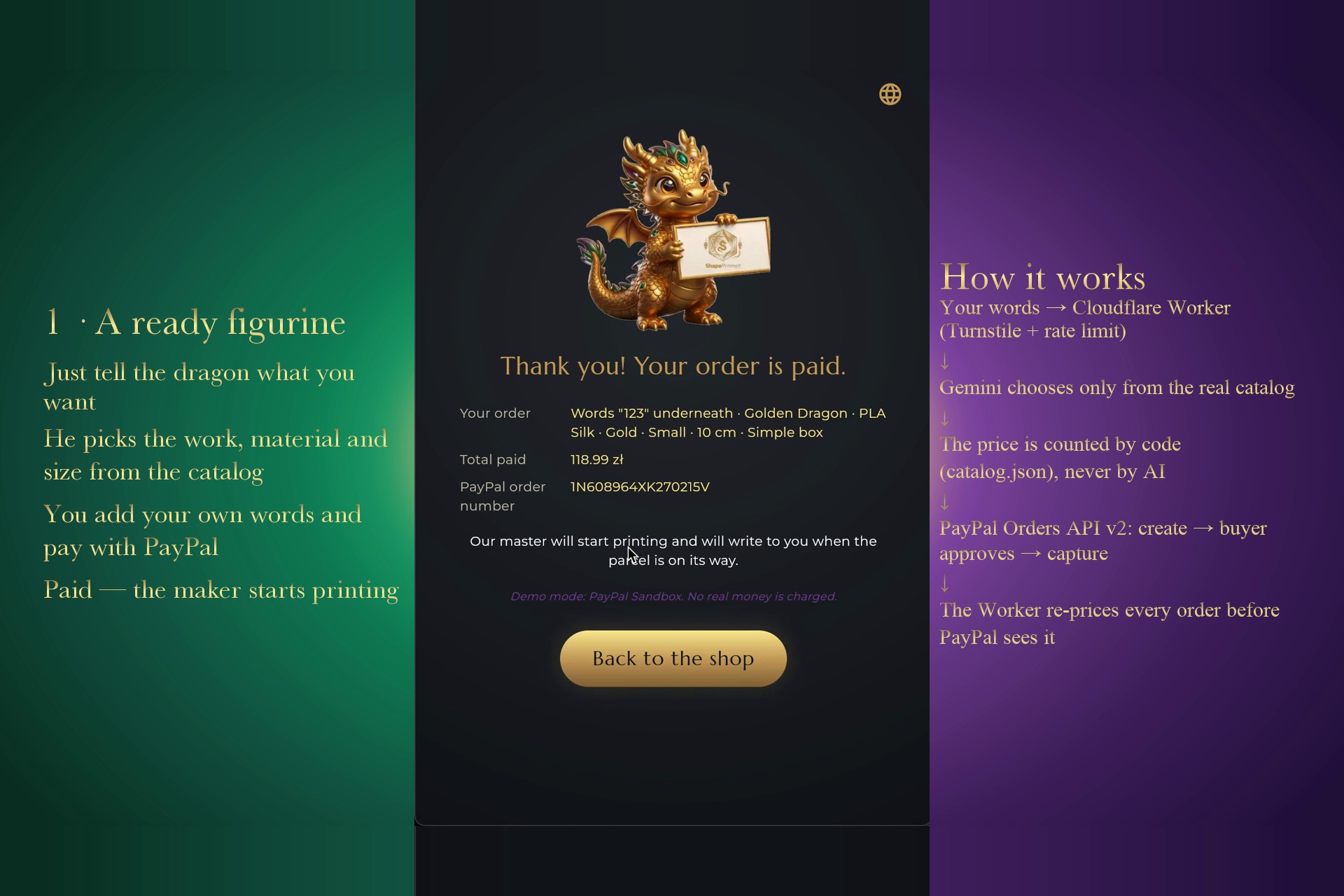
"A shiny dragon as a gift, up to 100 zł" — and the order is ready
-
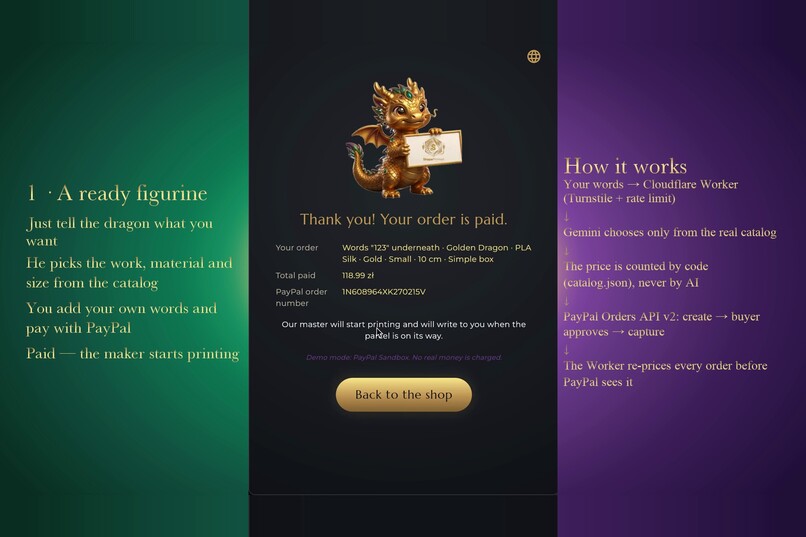
The Golden Dragon order, captured after PayPal approval
-
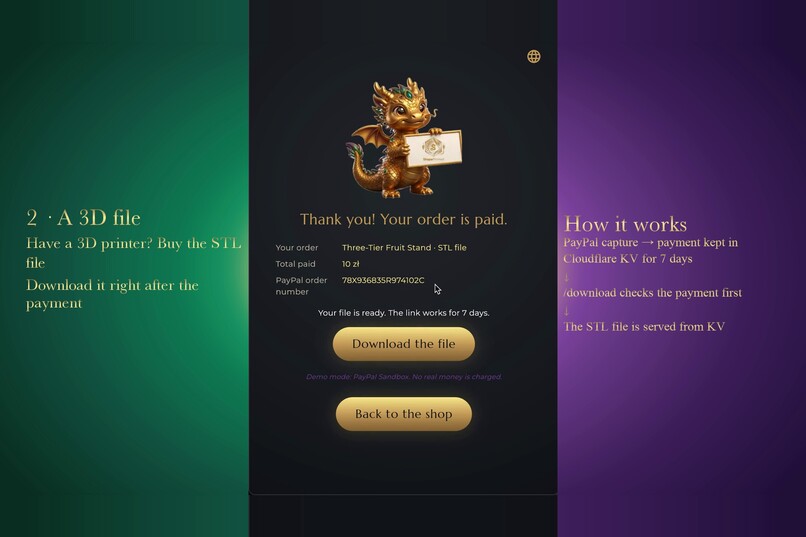
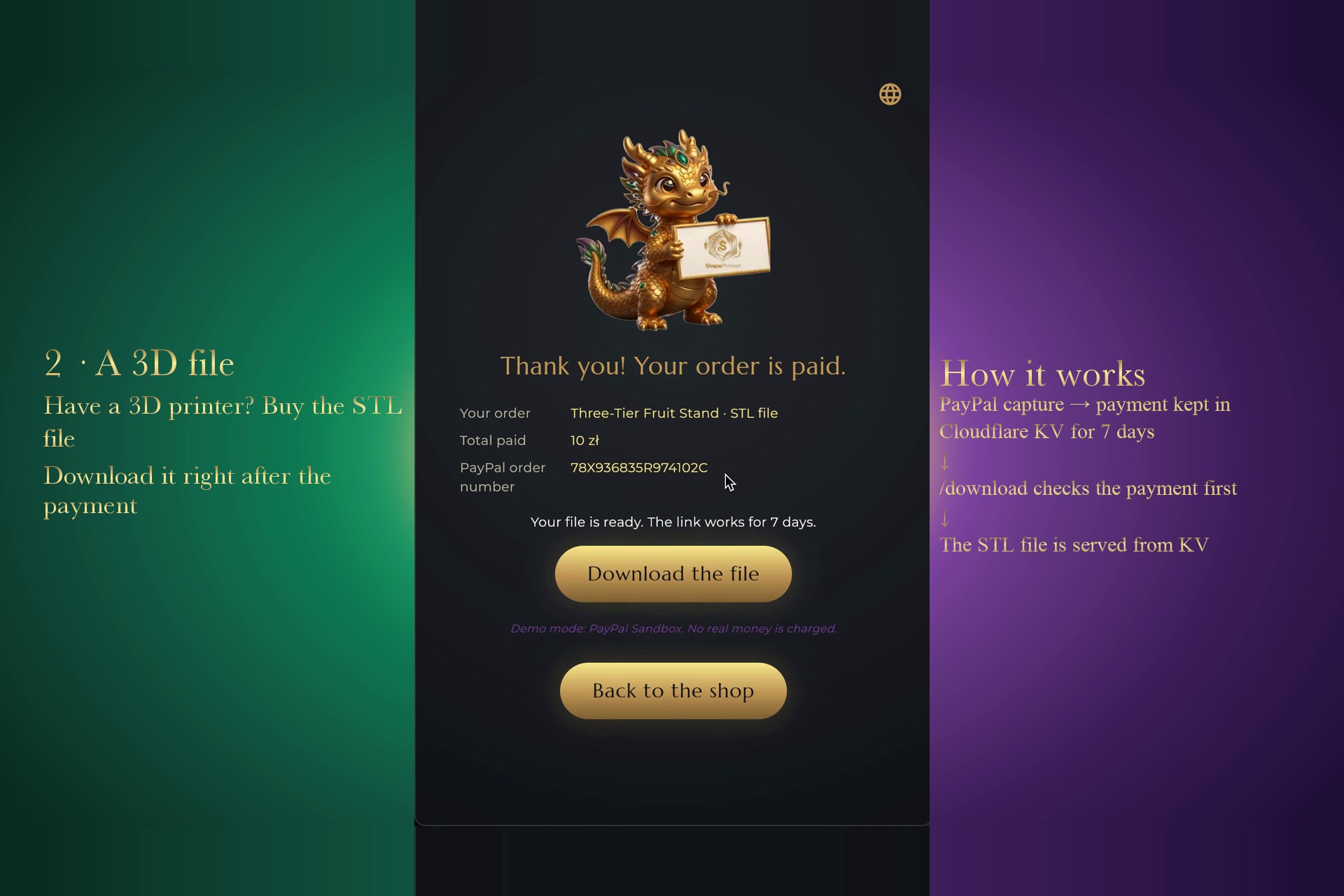
Three-Tier Fruit Stand: the download link works for 7 days
-
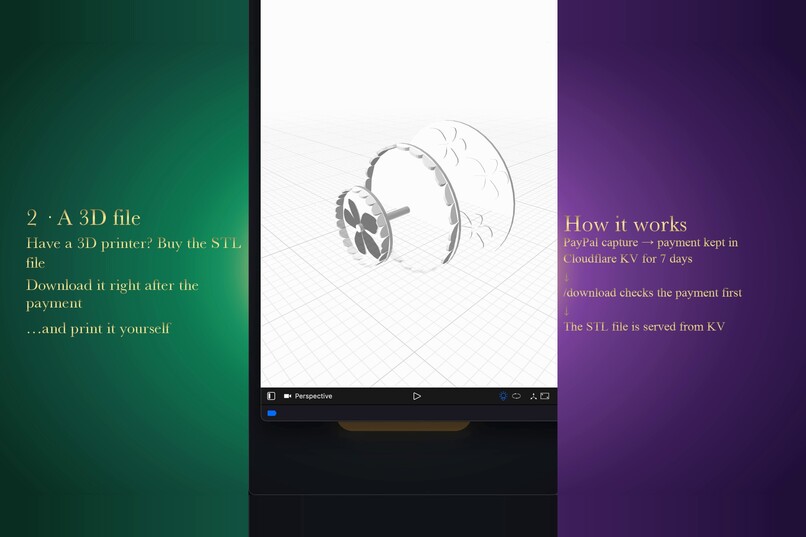
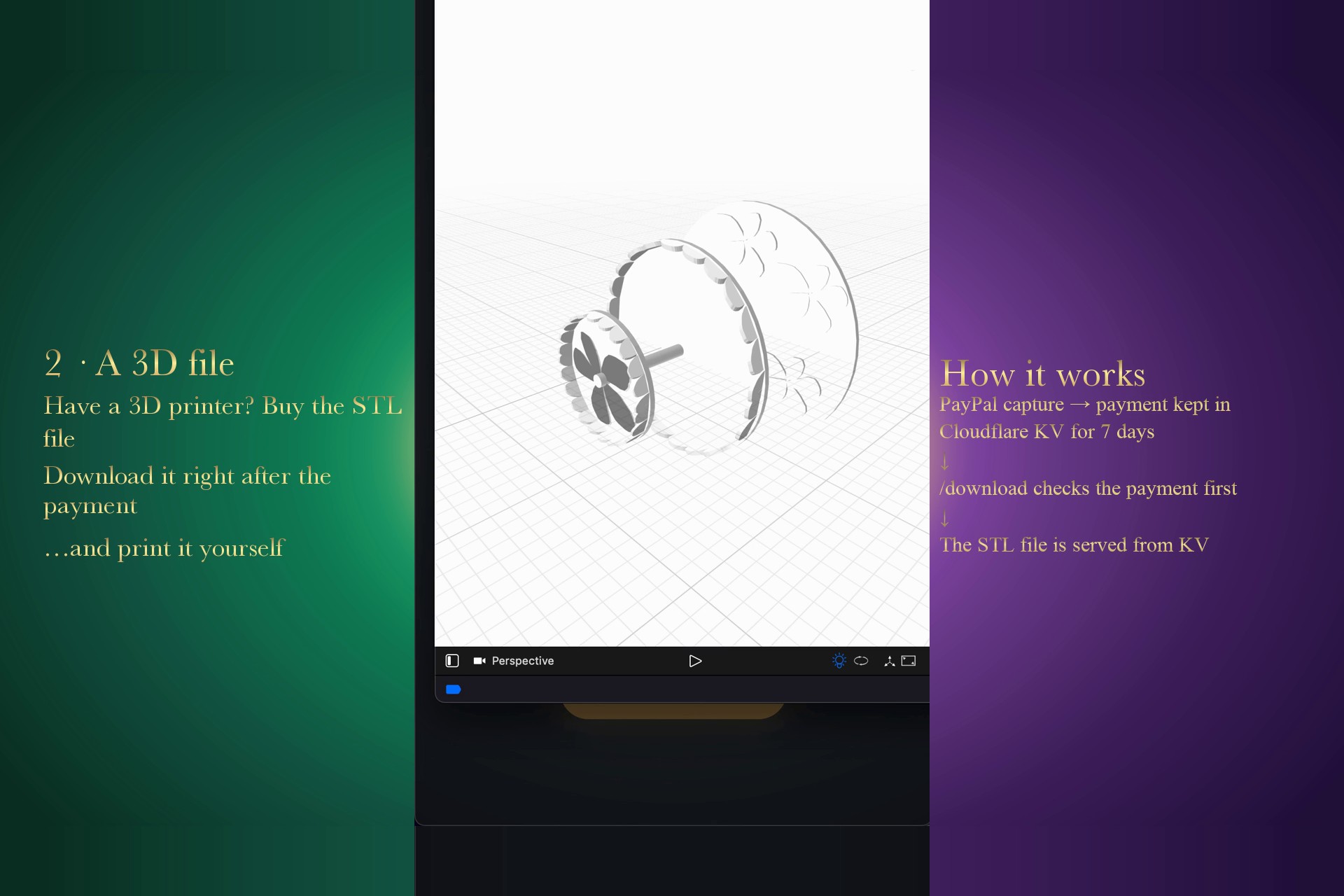
The downloaded STL, ready for the slicer
-
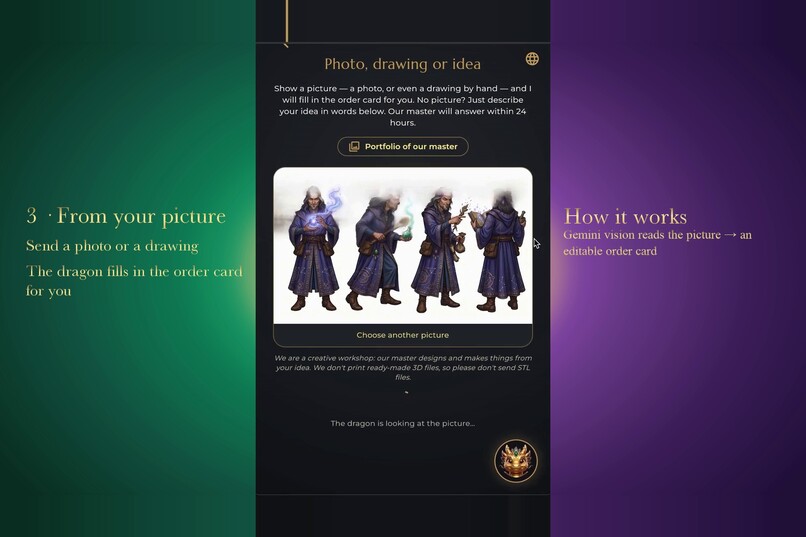
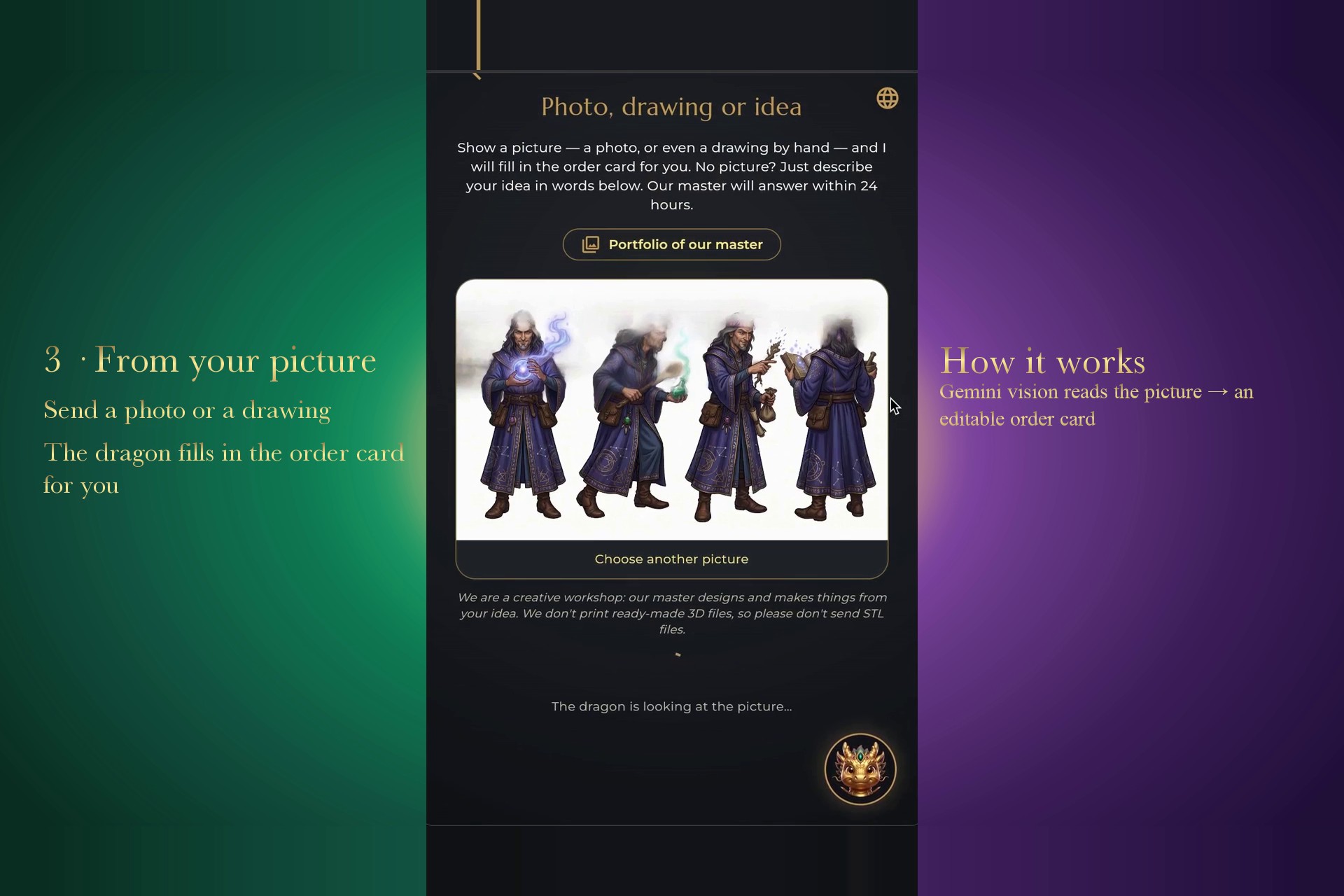
Four wizards in one picture: the dragon asks which one to make
-
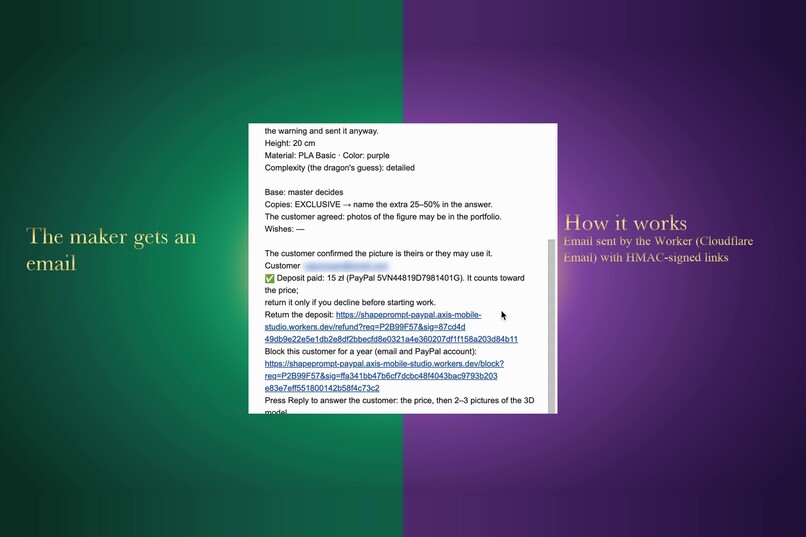
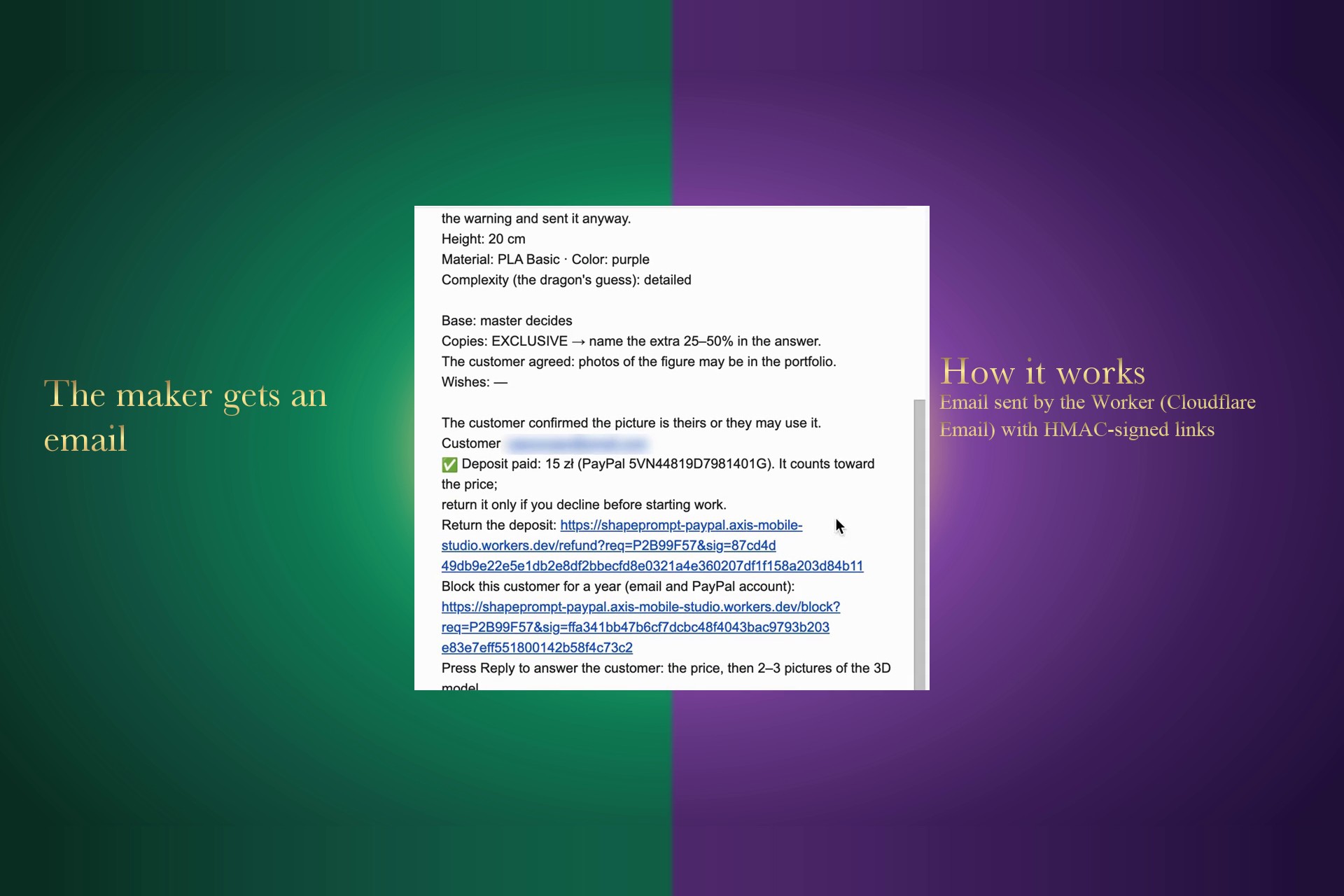
Everything the maker needs in one email, deposit included
-
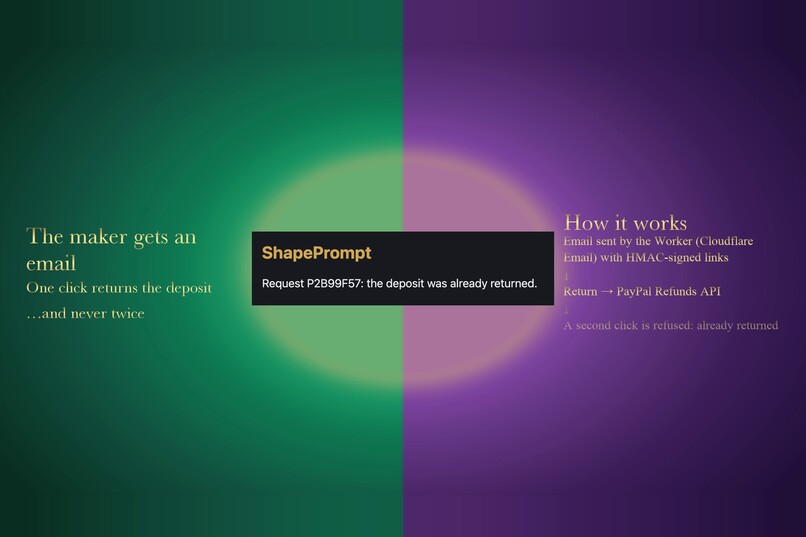
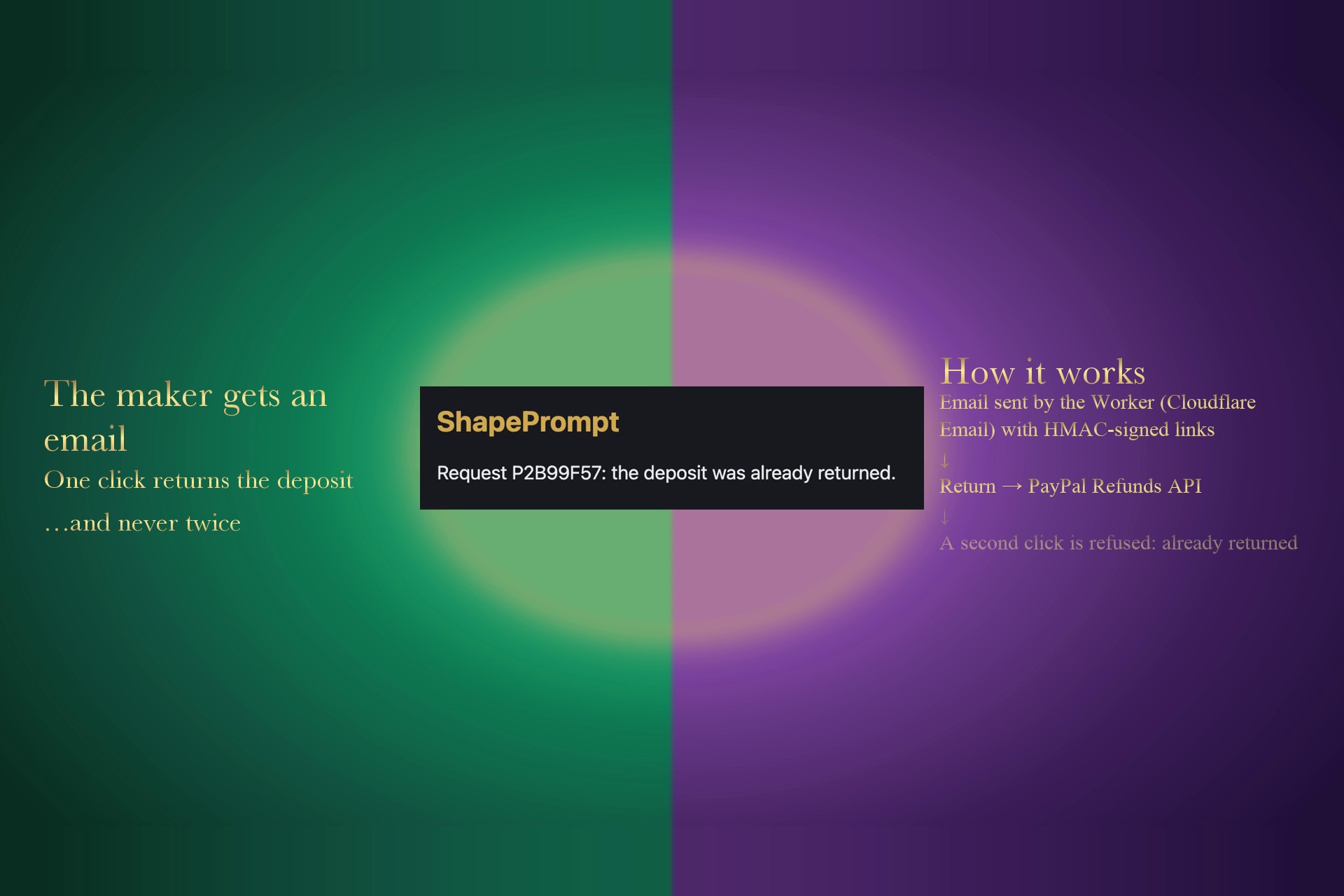
The second click is refused — the refund is idempotent
-
Flutter web, Cloudflare Worker, Gemini, PayPal Orders and Refunds
-
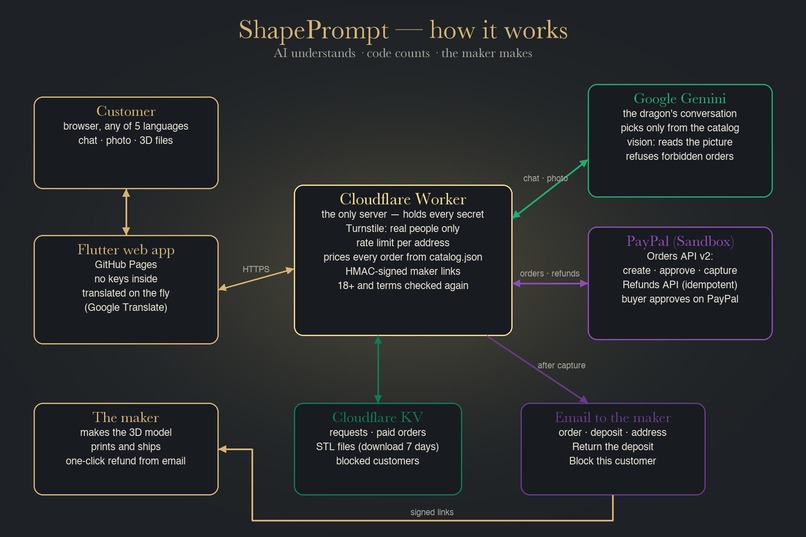
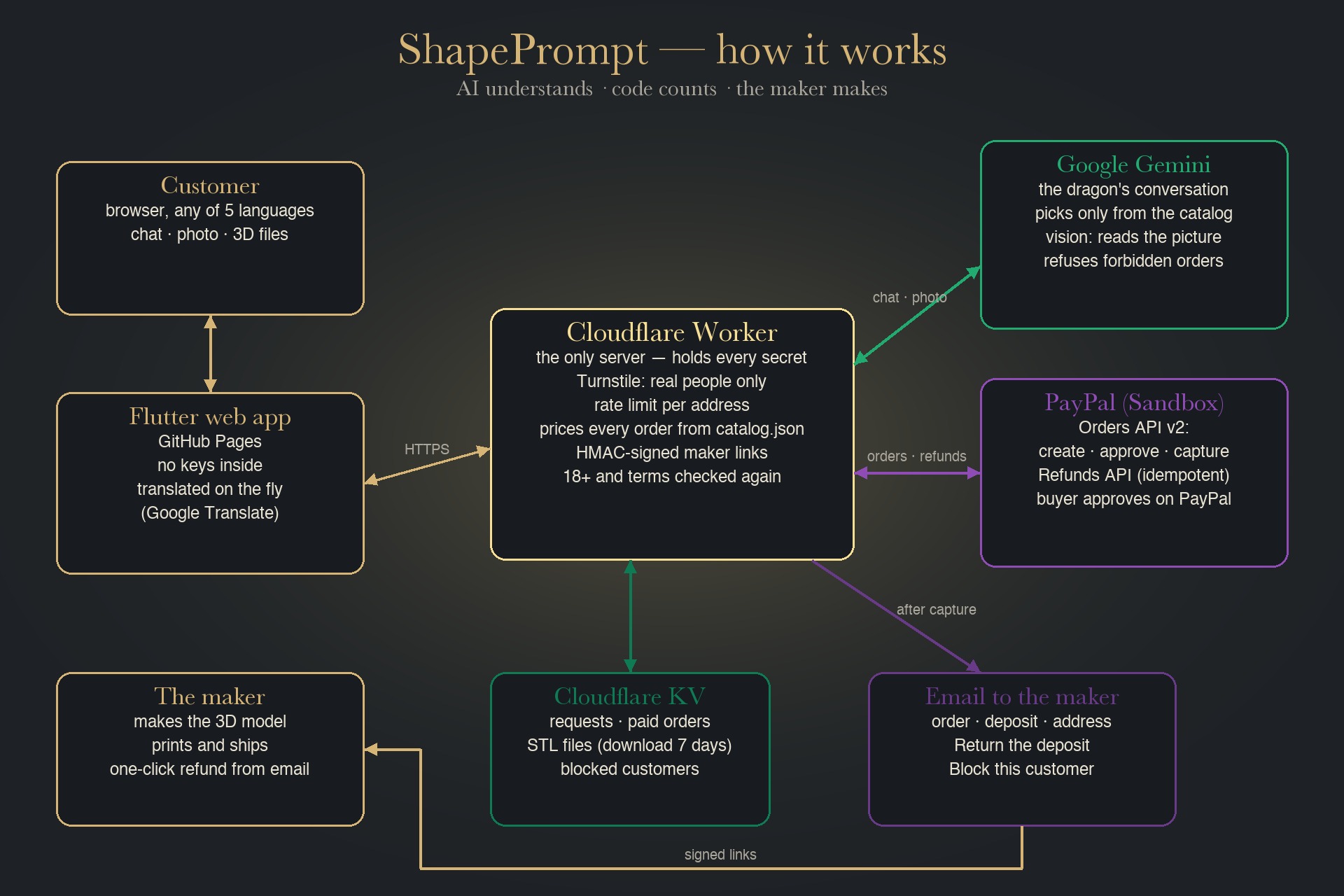
Architecture: the Worker holds every secret; AI never touches prices
Inspiration
I have a home 3D printer and I make figurines — the golden dragon in our logo went exactly this way: a picture, a 3D model, a print. People keep asking me for custom pieces, but every order was the same tiring loop: "what do you mean exactly?", "how much will it cost?", "how do I pay you?". ShapePrompt is my answer: a small online workshop where AI does the talking, code does the math, PayPal does the money — and I do the making.
What it does
Three ways to order, all paid with PayPal:
- A ready figurine. Tell the little golden dragon what you want — "a shiny dragon figurine as a gift, up to 100 zł". He picks the work, material and size from the real catalog and builds the order. You add your own words for the base, confirm the terms and pay with PayPal.
- A 3D file. Have a printer? Buy the STL file and download it right after the payment. The link works for 7 days.
- From your picture. Send a photo or a drawing. The dragon reads it and fills in the order card for you (figures, height, material, color), and warns you if faces or hands are blurred. A 15 zł deposit sends the request, so the maker gets only real orders.
For the maker: after the deposit, an email arrives with the whole order and two signed links — Return the deposit (a PayPal refund in one click) and Block this customer. A second click on Return is refused: "the deposit was already returned".
Speaks your language: English, Ukrainian, Polish, German and French, translated on the fly.
How I built it
- Flutter web app, hosted on GitHub Pages.
- Cloudflare Worker as the only server: it holds every key, so the app has none. Turnstile lets only real people talk to the dragon, and a rate limit protects the free AI quota.
- Gemini is the dragon's brain. It chooses only from the real catalog and reads pictures (vision) to fill the order card. It never sets a price.
- Prices are counted by code from the maker's real costs — filament price per gram, grams and hours from the slicer, electricity, labor — exported to
catalog.json. The Worker prices every order again before PayPal sees it. - PayPal Orders API v2: create → the buyer approves → capture. PayPal Refunds API for the deposit, idempotent.
- Cloudflare KV keeps requests and paid orders; the STL file is served only for a paid order.
- Cloudflare Email sends the maker's email with HMAC-signed links; a link opens a page with a button, because a mail app opening a link must never move money.
- The plan lived in files: a one-page scope, then a build log for every day (in the repo).
Challenges I ran into
- The AI wanted to be too helpful: it argued about colors, praised a blurry AI picture as "very sharp", once returned raw JSON instead of words. The fix was always the same — the AI prepares, code and a person decide: structured checks, a second try, and a friendly "my words got tangled".
- Language buttons changed the labels but not the chat. Now the dragon speaks English and the screen translates, so one button turns the whole conversation.
- A saved request looked "sent" when it wasn't. Now it says "Step 1 of 2 … Not sent to our master yet … Step 2 of 2: the deposit", and an unpaid request waits on the home page for 48 hours.
- Being a fair shop: 18+ and order terms before any payment, no weapons or hate symbols, and honest legal wording (Art. 38 point 3 of the Polish Consumer Rights Act for made-to-order pieces).
Accomplishments that I'm proud of
- Every money path is tested end to end in Sandbox: ready work, 3D file download, deposit, refund from the email, blocking a customer.
- The AI is useful but never in charge of money.
- It is my real workshop: the figurines, the 3D files and the dragon are mine.
What I learned
Structured checks beat an AI's first impression. Money flows must be idempotent. And a clear "where is my order now" is as important as the payment itself.
What's next
Real payments (live PayPal, the paid Gemini tier for EU customers), the maker's own website craftaxi.com, more materials and four-color prints.
AI tools used
- Gemini — inside the app: the dragon's conversation, the order card from a picture, safety checks.
- Claude (Claude Code) — my coding partner: we wrote the Flutter app, the Worker, the music for the video and the video edit together.
- Gemini image generation — the logo and the dragon art; Canva — the little dragon's animation; MakerWorld image-to-3D — the first 3D model of the dragon, then finished and printed by me.
- Music in the video: original, composed in code.
What's next for ShapePrompt
Built With
- cloudflare-workers
- dart
- flutter
- gemini
- javascript
- paypal
