-
-
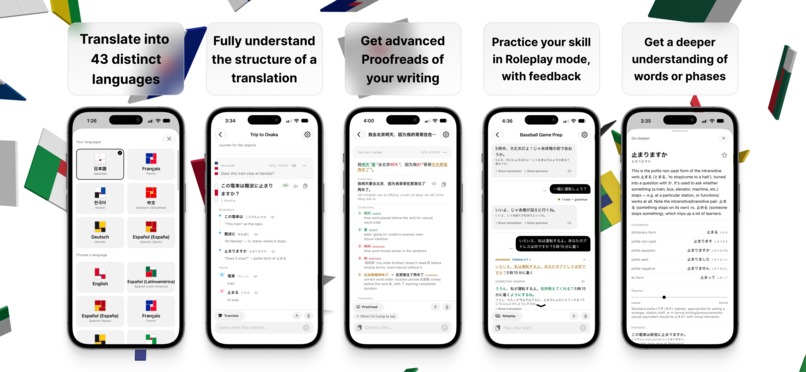
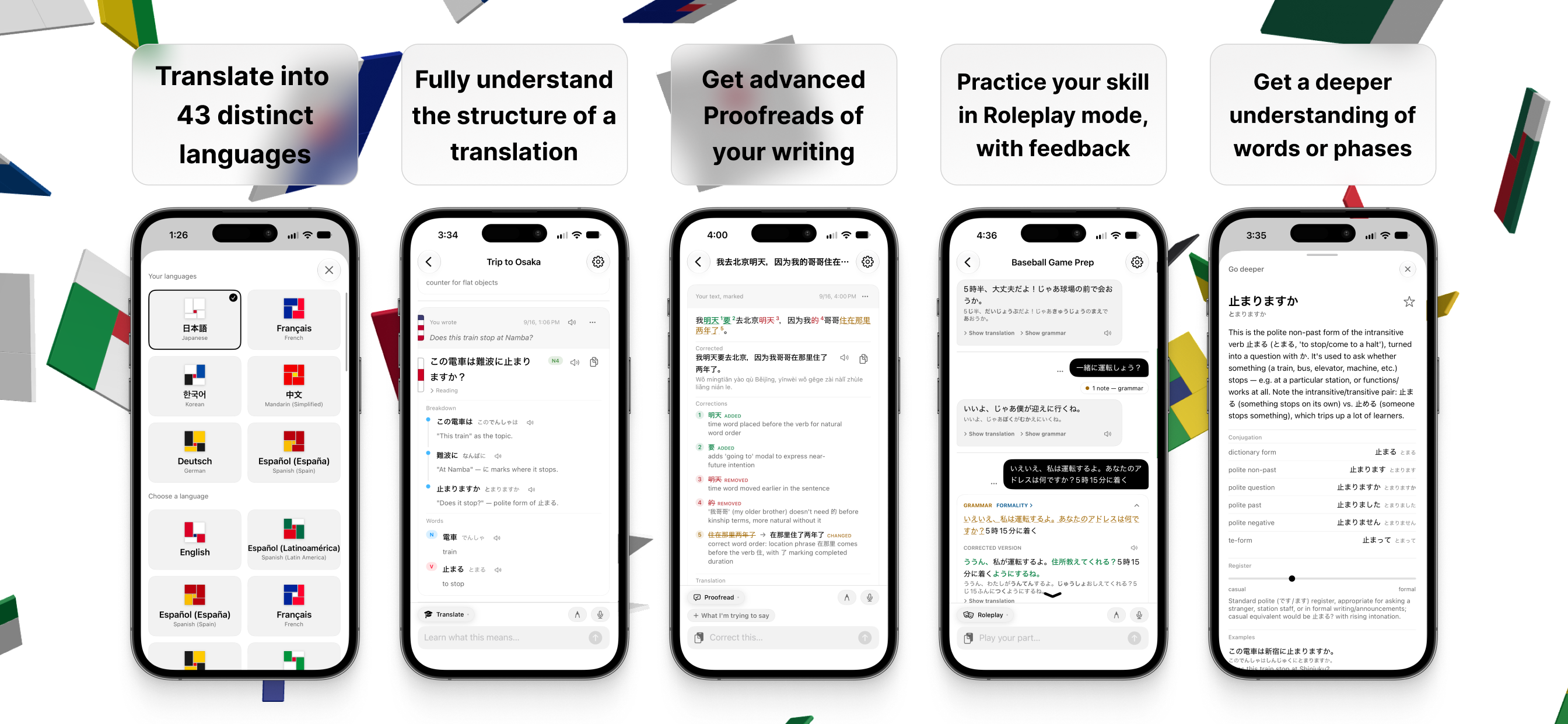
Feature Lineup
-
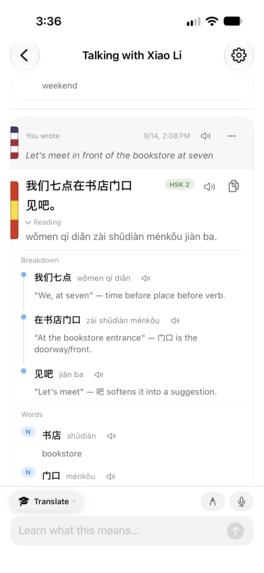
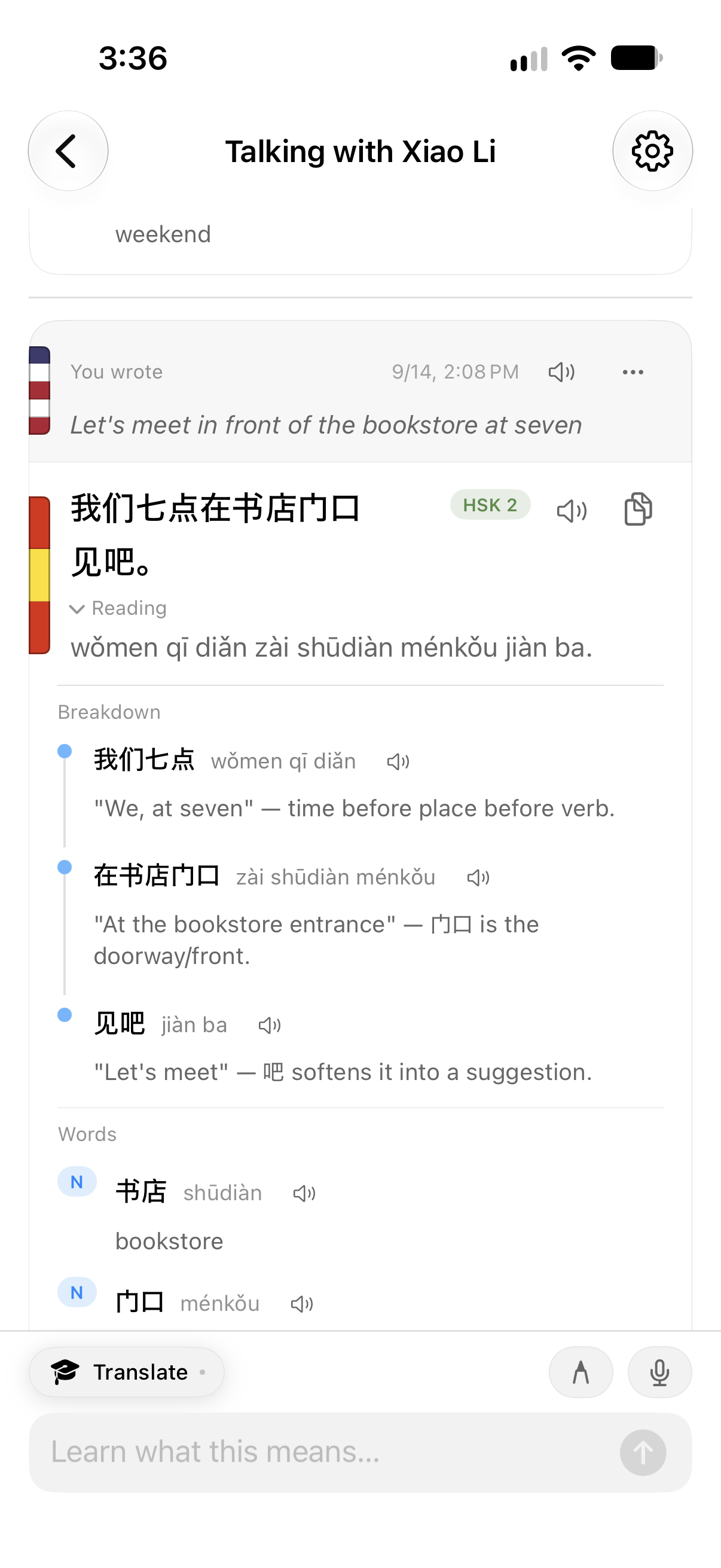
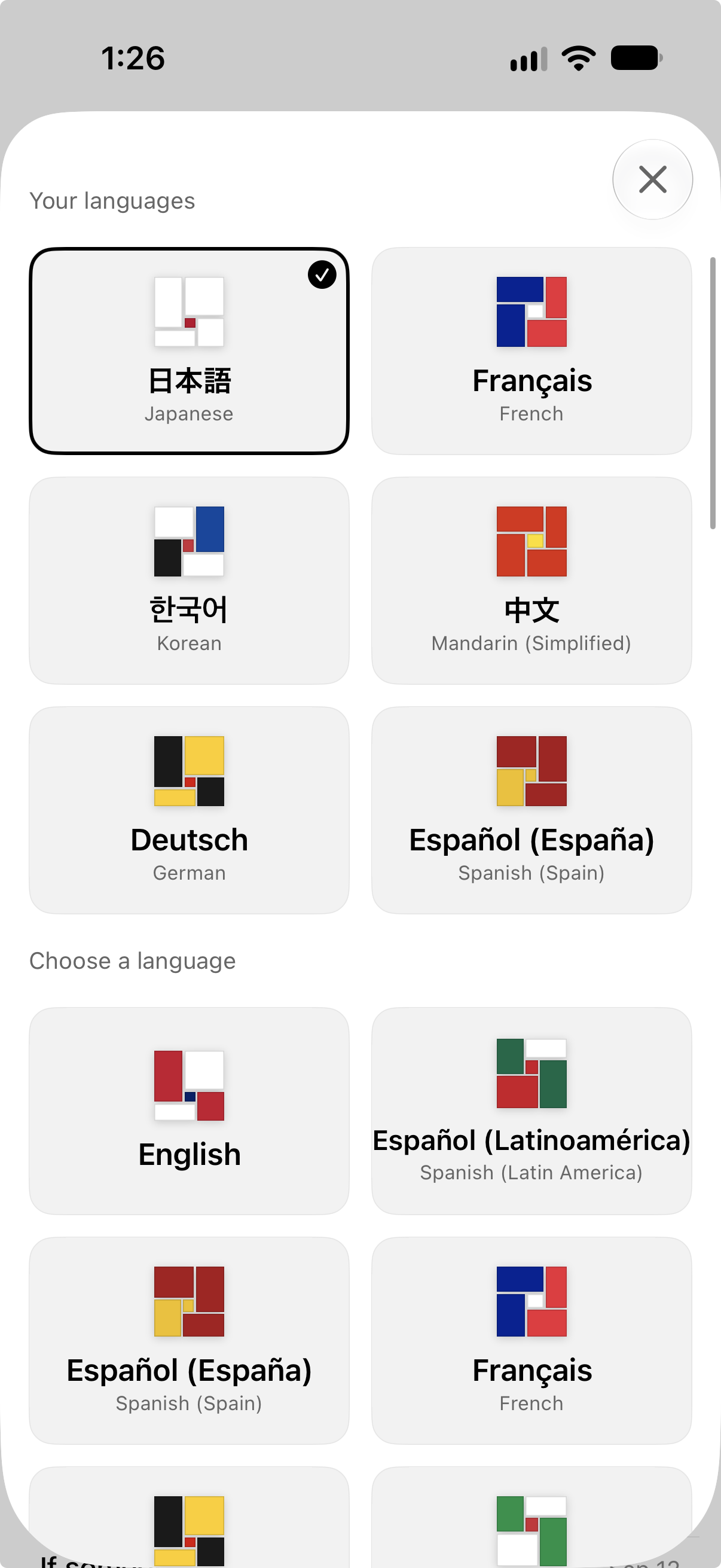
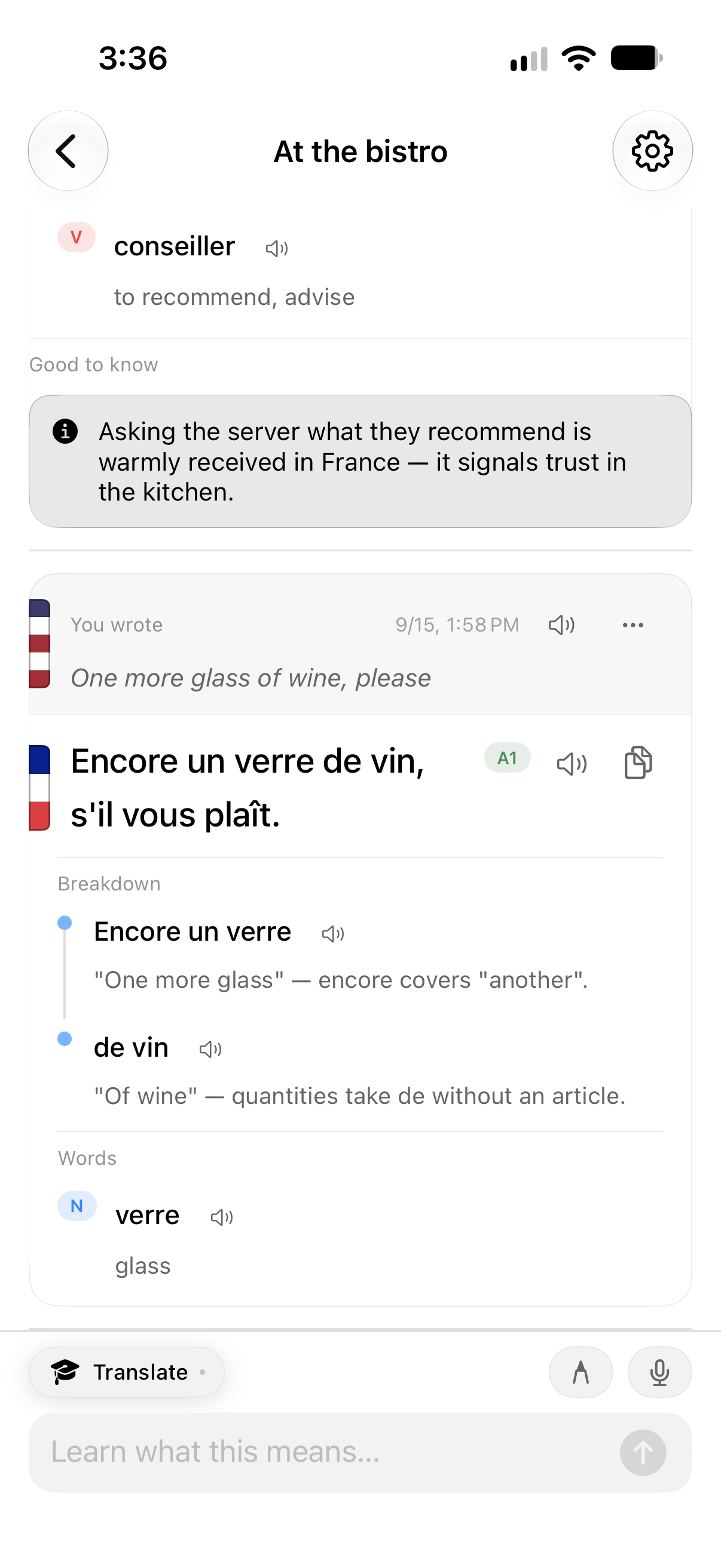
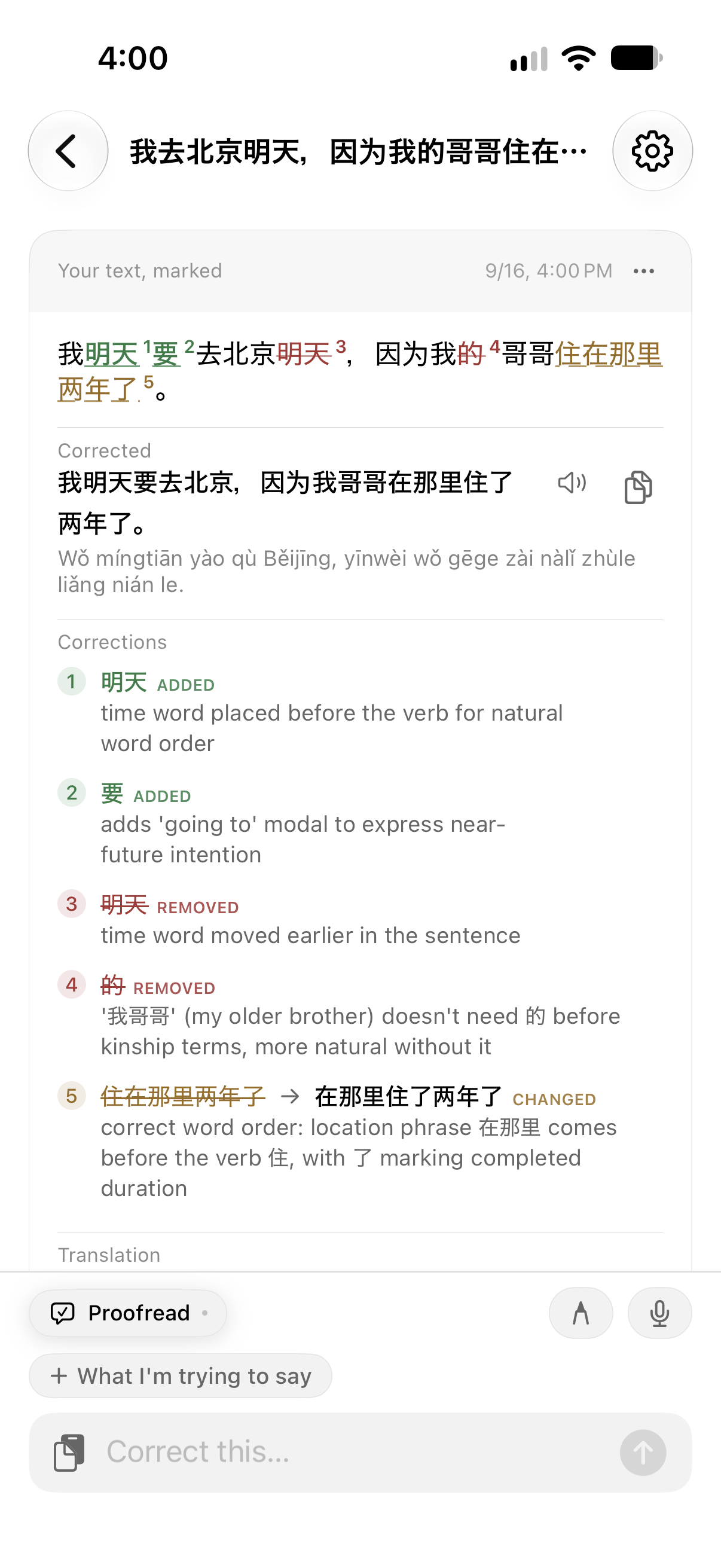
Translations with grammar breakdowns in Mandarin.
-
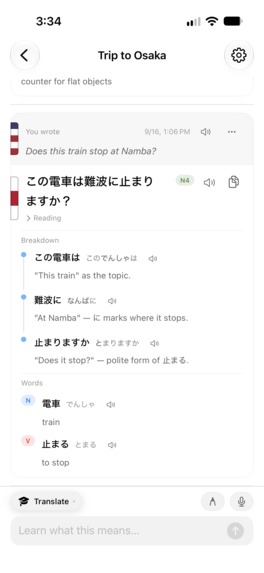
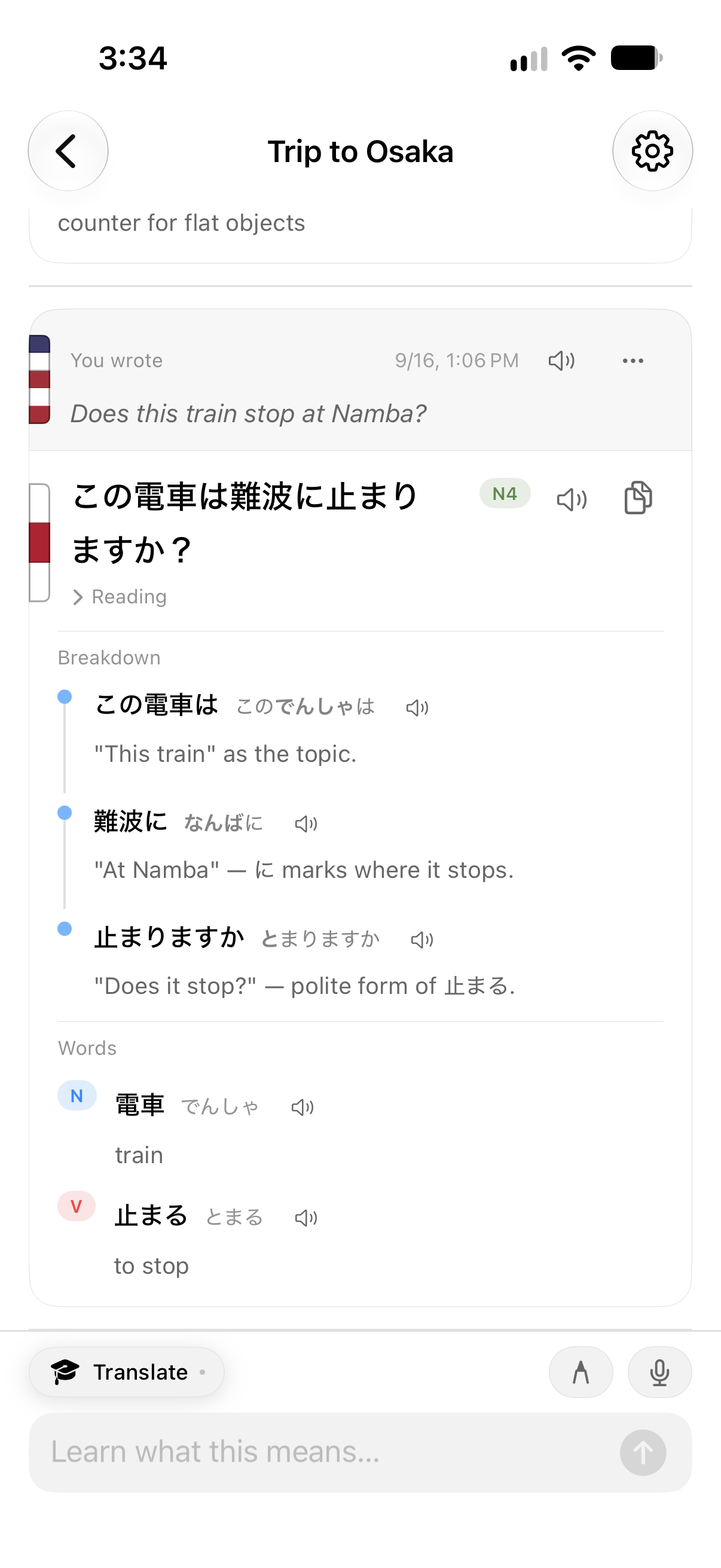
Translations with grammar breakdowns in Japanese.
-
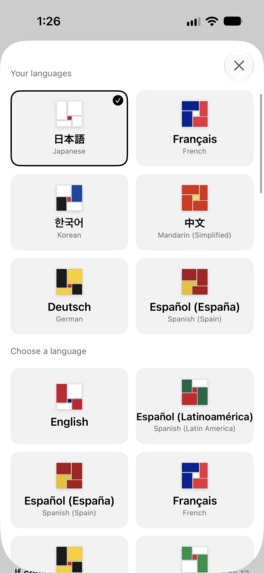
Available to translate across 43 distinct languages.
-
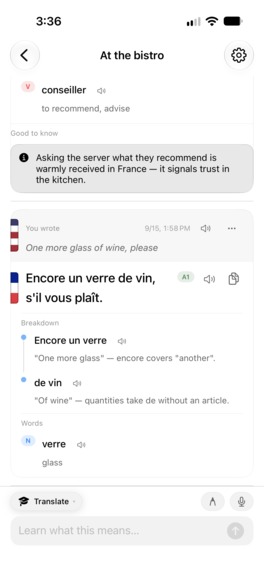
Translations with grammar breakdowns in French.
-
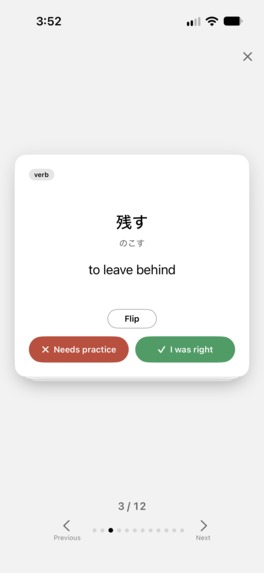
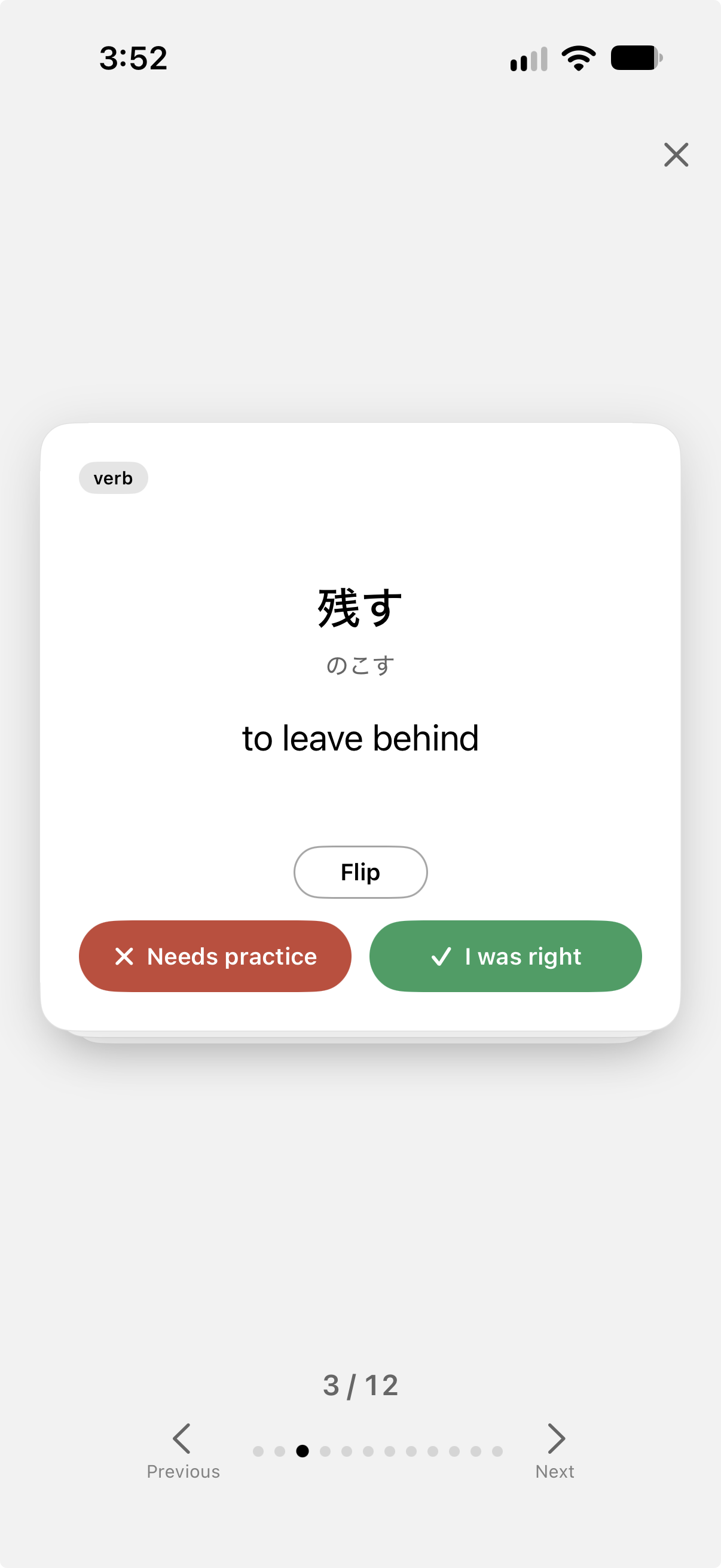
Built in flash-cards for the words you've learned through translating.
-
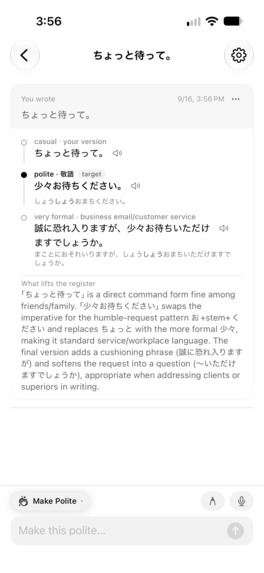
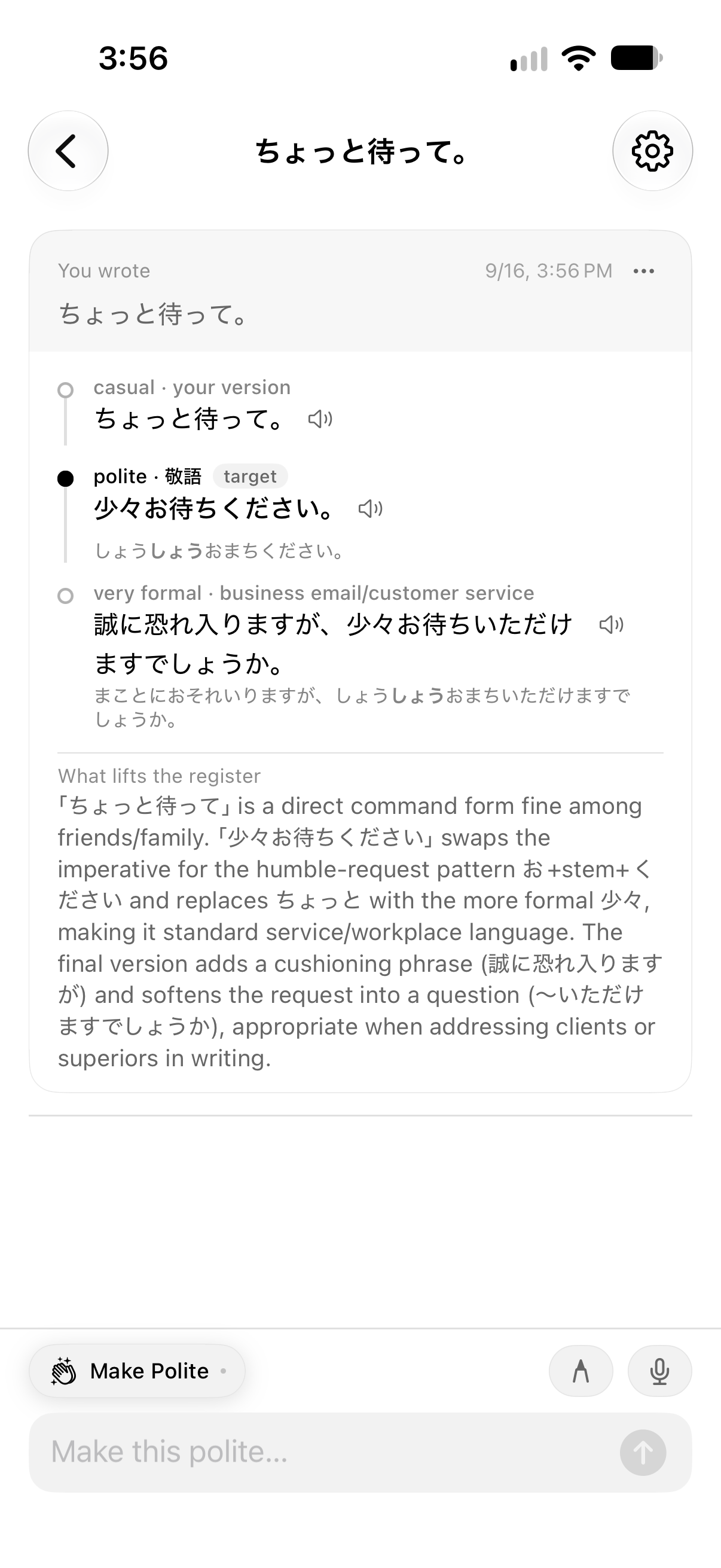
A suggested ladder of formality for the idea you're trying to express.
-
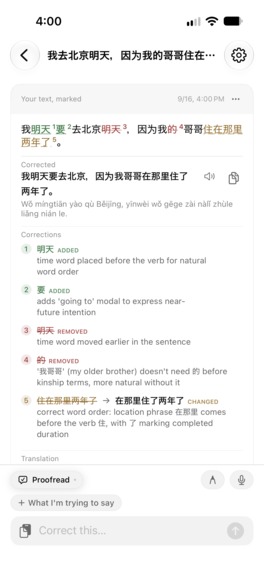
Proofread mode with marked up changes to your text, with explanations.
-
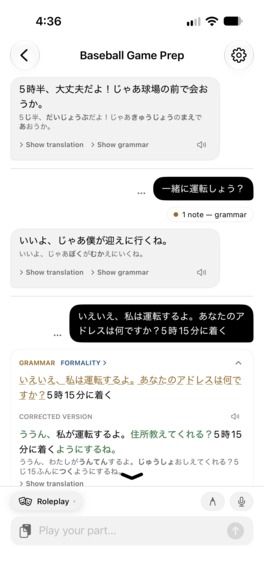
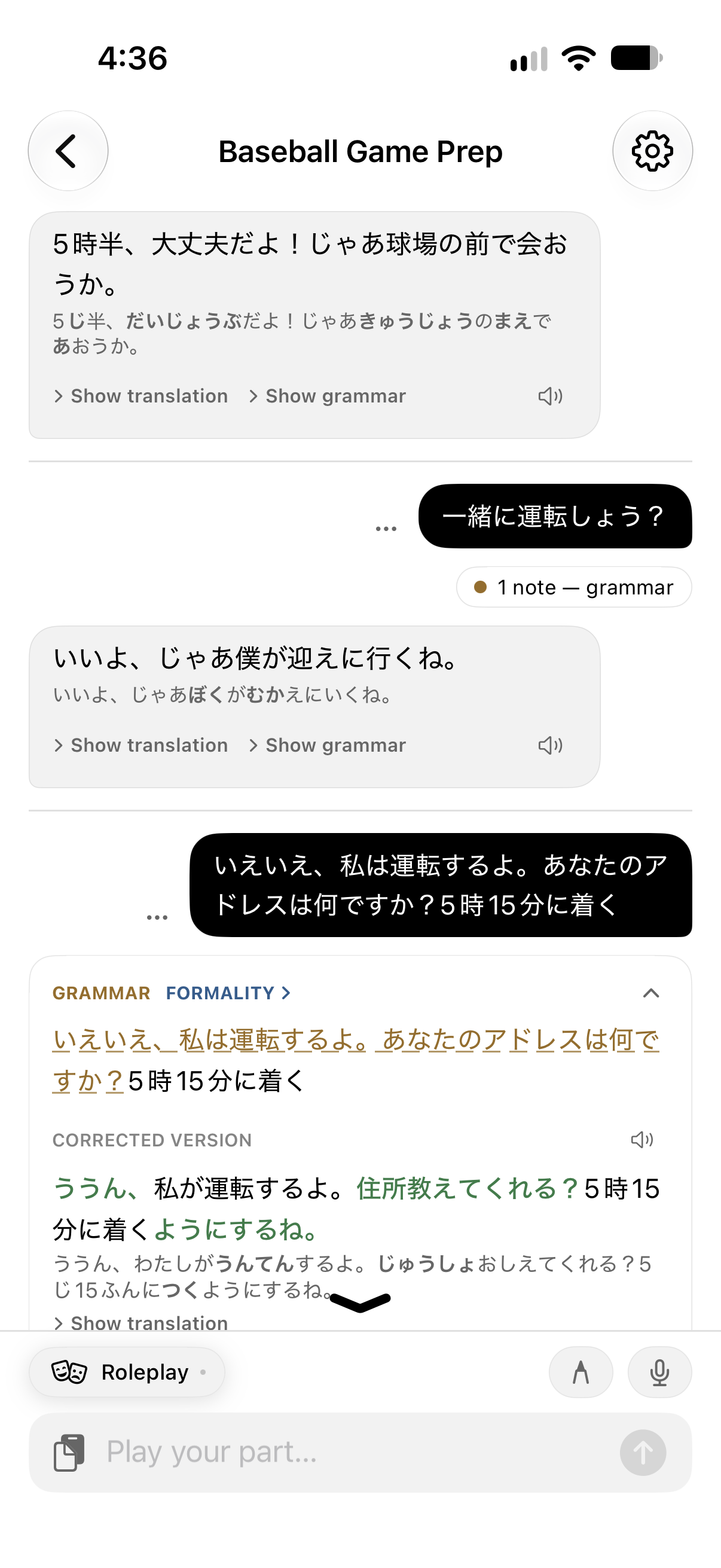
Roleplay situations with an AI and see in-line suggestions to improve your grammar.
Inspiration
I lived in Japan between 2017 and 2021, and spent a lot of that time studying Japanese. After moving back to the US, I've continued studying the language, with the eventual goal of fluency. While I lived in Japan, translating things to and from Japanese through Google Translate was a well-known act of comedy for people who lived there-- it was just never right. When LLMs hit the scene, I wanted to see if their language abilities extended to translation. Miraculously, any translation I showed a Japanese person from Claude never yielded a giggle. It was always applauded.
As I continued my studies, I'd keep an open tab with Claude helping me translate early Dragon Ball manga. It was incredibly helpful. I would tell Claude to break down the translation to explain how a sentence or expression was coming together, and my learning velocity exploded. But, there was friction. The tab kept refreshing back to the home page, and sometimes I'd just lose the chat in the growing list of chats, so I'd have to start a new chat, but the response structure was always inconsistent.
Instead of trying to recreate this magic over and over and over, I decided that I'd just build an app around this prompt, give it a deterministic response structure, and build a UI around it that was clear, and legible, and academic.
The result is a product that I now use daily for translations of any kind, across any language, that help me understand exactly what I'm saying, and how best to say it.
What it does
The app translates from your language to the language you're learning, and vice versa. It also proofreads, offers a gradient of formality options for an expression, or just a conversation to the LLM itself. It catalogues all of the words you've learned and compiles them into your own personal glossary, and offers quizzes and flashcards to help reinforce what you've learned.
How we built it
I took the Claude Sonnet API, gave it an app level prompt, with instructions for how to interpret a user's input, and then determine the correct response structure. The responses always follow a consistent JSON pattern for the app to parse into its UI.
Challenges we ran into
The probabilistic nature of the LLM response made it very hard to build a UI around. It took quite a lot of massaging of the response structure to get consistent responses from Claude's API. There are also challenges in Anthropic's handling of their safety policies. Sometimes a translation that includes words like "chemical" and "capsule" will be rejected by the API because Anthropic's safety guidelines deem this something along the lines of weapons manufacturing, even when it's simply a character in Dragon Ball wondering if they own a capsule that bursts into a fully functioning car.
Accomplishments that we're proud of
People from all over the world are already testing and using the app to advance their language competency. This app is really designed for more advanced language practitioners, and it makes their second or even third language more accessible and navigable to them, and their recognition and appreciation of that has made the work incredibly meaningful to me.
What we learned
People have been waiting for a serious tool like this. All other apps have disguised themselves as language learning apps, but are actually games in "education" clothing. The response to the app so far has made it clear that this is filling a big gap in the language learning market.
What's next for Shape Language
I believe there's a future where language schools, teachers, and language-focused content creators use Shape Language with their students to help continue to progress outside of the classroom. It's a perfect companion app for using a second (or nth) language in the real world, and actually learning from it.

Log in or sign up for Devpost to join the conversation.