-
-
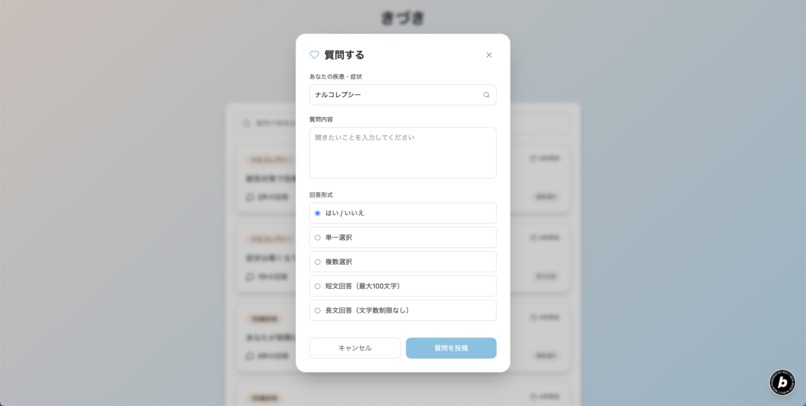
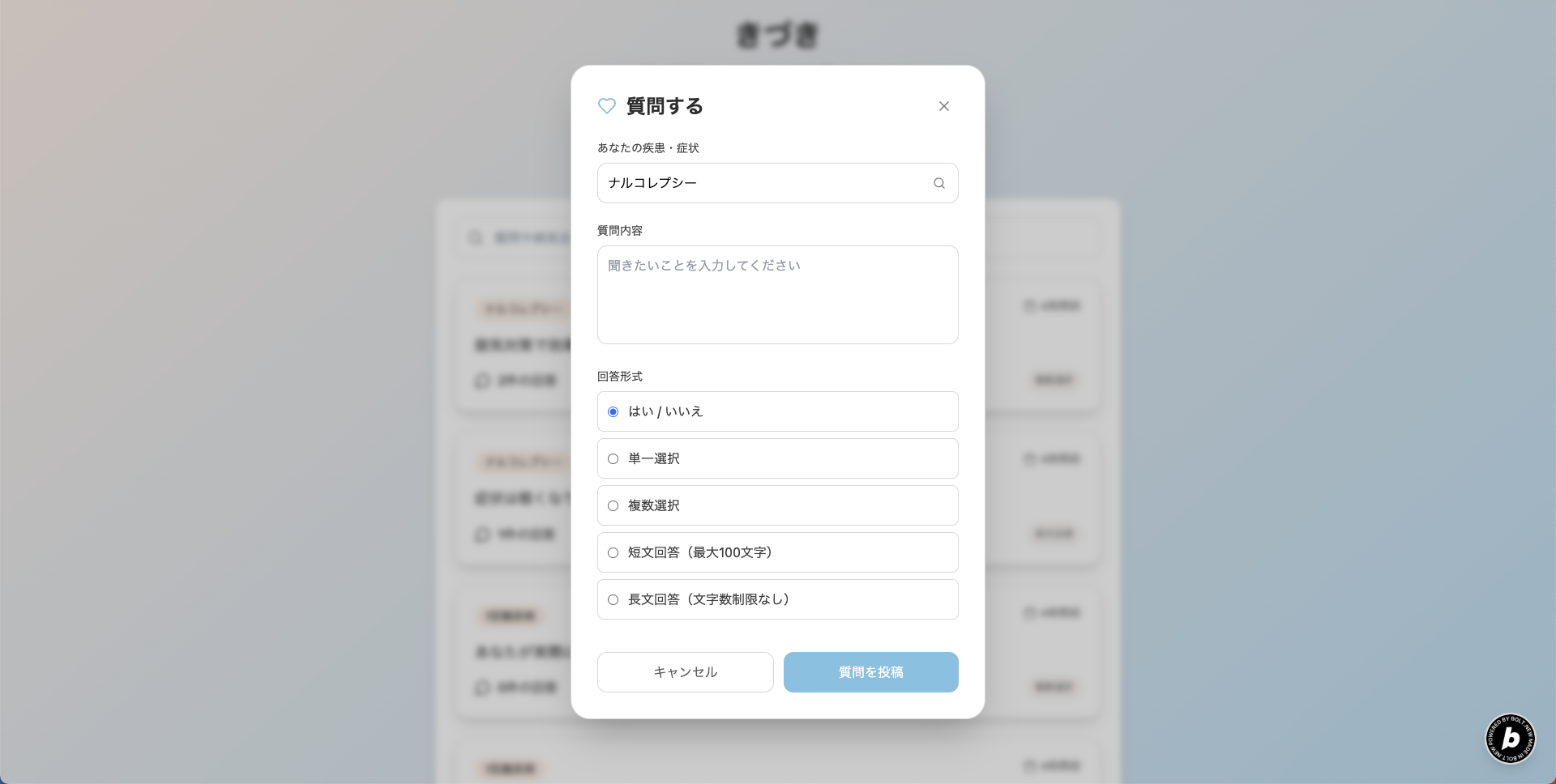
create_question
-
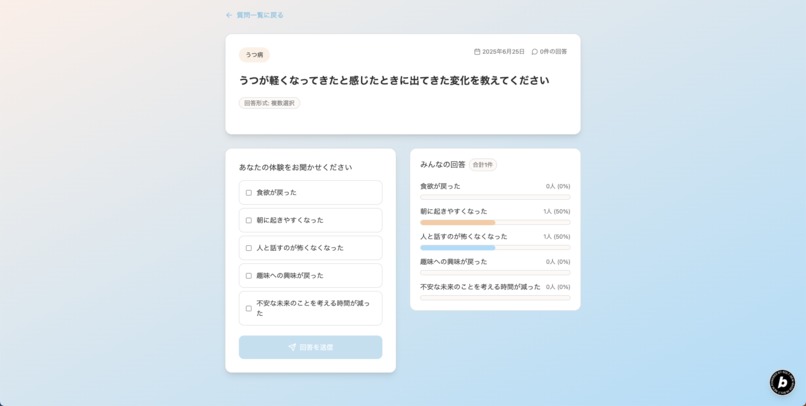
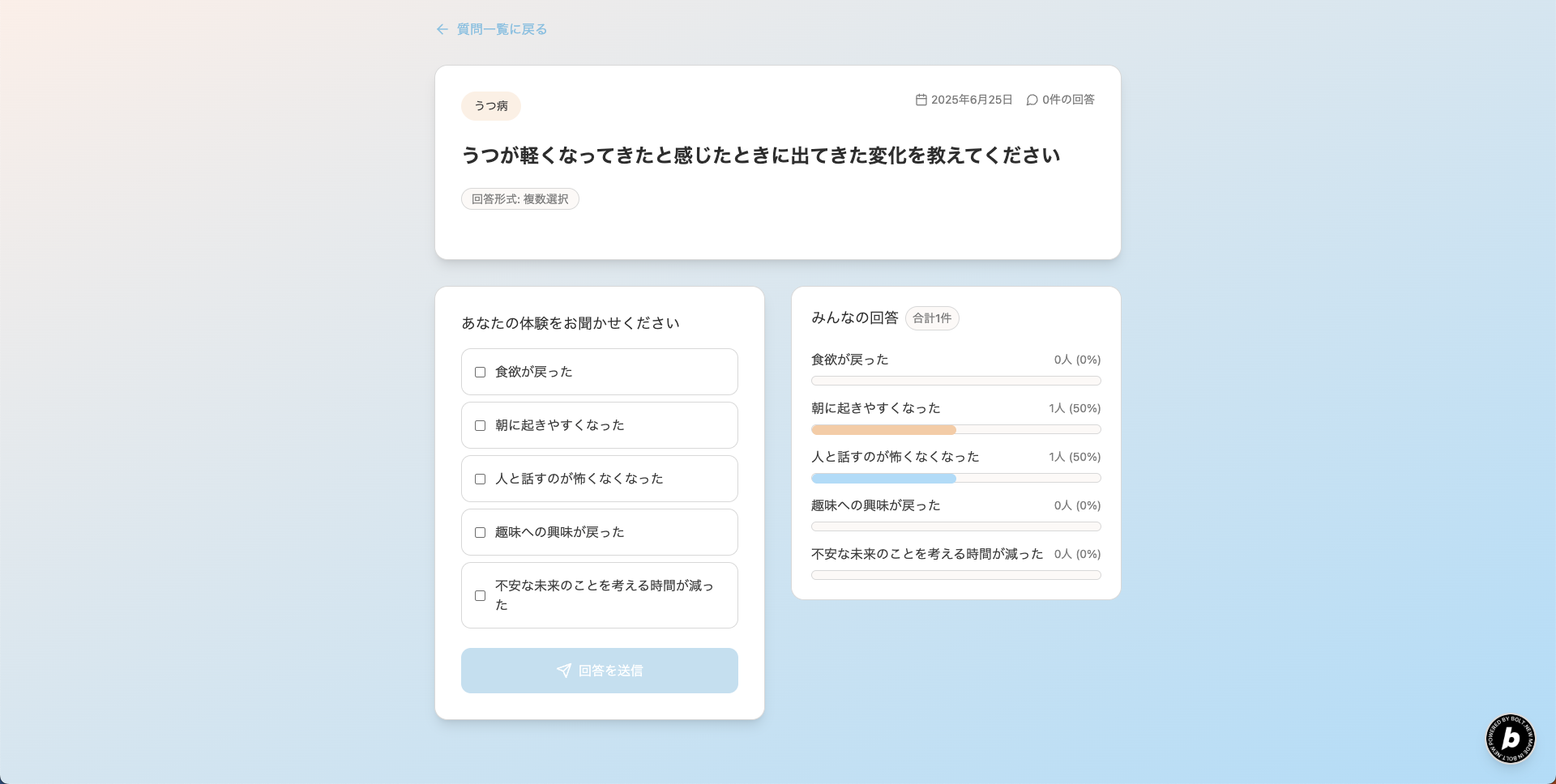
question_detail
-
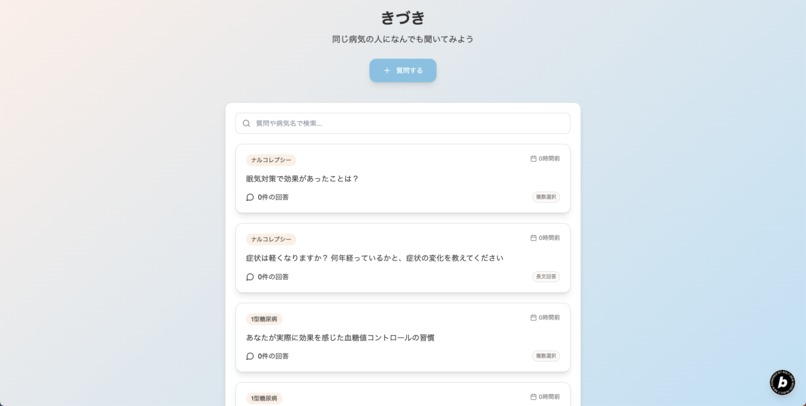
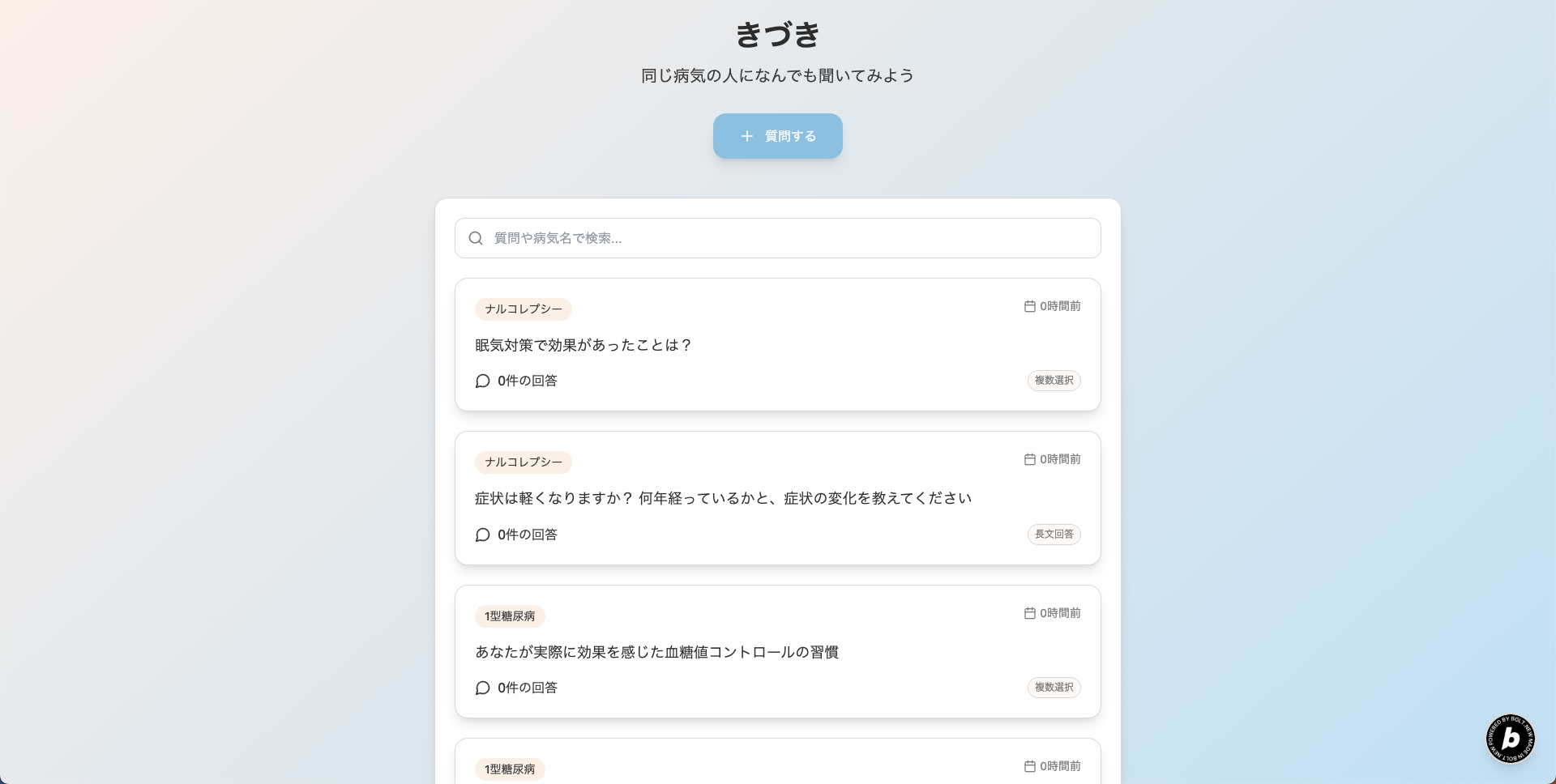
question_list
1. Inspiration
When you get diagnosed with a condition, doctors or search engines can’t always answer the real questions:
- Will I get better or worse?
- How do others handle medications or side effects?
- What kind of jobs are manageable?
- Are there daily tips or routines that actually help?
Posting on social media didn’t help—no one responded.
And even if they did, it didn’t mean much unless they had the same condition.
Platforms like Yahoo! Chiebukuro (Japanese Q&A) were too one-off, lacked structure, and didn’t let answers accumulate over time.
“If only I had seen answers from people with the same illness earlier.”
That’s what sparked this project.
2. What it does
This service lets people with the same condition ask and answer questions—completely anonymously.
- Anyone can post a question without registering
- Each question is tagged only with a condition (no categories)
- All questions are viewable by anyone
- Answers are submitted anonymously and freely
- Question authors choose the answer format: Yes/No, multiple choice, or free text
- Responses are shown as graphs or lists for easy understanding
It’s not a communication platform or social feed.
It’s a quiet space where only the questions and answers remain.
3. How we built it
I created most of it using "bolt". I used "cursor" to modify the scope of impact caused by adding some columns to the database.
4. Challenges we ran into
The original idea was a social-style platform where people could share their lifestyle tips, mindsets, and daily struggles.
But we soon realized: posting is hard—especially when you're unsure if you have the “right” to speak.
We pivoted to a question-only structure:
Anyone can ask, and anyone can answer.
That shift removed barriers and created a space where everyone could naturally participate—regardless of their stage or confidence.
5. Accomplishments that we're proud of
- Limiting contributions to “just questions” dramatically lowered the hurdle to participate.
- We created a UI free from social noise—focusing purely on insight.
6. What we learned
Posting is far more psychologically difficult than we expected.
That’s why offering a simple “ask or answer” experience matters.
We learned that real adoption doesn’t come from ideals—it comes from building something that respects people’s emotional limits.
7. What's next
- Allow users to submit multiple questions for deeper engagement
- Use AI to summarize answers, generate new questions, and improve search
- Long-term, we want people to stop thinking “I can’t do this because I’m sick” and start thinking:
“Even with illness, I can do this” or
“Because of my condition, I’m especially good at this”
Eventually, we’ll expand beyond Q&A to allow sharing of life hacks, helpful products, and mindset ideas—creating a knowledge base powered by lived experience.
Built With
- bolt
- react
- supabase
- typescript

Log in or sign up for Devpost to join the conversation.