Inspiration
Small-scale farmers produce much of the food in developing regions, yet they are the most exposed to climate change. Rains arrive late, droughts last longer, and sudden heavy downpours wash away seedlings. Most farmers still rely on guesswork or generic regional forecasts that don't tell them what to do on their own plot. "Shamba" means farm in Swahili — we wanted to build something that gives every shamba a sense of what the weather means for it.
What it does
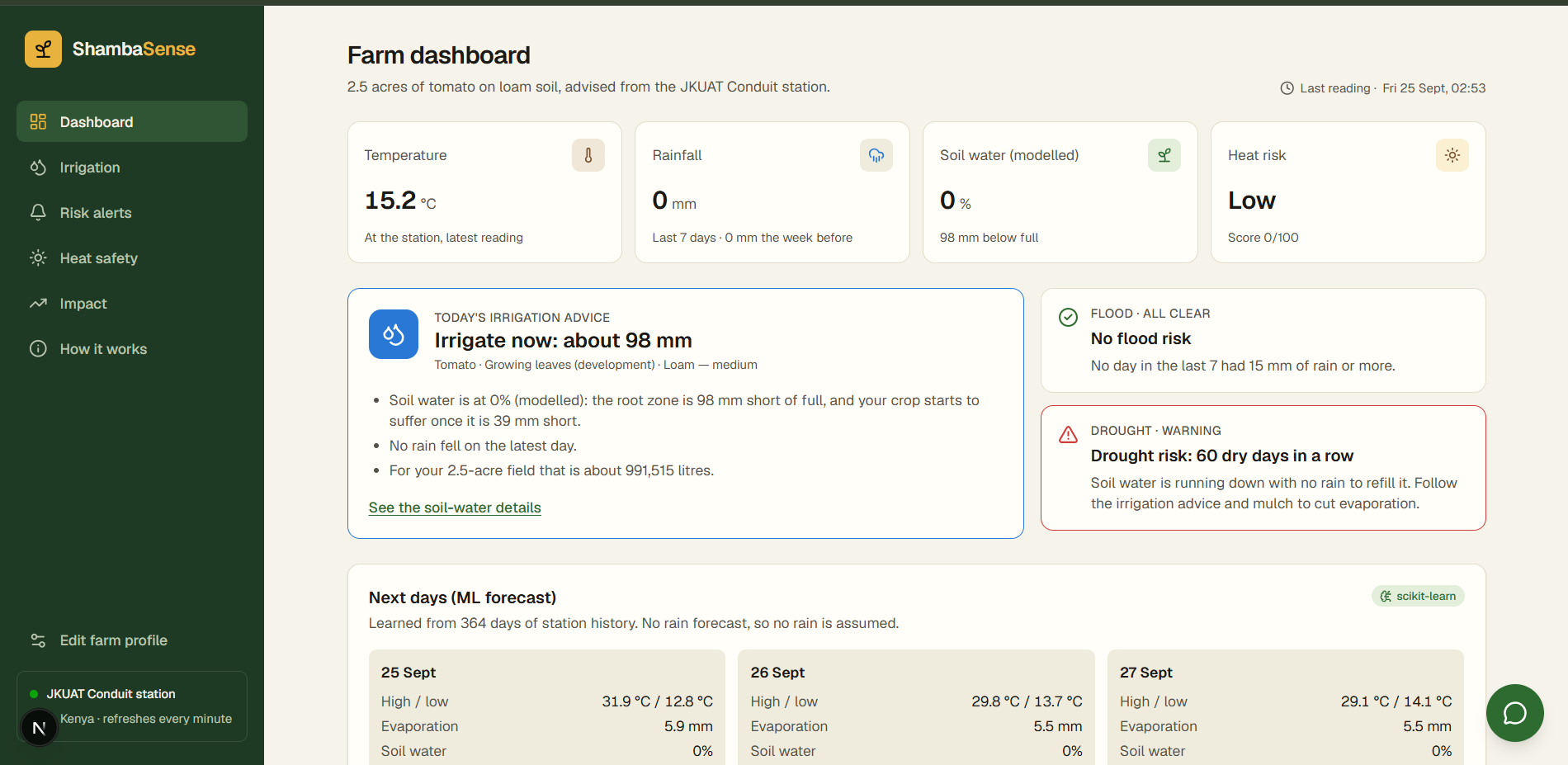
ShambaSense turns weather data into clear, actionable farm decisions:
- Farm profile – farmers enter their location, crops, and farm details to get personalised results.
- Weather analytics – historical and current conditions summarised into easy-to-read insights (rainfall, temperature, risk periods).
- ML forecast – a machine-learning model predicts upcoming conditions to help farmers choose planting and harvesting windows.
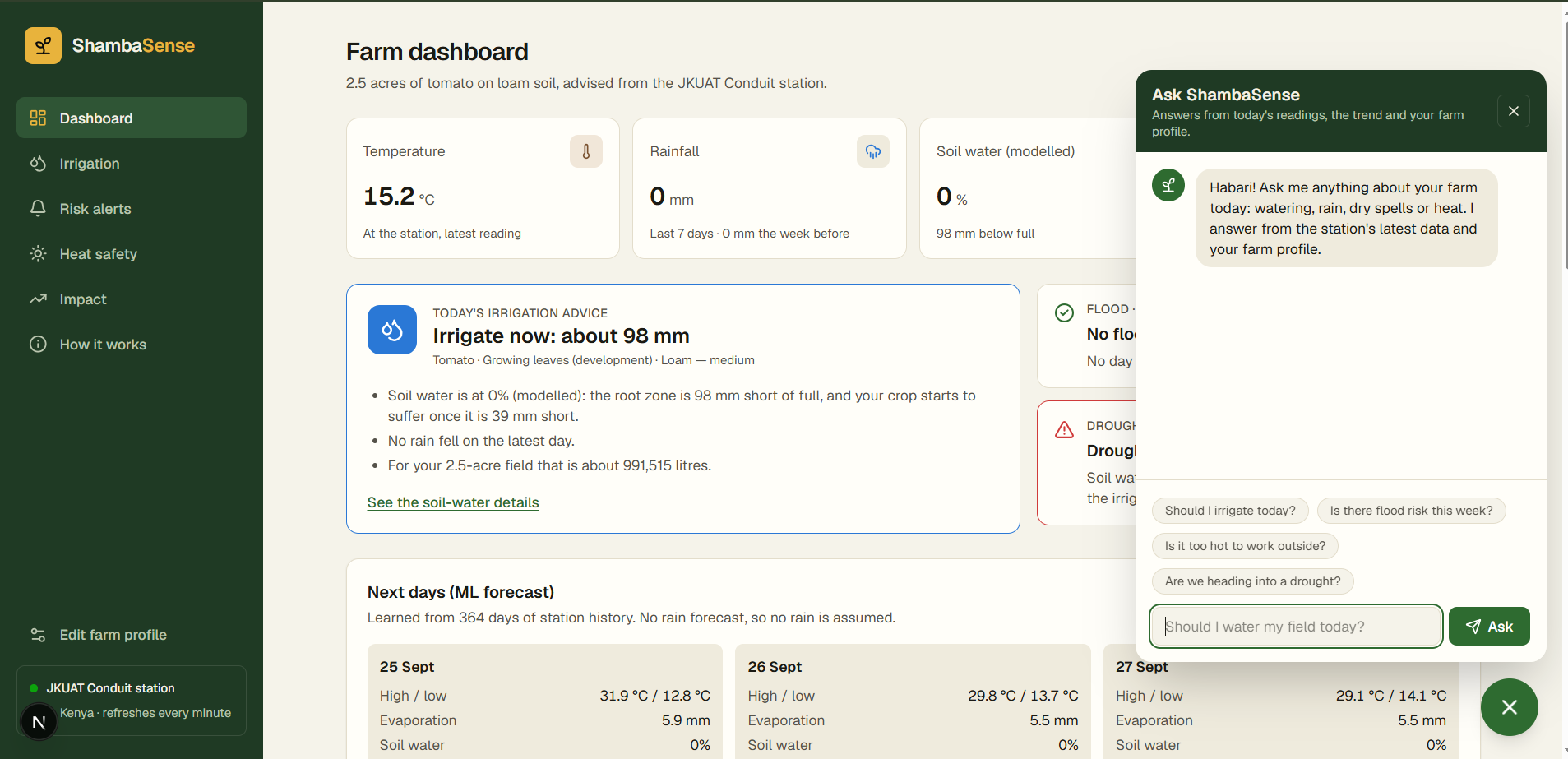
- AI farm assistant – powered by Groq, farmers can ask questions in plain language ("Should I plant maize this week?") and get practical advice grounded in their farm's data.
How we built it
- Frontend: Next.js, TypeScript, and Tailwind CSS for a fast, responsive, mobile-friendly interface.
- Backend: [backend framework/language] serving analytics, forecast, and profile endpoints.
- Weather data: [weather API / dataset name].
- Forecasting: a [model type, e.g. regression / time-series] model trained on [data source] to predict [rainfall / temperature].
- AI assistant: Groq's LLM API for low-latency, conversational farm advice, using the farmer's profile and forecast as context.
Challenges we ran into
- Noisy, incomplete weather data – cleaning and aligning data from different sources took more time than expected.
- Communicating uncertainty – a forecast is never 100% certain; presenting risk without confusing or misleading farmers was a design challenge.
- Keeping AI advice grounded – we had to feed the assistant real farm and forecast data so its answers stayed relevant instead of generic.
- Time pressure – integrating frontend, backend, ML, and AI within the hackathon window.
Accomplishments that we're proud of
- A working end-to-end product: from farm profile to forecast to AI advice.
- A clean, simple interface designed for users with limited technical background.
- Fast AI responses thanks to Groq, making the assistant feel conversational.
What we learned
- How to process and interpret real weather data, and how uncertain forecasts are.
- That the hardest part of climate tech isn't the model — it's turning predictions into decisions people trust.
- How to combine traditional ML forecasting with LLMs so each does what it's best at.
What's next for ShambaSense
- SMS / USSD and WhatsApp access for farmers without smartphones or reliable internet.
- Local language support (Swahili and more).
- Crop-specific advice – pest and disease risk alerts tied to weather conditions.
- Partnerships with farmer cooperatives and agricultural extension officers to pilot with real farmers.
- Improved models using satellite and soil data for hyperlocal predictions.
Built With
- apscheduler
- fastapi
- gradient-boosting
- groq
- httpx
- llm
- machine-learning
- mongodb
- nextjs
- numpy
- pandas
- pydantic
- pymongo
- python
- react
- scikit-learn
- tailwindcss
- typescript
- uvicorn

Log in or sign up for Devpost to join the conversation.