-
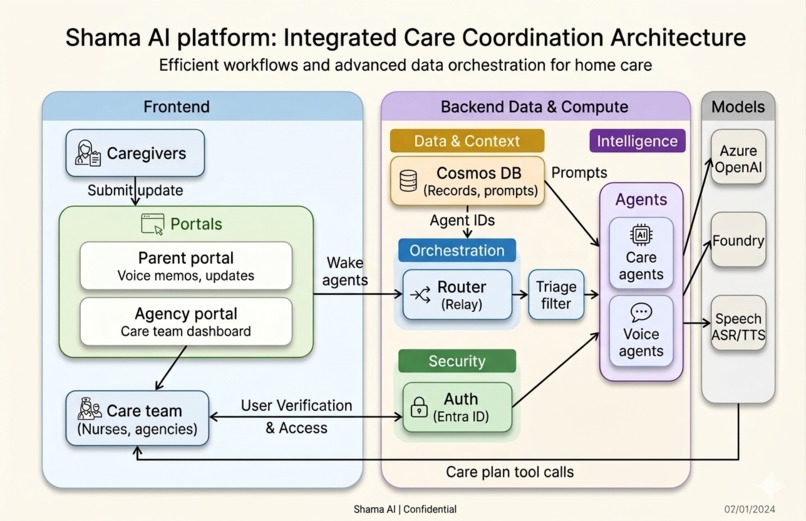
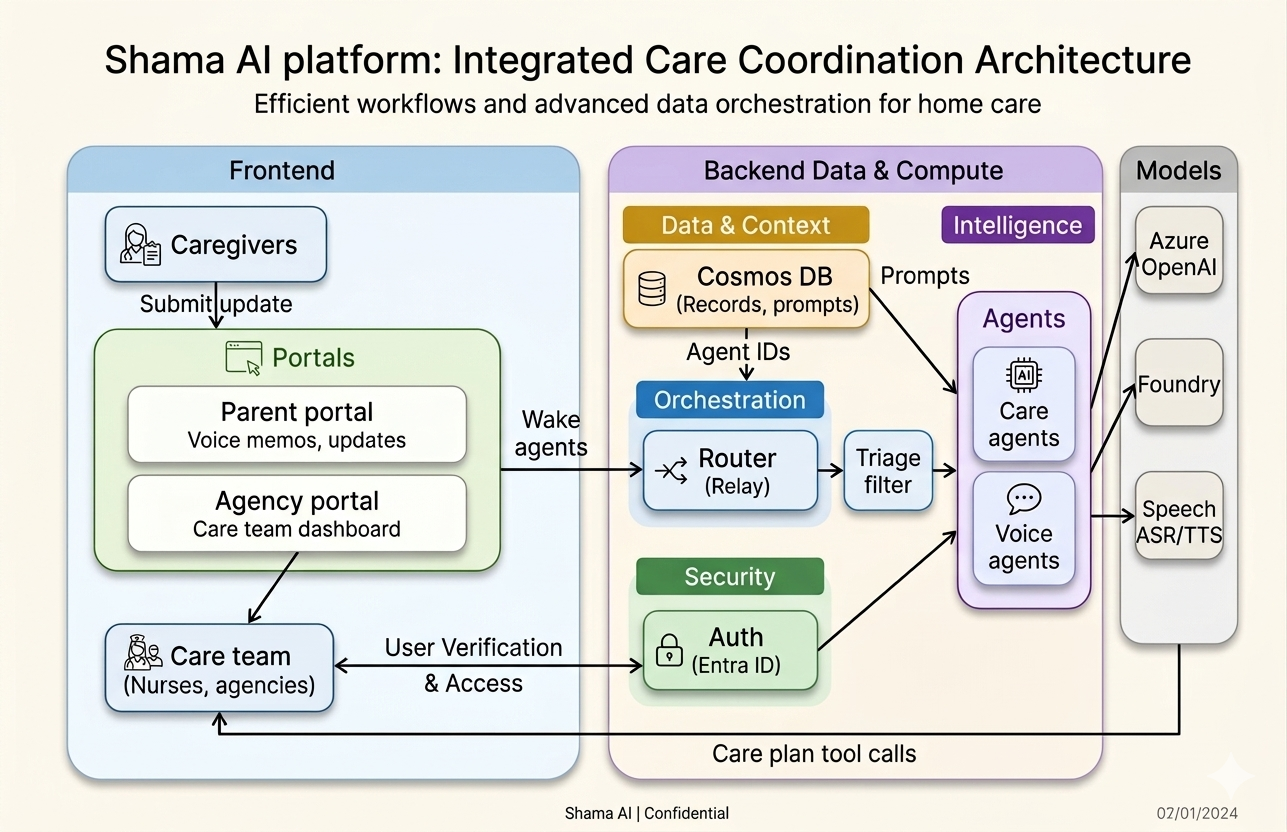
Integrated Care Coordination Architecture
Inspiration
"The hardest part was never the love or the effort. It was the system around them."
We built Shama AI because of my brother. He has autism, and he is on Medicaid. Growing up, I watched my parents carry the full weight of his care, and I watched it exhaust them.
The current system leaves families behind:
- Disjointed Realities: The caregiving agency lives in one world with its own records, while families live in another, dealing with the daily realities, small changes, and hard days.
- Lost Context: My parents were left constantly repeating themselves on phone calls, filling gaps from memory, and carrying vital information that was never shared.
- Agency-Only Focus: Every existing platform we looked at: Therap, Sandata, HHAeXchange, was built exclusively for the agency, treating the family as an afterthought.
What It Does
Shama AI is a connected two-portal platform for Medicaid home care that finally puts the agency and the family on the same page.
| PAIN | SHAMA AI'S CURE |
|---|---|
| Disconnected, siloed information | Live relay portals that instantly sync agency updates and family observations |
| Exhausting, complex medical forms | AI-powered care graph built via unstructured voice memos, images, and documents |
| One-sided agency software | Accessible family portal requiring zero clinical literacy or training |
How We Built It
Frontend:
- React running on Vite for a fast, responsive dashboard supporting both the agency and family portals.
- Microsoft Entra ID handling secure authentication and tenant separation so each agency's data stays isolated.
Backend & Relay:
- Three-Service Architecture splitting the platform across a dashboard, backend, and a real-time relay layer.
- Live Synchronization ensuring an update on one side instantly propagates to the other instead of sitting in a silo.
AI Layer:
- Azure-Based Ingestion Pipeline that processes unstructured inputs (documents, images, voice memos) into structured records.
- ASR & Extraction with a built-in confirmation loop, ensuring human validation happens before the AI's output becomes part of the permanent medical record.
Build Process:
- Real Engineering Practices: Shared GitHub repos, environment-based config, and branch-based development.
Accomplishments We're Proud Of
- Built a working, connected platform, not just a mockup, where family and agency portals genuinely communicate in real time.
- Engineered a zero-clinical-literacy interface allowing families to simply speak, upload, or snap a photo while the system does the structuring.
- Identified genuine white space in a large, underserved market by thoroughly mapping incumbents and proving the need for a connected parent portal.
Learnings & Challenges
- Plumbing a real-time connection: Keeping the relay layer in sync and handling edge cases where both sides touch the same record was complex but necessary to make two portals feel like one product.
- Structuring messy human input: Turning a tired parent's 9pm voice memo into trustworthy data required building a strict human-in-the-loop confirmation step. In healthcare, a confident wrong answer is worse than no answer.
- Navigating multi-tenancy: Medicaid data is highly sensitive. Getting Entra ID, tenant isolation, and per-role access right took real care and late nights chasing config mismatches.
- Shared visibility is the product: The missing piece in care is almost never more data; it’s shared visibility. The connection is the product, not the database.
- Trust in Healthcare AI: An AI that quietly guesses in a medical record is a liability; an AI that proposes and lets a human confirm is an asset.
What's Next
- Deepening the care graph: Flagging changes, catching contradictions between agency logs and family reports, and nudging the care team before issues become emergencies.
- Expanding the voice layer: Pushing toward non-English and underrepresented-language speakers so the families most often locked out of healthcare software can use this in their own words.
- Hardening for Medicaid deployment: Achieving full EVV compliance, acquiring agency certifications, and running pilots with real caregiving organizations to prove the connected model in the field.
Built for the families doing the daily work. We aren't just logging care; we are connecting it.
Built With
react vite azure microsoft-entra-id github
Built With
- claude
- fastap
- github
- next.js
- python
- react
- tailwind
- typescript

Log in or sign up for Devpost to join the conversation.