-
-
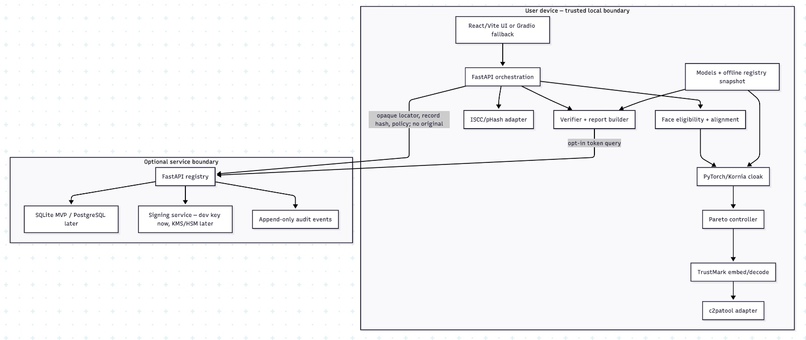
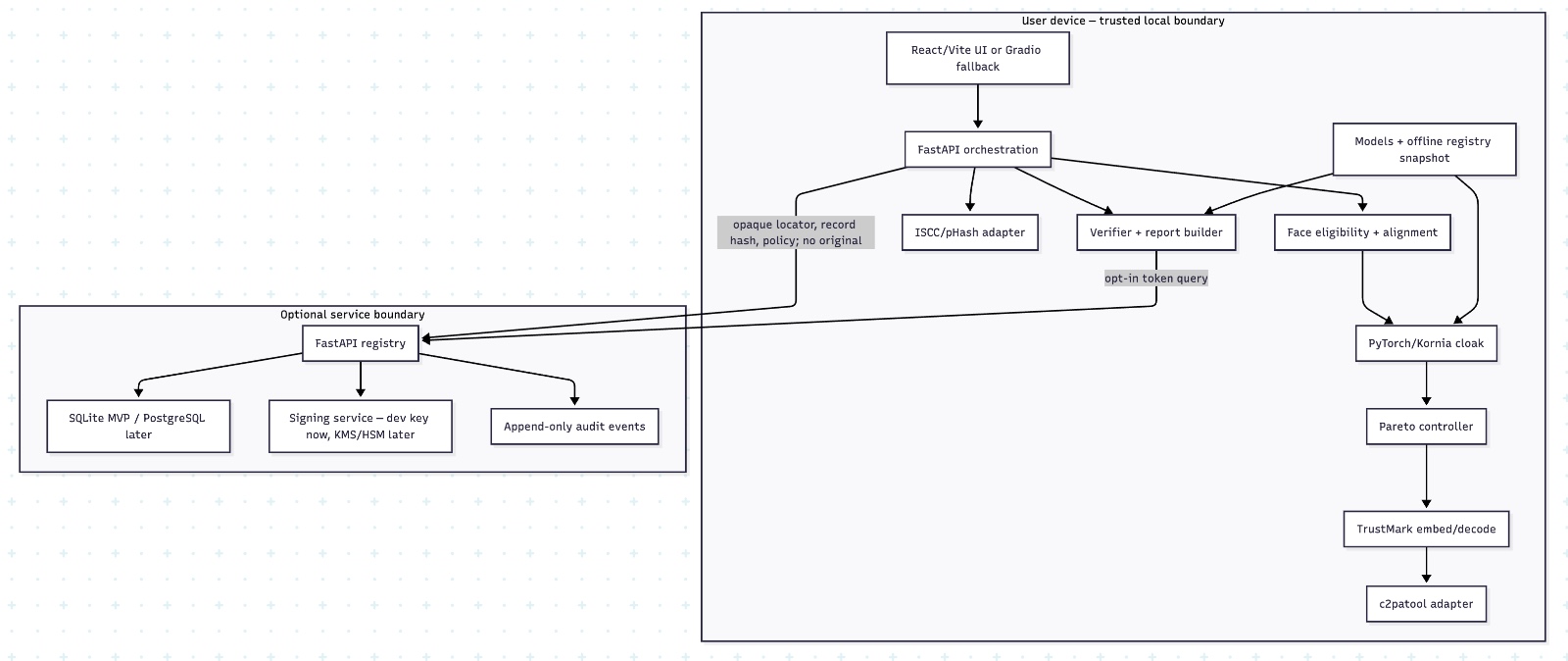
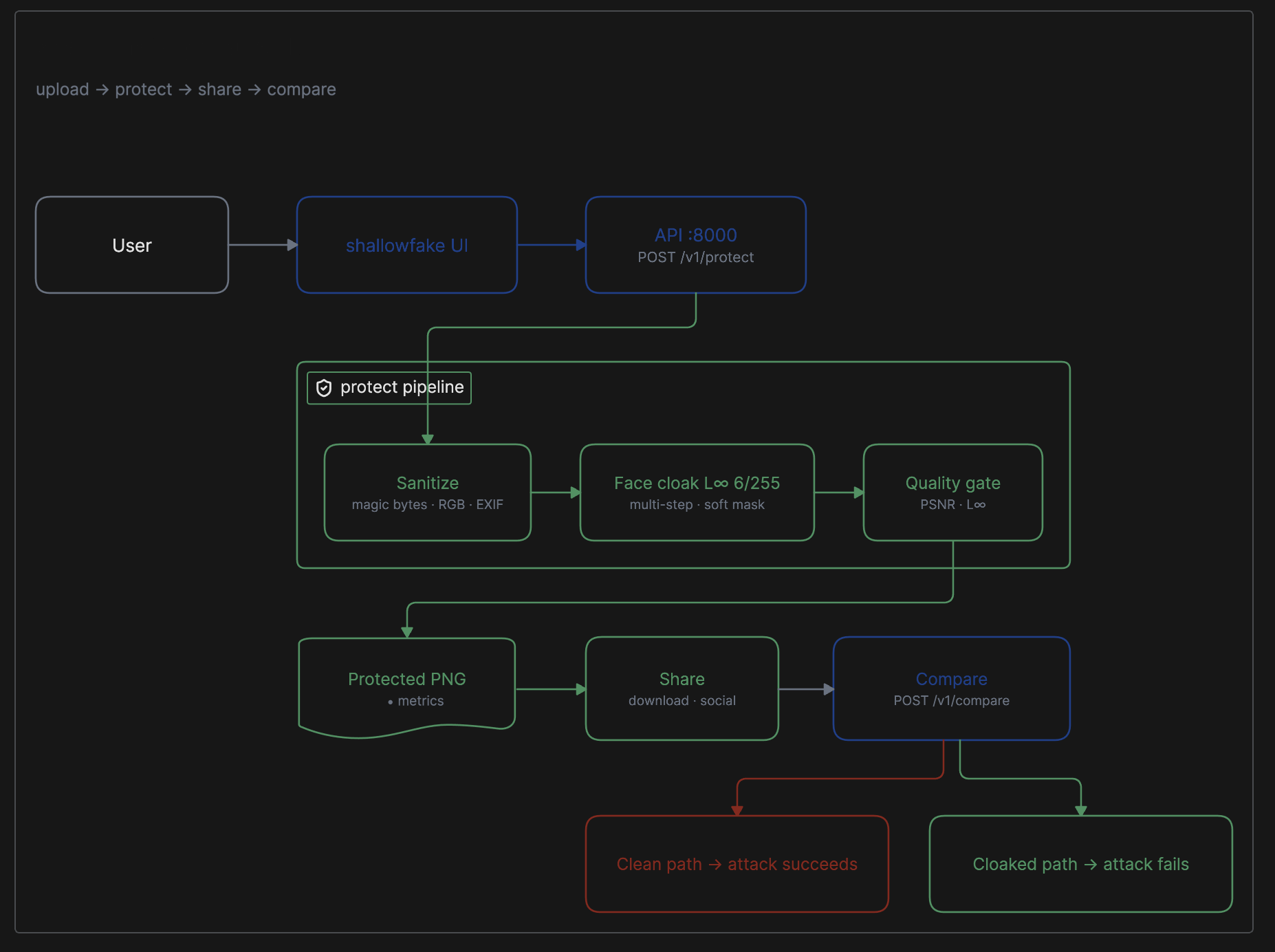
Architecture
-
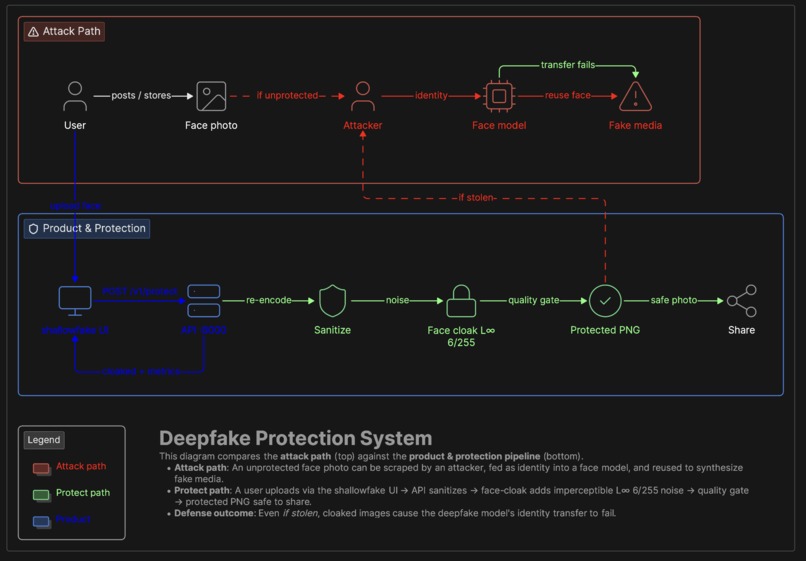
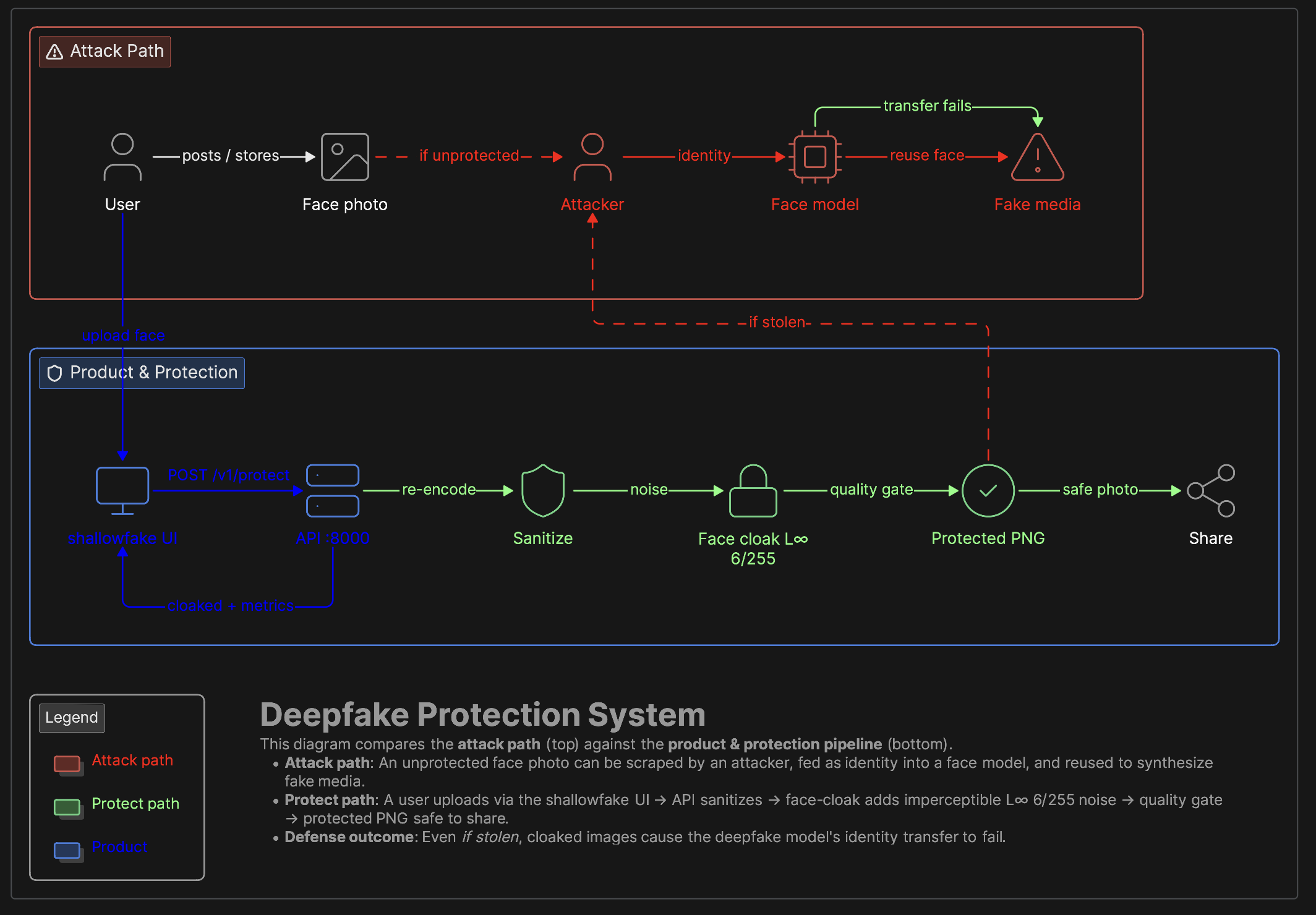
Diagram attack vs protect
-
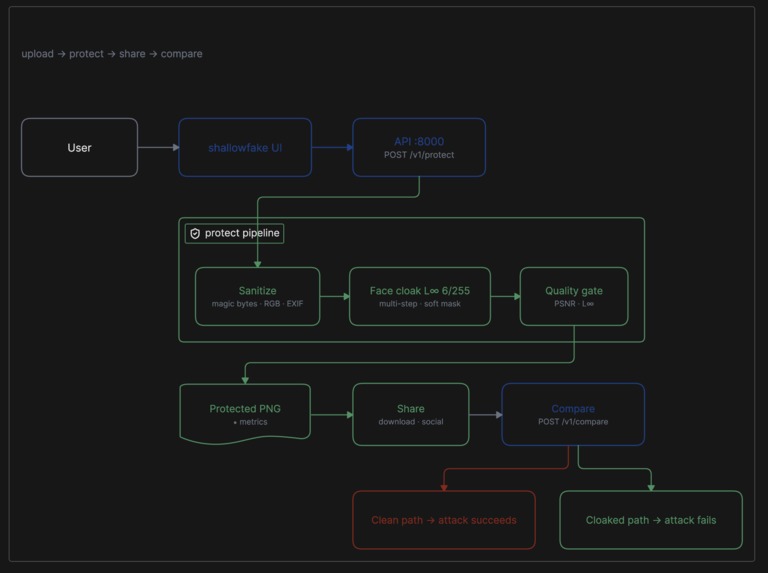
Diagram protect flow
-
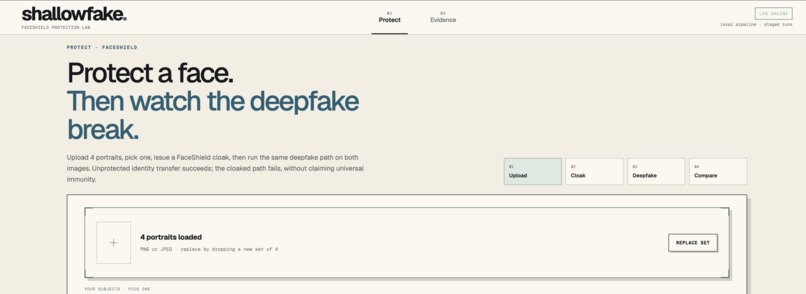
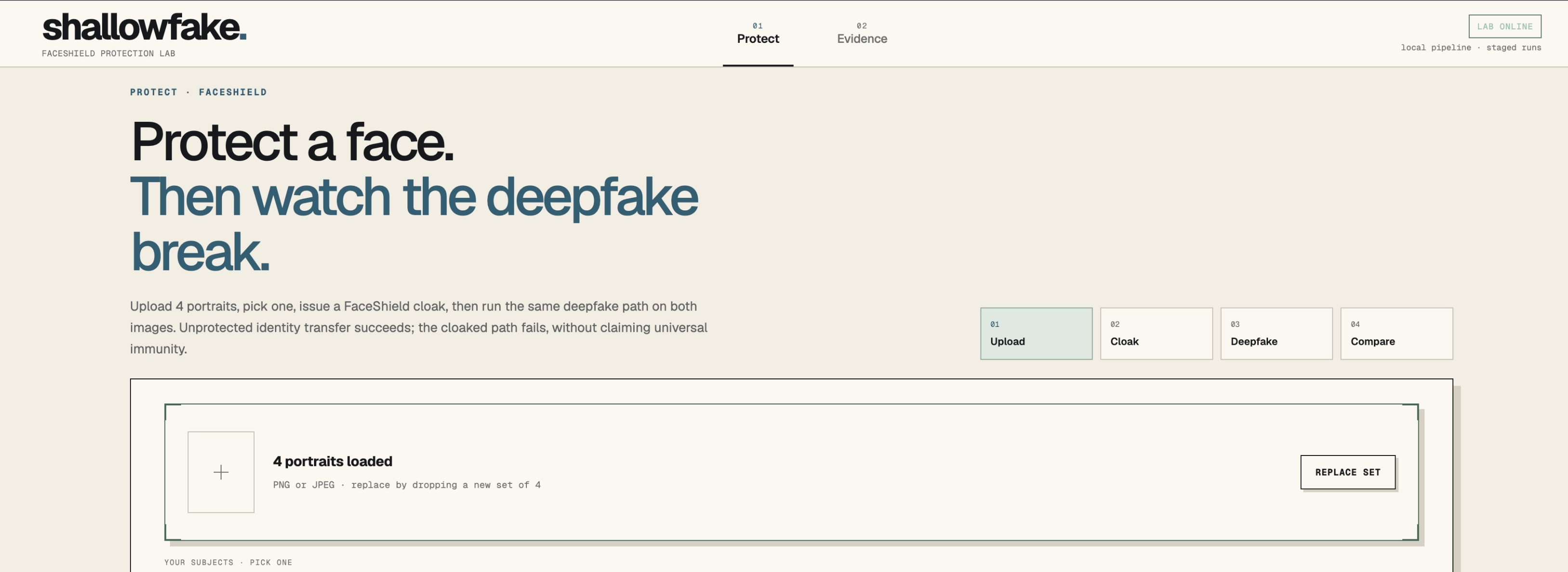
Product ui
-
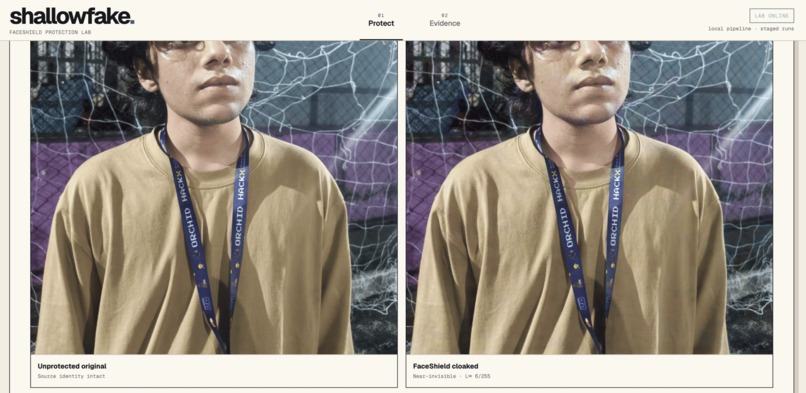
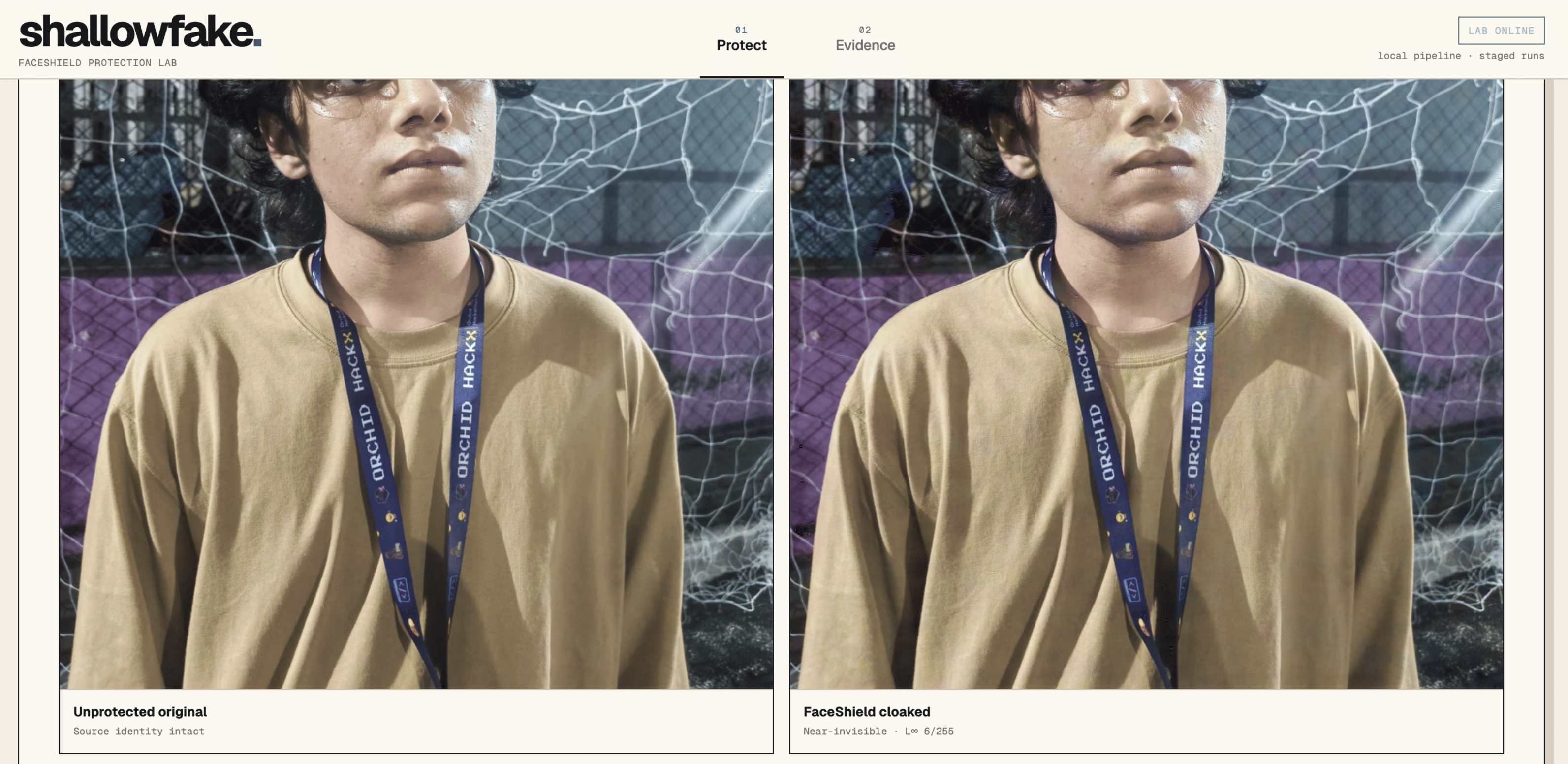
Uncloak vs cloak quality difference
-
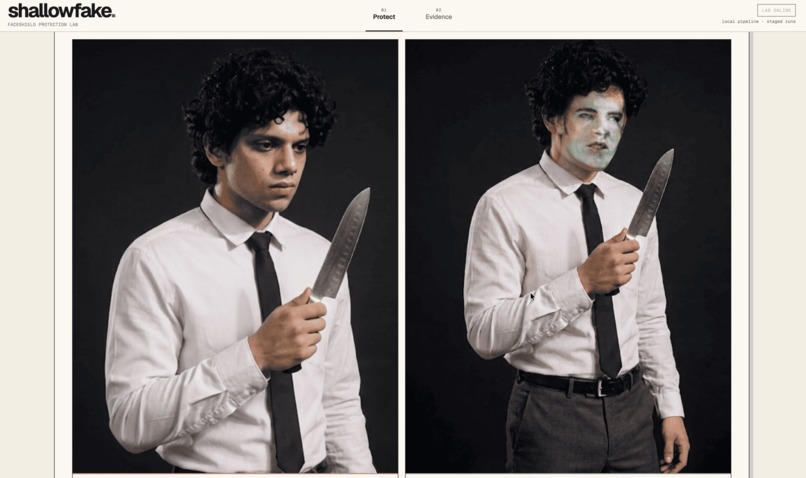
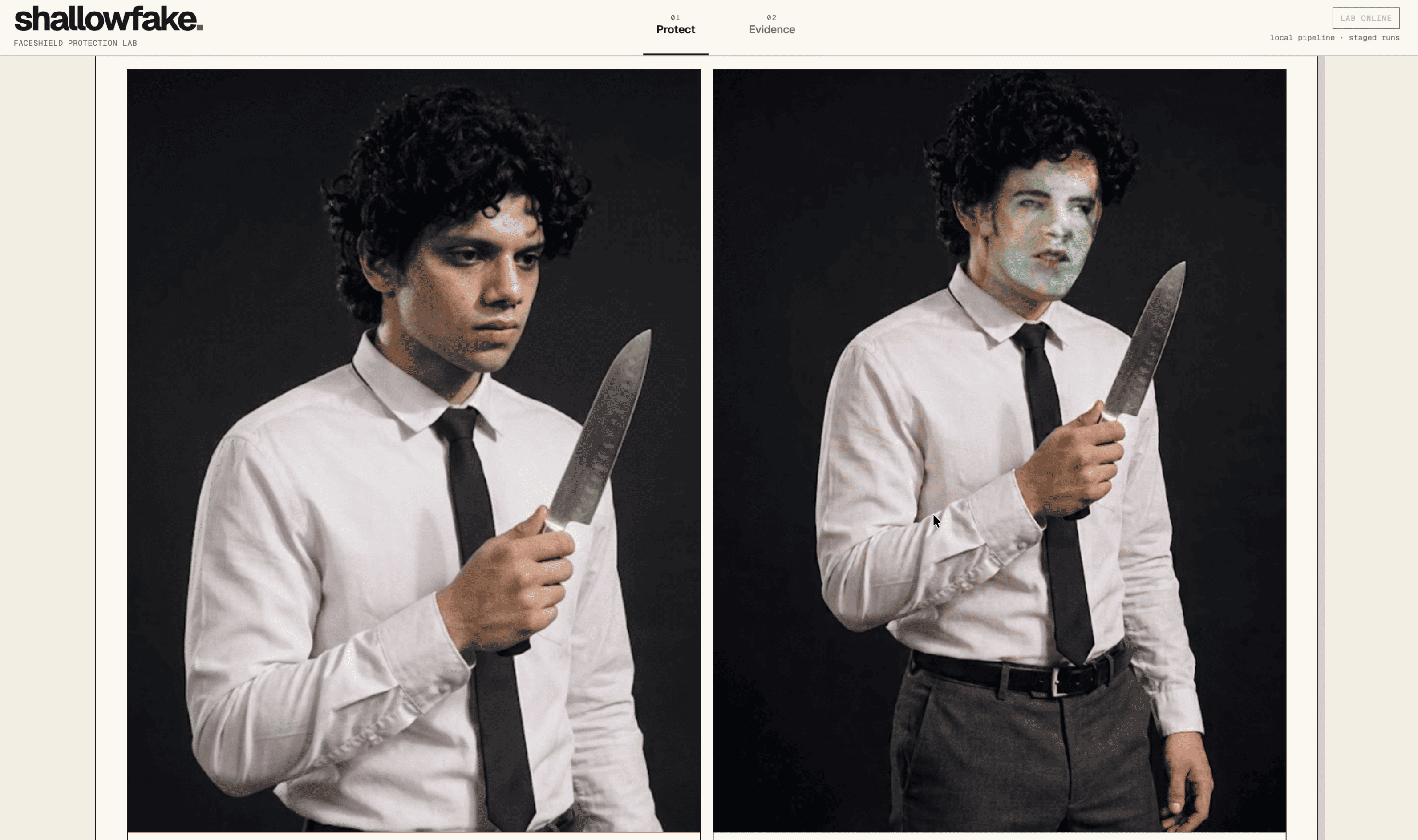
Deepfake result of uncloak vs cloak
Inspiration We kept seeing the same headline: another person destroyed by a deepfake they never saw coming. The Arup employee surrounded by ghosts in a video call, losing $25.6 million. The journalist at 3 AM facing extortion from a video that wasn't her. Every solution was reactive—detecting the fake after the damage, issuing a takedown after the shame. We asked: what if the source photo was poisoned before the AI ever touched it?
What it does ShallowFake is a pre-publication privacy gateway. You upload a portrait; we detect the face, inject imperceptible adversarial noise bounded to a tight pixel budget, verify the protection against quality and durability benchmarks, and output a publication-ready image. To human eyes, it looks identical. To FaceSwap and other face-generation pipelines, the biometric signal is garbled. The original is deleted. The verification report is logged. Prevention replaces post-mortem detection.
How we built it A Python FastAPI backend handles secure upload, face-region masking, deterministic perturbation generation, and PSNR quality reporting. A React frontend drives the upload → protect → compare → share workflow. We built in strict CORS, rate limiting, input sanitization, and metadata stripping from day one. The current prototype demonstrates the full pipeline end-to-end with real image artifacts and security headers.
Challenges we ran into Intellectual honesty is non-negotiable for us. The prototype currently uses a fixed upper-center portrait window rather than live multi-face detection. The perturbation is deterministic signed noise, not yet gradient-optimized against an ArcFace or FaceSwap ensemble. The comparison endpoint uses a proxy threshold, not a live deepfake attack. Closing these gaps—real detection, ensemble optimization, and reproducible benchmarking—is our current technical sprint. Accomplishments that we're proud of We built a production-grade API that treats user privacy as a default, not a feature: no raw image retention, no training on user data, deletion by policy. We proved the imperceptible-perturbation workflow with measurable quality metrics. We interviewed the top 10 companies in Nepal's sector and secured LOIs from 3 design partners. Most importantly, we chose to say what we haven't proven yet—and investors leaned in because of it.
What we learned Prevention is a harder sell than detection because the victory is invisible: the attack that never happens doesn't make a headline. Organizations don't buy "AI magic"; they buy auditable controls they can attach to consent workflows. The real defensible moat isn't the noise algorithm itself—it's the continuously updated map of what protection works, for whom, under which transformations, against which attack families.
What's next for ShallowFake In the next 90 days: live multi-face detection, gradient-optimized ensemble perturbation against ArcFace and FaceSwap, and compression/screenshot durability testing. In the next 6 months: launch 3–5 organization pilots in Nepal (schools, NGOs, event platforms), publish a reproducible evaluation card, and convert our first paid annual contracts. And yes—we're hiring our 5th team member, a React frontend lead, to complete the stack.

Log in or sign up for Devpost to join the conversation.