-
-
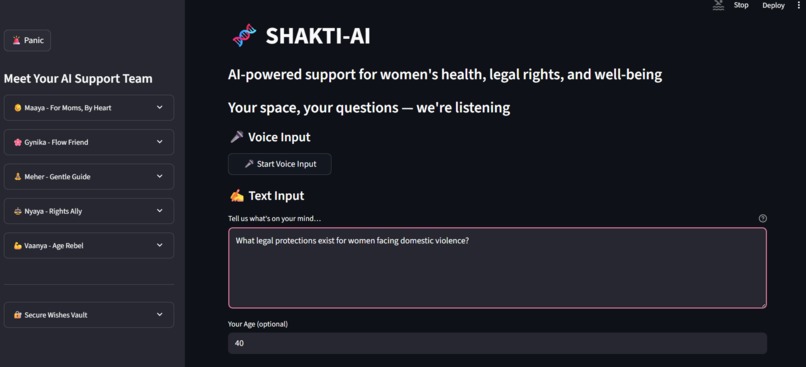
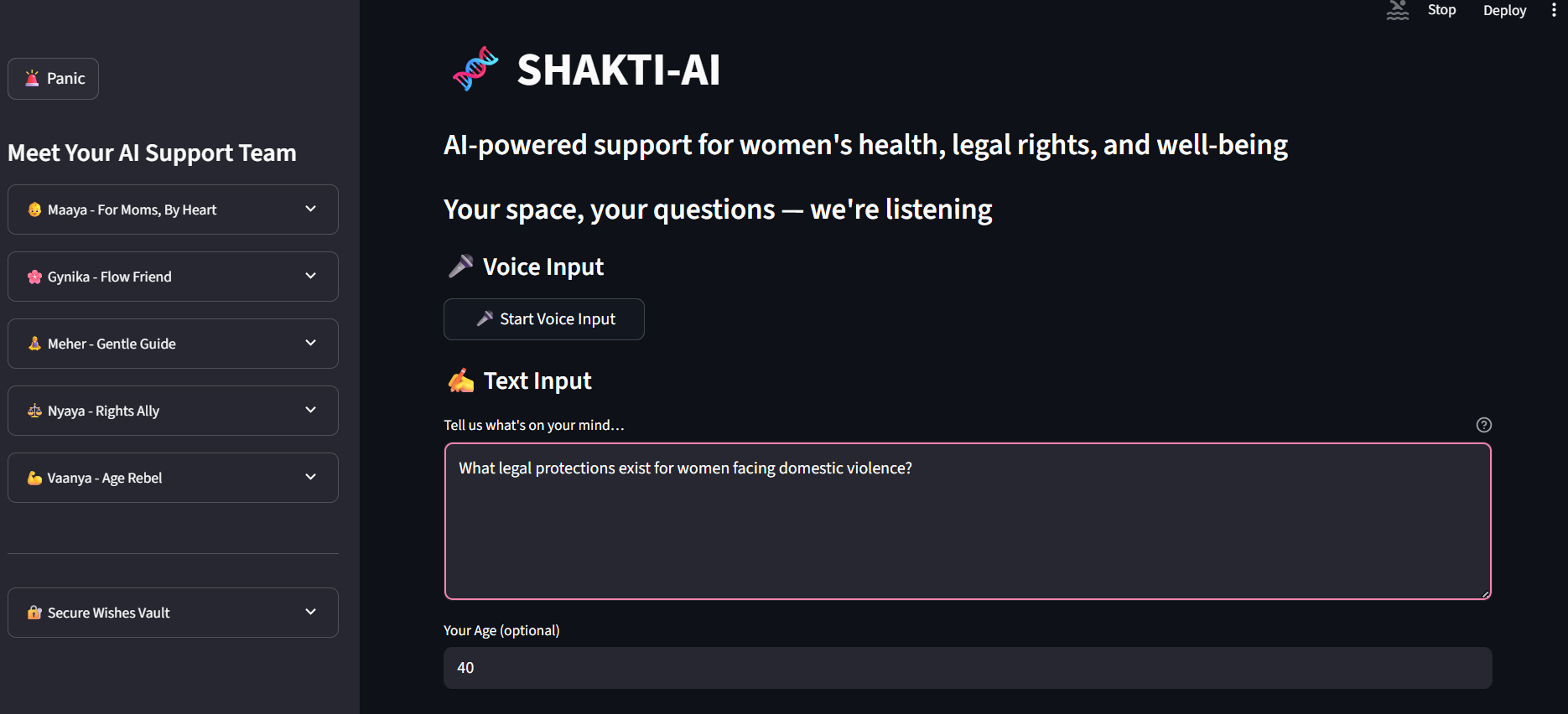
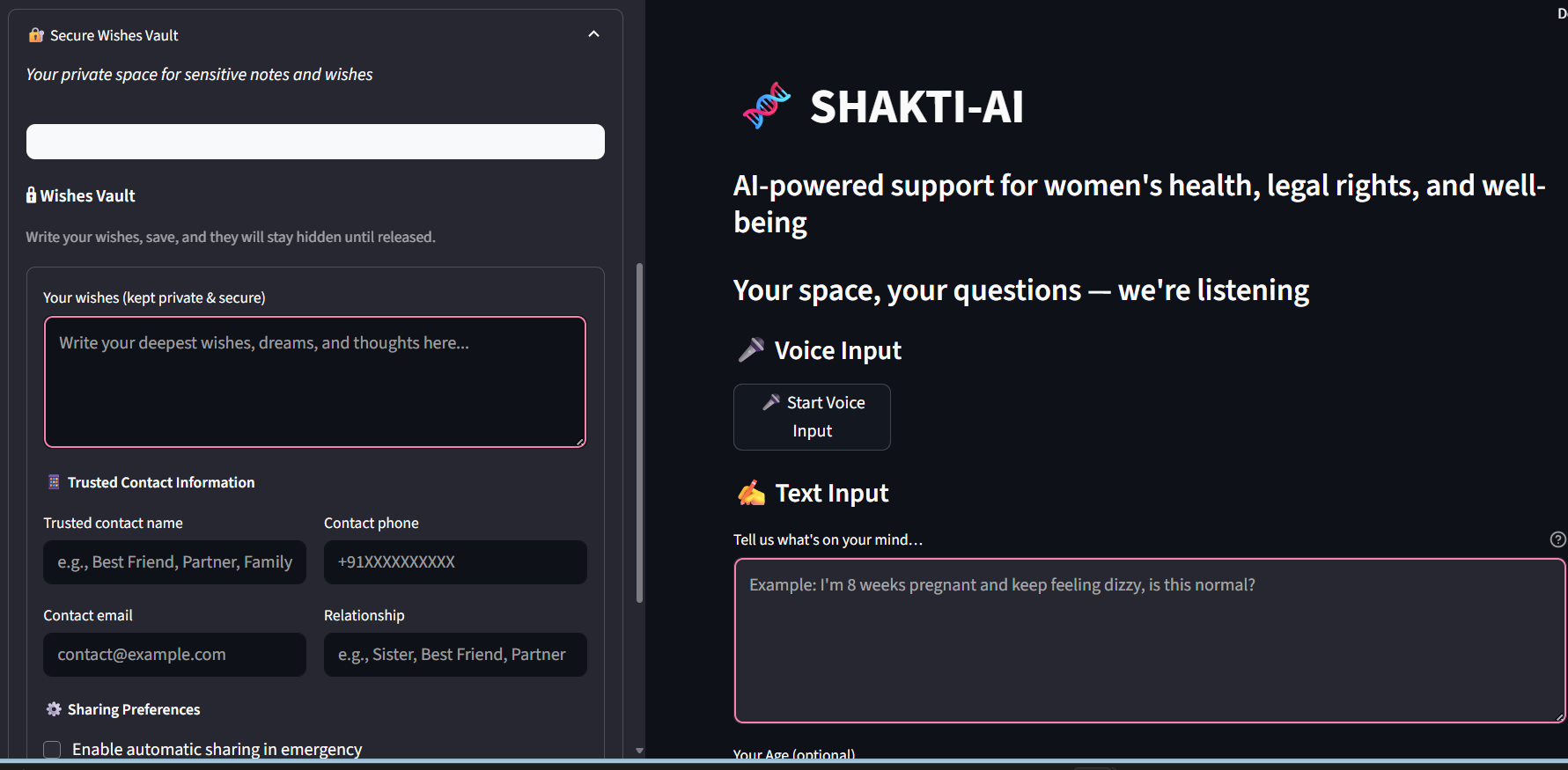
main user interface
-
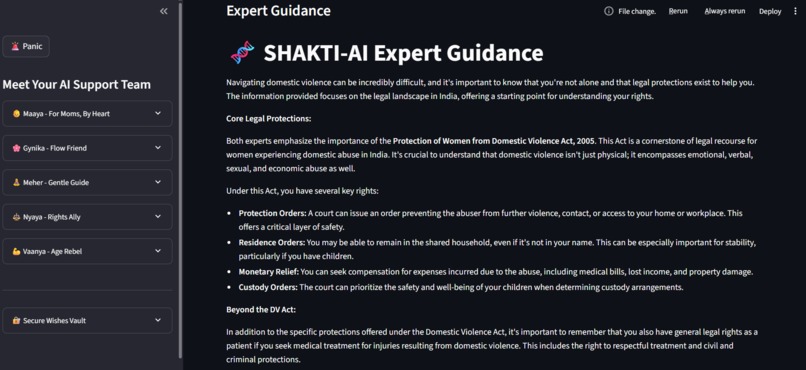
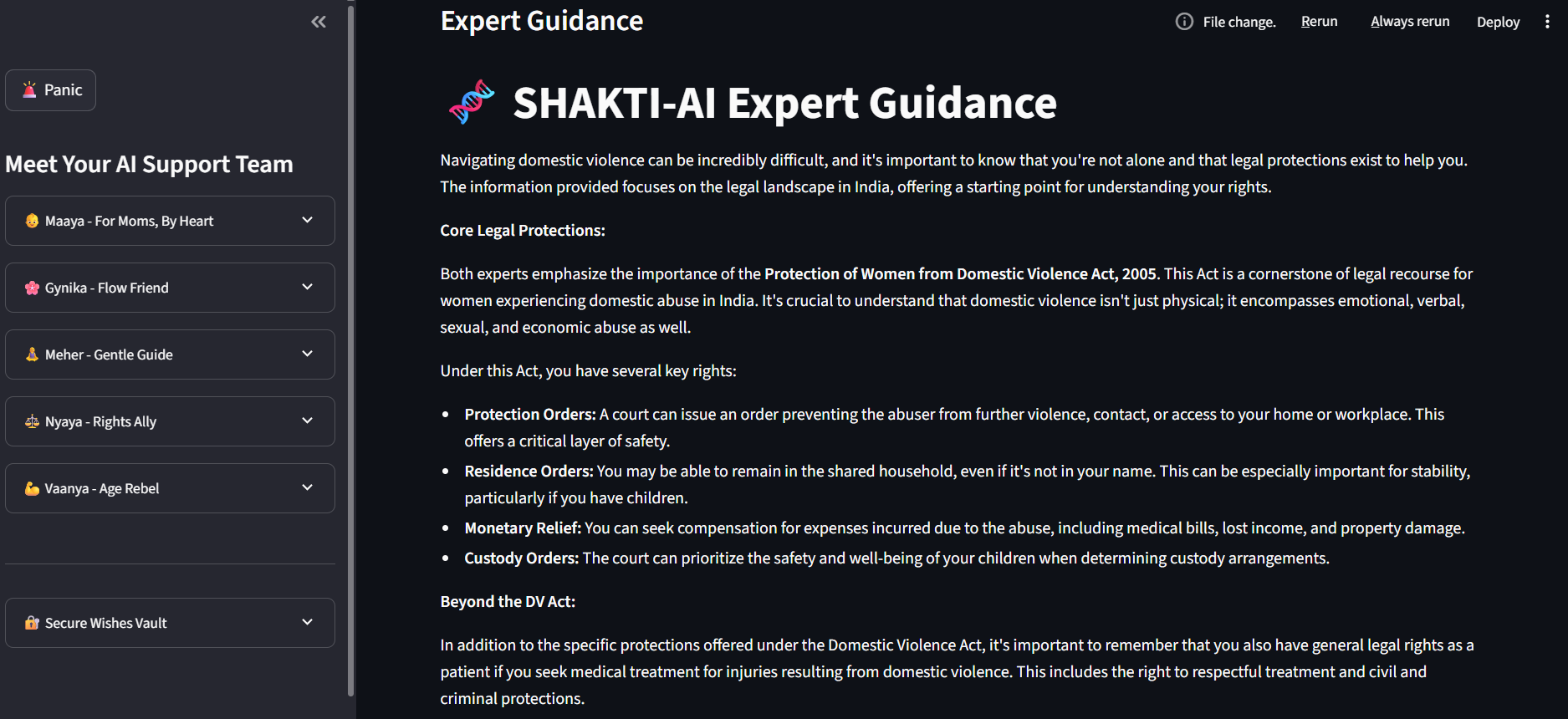
Agents response
-
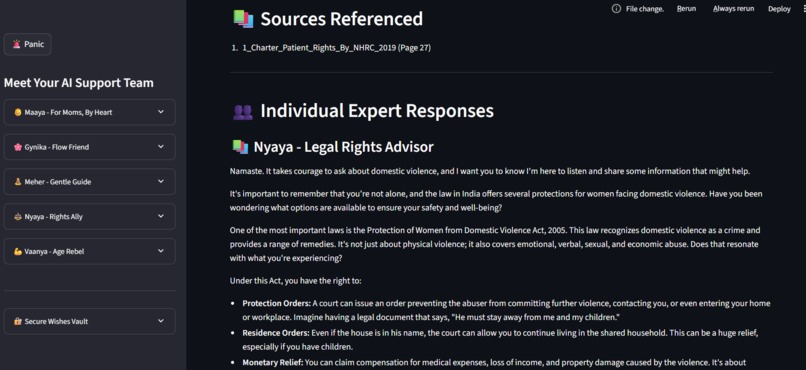
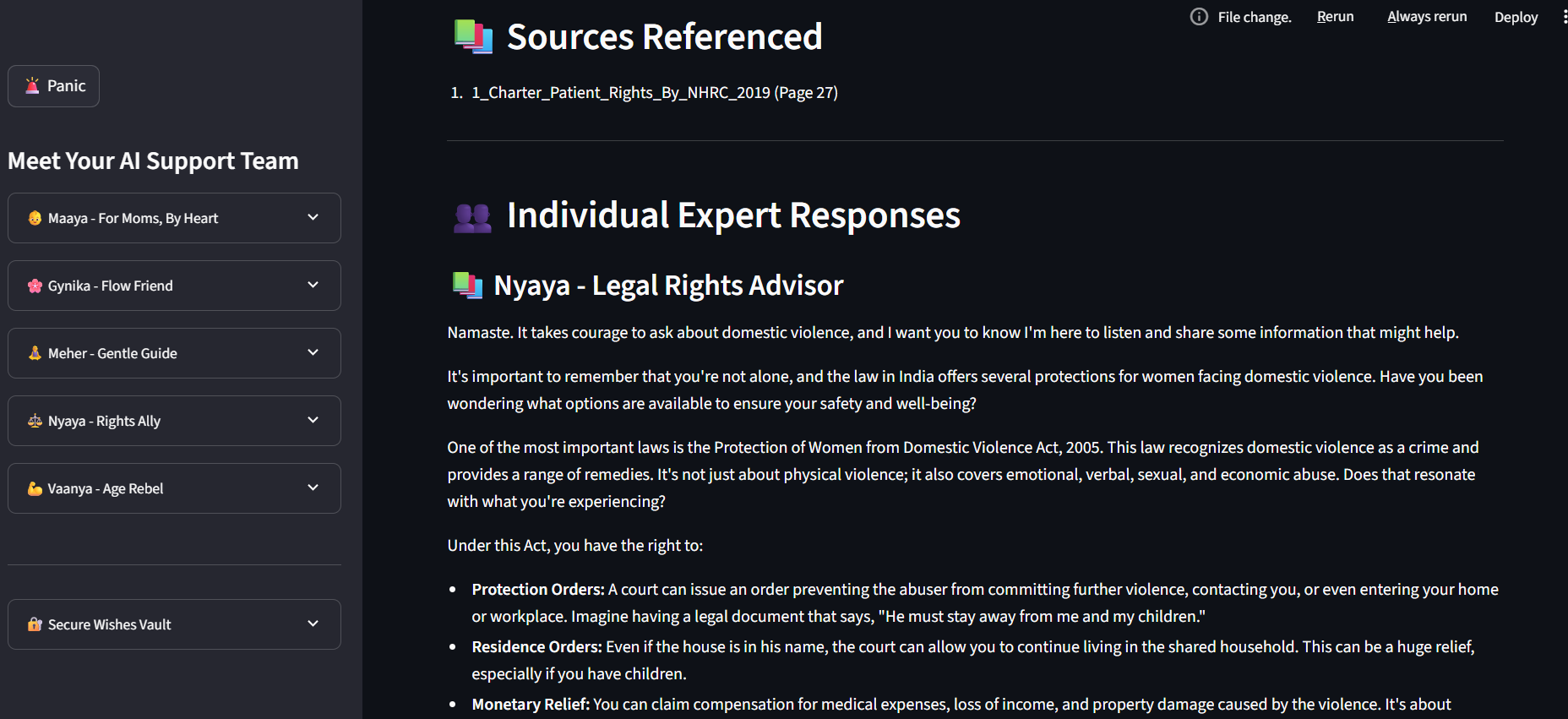
References and each agents' individual response
-
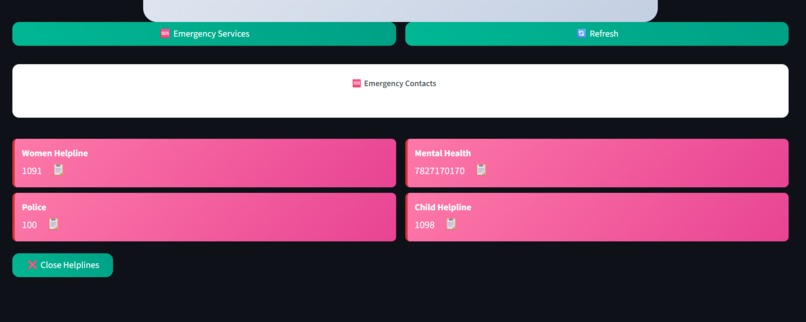
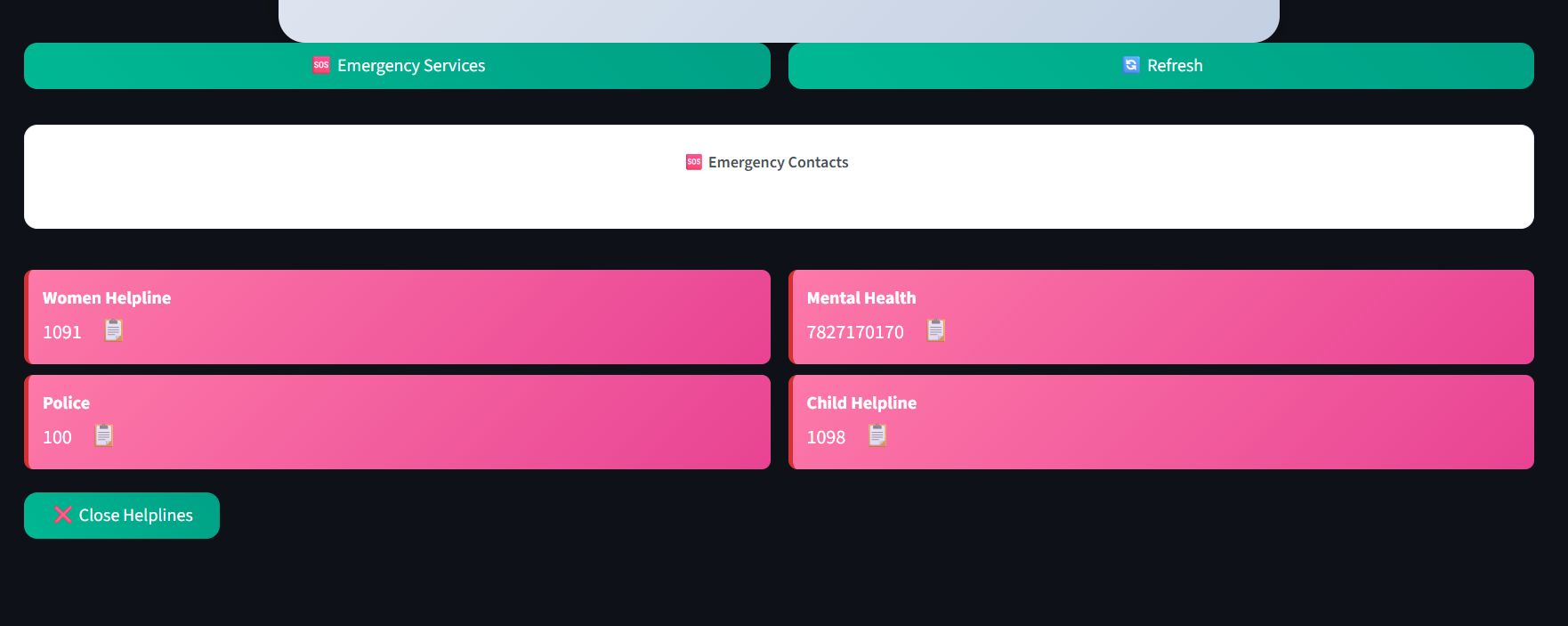
Emergency helpline numbers after scrolling a bit and "Refresh" button to go back to the main interface
-
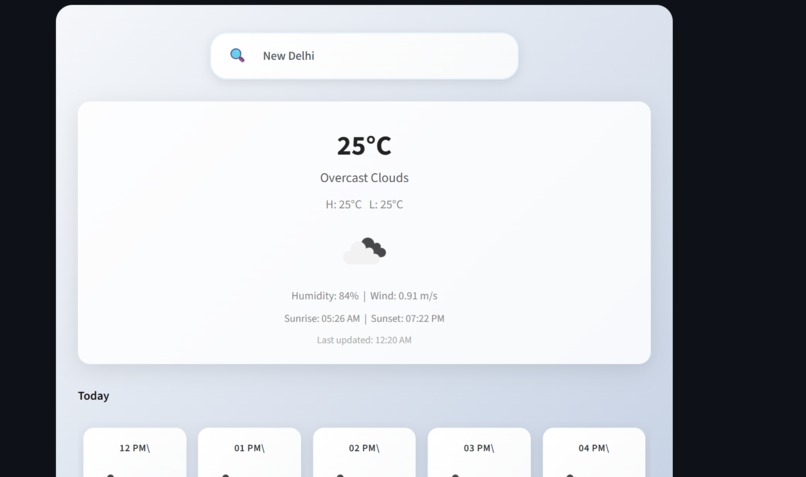
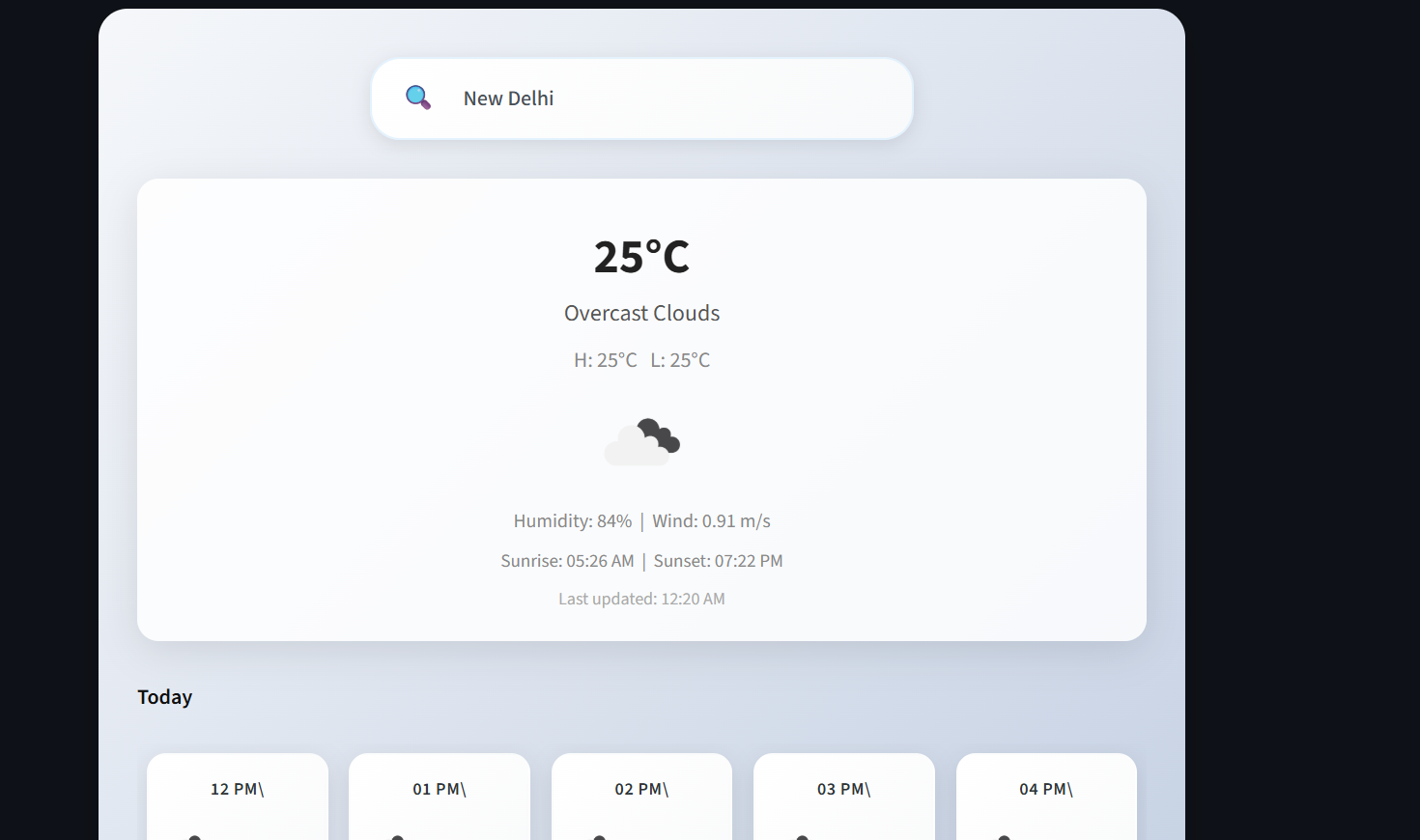
Weather forecast after "Panic" is clicked
-
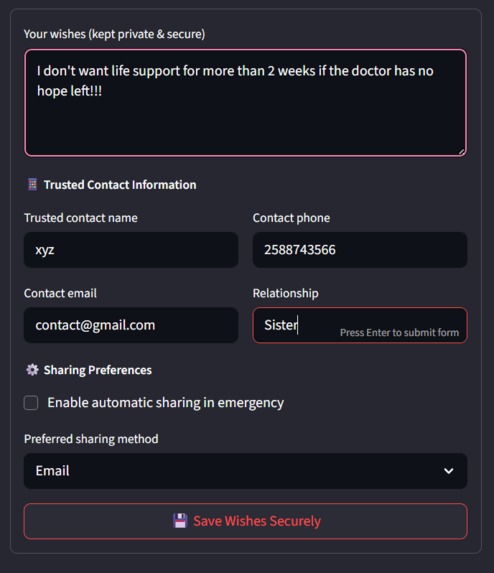
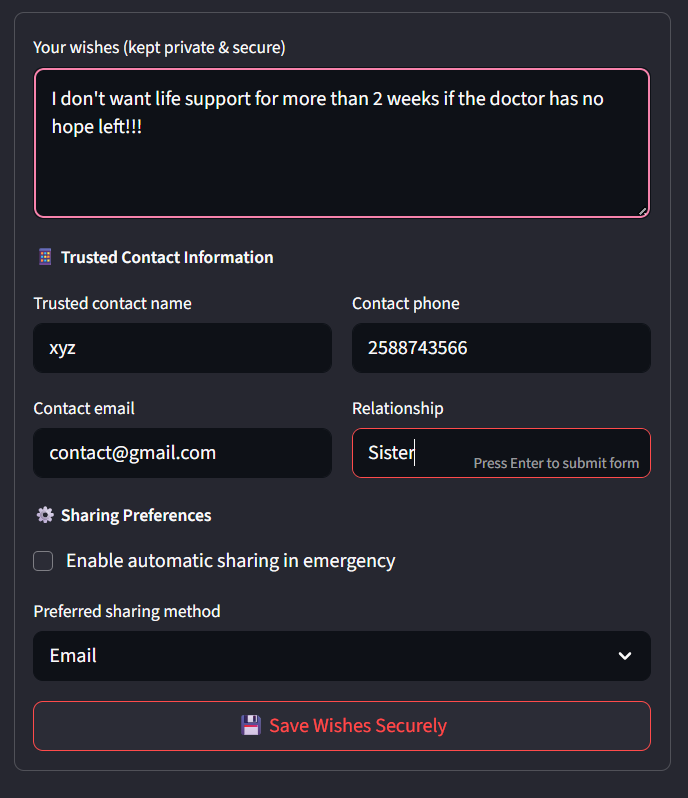
Save private wishes securely (binary encrypted form)
-
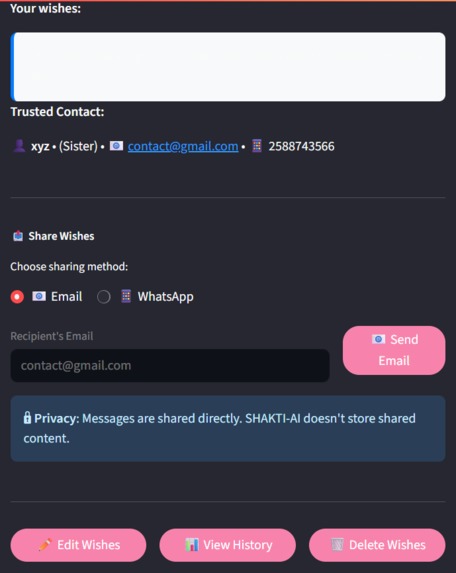
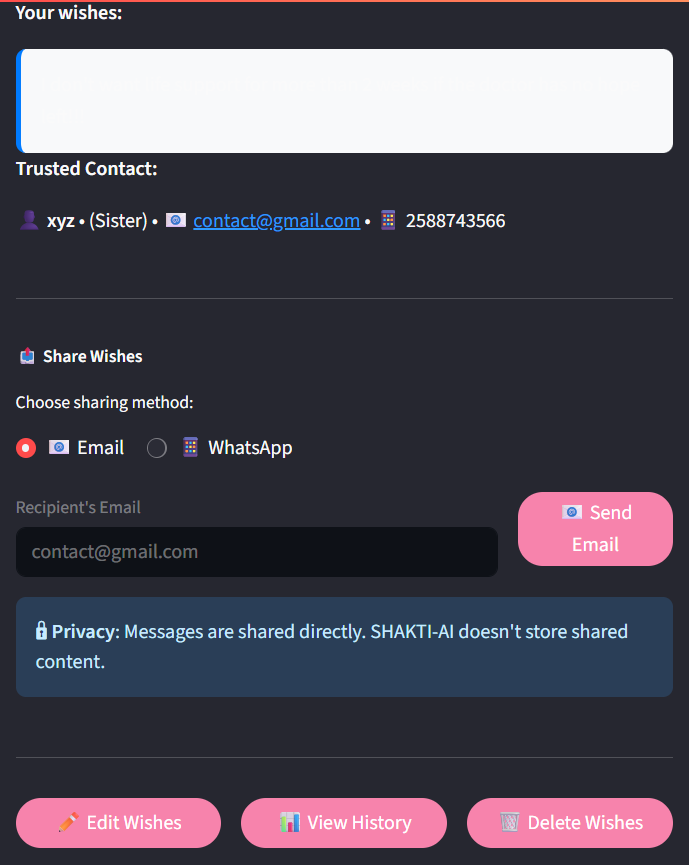
Send them securely and directly via email or WhatsApp or both
-
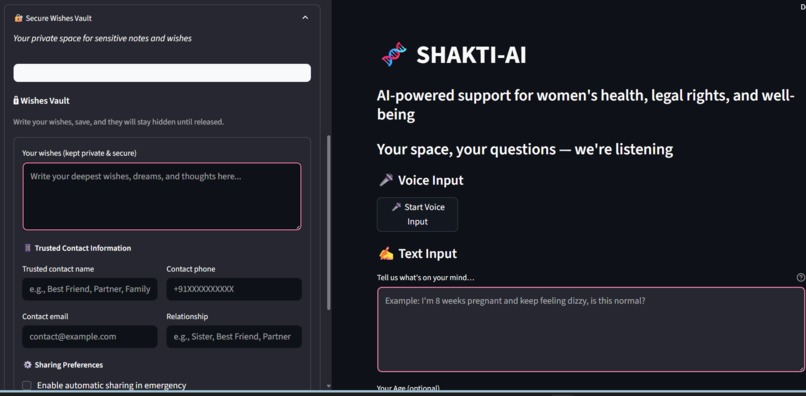
Wishes vault for writing wishes like "I don't want life support for more than 2 weeks if the doctor has no hope left!"
Shakti-AI: My Stand for Women’s Dignity, Autonomy, and Power
I built Shakti-AI because I couldn’t stop thinking about a real, heartbreaking case : a woman, two months pregnant and declared brain dead, was kept on life support for four months just to carry her pregnancy forward — her body was treated like an incubator, her dignity erased. That shook me. I realised how deep the cracks run when it comes to women’s bodily autonomy — whether you’re a teen, a mother, or an elderly woman, someone somewhere thinks they have a say over your body and mind.
So, I wanted to build something that pushes back — something that says: Her body, her voice, her rights. That’s how Shakti-AI was born. It’s a multi-agent system with five dedicated agents:
- Maaya — for moms, by heart (maternal & newborn care)
- Gynika — your flow friend (periods, PCOS, reproductive health)
- Meher — your gentle guide (mental health, gaslighting, coercion)
- Nyaya — your rights ally (legal rights, body autonomy)
- Vaanya — the age rebel (menopause & hormonal dignity)
How I Built It
I used LLM Orchestration, RAG pipelines, vector databases (FAISS) and a Streamlit frontend to bring it all together. Each agent has its own domain knowledge, conversation flow, and safety checks — for example, it can connect users with real helplines if needed. I trained it to stay trauma-informed, culturally aware, and privacy-first — no data logging that could put anyone at risk.
What I Learned
I deep-dived into multi-agent orchestration, prompt engineering, and how to fuse LLMs with real legal, medical, and cultural context. I learned how fragile women’s rights still are — and how technology can either invade privacy or protect it. It made me a better developer, but also a sharper researcher and a more empathetic person.
Challenges I Faced
Building Shakti-AI wasn’t easy. Designing context-aware conversations that don’t trigger or misguide users was tough. Finding authentic, reliable local resources was even tougher — there’s no single dataset for women’s rights in India that’s complete and up-to-date. Technically, managing multi-agent workflows, safe user interactions, and real-time document retrieval stretched my skills — but that’s exactly what made it worth it.
✨ Why I’m Proud
This isn’t just a project for me — it’s a promise. To myself, and to every woman who’s ever been told she doesn’t get to choose. Shakti-AI is my way of saying: We do. And I hope this sparks more tech that actually respects women — alive, gone, or fighting to be heard.


Log in or sign up for Devpost to join the conversation.