-
-
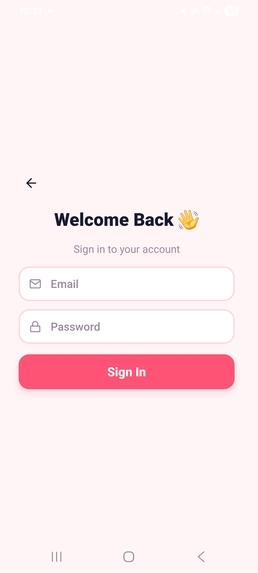
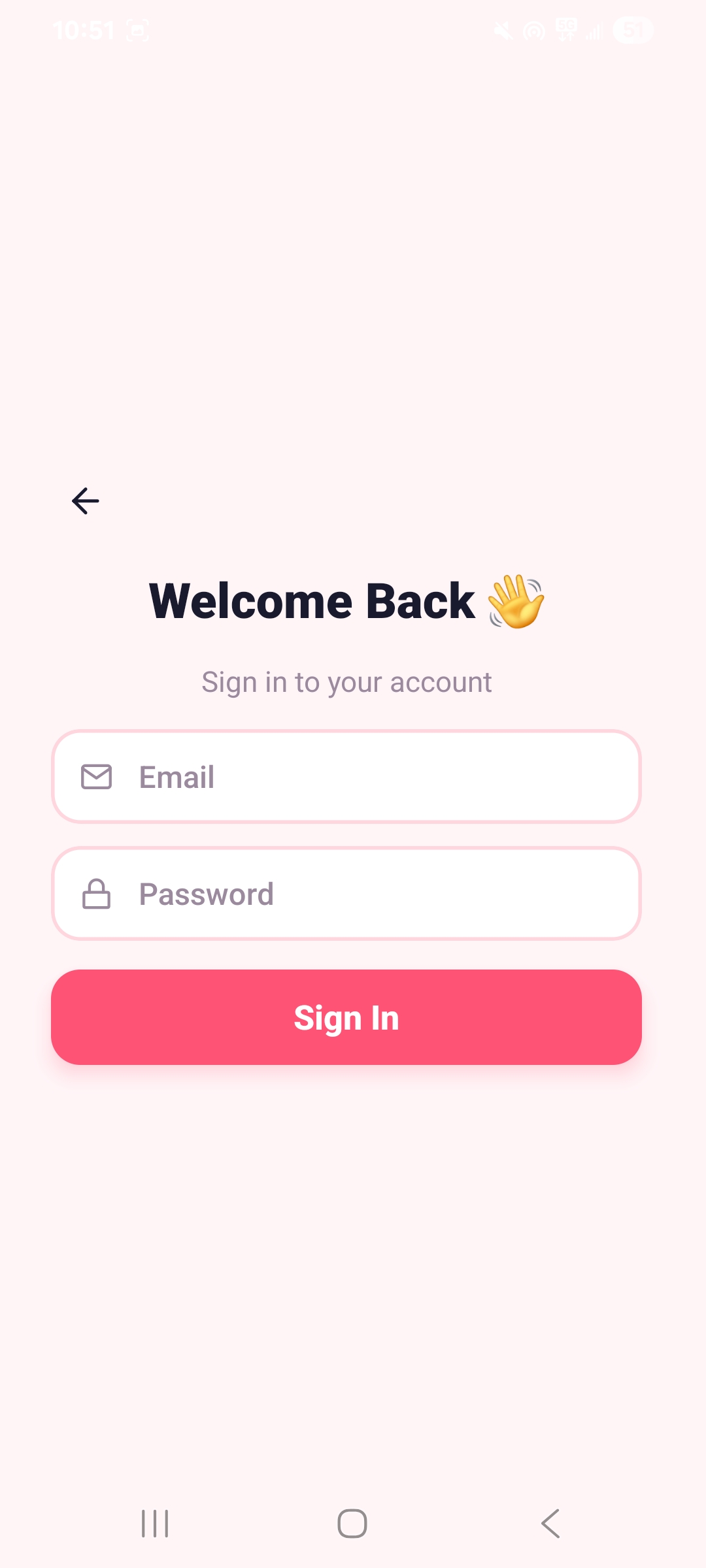
Sign In Screen
-
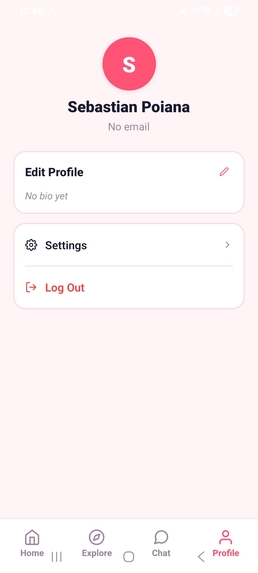
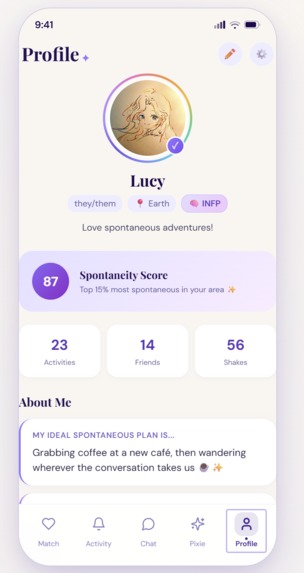
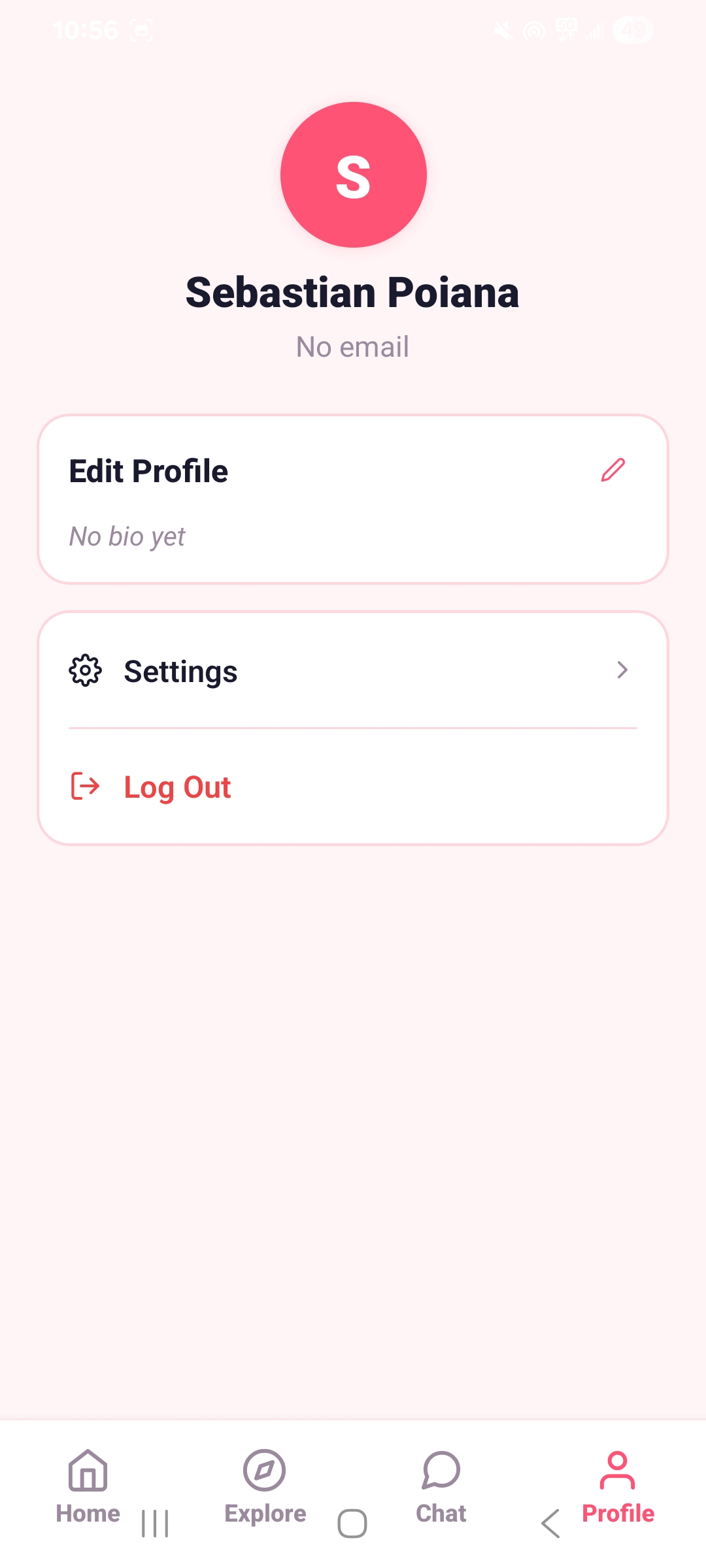
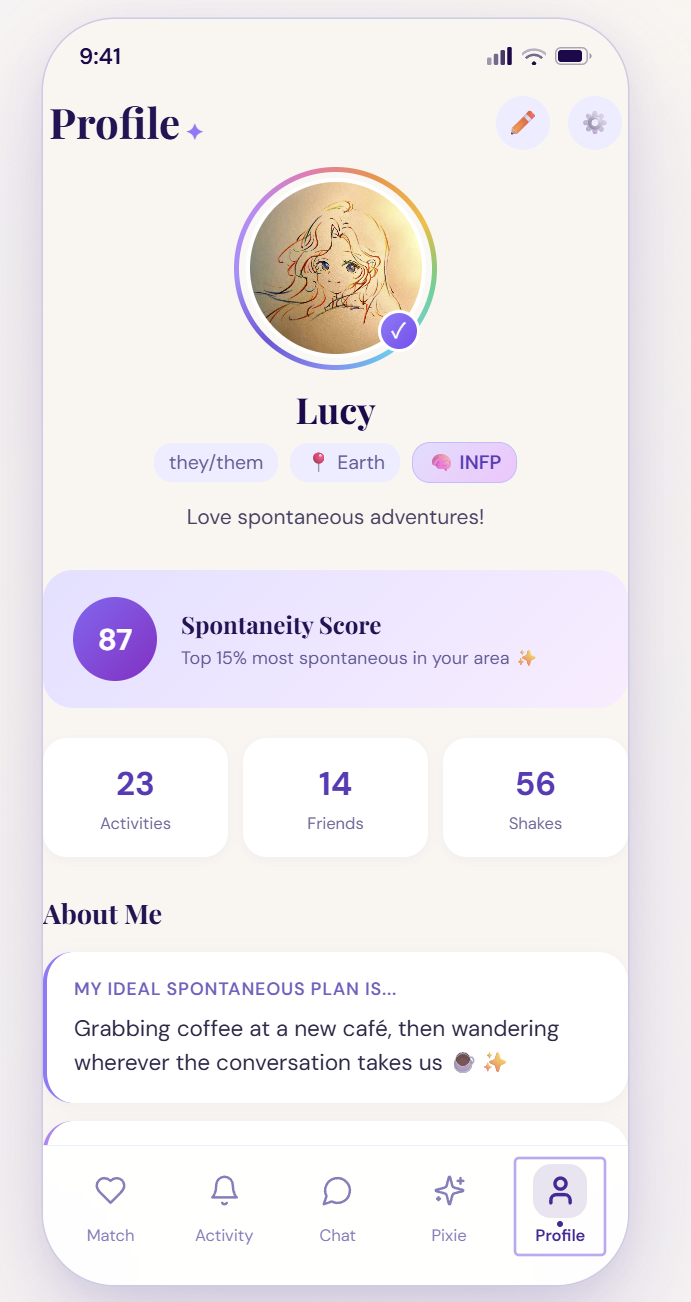
Profile Page
-
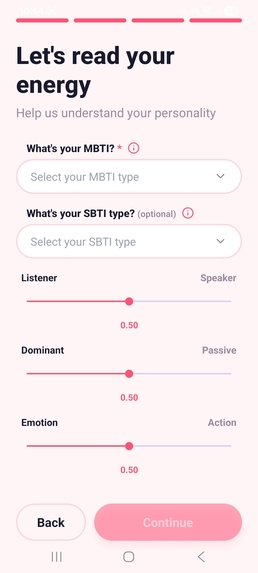
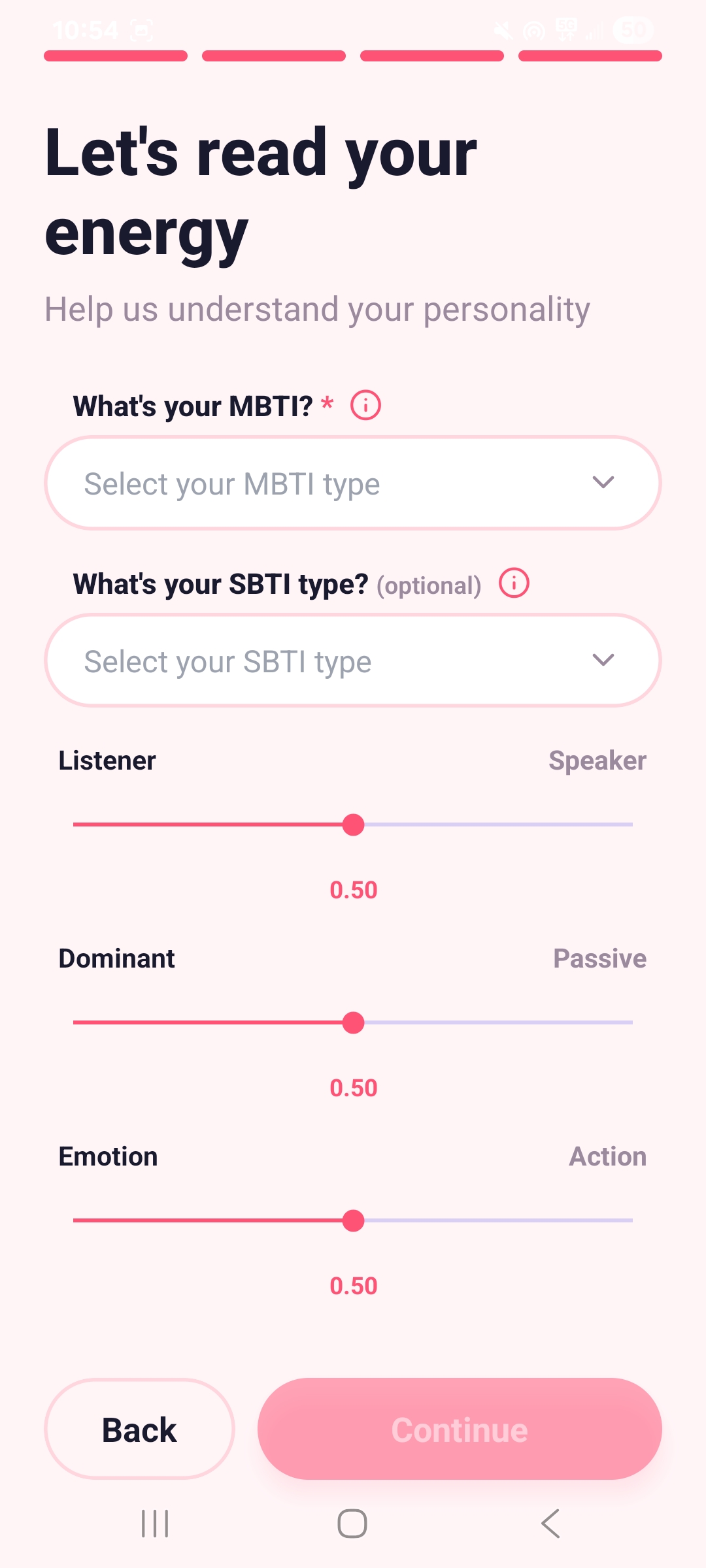
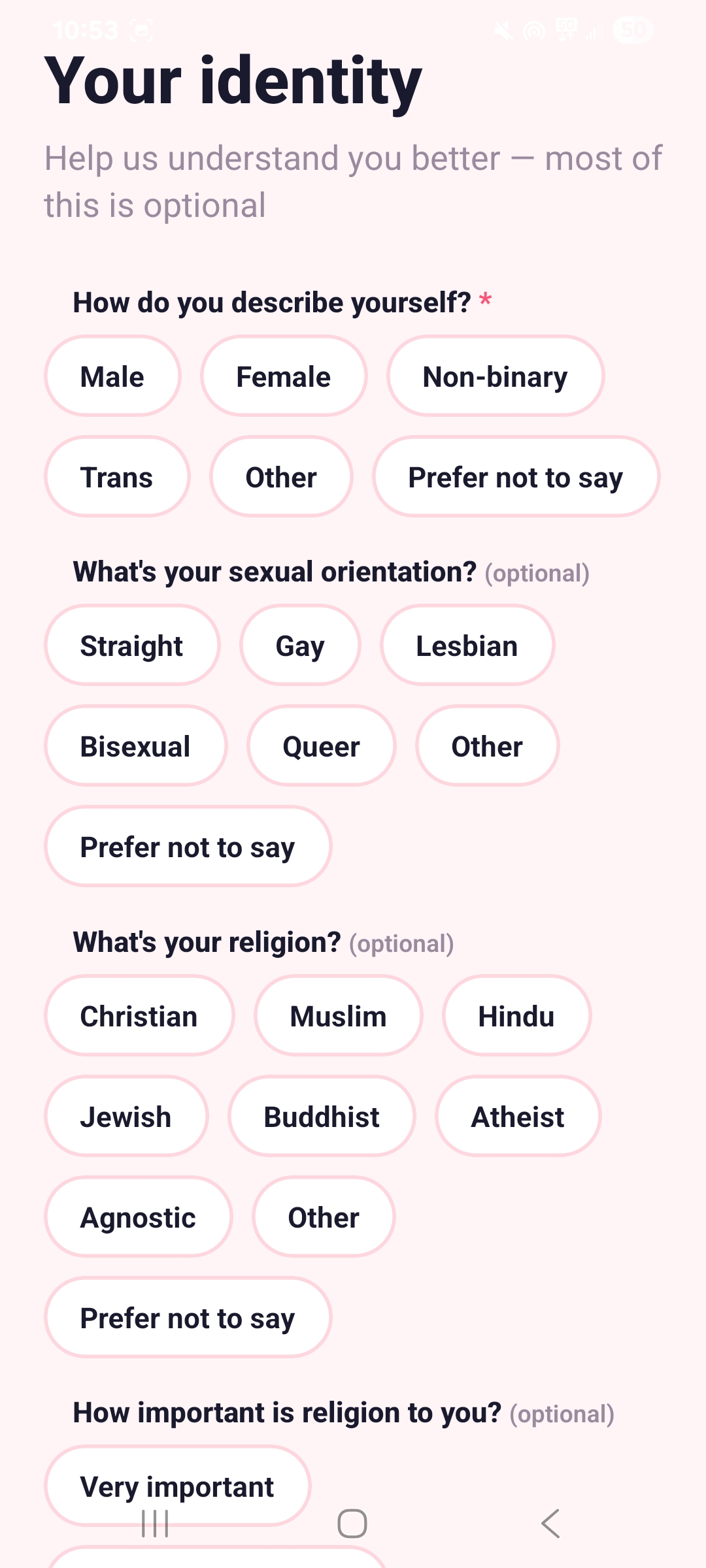
Sign Up Personality Specification Page
-
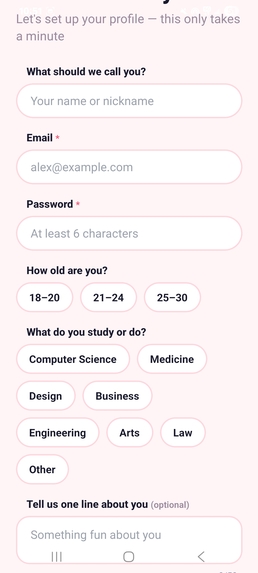
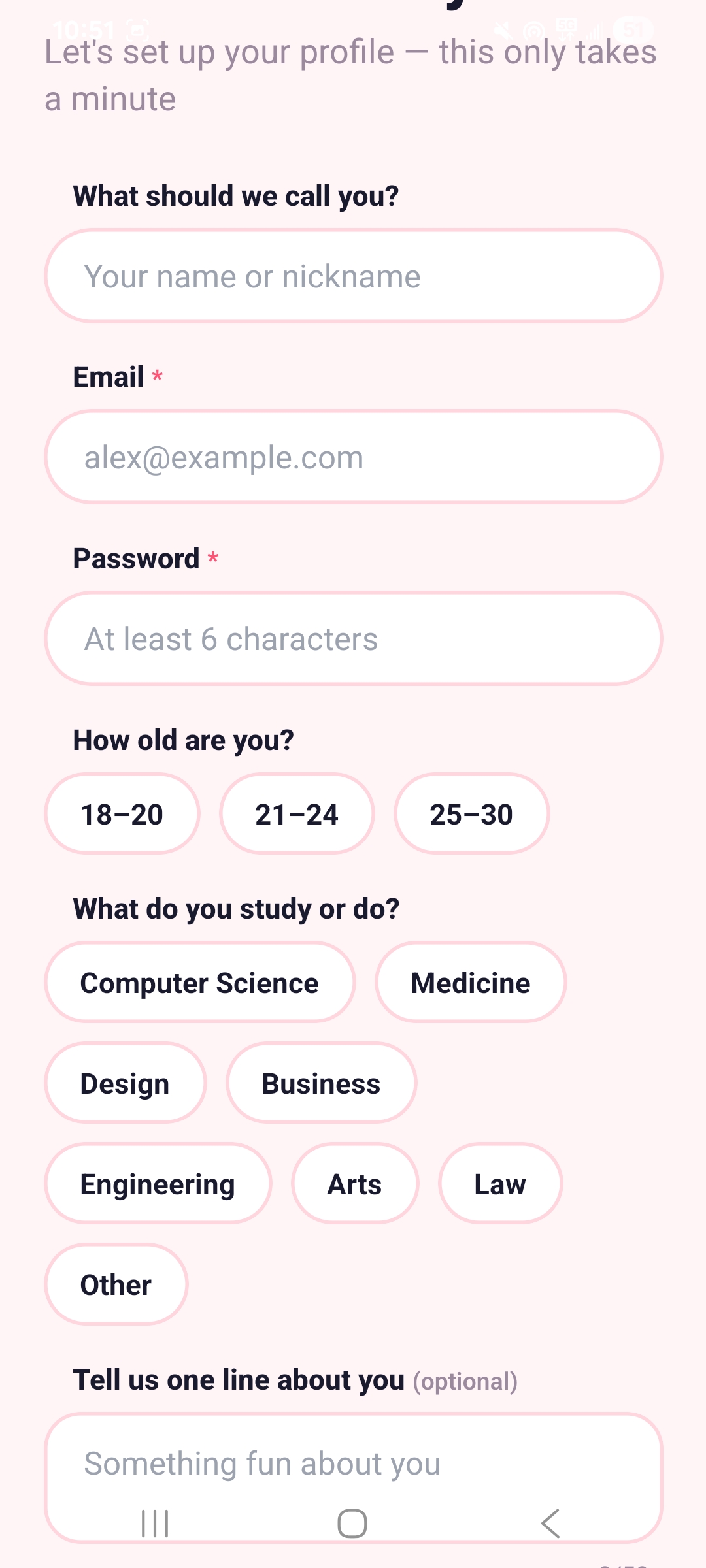
Sign Up Personal Details Page
-
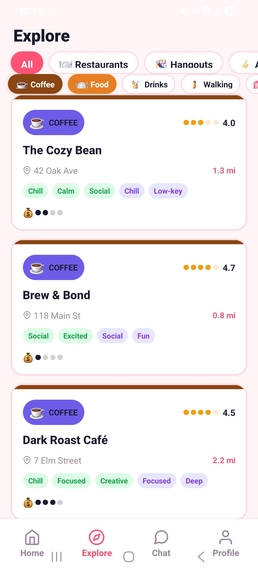
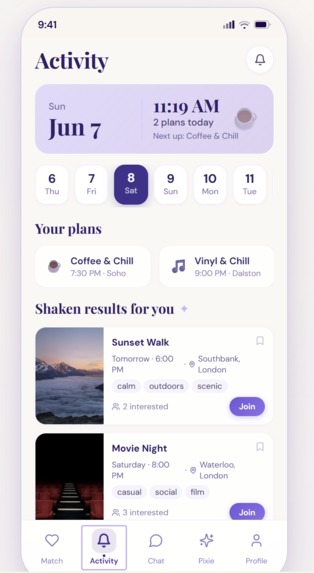
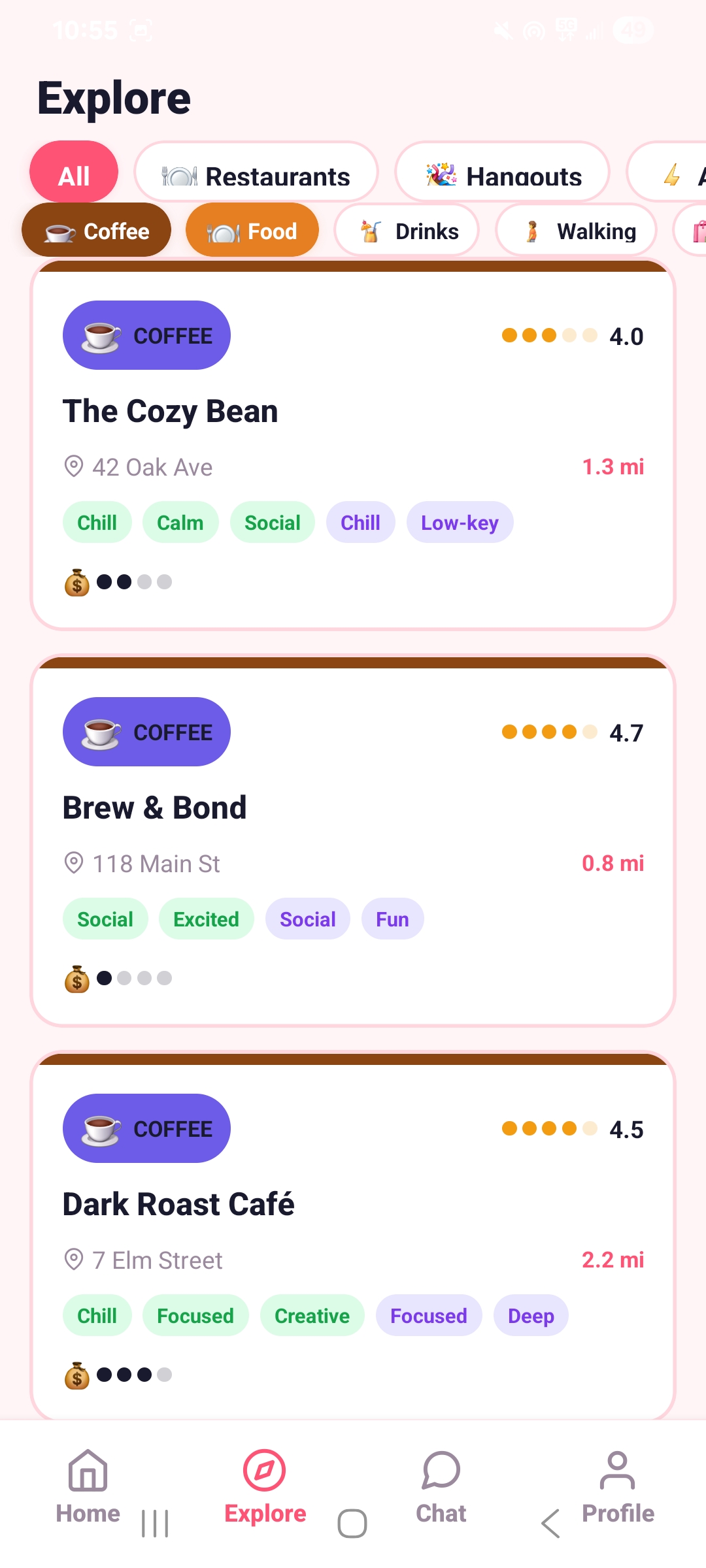
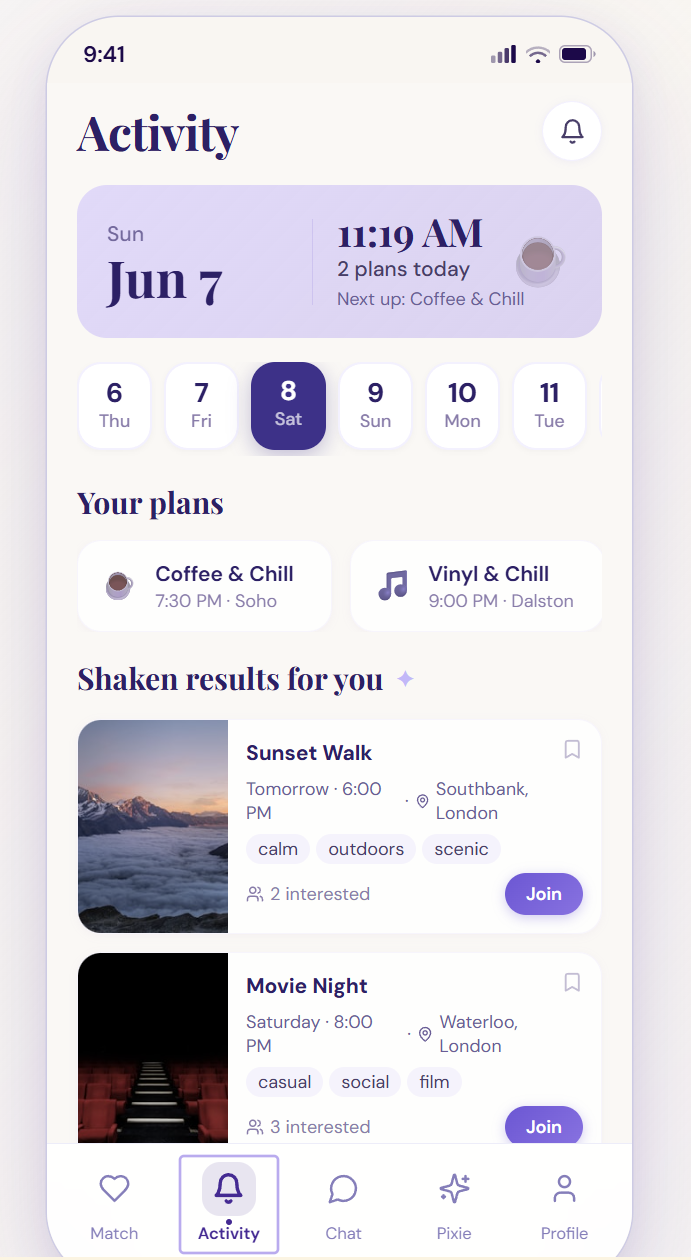
Activities Nearby
-
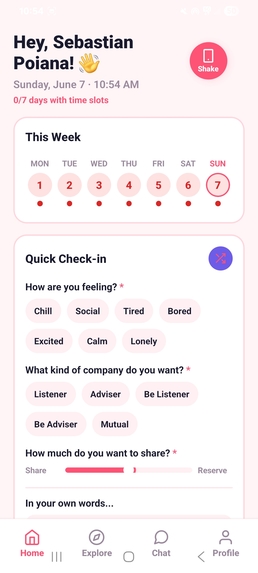
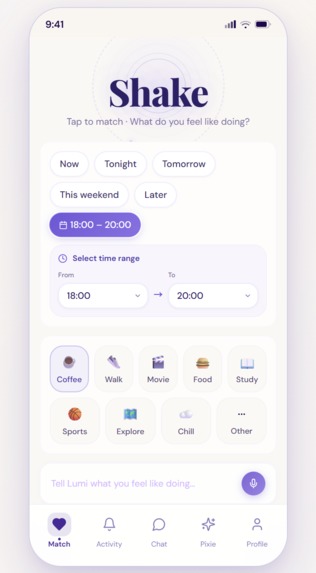
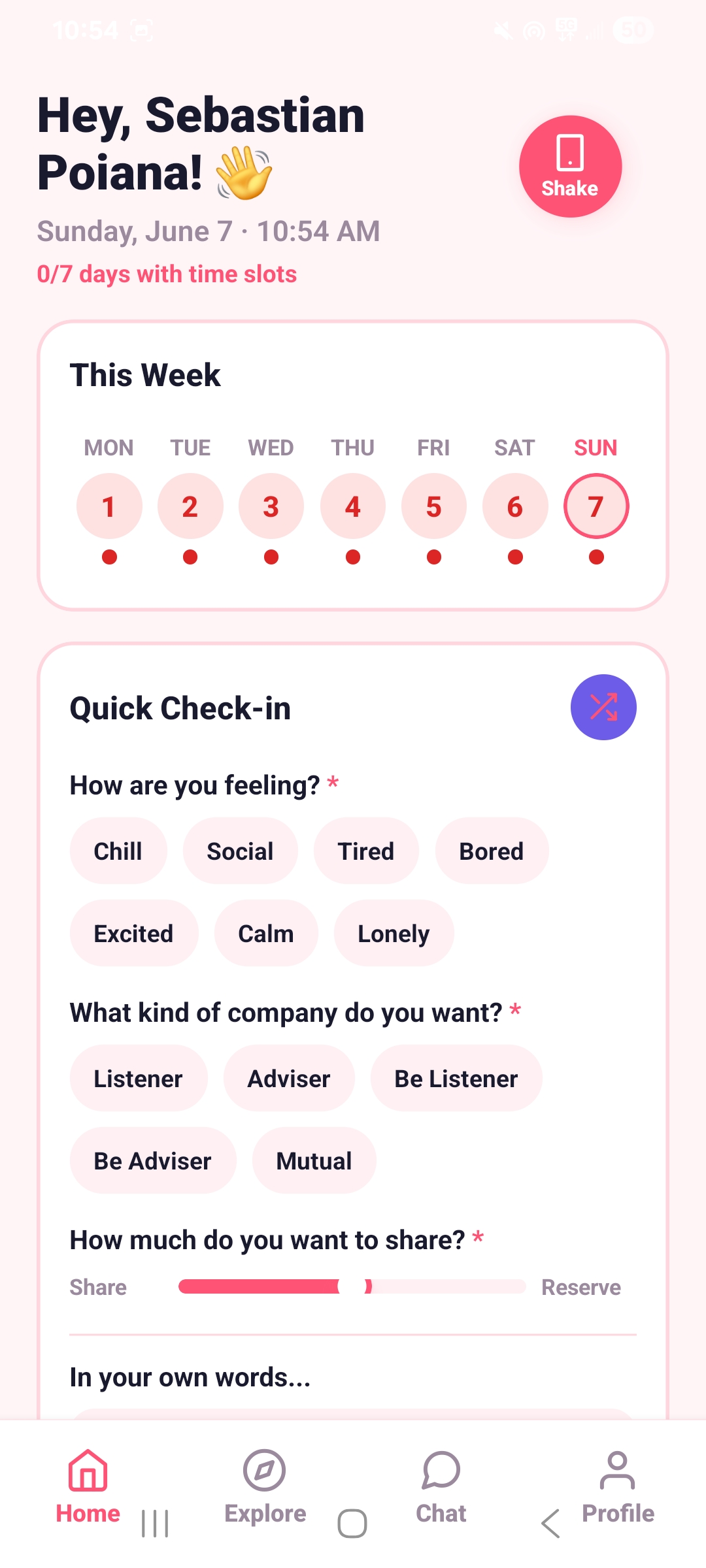
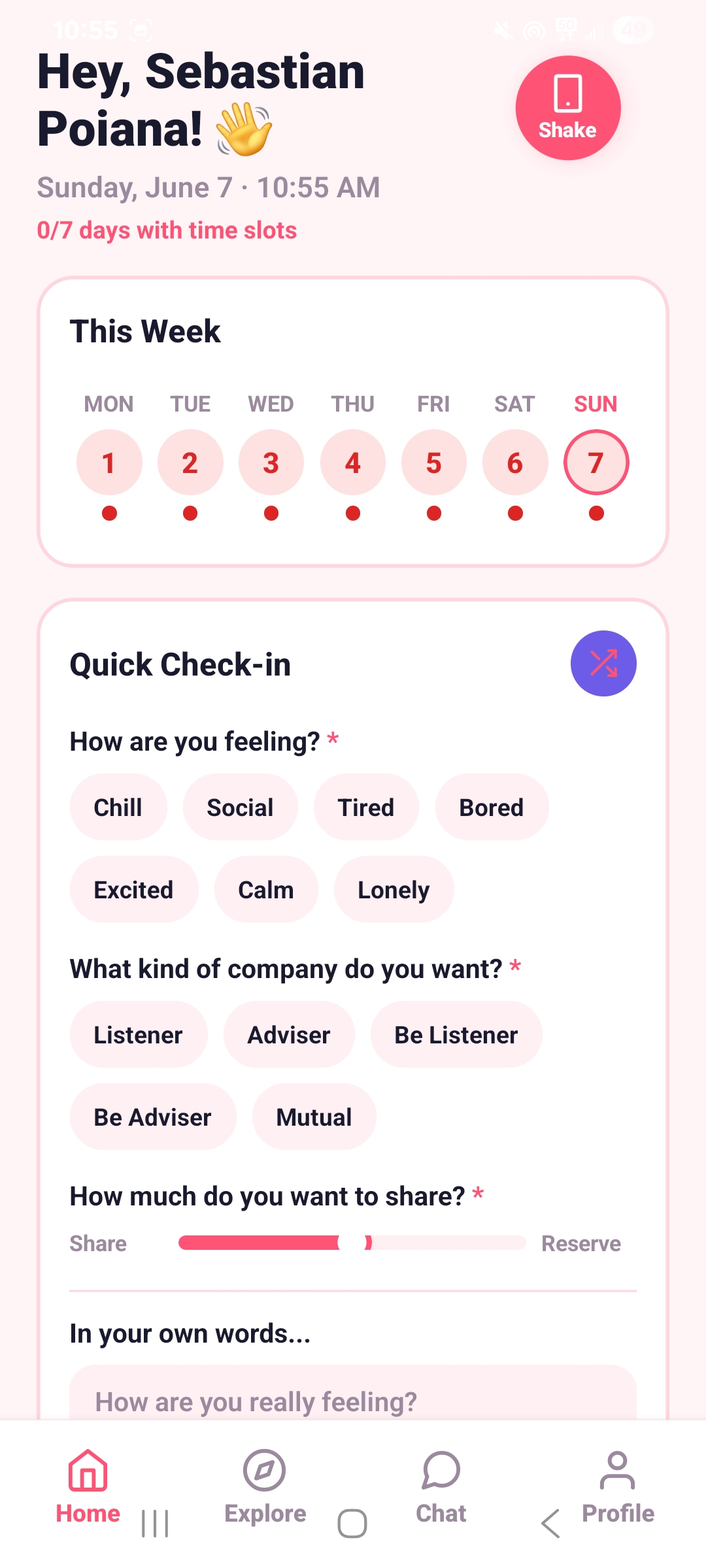
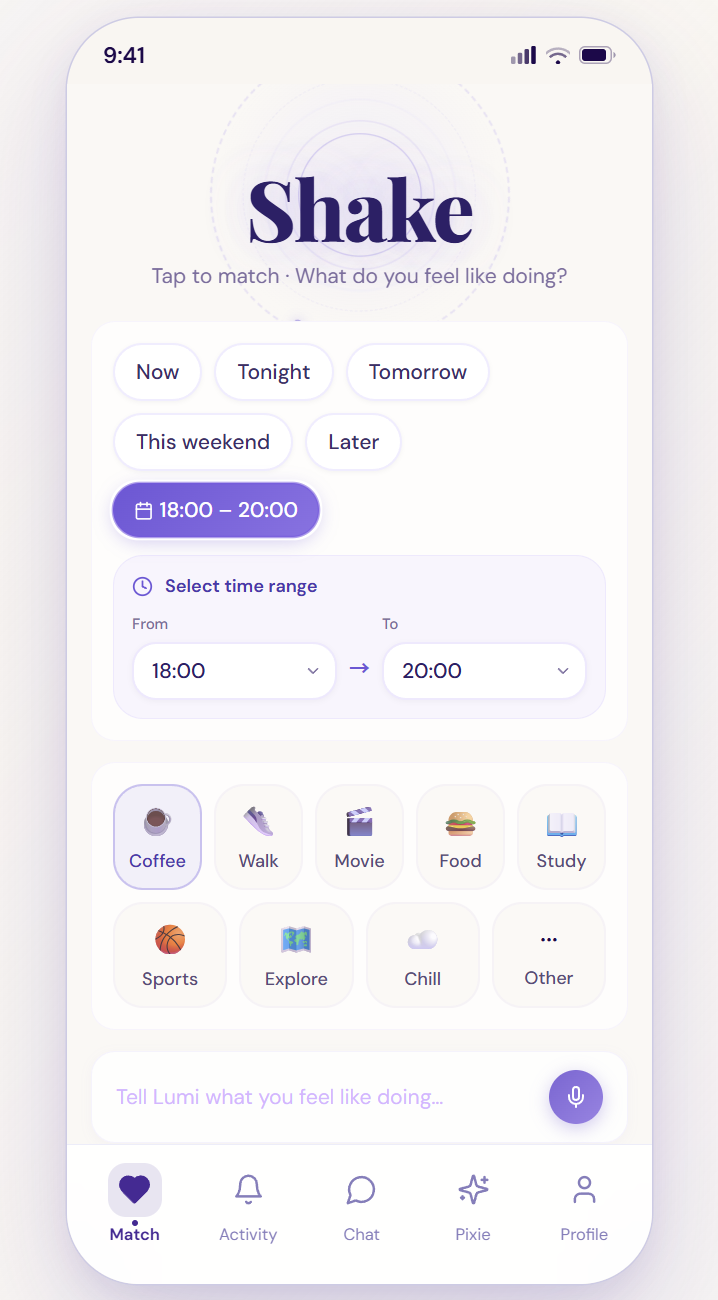
Shake Feture and the emotion detector, along with the match feature.
-
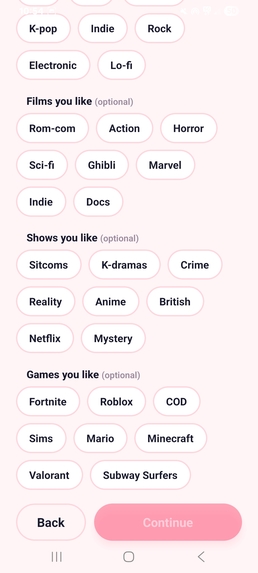
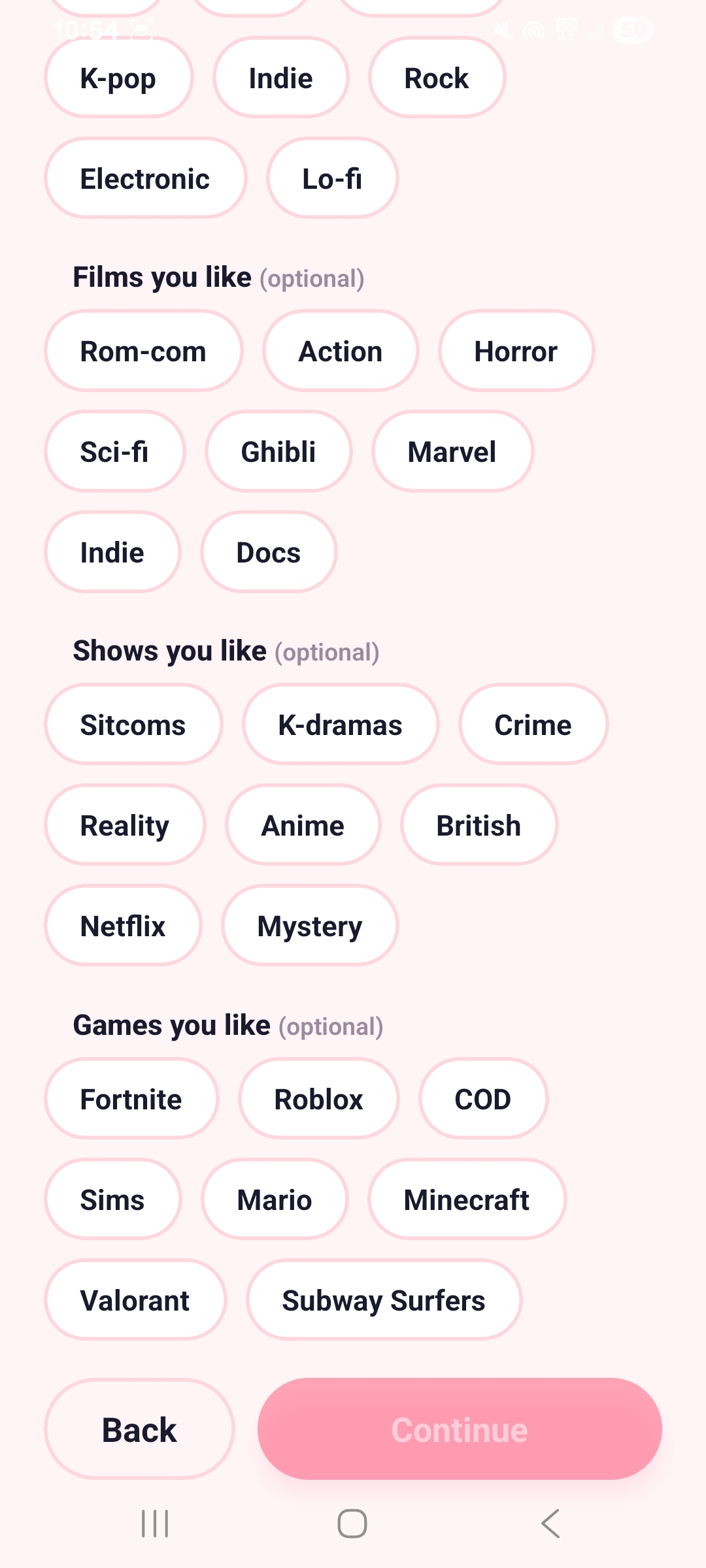
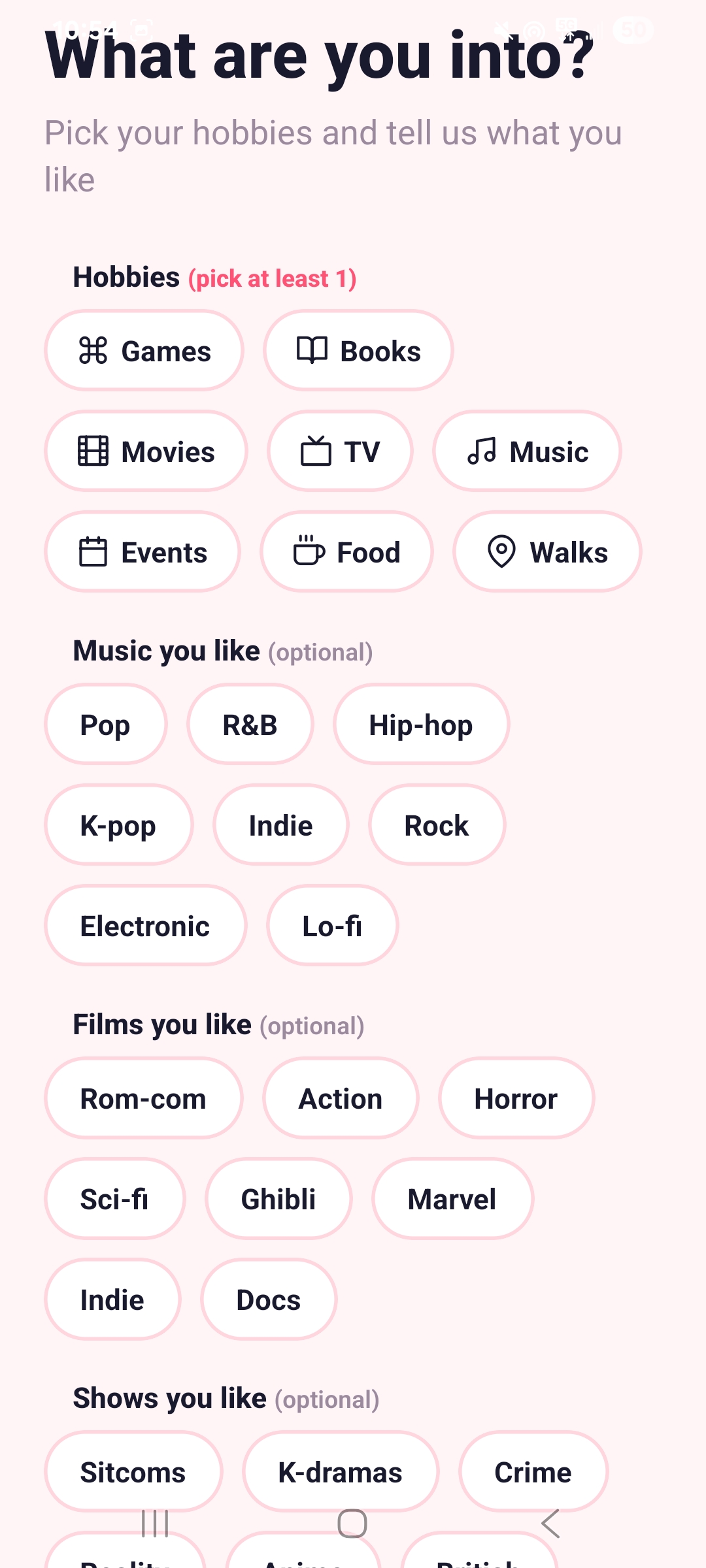
Sign Up Preferences Page
-
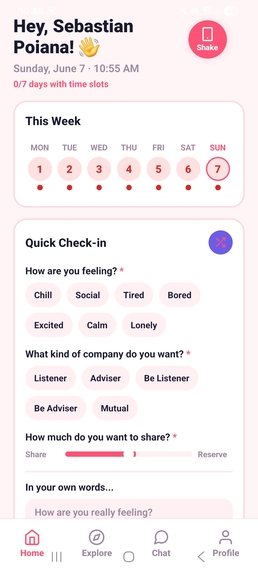
Sign Up Page Emotion Detector Details Page
-
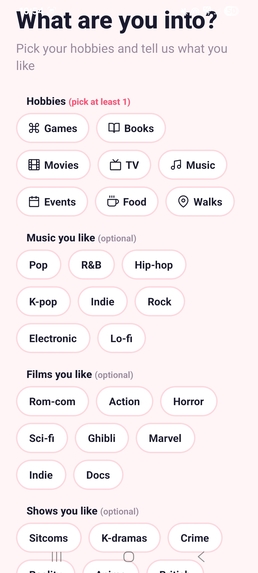
Further Specifications
-
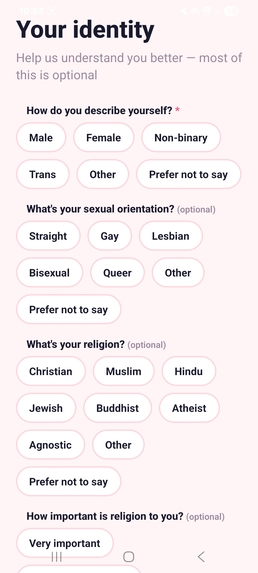
Further Specifications
-
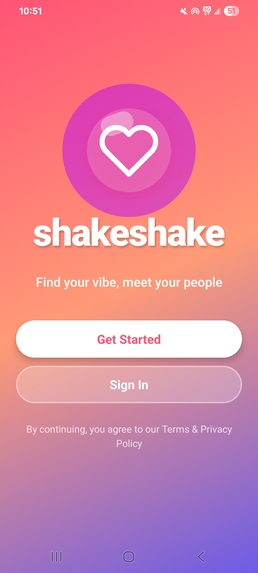
Entry Screen
-
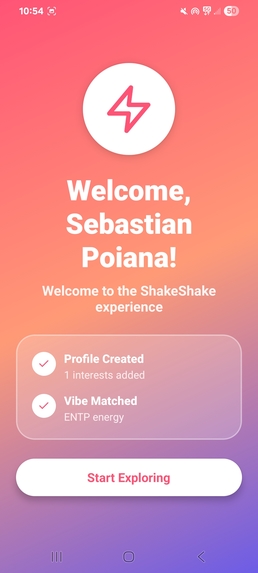
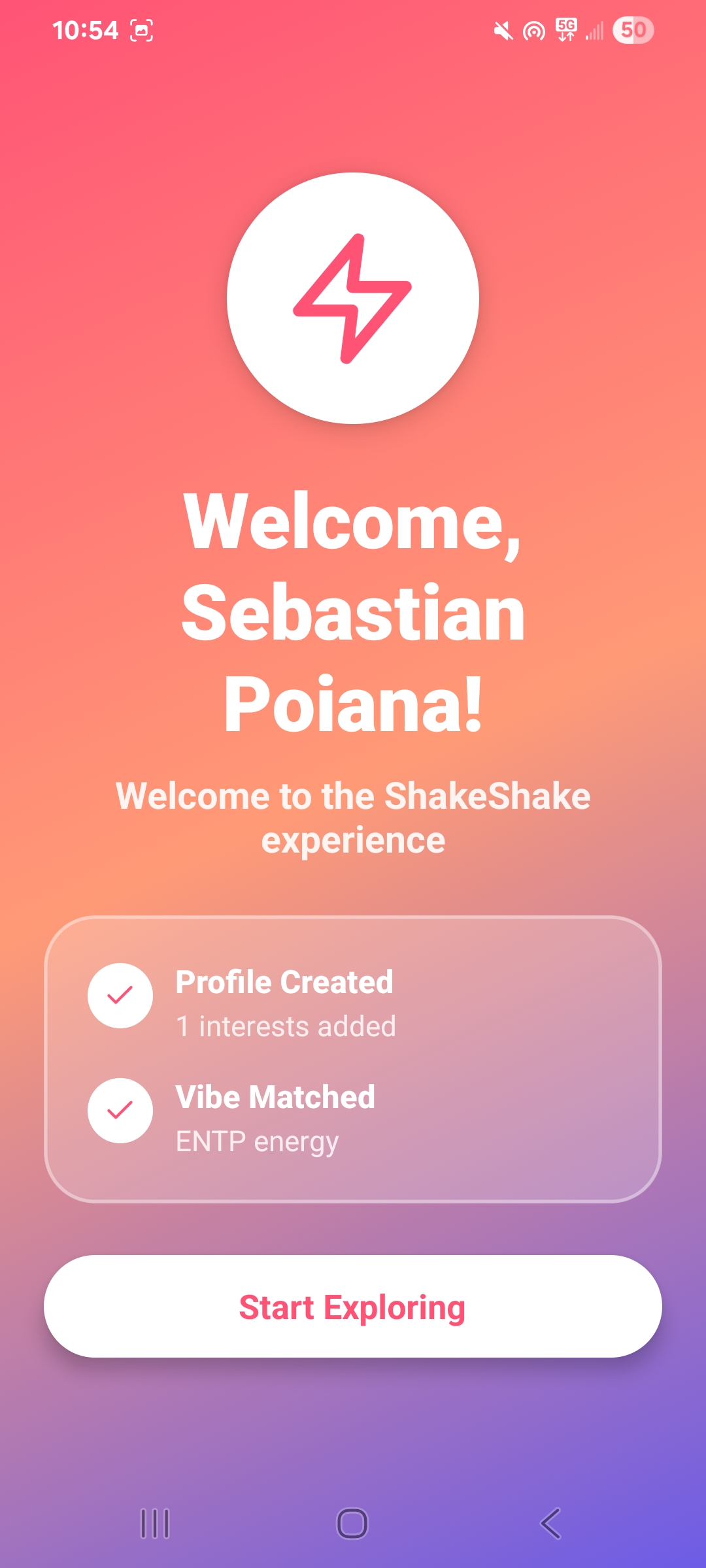
Created Profile
-
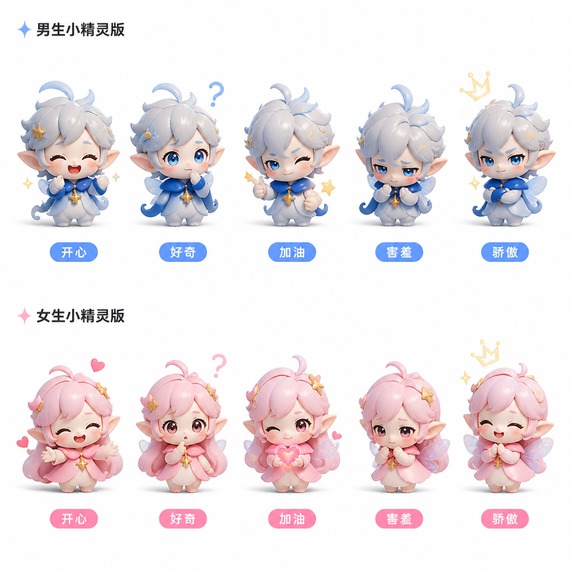
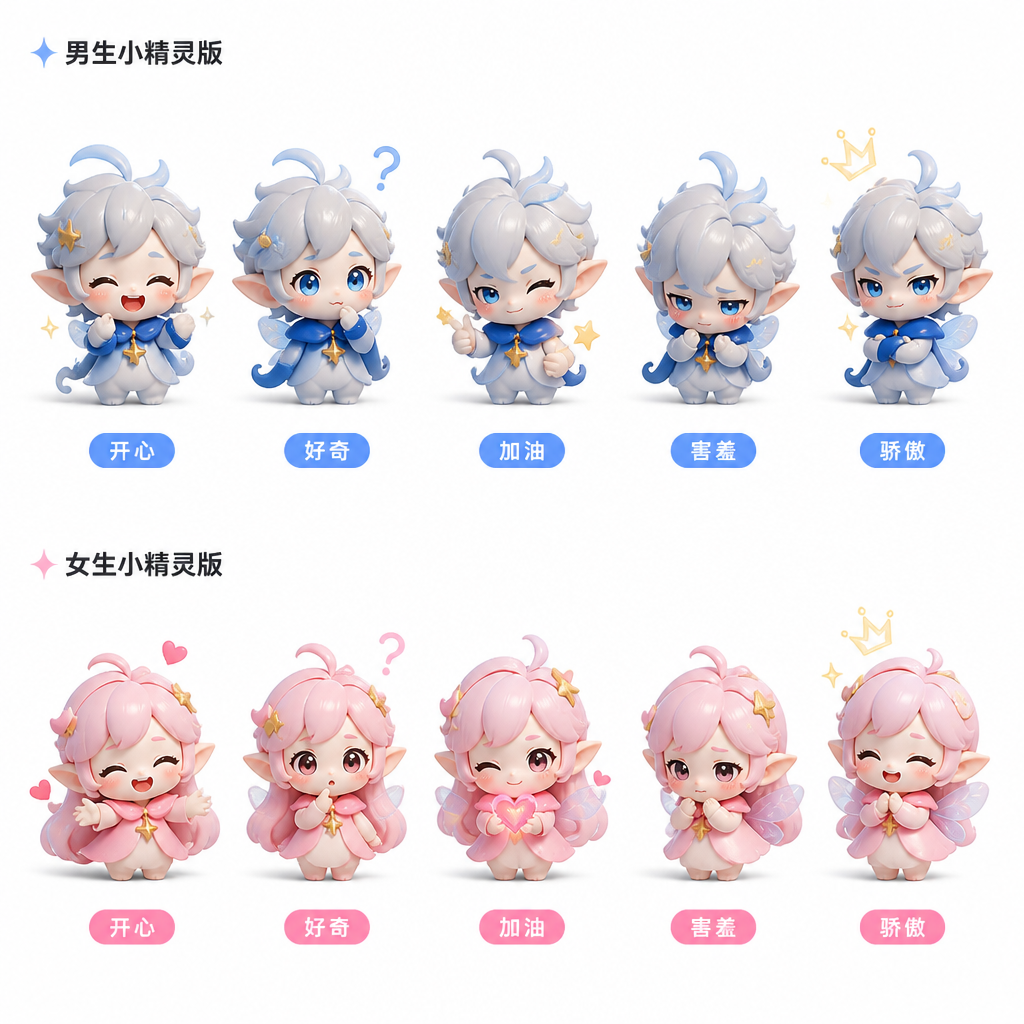
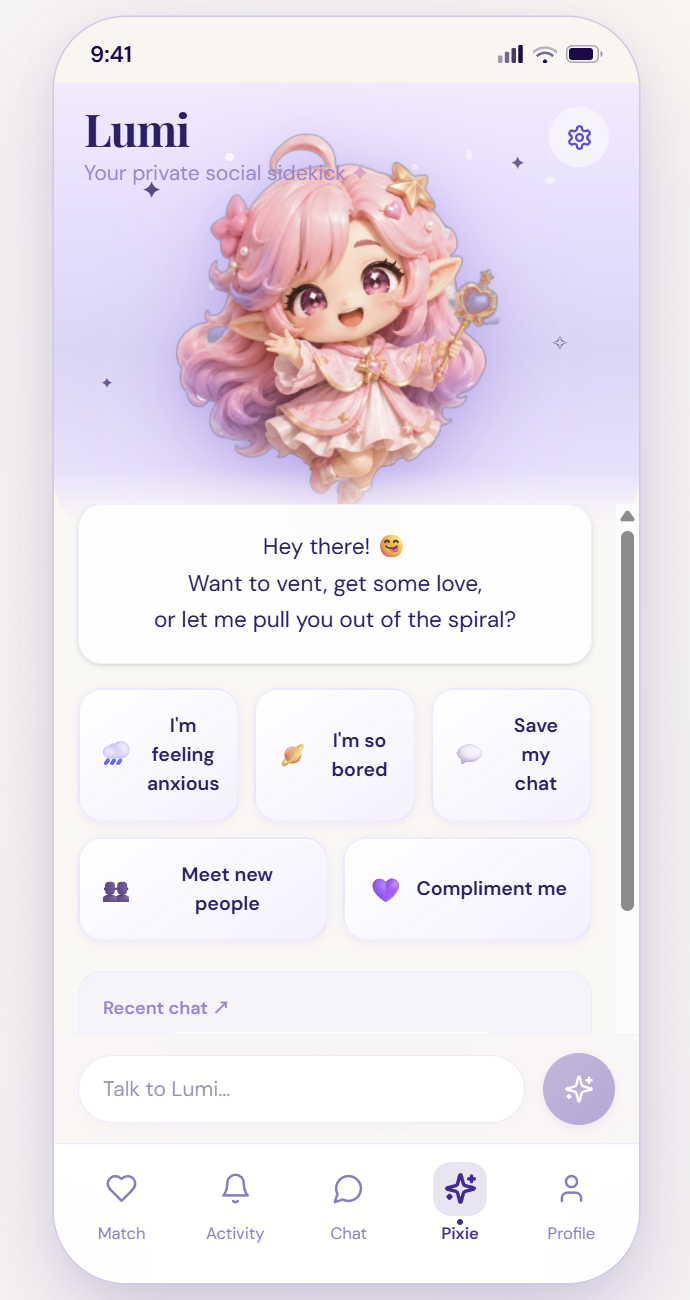
AI Pet Future Potential Emoji Implementation
-
-
-
-
-
-
Inspiration
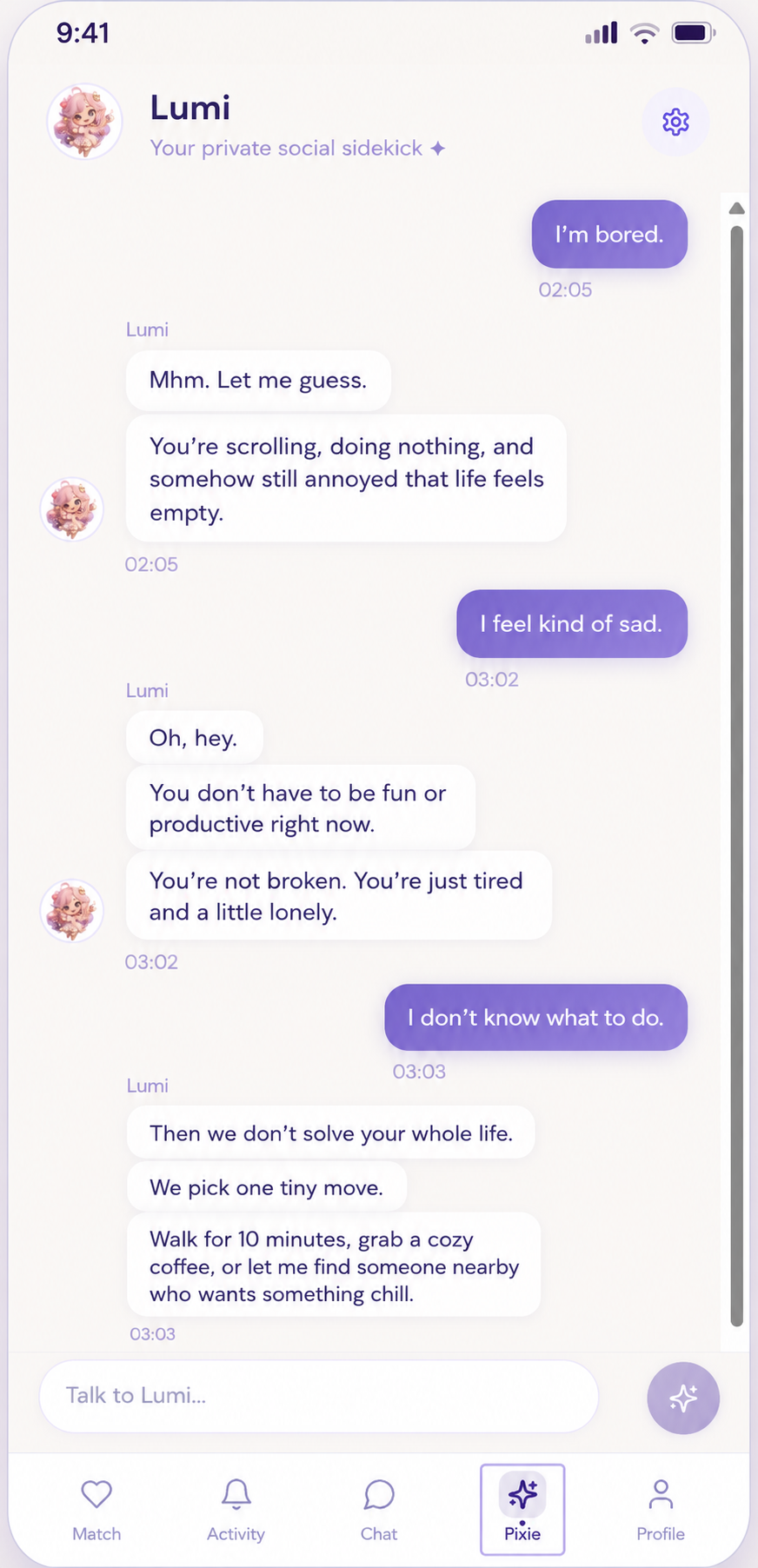
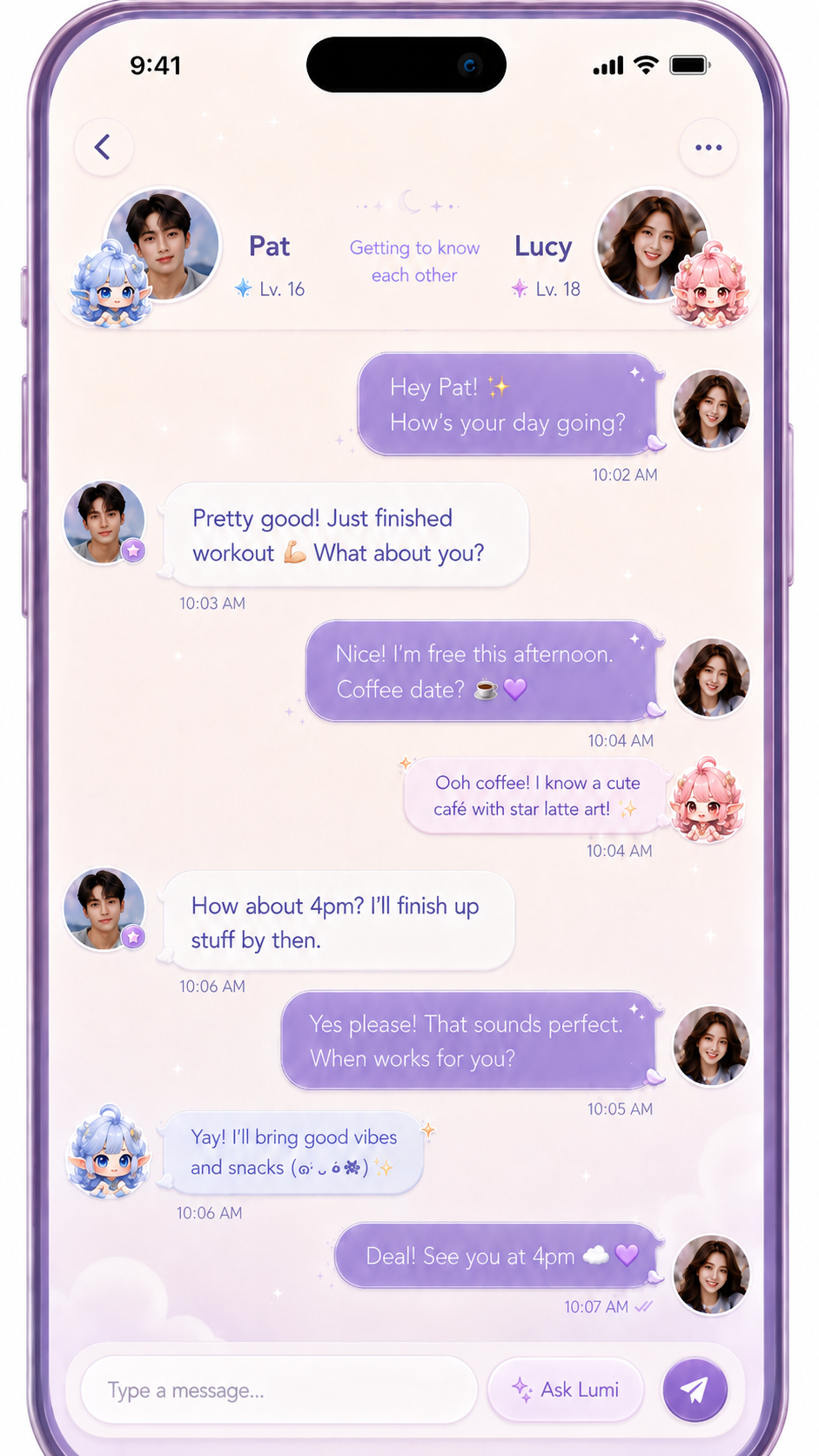
This app was firstly inspired by WeChat's localisation feature for 'Nearby People', only that we further improved it, by providing a linking connection to the user's calendar, an AI Planner for deciding on activities, an Emotion Detector that takes people's sign up personality details to match them with the 'right person' as well as the ability to point out how the people feel during their conversation, and also AI Pets assigned to users to chat, and support during in-chat communication.
We started from a simple but painful truth: social apps are mostly event-first, but real life is not. Gen Z life happens in fragments — one hour between classes, a free evening after work, a sudden moment when you want company but do not know who to ask.
That was the insight behind ShakeShake. The real problem is not just discovering events or chatting endlessly. It is finding the right person for now — someone who matches your time, your mood, and your social intent in that exact moment.
At first, our ideas were not strong enough. Social products are everywhere, and many early concepts felt too familiar. The hardest creative challenge was finding an angle that was both emotionally real and genuinely different. Eventually, we aligned on one core belief: slot-first social matching is a missing layer in current social apps.
What we built
We built ShakeShake, a slot-focused social experience that helps users turn free time into real connection.
Instead of asking, “What event should I go to?”, ShakeShake asks a much more urgent question: Who is the right person for this free slot right now?
Our product combines three layers:
- Slot-first matching: users match based on timetable availability, companionship psychology, vibe, and intent — not just static profiles.
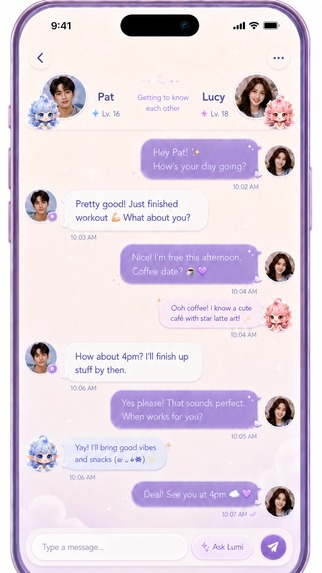
- AI Planner: once matched, AI helps turn that connection into a realistic plan based on time, activity, and social context. -Emotion Detector: the emotion detector feature will tell the people chatting how they feel before initiating a chat, and it can also work as a bar-metter for 'after' the chat to rate the covnersation between the individuals.
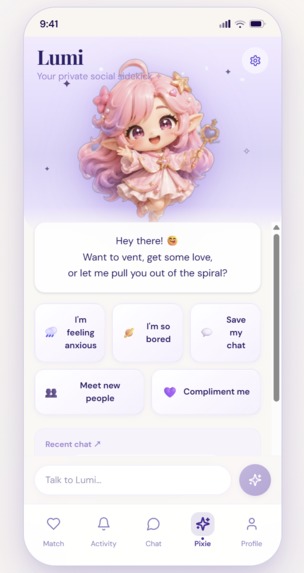
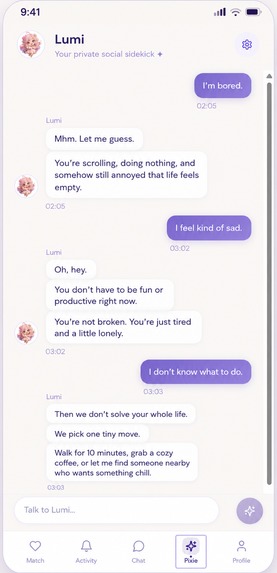
- AI Sprite: inside chat, a private AI companion helps users break the ice, express themselves more naturally, and reduce awkwardness in the first interaction.
Together, these layers move users from free slot -> right match -> real plan -> easier conversation.
How we built it
We used Expo Go to build and test the mobile experience quickly in a real app-like flow. We used Manus to help create the AI-assisted chat sprite, Z.ai to build the AI Planner, Fotor to produce video content for storytelling, and Cursor to support coding and product development.
This was not built as separate experiments. The goal was to make all the parts feel like one coherent user journey: matching, planning, and chatting all connected in a natural sequence.
Challenges we faced
The first major challenge was product direction. In a crowded social market, many ideas felt generic. It took a lot of discussion, iteration, and disagreement to get from “an AI social app” to a concept that felt specific, memorable, and actually useful.
The second major challenge was integration. With four people building across APIs, frontend, backend, and AI features at the same time, combining everyone’s work into one smooth product was difficult. Merging code, making interfaces consistent, and getting all systems to work together was the hardest technical part of the hackathon.
Thirdly, we faced a few testing constraints, because the two people had to be connected to the same internet connection to work. But we were able to sort this issue out by further debugging and testing until it finally matched the outcome.
In many ways, building the team workflow mirrored the product problem itself: alignment is easy to imagine, but hard to execute.
What we learned
We learned that building with AI tools is not just about stacking features. AI only becomes valuable when it solves a real emotional and behavioural problem in the user journey.
We also learned how much quality depends on focus. A product becomes stronger when it has one clear insight, one memorable flow, and one reason to exist.
Finally, we learned that a lot of code and product marketing can be done using AI. Work that would usually take a week or to weeks can now be done in 1 day! AI still has unlimited potential that our team can tap further into, and we can improve our demo in very short time.
On the workflow side, we learned how to combine multiple AI tools in one build process:
- Cursor for coding and iteration,
- Manus for AI social assistance concepts,
- Z.ai for planning logic,
- Fotor for visual storytelling,
- and Expo Go for fast mobile prototyping.
Most importantly, we learned that strong products are not created by one perfect idea at the start. They are created by refining, combining, and stress-testing ideas until they become coherent.
Why this matters
ShakeShake is not trying to be another event app, another dating app, or another generic social discovery tool.
It introduces a different model: slot-first social coordination.
It introduces a spot where people can finally feel understood: emotion detector before and during chatting.
That matters because one of the biggest hidden frictions in Gen Z social life is not lack of people — it is lack of alignment. Time does not match. Mood does not match. Intent does not match. And when those things fail, real-life connection never happens.
ShakeShake is our answer to that problem.
What we are proud of
We are proud that our team was able to address one of the most glaring GenZ issues: lack of friends, and lack of understanding.
We are proud that we turned a vague and crowded problem space into a clear, emotionally grounded product direction.
We are proud that four people with different ideas and technical responsibilities were able to merge their thinking, merge their code, and ship one coherent prototype.
And most of all, we are proud that ShakeShake feels different: not event-first, but slot-first — built to help people find the right person for now.
Built With
- discord
- fastapi
- fotor
- glm
- langchain
- manus
- olama
- python
- react-native

Log in or sign up for Devpost to join the conversation.