-
-
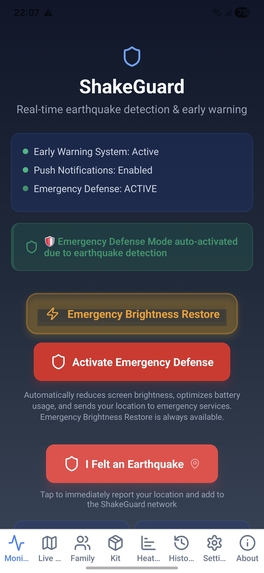
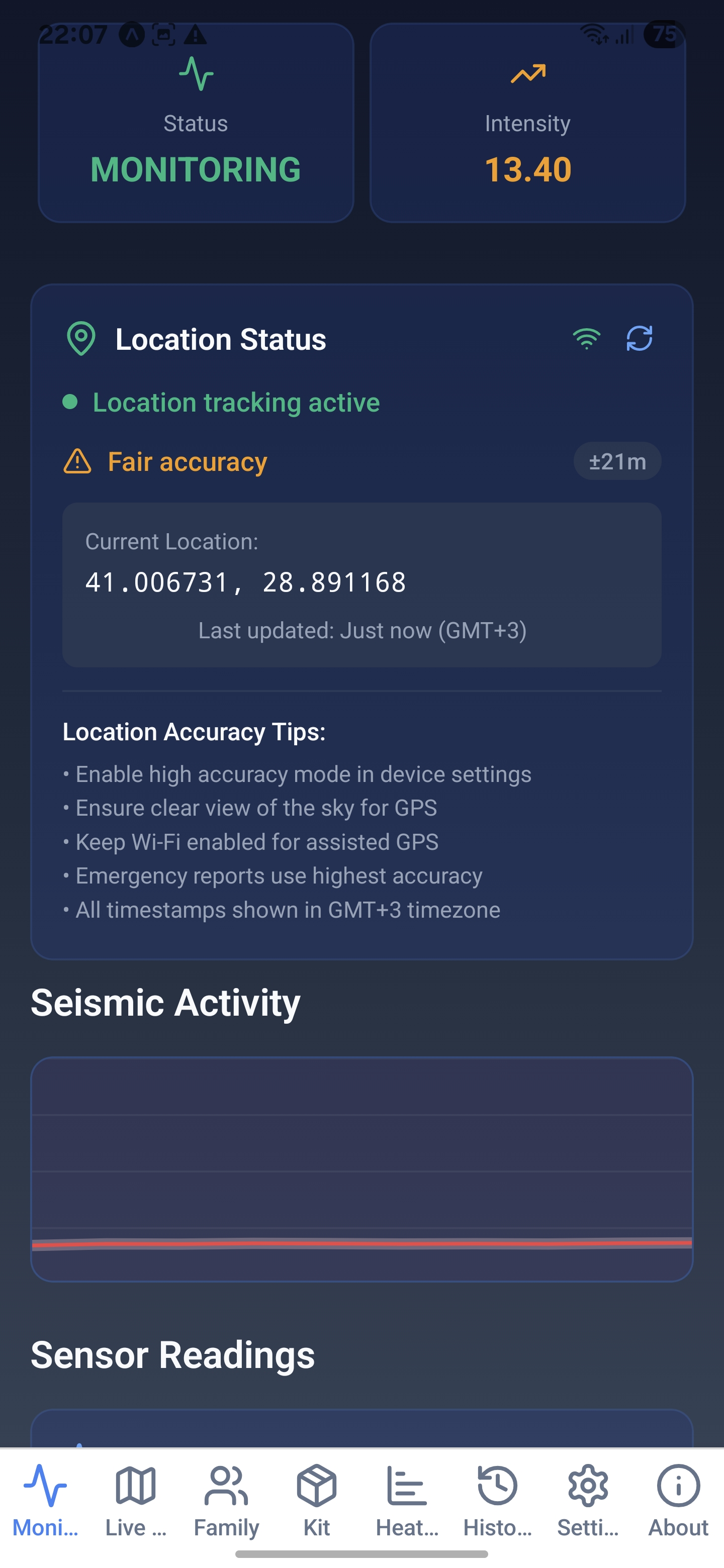
Home Screen
-
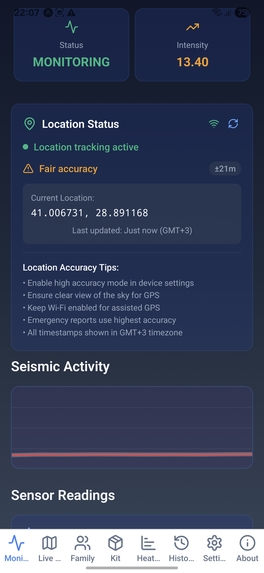
Location Status
-
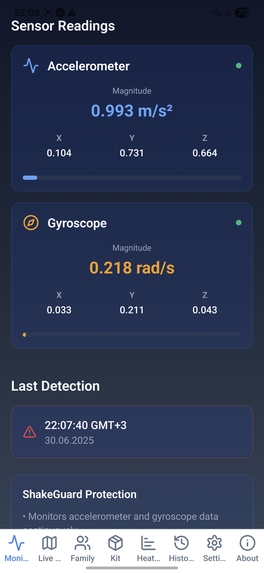
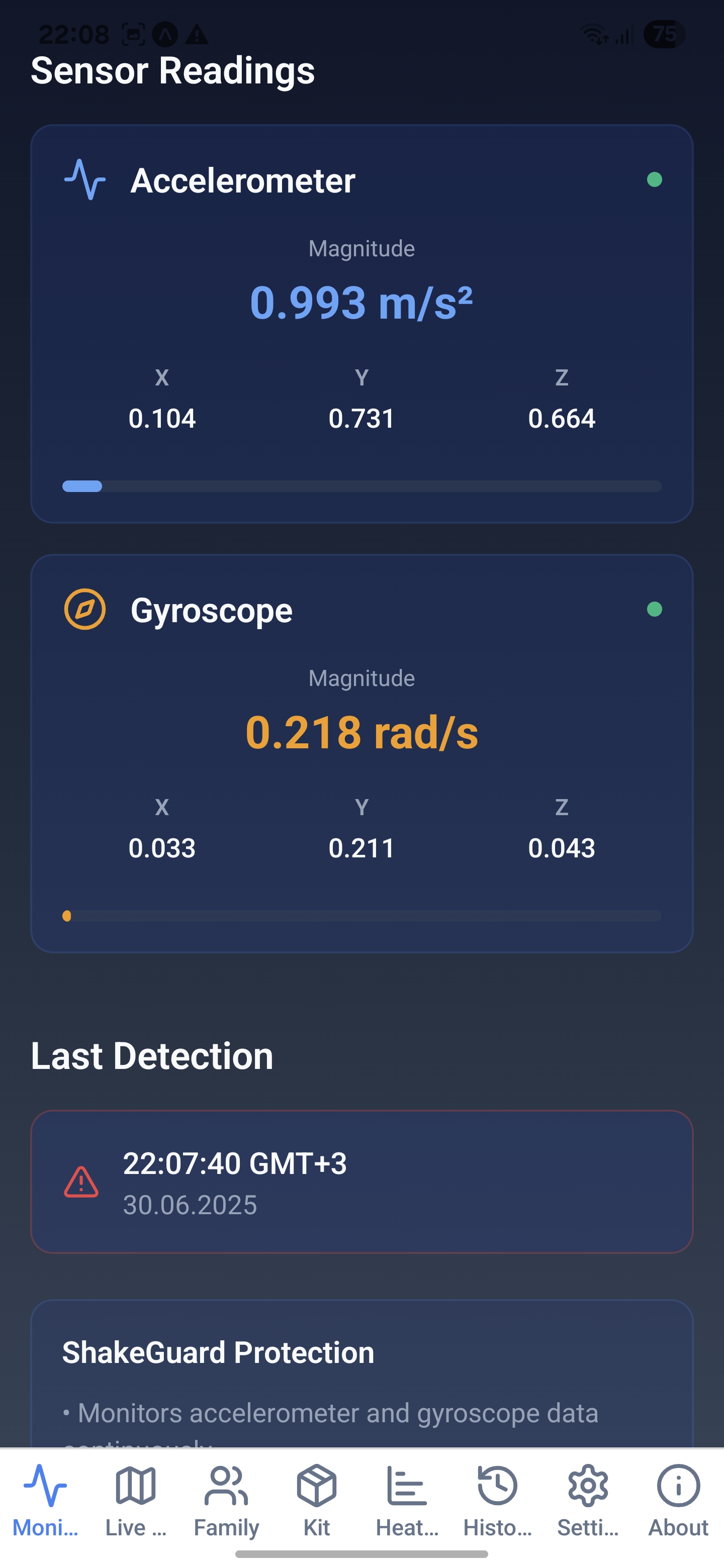
Sensor Readings
-
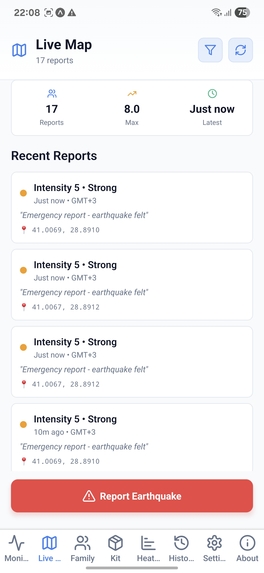
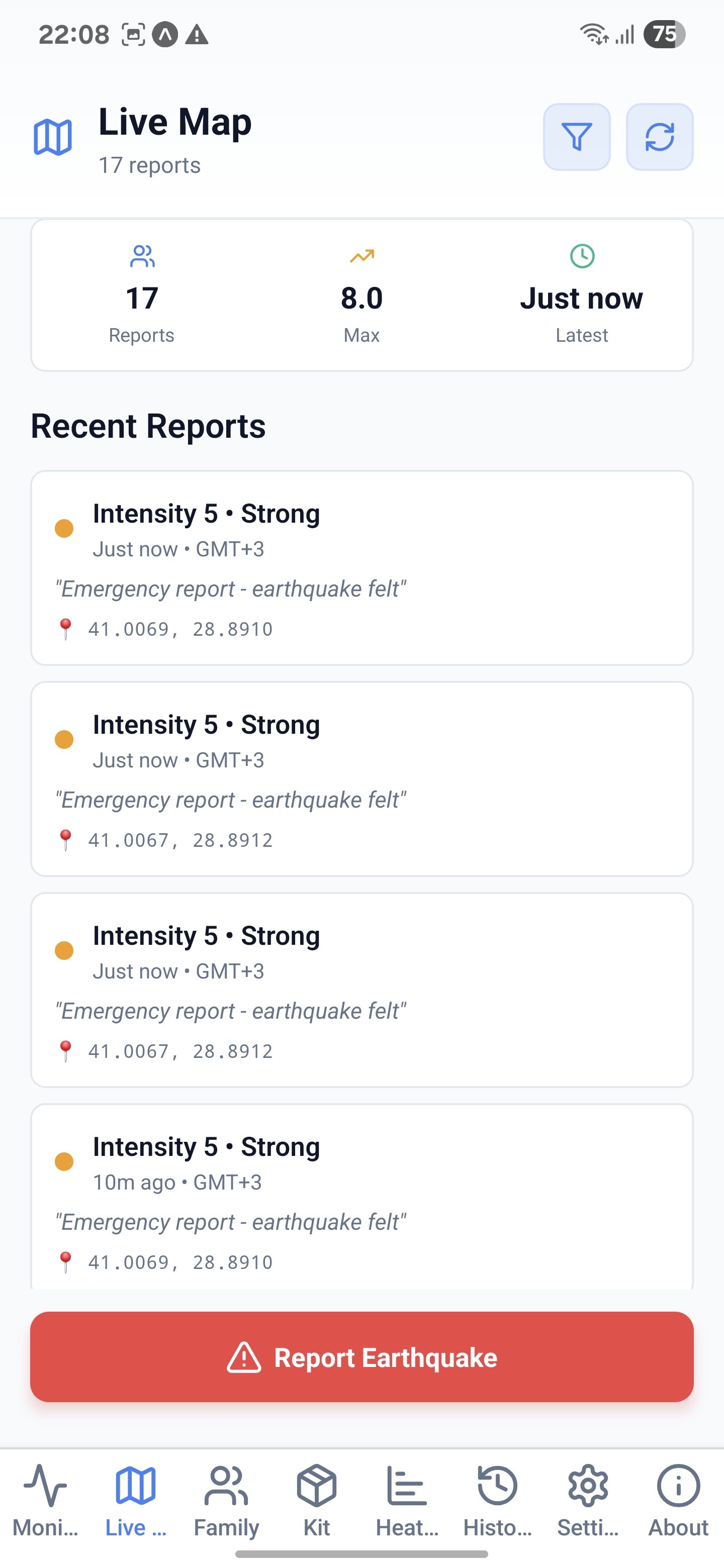
Live Earthquake Map
-
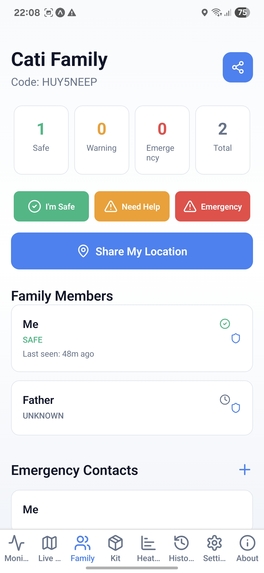
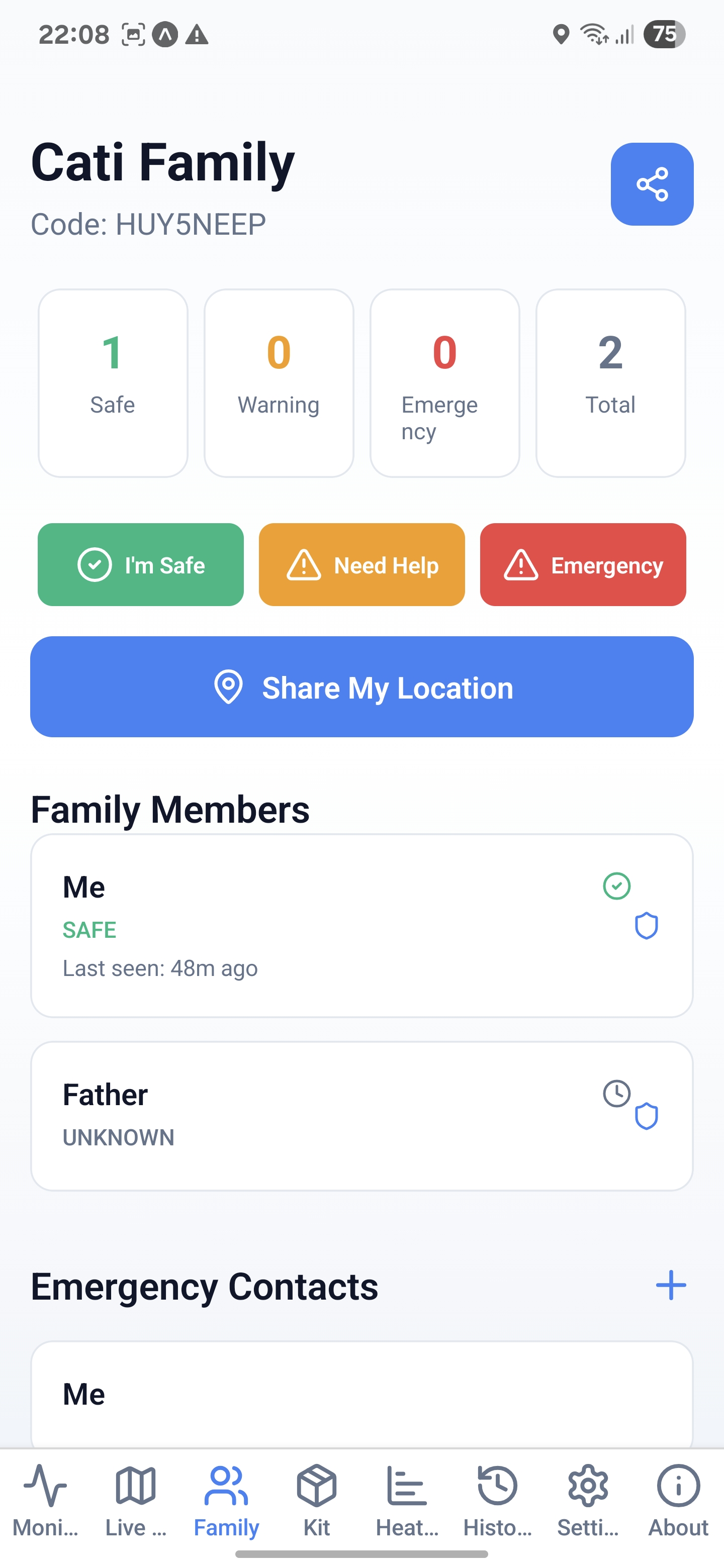
Family, Family Members and Emergency Location Sharing
-
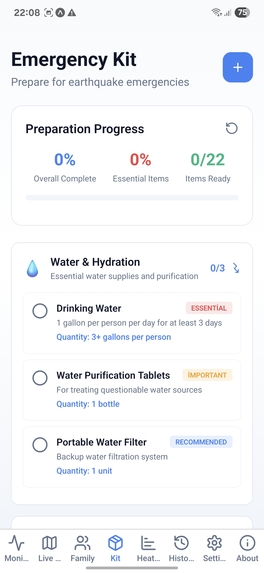
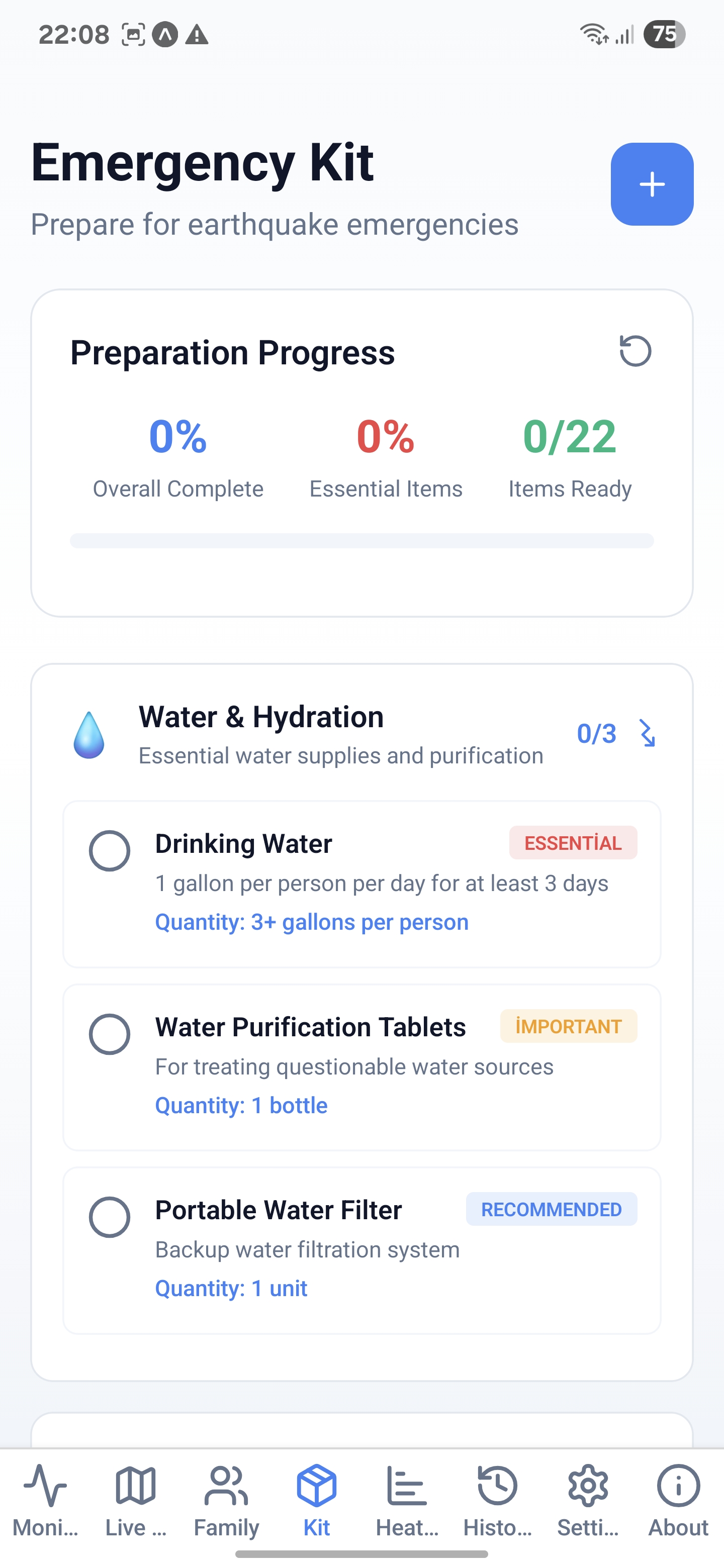
Emergency Kit
-
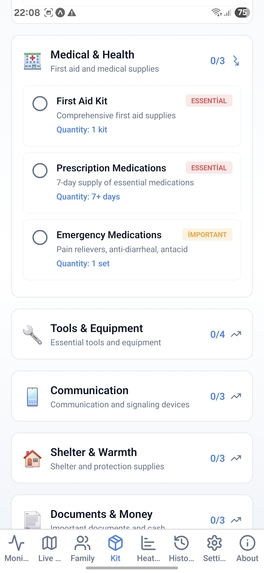
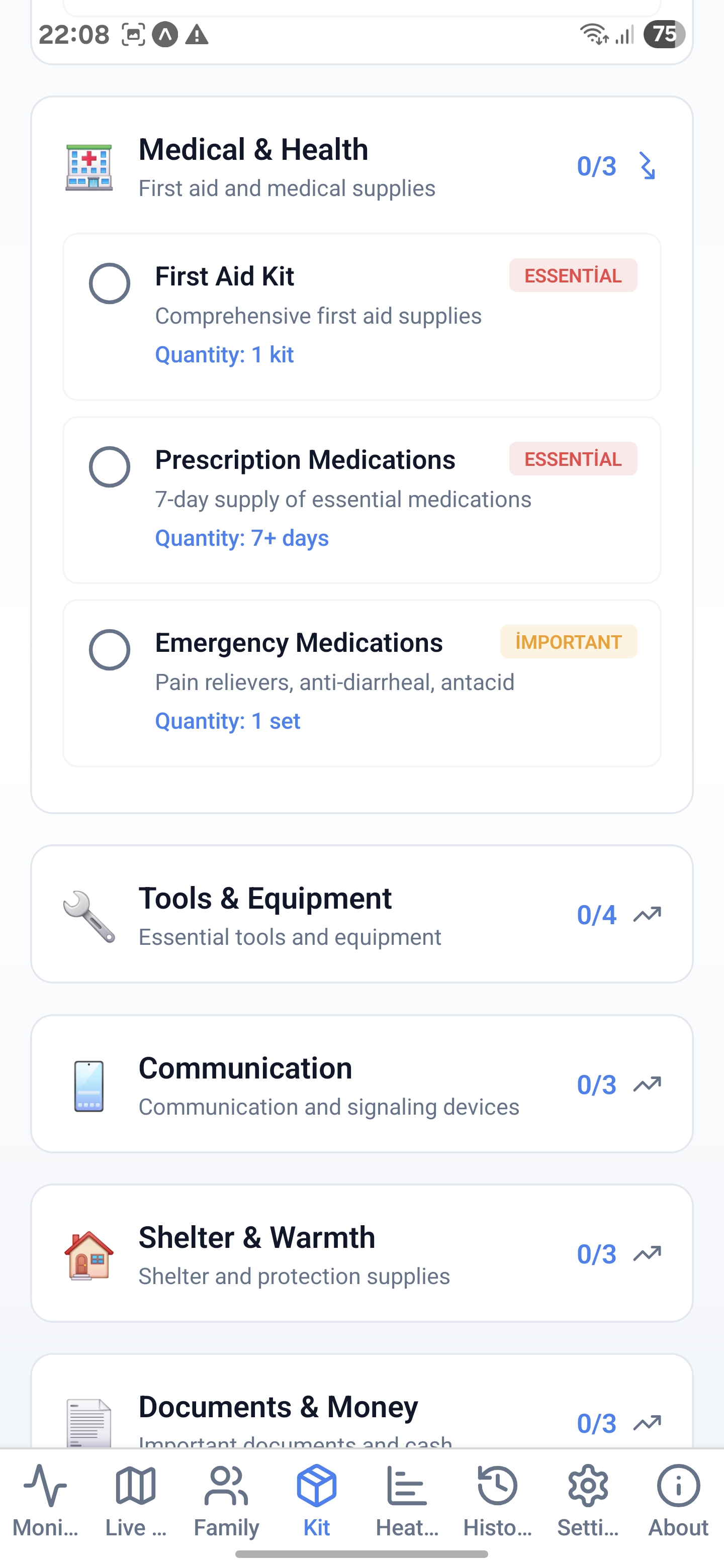
Emergency Kit 2
-
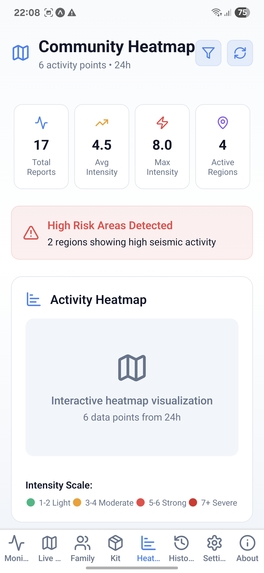
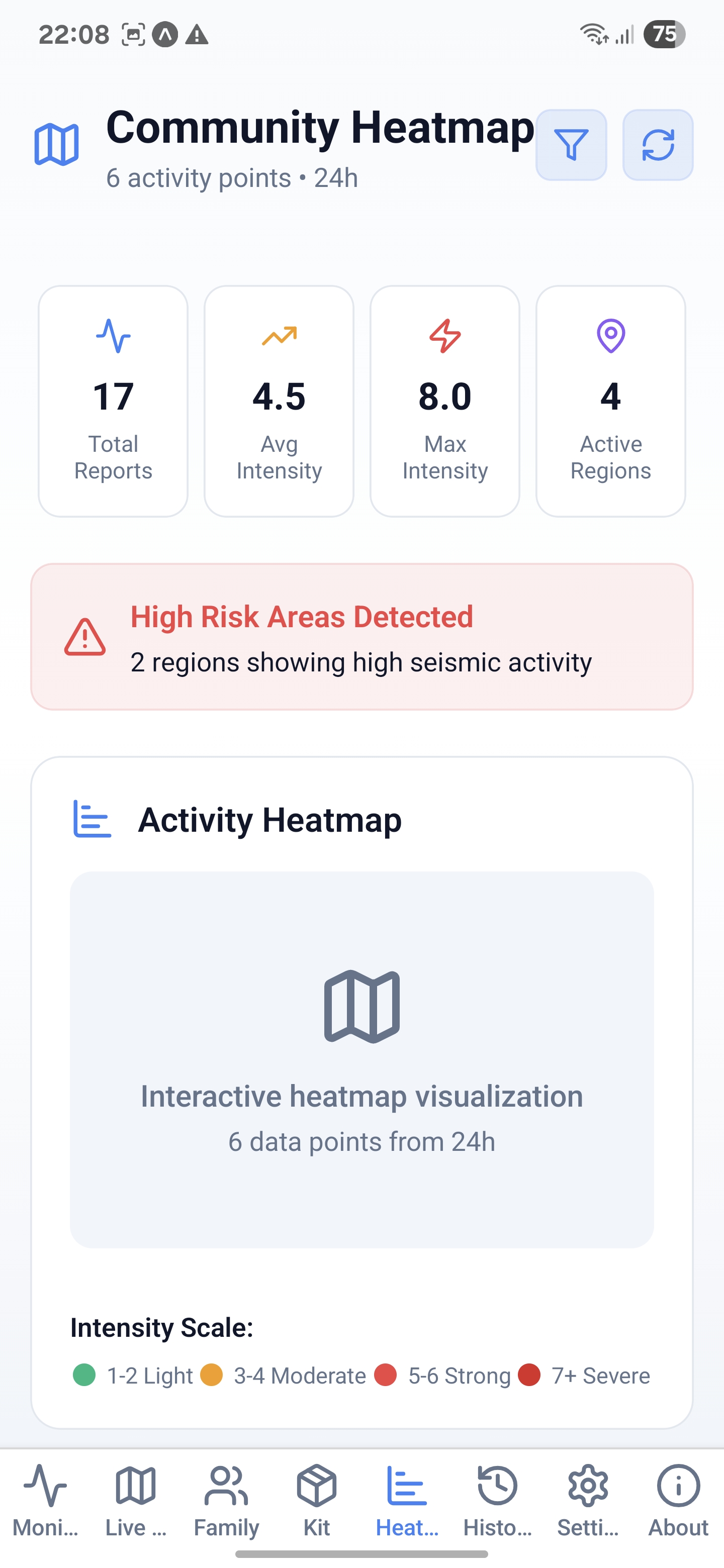
Community HeatMap
-
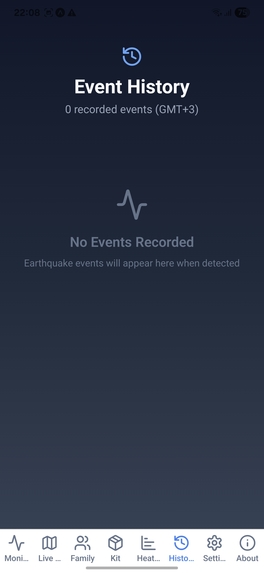
Detected Earthquake Events
-
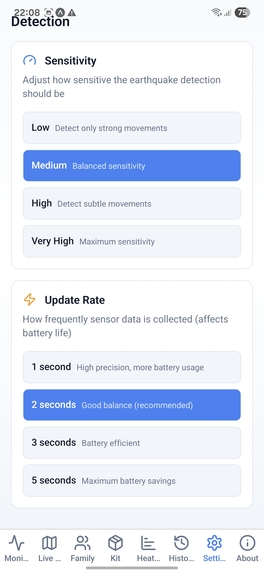
Settings and Theme
-
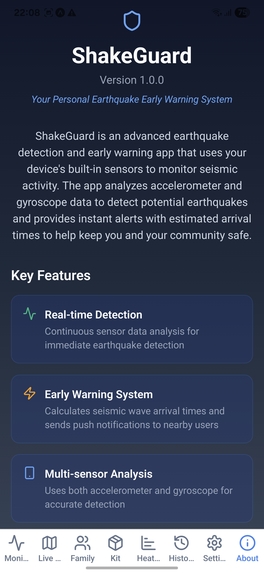
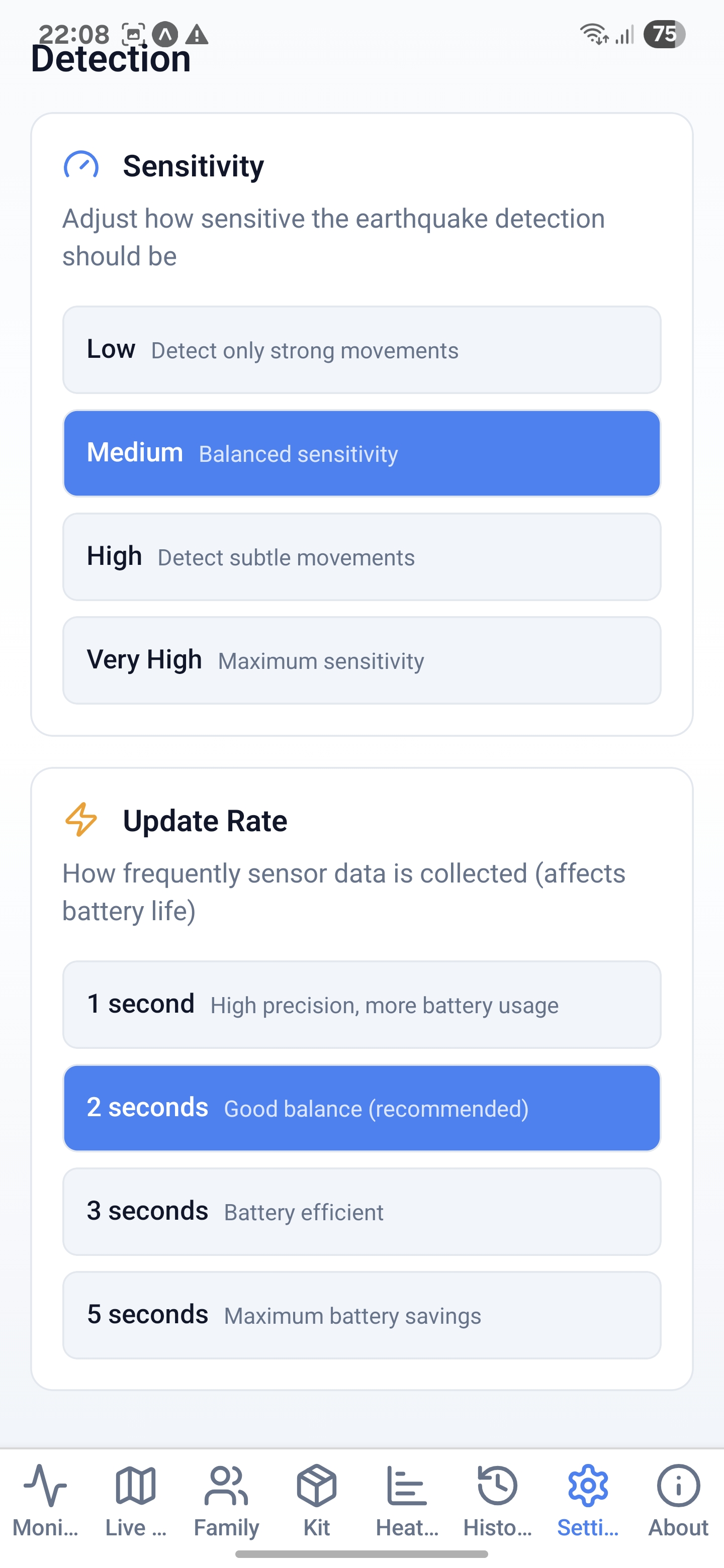
Settings Sensitivity and Sensor Data Update Rate
Inspiration
I live in Turkey, a country with a high risk of earthquakes, just like Japan and Hawaii. Earthquakes are truly one of the most destructive natural disasters. A few years ago, during a major earthquake in Türkiye, many people were rescued from under the rubble thanks to having their phones with them and being able to call for help through platforms like X, Instagram, and WhatsApp.
All of this inspired me to take that idea one step further to create a professional and reliable mobile application that could help people during earthquakes in a smarter and more efficient way.
What it does
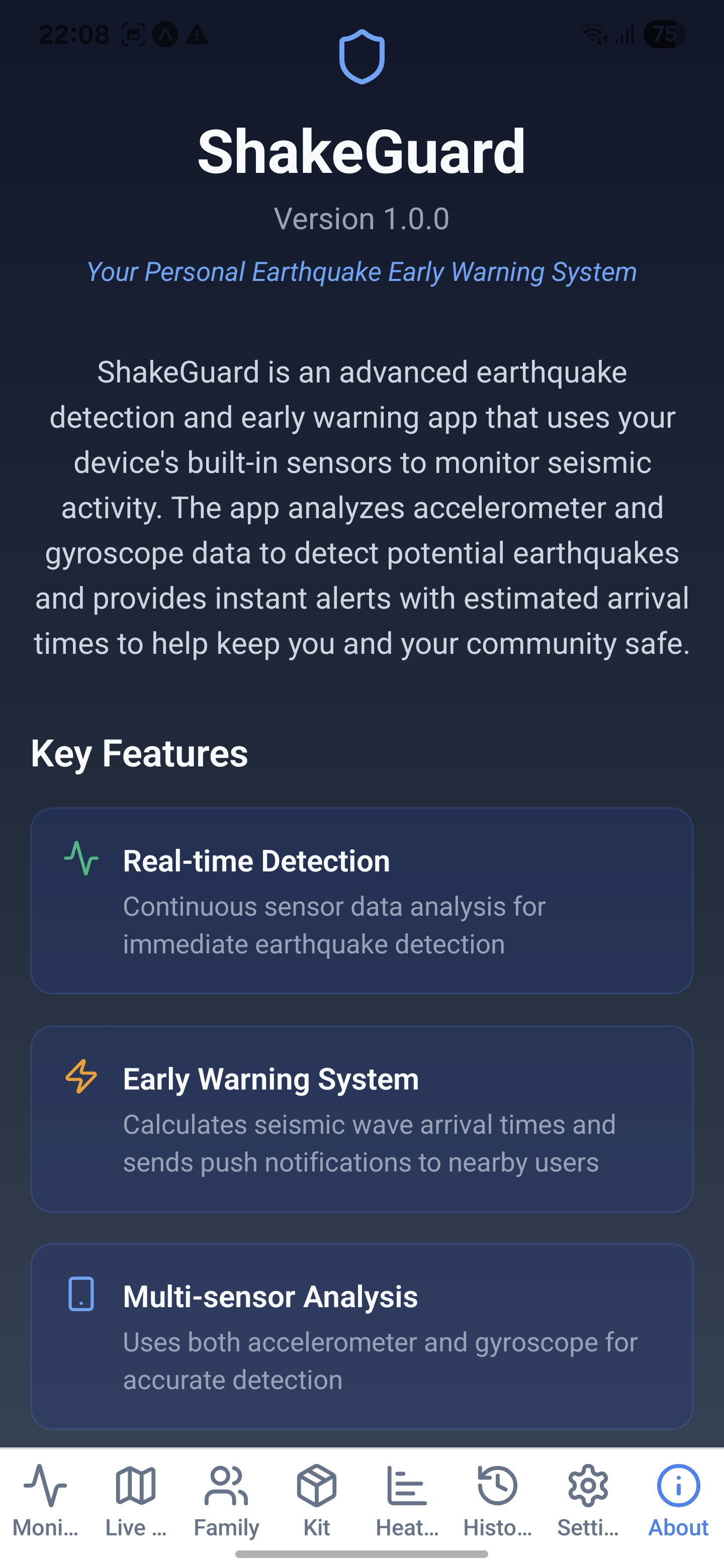
ShakeGuard is a comprehensive earthquake detection and emergency response app that transforms your smartphone into a personal seismic monitoring station.
Real time Earthquake Detection:
- Continuously monitors accelerometer and gyroscope sensors
- Uses advanced algorithms to distinguish earthquake motion from normal device movement
- Calculates earthquake intensity and duration with high precision
- Captures exact location coordinates when earthquakes are detected
Early Warning System:
- Calculates seismic wave arrival times using S-wave speed (3.5 km/s)
- Sends push notifications to users within the affected radius
- Provides urgent alerts for waves arriving in less than 10 seconds
- Shows estimated arrival times and safety instructions
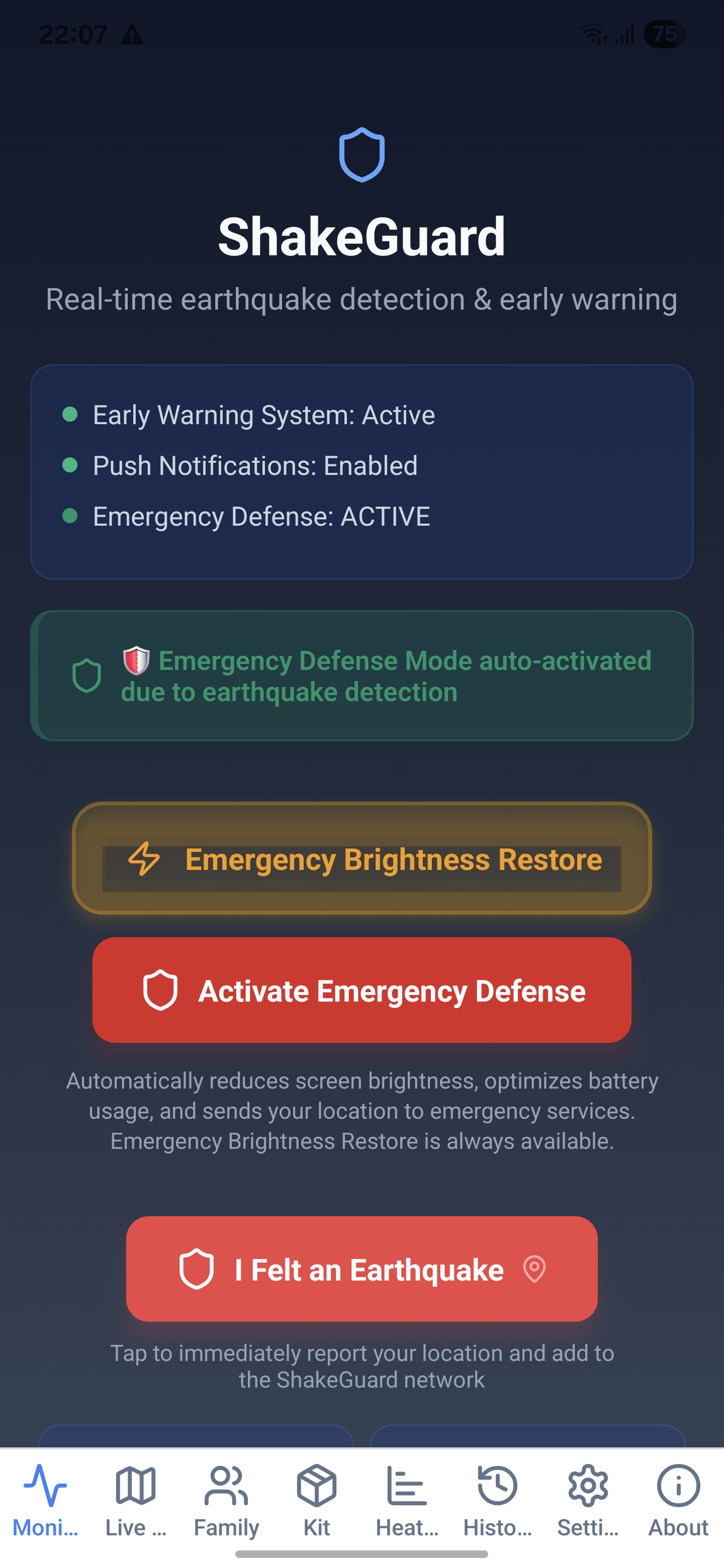
Emergency Defense Mode:
- Automatically activates during high intensity earthquakes (>2.5)
- Reduces screen brightness to conserve battery
- Optimizes device performance for emergency conditions
- Sends emergency location to database for rescue coordination
Family Safety Network:
- Create or join family groups with unique codes
- Share real-time safety status (Safe, Warning, Emergency)
- Automatic location sharing during earthquake events
- Emergency contact management and quick communication
Emergency Kit Checklist:
- Comprehensive preparedness checklist with 25+ essential items
- Categorized by Water, Food, Medical, Tools, Communication, Shelter, Documents
- Progress tracking with essential vs. recommended items
- Custom item addition and notes functionality
Community Heatmap:
- Visualizes earthquake activity patterns across regions
- Clusters nearby reports for clearer visualization
- Identifies high risk areas based on recent activity
- Real time updates as new reports are submitted
How we built it
Technology Stack:
- Frontend: React Native Expo
- Navigation: Expo Router with tab-based architecture
- Database: Supabase
- Sensors: Expo Sensors (Accelerometer, Gyroscope)
- Location: Expo Location with background tracking
- Notifications: Expo Notifications with push alerts
- Storage: AsyncStorage for local data persistence
- Styling: Custom StyleSheet with theme system
Challenges we ran into
While developing the ShakeGuard app, building a scalable real time location tracking and alert system brought several challenges. In particular, ensuring reliable data synchronization with Supabase and managing background location updates on mobile devices was complex. In fact, we can’t yet say that the app works perfectly.
For ShakeGuard to function at its best, multiple mobile devices in the same neighborhood or region need to work together in real time. Relying on data from just a single phone can lead to false detections of earthquakes.
Challenge Compliance:
Startup Challenge : You can use this app in all countries in the world where earthquakes occur. So this app is definitely scalable for millions of people to use.
Accomplishments that we're proud of
We successfully turned the idea of a defense system that protects both the user and the device during an earthquake into a functional mobile application. This concept goes beyond a simple notification system. We built a real time location tracking system integrated with Supabase, allowing users' locations to be quickly shared in emergency situations. By adding automatic defense features that preserve battery life such as reducing screen brightness and enabling power-saving mode we adopted an approach that not only alerts, but also supports long term usability. Considering real world scenarios, we realized the need for multi device data analysis and incorporated that into the technical design. This helped the project mature not only technically, but also conceptually.
What we learned
Building real time systems may seem simple in theory, but mobile device limitations especially for background processes make it much more complex.
While modern backend platforms like Supabase are great for rapid prototyping, they require careful planning when it comes to scalability and data synchronization.
We learned how crucial it is to evaluate data from multiple devices together in disaster scenarios like earthquakes.
Energy efficiency and proper use of device resources are just as important as user experience in emergency focused applications.
Most importantly, we realized that an app shouldn’t just work it should truly solve a real world problem.
Built With
- bolt.new


Log in or sign up for Devpost to join the conversation.