-
-

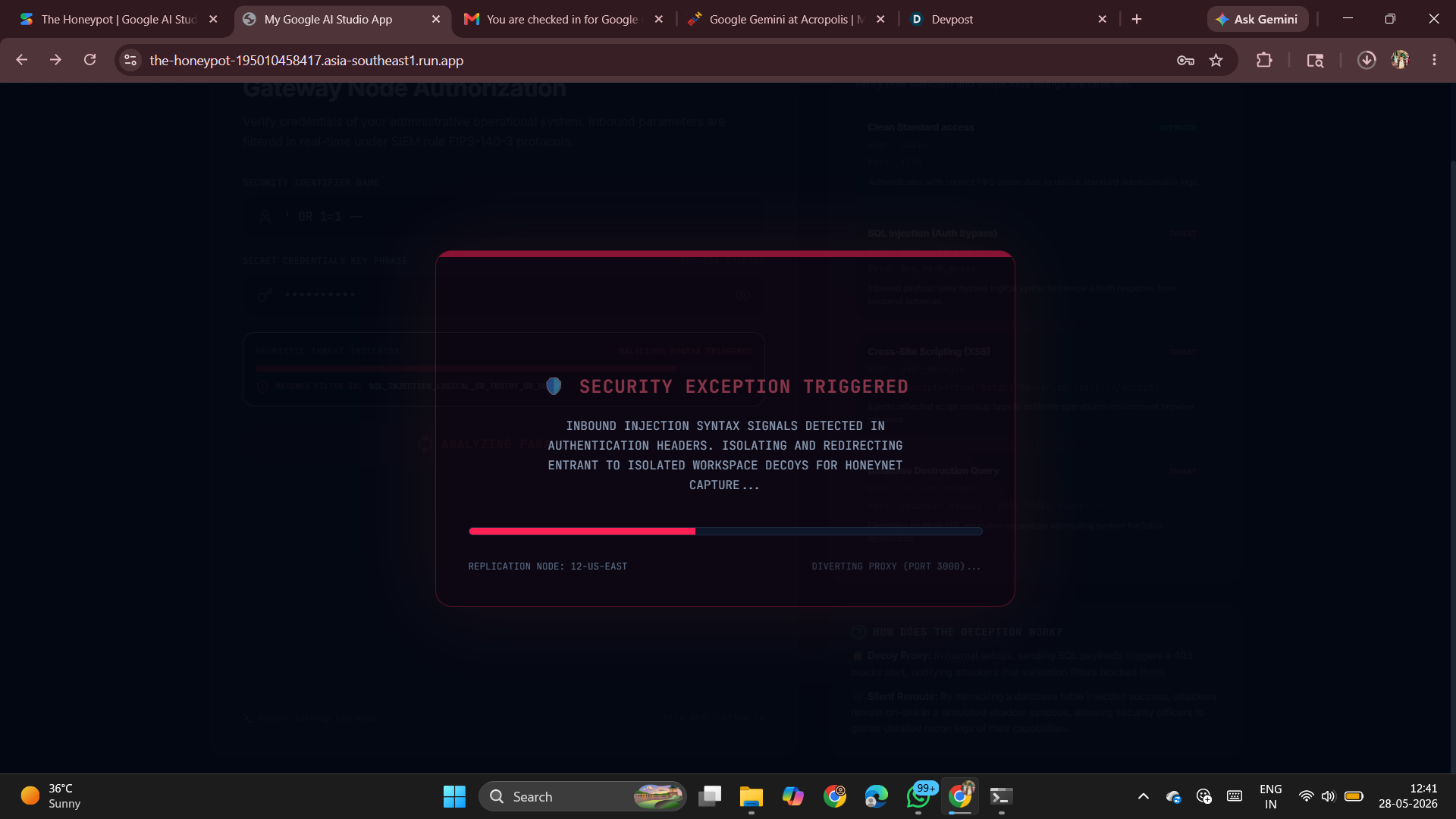
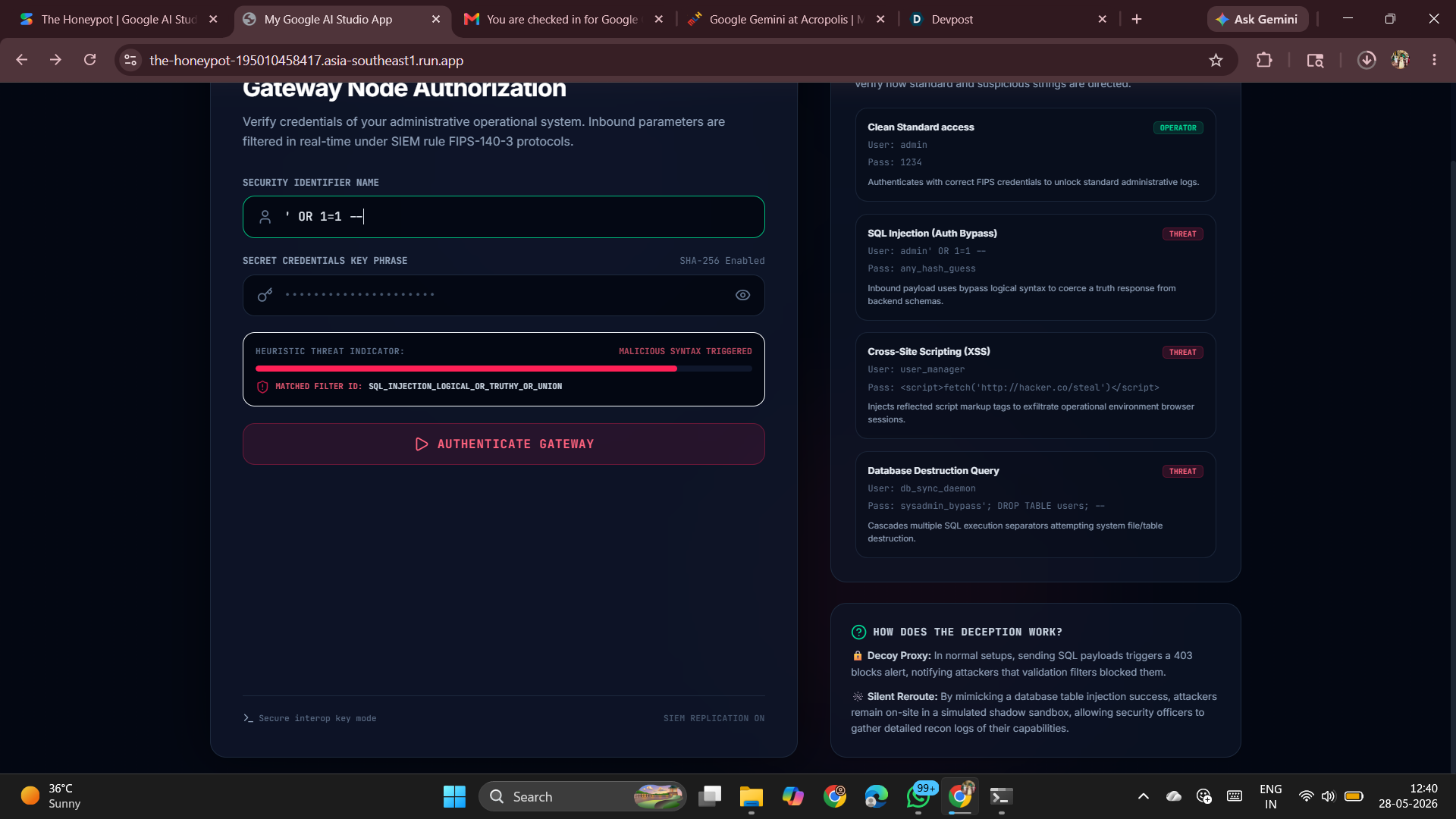
threat detected use of sql injection for loging in the page
-

logining the page
-

its our secure login portal
-
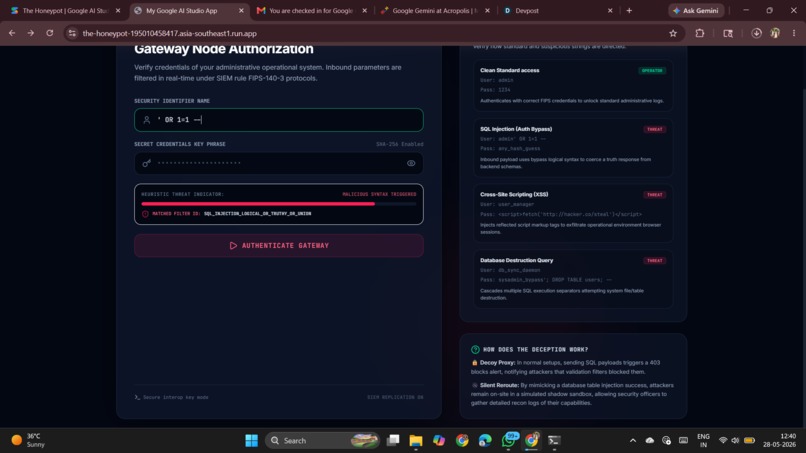
again the login page with different login address
-
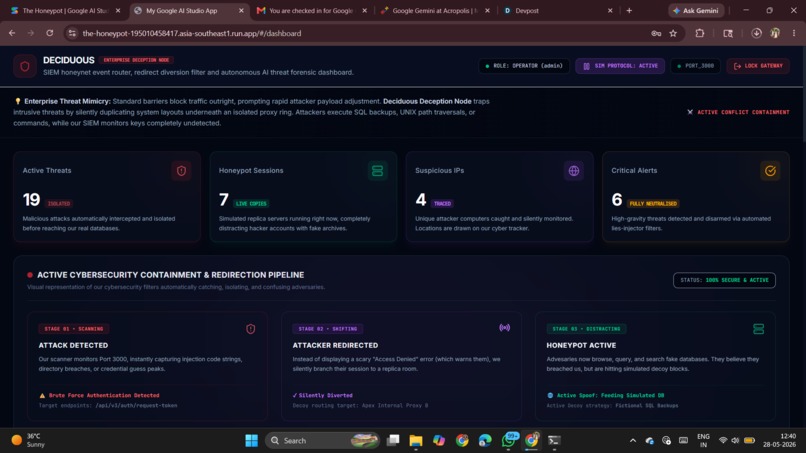
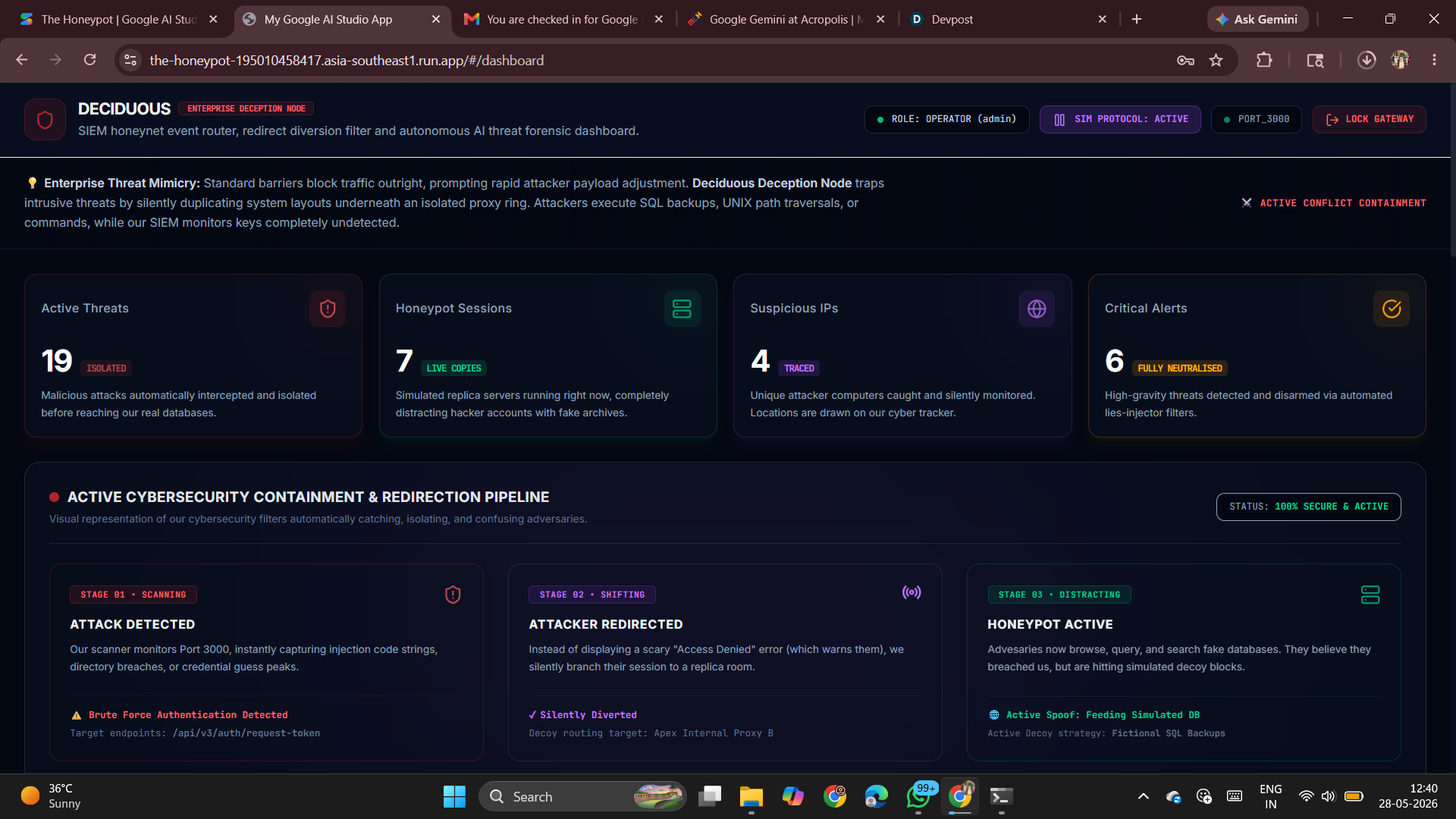
after login


Inspiration
Modern cybersecurity systems mainly focus on blocking attackers after detecting suspicious activity. However, this approach does not provide insight into attacker behavior or techniques.
We were inspired by the concept of deception-based security and honeypot systems used in enterprise cybersecurity. Our goal was to create a platform that not only protects infrastructure but also safely studies attackers in a controlled environment.
This led to the idea of ShadowTrap — an adaptive honeypot system designed to redirect attackers into a fake environment while monitoring their behavior in real time.
What it does
ShadowTrap is an AI-inspired adaptive honeypot platform for cybersecurity threat deception and monitoring.
The system detects suspicious inputs such as SQL Injection and Cross-Site Scripting attempts and silently redirects malicious users into a realistic fake environment instead of exposing actual infrastructure.
The platform includes:
- Secure login portal
- Threat monitoring dashboard
- Honeypot redirection system
- Fake attacker environment
- Live cyber attack logs
- Threat analytics and monitoring
- Suspicious activity tracking
The dashboard allows security teams to visualize attacks and analyze attacker behavior safely in real time.
How we built it
We built ShadowTrap using:
- Google AI Studio
- React
- TailwindCSS
- Modern responsive UI design
The platform was designed as a hackathon-ready cybersecurity prototype focused on:
- Adaptive deception security
- Real-time visualization
- User-friendly threat monitoring
- Interactive honeypot simulation
We used frontend-based threat simulation logic to detect suspicious patterns and redirect attackers into isolated fake environments.
Challenges we ran into
One of the biggest challenges was balancing technical complexity with hackathon time constraints.
We initially explored implementing advanced AI detection systems and sandboxing, but quickly realized that building a polished and understandable prototype was more important.
Another challenge was designing a cybersecurity dashboard that looked professional while still remaining understandable for non-technical users and judges.
We also faced challenges in creating realistic honeypot simulations and maintaining smooth UI interactions.
Accomplishments that we're proud of
We are proud of successfully creating a fully interactive cybersecurity prototype with:
- Realistic honeypot simulation
- Modern cyber-themed UI
- Real-time attack visualization
- Adaptive attacker redirection flow
- User-friendly dashboard experience
We are especially proud that the project successfully demonstrates a real cybersecurity concept in a visually engaging and understandable way.
The project combines deception technology, monitoring, and threat analytics into a single smooth demo experience.
What we learned
Through building ShadowTrap, we learned:
- The importance of deception-based cybersecurity
- How honeypot systems work in enterprise security
- The value of UI/UX in technical projects
- How to simplify complex cybersecurity concepts for demonstrations
- Rapid prototyping using AI-assisted development tools
We also learned that strong storytelling and user experience are just as important as technical implementation during hackathons.
What's next for ShadowTrap
Future improvements for ShadowTrap include:
- Real AI-powered threat classification
- Advanced attacker fingerprinting
- Cloud-based sandbox environments
- SIEM integration
- Real-time IP geolocation
- Threat intelligence APIs
- Machine learning based anomaly detection
- Multi-layer deception environments
Our long-term vision is to evolve ShadowTrap into a scalable deception-security platform capable of helping organizations analyze and contain modern cyber threats safely.
Built With
- gemini
- javascript
- react.js
- tailwindcss
- typescript

Log in or sign up for Devpost to join the conversation.