-
-
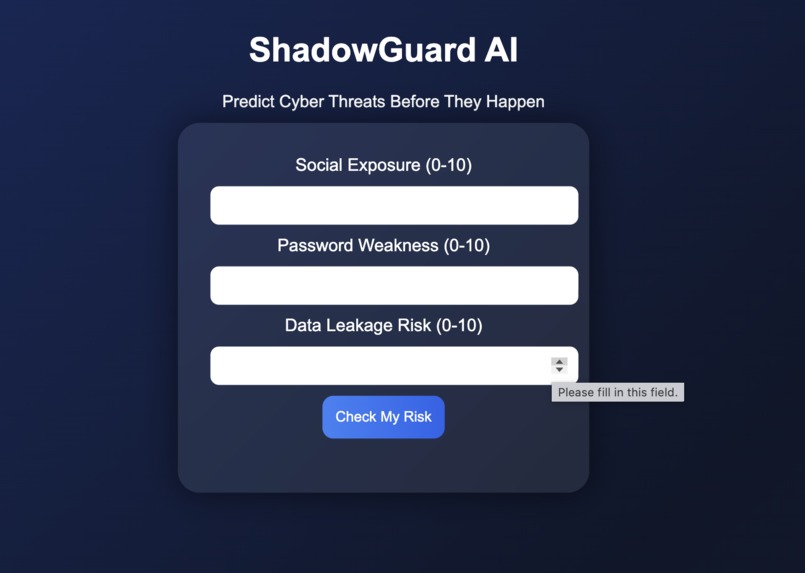
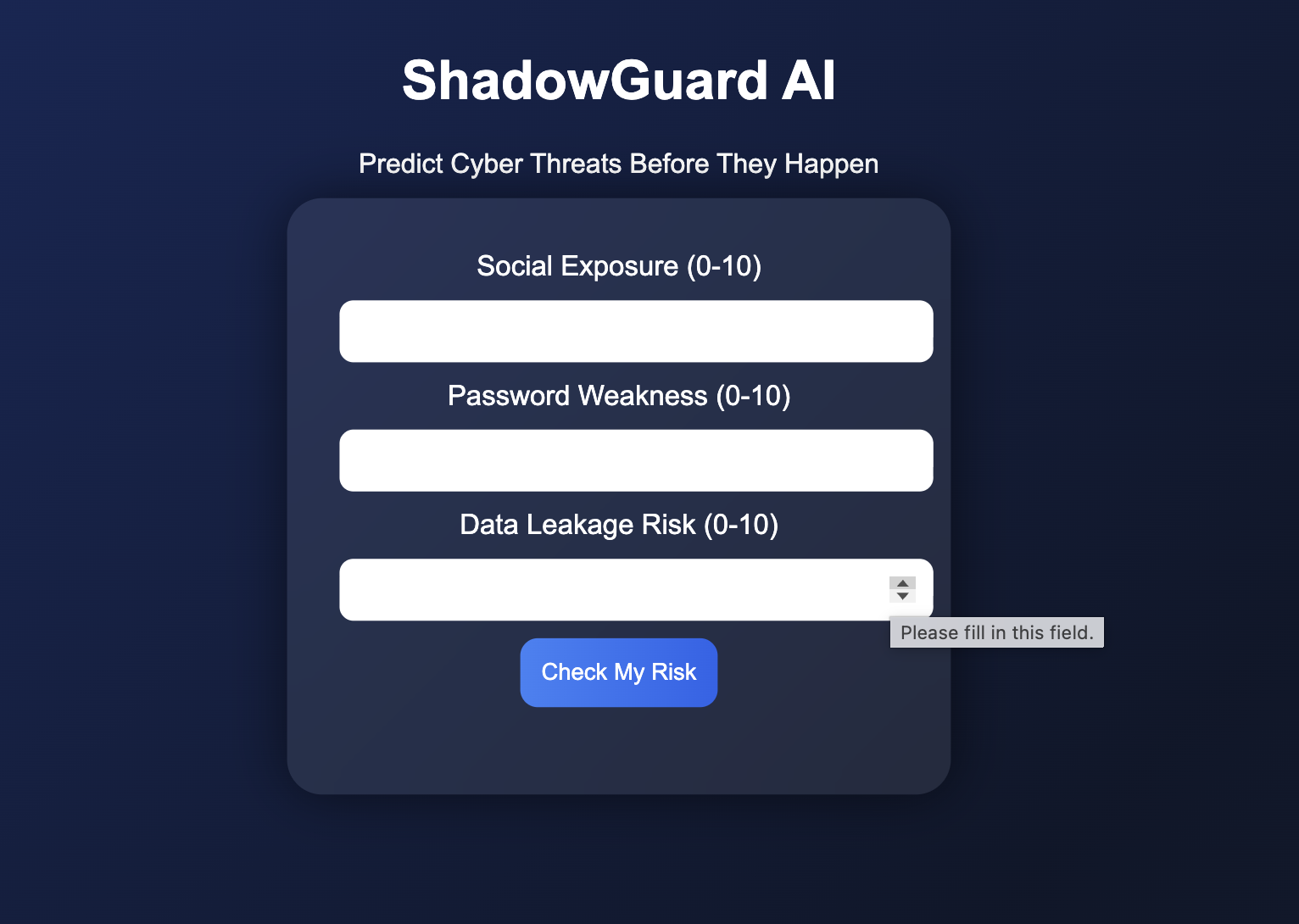
front page
-
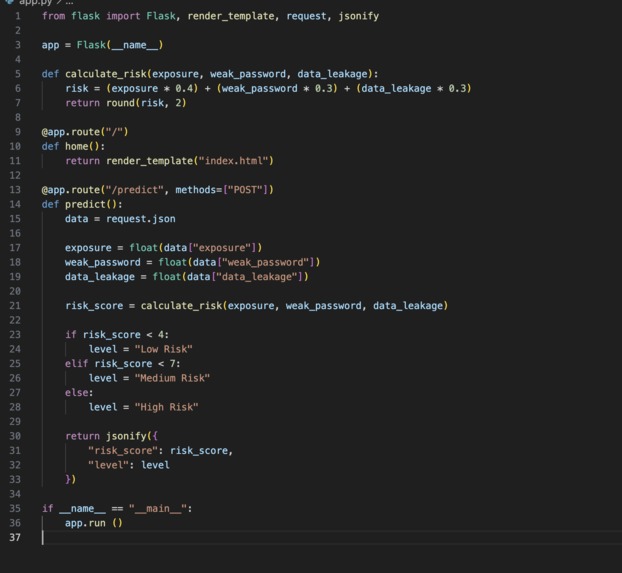
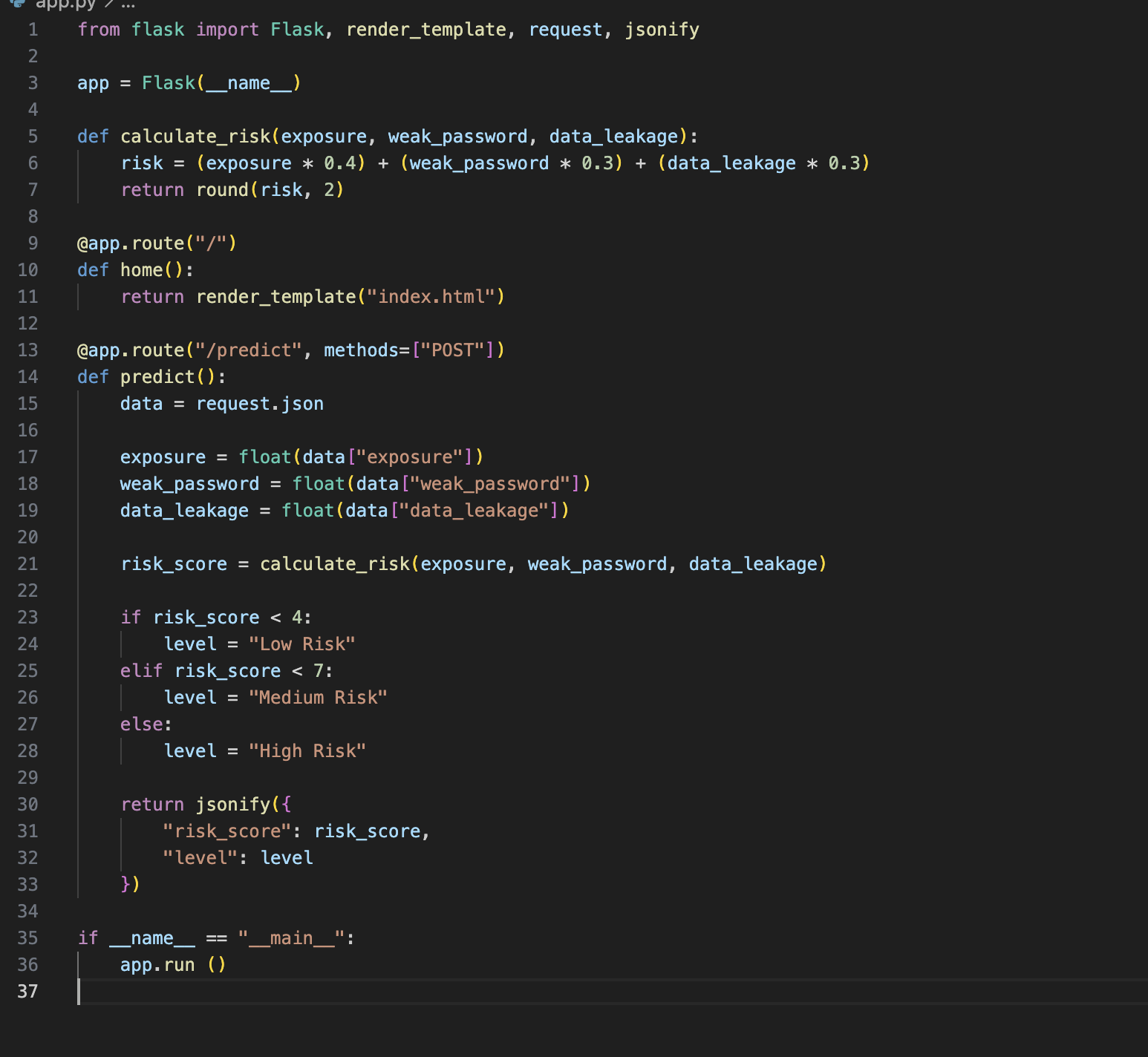
app.py
-
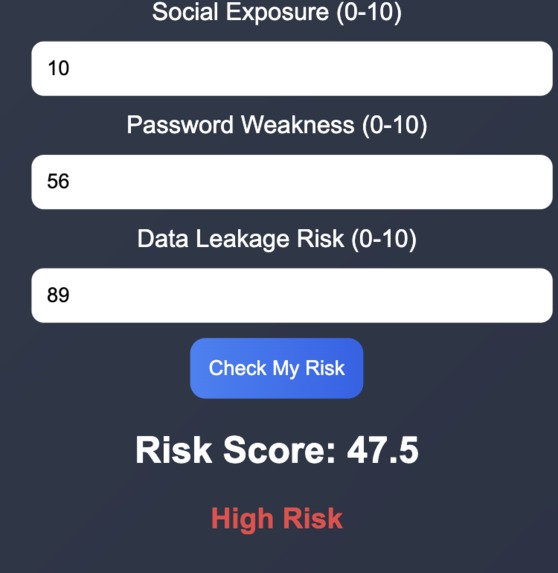
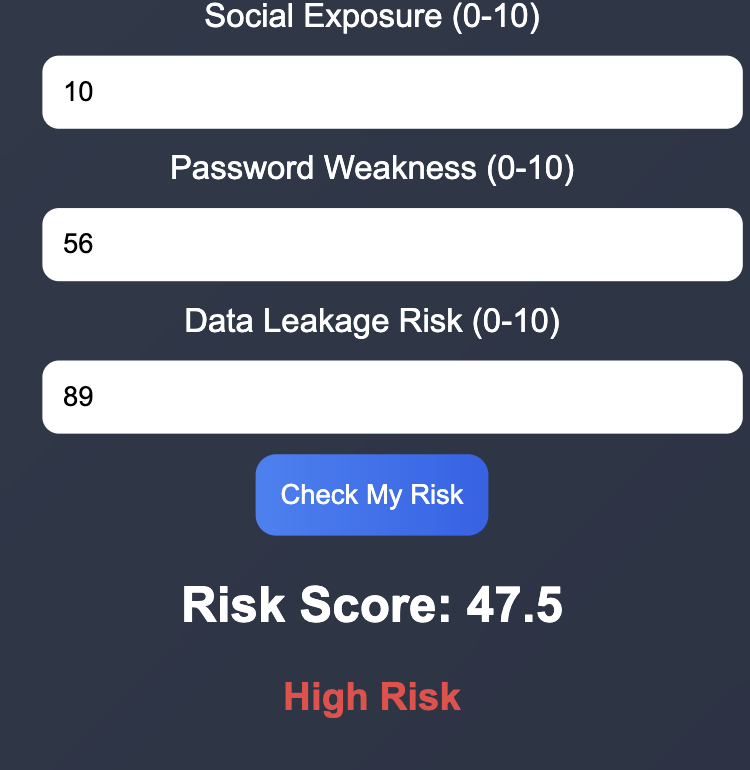
showing risk
-
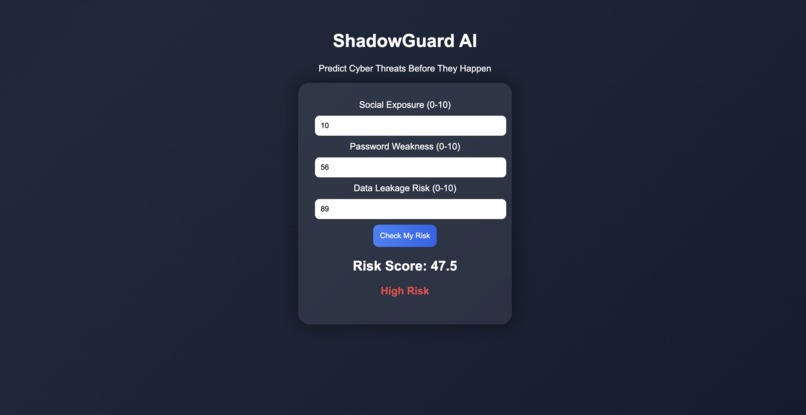
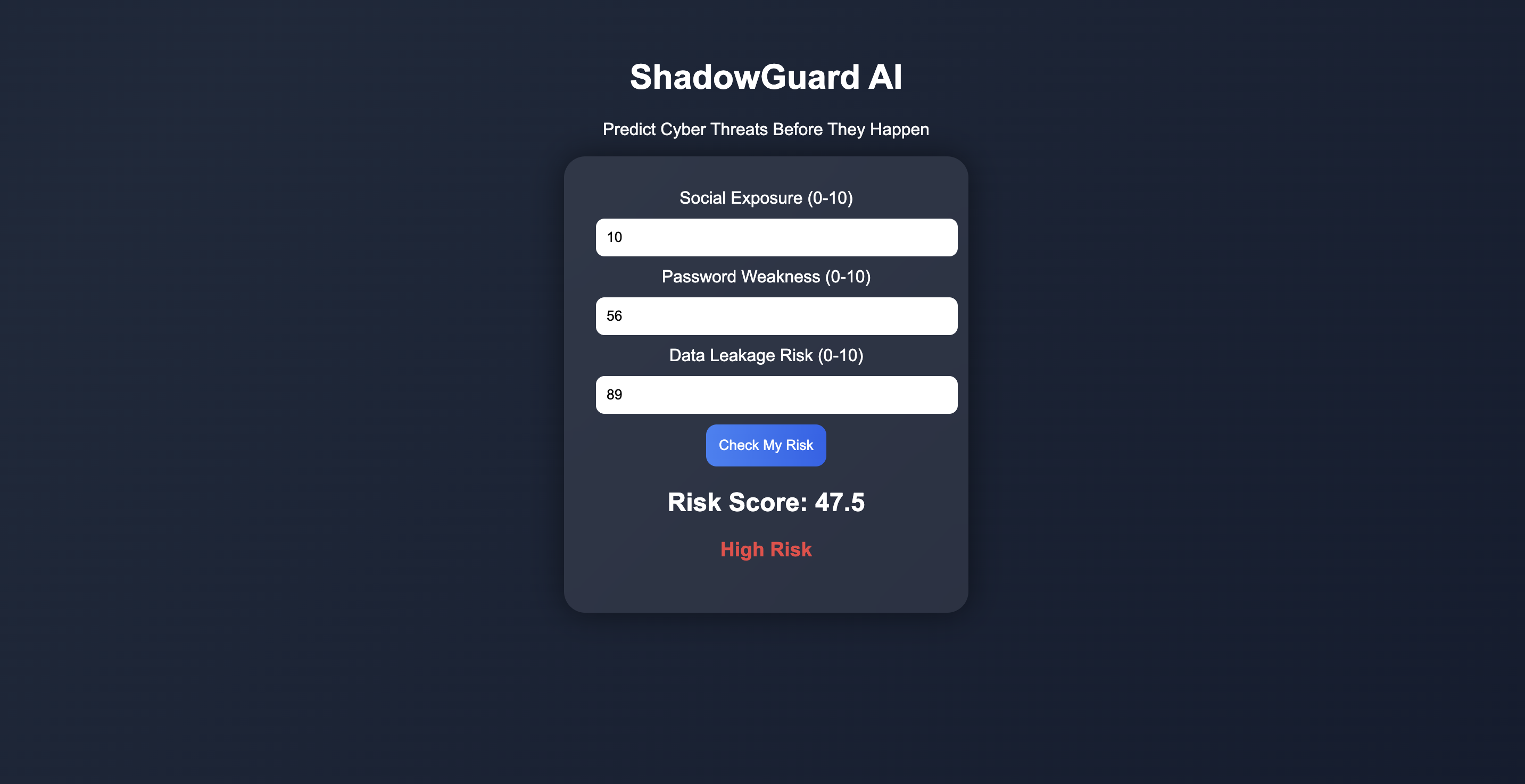
full screen
Inspiration
In today’s digital world, every individual leaves behind a “digital shadow” through social media activity, online accounts, and browsing behavior. I was inspired by the growing number of cyberattacks, identity theft cases, and data breaches happening globally.
I wanted to build a system that does not just react to cyber threats but predicts them before they happen.
Problem Statement
Most cybersecurity tools work after a threat occurs. There is very little focus on predictive risk analysis for individuals.
If we denote user risk as:
[ Risk = f(Exposure, Password Strength, Public Data Leakage) ]
then reducing exposure and strengthening security factors can significantly lower the probability of cyber attacks.
Solution – ShadowGuard AI
ShadowGuard AI analyzes publicly available digital footprints and calculates a personalized cyber risk score.
Key Features:
- Public data exposure analysis
- Weak password detection
- Dark web breach monitoring simulation
- Predictive cyber risk scoring
- Personalized security recommendations
How We Built It
- Frontend: React.js for interactive dashboard
- Backend: Python (Flask)
- Machine Learning: Scikit-learn for risk prediction model
- Database: Firebase / MongoDB
We trained a classification model to predict whether a user falls into Low, Medium, or High cyber risk categories.
What I Learned
- How predictive analytics can be applied in cybersecurity
- Feature engineering for risk assessment
- Real-time data handling and dashboard visualization
- Importance of ethical AI and responsible data use
Challenges Faced
- Collecting meaningful sample data
- Avoiding privacy violations
- Optimizing model accuracy within hackathon time limits
- Ensuring real-time performance
Future Scope
- Integration with real-time dark web APIs
- Browser extension for live monitoring
- AI-powered auto security patch suggestions
ShadowGuard AI aims to move cybersecurity from reactive defense to proactive prediction.


Log in or sign up for Devpost to join the conversation.