Inspiration
Hand shadow puppets are one of the oldest games people play with their hands: a lamp, a wall, and nothing else. Quest hand tracking gives us 25 joints per hand, every frame. We wanted a game where your hands are not a pointer or a controller stand-in. Your hands are the game.
What it is
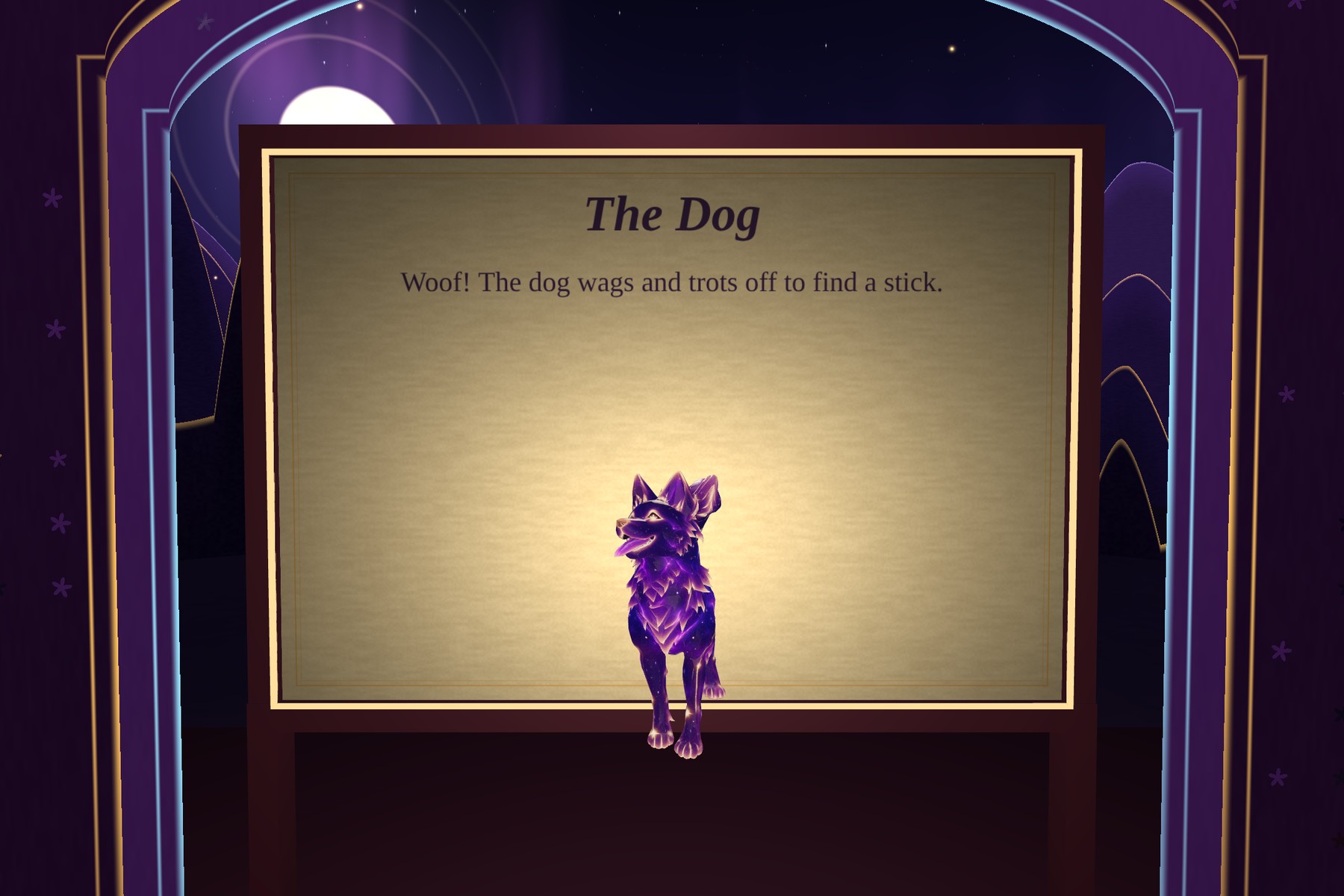
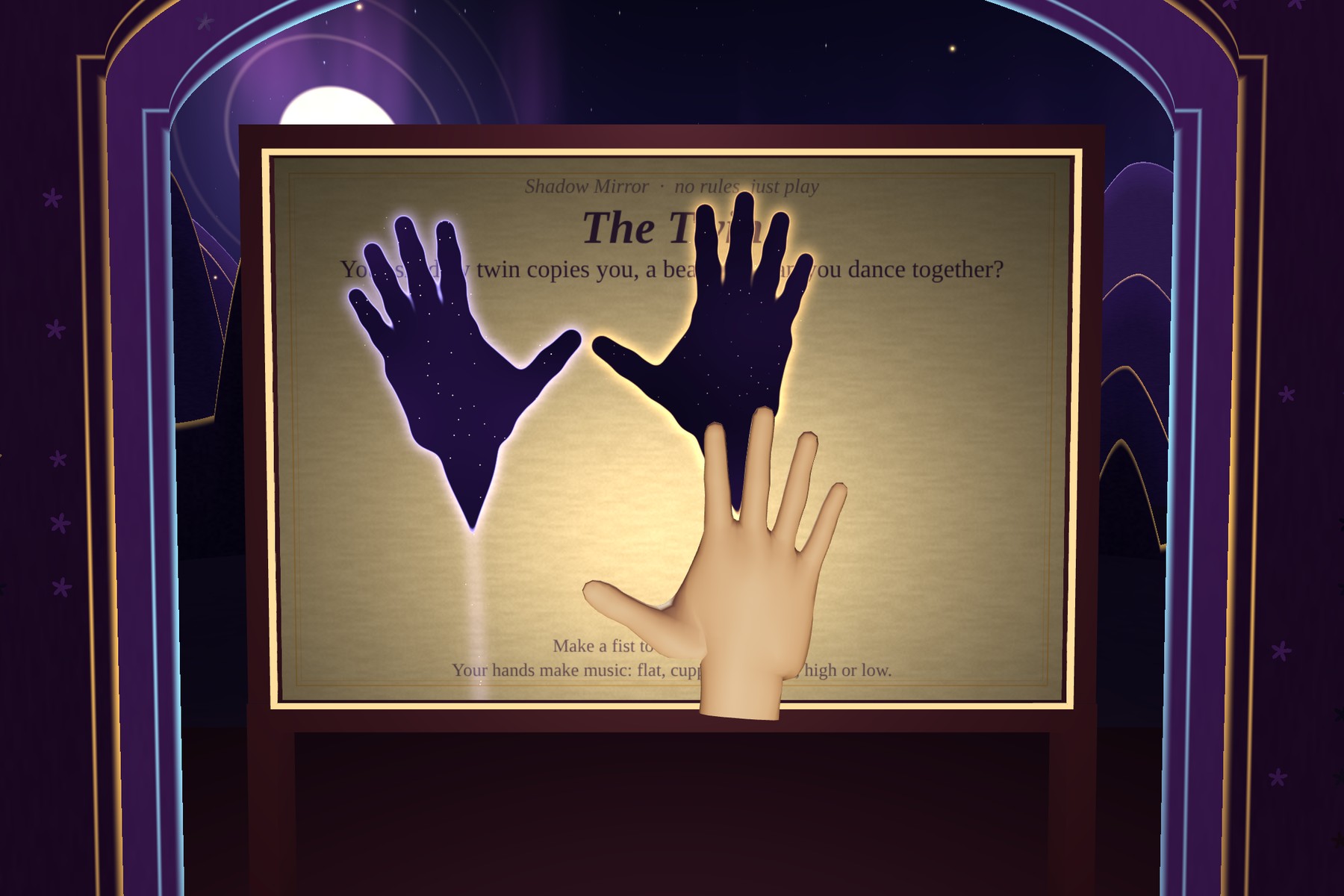
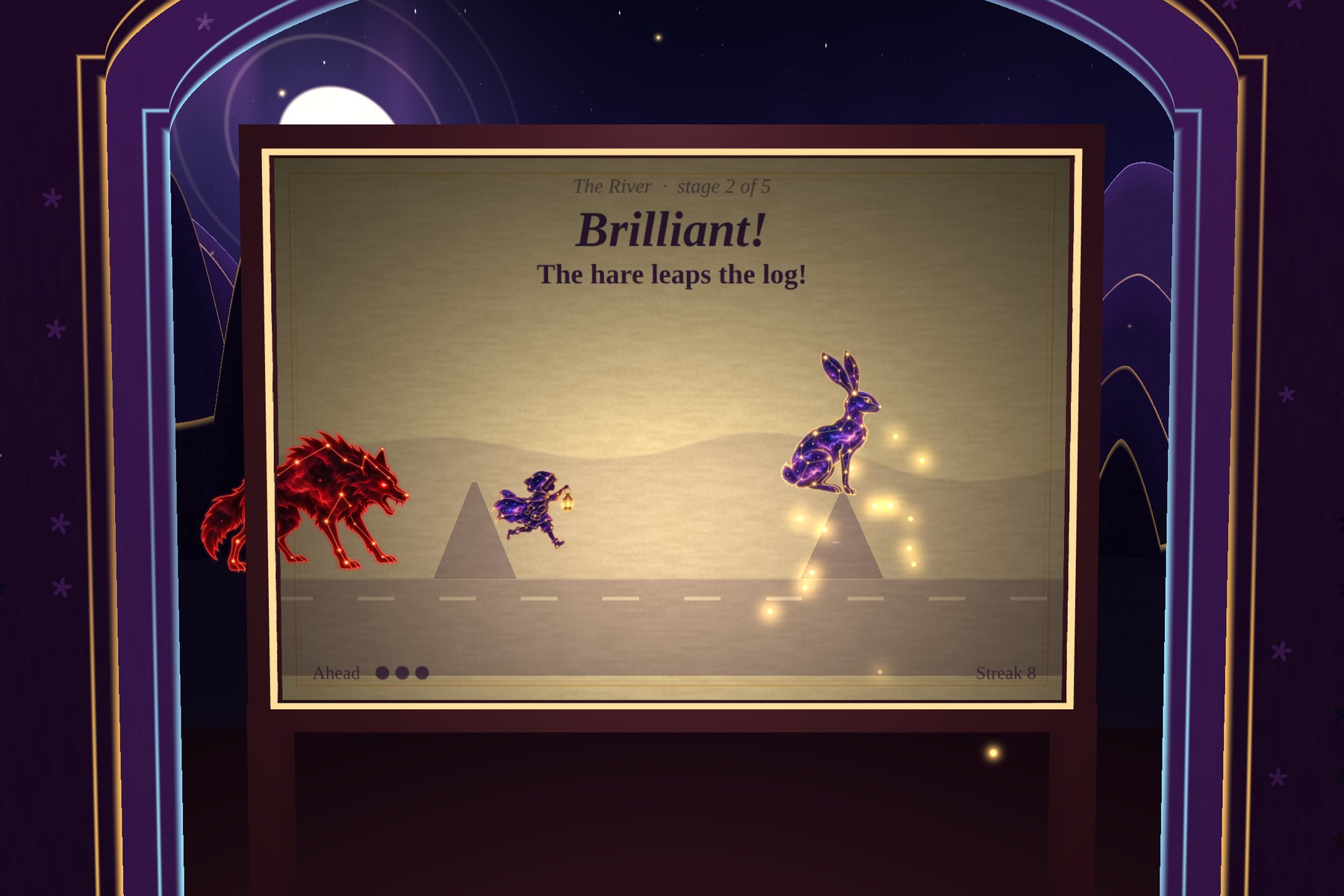
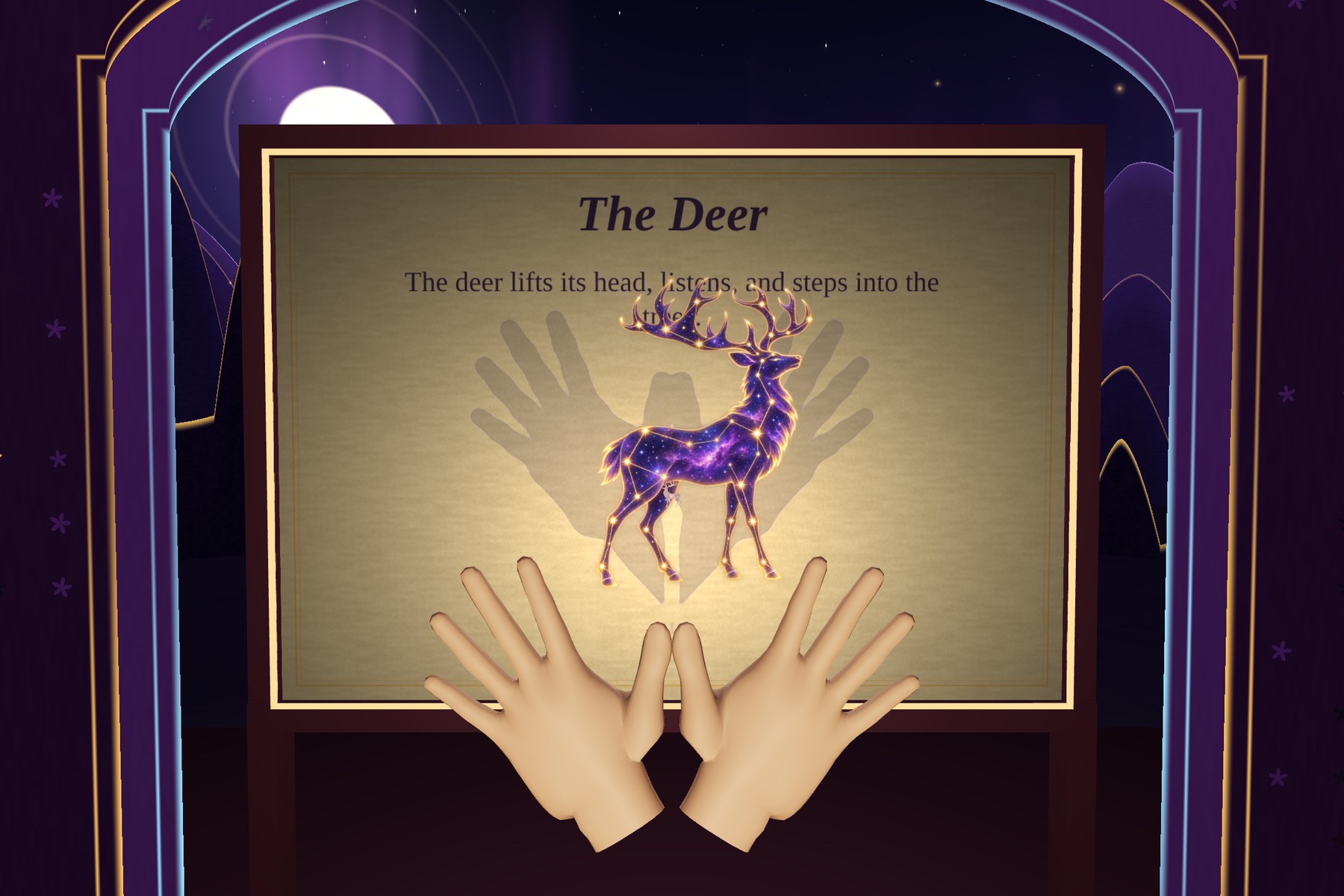
You sit in an open-air shadow theater on a starry night, with a lamp behind you, a moon over the pines, paper lanterns, and fireflies in the dark. Lift your hands, and their soft shadows fall on the paper. A golden line shows a sleeping creature. Make that shape, hold it, and the creature wakes: its eye opens, and the hare hops away, the crocodile slides down the river, the bird flies into the night.
- Ten story shadows in two chapters teach the classic shapes, from one open hand to two-hand creatures.
- Stuck? A glowing golden hand appears on your own wrist, already in the pose, so you only turn your hand and set your fingers to match.
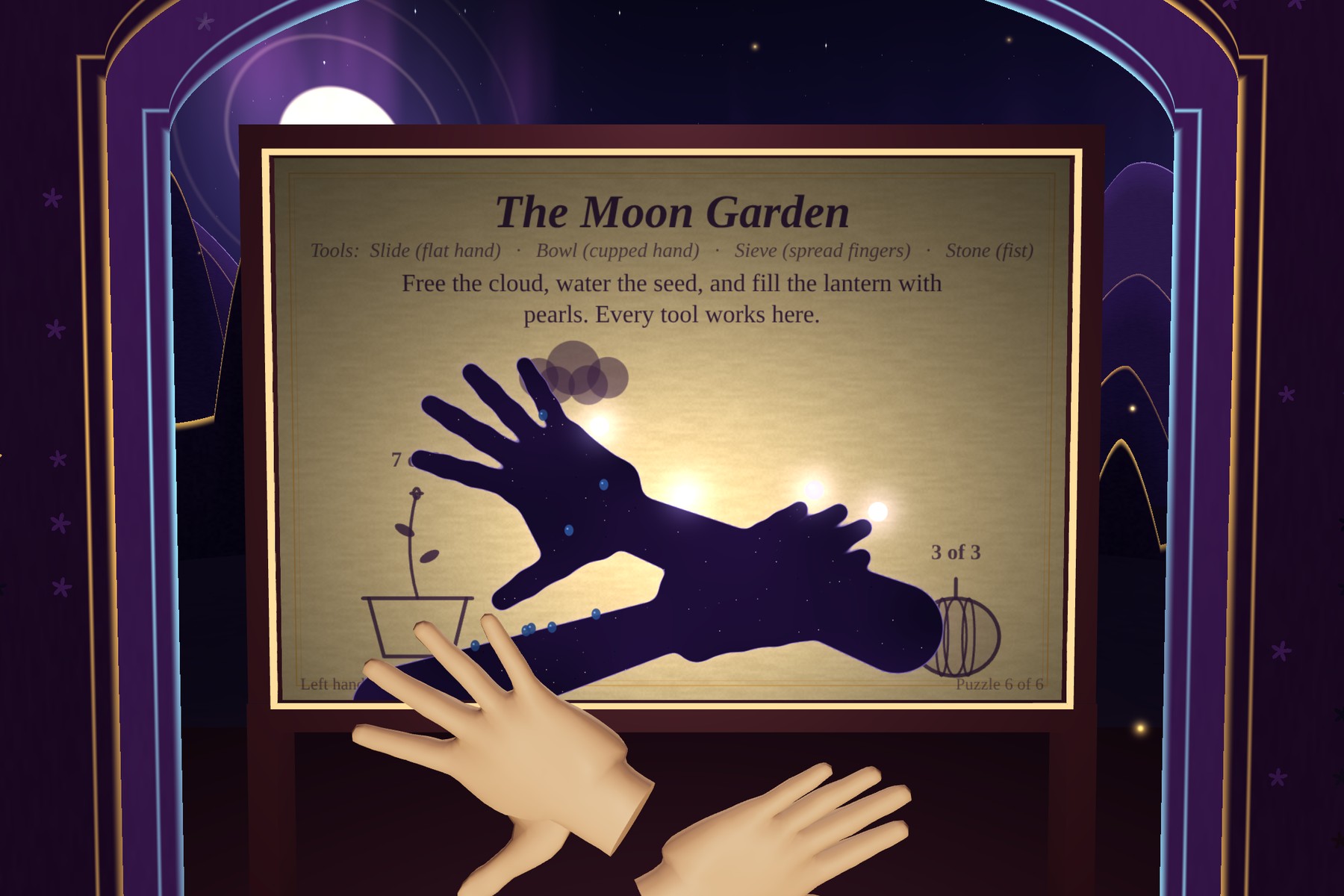
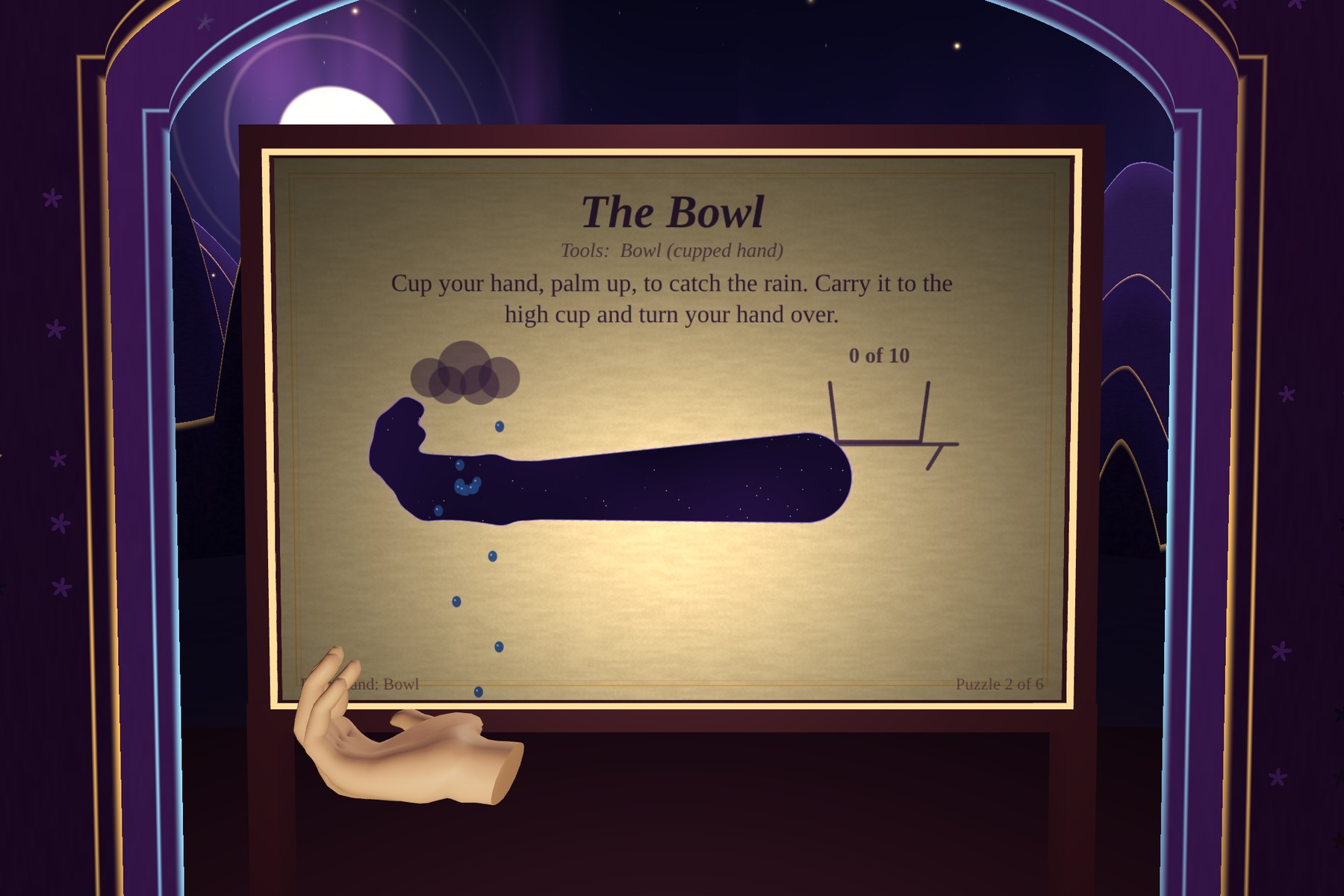
- Chapter three makes your shadow solid. Hold your hand and arm as a slide to guide rain into a cup, and herd fireflies, which flee from shadow, into a jar.
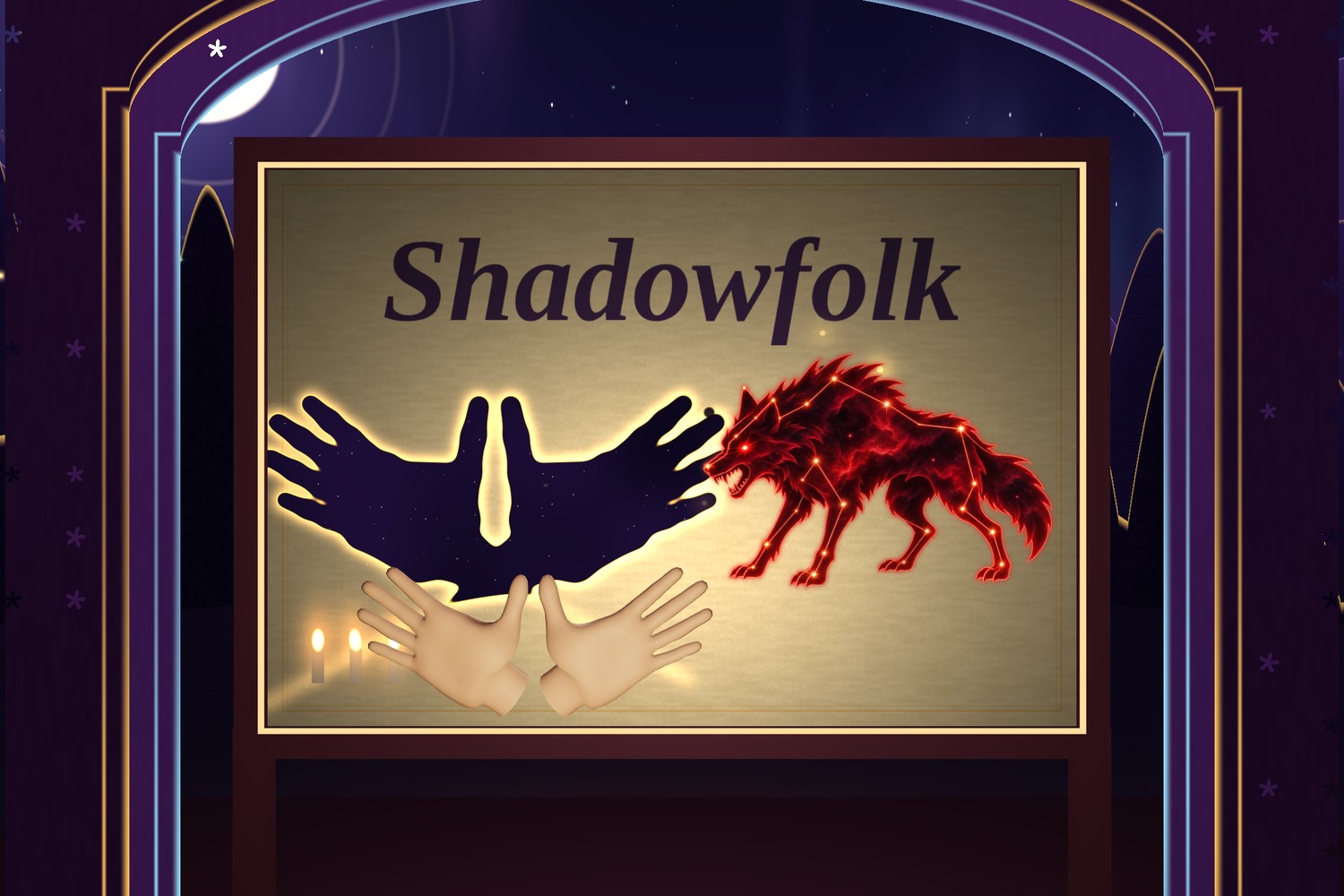
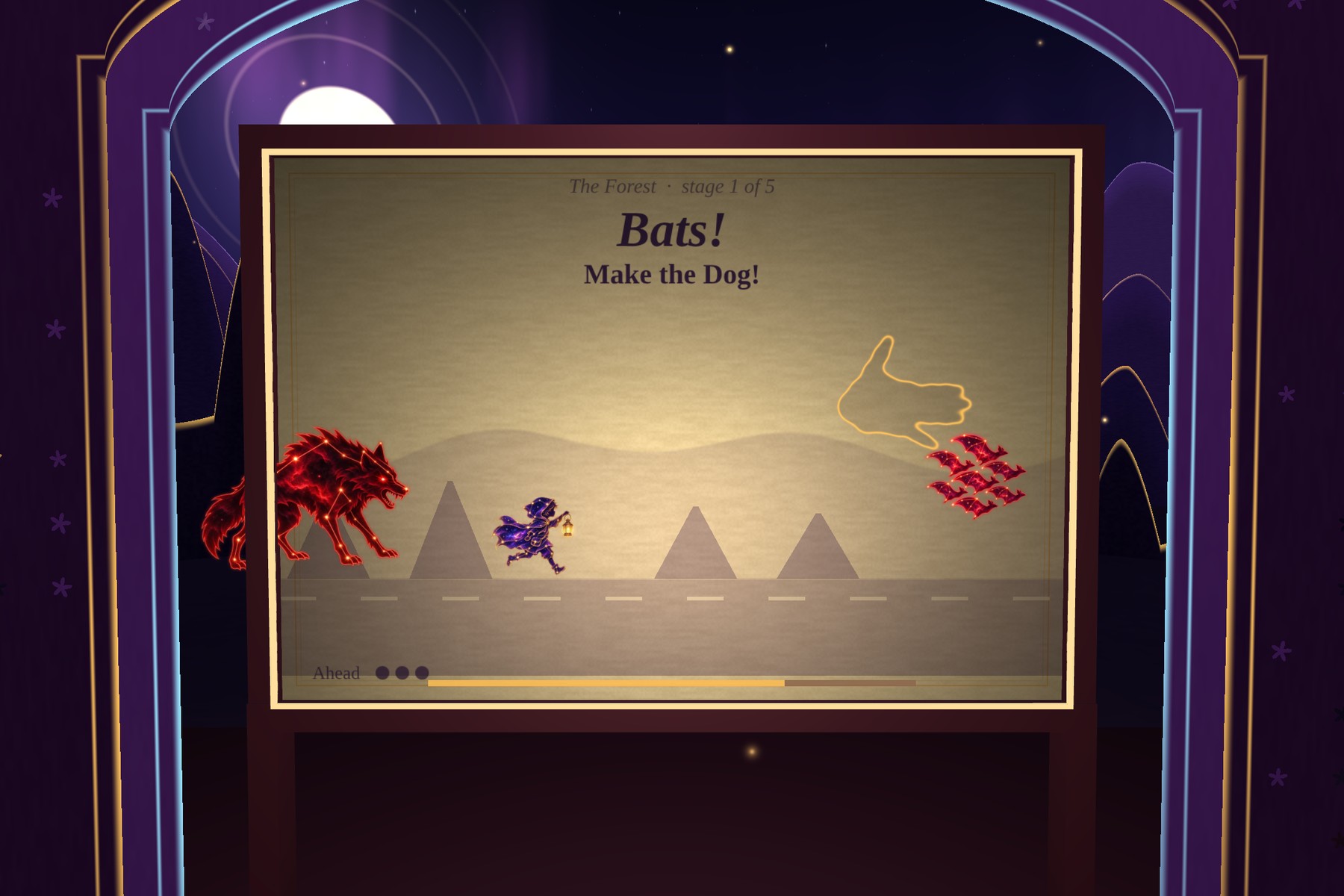
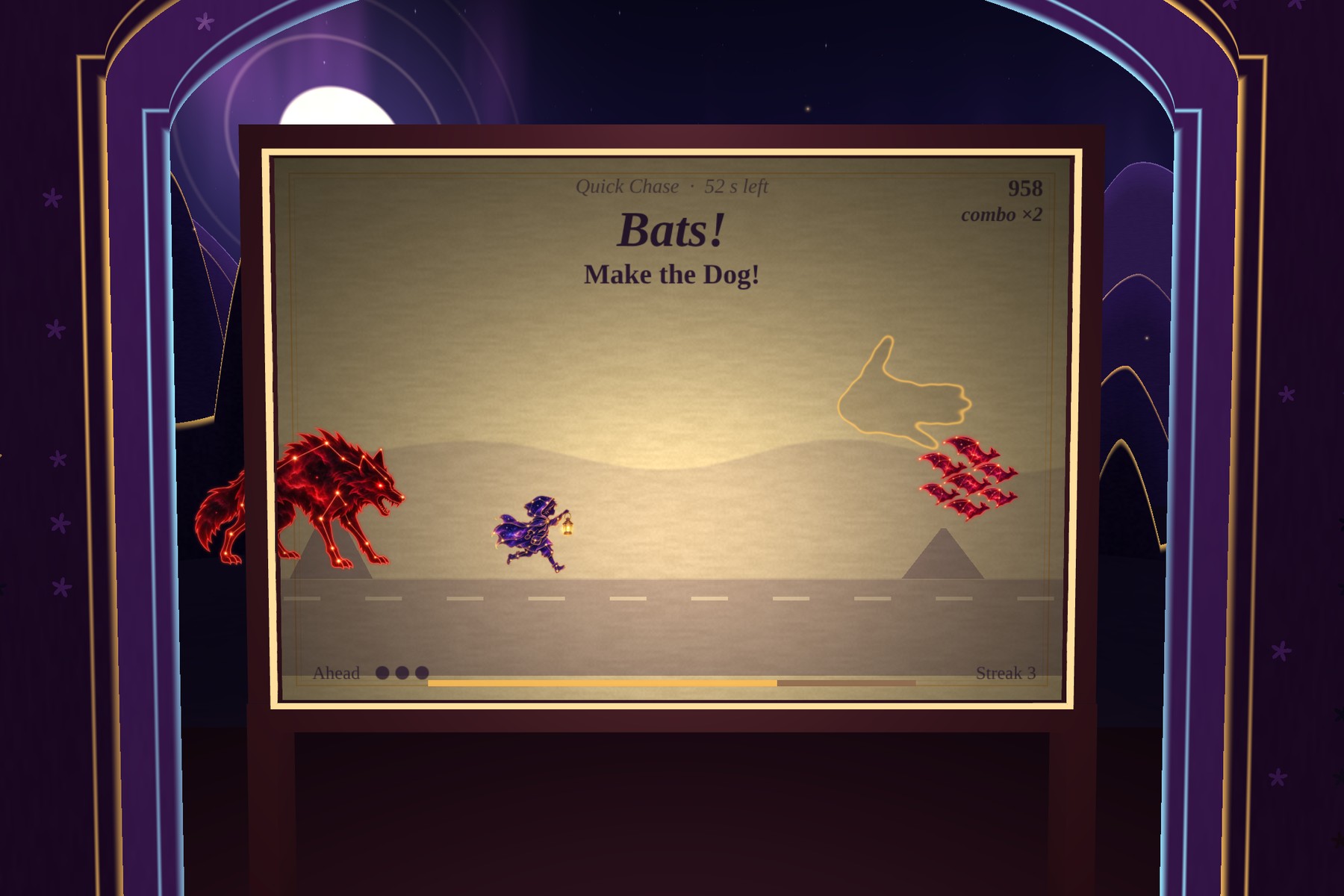
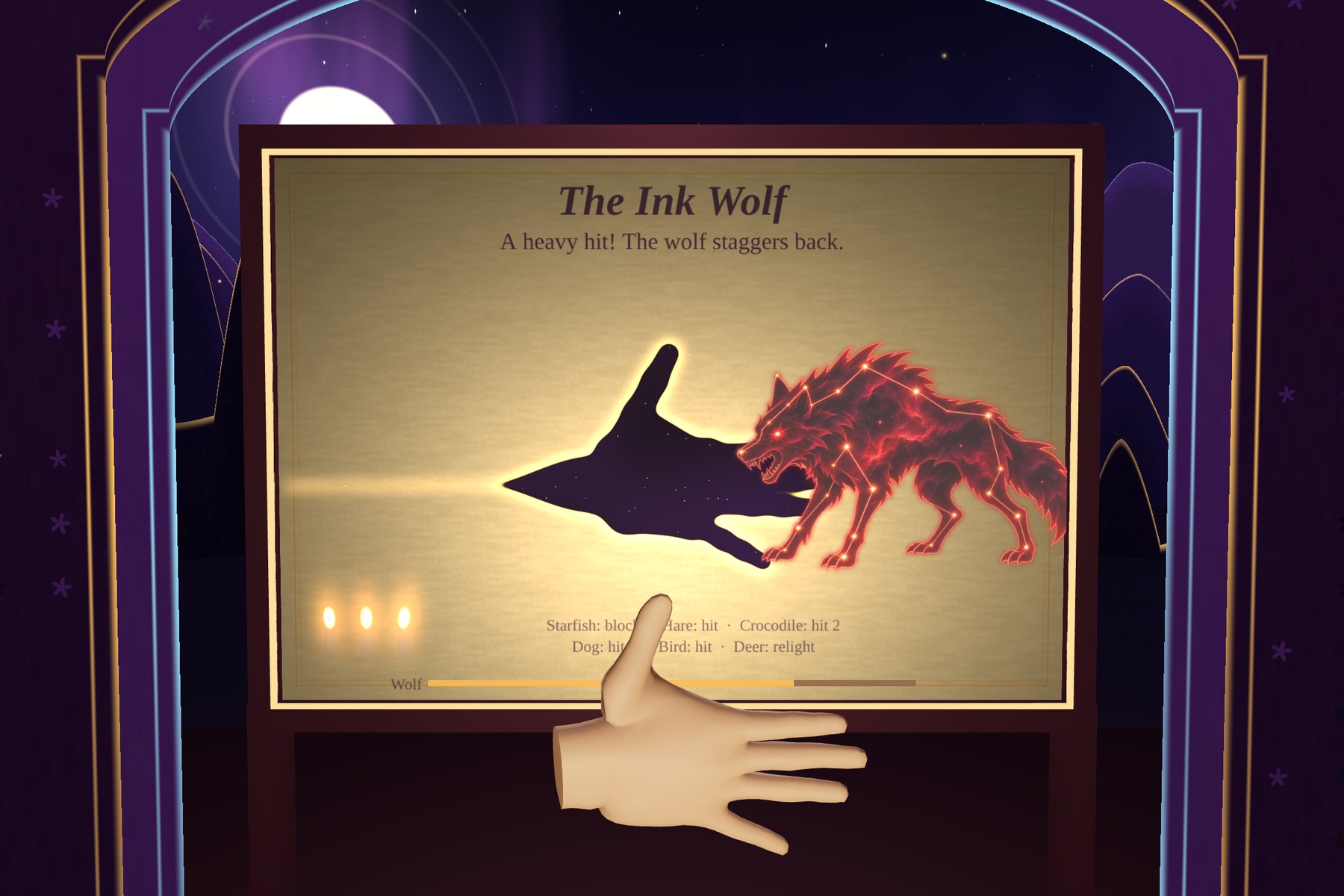
- Chapter four is a spell battle. Every creature you have woken is a spell. Make its shape and it flies across the paper at the Ink Wolf, which creeps toward your three lamp flames. Birds, bats and owls swoop, the dog and crocodile hit twice as hard, the starfish raises a ward, the spider's web slows the wolf, and the deer relights a flame. The wolf's eyes glow red before it bites, so you have time to block.
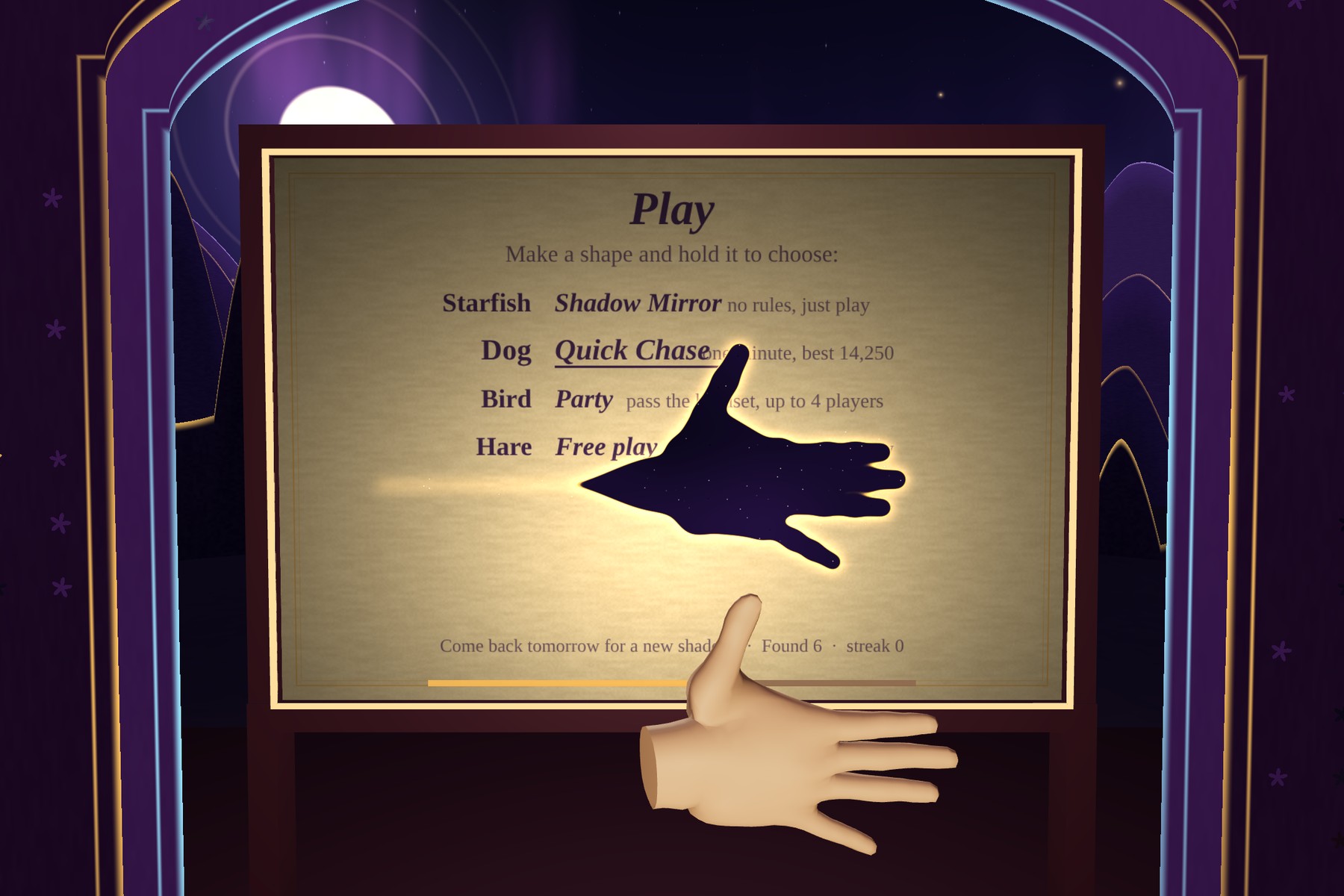
- After the story, a new shadow wakes every day. The Shadow Book keeps your collection and your daily streak, and free play lets any shadow you know wake its creature.
How we built it
- WebXR with the Immersive Web SDK, so it runs in the Quest browser with no install.
- Each hand becomes 32 capsules (finger bones, palm, thumb web, forearm), projected from the lamp onto the wall with a penumbra from the flame size, and drawn as instanced quads into a high-resolution shadow texture.
- A CPU matcher compares your shadow with the target. It ignores position and size, so you can make the shape anywhere, and it accepts the mirrored shape for left-handed players.
- Every target comes from a pose model of a real hand. Tests check that each shape matches itself, matches when moved or mirrored, and rejects every other shape. Puzzle tests drive the physics with drawn shadows, and battle tests play whole fights: a player who does nothing loses, a careful one wins.
- The battle uses the same matcher on every creature in your Shadow Book at once, so any known shape is a spell. The wolf is drawn as capsules straight onto the paper, in the same shadow pass as your hands.
- No art or audio files. The paper, the night sky, the light, and a generative lullaby score with chimes in the current chord are all code. In the battle, a frame-drum pulse joins the score.
Design for the guidelines
- Hands-first: the whole game uses hands only. The three buttons are brass buttons you poke on a tray.
- Seated: every interaction is within a two-foot radius of your chest.
- Short sessions: your shadow appears in the first seconds, a creature takes about a minute, and progress saves on each one.
- Accessibility: no time limits outside the battle (and the battle can be skipped), either hand works, the guide shows each pose on your hand, and Gentle mode lowers the match level, accepts one hand for two-hand shapes, and switches to high-contrast paper.
What is next
- More chapters, and two-player shadow plays.
- A shared daily shadow board for friends.
- Meta VR Glasses support with a pinch-only mode.
Built With
- hand-tracking
- immersive-web-sdk
- meta-quest
- three.js
- typescript
- vercel
- vite
- web-audio
- webxr
